



Giripladib
Based on 1 publication(s) in Google Scholar
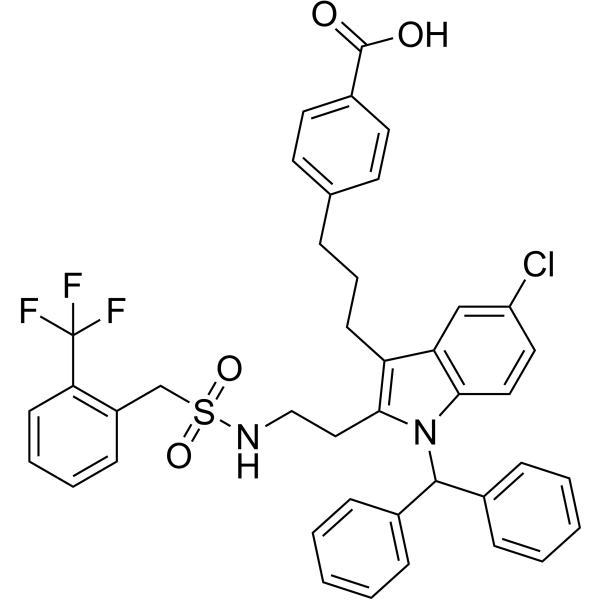
Giripladib (PLA-695) is a selective cPLA2α inhibitor. Giripladib attenuates CKD serum-induced PUFA accumulation, MDA and ROS levels, restores the GSH/GSSG ratio, and alleviates mitochondria-Ferroptosis-related morphological changes. Giripladib exhibits anti-inflammatory and disease-modifying effects in collagen-induced arthritis. Giripladib can be used in research on chronic kidney disease-associated plaque vulnerability, rheumatoid arthritis, and breast cancer.
For research use only. We do not sell to patients.
- Purity : 99.68%
- CAS No.: 865200-20-0
- Formula: C41H36ClF3N2O4S
- Molecular Weight:745.25
-
Storage:Powder -20°C, 3 years ; In solvent -80°C, 6 months , -20°C, 1 month

To place orders, for customer services and technical support, please contact: MedChemExpress USA
Tel: 609-228-6898 E-mail: [email protected] [email protected]


-
 Biological Activity
-
Chemical Information
-
Solvent & Solubility
- Protocols
- Purity & Documentation
- References
-
 Help & FAQs


-
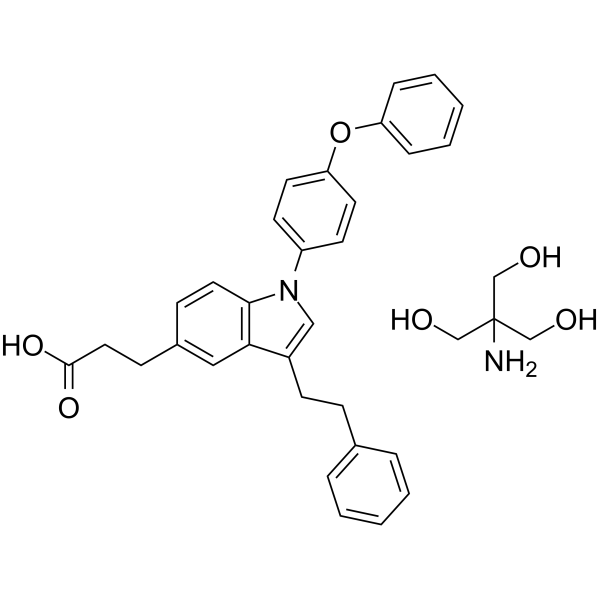
HY-119019
ASB14780cPLA2α Inhibitor -
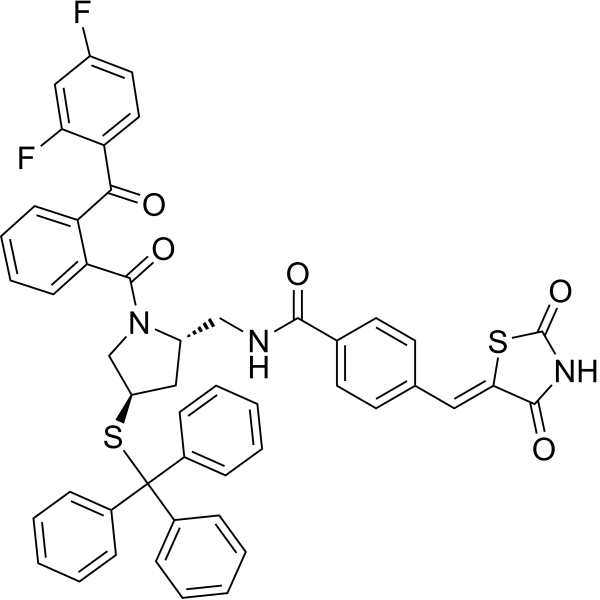
HY-111376
PyrrophenonePLA2 Inhibitor -
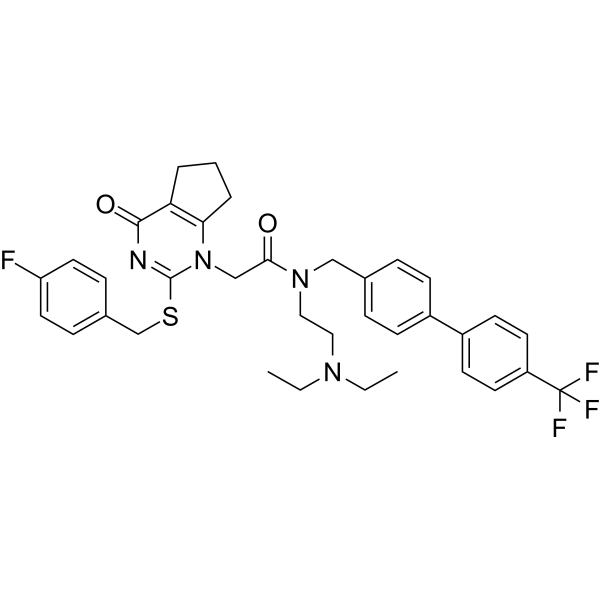
HY-10521
DarapladibLp-PLA2 Inhibitor -
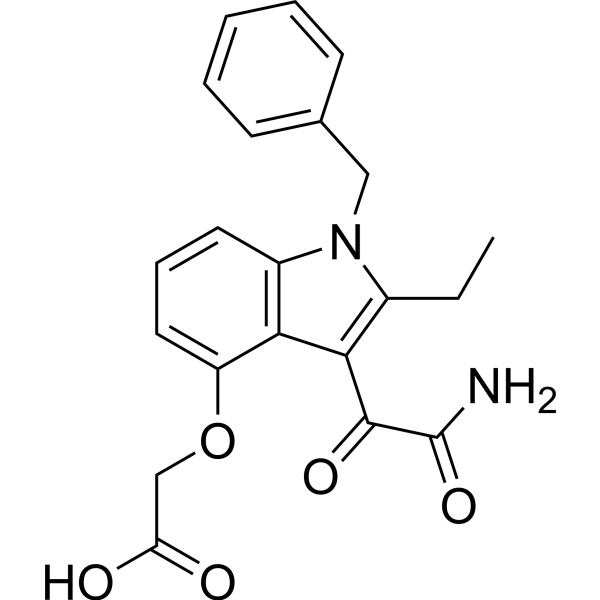
HY-13402
VarespladibsPLA2 Inhibitor -
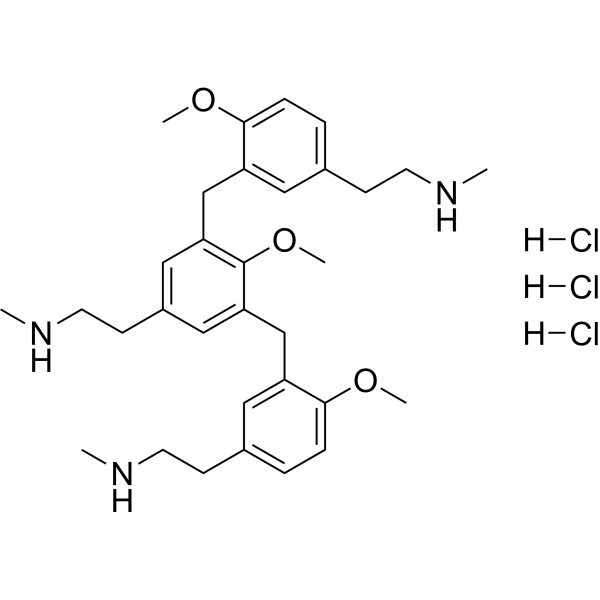
HY-130592
Compound 48/80 trihydrochlorideHistamine Releaser/Mast Cell Degranulator -
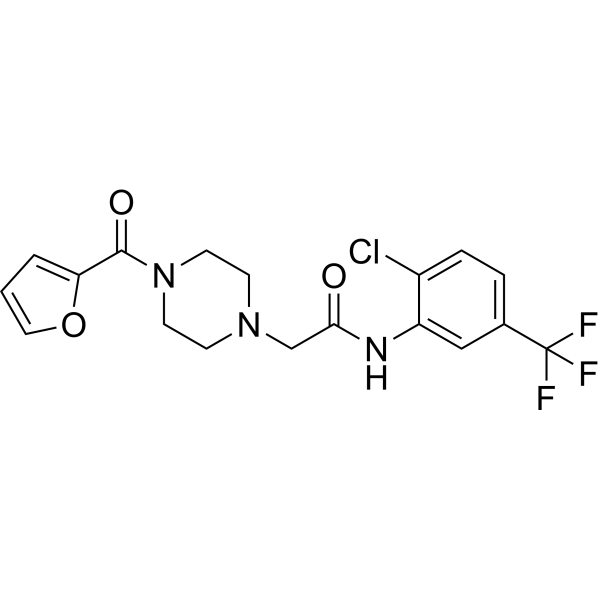
HY-100736
ML348APT1/LYPLA1 Inhibitor -
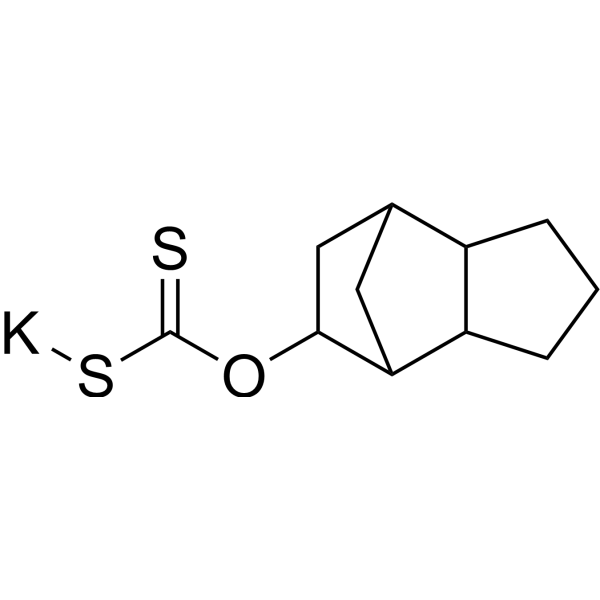
HY-70072
D609PC-PLC Inhibitor -
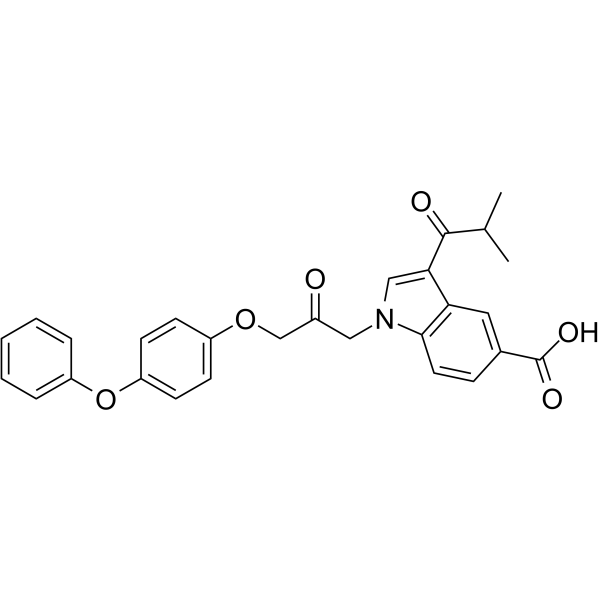
HY-10801
CAY10650cPLA2α Inhibitor -
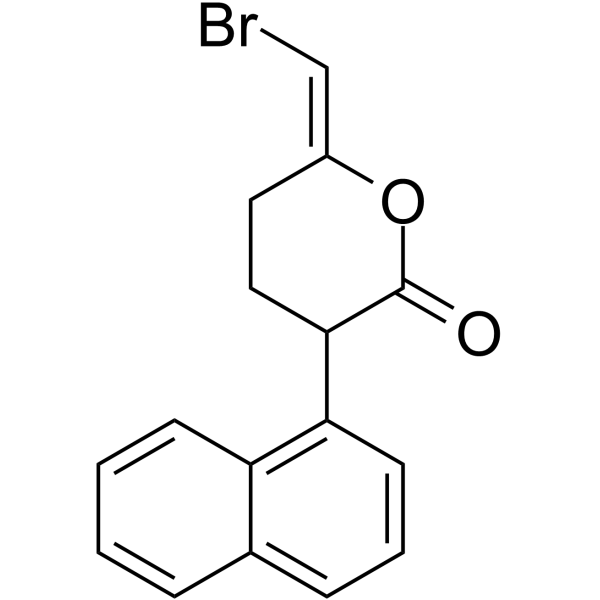
HY-107411
Bromoenol lactonePhospholipase Inhibitor -
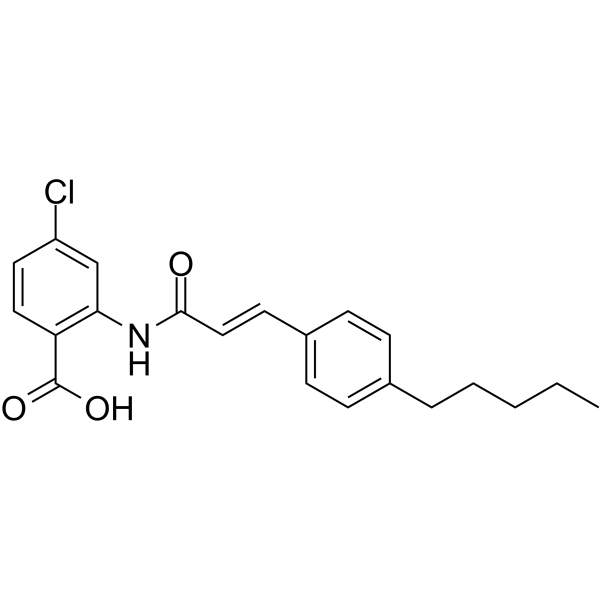
HY-123070
ONO-RS-082PLA2 Inhibitor -
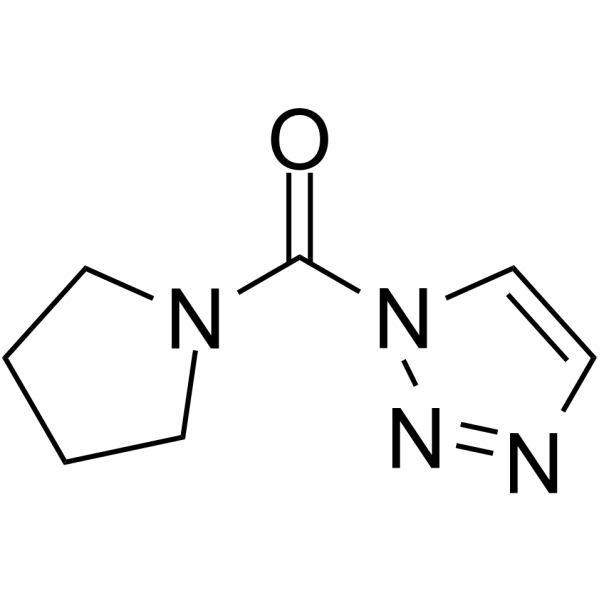
HY-18522
AA26-9Serine Hydrolase Inhibitor
Publications Citing Use of MedChemExpress (MCE) Giripladib
MoreAll Phospholipase Isoforms
More

Biological Activity
Description
IC50 & Target
[3]|
cPLA2α |
In Vitro
MedChemExpress (MCE) has not independently confirmed the accuracy of these methods. They are for reference only.
-
Cell Line:BCSCs and non-BCSCs derived from breast cancer cells
-
Concentration:Various concentrations
-
Incubation Time:48 h
-
Result:Increased sensitivity of BCSCs to chemotherapeutic agents.
Combination with chemotherapeutic agents was more effective in reducing BCSCs numbers than single agent treatment alone.
In Vivo
MedChemExpress (MCE) has not independently confirmed the accuracy of these methods. They are for reference only.
-
Animal Model:ApoE−/− (C57BL/6J background) (male, 8 weeks old, 20-25 g)[1]
-
Dosage:7.5 mg/kg
-
Administration:i.p.; daily; 12 weeks
-
Result:Ameliorated PUFA accumulation, reduced arterial MDA production, and diminished 4-HNE expression in fibrous cap VSMCs.
Mitigated mitochondrial-ferroptosis-associated morphological alterations including mitochondrial shrinkage.
Significantly mitigated atherosclerotic plaque vulnerability and reduced lesion area.
-
Animal Model:BALB/c nude (female, 5-week-old)[4]
-
Dosage:7.5 mg/kg (Giripladib); 4 mg/kg (Doxorubicin)
-
Administration:i.p.; once daily (Giripladib); every 5 days (Doxorubicin)
-
Result:Notably decreased tumorigenesis of BCSCs and suppressed tumor growth compared with monotherapy.
Significantly reduced stemness-related transcription factor KLF4 in tumors.
Clinical Trial
| NCT Number | Sponsor | Condition | Start Date |
Phase

|
|---|---|---|---|---|
| NCT01329991 | 2011-05 | PHASE1 |


Chemical Information
-
CAS No. 865200-20-0
-
Appearance Solid
-
Molecular Weight 745.25
-
Formula C41H36ClF3N2O4S
-
Color White to light yellow
-
SMILES
O=C(C1=CC=C(CCCC2=C(CCNS(=O)(CC3=C(C(F)(F)F)C=CC=C3)=O)N(C(C4=CC=CC=C4)C5=CC=CC=C5)C6=C2C=C(C=C6)Cl)C=C1)O
-
Synonyms
PLA-695
-
Shipping
Room temperature in continental US; may vary elsewhere.
-
Storage
Powder -20°C 3 years In solvent -80°C 6 months -20°C 1 month


Publications (1)
-
Journal Impact Factor
-
Most Recent


Solvent & Solubility
In Vitro:
DMSO : 125 mg/mL (167.73 mM; Need ultrasonic; Hygroscopic DMSO has a significant impact on the solubility of product, please use newly opened DMSO)
Please refer to the solubility information to select the appropriate solvent. Once prepared, please aliquot and store the solution to prevent product inactivation from repeated freeze-thaw cycles.
Storage method and period of stock solution: -80°C, 6 months; -20°C, 1 month. When stored at -80°C, please use it within 6 months. When stored at -20°C, please use it within 1 month.
Please refer to the solubility information to select the appropriate solvent. Once prepared, please aliquot and store the solution to prevent product inactivation from repeated freeze-thaw cycles.
Storage method and period of stock solution: -80°C, 6 months; -20°C, 1 month. When stored at -80°C, please use it within 6 months. When stored at -20°C, please use it within 1 month.
Concentration (start) × Volume (start) = Concentration (final) × Volume (final)


Purity & Documentation
-
Data Sheet (305 KB)
-
SDS (251 KB)
- English - EN (251 KB)
- Français - FR (251 KB)
- Deutsch - DE (251 KB)
- Norwegian - NO (251 KB)
- Español - ES (251 KB)
- Swedish - SV (251 KB)
- Italian - IT (251 KB)
- Korean - KR (251 KB)
- Portuguese - PT (251 KB)
-
Handling Instructions (2659 KB)
References
[3]. Kokotos G, et al. Inhibition of group IVA cytosolic phospholipase A2 by thiazolyl ketones in vitro, ex vivo, and in vivo. Journal of medicinal chemistry. 2014 Sep 25;57(18):7523-35. [Content Brief]
[4]. Liu S, et al. A novel lncRNA ROPM-mediated lipid metabolism governs breast cancer stem cell properties. Journal of hematology & oncology. 2021 Oct 29;14(1):178. [Content Brief]


Complete Stock Solution Preparation Table
Please refer to the solubility information to select the appropriate solvent. Once prepared, please aliquot and store the solution to prevent product inactivation from repeated freeze-thaw cycles.
Storage method and period of stock solution: -80°C, 6 months; -20°C, 1 month. When stored at -80°C, please use it within 6 months. When stored at -20°C, please use it within 1 month.
| Optional Solvent | Concentration Solvent Mass | 1 mg | 5 mg | 10 mg | 25 mg |
|---|---|---|---|---|---|
| DMSO | 1 mM | 1.3418 mL | 6.7092 mL | 13.4183 mL | 33.5458 mL |
| 5 mM | 0.2684 mL | 1.3418 mL | 2.6837 mL | 6.7092 mL | |
| 10 mM | 0.1342 mL | 0.6709 mL | 1.3418 mL | 3.3546 mL | |
| 15 mM | 0.0895 mL | 0.4473 mL | 0.8946 mL | 2.2364 mL | |
| 20 mM | 0.0671 mL | 0.3355 mL | 0.6709 mL | 1.6773 mL | |
| 25 mM | 0.0537 mL | 0.2684 mL | 0.5367 mL | 1.3418 mL | |
| 30 mM | 0.0447 mL | 0.2236 mL | 0.4473 mL | 1.1182 mL | |
| 40 mM | 0.0335 mL | 0.1677 mL | 0.3355 mL | 0.8386 mL | |
| 50 mM | 0.0268 mL | 0.1342 mL | 0.2684 mL | 0.6709 mL | |
| 60 mM | 0.0224 mL | 0.1118 mL | 0.2236 mL | 0.5591 mL | |
| 80 mM | 0.0168 mL | 0.0839 mL | 0.1677 mL | 0.4193 mL | |
| 100 mM | 0.0134 mL | 0.0671 mL | 0.1342 mL | 0.3355 mL |


Giripladib Related Classifications
HY-14952 Related Classifications
 Powered by Bioz
Keywords
- Giripladib
- 865200-20-0
- PLA-695
- PLA695
- PLA 695
- Phospholipase
- Reactive Oxygen Species (ROS)
- Glutathione Peroxidase
- Ferroptosis
- Mitochondrial Metabolism
- GIVA cPLA2
- chronic kidney disease
- breast cancer stem cell
- VSMC ferroptosis
- cytosolic phospholipase A2
- cPLA2α
- collagen-induced arthritis
- breast cancer
- PLA2G16
- rheumatoid arthritis
- Inhibitor
- inhibitor
- inhibit