



Quercitrin
Based on 6 publication(s) in Google Scholar
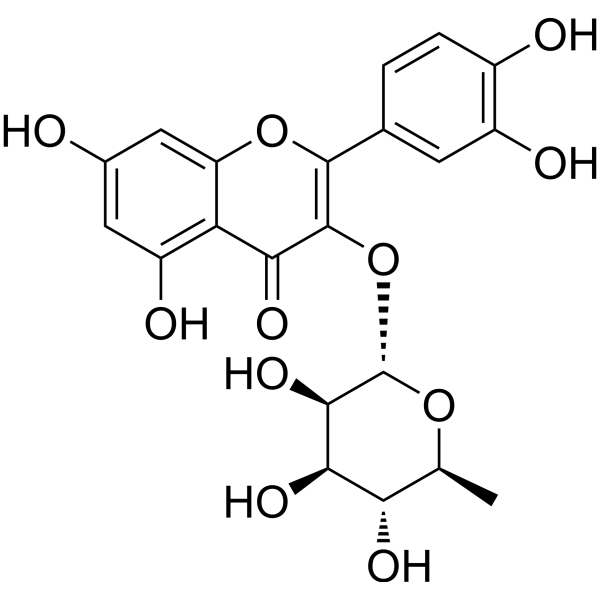
Quercitrin (Quercetin 3-rhamnoside) is a bioflavonoid compound with potential anti-inflammation, antioxidative and neuroprotective effect. Quercitrin induces apoptosis of colon cancer cells. Quercitrin can be used for the research of cardiovascular and neurological disease research.
For research use only. We do not sell to patients.
- Purity : 99.82%
- CAS No.: 522-12-3
- Formula: C21H20O11
- Molecular Weight:448.38
-
Storage:
-20°C, protect from light
* In solvent : -80°C, 6 months; -20°C, 1 month (protect from light)

To place orders, for customer services and technical support, please contact: MedChemExpress USA
Tel: 609-228-6898 E-mail: [email protected] [email protected]


-
 Biological Activity
-
Chemical Information
-
Solvent & Solubility
- Protocols
- Purity & Documentation
- References
-
 Help & FAQs


-
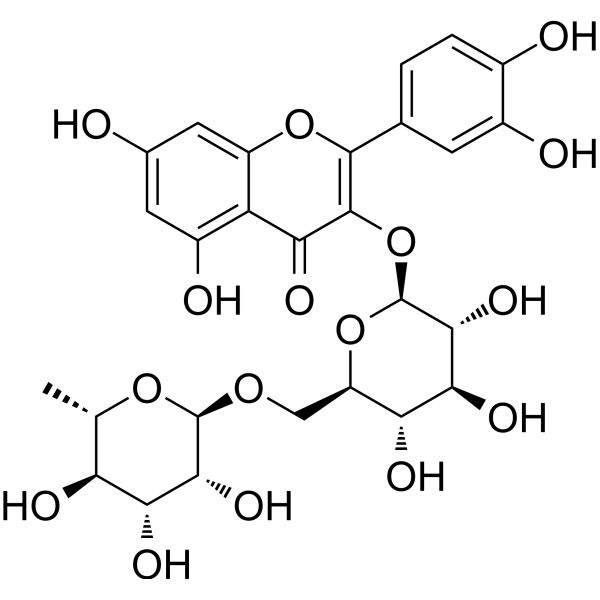
HY-N0148
RutinCBR1 Inhibitor -
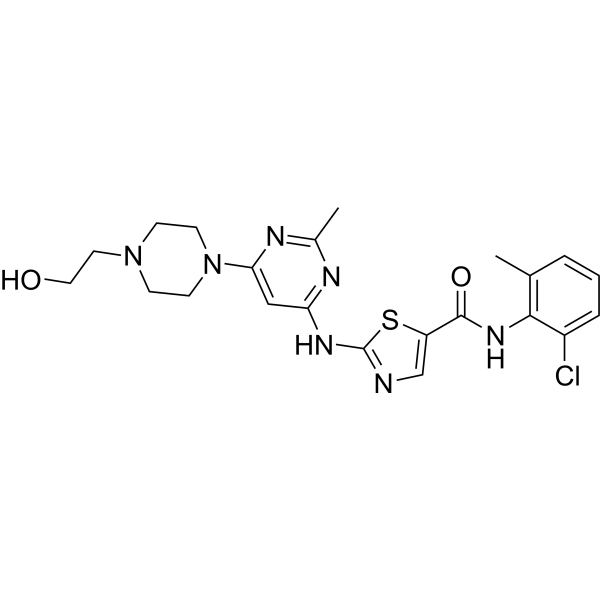
HY-10181
DasatinibSrc/Bcr-Abl Inhibitor -
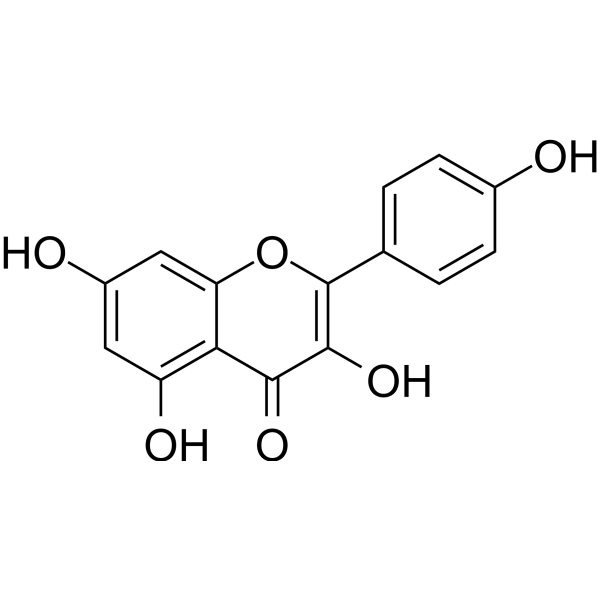
HY-14590
KaempferolEstrogen Receptor α Inhibitor -
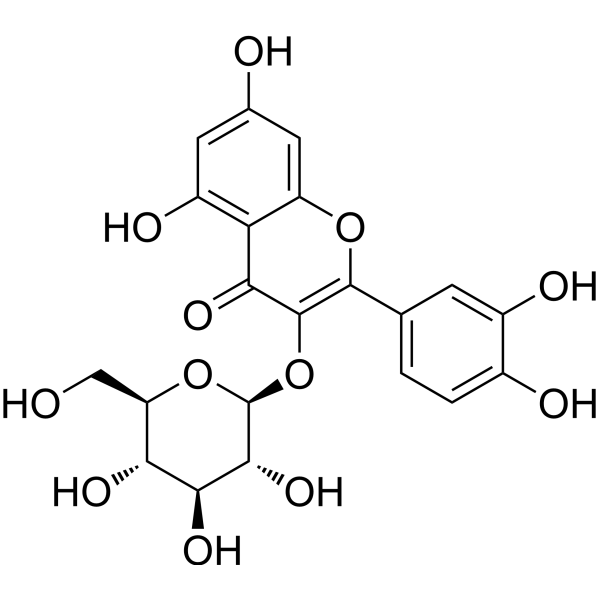
HY-N1445
IsoquercitrinNO Synthase Inhibitor -
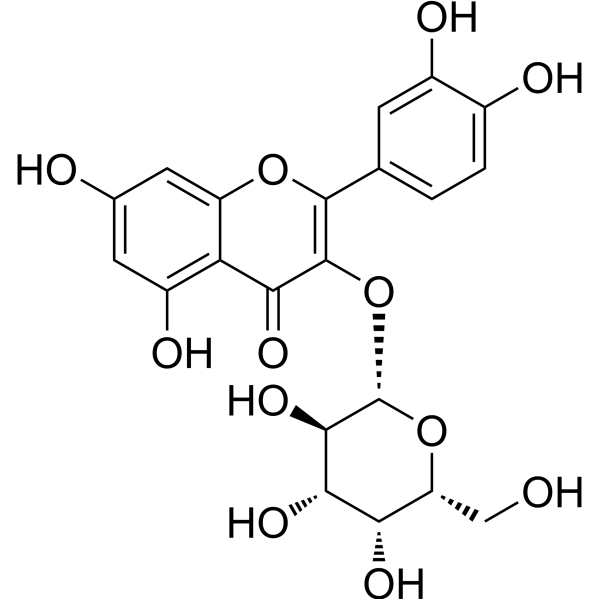
HY-N0452
HyperosideApoptosis Inducer -

HY-N0418R
Quercitrin (Standard)Anti-inflammatory Agent -
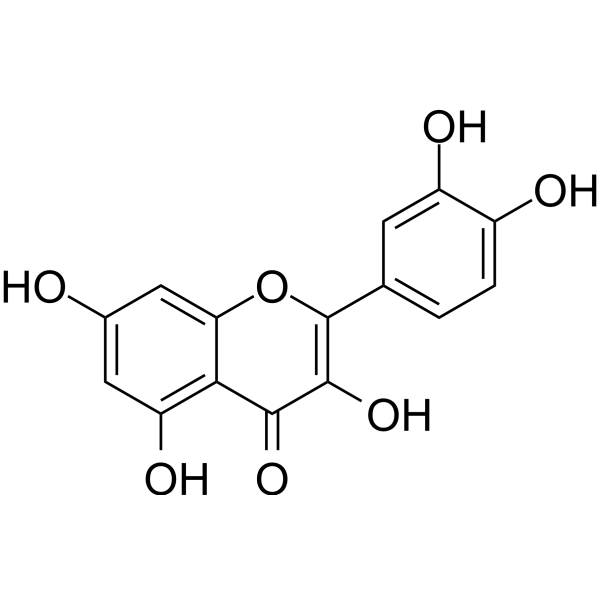
HY-18085
QuercetinFlavonoid Antioxidant -
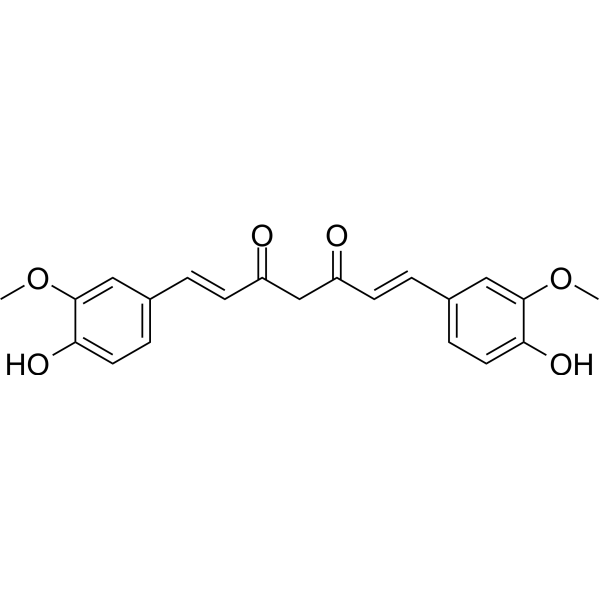
HY-N0005
Curcuminp300 Histone Acetylatransferase Inhibitor -
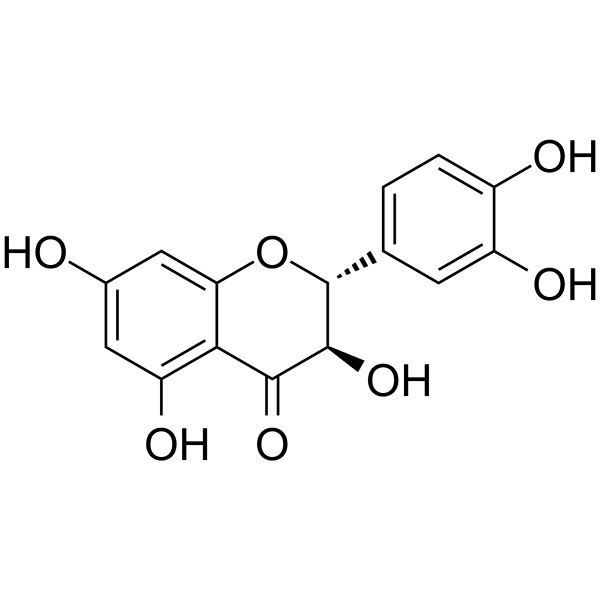
HY-N0136
TaxifolinAntifibrotic Agent -
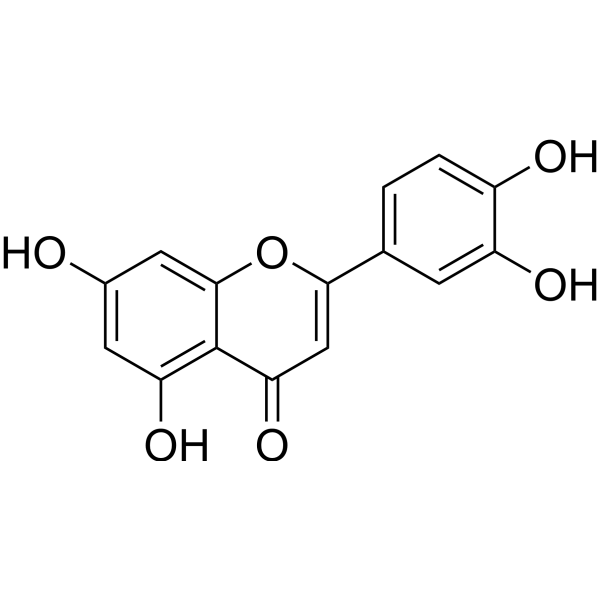
HY-N0162
LuteolinNrf2 Inhibitor -
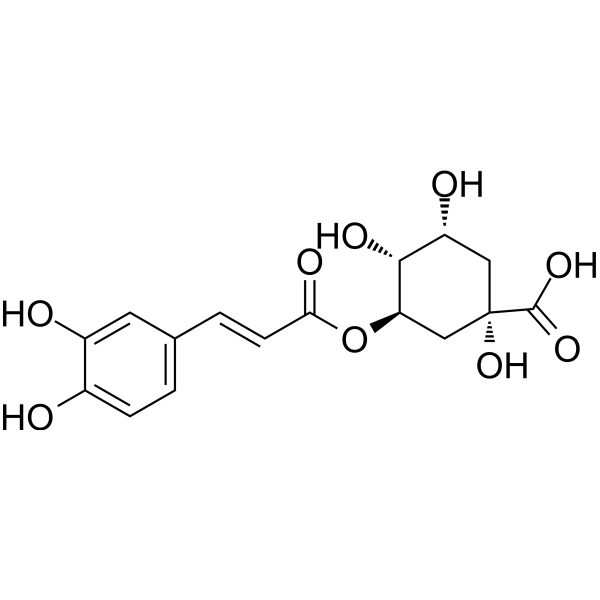
HY-N0055
Chlorogenic acidAntioxidant -
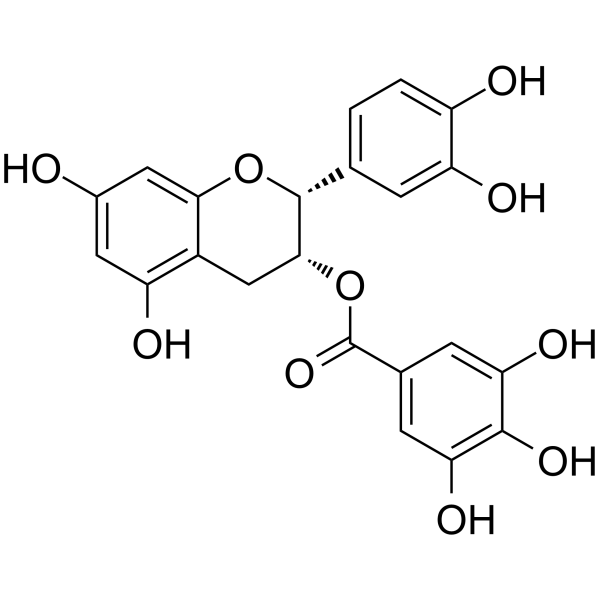
HY-N0002
(-)-Epicatechin gallateCOX-1 Inhibitor
Publications Citing Use of MedChemExpress (MCE) Quercitrin
More Customer Validation & Images

-
WB
-
IHC


Biological Activity
Description
Cellular Effect
|
Cell Line

|
Type | Value | Description | References |
|---|---|---|---|---|
| A549 | IC50 |
>20 mg/mL
Compound: 20
|
Cytotoxicity against human A549 cells after 3 days by SRB assay
Cytotoxicity against human A549 cells after 3 days by SRB assay
|
[PMID: 15568778] |
| BALB/3T3 | IC50 |
>223 μM
Compound: 7
|
Growth inhibition of BALB/c mouse cloned 3T3/A31 cells after 72 hrs by nigrosin assay
Growth inhibition of BALB/c mouse cloned 3T3/A31 cells after 72 hrs by nigrosin assay
|
[PMID: 10096863] |
| BV-2 | IC50 |
>100 μM
Compound: 3
|
Antineuroinflammatory activity in human BV2 cells assessed as inhibition of LPS-induced NO production after 24 hrs in presence of LPS by Griess reaction
Antineuroinflammatory activity in human BV2 cells assessed as inhibition of LPS-induced NO production after 24 hrs in presence of LPS by Griess reaction
|
[PMID: 27623545] |
| L6 | IC50 |
>30 μg/mL
Compound: 18
|
Antitrypanosomal activity against trypomastigote forms of Trypanosoma cruzi Tulahuen C2C4 infected in rat L6 cells after 96 hrs by photometric method
Antitrypanosomal activity against trypomastigote forms of Trypanosoma cruzi Tulahuen C2C4 infected in rat L6 cells after 96 hrs by photometric method
|
10.1039/C5MD00481K |
| L6 | IC50 |
>90 μg/mL
Compound: 18
|
Cytotoxicity against rat L6 cells after 72 hrs by alamar blue staining based fluorescence analysis
Cytotoxicity against rat L6 cells after 72 hrs by alamar blue staining based fluorescence analysis
|
10.1039/C5MD00481K |
| MCF7 | IC50 |
>20 mg/mL
Compound: 20
|
Cytotoxicity against human MCF7 cells after 3 days by SRB assay
Cytotoxicity against human MCF7 cells after 3 days by SRB assay
|
[PMID: 15568778] |
| MDCK | CC50 |
>446 μM
Compound: Quercitrin
|
Cytotoxicity against MDCK cells
Cytotoxicity against MDCK cells
|
[PMID: 25096296] |
In Vitro
Quercitrin (5-50 μM; 24-72 h) time- and dose-dependently inhibits cell proliferation and increases cytotoxic effects to colorectal carcinoma cells[1]. Quercitrin (5-50 μM; 24-72 h) time- and dose-dependently increases nucleosomal enrichment factor (EF) of DLD-1 cells[1]. Quercitrin (50 μM; 48-72 h) induces cell apoptosis and the loss of mitochondrial membrane potential, and causes translocation of phosphatidylserine (PS) from the inner to outer Leaflet of DLD-1 cells[1].
MedChemExpress (MCE) has not independently confirmed the accuracy of these methods. They are for reference only.
-
Cell Line:DLD-1 colon cancer cell lines
-
Concentration:5, 10, 25 and 50 μM
-
Incubation Time:24, 48 and 72 hours
-
Result:Time- and Dose-dependently decreased cell proliferation of colorectal carcinoma cells.
-
Cell Line:DLD-1 colon cancer cell lines
-
Concentration:50 μM
-
Incubation Time:48 and 72 hours
-
Result:Induced cell apoptosis and time- and dose-dependently increased caspase-3 enzyme activity.
In Vivo
MedChemExpress (MCE) has not independently confirmed the accuracy of these methods. They are for reference only.
-
Animal Model:Male ICR mice with carbon tetrachloride (CCl4) induced brain injury[2]
-
Dosage:50 and 100 mg/kg
-
Administration:Oral gavage; 50 and 100 mg/kg, once
-
Result:Dose-dependently decreased the levels of ROS and malondialdehyde (MDA) concentration in the hippocampus homogenates, and also dose-dependently decreased the CYP2E1 level in the brains. Increased the activities of superoxide dismutase (SOD), catalase (CAT), glutathione peroxidase (GPx). Inhibited the N-methyl-D-aspartate receptor 2B subunit (NR2B) level and the activities of monoamine oxidase (MAO) and acetylcholine esterase (AChE) in mouse brains.


Chemical Information
-
CAS No. 522-12-3
-
Appearance Solid
-
Molecular Weight 448.38
-
Formula C21H20O11
-
Color Light yellow to yellow
-
SMILES
OC1=CC(O)=C(C(C(O[C@H]2[C@H](O)[C@H](O)[C@@H](O)[C@H](C)O2)=C(C3=CC(O)=C(O)C=C3)O4)=O)C4=C1
-
Synonyms
Quercetin 3-rhamnoside
-
Structure Classification
-
Shipping
Room temperature in continental US; may vary elsewhere.
-
Storage
-20°C, protect from light
* In solvent : -80°C, 6 months; -20°C, 1 month (protect from light)


Publications (6)
-
Journal Impact Factor
-
Most Recent
-
Acta Pharm Sin B
Chrysin serves as a novel inhibitor of DGK α/FAK interaction to suppress the malignancy of esophageal squamous cell carcinoma (ESCC). [Abstract]2021 Jan;11(1):143-155. PMID: 33532186 -
Phytomedicine
Quercitrin improves cardiac remodeling following myocardial infarction by regulating macrophage polarization and metabolic reprogramming. [Abstract]2024 May:127:155467. PMID: 38447360
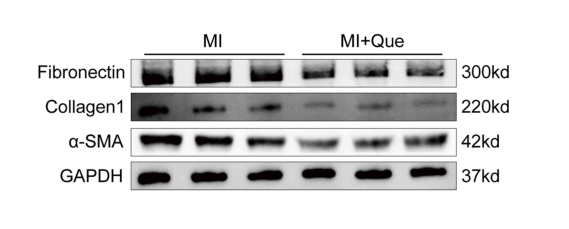
Quercitrin purchased from MedChemExpress. Usage Cited in: Phytomedicine. 2024 May:127:155467. [Abstract]
Quercitrin (Que 80 mg/kg). Western blot images of fibronectin, collagen I, α-SMA, and GAPDH.
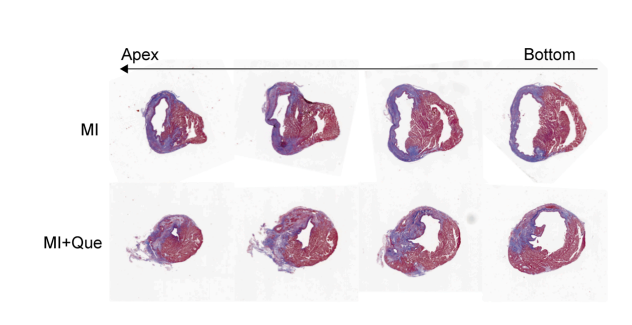
Quercitrin purchased from MedChemExpress. Usage Cited in: Phytomedicine. 2024 May:127:155467. [Abstract]
Quercitrin (Que 80 mg/kg). Masson staining of the MI group and the MI+Que group.
-
Food Chem
Effects of sun drying combined with baking processes on the flavor quality of Chongqing Tuocha raw tea. [Abstract]2025 Dec 30:497:146992. PMID: 41285060 -
Food Chem
Flavonoid-mediated metabolic underpinning quality variation in red bud-sport pear mutants. [Abstract]2025 Oct 15:489:144992. PMID: 40466530 -
Int J Biol Macromol
2025 Mar:294:139536. PMID: 39765299 -


Solvent & Solubility
In Vitro:
DMSO : 125 mg/mL (278.78 mM; Need ultrasonic; Hygroscopic DMSO has a significant impact on the solubility of product, please use newly opened DMSO)
Please refer to the solubility information to select the appropriate solvent. Once prepared, please aliquot and store the solution to prevent product inactivation from repeated freeze-thaw cycles.
Storage method and period of stock solution: -80°C, 6 months; -20°C, 1 month (protect from light). When stored at -80°C, please use it within 6 months. When stored at -20°C, please use it within 1 month.
Please refer to the solubility information to select the appropriate solvent. Once prepared, please aliquot and store the solution to prevent product inactivation from repeated freeze-thaw cycles.
Storage method and period of stock solution: -80°C, 6 months; -20°C, 1 month (protect from light). When stored at -80°C, please use it within 6 months. When stored at -20°C, please use it within 1 month.
Concentration (start) × Volume (start) = Concentration (final) × Volume (final)
In Vivo:
Select the appropriate dissolution method based on your experimental animal and administration route.
- For the following dissolution methods, please ensure to first prepare a clear stock solution using an In Vitro approach and then sequentially add co-solvents:
- To ensure reliable experimental results, the clarified stock solution can be appropriately stored based on storage conditions. As for the working solution for In Vivo experiments, it is recommended to prepare freshly and use it on the same day.
- The percentages shown for the solvents indicate their volumetric ratio in the final prepared solution. If precipitation or phase separation occurs during preparation, heat and/or sonication can be used to aid dissolution.
Add each solvent one by one: 10% DMSO 40% PEG300 5% Tween-80 45% Saline
Solubility: ≥ 2.58 mg/mL (5.75 mM); Clear solution
This protocol yields a clear solution of ≥ 2.58 mg/mL (saturation unknown).
Taking 1 mL working solution as an example, add 100 μL DMSO stock solution (25.8 mg/mL) to 400 μL PEG300, and mix evenly; then add 50 μL Tween-80 and mix evenly; then add 450 μL Saline to adjust the volume to 1 mL.
Preparation of Saline: Dissolve 0.9 g sodium chloride in ddH₂O and dilute to 100 mL to obtain a clear Saline solution.
Add each solvent one by one: 10% DMSO 90% (20% SBE-β-CD in Saline)
Solubility: ≥ 2.08 mg/mL (4.64 mM); Clear solution
This protocol yields a clear solution of ≥ 2.08 mg/mL (saturation unknown).
Taking 1 mL working solution as an example, add 100 μL DMSO stock solution (20.8 mg/mL) to 900 μL 20% SBE-β-CD in Saline, and mix evenly.
Preparation of 20% SBE-β-CD in Saline (4°C, storage for one week): 2 g SBE-β-CD powder is dissolved in 10 mL Saline, completely dissolve until clear.
In Vivo Dissolution Calculator
Please enter the basic information of animal experiments:
-
-
-
-
Recommended: Prepare an additional quantity of animals to account for potential losses during experiments.
Please enter your animal formula composition:
-
%DMSO +
Recommended: Keep the proportion of DMSO in working solution below 2% if your animal is weak.
-
%+
-
+%Tween-80 + +
-
%Saline +
The co-solvents required include: DMSO, . All of co-solvents are available by MedChemExpress (MCE). , Tween 80. All of co-solvents are available by MedChemExpress (MCE).
Working solution concentration: 0.22 mg/mL
Method for preparing stock solution: mg drug dissolved in μL DMSO. Stock solution concentration: mg/mL. * In solvent : -80°C, 6 months; -20°C, 1 month (protect from light)
1. Take μL DMSO stock solution;
2. Add μL .
μL , mix evenly;
3. Then add μL Tween 80, mix evenly;
4. Then add μL
Please ensure that the stock solution in the first step is dissolved to a clear state, and add co-solvents in sequence. You can use ultrasonic heating (ultrasonic cleaner, recommended frequency 20-40 kHz), vortexing, etc. to assist dissolution.


Purity & Documentation
-
Data Sheet (283 KB)
-
SDS (396 KB)
- English - EN (396 KB)
- Français - FR (396 KB)
- Deutsch - DE (396 KB)
- Norwegian - NO (396 KB)
- Español - ES (396 KB)
- Swedish - SV (396 KB)
- Italian - IT (396 KB)
- Korean - KR (396 KB)
- Portuguese - PT (396 KB)
-
Handling Instructions (2659 KB)
References


Complete Stock Solution Preparation Table
Please refer to the solubility information to select the appropriate solvent. Once prepared, please aliquot and store the solution to prevent product inactivation from repeated freeze-thaw cycles.
Storage method and period of stock solution: -80°C, 6 months; -20°C, 1 month (protect from light). When stored at -80°C, please use it within 6 months. When stored at -20°C, please use it within 1 month.
| Optional Solvent | Concentration Solvent Mass | 1 mg | 5 mg | 10 mg | 25 mg |
|---|---|---|---|---|---|
| DMSO | 1 mM | 2.2303 mL | 11.1513 mL | 22.3025 mL | 55.7563 mL |
| 5 mM | 0.4461 mL | 2.2303 mL | 4.4605 mL | 11.1513 mL | |
| 10 mM | 0.2230 mL | 1.1151 mL | 2.2303 mL | 5.5756 mL | |
| 15 mM | 0.1487 mL | 0.7434 mL | 1.4868 mL | 3.7171 mL | |
| 20 mM | 0.1115 mL | 0.5576 mL | 1.1151 mL | 2.7878 mL | |
| 25 mM | 0.0892 mL | 0.4461 mL | 0.8921 mL | 2.2303 mL | |
| 30 mM | 0.0743 mL | 0.3717 mL | 0.7434 mL | 1.8585 mL | |
| 40 mM | 0.0558 mL | 0.2788 mL | 0.5576 mL | 1.3939 mL | |
| 50 mM | 0.0446 mL | 0.2230 mL | 0.4461 mL | 1.1151 mL | |
| 60 mM | 0.0372 mL | 0.1859 mL | 0.3717 mL | 0.9293 mL | |
| 80 mM | 0.0279 mL | 0.1394 mL | 0.2788 mL | 0.6970 mL | |
| 100 mM | 0.0223 mL | 0.1115 mL | 0.2230 mL | 0.5576 mL |


Quercitrin Related Classifications
HY-N0418 Related Classifications
 Powered by Bioz