



Stevioside
Based on 5 publication(s) in Google Scholar
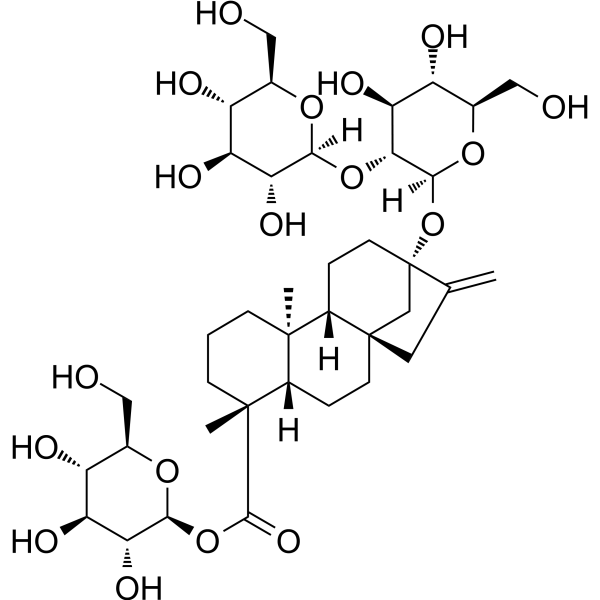
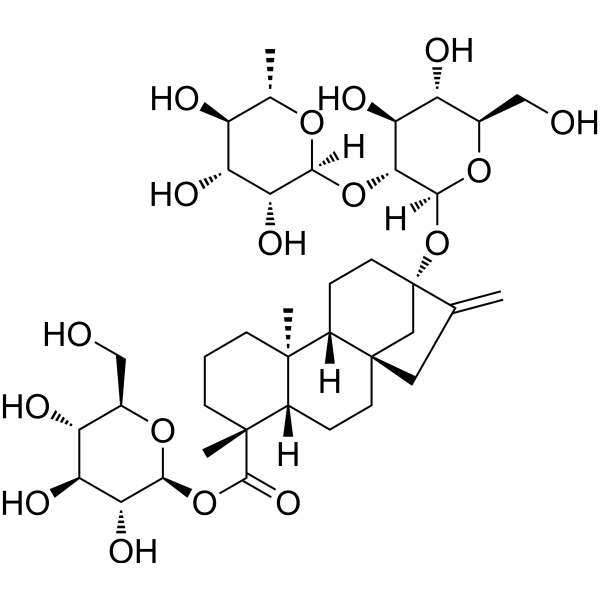
Stevioside is an orally active sweetener that can be isolated from Stevia rebaudiana, with antihypertensive, antihyperglycemic, antioxidant, anti-inflammatory and anti-tumor activities.
For research use only. We do not sell to patients.
- Purity : 99.32%
- CAS No.: 57817-89-7
- Formula: C38H60O18
- Molecular Weight:804.87
-
Storage:Powder -20°C, 3 years , 4°C, 2 years ; In solvent -80°C, 6 months , -20°C, 1 month

To place orders, for customer services and technical support, please contact: MedChemExpress USA
Tel: 609-228-6898 E-mail: [email protected] [email protected]


-
 Biological Activity
-
Chemical Information
-
Solvent & Solubility
- Protocols
- Purity & Documentation
- References
-
 Help & FAQs


-
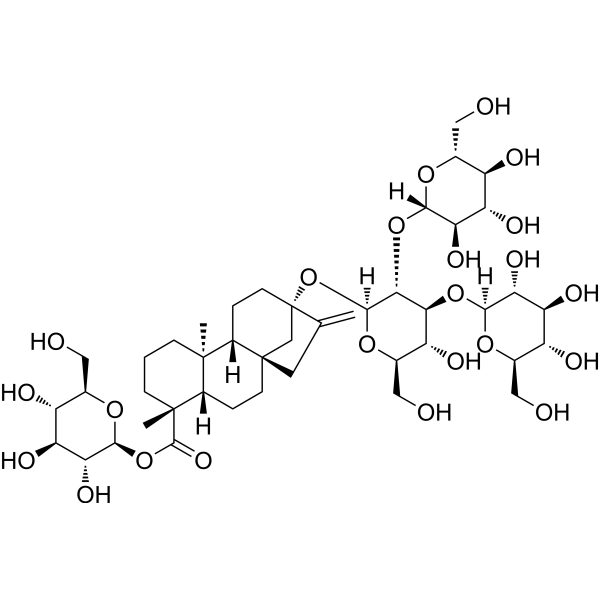
HY-N0466
Rebaudioside Aα-Glucosidase Inhibitor -
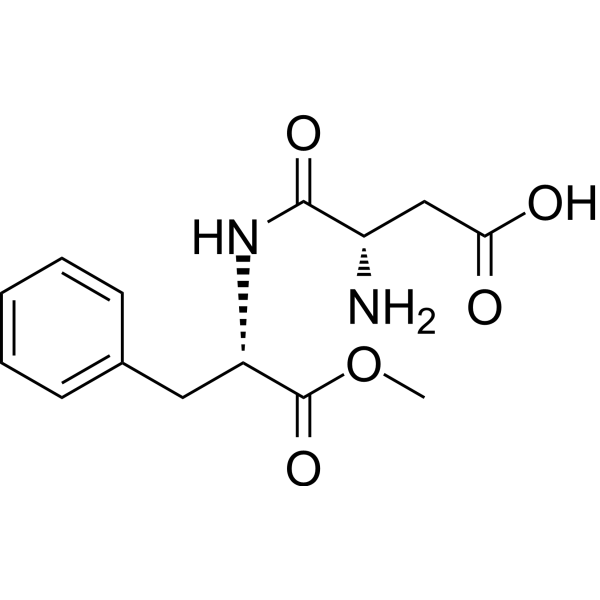
HY-B0361
AspartameSweetener -
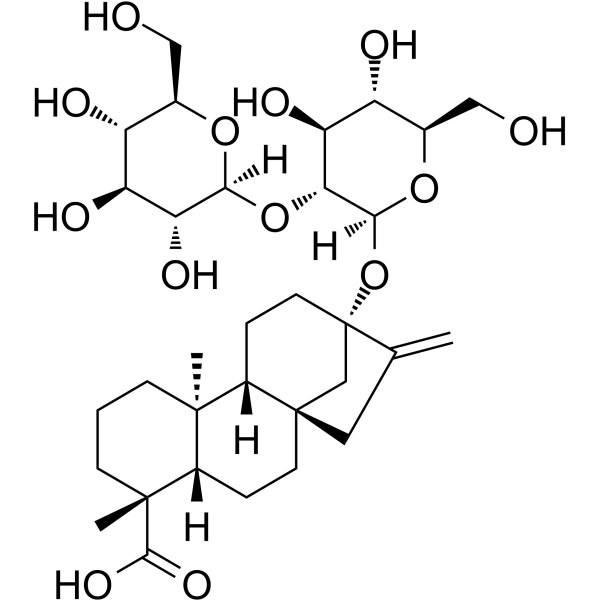
HY-N2547
SteviolbiosideSweetener -
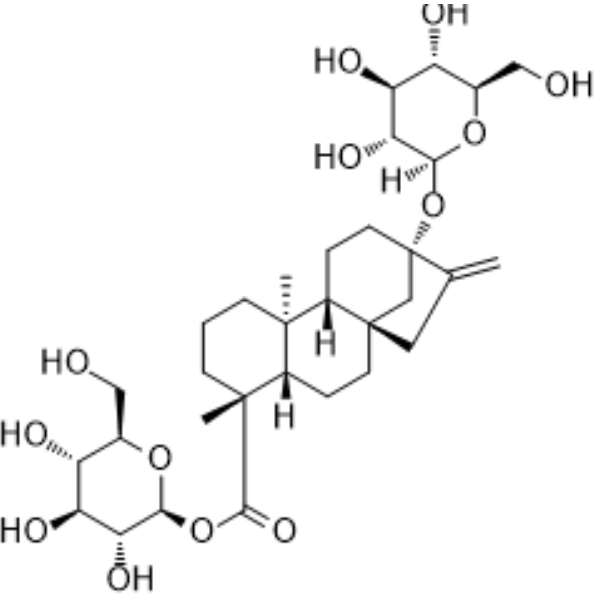
HY-N0668
RubusosideSolubilizing Agent -
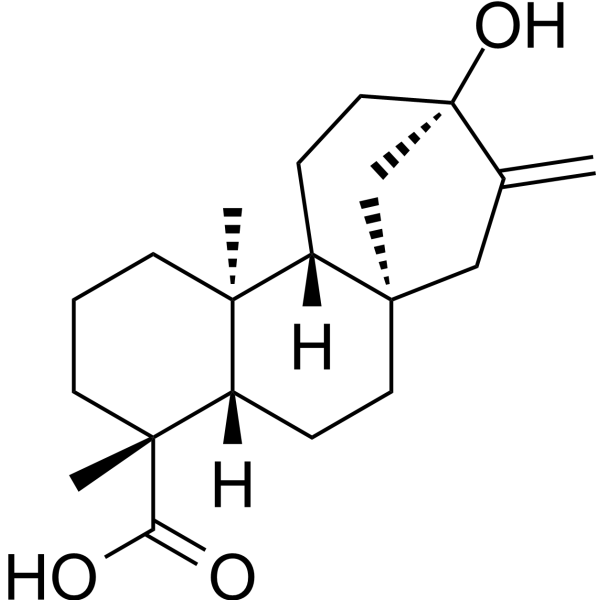
HY-N2057
SteviolAQP2/CFTR Inhibitor -
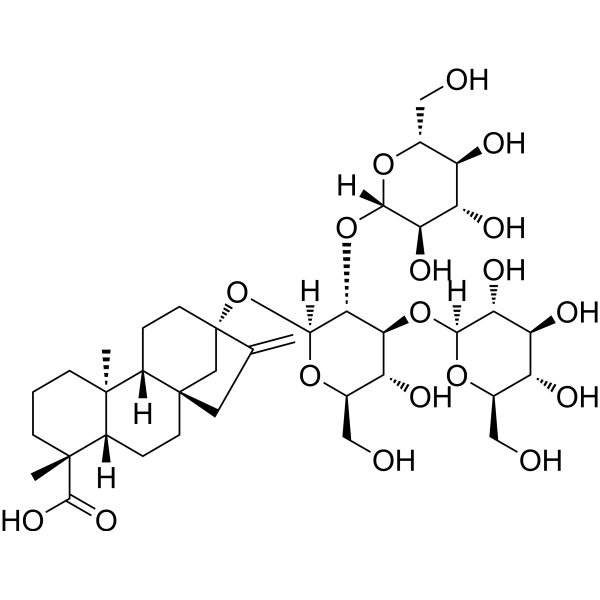
HY-N6808
Rebaudioside BSweetener -
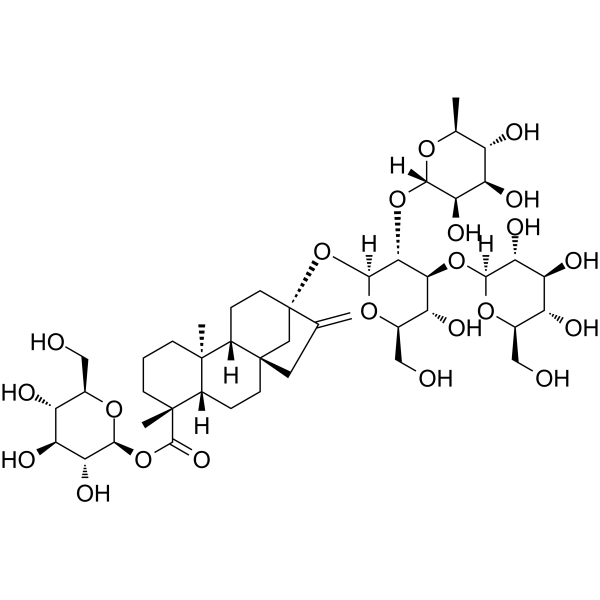
HY-N0467
Rebaudioside CTAS1R2/TAS1R3 Activator -
HY-N6992
Dulcoside ASweetener -

HY-N0669R
Stevioside (Standard)sweetener -
HY-N0614
SucraloseNon-Nutritive Sweetener -
HY-B0400
D-SorbitolSugar Alcohol -
HY-B0445
NAD+Endogenous Metabolite
Publications Citing Use of MedChemExpress (MCE) Stevioside
More Customer Validation & Images

-
Cell Proliferation/Viability Assay
-
Cell Imaging/Staining
-
Bio/Physico-chemical Assay
-
RT-PCR
-
WB


Biological Activity
Description
Cellular Effect
|
Cell Line

|
Type | Value | Description | References |
|---|---|---|---|---|
| Raji | IC50 |
360 μM
Compound: 1
|
Inhibition of TPA-induced EBV-early antigen activation in human Raji cells after 48hrs by indirect immunofluorescence technique
Inhibition of TPA-induced EBV-early antigen activation in human Raji cells after 48hrs by indirect immunofluorescence technique
|
[PMID: 19131254] |
In Vitro
Stevioside (10 μM, 24-48 h) can enhance cytotoxicity of 5-Fluorouracil (5-Fu, HY-90006) to MDA-MB-231 and SKBR3cells[1].
Stevioside (10 μM, 48 h) combinated with 5-Fu (HY-90006) could increase the ratio of Bax to Bcl-2 in MDA-MB-231 cells, thereby triggering apoptosis[1].
Stevioside (10-1000 μM, 6 h) induces TNF-α and IL-1β release in THP-1 cells[2].
MedChemExpress (MCE) has not independently confirmed the accuracy of these methods. They are for reference only.
-
Cell Line:MDA-MB-231
-
Concentration:10 μM
-
Incubation Time:24 h
-
Result:Increased the rate of apoptosis in cells with combination of 5-Fu (HY-90006).
Increased ROS level significantly in MDA-MB-231.
Combinated with 5-Fu (HY-90006) could trigger early and late apoptotic events in cancer cells.
-
Cell Line:THP-1 cells
-
Concentration:1 mM
-
Incubation Time:45 min
-
Result:Inhibited the expression level of NF-κB and IKKβ.
In Vivo
Stevioside (50-200 mg/kg, i.v., one time) reduces blood pressure in a dose-dependent manner in spontaneously hypertensive rats[4].
Stevioside (6.25-25 mg/kg, p.o., daily, 15 days) increases the proliferative response of in LPS stimulated B-lymphocytes in Balb/c mice[5].
MedChemExpress (MCE) has not independently confirmed the accuracy of these methods. They are for reference only.
-
Animal Model:Balb/c mice[5]
-
Dosage:6.25-25 mg/kg
-
Administration:p.o., daily, 7 days
-
Result:Didn’t show any change in the general behaviour of the test animals.
Increased antibody synthesis of 15.38% and delayed type hypersensitivity (DTH) response of 18% at the dose of 12.5 mg/kg.
Possessed macrophage stimulatory activity and increased phagocytic index.
Clinical Trial
| NCT Number | Sponsor | Condition | Start Date |
Phase
|
|---|---|---|---|---|
| NCT01329991 | Plexxikon| | 2011-05 | PHASE1 |


Chemical Information
-
CAS No. 57817-89-7
-
Appearance Solid
-
Molecular Weight 804.87
-
Formula C38H60O18
-
Color White to off-white
-
SMILES
C[C@]([C@]1([H])CC2)(CCC[C@@]1(C)C(O[C@@H]([C@@H]([C@@H](O)[C@@H]3O)O)O[C@@H]3CO)=O)[C@@]4([H])[C@]2(CC5=C)C[C@@]5(O[C@@](O[C@H](CO)[C@@H](O)[C@@H]6O)([H])[C@@H]6O[C@]([C@@H]([C@@H](O)[C@@H]7O)O)([H])O[C@@H]7CO)CC4
-
Structure Classification
-
Shipping
Room temperature in continental US; may vary elsewhere.
-
Storage
Powder -20°C 3 years 4°C 2 years In solvent -80°C 6 months -20°C 1 month


Publications (5)
-
Journal Impact Factor
-
Most Recent
-
-
J Orthop Translat
2022 Nov 15:38:190-202. PMID: 36439628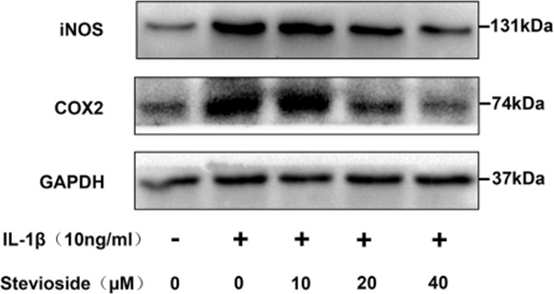
Stevioside purchased from MedChemExpress. Usage Cited in: J Orthop Translat. 2022 Nov 15:38:190-202. [Abstract]
Stevioside (STE; 10, 20, 40 µM) significantly decreases the expression of iNOS and COX-2 in a dose-dependent manner compared to stimulation with IL-1β.
-
Mediators Inflamm
Selenium Nanoparticles Decorated With Stevioside Potentially Attenuate Fructose Palmitate Induced Lipid Accumulation in HepG2 Cells. [Abstract]2025 Feb 13:2025:7942947. PMID: 39981401
Stevioside purchased from MedChemExpress. Usage Cited in: Mediators Inflamm. 2025 Feb 13:2025:7942947. [Abstract]
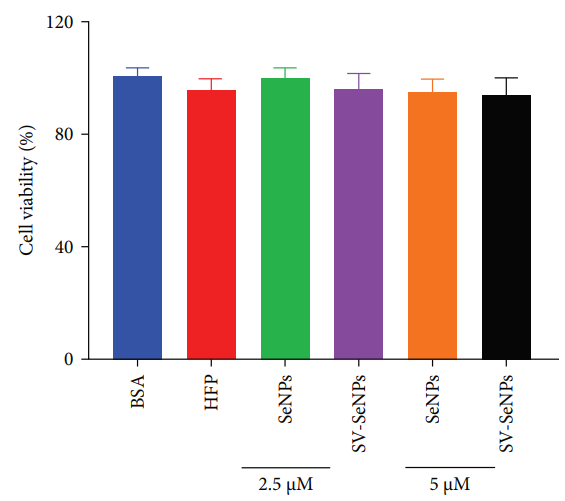
Stevioside (SV, 2.5-5 μM). CCK8 assay of cell viability of HFP-induced-HepG2 cells treated with different concentrations of SeNPs and SV-SeNPs for 48 h.
Stevioside purchased from MedChemExpress. Usage Cited in: Mediators Inflamm. 2025 Feb 13:2025:7942947. [Abstract]
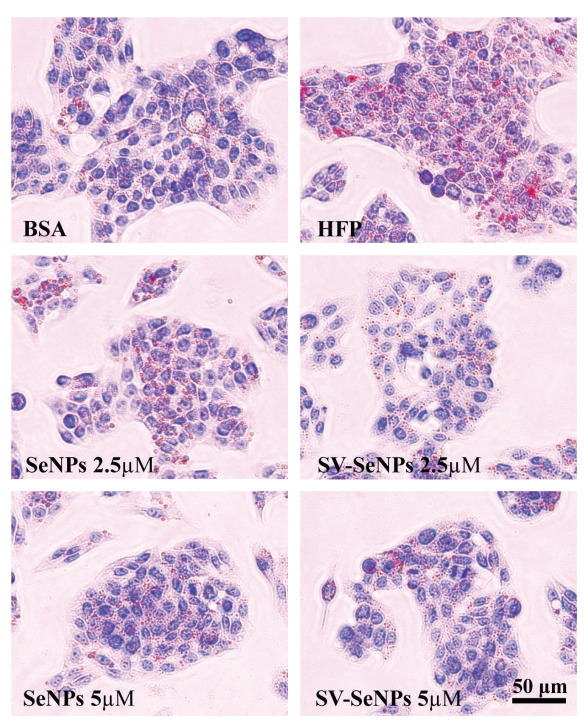
Stevioside (SV, 2.5-5 μM). The changes of lipid droplets in HFP-induced-HepG2 cells after SeNPs and SV-SeNPs treatment for 48 h were tested by oil red O staining.
Stevioside purchased from MedChemExpress. Usage Cited in: Mediators Inflamm. 2025 Feb 13:2025:7942947. [Abstract]
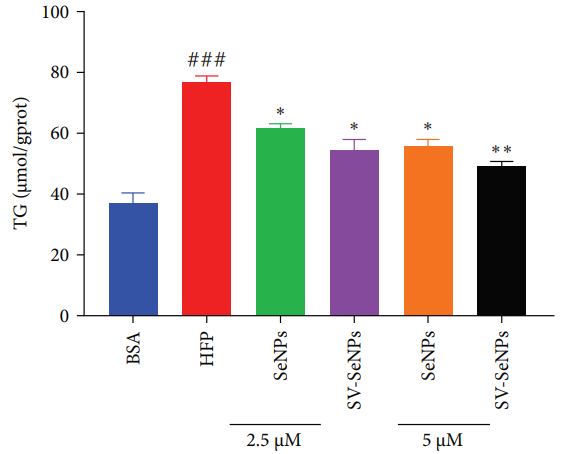
Stevioside (SV, 2.5-5 μM). Determination of TG content in HFP-induced-HepG2 cells incubated with SeNPs and SV-SeNPs for 48 h. The data represent the mean ± SD of three independent experiments.
Stevioside purchased from MedChemExpress. Usage Cited in: Mediators Inflamm. 2025 Feb 13:2025:7942947. [Abstract]
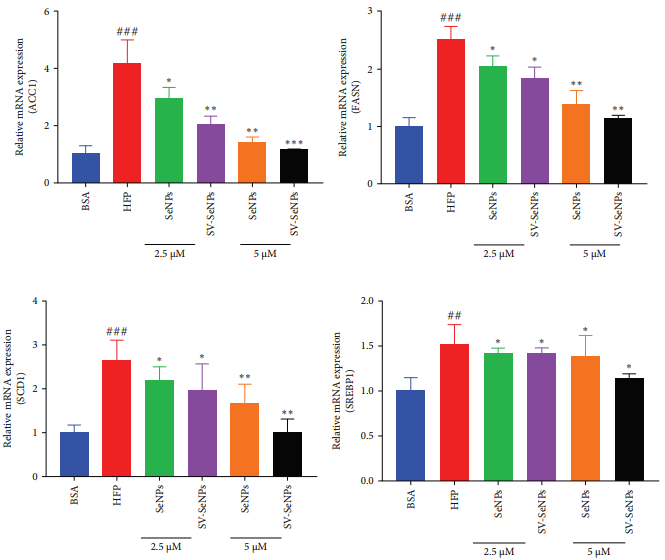
Stevioside (SV, 2.5-5 μM). SV-SeNPs relieve cell steatosis by modulation of lipid metabolic gene expression in HFP-treated HepG2 cells. HFP-induced-HepG2 cells were incubated with SeNPs and SV-SeNPs for 48 h and followed by q-PCR analysis of the mRNA expression of ACC1, FASN, SCD1, SREBP1.
Stevioside purchased from MedChemExpress. Usage Cited in: Mediators Inflamm. 2025 Feb 13:2025:7942947. [Abstract]
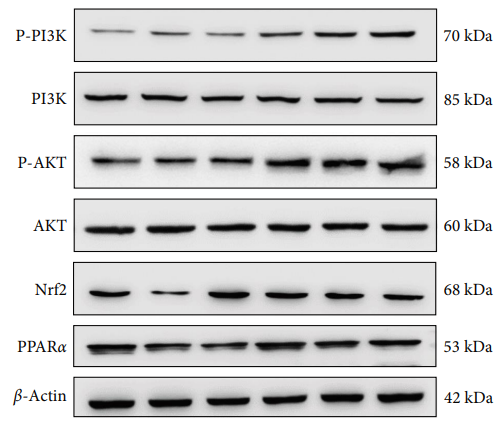
Stevioside (SV, 2.5-5 μM). Effects of SV-SeNPs on PI3K/AKT/Nrf2 signaling pathway and PPARα in HFP-treated HepG2 cells. (A) HFP-induced-HepG2 cells were incubated with SeNPs and SV-SeNPs for 48 h and followed by western blot analysis of expression of P-PI3K, P-AKT, Nrf2, and PPARα.
-
Microbiol Spectr
Potential quorum-sensing inhibitor of Hafnia alvei H4-theaflavin-3,3´-digallate analyzed by virtual screening and molecular simulation. [Abstract]2023 Sep 21;11(5):e0267123. PMID: 37732782 -
Vet Microbiol
The Chinese medicine monomer Schisandrin C inhibits PRRSV infection by regulating the OGT-PI3K/AKT/mTOR signaling pathway. [Abstract]2026 May:316:110992. PMID: 41865607


Solvent & Solubility
In Vitro:
DMSO : 175 mg/mL (217.43 mM; Need ultrasonic; Hygroscopic DMSO has a significant impact on the solubility of product, please use newly opened DMSO)
Please refer to the solubility information to select the appropriate solvent. Once prepared, please aliquot and store the solution to prevent product inactivation from repeated freeze-thaw cycles.
Storage method and period of stock solution: -80°C, 6 months; -20°C, 1 month. When stored at -80°C, please use it within 6 months. When stored at -20°C, please use it within 1 month.
Please refer to the solubility information to select the appropriate solvent. Once prepared, please aliquot and store the solution to prevent product inactivation from repeated freeze-thaw cycles.
Storage method and period of stock solution: -80°C, 6 months; -20°C, 1 month. When stored at -80°C, please use it within 6 months. When stored at -20°C, please use it within 1 month.
Concentration (start) × Volume (start) = Concentration (final) × Volume (final)
In Vivo:
Select the appropriate dissolution method based on your experimental animal and administration route.
- For the following dissolution methods, please ensure to first prepare a clear stock solution using an In Vitro approach and then sequentially add co-solvents:
- To ensure reliable experimental results, the clarified stock solution can be appropriately stored based on storage conditions. As for the working solution for In Vivo experiments, it is recommended to prepare freshly and use it on the same day.
- The percentages shown for the solvents indicate their volumetric ratio in the final prepared solution. If precipitation or phase separation occurs during preparation, heat and/or sonication can be used to aid dissolution.
Add each solvent one by one: 10% DMSO 40% PEG300 5% Tween-80 45% Saline
Solubility: ≥ 2.08 mg/mL (2.58 mM); Clear solution
This protocol yields a clear solution of ≥ 2.08 mg/mL (saturation unknown).
Taking 1 mL working solution as an example, add 100 μL DMSO stock solution (20.8 mg/mL) to 400 μL PEG300, and mix evenly; then add 50 μL Tween-80 and mix evenly; then add 450 μL Saline to adjust the volume to 1 mL.
Preparation of Saline: Dissolve 0.9 g sodium chloride in ddH₂O and dilute to 100 mL to obtain a clear Saline solution.
Add each solvent one by one: 10% DMSO 90% (20% SBE-β-CD in Saline)
Solubility: ≥ 2.08 mg/mL (2.58 mM); Clear solution
This protocol yields a clear solution of ≥ 2.08 mg/mL (saturation unknown).
Taking 1 mL working solution as an example, add 100 μL DMSO stock solution (20.8 mg/mL) to 900 μL 20% SBE-β-CD in Saline, and mix evenly.
Preparation of 20% SBE-β-CD in Saline (4°C, storage for one week): 2 g SBE-β-CD powder is dissolved in 10 mL Saline, completely dissolve until clear.
In Vivo Dissolution Calculator
Please enter the basic information of animal experiments:
-
-
-
-
Recommended: Prepare an additional quantity of animals to account for potential losses during experiments.
Please enter your animal formula composition:
-
%DMSO +
Recommended: Keep the proportion of DMSO in working solution below 2% if your animal is weak.
-
%+
-
+%Tween-80 + +
-
%Saline +
The co-solvents required include: DMSO, . All of co-solvents are available by MedChemExpress (MCE). , Tween 80. All of co-solvents are available by MedChemExpress (MCE).
Working solution concentration: 0.22 mg/mL
Method for preparing stock solution: mg drug dissolved in μL DMSO. Stock solution concentration: mg/mL.
1. Take μL DMSO stock solution;
2. Add μL .
μL , mix evenly;
3. Then add μL Tween 80, mix evenly;
4. Then add μL
Please ensure that the stock solution in the first step is dissolved to a clear state, and add co-solvents in sequence. You can use ultrasonic heating (ultrasonic cleaner, recommended frequency 20-40 kHz), vortexing, etc. to assist dissolution.


Purity & Documentation
-
Data Sheet (289 KB)
-
SDS (393 KB)
- English - EN (393 KB)
- Français - FR (393 KB)
- Deutsch - DE (393 KB)
- Norwegian - NO (393 KB)
- Español - ES (393 KB)
- Swedish - SV (393 KB)
- Italian - IT (393 KB)
- Korean - KR (393 KB)
- Portuguese - PT (393 KB)
-
Handling Instructions (2659 KB)
References
[1]. Khare N, et al. Stevioside mediated chemosensitization studies and cytotoxicity assay on breast cancer cell lines MDA-MB-231 and SKBR3. Saudi J Biol Sci. 2019 Nov;26(7):1596-1601. [Content Brief]
[2]. Boonkaewwan C, Toskulkao C, Vongsakul M. Anti-Inflammatory and Immunomodulatory Activities of Stevioside and Its Metabolite Steviol on THP-1 Cells. J Agric Food Chem. 2006 Feb 8;54(3):785-9. [Content Brief]
[3]. Ilić V, Vukmirović S, Stilinović N, Čapo I, Arsenović M, Milijašević B. Insight into anti-diabetic effect of low dose of stevioside. Biomed Pharmacother. 2017 Jun;90:216-221. [Content Brief]
[4]. Chan P, et al. The effect of stevioside on blood pressure and plasma catecholamines in spontaneously hypertensive rats. Life Sci. [Content Brief]
[5]. Sehar I, Kaul A, Bani S, Pal HC, Saxena AK. Immune up regulatory response of a non-caloric natural sweetener, stevioside. Chem Biol Interact. 2008 May 28;173(2):115-21. [Content Brief]


Complete Stock Solution Preparation Table
Please refer to the solubility information to select the appropriate solvent. Once prepared, please aliquot and store the solution to prevent product inactivation from repeated freeze-thaw cycles.
Storage method and period of stock solution: -80°C, 6 months; -20°C, 1 month. When stored at -80°C, please use it within 6 months. When stored at -20°C, please use it within 1 month.
| Optional Solvent | Concentration Solvent Mass | 1 mg | 5 mg | 10 mg | 25 mg |
|---|---|---|---|---|---|
| DMSO | 1 mM | 1.2424 mL | 6.2122 mL | 12.4244 mL | 31.0609 mL |
| 5 mM | 0.2485 mL | 1.2424 mL | 2.4849 mL | 6.2122 mL | |
| 10 mM | 0.1242 mL | 0.6212 mL | 1.2424 mL | 3.1061 mL | |
| 15 mM | 0.0828 mL | 0.4141 mL | 0.8283 mL | 2.0707 mL | |
| 20 mM | 0.0621 mL | 0.3106 mL | 0.6212 mL | 1.5530 mL | |
| 25 mM | 0.0497 mL | 0.2485 mL | 0.4970 mL | 1.2424 mL | |
| 30 mM | 0.0414 mL | 0.2071 mL | 0.4141 mL | 1.0354 mL | |
| 40 mM | 0.0311 mL | 0.1553 mL | 0.3106 mL | 0.7765 mL | |
| 50 mM | 0.0248 mL | 0.1242 mL | 0.2485 mL | 0.6212 mL | |
| 60 mM | 0.0207 mL | 0.1035 mL | 0.2071 mL | 0.5177 mL | |
| 80 mM | 0.0155 mL | 0.0777 mL | 0.1553 mL | 0.3883 mL | |
| 100 mM | 0.0124 mL | 0.0621 mL | 0.1242 mL | 0.3106 mL |


Stevioside Related Classifications
HY-N0669 Related Classifications
 Powered by Bioz