



Calcifediol monohydrate
Based on 15 publication(s) in Google Scholar
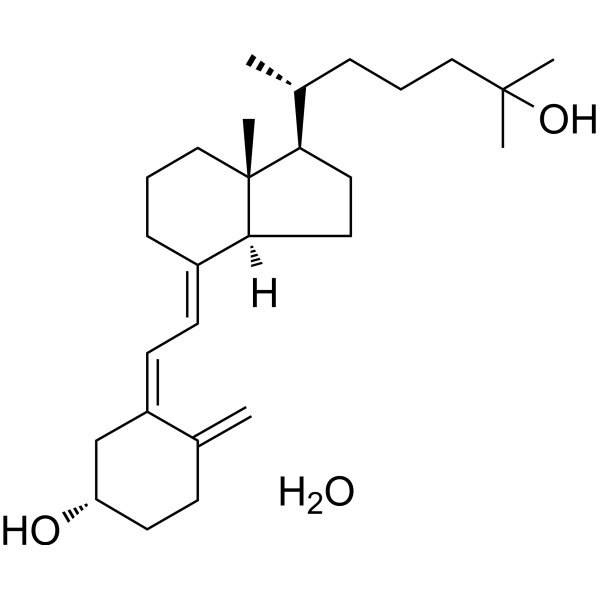
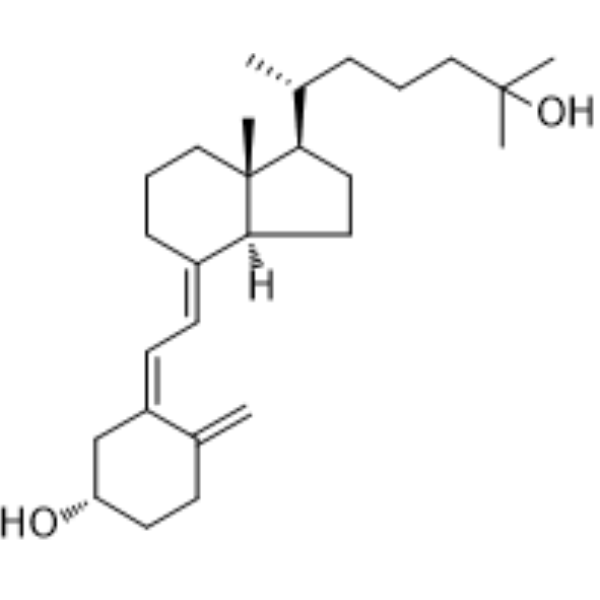
Calcifediol monohydrate (25-hydroxy Vitamin D3 monohydrate), is an effective VDR ligand and VD supplement. Calcifediol is a prohormone of the vitamin D endocrine system (VDES) and is hydroxylated in the liver to produce the active form, calcitriol. Calcifediol can rapidly increase serum VD levels.
For research use only. We do not sell to patients.
- Purity: 99.98%
- CAS No.: 63283-36-3
- Formula: C27H46O3
- Molecular Weight:418.65
-
Storage:
-20°C, protect from light, stored under nitrogen
* In solvent : -80°C, 6 months; -20°C, 1 month (protect from light, stored under nitrogen)

To place orders, for customer services and technical support, please contact: MedChemExpress USA
Tel: 609-228-6898 E-mail: [email protected] [email protected]


-
 Biological Activity
-
Chemical Information
-
Solvent & Solubility
- Purity & Documentation
- References
-
 Help & FAQs


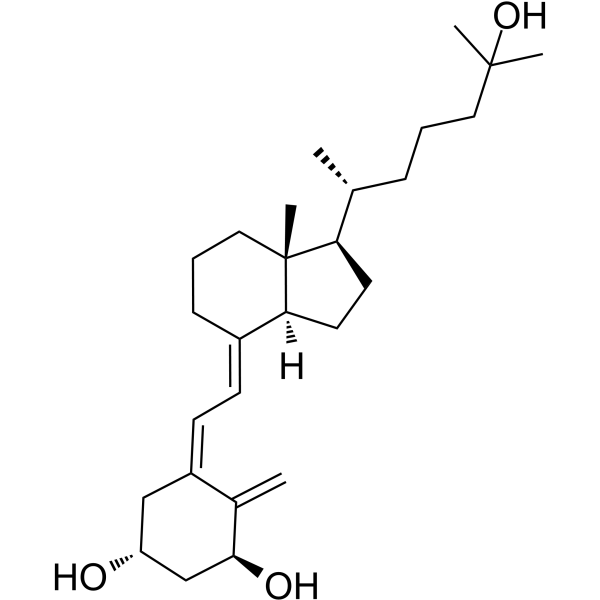
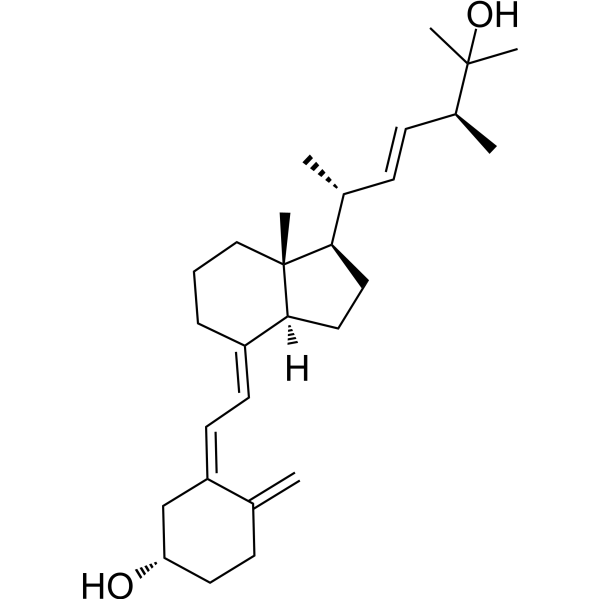

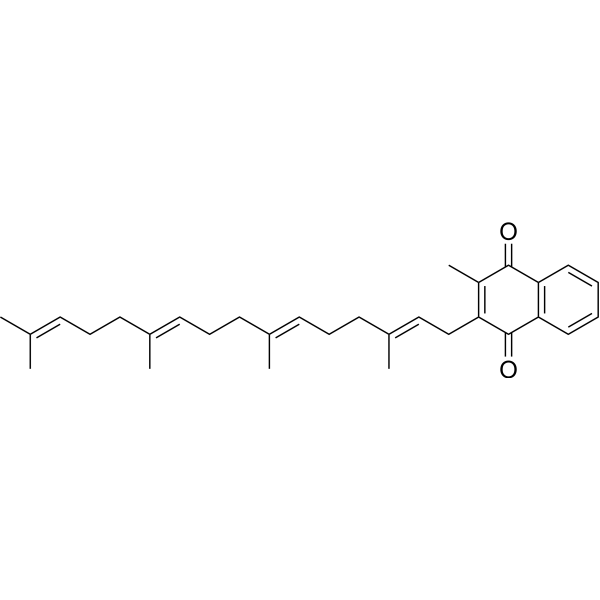
Publications Citing Use of MedChemExpress (MCE) Calcifediol monohydrate
More- Nat Chem Biol. 2022 Nov;18(11):1196-1203. [Abstract]
- Proc Natl Acad Sci U S A. 2022 Apr 12;119(15):e2117004119. [Abstract]
- Free Radic Biol Med. 2026 Aug 16:252:664-676. [Abstract]
- Ther Adv Endocrinol Metab. 2020 Oct 20:11:2042018820958295. [Abstract]
- Anal Chim Acta. 2026 Jun 16;1418:345855.
- Int J Mol Sci. 2025 Mar 25;26(7):2985. [Abstract]
- Int Immunopharmacol. 2023 Sep:122:110558. [Abstract]
- Int J Mol Sci. 2017 Dec 19;18(12):2764. [Abstract]
- J Clin Endocrinol Metab. 2026 Jan 5:dgaf708. [Abstract]
- Front Pharmacol. 2020 Mar 31:11:200. [Abstract]
- Sci Rep. 2022 Feb 22;12(1):3014. [Abstract]
- Virol Sin. 2024 Oct;39(5):802-811. [Abstract]
- J Sep Sci. 2025 Apr;48(4):e70130. [Abstract]
- Animals (Basel). 2026 Jul 18;16(14):2229.
- Biochem Biophys Res Commun. 2026 Jul 2:820:153865. [Abstract]
 Customer Validation & Images

-
Others
-
WB
-
Cell Imaging/Staining
-
WB
-
ELISA
All Endogenous Metabolite Isoforms
More

Biological Activity
Description
IC50 & Target
[1]|
Human Endogenous Metabolite |
In Vitro
Calcifediol in either liposomes or ethanolic solution has no effect on the release of the proinflammatory cytokine KC from Pseudomonas-infected murine epithelial cells. Treatment of infected, human bronchial 16-HBE cells with Calcifediol liposomes results in a significant reduction in bacterial survival[1].
MedChemExpress (MCE) has not independently confirmed the accuracy of these methods. They are for reference only.
Clinical Trial
| NCT Number | Sponsor | Condition | Start Date |
Phase

|
|---|---|---|---|---|
| NCT01329991 | Plexxikon| | 2011-05 | PHASE1 |


Chemical Information
-
CAS No. 63283-36-3
-
Appearance Solid
-
Molecular Weight 418.65
-
Formula C27H46O3
-
Color White to off-white
-
SMILES
C=C(CC1)/C(C[C@H]1O)=C\C=C2[C@@]3([H])[C@@](CCC\2)(C)[C@@H]([C@H](C)CCCC(C)(C)O)CC3.O
-
Synonyms
25-hydroxy Vitamin D3 monohydrate
-
Structure Classification
-
Initial Source
-
Shipping
Room temperature in continental US; may vary elsewhere.
-
Storage
-20°C, protect from light, stored under nitrogen
* In solvent : -80°C, 6 months; -20°C, 1 month (protect from light, stored under nitrogen)


Publications (15)
-
Journal Impact Factor
-
Most Recent
-
Nat Chem Biol
2022 Nov;18(11):1196-1203. PMID: 35982227 -
Proc Natl Acad Sci U S A
2022 Apr 12;119(15):e2117004119. PMID: 35394864 -
Free Radic Biol Med
Vitamin D receptor/sirtuin 3 pathway mediates the cardioprotective effects of aerobic exercise in diabetic mice. [Abstract]2026 Aug 16:252:664-676. PMID: 42061479 -
Ther Adv Endocrinol Metab
The protective effect of iodide intake adjustment and 1,25(OH)2D3 supplementation in rat offspring following excess iodide intake. [Abstract]2020 Oct 20:11:2042018820958295. PMID: 35154633 -
-
Int J Mol Sci
DKS26 Alleviates Ischemia-Reperfusion Injury-Induced Acute Kidney Injury by Stabilizing Vitamin D Receptors to Inhibit the Inflammatory Pathway of NF-κB P65. [Abstract]2025 Mar 25;26(7):2985. PMID: 40243616
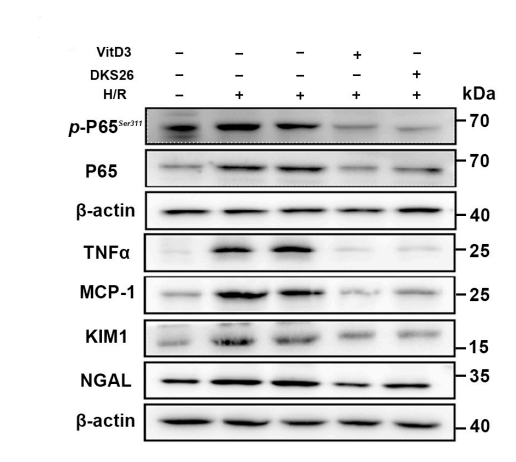
Calcifediol monohydrate purchased from MedChemExpress. Usage Cited in: Int J Mol Sci. 2025 Mar 25;26(7):2985. [Abstract]
Western blot detection of p-P65Ser311, P65, TNFα, MCP-1, KIM1, and NGAL expression in cells after administration of the VDR agonist Calcifediol and/or DKS26-treated mRETCs; n = 3. Calcifediol: 300 nM, DKS26: 100 μg/mL.
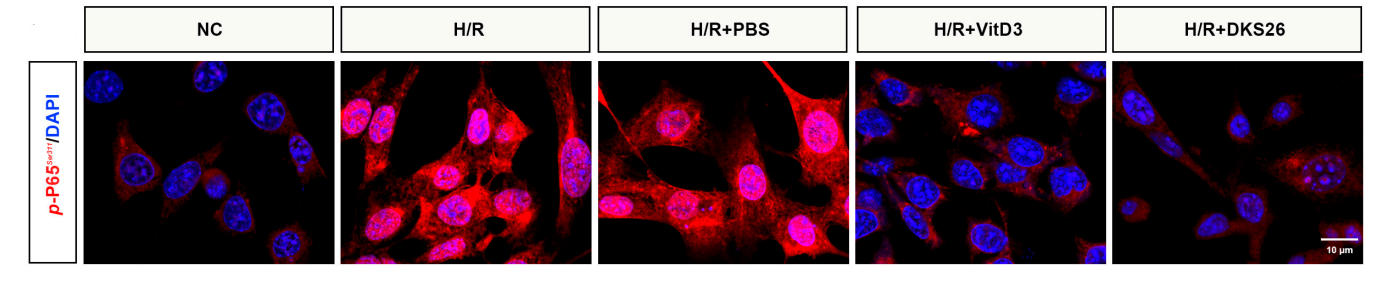
Calcifediol monohydrate purchased from MedChemExpress. Usage Cited in: Int J Mol Sci. 2025 Mar 25;26(7):2985. [Abstract]
Effects of Calcifediol or DKS26 on the nuclear translocation of p-P65Ser311 (red) observed by laser confocal microscopy.
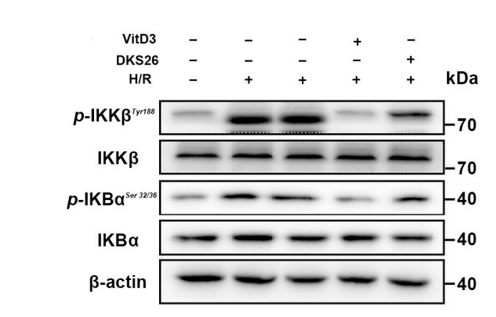
Calcifediol monohydrate purchased from MedChemExpress. Usage Cited in: Int J Mol Sci. 2025 Mar 25;26(7):2985. [Abstract]
Expression of p-IKKβ, IKKβ, p-IKBα, and IKBα after treatment with the VDR agonist calcifediol or DKS26 in mRTECs; n = 3. Calcifediol: 300 nM, DKS26: 100 μg/mL.
-
Int Immunopharmacol
Vitamin D attenuates DNCB-induced atopic dermatitis-like skin lesions by inhibiting immune response and restoring skin barrier function. [Abstract]2023 Sep:122:110558. PMID: 37393836 -
Int J Mol Sci
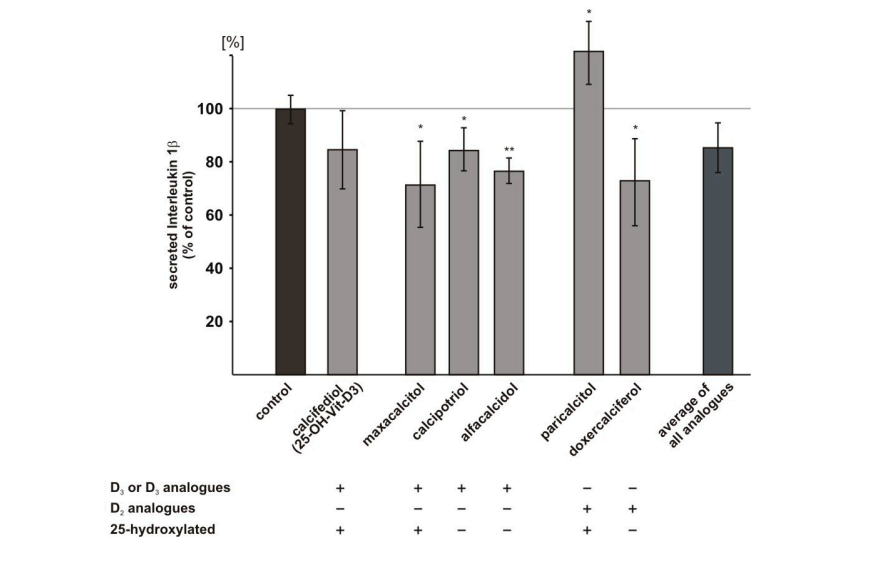
Vitamin D and Its Analogues Decrease Amyloid-β (Aβ) Formation and Increase Aβ-Degradation. [Abstract]2017 Dec 19;18(12):2764. PMID: 29257109
Calcifediol monohydrate purchased from MedChemExpress. Usage Cited in: Int J Mol Sci. 2017 Dec 19;18(12):2764. [Abstract]
Effect of vitamin D and analogues on Interleukin-1β level. Interleukin-1β (IL-1β) level was determined by enzyme-linked immunosorbent assay (ELISA) technique (n ≥ 3). IL-1β was analyzed in SH-SY5Y wt cells incubated with 100 nM Calcifediol or analogues compared to cells treated with the solvent control.
-
J Clin Endocrinol Metab
Leveraging menstrual effluent (ME) to investigate vitamin D and human decidualization, a potential link with fertility. [Abstract]2026 Jan 5:dgaf708. PMID: 41492807
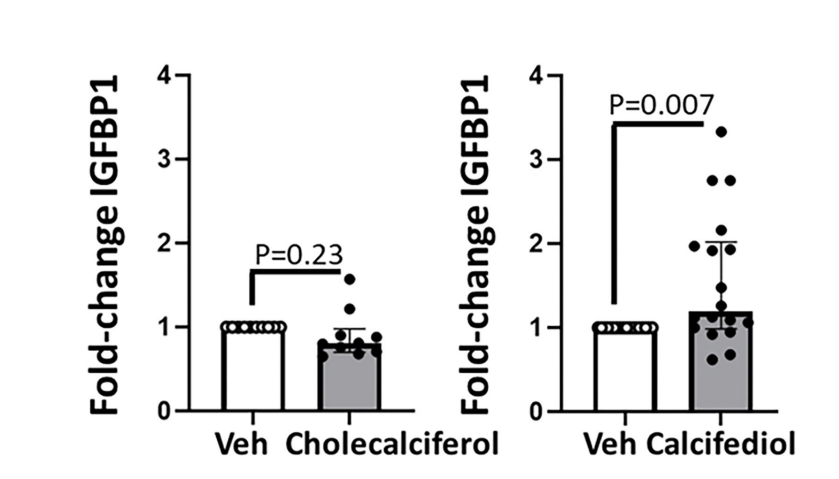
Calcifediol monohydrate purchased from MedChemExpress. Usage Cited in: J Clin Endocrinol Metab. 2026 Jan 5:dgaf708. [Abstract]
Effects of cholecalciferol and calcifediol treatment on ME-eSC decidualization. ME-eSCs were pre-treated with vehicle (Veh) vs. cholecalciferol at Veh vs. Calcifediol at 0.1 μM 4 hrs prior to decidualization (stimulated with cAMP+MPA).
-
Front Pharmacol
Calcipotriol Inhibits NLRP3 Signal Through YAP1 Activation to Alleviate Cholestatic Liver Injury and Fibrosis. [Abstract]2020 Mar 31:11:200. PMID: 32296329 -
Sci Rep
Quantitative NMR (qNMR) spectroscopy based investigation of the absolute content, stability and isomerization of 25-hydroxyvitamin D2/D3 and 24(R),25-dihydroxyvitamin D2 in solution phase. [Abstract]2022 Feb 22;12(1):3014. PMID: 35194108 -
Virol Sin
Antiviral activity of vitamin D derivatives against severe fever with thrombocytopenia syndrome virus in vitro and in vivo. [Abstract]2024 Oct;39(5):802-811. PMID: 39168248 -
J Sep Sci
Rapid Determination of 25-Hydroxyvitamin D3 and 24,25-Dihydroxyvitamin D3 in Human Urine Based on Polystyrene/Graphene Oxide Packed-Fibers Solid-Phase Extraction Coupled With High-Performance Liquid Chromatography and Atmospheric Pressure Chemical Ionization Tandem Mass Spectrometry. [Abstract]2025 Apr;48(4):e70130. PMID: 40219819 -
-
Biochem Biophys Res Commun
MASH associated lipotoxicity perturbs the expression of hepatic vitamin D bioactivating gene CYP2R1 in humans and mice. [Abstract]2026 Jul 2:820:153865. PMID: 42061004


Solvent & Solubility
In Vitro:
DMSO : 50 mg/mL (119.43 mM; Need ultrasonic; Hygroscopic DMSO has a significant impact on the solubility of product, please use newly opened DMSO)
Please refer to the solubility information to select the appropriate solvent. Once prepared, please aliquot and store the solution to prevent product inactivation from repeated freeze-thaw cycles.
Storage method and period of stock solution: -80°C, 6 months; -20°C, 1 month (protect from light, stored under nitrogen). When stored at -80°C, please use it within 6 months. When stored at -20°C, please use it within 1 month.
Please refer to the solubility information to select the appropriate solvent. Once prepared, please aliquot and store the solution to prevent product inactivation from repeated freeze-thaw cycles.
Storage method and period of stock solution: -80°C, 6 months; -20°C, 1 month (protect from light, stored under nitrogen). When stored at -80°C, please use it within 6 months. When stored at -20°C, please use it within 1 month.
Concentration (start) × Volume (start) = Concentration (final) × Volume (final)
In Vivo:
Select the appropriate dissolution method based on your experimental animal and administration route.
- For the following dissolution methods, please ensure to first prepare a clear stock solution using an In Vitro approach and then sequentially add co-solvents:
- To ensure reliable experimental results, the clarified stock solution can be appropriately stored based on storage conditions. As for the working solution for In Vivo experiments, it is recommended to prepare freshly and use it on the same day.
- The percentages shown for the solvents indicate their volumetric ratio in the final prepared solution. If precipitation or phase separation occurs during preparation, heat and/or sonication can be used to aid dissolution.
Add each solvent one by one: 10% DMSO 90% (20% SBE-β-CD in Saline)
Solubility: ≥ 2.5 mg/mL (5.97 mM); Clear solution
This protocol yields a clear solution of ≥ 2.5 mg/mL (saturation unknown).
Taking 1 mL working solution as an example, add 100 μL DMSO stock solution (25.0 mg/mL) to 900 μL 20% SBE-β-CD in Saline, and mix evenly.
Preparation of 20% SBE-β-CD in Saline (4°C, storage for one week): 2 g SBE-β-CD powder is dissolved in 10 mL Saline, completely dissolve until clear.
In Vivo Dissolution Calculator
Please enter the basic information of animal experiments:
-
-
-
-
Recommended: Prepare an additional quantity of animals to account for potential losses during experiments.
Please enter your animal formula composition:
-
%DMSO +
Recommended: Keep the proportion of DMSO in working solution below 2% if your animal is weak.
-
%+
-
+%Tween-80 + +
-
%Saline +
The co-solvents required include: DMSO, . All of co-solvents are available by MedChemExpress (MCE). , Tween 80. All of co-solvents are available by MedChemExpress (MCE).
Working solution concentration: 0.22 mg/mL
Method for preparing stock solution: mg drug dissolved in μL DMSO. Stock solution concentration: mg/mL. * In solvent : -80°C, 6 months; -20°C, 1 month (protect from light, stored under nitrogen)
1. Take μL DMSO stock solution;
2. Add μL .
μL , mix evenly;
3. Then add μL Tween 80, mix evenly;
4. Then add μL
Please ensure that the stock solution in the first step is dissolved to a clear state, and add co-solvents in sequence. You can use ultrasonic heating (ultrasonic cleaner, recommended frequency 20-40 kHz), vortexing, etc. to assist dissolution.


Purity & Documentation
-
Data Sheet (275 KB)
-
SDS (644 KB)
- English - EN (644 KB)
- Français - FR (644 KB)
- Deutsch - DE (644 KB)
- Norwegian - NO (644 KB)
- Español - ES (644 KB)
- Swedish - SV (644 KB)
- Italian - IT (644 KB)
- Korean - KR (644 KB)
- Portuguese - PT (644 KB)
-
Handling Instructions (2659 KB)
References
[1]. Castoldi A, et al. Calcifediol-loaded liposomes for local treatment of pulmonary bacterial infections. Eur J Pharm Biopharm. 2016 Nov 22. [Content Brief]
[2]. Wei Zheng, et al. Vitamin D-induced vitamin D receptor expression induces tamoxifen sensitivity in MCF-7 stem cells via suppression of Wnt/β-catenin signaling. Biosci Rep. 2018 Dec 7;38(6):BSR20180595. [Content Brief]


Complete Stock Solution Preparation Table
Please refer to the solubility information to select the appropriate solvent. Once prepared, please aliquot and store the solution to prevent product inactivation from repeated freeze-thaw cycles.
Storage method and period of stock solution: -80°C, 6 months; -20°C, 1 month (protect from light, stored under nitrogen). When stored at -80°C, please use it within 6 months. When stored at -20°C, please use it within 1 month.
| Optional Solvent | Concentration Solvent Mass | 1 mg | 5 mg | 10 mg | 25 mg |
|---|---|---|---|---|---|
| DMSO | 1 mM | 2.3886 mL | 11.9432 mL | 23.8863 mL | 59.7158 mL |
| 5 mM | 0.4777 mL | 2.3886 mL | 4.7773 mL | 11.9432 mL | |
| 10 mM | 0.2389 mL | 1.1943 mL | 2.3886 mL | 5.9716 mL | |
| 15 mM | 0.1592 mL | 0.7962 mL | 1.5924 mL | 3.9811 mL | |
| 20 mM | 0.1194 mL | 0.5972 mL | 1.1943 mL | 2.9858 mL | |
| 25 mM | 0.0955 mL | 0.4777 mL | 0.9555 mL | 2.3886 mL | |
| 30 mM | 0.0796 mL | 0.3981 mL | 0.7962 mL | 1.9905 mL | |
| 40 mM | 0.0597 mL | 0.2986 mL | 0.5972 mL | 1.4929 mL | |
| 50 mM | 0.0478 mL | 0.2389 mL | 0.4777 mL | 1.1943 mL | |
| 60 mM | 0.0398 mL | 0.1991 mL | 0.3981 mL | 0.9953 mL | |
| 80 mM | 0.0299 mL | 0.1493 mL | 0.2986 mL | 0.7464 mL | |
| 100 mM | 0.0239 mL | 0.1194 mL | 0.2389 mL | 0.5972 mL |


Calcifediol monohydrate Related Classifications
HY-32351A Related Classifications
 Powered by Bioz