



Loxoprofen
Based on 1 publication(s) in Google Scholar
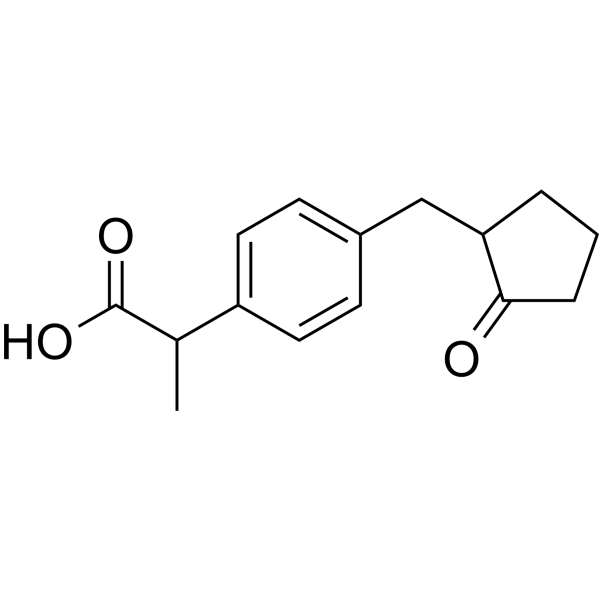
Loxoprofen is a non-steroidal, orally active anti-inflammatory agent with analgesic and anti-pyretic properties. Loxoprofen is a nonselective COX inhibitor with IC50s of 6.5 and 13.5 μM for COX-1 and COX-2, respectively. Loxoprofen can reduce atherosclerosis and shows antitumor activity.
For research use only. We do not sell to patients.
- Purity : 99.57%
- CAS No.: 68767-14-6
- Formula: C15H18O3
- Molecular Weight:246.31
-
Storage:Powder -20°C, 3 years , 4°C, 2 years ; In solvent -80°C, 2 years , -20°C, 1 year

To place orders, for customer services and technical support, please contact: MedChemExpress USA
Tel: 609-228-6898 E-mail: [email protected] [email protected]


-
 Biological Activity
-
Chemical Information
-
Solvent & Solubility
- Protocols
- Purity & Documentation
- References
-
 Help & FAQs


-
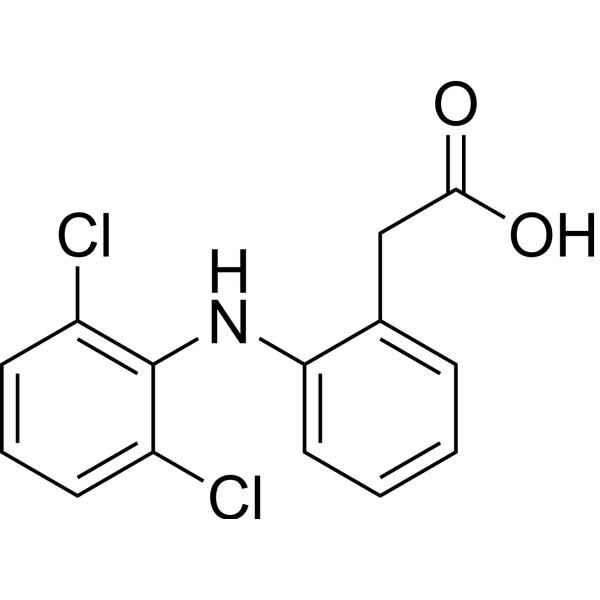
HY-15036
DiclofenacCOX Inhibitor -
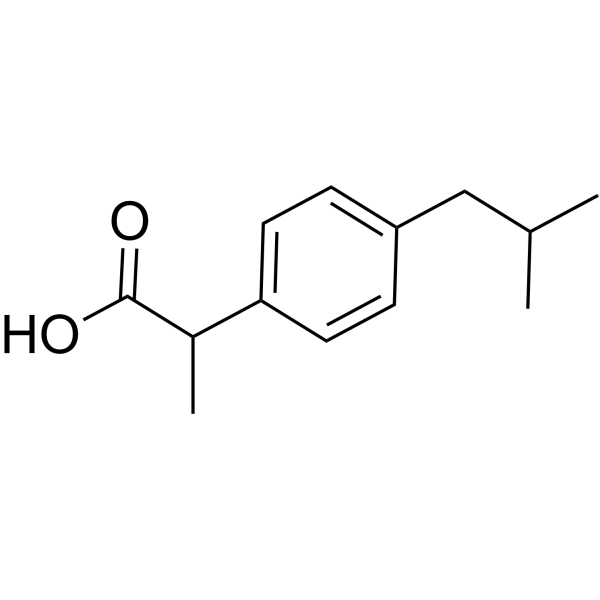
HY-78131
IbuprofenCOX-1 Inhibitor -
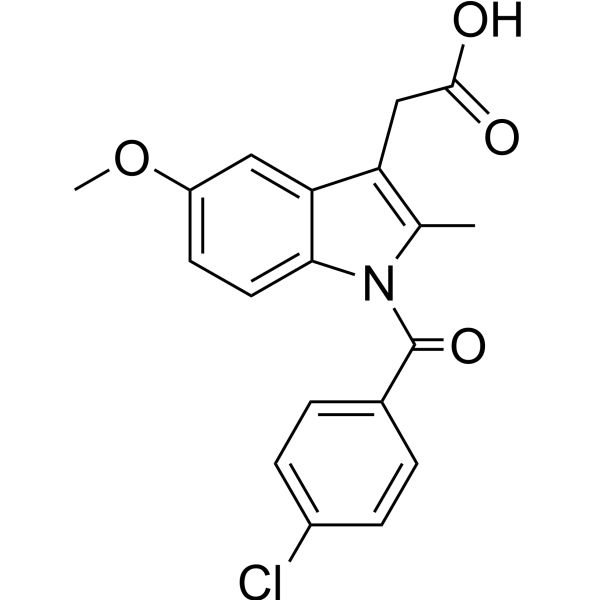
HY-14397
IndomethacinCOX1/2 Inhibitor -
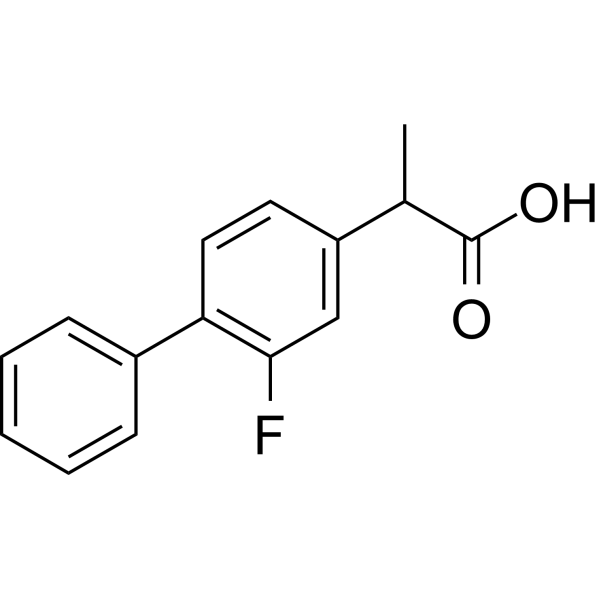
HY-10582
FlurbiprofenCOX Inhibitor -
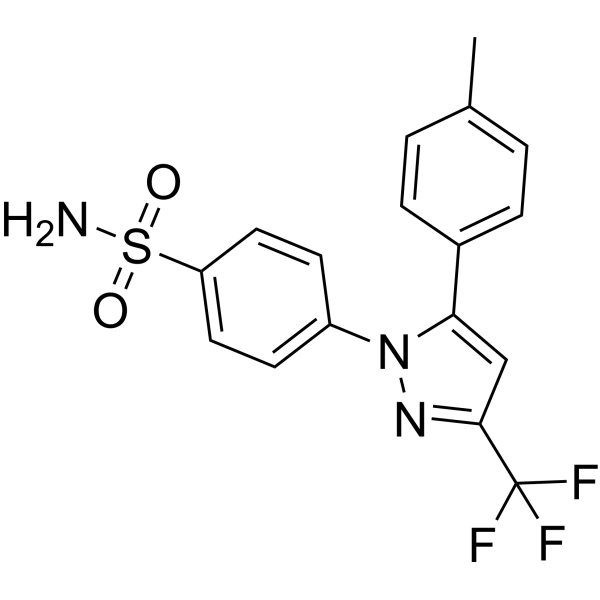
HY-14398
CelecoxibCOX-2inhibitor -
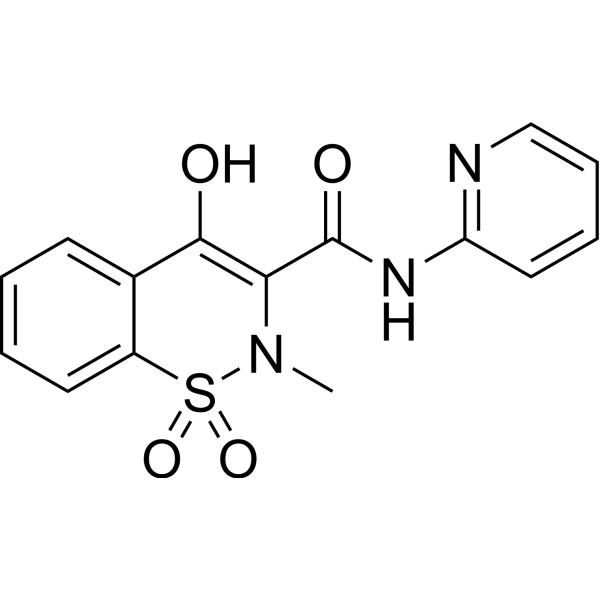
HY-B0253
PiroxicamCOX Inhibitor -
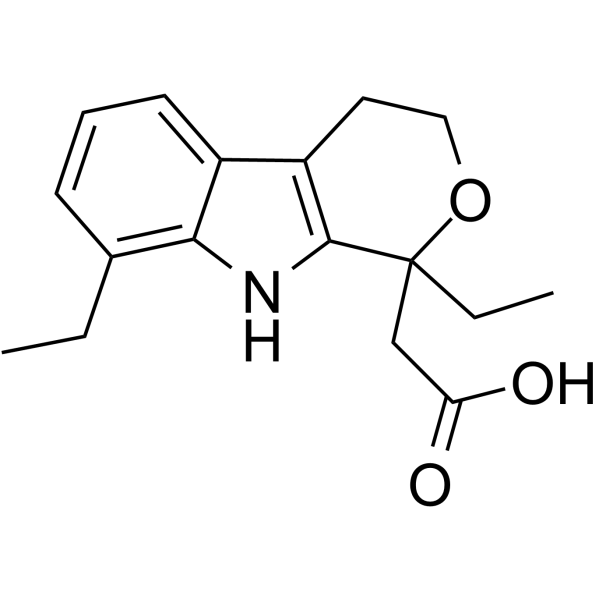
HY-76251
EtodolacCOX Inhibitor -
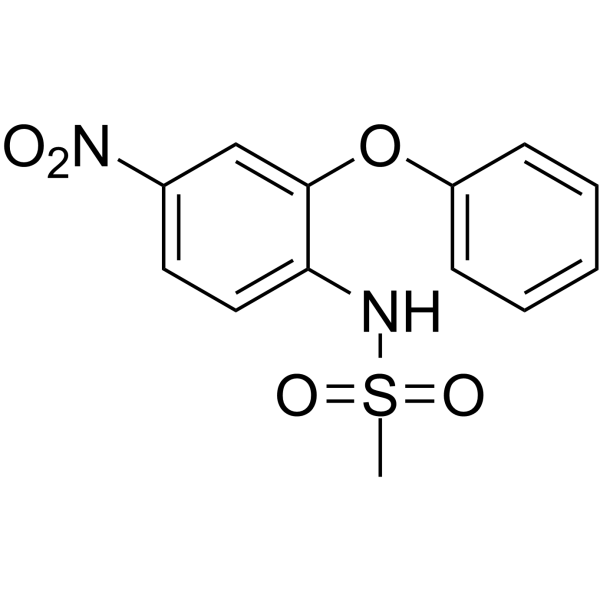
HY-B0363
NimesulideCOX Inhibitor -
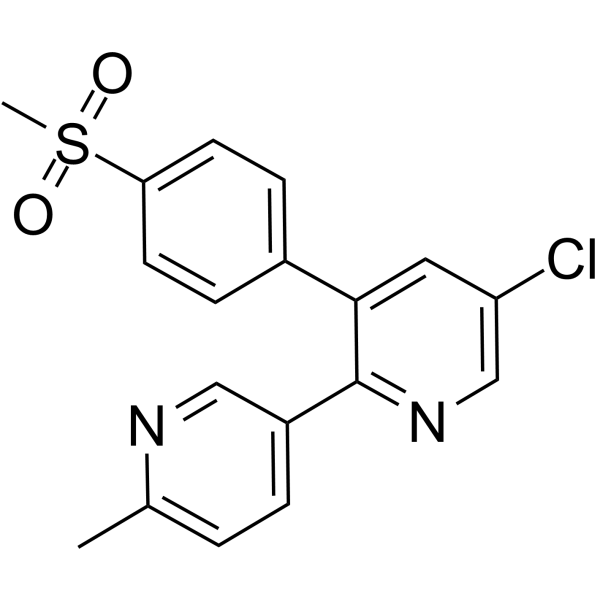
HY-15321
EtoricoxibCOX-2 Inhibitor -
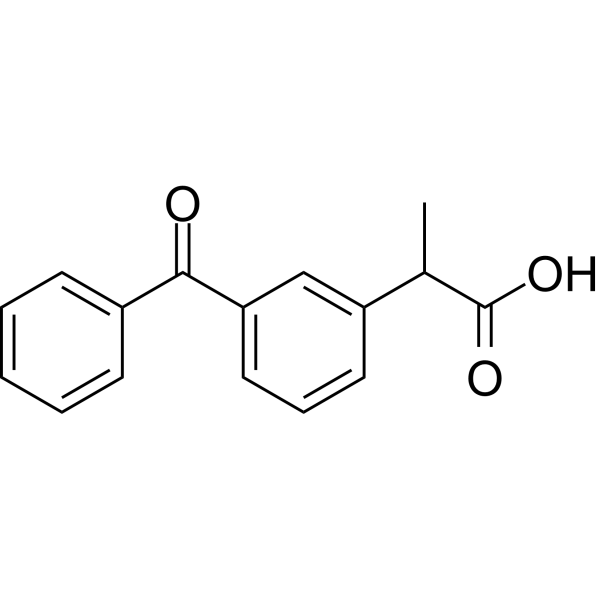
HY-B0227
KetoprofenAnti-inflammatory agent -
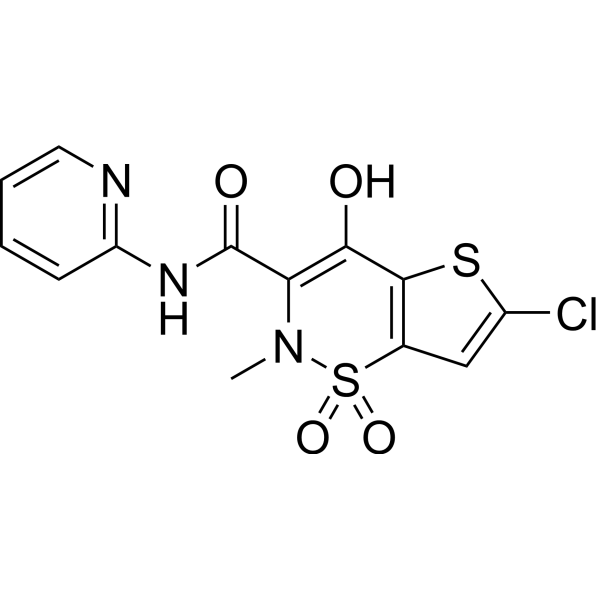
HY-B0367
LornoxicamCOX Inhibitor -
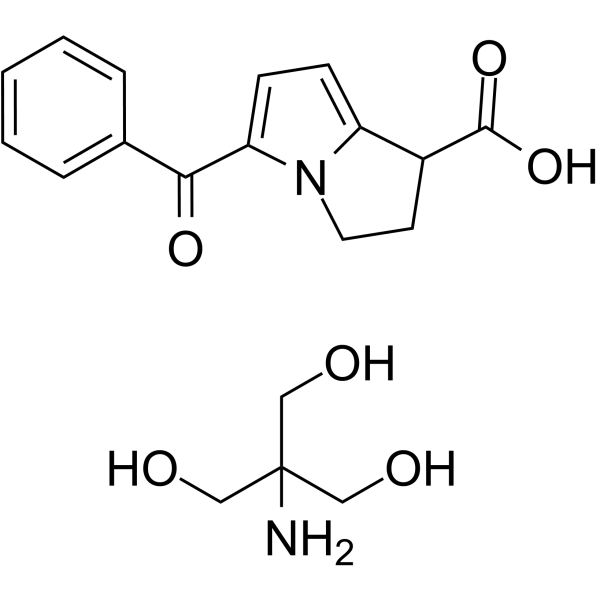
HY-B0138
Ketorolac tromethamine saltCOX Inhibitor
Publications Citing Use of MedChemExpress (MCE) Loxoprofen
More

Biological Activity
Description
IC50 & Target
[1]|
COX-1 6.5 μM (IC50, in human whole blood) |
COX-2 13.5 μM (IC50, in human whole blood) |
In Vitro
Loxoprofen, an anti-inflammatory prodrug (NSAID), is a nonselective COX inhibitor with IC50s of 6.5 and 13.5 μM for COX-1 and COX-2 in human whole blood assays, respectively[1].
Loxoprofen (LOX) is a non-selective cyclooxygenase inhibitor that is widely used for the reasearch of pain and inflammation caused by chronic and transitory conditions. Its alcoholic metabolites are formed by carbonyl reductase (CR) and they consist of trans-LOX, which is active, and cis-LOX, which is inactive. In addition, LOX can also be converted into an inactive hydroxylated metabolite (OH-LOXs) by cytochrome P450 (CYP)[2].
MedChemExpress (MCE) has not independently confirmed the accuracy of these methods. They are for reference only.
In Vivo
MedChemExpress (MCE) has not independently confirmed the accuracy of these methods. They are for reference only.
-
Animal Model:ApoE-/- mice (C57BL/6J-Apoetm1Unc) with high-fat diet (0.2% cholesterol, 21% saturated fat) from 8 to 16 weeks of age[3]
-
Dosage:4 mg/kg/day in drinking water
-
Administration:Oral dosing from 8 to 16 weeks of age or from 15 to 16 weeks of age
-
Result:Inhibited platelet thromboxane production and platelet aggregation. Reduced extent of atherosclerosis. Suppressed the production of PGE2, TxB2 and PGI2.
-
Animal Model:6-week-old male C57BL/6 and BDF1 mice, 100 μL suspensions (2 × 10⁶ cells/mL) of LLC cells and KLN205 cells were injected subcutaneously into C57BL/6 and BDF1 mice, respectively[4].
-
Dosage:60 μg/mL
-
Administration:Oral dosing in drinking water, every day for 24 days
-
Result:Suppressed tumor growth and angiogenesis, suppressed expression of VEGF in mice with LLC tumor, inhibited tubular formation of HUVECs.


Chemical Information
-
CAS No. 68767-14-6
-
Appearance Solid
-
Molecular Weight 246.31
-
Formula C15H18O3
-
Color White to off-white
-
SMILES
O=C1C(CCC1)CC2=CC=C(C(C)C(O)=O)C=C2
-
Shipping
Room temperature in continental US; may vary elsewhere.
-
Storage
Powder -20°C 3 years 4°C 2 years In solvent -80°C 2 years -20°C 1 year


Publications (1)
-
Journal Impact Factor
-
Most Recent
-
Eur J Med Chem
2024 Dec 5:279:116842. PMID: 39260319


Solvent & Solubility
In Vitro:
DMSO : ≥ 100 mg/mL (406.00 mM; Hygroscopic DMSO has a significant impact on the solubility of product, please use newly opened DMSO)
* "≥" means soluble, but saturation unknown.
Please refer to the solubility information to select the appropriate solvent. Once prepared, please aliquot and store the solution to prevent product inactivation from repeated freeze-thaw cycles.
Storage method and period of stock solution: -80°C, 2 years; -20°C, 1 year. When stored at -80°C, please use it within 2 years. When stored at -20°C, please use it within 1 year.
Please refer to the solubility information to select the appropriate solvent. Once prepared, please aliquot and store the solution to prevent product inactivation from repeated freeze-thaw cycles.
Storage method and period of stock solution: -80°C, 2 years; -20°C, 1 year. When stored at -80°C, please use it within 2 years. When stored at -20°C, please use it within 1 year.
Concentration (start) × Volume (start) = Concentration (final) × Volume (final)
In Vivo:
Select the appropriate dissolution method based on your experimental animal and administration route.
- For the following dissolution methods, please ensure to first prepare a clear stock solution using an In Vitro approach and then sequentially add co-solvents:
- To ensure reliable experimental results, the clarified stock solution can be appropriately stored based on storage conditions. As for the working solution for In Vivo experiments, it is recommended to prepare freshly and use it on the same day.
- The percentages shown for the solvents indicate their volumetric ratio in the final prepared solution. If precipitation or phase separation occurs during preparation, heat and/or sonication can be used to aid dissolution.
Add each solvent one by one: 10% DMSO 40% PEG300 5% Tween-80 45% Saline
Solubility: ≥ 2.5 mg/mL (10.15 mM); Clear solution
This protocol yields a clear solution of ≥ 2.5 mg/mL (saturation unknown).
Taking 1 mL working solution as an example, add 100 μL DMSO stock solution (25.0 mg/mL) to 400 μL PEG300, and mix evenly; then add 50 μL Tween-80 and mix evenly; then add 450 μL Saline to adjust the volume to 1 mL.
Preparation of Saline: Dissolve 0.9 g sodium chloride in ddH₂O and dilute to 100 mL to obtain a clear Saline solution.
Add each solvent one by one: 10% DMSO 90% (20% SBE-β-CD in Saline)
Solubility: ≥ 2.5 mg/mL (10.15 mM); Clear solution
This protocol yields a clear solution of ≥ 2.5 mg/mL (saturation unknown).
Taking 1 mL working solution as an example, add 100 μL DMSO stock solution (25.0 mg/mL) to 900 μL 20% SBE-β-CD in Saline, and mix evenly.
Preparation of 20% SBE-β-CD in Saline (4°C, storage for one week): 2 g SBE-β-CD powder is dissolved in 10 mL Saline, completely dissolve until clear.
In Vivo Dissolution Calculator
Please enter the basic information of animal experiments:
-
-
-
-
Recommended: Prepare an additional quantity of animals to account for potential losses during experiments.
Please enter your animal formula composition:
-
%DMSO +
Recommended: Keep the proportion of DMSO in working solution below 2% if your animal is weak.
-
%+
-
+%Tween-80 + +
-
%Saline +
The co-solvents required include: DMSO, . All of co-solvents are available by MedChemExpress (MCE). , Tween 80. All of co-solvents are available by MedChemExpress (MCE).
Working solution concentration: 0.22 mg/mL
Method for preparing stock solution: mg drug dissolved in μL DMSO. Stock solution concentration: mg/mL.
1. Take μL DMSO stock solution;
2. Add μL .
μL , mix evenly;
3. Then add μL Tween 80, mix evenly;
4. Then add μL
Please ensure that the stock solution in the first step is dissolved to a clear state, and add co-solvents in sequence. You can use ultrasonic heating (ultrasonic cleaner, recommended frequency 20-40 kHz), vortexing, etc. to assist dissolution.


Purity & Documentation
-
Data Sheet (278 KB)
-
SDS (393 KB)
- English - EN (393 KB)
- Français - FR (393 KB)
- Deutsch - DE (393 KB)
- Norwegian - NO (393 KB)
- Español - ES (393 KB)
- Swedish - SV (393 KB)
- Italian - IT (393 KB)
- Korean - KR (393 KB)
- Portuguese - PT (393 KB)
-
Handling Instructions (2659 KB)
References
[1]. Riendeau D, et al. Evaluation of loxoprofen and its alcohol metabolites for potency and selectivity of inhibition of cyclooxygenase-2. Bioorg Med Chem Lett. 2004;14(5):1201-1203. [Content Brief]
[2]. Paudel S, et al. Assessing Drug Interaction and Pharmacokinetics of Loxoprofen in Mice Treated with CYP3A Modulators. Pharmaceutics. 2019;11(9):479. Published 2019 Sep 16. [Content Brief]
[3]. Hamaguchi M, et al. Loxoprofen Sodium, a Non-Selective NSAID, Reduces Atherosclerosis in Mice by Reducing Inflammation. J Clin Biochem Nutr. 2010 Sep;47(2):138-47. [Content Brief]
[4]. Kanda A, et al. Loxoprofen sodium suppresses mouse tumor growth by inhibiting vascular endothelial growth factor. Acta Oncol. 2003;42(1):62-70. [Content Brief]


Complete Stock Solution Preparation Table
Please refer to the solubility information to select the appropriate solvent. Once prepared, please aliquot and store the solution to prevent product inactivation from repeated freeze-thaw cycles.
Storage method and period of stock solution: -80°C, 2 years; -20°C, 1 year. When stored at -80°C, please use it within 2 years. When stored at -20°C, please use it within 1 year.
| Optional Solvent | Concentration Solvent Mass | 1 mg | 5 mg | 10 mg | 25 mg |
|---|---|---|---|---|---|
| DMSO | 1 mM | 4.0600 mL | 20.3000 mL | 40.5999 mL | 101.4998 mL |
| 5 mM | 0.8120 mL | 4.0600 mL | 8.1200 mL | 20.3000 mL | |
| 10 mM | 0.4060 mL | 2.0300 mL | 4.0600 mL | 10.1500 mL | |
| 15 mM | 0.2707 mL | 1.3533 mL | 2.7067 mL | 6.7667 mL | |
| 20 mM | 0.2030 mL | 1.0150 mL | 2.0300 mL | 5.0750 mL | |
| 25 mM | 0.1624 mL | 0.8120 mL | 1.6240 mL | 4.0600 mL | |
| 30 mM | 0.1353 mL | 0.6767 mL | 1.3533 mL | 3.3833 mL | |
| 40 mM | 0.1015 mL | 0.5075 mL | 1.0150 mL | 2.5375 mL | |
| 50 mM | 0.0812 mL | 0.4060 mL | 0.8120 mL | 2.0300 mL | |
| 60 mM | 0.0677 mL | 0.3383 mL | 0.6767 mL | 1.6917 mL | |
| 80 mM | 0.0507 mL | 0.2537 mL | 0.5075 mL | 1.2687 mL | |
| 100 mM | 0.0406 mL | 0.2030 mL | 0.4060 mL | 1.0150 mL |


Loxoprofen Related Classifications
HY-B0578 Related Classifications
 Powered by Bioz