



Hyperthyroidism
-
Hyperthyroidism (5)

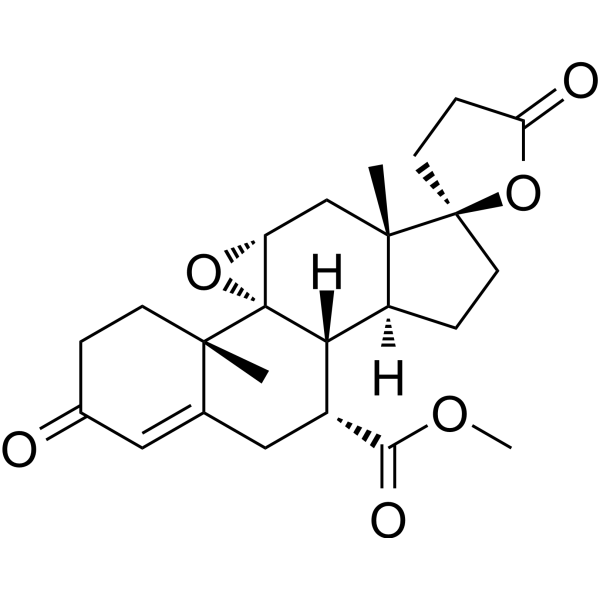
- Formula: C24H30O6
- Molecular Weight: 414.49
Eplerenone (Epoxymexrenone) is a selective, highly specific and orally active aldosterone blocker (SAB). Eplerenone also is a selective mineralocorticoid receptor antagonist (MRA) with IC50 value of 0.081 μM. Eplerenone can be used for the research of hypertension, atherosclerosis, chronic systolic heart failure (HF) and cardiovascular (CV).
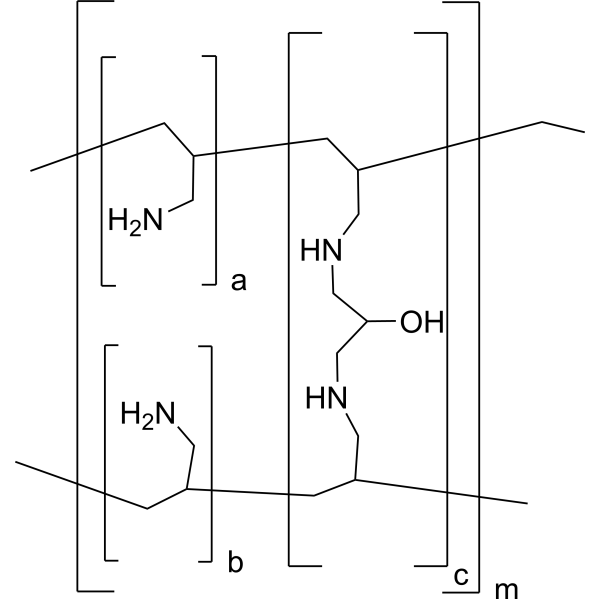
- Formula: [(C3H7N)a+b·(C9H18N2O)c]n
Sevelamer is an orally active polymeric phosphate binder and bile acid sequestrant. Sevelamer binds dietary phosphate in the gastrointestinal tract, reducing phosphate absorption and serum phosphorus levels, and reduces urinary phosphate excretion. Sevelamer binds polyanion bile acids, increases bile acid faecal excretion, and reduces total cholesterol and LDL cholesterol levels. Sevelamer can be used for the research of hyperphosphataemia, hyperparathyroidism, chronic renal failure, kidney disease, and type 2 diabetes.
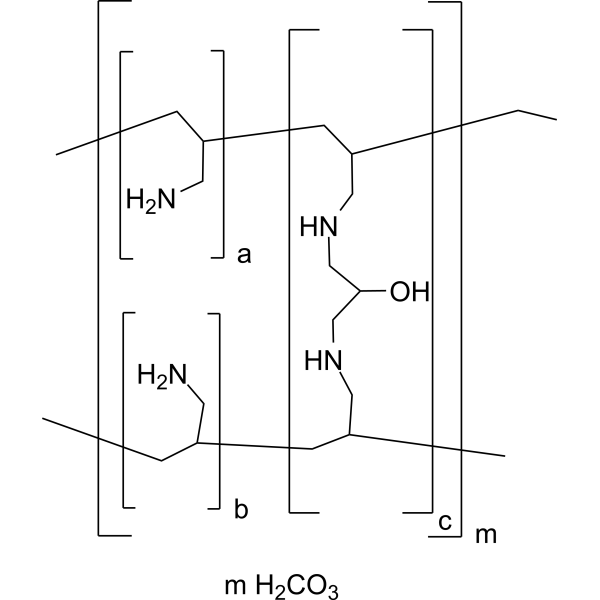
- Formula: [(C3H7N)a+b·(C9H18N2O)c]n·xH2CO3
Sevelamer carbonate is an orally active polymeric phosphate binder and bile acid sequestrant. Sevelamer carbonate binds dietary phosphate in the gastrointestinal tract, reducing phosphate absorption and serum phosphorus levels, and reduces urinary phosphate excretion. Sevelamer carbonate binds polyanion bile acids, increases bile acid faecal excretion, and reduces total cholesterol and LDL cholesterol levels. Sevelamer carbonate can be used for the research of hyperphosphataemia, hyperparathyroidism, chronic renal failure, kidney disease, and type 2 diabetes.
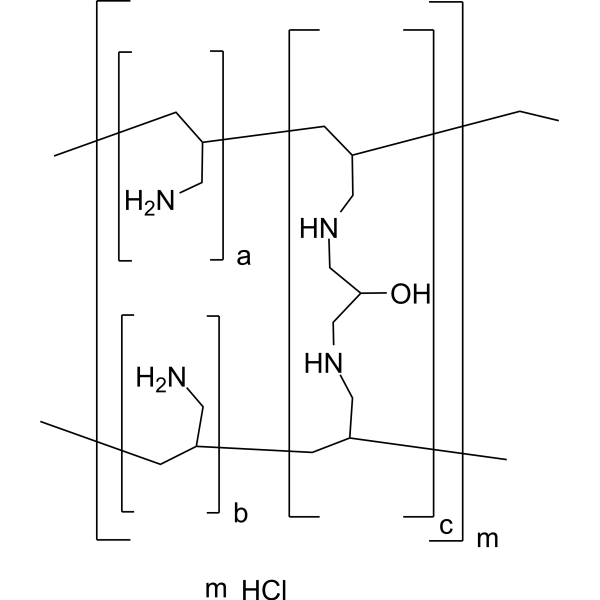
- Formula: [(C3H7N)a+b·(C9H18N2O)c]n·xHCl
- Molecular Weight: 186.08 (monomer)
Sevelamer hydrochloride is an orally active polymeric phosphate binder and bile acid sequestrant. Sevelamer hydrochloride binds dietary phosphate in the gastrointestinal tract, reducing phosphate absorption and serum phosphorus levels, and reduces urinary phosphate excretion. Sevelamer hydrochloride binds polyanion bile acids, increases bile acid faecal excretion, and reduces total cholesterol and LDL cholesterol levels. Sevelamer hydrochloride can be used for the research of hyperphosphataemia, hyperparathyroidism, chronic renal failure, kidney disease, and type 2 diabetes.

- Formula: C25H42O4
- Molecular Weight: 406.60
19-Nor-22-oxa-1a,25(OH)2-VD3 is a vitamin D₃ analogue. 19-Nor-22-oxa-1a,25(OH)2-VD3 has an extremely low affinity for the vitamin D receptor (VDR) and hardly binds to the vitamin D binding protein (DBP). 19-Nor-22-oxa-1a,25(OH)2-VD3 can effectively induce the differentiation of HL-60 cells and cause G₀-G₁ phase cell cycle arrest. 19-Nor-22-oxa-1a,25(OH)2-VD3 can be used to study diseases such as excessive hyperparathyroidism.



