



All-trans-retinal
Based on 3 publication(s) in Google Scholar
All-trans-retinal is an vitamin A metabolite in the retina, and is produced following photo-isomerization of the visual chromophore 11-cis-Retinal. All-trans-retinal is cleared from photoreceptors by ATP-binding cassette transporter (ABCA4) and all-trans-retinol dehydrogenase (RDH). All-trans-retinal induces Bax activation via DNA damage to mediate retinal cell apoptosis.
商品は「研究用試薬」です。人や動物の医療用・臨床診断用・食品用の製品ではありません。
研究用途以外に使用した場合、当社は一切の責任を負いかねます。
- 純度 : 99.56%
- CAS 番号: 116-31-4
- 分子式: C20H28O
- 分子量:284.44
-
保管条件:
-20°C, protect from light, stored under nitrogen
* The compound is unstable in solutions, freshly prepared is recommended.

To place orders, for customer services and technical support, please contact: MedChemExpress USA
Tel: 609-228-6898 E-mail: [email protected] [email protected]


-
 生物活性
生物活性
-
化学情報
-
溶剤 & 溶解度
- プロトコル
- 純度とドキュメンテーション
- 参考文献
-
 Help & FAQs


-
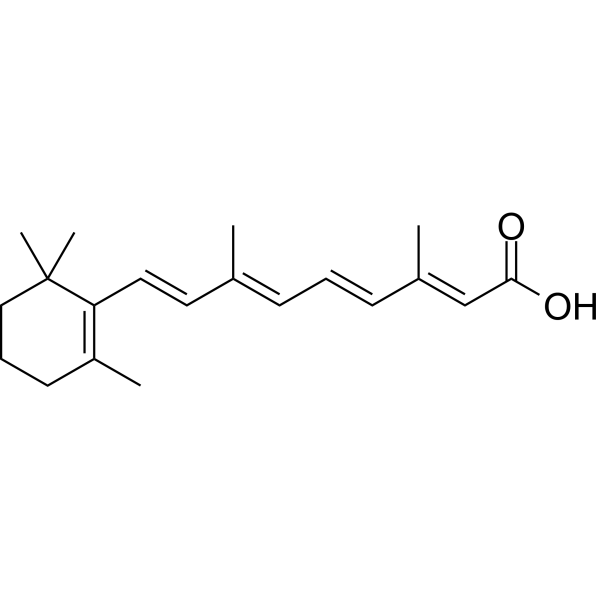
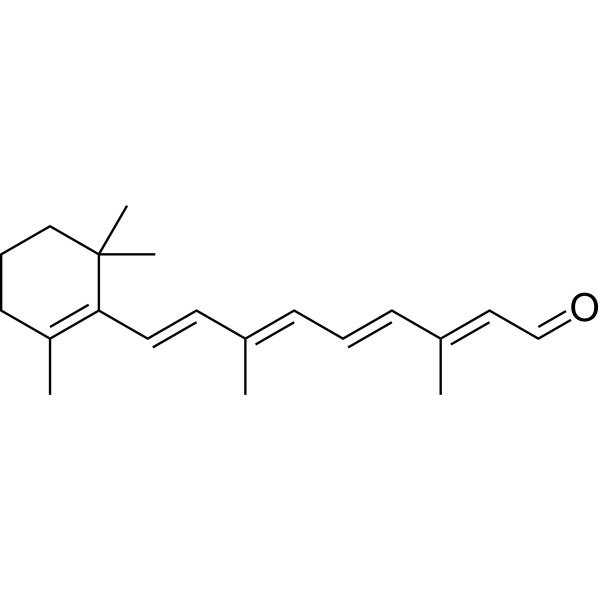
HY-14649
Retinoic acidRAR Agonist -

HY-B1342
Vitamin A -

HY-W004500R
All-trans-retinal (Standard)Analytical Standard -
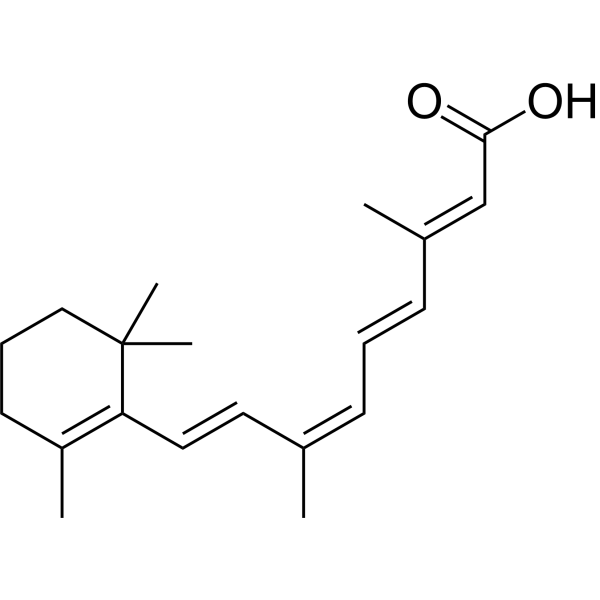
HY-15128
9-cis-Retinoic acidRAR/RXR Agonist -
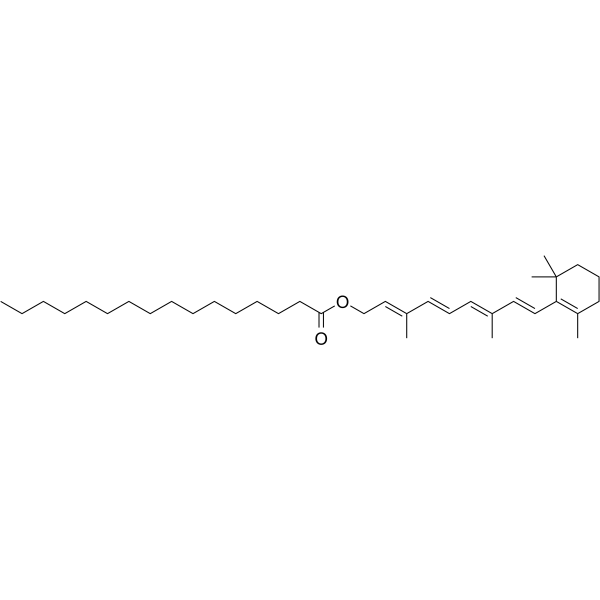
HY-B1384
Retinyl palmitateEndogenous Metabolite -
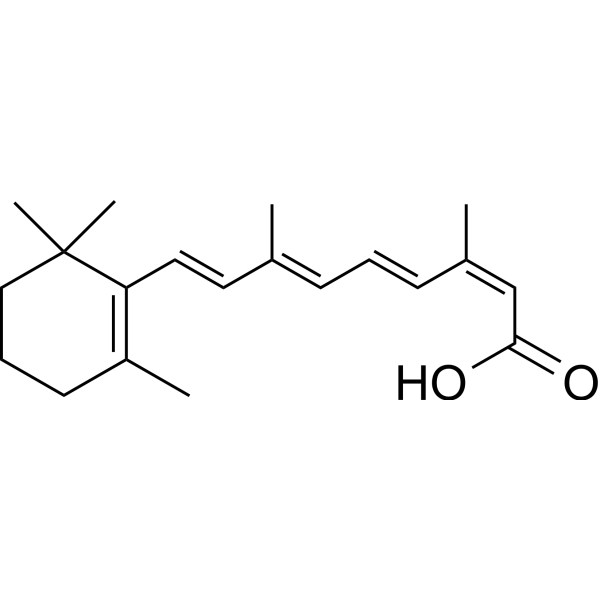
HY-15127
IsotretinoinAnti-acne Agent -
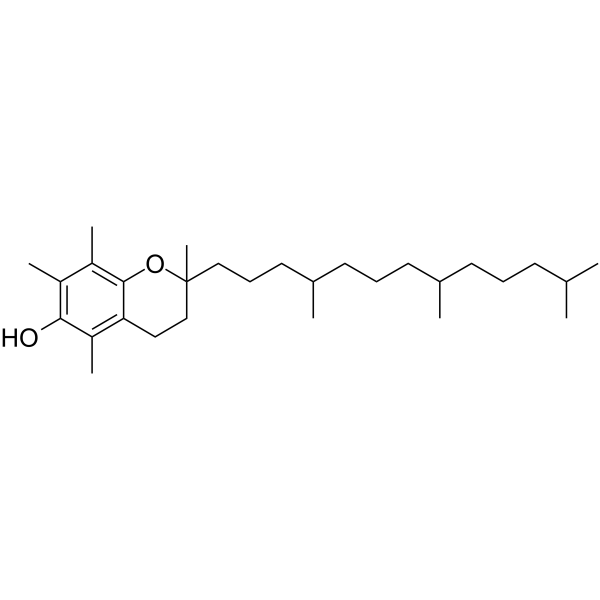
HY-W020044
DL-alpha-TocopherolVitamin E -
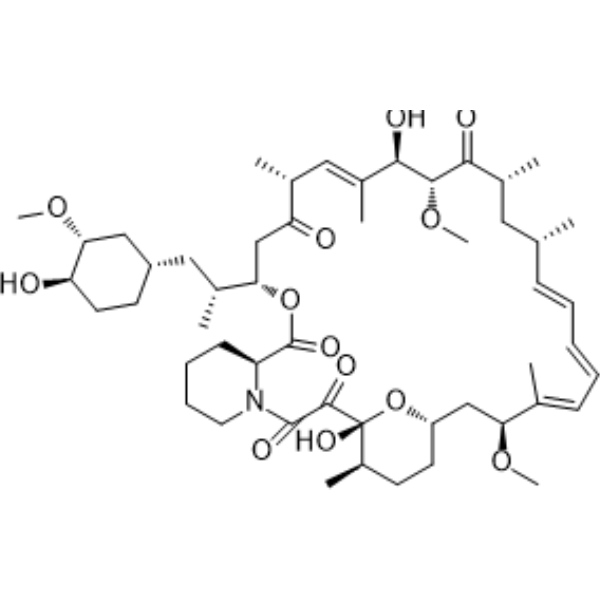
HY-10219
RapamycinmTOR Inhibitor -
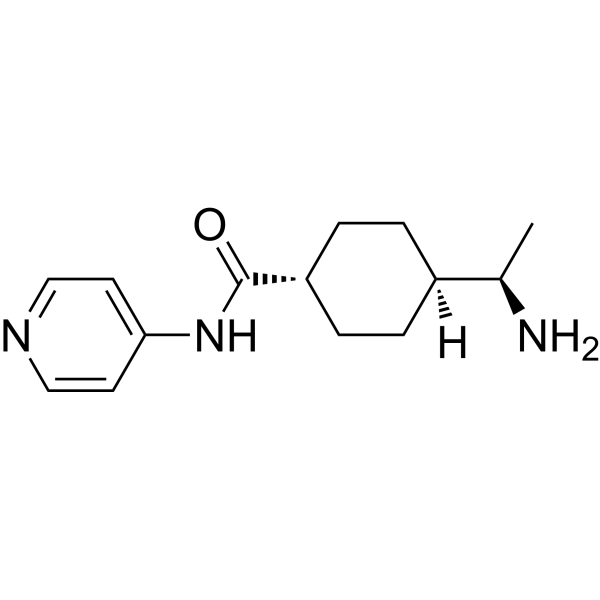
HY-10071
Y-27632ROCK Inhibitor -
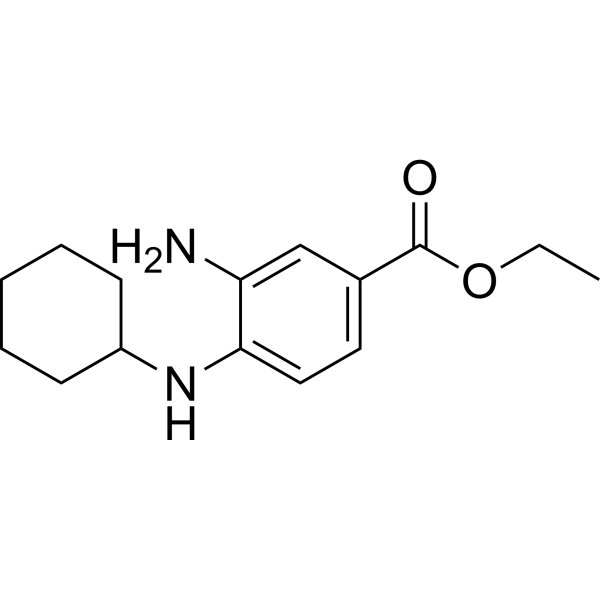
HY-100579
Ferrostatin-1Ferroptosis Inhibitor -
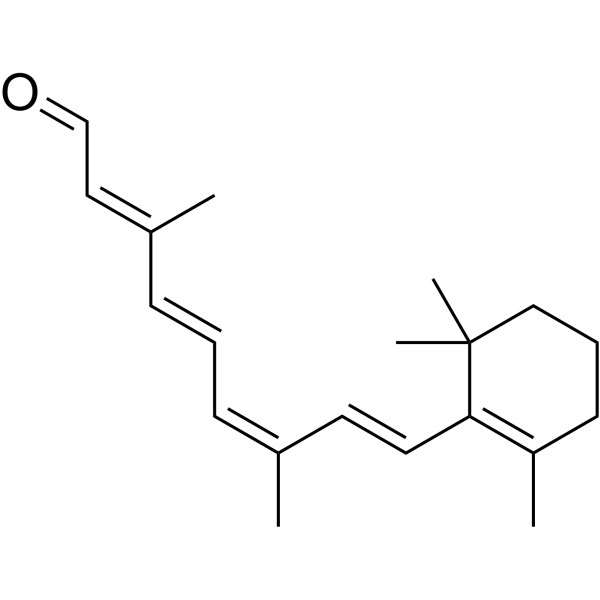
HY-W009310
9-cis-RetinalNatural Retinoid -
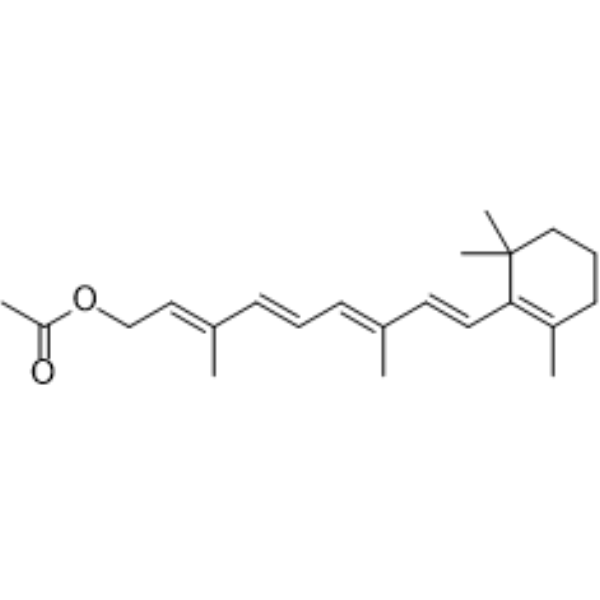
HY-N0679
Retinyl acetateAnticancer Agent
MedChemExpress(MCE)の使用を引用している文献 All-trans-retinal
More Customer Validation & Images

-
Bio/Physico-chemical Assay
-
Cell Proliferation/Viability Assay
-
Bio/Physico-chemical Assay
Endogenous Metabolite アイソフォーム固有の製品をすべて表示
More

生物活性
製品説明
IC50 & Target
|
Human Endogenous Metabolite |
体外実験
All-trans-retinal (10-30 μM; 16 h) displays a dose-dependent toxicity which included the morphological disruption of ARPE-19 cells and a decrease in their viability is observed to be time-dependent measured by LDH assay[1].
All-trans-retinal (10-30 μM; 30 mim) increases the phosphorylation of p53 at Ser 46 and 8-OHdG production[1].
MedChemExpress (MCE) has not independently confirmed the accuracy of these methods. They are for reference only.
-
Cell Line:ARPE-19 cells
-
Concentration:10 μM, 20 μM, 30 μM
-
Incubation Time:16 h
-
Result:Displayed a dose-dependent toxicity which included the morphological disruption of ARPE-19 cells.
-
Cell Line:ARPE-19 cells
-
Concentration:10 μM, 30 μM
-
Incubation Time:30 min
-
Result:The phosphorylation of p53 at Ser 46 were detected prior to Bax activation in ARPE-19 cells.


化学情報
-
CAS 番号 116-31-4
-
性状 Solid
-
分子量 284.44
-
分子式 C20H28O
-
Color Light yellow to yellow
-
SMILES
CC(/C=C/C=C(/C=C/C1=C(CCCC(C)1C)C)C)=C\C=O
-
別名
all trans-レチナール
-
Structure Classification
-
Initial Source
-
輸送条件
Room temperature in continental US; may vary elsewhere.
-
保管条件
-20°C, protect from light, stored under nitrogen
* The compound is unstable in solutions, freshly prepared is recommended.


Publications (3)
-
Journal Impact Factor
-
Most Recent
-
Cell Res
Light sensing enhances thermotolerance and competitive fitness via serotonergic signaling in an eyeless organism. [Abstract]2026 Apr;36(4):286-299. PMID: 41764323 -
Nat Commun
Suppression of ferroptosis by vitamin A or radical-trapping antioxidants is essential for neuronal development. [Abstract]2024 Sep 1;15(1):7611. PMID: 39218970
All-trans-retinal purchased from MedChemExpress. Usage Cited in: Nat Commun. 2024 Sep 1;15(1):7611. [Abstract]
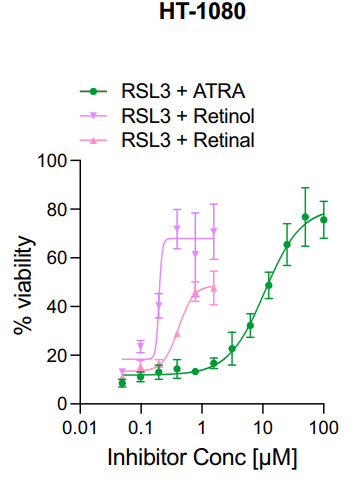
CellTiter-Glo assay of HT-1080 cells co-treated with RSL3 and ATRA, Retinol or Retinal (n = 3 biologically independent replicates) – All-trans-retinal (Retinal) and Retinol at concentrations > 3 µM were toxic.
All-trans-retinal purchased from MedChemExpress. Usage Cited in: Nat Commun. 2024 Sep 1;15(1):7611. [Abstract]
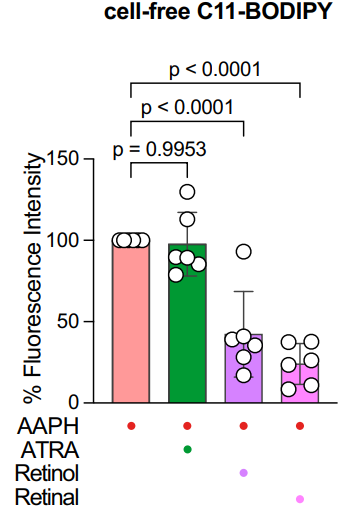
C11-BODIPY cell-free assay of the radical initiator AAPH co-treated with ATRA, Retinol or All-trans-retinal (Retinal). The results showed that Retinal significantly reduced the C11-BODIPY signal induced by AAPH in the cell-free system, indicating its antioxidant activity in free radical scavenging.
-
J Biol Chem
A cell-based assay for retinaldehyde dehydrogenase activity: Retinoid quantification as an alternative to current fluorescence-based approaches. [Abstract]2026 Jan 29;302(3):111211. PMID: 41617028
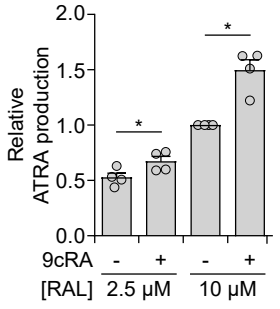
All-trans-retinal purchased from MedChemExpress. Usage Cited in: J Biol Chem. 2026 Jan 29;302(3):111211. [Abstract]
mutuDC1940 cells were treated for 20 h with 1 μM 9cRA, then assayed for RALDH activity in the suspension cell forma, utilising the indicated All-trans-retinal (RAL, 2.5-10 μM) concentrations for 20 min.


溶剤 & 溶解度
体外:
DMSO : 100 mg/mL (351.57 mM; Need ultrasonic; Hygroscopic DMSO has a significant impact on the solubility of product, please use newly opened DMSO)
Please refer to the solubility information to select the appropriate solvent. The compound is unstable in solutions, freshly prepared is recommended.
Please refer to the solubility information to select the appropriate solvent. The compound is unstable in solutions, freshly prepared is recommended.
濃度 (開始) × 体積 (開始) = 濃度 (終了) × 体積 (終了)
体内:
Select the appropriate dissolution method based on your experimental animal and administration route.
- For the following dissolution methods, please ensure to first prepare a clear stock solution using an In Vitro approach and then sequentially add co-solvents:
- To ensure reliable experimental results, the clarified stock solution can be appropriately stored based on storage conditions. As for the working solution for In Vivo experiments, it is recommended to prepare freshly and use it on the same day.
- The percentages shown for the solvents indicate their volumetric ratio in the final prepared solution. If precipitation or phase separation occurs during preparation, heat and/or sonication can be used to aid dissolution.
Add each solvent one by one: 10% DMSO 40% PEG300 5% Tween-80 45% Saline
Solubility: ≥ 2.08 mg/mL (7.31 mM); Clear solution
This protocol yields a clear solution of ≥ 2.08 mg/mL (saturation unknown).
Taking 1 mL working solution as an example, add 100 μL DMSO stock solution (20.8 mg/mL) to 400 μL PEG300, and mix evenly; then add 50 μL Tween-80 and mix evenly; then add 450 μL Saline to adjust the volume to 1 mL.
Preparation of Saline: Dissolve 0.9 g sodium chloride in ddH₂O and dilute to 100 mL to obtain a clear Saline solution.
Add each solvent one by one: 10% DMSO 90% (20% SBE-β-CD in Saline)
Solubility: 2.08 mg/mL (7.31 mM); Suspended solution; Need ultrasonic
This protocol yields a suspended solution of 2.08 mg/mL. Suspended solution can be used for oral and intraperitoneal injection.
Taking 1 mL working solution as an example, add 100 μL DMSO stock solution (20.8 mg/mL) to 900 μL 20% SBE-β-CD in Saline, and mix evenly.
Preparation of 20% SBE-β-CD in Saline (4°C, storage for one week): 2 g SBE-β-CD powder is dissolved in 10 mL Saline, completely dissolve until clear.
In Vivo Dissolution Calculator
Please enter the basic information of animal experiments:
-
-
-
-
Recommended: Prepare an additional quantity of animals to account for potential losses during experiments.
Please enter your animal formula composition:
-
%DMSO +
Recommended: Keep the proportion of DMSO in working solution below 2% if your animal is weak.
-
%+
-
+%Tween-80 + +
-
%Saline +
The co-solvents required include: DMSO, . All of co-solvents are available by MedChemExpress (MCE). , Tween 80. All of co-solvents are available by MedChemExpress (MCE).
Working solution concentration: 0.22 mg/mL
Method for preparing stock solution: mg drug dissolved in μL DMSO. Stock solution concentration: mg/mL. * The compound is unstable in solutions, freshly prepared is recommended.
1. Take μL DMSO stock solution;
2. Add μL .
μL , mix evenly;
3. Then add μL Tween 80, mix evenly;
4. Then add μL
Please ensure that the stock solution in the first step is dissolved to a clear state, and add co-solvents in sequence. You can use ultrasonic heating (ultrasonic cleaner, recommended frequency 20-40 kHz), vortexing, etc. to assist dissolution.


純度とドキュメンテーション
-
データシート (276 KB)
-
SDS (557 KB)
- English - EN (557 KB)
- Français - FR (557 KB)
- Deutsch - DE (557 KB)
- Norwegian - NO (557 KB)
- Español - ES (557 KB)
- Swedish - SV (557 KB)
- Italian - IT (557 KB)
- Korean - KR (557 KB)
- Portuguese - PT (557 KB)
-
取扱説明書 (2659 KB)
参考文献


Complete Stock Solution Preparation Table
Please refer to the solubility information to select the appropriate solvent. The compound is unstable in solutions, freshly prepared is recommended.
| Optional Solvent | Concentration Solvent Mass | 1 mg | 5 mg | 10 mg | 25 mg |
|---|---|---|---|---|---|
| DMSO | 1 mM | 3.5157 mL | 17.5784 mL | 35.1568 mL | 87.8920 mL |
| 5 mM | 0.7031 mL | 3.5157 mL | 7.0314 mL | 17.5784 mL | |
| 10 mM | 0.3516 mL | 1.7578 mL | 3.5157 mL | 8.7892 mL | |
| 15 mM | 0.2344 mL | 1.1719 mL | 2.3438 mL | 5.8595 mL | |
| 20 mM | 0.1758 mL | 0.8789 mL | 1.7578 mL | 4.3946 mL | |
| 25 mM | 0.1406 mL | 0.7031 mL | 1.4063 mL | 3.5157 mL | |
| 30 mM | 0.1172 mL | 0.5859 mL | 1.1719 mL | 2.9297 mL | |
| 40 mM | 0.0879 mL | 0.4395 mL | 0.8789 mL | 2.1973 mL | |
| 50 mM | 0.0703 mL | 0.3516 mL | 0.7031 mL | 1.7578 mL | |
| 60 mM | 0.0586 mL | 0.2930 mL | 0.5859 mL | 1.4649 mL | |
| 80 mM | 0.0439 mL | 0.2197 mL | 0.4395 mL | 1.0986 mL | |
| 100 mM | 0.0352 mL | 0.1758 mL | 0.3516 mL | 0.8789 mL |


All-trans-retinal 関連分類
HY-W004500 関連分類
 Powered by Bioz