



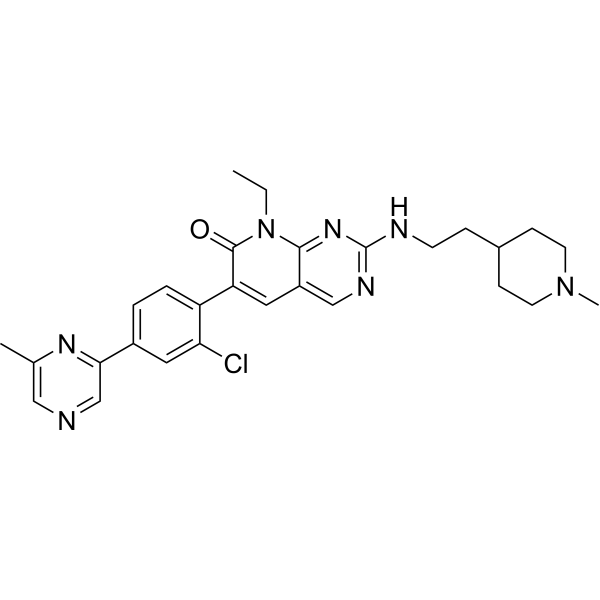
FRAX1036
Based on 5 publication(s) in Google Scholar
FRAX1036 is a PAK inhibitor with Kis of 23.3 nM, 72.4 nM, and 2.4 μM for PAK1, PAK2 and PAK4, respectively.
商品は「研究用試薬」です。人や動物の医療用・臨床診断用・食品用の製品ではありません。
研究用途以外に使用した場合、当社は一切の責任を負いかねます。
- 純度 : 98.27%
- CAS 番号: 1432908-05-8
- 分子式: C28H32ClN7O
- 分子量:518.05
-
保管条件:Powder -20°C, 3 years , 4°C, 2 years ; In solvent -80°C, 2 years , -20°C, 1 year

To place orders, for customer services and technical support, please contact: MedChemExpress USA
Tel: 609-228-6898 E-mail: [email protected] [email protected]


-
 生物活性
生物活性
-
化学情報
-
溶剤 & 溶解度
- 純度とドキュメンテーション
- 参考文献
-
 Help & FAQs


-
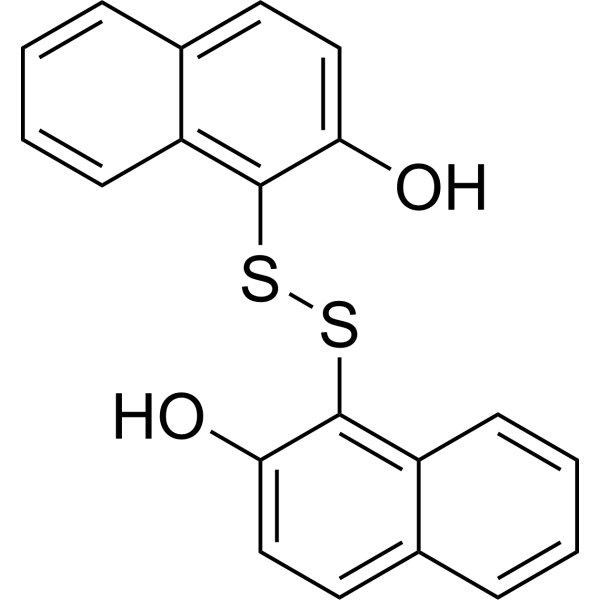
HY-15663
IPA-3PAK Inhibitor -
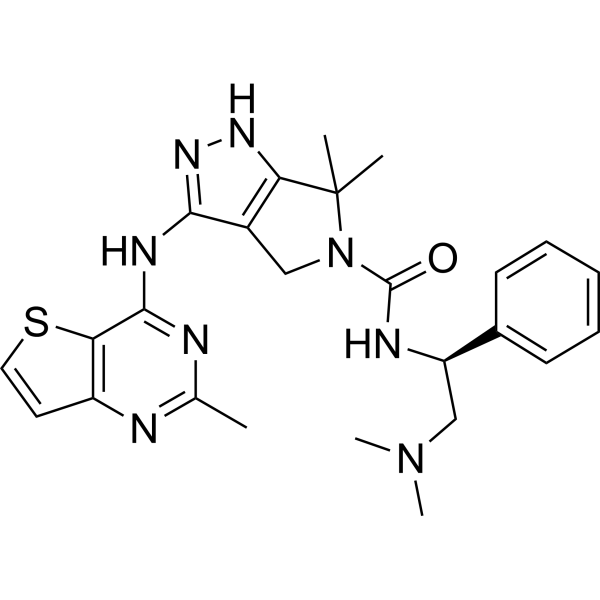
HY-13007
PF-3758309PAK4 Inhibitor -
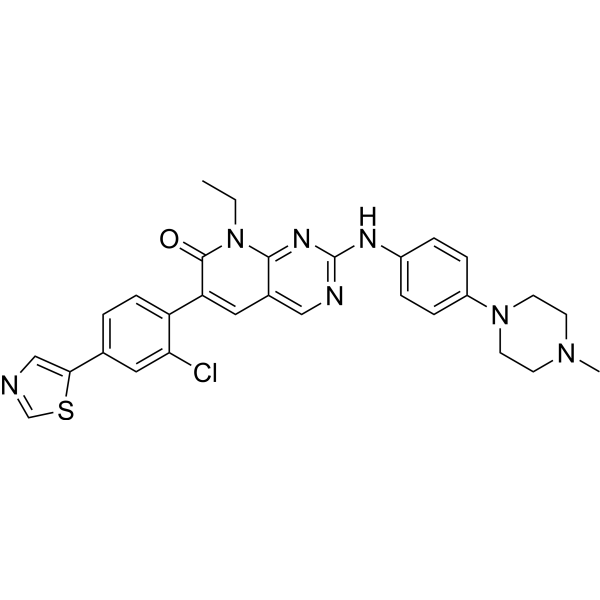
HY-15542A
FRAX597PAK Inhibitor -
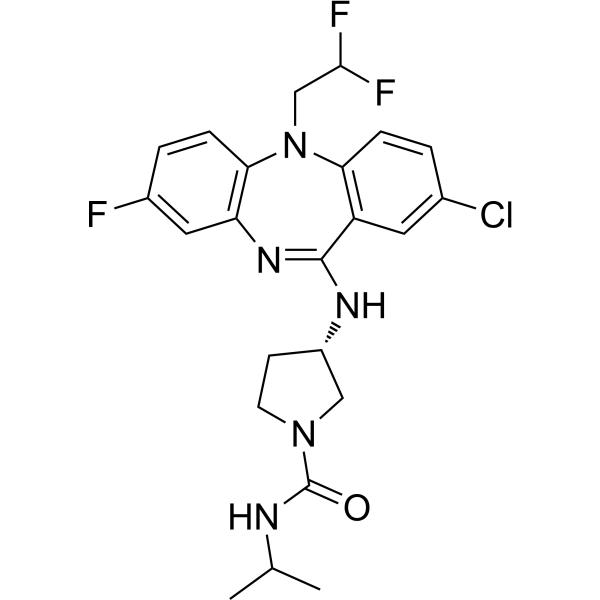
HY-100519
NVS-PAK1-1PAK1 Inhibitor -
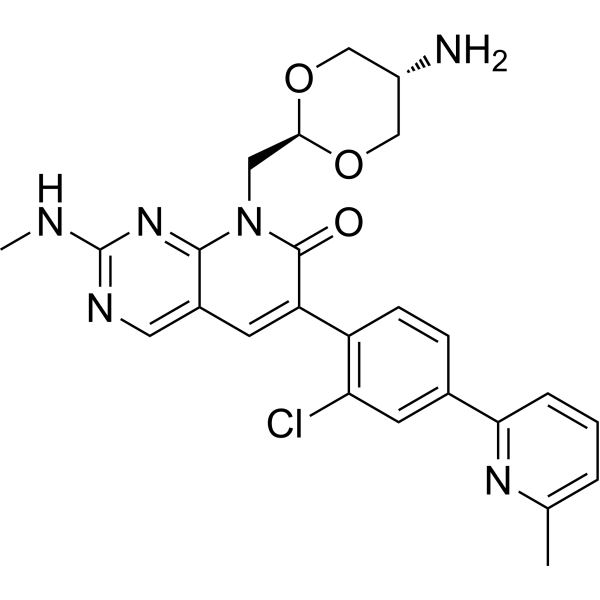
HY-19635
G-5555PAK Inhibitor -
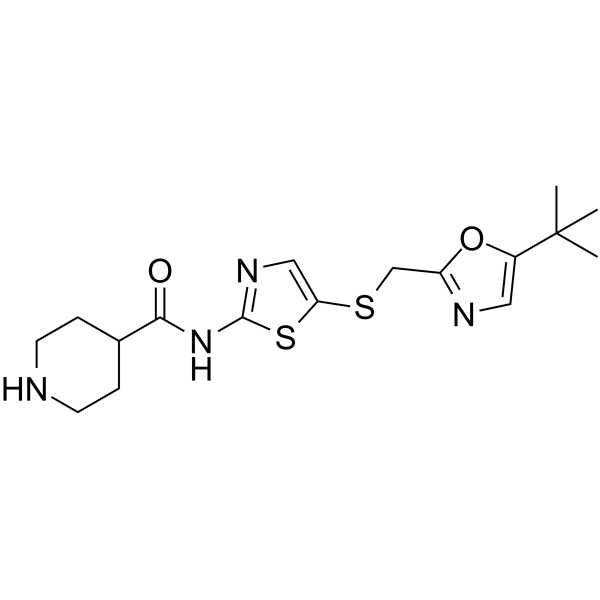
HY-10008
SNS-032CDK Inhibitor -
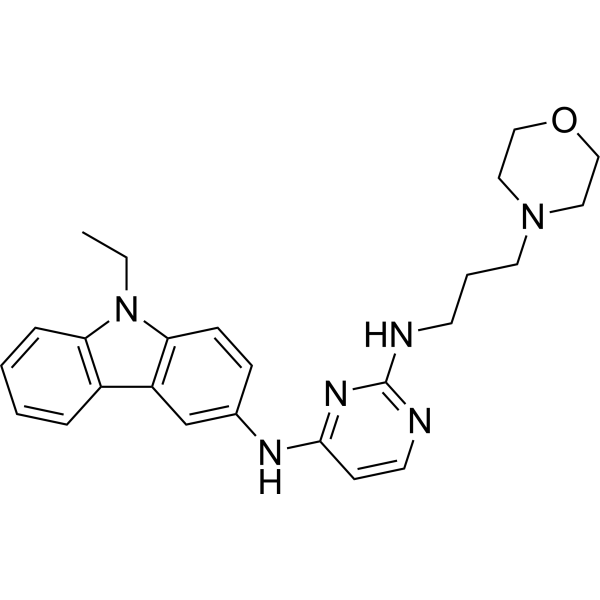
HY-12810
EHop-016Rac1/Rac3 Inhibitor -
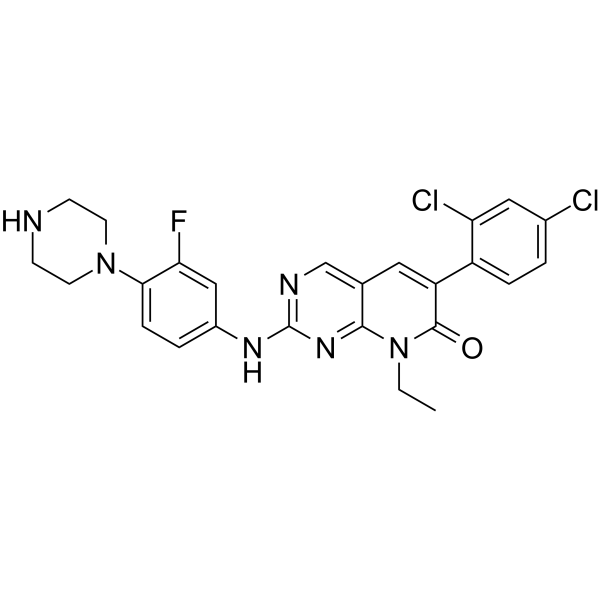
HY-15542B
FRAX486PAK Inhibitor -
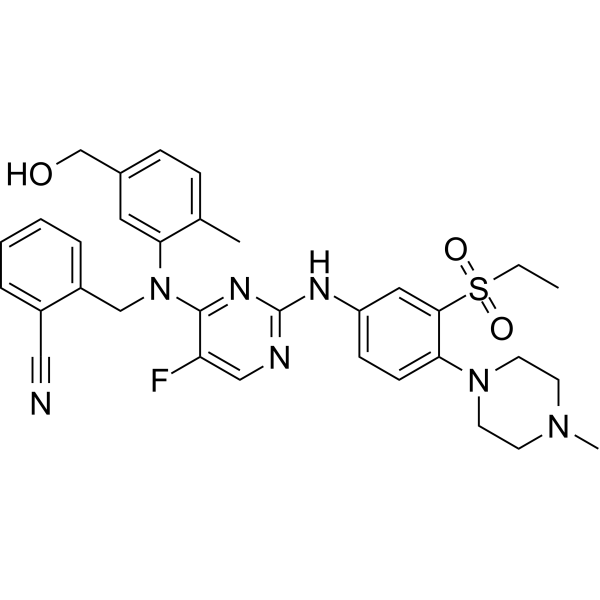
HY-120940
AZ13705339PAK1 Inhibitor -
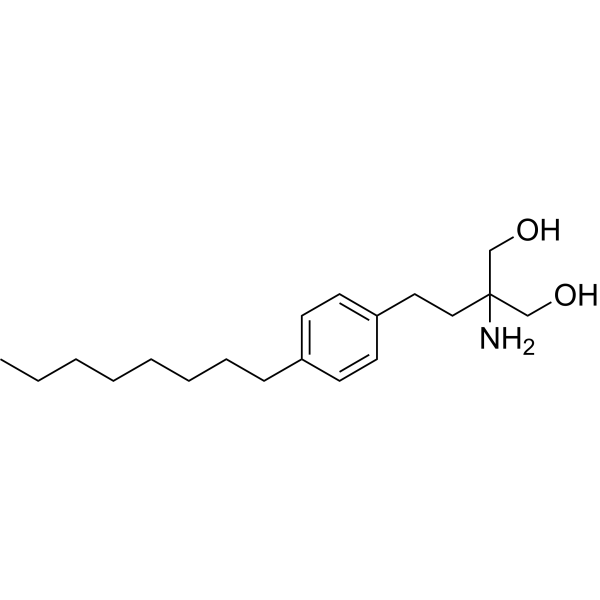
HY-11063
FingolimodS1P Antagonist -
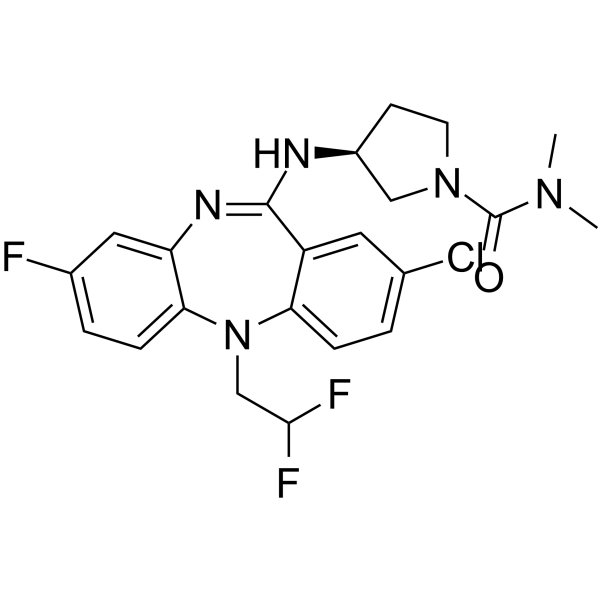
HY-131043
NVS-PAK1-CPAK1 Inhibitor Probe -
HY-125035
LCH-7749944PAK4 Inhibitor
MedChemExpress(MCE)の使用を引用している文献 FRAX1036
More

生物活性
製品説明
IC50 & Target
[1]|
PAK1 23.3 nM (Ki) |
PAK2 72.4 nM (Ki) |
PAK4 2.4 μM (Ki) |
体外実験
FRAX1036 is a PAK inhibitor with Kis of 23.3 nM, 72.4 nM, and 2.4 μM for PAK1, PAK2 and PAK4, respectively. FRAX1036 (2.5 μM) incombination with docetaxel alters stathmin phosphorylation, induces the apoptotic marker cleaved PARP and increases kinetics of apoptosis in MDA-MB-175 and HCC2911 cells; also alters microtubule organization, mitosis and cell fate in U2OS cells. Moreover, FRAX1036 shows significantly effective inhibition on U2OS cells[1]. FRAX1036 (10 μM) affects the proliferation of non-small cell lung cancer (NSCLC) cells when added to KRAS prenylation inhibitors[2].
MedChemExpress (MCE) has not independently confirmed the accuracy of these methods. They are for reference only. .


化学情報
-
CAS 番号 1432908-05-8
-
性状 Solid
-
分子量 518.05
-
分子式 C28H32ClN7O
-
Color White to light yellow
-
SMILES
O=C1C(C2=CC=C(C3=NC(C)=CN=C3)C=C2Cl)=CC4=CN=C(NCCC5CCN(C)CC5)N=C4N1CC
-
輸送条件
Room temperature in continental US; may vary elsewhere.
-
保管条件
Powder -20°C 3 years 4°C 2 years In solvent -80°C 2 years -20°C 1 year


Publications (5)
-
Journal Impact Factor
-
Most Recent
-
PLoS One
Synergistic effect of PAK and Hippo pathway inhibitor combination in NF2-deficient Schwannoma. [Abstract]2024 Jul 31;19(7):e0305121. PMID: 39083549 -
-
bioRxiv
Network analysis of α-synuclein pathology progression reveals p21-activated kinases as regulators of vulnerability. [Abstract]2024 Oct 22:2024.10.22.619411. PMID: 39484617 -
-
Elife
p27Kip1 promotes invadopodia turnover and invasion through the regulation of the PAK1/Cortactin pathway. [Abstract]2017 Mar 13:6:e22207. PMID: 28287395


溶剤 & 溶解度
体外:
DMSO : 5.3 mg/mL (10.23 mM; Need warming; Hygroscopic DMSO has a significant impact on the solubility of product, please use newly opened DMSO)
Please refer to the solubility information to select the appropriate solvent. Once prepared, please aliquot and store the solution to prevent product inactivation from repeated freeze-thaw cycles.
Storage method and period of stock solution: -80°C, 2 years; -20°C, 1 year. When stored at -80°C, please use it within 2 years. When stored at -20°C, please use it within 1 year.
Please refer to the solubility information to select the appropriate solvent. Once prepared, please aliquot and store the solution to prevent product inactivation from repeated freeze-thaw cycles.
Storage method and period of stock solution: -80°C, 2 years; -20°C, 1 year. When stored at -80°C, please use it within 2 years. When stored at -20°C, please use it within 1 year.
濃度 (開始) × 体積 (開始) = 濃度 (終了) × 体積 (終了)
体内:
For the following dissolution methods, please prepare the working solution directly:
It is recommended to prepare fresh solutions and use them promptly within a short period of time.
The percentages shown for the solvents indicate their volumetric ratio in the final prepared solution. If precipitation or phase separation occurs during preparation, heat and/or sonication can be used to aid dissolution.
Add each solvent one by one: 50% PEG300 50% Saline
Solubility: 10 mg/mL (19.30 mM); Suspended solution; Need ultrasonic


純度とドキュメンテーション
-
データシート (274 KB)
-
SDS (394 KB)
- English - EN (394 KB)
- Français - FR (394 KB)
- Deutsch - DE (394 KB)
- Norwegian - NO (394 KB)
- Español - ES (394 KB)
- Swedish - SV (394 KB)
- Italian - IT (394 KB)
- Korean - KR (394 KB)
- Portuguese - PT (394 KB)
-
取扱説明書 (2659 KB)
参考文献
[1]. Ong CC, et al. Small molecule inhibition of group I p21-activated kinases in breast cancer induces apoptosis and potentiates the activity of microtubule stabilizing agents. Breast Cancer Res. 2015 Apr 23;17:59. [Content Brief]
[2]. Mortazavi F, et al. Significance of KRAS/PAK1/Crk pathway in non-small cell lung cancer oncogenesis. BMC Cancer. 2015 May 9;15:381. [Content Brief]


Complete Stock Solution Preparation Table
Please refer to the solubility information to select the appropriate solvent. Once prepared, please aliquot and store the solution to prevent product inactivation from repeated freeze-thaw cycles.
Storage method and period of stock solution: -80°C, 2 years; -20°C, 1 year. When stored at -80°C, please use it within 2 years. When stored at -20°C, please use it within 1 year.
| Optional Solvent | Concentration Solvent Mass | 1 mg | 5 mg | 10 mg | 25 mg |
|---|---|---|---|---|---|
| DMSO | 1 mM | 1.9303 mL | 9.6516 mL | 19.3032 mL | 48.2579 mL |
| 5 mM | 0.3861 mL | 1.9303 mL | 3.8606 mL | 9.6516 mL | |
| 10 mM | 0.1930 mL | 0.9652 mL | 1.9303 mL | 4.8258 mL |


FRAX1036 関連分類
HY-19538 関連分類
 Powered by Bioz