



Matuzumab

Based on 1 Customer Validation
Matuzumab (EMD 72000) is a humanized anti-EGFR monoclonal antibody that blocks EGFR activation and downstream signaling, inhibits tumor growth. Deglycosylation and the possible elimination of ADCC activity can reduce the in vivo anti-tumor activity of Mattuzumab.
商品は「研究用試薬」です。人や動物の医療用・臨床診断用・食品用の製品ではありません。
研究用途以外に使用した場合、当社は一切の責任を負いかねます。
- 純度 : 99.50%
- CAS 番号: 339186-68-4
- 分子量:145.5 kDa
-
保管条件:
Please store the product under the recommended conditions in the Certificate of Analysis.


To place orders, for customer services and technical support, please contact: MedChemExpress USA
Tel: 609-228-6898 E-mail: [email protected] [email protected]


-
 生物活性
生物活性
-
化学情報
- プロトコル
- 純度とドキュメンテーション
- 参考文献
-
 Help & FAQs


-

HY-P9905
CetuximabEGFR Inhibitor -

HY-P99849
DepatuxizumabMonoclonal Antibody -

HY-P99041
PanitumumabAnti-EGFR Monoclonal Antibody -

HY-P99155
ZalutumumabEGFR Antibody -

HY-P9964
NecitumumabEGFR IgG Monoclonal -

HY-P99295
ImgatuzumabAnti-EGFR Antibody -

HY-P9968
NimotuzumabEGFR Antibody -

HY-P99306
ModotuximabAnti-Human EGFR Antibody -

HY-P9977
AmivantamabEGFR-MET Dual Antibody -

HY-P99045
SacituzumabAnti-TROP-2 Antibody -

HY-P99029
MagrolimabAnti-CD47 Antibody -

HY-P99041A
Panitumumab (anti-EGFR)Anti-EGFR Monoclonal Antibody
EGFR アイソフォーム固有の製品をすべて表示
More

生物活性
製品説明
Isotype
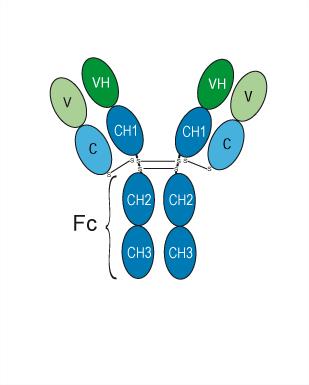
Human IgG1 kappa
Recommend Isotype Controls
Species Reactivity
Human
IC50 & Target
ERBB1/EGFR/HER1
体外実験
Matuzumab (10 ng, 4-72 h) can exert a powerful anti-tumor ADCC effect in the target monolayer cells of head and neck squamous cell carcinoma (SCCHN)[2].
Matuzumab was enzymatically de-glycosylated to eliminate its ADCC activity, but the de-glycosylated antibody maintained its ability to bind to A431 tumor cells, block EGFR signaling, and inhibit growth in vitro[1].
MedChemExpress (MCE) has not independently confirmed the accuracy of these methods. They are for reference only. Further protocols information, click here.
-
Cell Line:UM-SCC 14C, UDSCC 4, MCF-7, UM-SCC 11B and 22B
-
Concentration:10 ng
-
Incubation Time:4, 24 or 72 h
-
Result:The increase of effector:target ratios caused enhanced tumour cell killing.
Led to a significant enhancement of effector cell activity and increased ADCC.
体内実験
Matuzumab achieves complete remission in 87% of lung cancer xenografts and 83% of gastric cancer xenografts. The growth of drug-resistant pancreatic cancer xenograft tumors decreases by 31%[1].
MedChemExpress (MCE) has not independently confirmed the accuracy of these methods. They are for reference only.
臨床実験
| NCT Number | Sponsor | Condition | Start Date |
Phase

|
|---|---|---|---|---|
| NCT01329991 | Plexxikon| | 2011-05 | PHASE1 |
遺伝子ID
アクセッション番号
Conjugated
Unconjugated
Reconsititution
The product can be reconstituted/diluted with sterile PBS or saline.
Format
-
Human IgG1 nd
アプリケーション
ELISA, FACS, Functional assay
Verified Bioactivity
-
 Immobilized Human EGFR Protein (ECD, His Tag) can bind Matuzumab. The EC50 for this effect is 1.802 ng/mL.
 -
 Flow Cytometry analysis of A431 cells labelling ERBB1/EGFR/HER1 (red) with Matuzumab (anti-ERBB1/EGFR/HER1) (HY-P9969). Goat Anti-Human IgG (Alexa Fluor 488) (HY-P83776) at a dilution of 1/1000 was used as the secondary antibody. Blue-Human IgG1 kappa (HY-P99001). Black-Unlabelled control, cells without incubation with primary antibody.


化学情報
-
CAS 番号 339186-68-4
-
性状 Liquid
-
分子量 145.5 kDa
-
Color Colorless to light yellow
-
SMILES
[Matuzumab]
-
別名
EMD 72000
-
輸送条件
Shipping with dry ice.
-
Formulation
Please refer to the lot-specific COA for specific buffer information.
-
保管条件
Please store the product under the recommended conditions in the Certificate of Analysis.

プロトコル
-
Patient-Derived Xenograft (PDX)
Patient-derived xenograft (PDX) models are generated by engrafting primary human tumor tissue directly into immunodeficient mice, allowing in vivo propagation of patient tumor biology without initial in vitro adaptation. These models are used to preserve key histopathological and molecular characteristics of the original tumor and enable assessment of tumor growth dynamics and therapeutic response in a living organism. The biological readout is tumor engraftment and subsequent growth in the murine host, which reflects the ability of human tumor cells to survive, vascularize, and expand in an immunocompromised microenvironment.
-
Patient-Derived Orthotopic Xenograft (PDOX)
Patient-derived orthotopic xenograft (PDOX) modeling implants fresh patient tumor tissue or patient-derived tumor cells into the anatomically corresponding organ or tissue site of immunodeficient mice, usually by surgical orthotopic implantation, to preserve patient tumor histology, local microenvironmental context, invasion, metastatic behavior, and treatment-response features better than subcutaneous implantation. PDOX readouts include tumor engraftment, orthotopic tumor growth, local invasion, metastasis, recurrence after resection, histologic similarity to the donor tumor, biomarker retention, molecular concordance, survival, and response or resistance to therapy. PDOX models are used for preclinical drug testing and individualized therapy evaluation, but engraftment success varies by tumor type and specimen quality.
-
Subcutaneous Cell-Line-Derived Xenograft
Subcutaneous cell-line-derived xenograft (CDX) models are established by implanting cultured human cancer cell lines into immunodeficient mice, where the injected cells form localized tumors that can be monitored in vivo as a measure of tumorigenic potential, growth kinetics, and treatment response. These models are widely used in oncology research because they allow reproducible tumor formation and enable comparative assessment of tumor growth between different cell lines or genetic manipulations in a controlled in vivo microenvironment. Subcutaneous implantation of cancer cells in immunodeficient mice is a standard approach for evaluating tumor growth behavior and therapeutic response across multiple cancer types, including prostate, esophageal, pancreatic, and colon cancer models.
-
Orthotopic Cell-Line Xenograft
Orthotopic cell-line xenograft models involve implantation of human cancer cell lines into the anatomically corresponding organ of immunodeficient mice to reproduce tumor growth within a native microenvironment, enabling more clinically relevant tumor behavior compared with subcutaneous models. These models are widely used because orthotopic placement better recapitulates tumor progression, including invasion and metastatic spread, which are often underrepresented in heterotopic implantation systems. Compared with conventional xenografts, orthotopic implantation is described as more technically complex but provides improved simulation of tumor-microenvironment interactions and metastatic behavior, making it particularly valuable for translational oncology research. Surgical orthotopic implantation approaches have been emphasized as enabling faithful reproduction of clinical cancer features, including metastasis and disease progression patterns that align with the tumor’s organ of origi


純度とドキュメンテーション
-
データシート (260 KB)
-
SDS (251 KB)
- English - EN (251 KB)
- Français - FR (251 KB)
- Deutsch - DE (251 KB)
- Norwegian - NO (251 KB)
- Español - ES (251 KB)
- Swedish - SV (251 KB)
- Italian - IT (251 KB)
- Korean - KR (251 KB)
- Portuguese - PT (251 KB)
-
Inhibitory Antibodies User Guide (603 KB)
参考文献
[1]. Joan H Schiller. Developments in epidermal growth factor receptor-targeting therapy for solid tumors: focus on matuzumab (EMD 72000). Cancer Invest. 2008 Feb;26(1):81-95. [Content Brief]
[2]. Bier H, et al. Anti-(epidermal growth factor) receptor monoclonal antibodies for the induction of antibody-dependent cell-mediated cytotoxicity against squamous cell carcinoma lines of the head and neck. Cancer Immunol Immunother. 1998 May;46(3):167-73. [Content Brief]

Calculators
濃度 (開始) × 体積 (開始) = 濃度 (終了) × 体積 (終了)


Matuzumab 関連分類
HY-P9969 関連分類
 Powered by Bioz