



オルシノール

Based on 1 Customer Validation
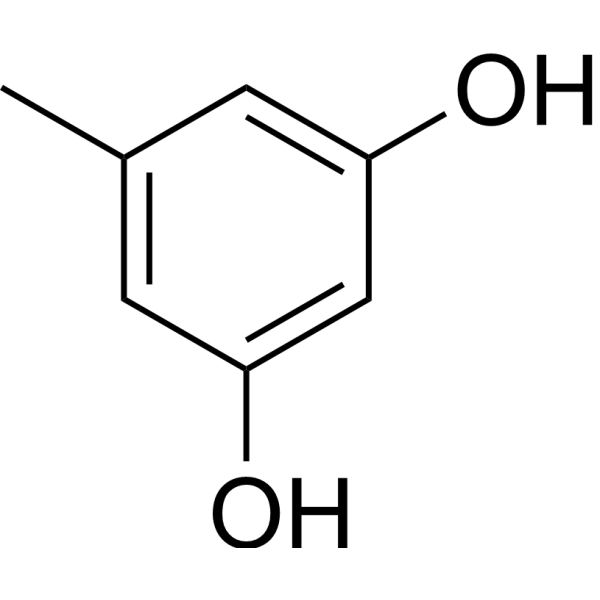
Orcinol (3,5-Dihydroxytoluene) is an organic compound used in biological dyeing and proteomics research. Orcinol inhibits melanogenesis in B16F10 cells by upregulating the MAPK/ERK signaling pathway, and suppresses the expression of MITF, tyrosinase (TYR), TRP1, and DCT. Orcinol exhibits certain DPPH radical scavenging activity. In addition, Orcinol can alter nitrogen balance in animals. Orcinol holds promise for research in cancer and metabolic diseases.
商品は「研究用試薬」です。人や動物の医療用・臨床診断用・食品用の製品ではありません。
研究用途以外に使用した場合、当社は一切の責任を負いかねます。
- 純度 : 99.97%
- CAS 番号: 504-15-4
- 分子式: C7H8O2
- 分子量:124.14
-
保管条件:
4°C, protect from light
* In solvent : -80°C, 6 months; -20°C, 1 month (protect from light)

To place orders, for customer services and technical support, please contact: MedChemExpress USA
Tel: 609-228-6898 E-mail: [email protected] [email protected]


-
 生物活性
生物活性
-
化学情報
-
溶剤 & 溶解度
- プロトコル
- 純度とドキュメンテーション
- 参考文献
-
 Help & FAQs


-
HY-N0168
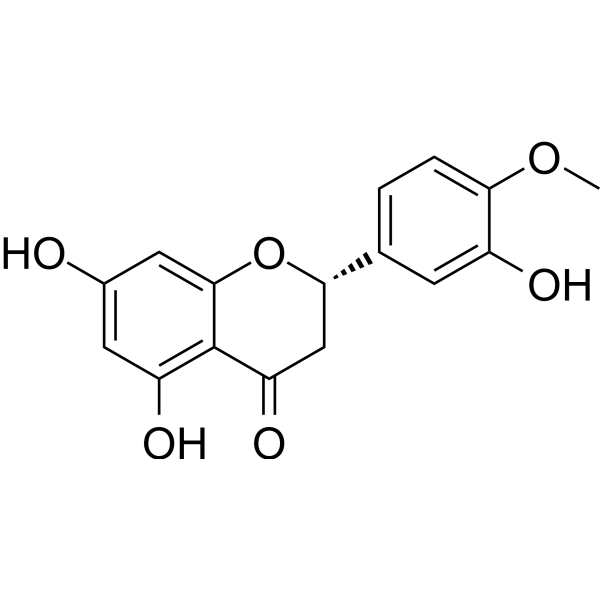
HesperetinUGT Inhibitor -
HY-N0192
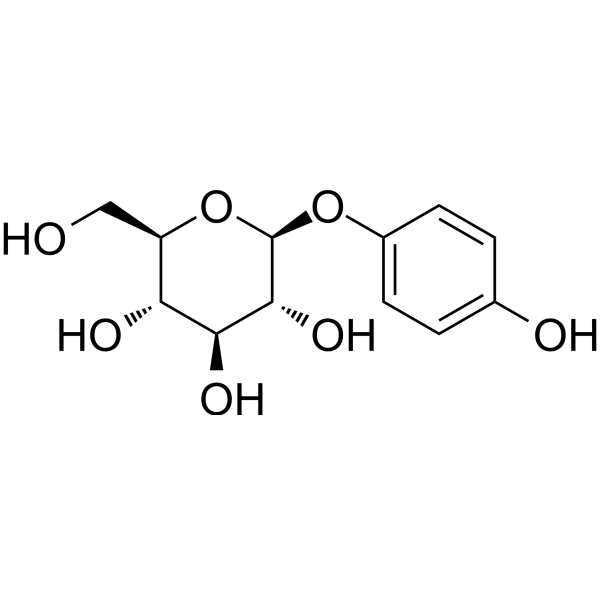
ArbutinEndogenous Metabolite -
HY-I0400
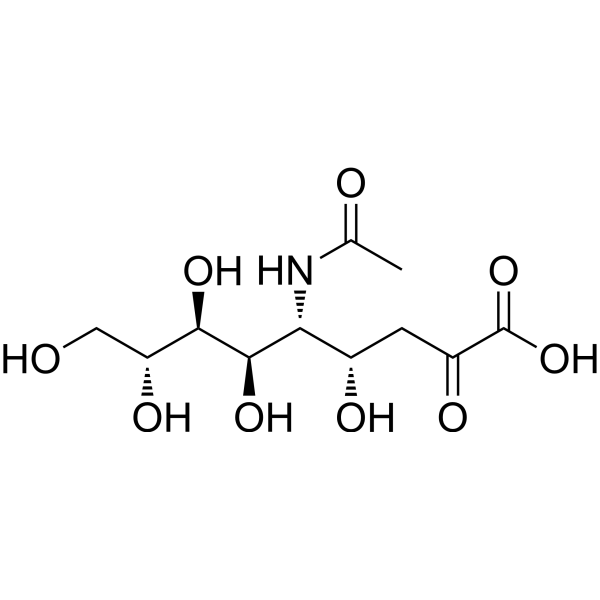
N-Acetylneuraminic acidSialic Acid Monosaccharide; Tyrosinase Inhibitior -
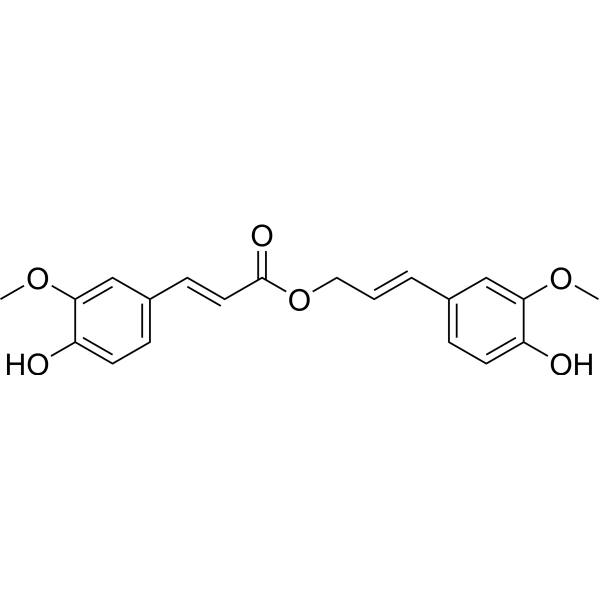
HY-N1916
Coniferyl ferulateGST Inhibitor -
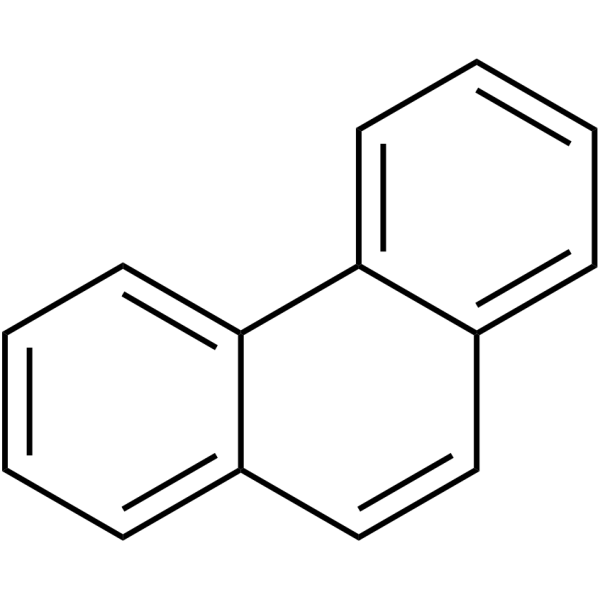
HY-B1727
PhenanthrenePolycyclic Aromatic Hydrocarbon -
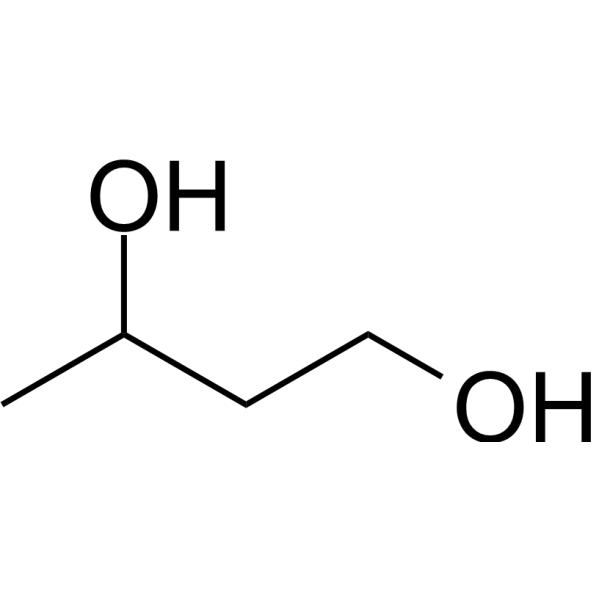
HY-77490A
1,3-Butanediolβ-Hydroxybutyrate Producer -
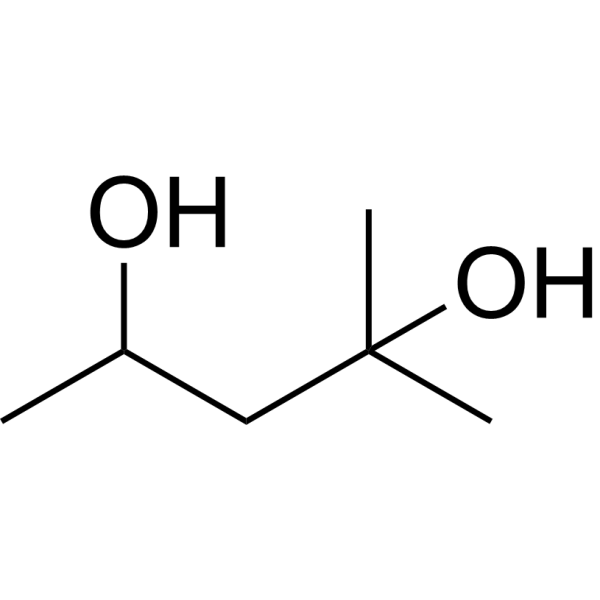
HY-B0903
Hexylene glycolSurfactant -

HY-I0400R
N-Acetylneuraminic acid (Standard)Sialic Acid Monosaccharide; Tyrosinase Inhibitior -

HY-N0192R
Arbutin (Standard)Endogenous Metabolite -
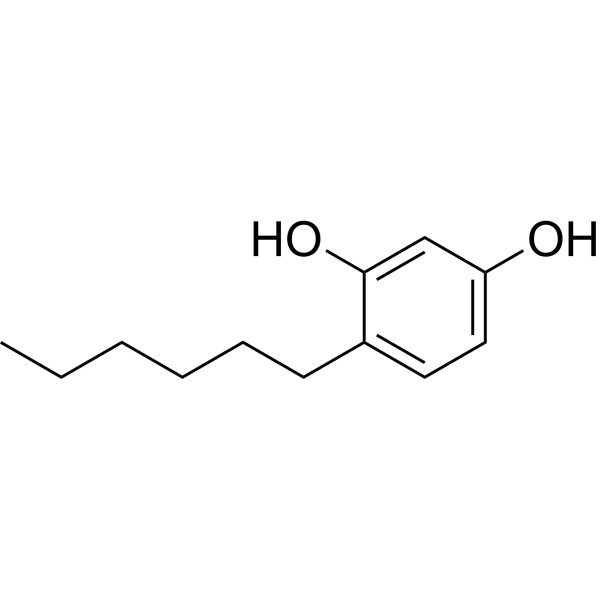
HY-B0986
HexylresorcinolAntimicrobial -
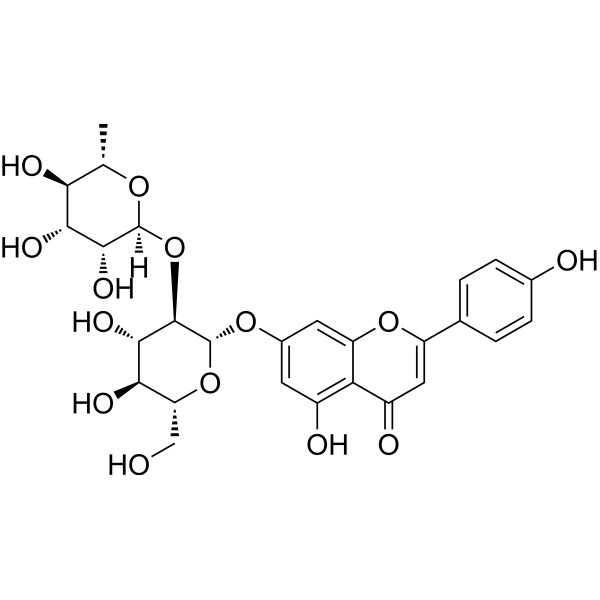
HY-N0755
RhoifolinFlavone Glycoside -
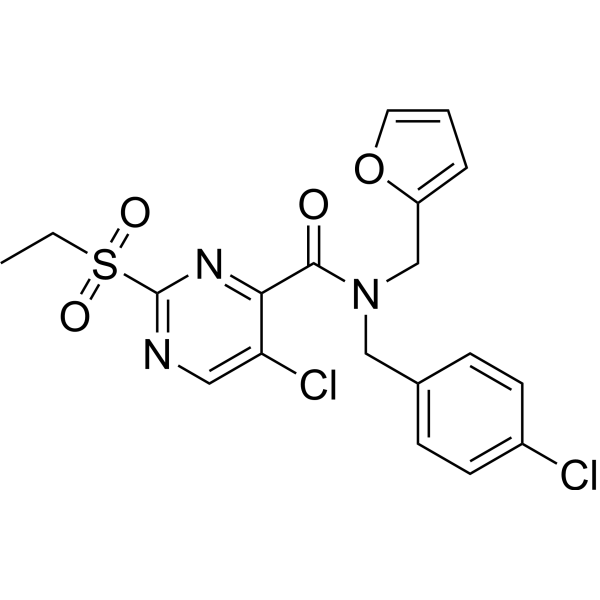
HY-136179
ZAP-180013ZAP-70 Inhibitor


生物活性
製品説明
IC50 & Target
|
COX-2 |
体外実験
Orcinol (0.08-3 mM, 24 hours) exhibites low radical scavenging activity and cytotoxicity[1]. Orcinol (0.5-1 mM, 72 hours treatment) inhibites melanogenesis in B16F10 cells[2]. Orcinol (0.5-1 mM, 24 hours) inhibites the expression of melanogenesis-related genes by upregulating the MAPK/ERK signaling pathway and inhibiting the expression of melanogenesis-related genes such as MITF[2].
MedChemExpress (MCE) has not independently confirmed the accuracy of these methods. They are for reference only. Further protocols information, click here.
-
Cell Line:RAW264.7 mouse macrophage-like cells
-
Concentration:0.08-3 mM
-
Incubation Time:24 hours
-
Result:Exhibited weak radical scavenging activity and relatively low cytotoxicity, with an LC50 of 3 mM and weak DPPH radical scavenging activity.
-
Cell Line:B16F10 mouse melanoma cells
-
Concentration:0.5-1 mM
-
Incubation Time:72 hours
-
Result:Significantly reduced intracellular tyrosinase activity and melanin content.
-
Cell Line:B16F10 mouse melanoma cells
-
Concentration:0.5-1 mM
-
Incubation Time:24 hours
-
Result:Significantly downregulated the mRNA levels of MITF, TYR, TRP1, and DCT.
体内実験
MedChemExpress (MCE) has not independently confirmed the accuracy of these methods. They are for reference only.
-
Animal Model:Common brushtail possum (Trichosurus vulpecula)[3]
-
Dosage:2%, included in diet
-
Administration:Dietary intake (2% Orcinol included in diet), 9 days
-
Result:Caused an immediate reduction in food intake, which returned to normal after 2 days. Urine pH dropped from 7.8 to 5.1, with increased excretion of ammonium nitrogen. No signs of protein catabolism were observed.
Emission (Em)
695
Excitation (Ex)
670


化学情報
-
CAS 番号 504-15-4
-
性状 Solid
-
分子量 124.14
-
分子式 C7H8O2
-
Color White to yellow
-
SMILES
OC1=CC(C)=CC(O)=C1
-
別名
Orcinol; 3,5-Dihydroxytoluene
-
Structure Classification
-
Initial Source
-
輸送条件
Room temperature in continental US; may vary elsewhere.
-
保管条件
4°C, protect from light
* In solvent : -80°C, 6 months; -20°C, 1 month (protect from light)


溶剤 & 溶解度
体外:
DMSO : 100 mg/mL (805.54 mM; Need ultrasonic; Hygroscopic DMSO has a significant impact on the solubility of product, please use newly opened DMSO)
Please refer to the solubility information to select the appropriate solvent. Once prepared, please aliquot and store the solution to prevent product inactivation from repeated freeze-thaw cycles.
Storage method and period of stock solution: -80°C, 6 months; -20°C, 1 month (protect from light). When stored at -80°C, please use it within 6 months. When stored at -20°C, please use it within 1 month.
Please refer to the solubility information to select the appropriate solvent. Once prepared, please aliquot and store the solution to prevent product inactivation from repeated freeze-thaw cycles.
Storage method and period of stock solution: -80°C, 6 months; -20°C, 1 month (protect from light). When stored at -80°C, please use it within 6 months. When stored at -20°C, please use it within 1 month.
濃度 (開始) × 体積 (開始) = 濃度 (終了) × 体積 (終了)

プロトコル
-
RNA extraction experimental
By lysing cells, releasing RNA, and removing impurities such as proteins and DNA, high-purity RNA products are finally obtained. The commonly used traditional method is the guanidine isothiocyanate/phenol/chloroform method (Trizol), which is suitable for a variety of animal materials including animal tissues, microorganisms, cultured cells, etc., and most plant materials.
-
Research Protocol for Omics Data Analysis Pipelines
Omics data analysis pipelines convert raw high-throughput measurements from genomics, transcriptomics, epigenomics, proteomics, metabolomics, or single-cell assays into quality-controlled, statistically tested, biologically interpretable results. A reproducible omics pipeline requires predefined experimental metadata, raw-data quality control, modality-specific preprocessing, normalization, statistical modeling, multiple-testing correction, biological annotation, and independent validation. RNA-seq pipelines commonly include read QC, alignment or pseudoalignment, quantification, normalization, and differential-expression testing, while single-cell pipelines additionally require cell-level QC, normalization, dimensionality reduction, clustering, cell annotation, and sample-aware differential testing. Multi-omics integration can connect molecular layers such as transcriptome, proteome, metabolome, and epigenome, but unresolved problems include batch effects, missing values, unequal featu


純度とドキュメンテーション
-
データシート (279 KB)
-
SDS (394 KB)
- English - EN (394 KB)
- Français - FR (394 KB)
- Deutsch - DE (394 KB)
- Norwegian - NO (394 KB)
- Español - ES (394 KB)
- Swedish - SV (394 KB)
- Italian - IT (394 KB)
- Korean - KR (394 KB)
- Portuguese - PT (394 KB)
-
取扱説明書 (2659 KB)
参考文献
[1]. Murakami Y, et al. The Radical Scavenging Activity and Cytotoxicity of Resveratrol, Orcinol and 4-Allylphenol and their Inhibitory Effects on Cox-2 Gene Expression and Nf-κb Activation in RAW264.7 Cells Stimulated with Porphyromonas gingivalis-fimbriae. In Vivo. 2015 May-Jun;29(3):341-9. [Content Brief]
[3]. Edwards MJ, et al. Acid loads induced by the detoxification of plant secondary metabolites do not limit feeding by common brushtail possums (Trichosurus vulpecula). J Comp Physiol B. 2010 Feb;180(2):247-57. [Content Brief]


Complete Stock Solution Preparation Table
Please refer to the solubility information to select the appropriate solvent. Once prepared, please aliquot and store the solution to prevent product inactivation from repeated freeze-thaw cycles.
Storage method and period of stock solution: -80°C, 6 months; -20°C, 1 month (protect from light). When stored at -80°C, please use it within 6 months. When stored at -20°C, please use it within 1 month.
| Optional Solvent | Concentration Solvent Mass | 1 mg | 5 mg | 10 mg | 25 mg |
|---|---|---|---|---|---|
| DMSO | 1 mM | 8.0554 mL | 40.2771 mL | 80.5542 mL | 201.3855 mL |
| 5 mM | 1.6111 mL | 8.0554 mL | 16.1108 mL | 40.2771 mL | |
| 10 mM | 0.8055 mL | 4.0277 mL | 8.0554 mL | 20.1386 mL | |
| 15 mM | 0.5370 mL | 2.6851 mL | 5.3703 mL | 13.4257 mL | |
| 20 mM | 0.4028 mL | 2.0139 mL | 4.0277 mL | 10.0693 mL | |
| 25 mM | 0.3222 mL | 1.6111 mL | 3.2222 mL | 8.0554 mL | |
| 30 mM | 0.2685 mL | 1.3426 mL | 2.6851 mL | 6.7129 mL | |
| 40 mM | 0.2014 mL | 1.0069 mL | 2.0139 mL | 5.0346 mL | |
| 50 mM | 0.1611 mL | 0.8055 mL | 1.6111 mL | 4.0277 mL | |
| 60 mM | 0.1343 mL | 0.6713 mL | 1.3426 mL | 3.3564 mL | |
| 80 mM | 0.1007 mL | 0.5035 mL | 1.0069 mL | 2.5173 mL | |
| 100 mM | 0.0806 mL | 0.4028 mL | 0.8055 mL | 2.0139 mL |


Orcinol 関連分類
HY-D0168 関連分類
 Powered by Bioz