



Pep2-AVKI

Based on 1 Customer Validation
Pep2-AVKI is a selective peptide inhibitor of the binding of the AMPA receptor subunit (GluR2) at the C-terminal PDZ site to C-kinase (PICK1). Pep2-AVKI does not affect the binding of (AMPA-type glutamate receptor) GluA2 to GRIP or ABP. Pep2-AVKI does not increase the amplitude of AMPA currents. pep2-AVKI can be used to study neurological diseases.
商品は「研究用試薬」です。人や動物の医療用・臨床診断用・食品用の製品ではありません。
研究用途以外に使用した場合、当社は一切の責任を負いかねます。
- 純度 : 99.24%
- CAS 番号: 1315378-69-8
- 分子式: C60H93N13O17
- 分子量:1268.46
-
保管条件:
Sealed storage, away from moisture.
Powder -80°C, 2 years , -20°C, 1 year* In solvent : -80°C, 6 months; -20°C, 1 month (sealed storage, away from moisture)


To place orders, for customer services and technical support, please contact: MedChemExpress USA
Tel: 609-228-6898 E-mail: [email protected] [email protected]


-
 生物活性
生物活性
-
化学情報
-
溶剤 & 溶解度
- 純度とドキュメンテーション
- 参考文献
-
 Help & FAQs


-

HY-P1056
pep2-SVKIGluA2-GRIP/ABP/PICK1 Inhibitor -
HY-101165
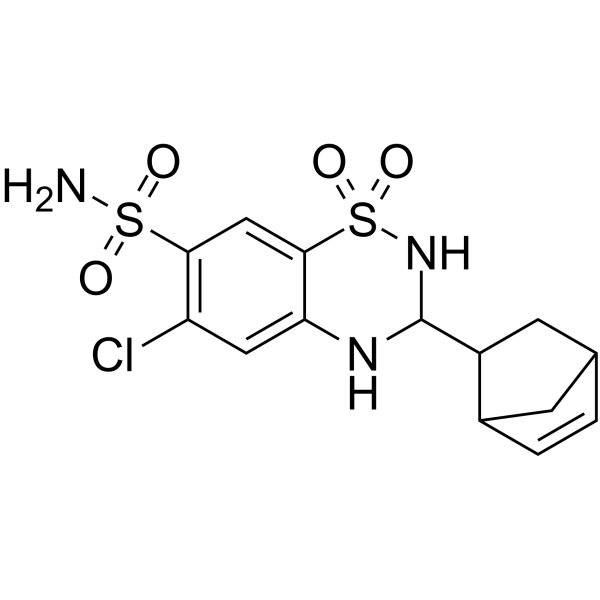
CyclothiazideAMPA Receptors PAM -
HY-18663
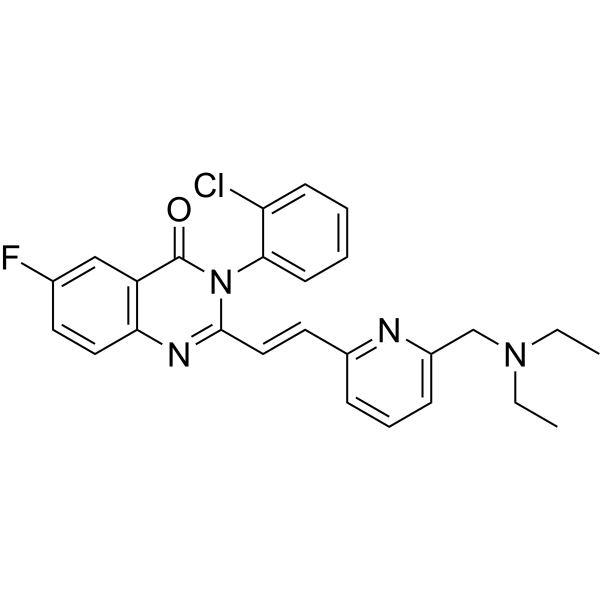
CP-465022AMPA Receptor Antagonist -
HY-15068A
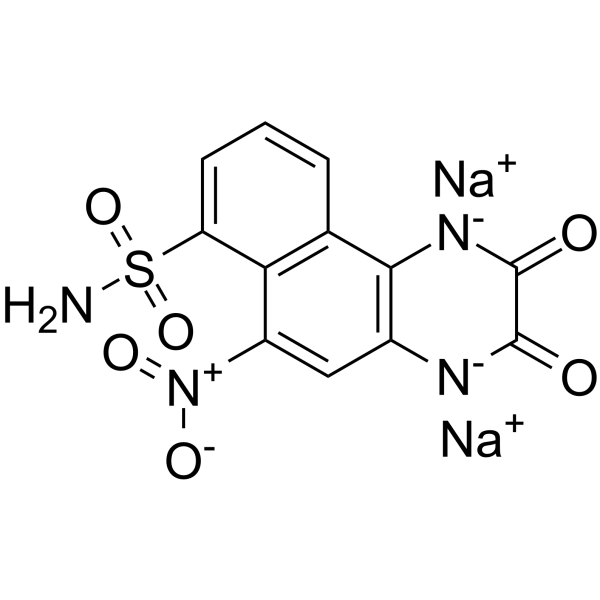
NBQX disodiumAMPA Receptor Antagonist -
HY-100815A
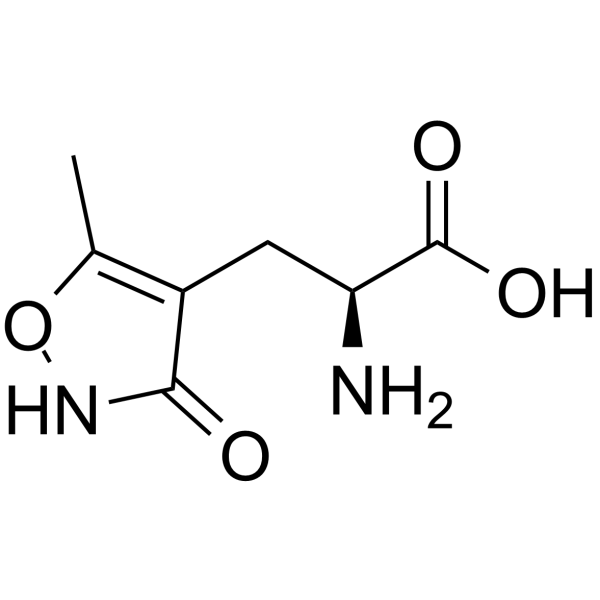
(S)-AMPAAMPA Receptor Agonist -
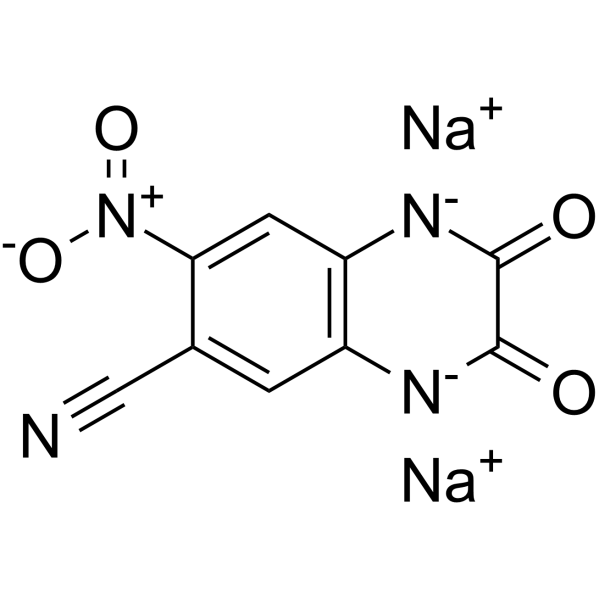
HY-15066A
CNQX disodiumiGluR Antagonist -
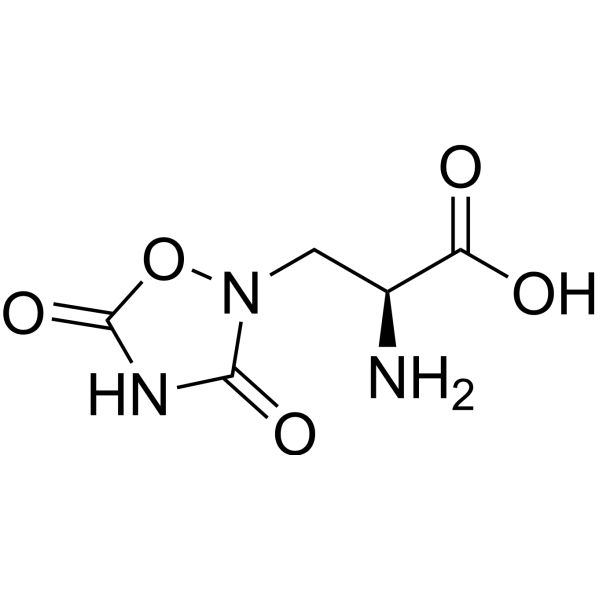
HY-12597
Quisqualic acidmGluR Activator -

HY-101165R
Cyclothiazide (Standard)AMPA Receptors PAM -
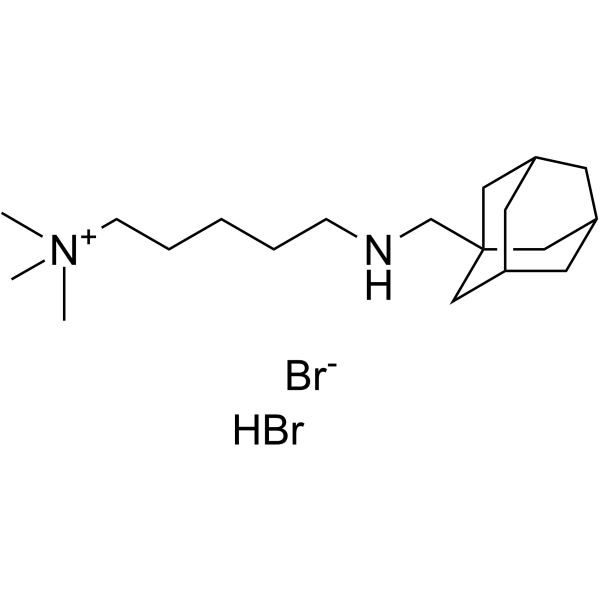
HY-103230
IEM-1460 -
HY-101528
IDRA 21AMPA Modulator -
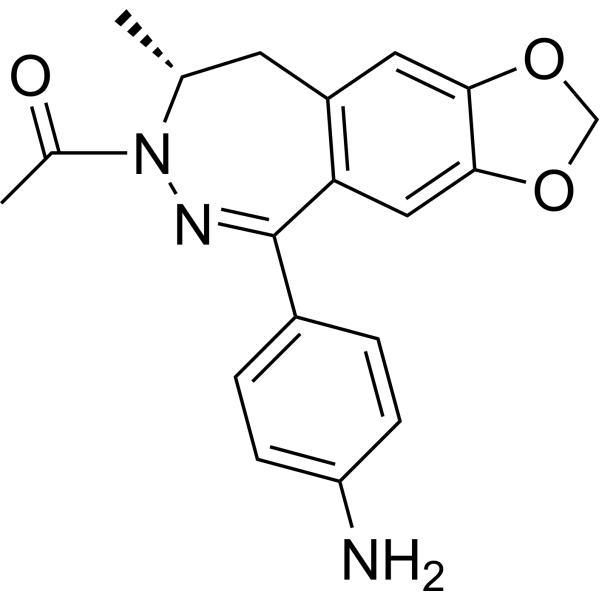
HY-15079
TalampanelAMPA receptor antagonist -
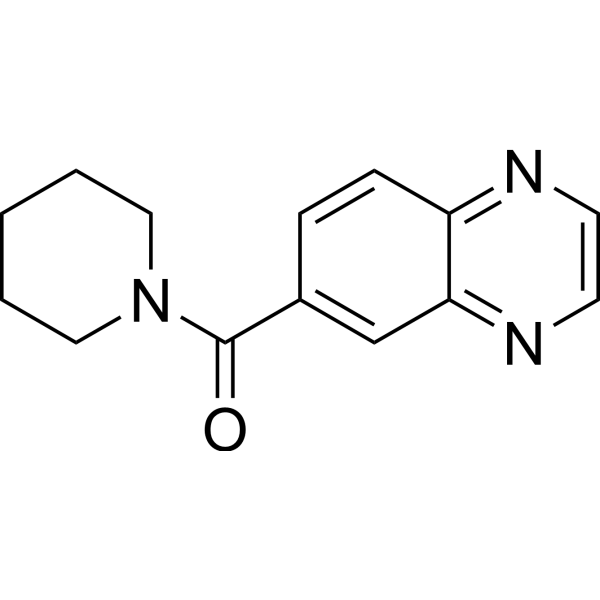
HY-10933
CX516AMPA Receptor PAM
iGluR アイソフォーム固有の製品をすべて表示
More

生物活性
製品説明
体外実験
Pep2-AVKI (1 mM) selectively binds to PICK and does not alter (Miniature Excitatory Postsynaptic Current) mEPSC amplitude or frequency, but inhibits the activity-induced increase in (Excitatory Postsynaptic Current) EPSC amplitude ratio in cerebellar stellate cells[1].
Pep2-AVKI (1 mM) blocks the increase in synaptic GluR2-containing receptors in cerebellar stellate cells[1].
Pep2-AVKI increases AMPA-evoked (radiolabeled norepinephrine) [3H]NA and (radiolabeled D-aspartate) [3H]D-ASP and increases 10 μM NMDA/1 μM Glycine (HY-Y0966)/50 μM (S) AMPA-induced tritium release, but does not alter 10 μM NMDA/1 μM Glycine-induced [3H]D-ASP release in hippocampal synaptosomes[2][3].
Pep2-AVKI (100 μM) blocks (Long-Term Depression) LTD in postsynaptic neurons[4].
MedChemExpress (MCE) has not independently confirmed the accuracy of these methods. They are for reference only.


化学情報
-
CAS 番号 1315378-69-8
-
性状 Solid
-
分子量 1268.46
-
分子式 C60H93N13O17
-
Color White to off-white
-
配列
Tyr-Asn-Val-Tyr-Gly-Ile-Glu-Ala-Val-Lys-Ile
-
シーケンスの短縮
YNVYGIEAVKI
-
輸送条件
Room temperature in continental US; may vary elsewhere.
-
保管条件
Sealed storage, away from moisture
Powder -80°C 2 years -20°C 1 year * In solvent : -80°C, 6 months; -20°C, 1 month (sealed storage, away from moisture)


溶剤 & 溶解度
体外:
DMSO : 10 mg/mL (7.88 mM; Need ultrasonic; Hygroscopic DMSO has a significant impact on the solubility of product, please use newly opened DMSO)
Please refer to the solubility information to select the appropriate solvent. Once prepared, please aliquot and store the solution to prevent product inactivation from repeated freeze-thaw cycles.
Storage method and period of stock solution: -80°C, 6 months; -20°C, 1 month (sealed storage, away from moisture). When stored at -80°C, please use it within 6 months. When stored at -20°C, please use it within 1 month.
Please refer to the solubility information to select the appropriate solvent. Once prepared, please aliquot and store the solution to prevent product inactivation from repeated freeze-thaw cycles.
Storage method and period of stock solution: -80°C, 6 months; -20°C, 1 month (sealed storage, away from moisture). When stored at -80°C, please use it within 6 months. When stored at -20°C, please use it within 1 month.
濃度 (開始) × 体積 (開始) = 濃度 (終了) × 体積 (終了)
体内:
Select the appropriate dissolution method based on your experimental animal and administration route.
- For the following dissolution methods, please ensure to first prepare a clear stock solution using an In Vitro approach and then sequentially add co-solvents:
- To ensure reliable experimental results, the clarified stock solution can be appropriately stored based on storage conditions. As for the working solution for In Vivo experiments, it is recommended to prepare freshly and use it on the same day.
- The percentages shown for the solvents indicate their volumetric ratio in the final prepared solution. If precipitation or phase separation occurs during preparation, heat and/or sonication can be used to aid dissolution.
Add each solvent one by one: 10% DMSO 40% PEG300 5% Tween-80 45% Saline
Solubility: ≥ 1 mg/mL (0.79 mM); Clear solution
This protocol yields a clear solution of ≥ 1 mg/mL (saturation unknown).
Taking 1 mL working solution as an example, add 100 μL DMSO stock solution (10.0 mg/mL) to 400 μL PEG300, and mix evenly; then add 50 μL Tween-80 and mix evenly; then add 450 μL Saline to adjust the volume to 1 mL.
Preparation of Saline: Dissolve 0.9 g sodium chloride in ddH₂O and dilute to 100 mL to obtain a clear Saline solution.
Add each solvent one by one: 10% DMSO 90% (20% SBE-β-CD in Saline)
Solubility: ≥ 1 mg/mL (0.79 mM); Clear solution
This protocol yields a clear solution of ≥ 1 mg/mL (saturation unknown).
Taking 1 mL working solution as an example, add 100 μL DMSO stock solution (10.0 mg/mL) to 900 μL 20% SBE-β-CD in Saline, and mix evenly.
Preparation of 20% SBE-β-CD in Saline (4°C, storage for one week): 2 g SBE-β-CD powder is dissolved in 10 mL Saline, completely dissolve until clear.
In Vivo Dissolution Calculator
Please enter the basic information of animal experiments:
-
-
-
-
Recommended: Prepare an additional quantity of animals to account for potential losses during experiments.
Please enter your animal formula composition:
-
%DMSO +
Recommended: Keep the proportion of DMSO in working solution below 2% if your animal is weak.
-
%+
-
+%Tween-80 + +
-
%Saline +
The co-solvents required include: DMSO, . All of co-solvents are available by MedChemExpress (MCE). , Tween 80. All of co-solvents are available by MedChemExpress (MCE).
Working solution concentration: 0.22 mg/mL
Method for preparing stock solution: mg drug dissolved in μL DMSO. Stock solution concentration: mg/mL. * In solvent : -80°C, 6 months; -20°C, 1 month (sealed storage, away from moisture)
1. Take μL DMSO stock solution;
2. Add μL .
μL , mix evenly;
3. Then add μL Tween 80, mix evenly;
4. Then add μL
Please ensure that the stock solution in the first step is dissolved to a clear state, and add co-solvents in sequence. You can use ultrasonic heating (ultrasonic cleaner, recommended frequency 20-40 kHz), vortexing, etc. to assist dissolution.


純度とドキュメンテーション
-
データシート (272 KB)
-
SDS (254 KB)
- English - EN (254 KB)
- Français - FR (254 KB)
- Deutsch - DE (254 KB)
- Norwegian - NO (254 KB)
- Español - ES (254 KB)
- Swedish - SV (254 KB)
- Italian - IT (254 KB)
- Korean - KR (254 KB)
- Portuguese - PT (254 KB)
-
取扱説明書 (2659 KB)
参考文献
[1]. Liu SJ, et al. Subunit interaction with PICK and GRIP controls Ca2+ permeability of AMPARs at cerebellar synapses. Nat Neurosci. 2005 Jun;8(6):768-75. [Content Brief]
[2]. Pittaluga A, et al. Trafficking of presynaptic AMPA receptors mediating neurotransmitter release: neuronal selectivity and relationships with sensitivity to cyclothiazide. Neuropharmacology. 2006 Mar;50(3):286-96. [Content Brief]
[3]. Summa M, et al.Hippocampal AMPA autoreceptors positively coupled to NMDA autoreceptors traffic in a constitutive manner and undergo adaptative changes following enriched environment training. Neuropharmacology. 2011 Dec;61(8):1282-90. [Content Brief]
[4]. Toyoda H, et al. Long-term depression requires postsynaptic AMPA GluR2 receptor in adult mouse cingulate cortex. J Cell Physiol. 2007 May;211(2):336-43. [Content Brief]


Complete Stock Solution Preparation Table
Please refer to the solubility information to select the appropriate solvent. Once prepared, please aliquot and store the solution to prevent product inactivation from repeated freeze-thaw cycles.
Storage method and period of stock solution: -80°C, 6 months; -20°C, 1 month (sealed storage, away from moisture). When stored at -80°C, please use it within 6 months. When stored at -20°C, please use it within 1 month.
| Optional Solvent | Concentration Solvent Mass | 1 mg | 5 mg | 10 mg | 25 mg |
|---|---|---|---|---|---|
| DMSO | 1 mM | 0.7884 mL | 3.9418 mL | 7.8836 mL | 19.7089 mL |
| 5 mM | 0.1577 mL | 0.7884 mL | 1.5767 mL | 3.9418 mL |


Pep2-AVKI 関連分類
HY-P1059 関連分類
 Powered by Bioz