



Razuprotafib
Based on 4 publication(s) in Google Scholar
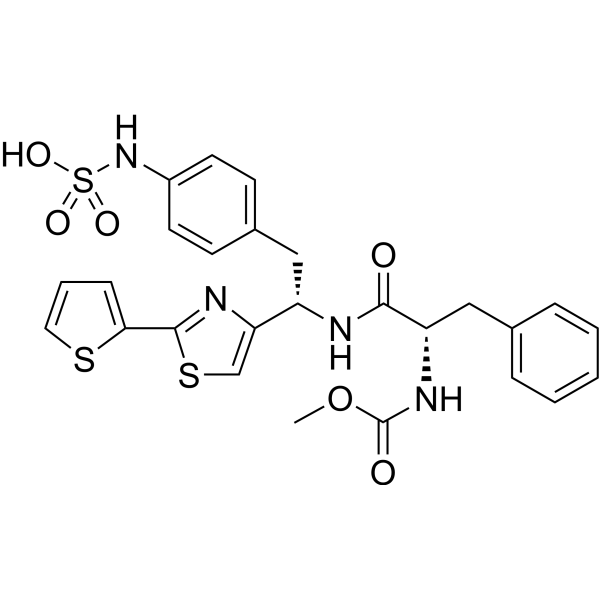
Razuprotafib (AKB-9778) is a potent and selective inhibitor of the catalytic activity of VE-PTP (vascular endothelial protein tyrosine phosphatase) with an IC50of 17 pM. Razuprotafib promotes TIE2 activation, enhances ANG1-induced TIE2 activation, and stimulates phosphorylation of signaling molecules in the TIE2 pathway, including AKT, eNOS, and ERK. Razuprotafib inhibits the structurally related phosphatase PTP1B with an IC50 of 780 nM. Razuprotafib shows excellent selectivity for VE-PTP versus a variety of phosphatases, with the exception of HPTPη (IC50=36 pM) and HPTPγ (100 pM).
商品は「研究用試薬」です。人や動物の医療用・臨床診断用・食品用の製品ではありません。
研究用途以外に使用した場合、当社は一切の責任を負いかねます。
- 純度 : 98.0%
- CAS 番号: 1008510-37-9
- 分子式: C26H26N4O6S3
- 分子量:586.70
-
保管条件:Powder -20°C, 3 years , 4°C, 2 years ; In solvent -80°C, 6 months , -20°C, 1 month

To place orders, for customer services and technical support, please contact: MedChemExpress USA
Tel: 609-228-6898 E-mail: [email protected] [email protected]


-
 生物活性
生物活性
-
化学情報
-
溶剤 & 溶解度
- プロトコル
- 純度とドキュメンテーション
- 参考文献
-
 Help & FAQs


-
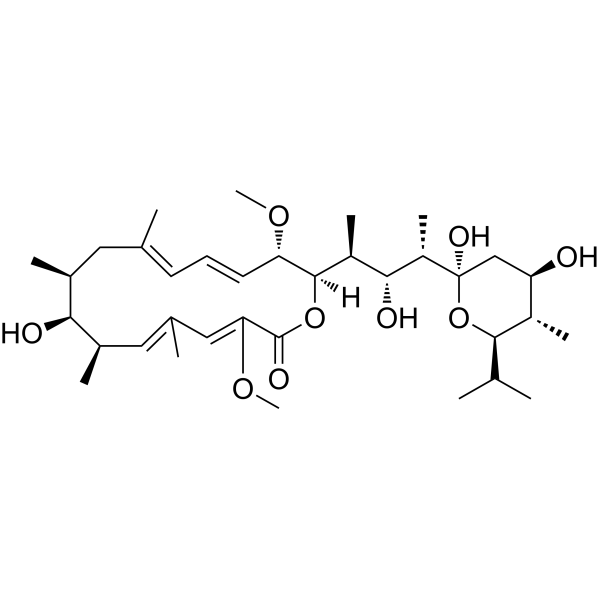
HY-100558
Bafilomycin A1V-ATPase Inhibitor -
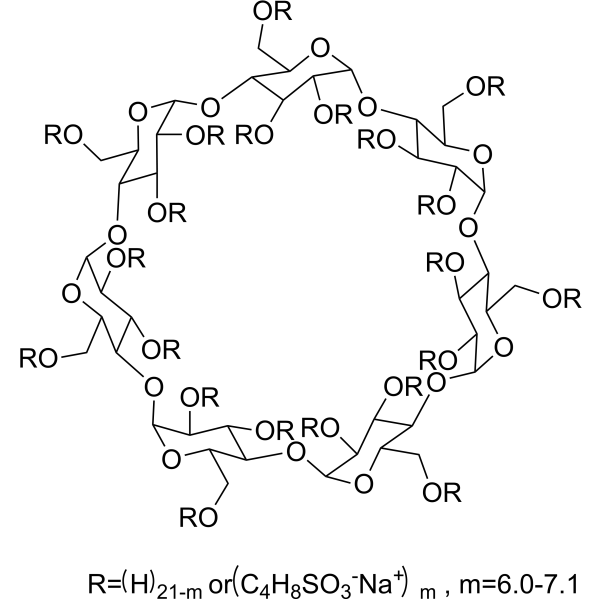
HY-17031
SBE-β-CDExcipient -
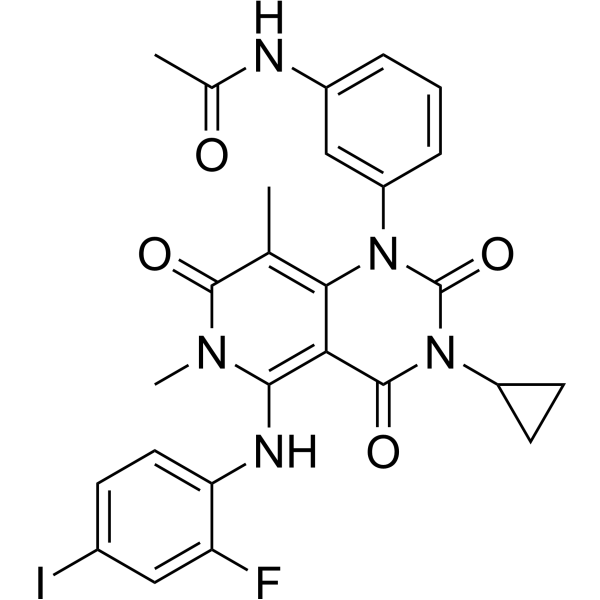
HY-10999
TrametinibMEK Inhibitor -
HY-100218A
RSL3GPX4 Inhibitor -
HY-Y0873
PEG300Neutral Polymer -
HY-100579
Ferrostatin-1Ferroptosis Inhibitor -
HY-10119
VorapaxarPAR-1 Antagonist -

HY-P99029
MagrolimabAnti-CD47 Antibody -
HY-13453
BAY 11-7082IκBα/NF-κB Inhibitor -
HY-13867
Bisindolylmaleimide IPKC Inhibitor -

HY-108831
NatalizumabAnti-α4 Integrin Monoclonal Antibody -
HY-17394
CisplatinDNA Alkylator
MedChemExpress(MCE)の使用を引用している文献 Razuprotafib
More Customer Validation & Images

-
In Vivo Efficacy Study

-
In Vivo Efficacy Study

-
In Vivo Efficacy Study

-
WB

-
IF


生物活性
製品説明
体外実験
Razuprotafib (AKB-9778) promotes TIE2 phosphorylation and activation of downstream signaling in HUVECs and enhances angiopoietin-induced TIE2 phosphorylation[1].
MedChemExpress (MCE) has not independently confirmed the accuracy of these methods. They are for reference only. Further protocols information, click here.
体内実験
MedChemExpress (MCE) has not independently confirmed the accuracy of these methods. They are for reference only.
臨床実験
| NCT Number | Sponsor | Condition | Start Date |
Phase

|
|---|---|---|---|---|
| NCT01329991 | Plexxikon| | 2011-05 | PHASE1 |


化学情報
-
CAS 番号 1008510-37-9
-
性状 Solid
-
分子量 586.70
-
分子式 C26H26N4O6S3
-
Color White to light yellow
-
SMILES
O=C([C@@H](NC(OC)=O)CC1=CC=CC=C1)N[C@H](C2=CSC(C3=CC=CS3)=N2)CC4=CC=C(NS(=O)(O)=O)C=C4
-
別名
AKB-9778
-
輸送条件
Room temperature in continental US; may vary elsewhere.
-
保管条件
Powder -20°C 3 years 4°C 2 years In solvent -80°C 6 months -20°C 1 month


Publications (4)
-
Journal Impact Factor
-
Most Recent
-
Exp Mol Med
An agonistic anti-Tie2 antibody suppresses the normal-to-tumor vascular transition in the glioblastoma invasion zone. [Abstract]2023 Feb;55(2):470-484. PMID: 36828931
Razuprotafib purchased from MedChemExpress. Usage Cited in: Exp Mol Med. 2023 Feb;55(2):470-484. [Abstract]
4E2 treatment suppressed VEGF-driven VEGFR2 phosphorylation, but cotreatment with AKB-9778 (Razuprotafib, 2.5 μM) and 4E2 restored it to the level observed after AKB-9778 treatment alone.
Razuprotafib purchased from MedChemExpress. Usage Cited in: Exp Mol Med. 2023 Feb;55(2):470-484. [Abstract]
Cotreatment with AKB-9778 (Razuprotafib, 40 mg/kg, sc, twice daily for 5 days) significantly attenuated the 4E2-driven suppression of VEGFR2 phosphorylation but showed no additional effect on 4E2-induced Tie2 phosphorylation in GBM vessels.

Razuprotafib purchased from MedChemExpress. Usage Cited in: Exp Mol Med. 2023 Feb;55(2):470-484. [Abstract]
AKB-9778 (Razuprotafib, 40 mg/kg, sc, twice daily for 5 days) moderately reduced the level of junctional VE-cadherin in 4E2-treated GBM vessels.
-
Int J Mol Sci
Razuprotafib Does Not Improve Microcirculatory Perfusion Disturbances nor Renal Edema in Rats on Extracorporeal Circulation. [Abstract]2025 Mar 25;26(7):3000. PMID: 40243701
Razuprotafib purchased from MedChemExpress. Usage Cited in: Int J Mol Sci. 2025 Mar 25;26(7):3000. [Abstract]
A higher oxygen tension was observed after the discontinuation of ECC in Razuprotafib (20 mg/kg, single dose, jugular vein injection)-treated rats compared to the placebo-treated rats.
Razuprotafib purchased from MedChemExpress. Usage Cited in: Int J Mol Sci. 2025 Mar 25;26(7):3000. [Abstract]
Razuprotafib (20 mg/kg, single dose, jugular vein injection) treatment suppressed the increase in circulating TNFα during ECC compared to vehicle rats, without affecting IL-6 and ICAM-1 levels.
Razuprotafib purchased from MedChemExpress. Usage Cited in: Int J Mol Sci. 2025 Mar 25;26(7):3000. [Abstract]
60 min after the discontinuation of ECC, rats treated with Razuprotafib (20 mg/kg, single dose, jugular vein injection) had a higher PaO2/FiO2 ratio compared to untreated rats.
-
Int Immunopharmacol
Enhancing immunotherapy efficacy in oral cancer through AKB-9778-mediated vascular normalization. [Abstract]2025 Feb 20:148:114133. PMID: 39879836 -


溶剤 & 溶解度
体外:
DMSO : 100 mg/mL (170.44 mM; Need ultrasonic; Hygroscopic DMSO has a significant impact on the solubility of product, please use newly opened DMSO)
Please refer to the solubility information to select the appropriate solvent. Once prepared, please aliquot and store the solution to prevent product inactivation from repeated freeze-thaw cycles.
Storage method and period of stock solution: -80°C, 6 months; -20°C, 1 month. When stored at -80°C, please use it within 6 months. When stored at -20°C, please use it within 1 month.
Please refer to the solubility information to select the appropriate solvent. Once prepared, please aliquot and store the solution to prevent product inactivation from repeated freeze-thaw cycles.
Storage method and period of stock solution: -80°C, 6 months; -20°C, 1 month. When stored at -80°C, please use it within 6 months. When stored at -20°C, please use it within 1 month.
濃度 (開始) × 体積 (開始) = 濃度 (終了) × 体積 (終了)
体内:
Select the appropriate dissolution method based on your experimental animal and administration route.
- For the following dissolution methods, please ensure to first prepare a clear stock solution using an In Vitro approach and then sequentially add co-solvents:
- To ensure reliable experimental results, the clarified stock solution can be appropriately stored based on storage conditions. As for the working solution for In Vivo experiments, it is recommended to prepare freshly and use it on the same day.
- The percentages shown for the solvents indicate their volumetric ratio in the final prepared solution. If precipitation or phase separation occurs during preparation, heat and/or sonication can be used to aid dissolution.
Add each solvent one by one: 10% DMSO 40% PEG300 5% Tween-80 45% Saline
Solubility: ≥ 2.5 mg/mL (4.26 mM); Clear solution
This protocol yields a clear solution of ≥ 2.5 mg/mL (saturation unknown).
Taking 1 mL working solution as an example, add 100 μL DMSO stock solution (25.0 mg/mL) to 400 μL PEG300, and mix evenly; then add 50 μL Tween-80 and mix evenly; then add 450 μL Saline to adjust the volume to 1 mL.
Preparation of Saline: Dissolve 0.9 g sodium chloride in ddH₂O and dilute to 100 mL to obtain a clear Saline solution.
Add each solvent one by one: 10% DMSO 90% (20% SBE-β-CD in Saline)
Solubility: ≥ 2.5 mg/mL (4.26 mM); Clear solution
This protocol yields a clear solution of ≥ 2.5 mg/mL (saturation unknown).
Taking 1 mL working solution as an example, add 100 μL DMSO stock solution (25.0 mg/mL) to 900 μL 20% SBE-β-CD in Saline, and mix evenly.
Preparation of 20% SBE-β-CD in Saline (4°C, storage for one week): 2 g SBE-β-CD powder is dissolved in 10 mL Saline, completely dissolve until clear.
In Vivo Dissolution Calculator
Please enter the basic information of animal experiments:
-
-
-
-
Recommended: Prepare an additional quantity of animals to account for potential losses during experiments.
Please enter your animal formula composition:
-
%DMSO +
Recommended: Keep the proportion of DMSO in working solution below 2% if your animal is weak.
-
%+
-
+%Tween-80 + +
-
%Saline +
The co-solvents required include: DMSO, . All of co-solvents are available by MedChemExpress (MCE). , Tween 80. All of co-solvents are available by MedChemExpress (MCE).
Working solution concentration: 0.22 mg/mL
Method for preparing stock solution: mg drug dissolved in μL DMSO. Stock solution concentration: mg/mL.
1. Take μL DMSO stock solution;
2. Add μL .
μL , mix evenly;
3. Then add μL Tween 80, mix evenly;
4. Then add μL
Please ensure that the stock solution in the first step is dissolved to a clear state, and add co-solvents in sequence. You can use ultrasonic heating (ultrasonic cleaner, recommended frequency 20-40 kHz), vortexing, etc. to assist dissolution.

プロトコル
-
Kinase activity and phosphorylation assays
Kinase activity assays measure the ability of kinases to transfer phosphate groups from ATP to specific substrates, while phosphorylation assays detect the presence and levels of phosphorylated proteins. Common methods include radiolabeled ATP incorporation (e. g. ,), ADP release detection via bioluminescence (e. g. ,[3]), enzyme-linked immunosorbent assays (ELISA) for phospho-specific epitopes (e. g. ,[6]), and microtiter-based formats for high-throughput screening (e. g. ,[8]). The ADP-Glo assay quantifies kinase activity by measuring ADP produced during phosphorylation using a luciferase-based system. Radiometric assays involve autoradiography or scintillation counting after incorporation of 32P-labeled ATP into substrate proteins. ELISA-based approaches rely on phospho-specific antibodies to detect activated kinases in cell lysates or purified samples.
-
Western Blot
Western blotting (WB) is a commonly used experimental method in molecular biology, biochemistry, and immunogenetics for identifying and quantifying target proteins. It combines gel electrophoresis with immunoassay, enabling researchers to analyze protein expression, post-translational modifications, and molecular weight.
-
Protocol for Kinase activity and phosphorylation assays
Kinase activity assays measure transfer of phosphate from ATP to a protein or peptide substrate, generating phosphorylated substrate, ADP, or incorporated radiolabeled phosphate as the readout; phosphorylation assays measure site-specific phosphorylation in cells or tissues as a proxy for kinase-pathway activation, inhibition, or substrate regulation. Phosphorylation can be detected by phospho-specific Western blot, immunoprecipitation kinase assay, phospho-immunofluorescence, phospho-flow cytometry, luminescent ADP detection, radiolabeled ATP incorporation, or reporter-based pathway assays, and these readouts can be applied to cancer cells, primary neurons, mouse tumors, organoids, inflammatory macrophages, ferroptosis studies, and mitophagy studies when the kinase target is biologically relevant.


純度とドキュメンテーション
-
データシート (277 KB)
-
SDS (254 KB)
- English - EN (254 KB)
- Français - FR (254 KB)
- Deutsch - DE (254 KB)
- Norwegian - NO (254 KB)
- Español - ES (254 KB)
- Swedish - SV (254 KB)
- Italian - IT (254 KB)
- Korean - KR (254 KB)
- Portuguese - PT (254 KB)
-
取扱説明書 (2659 KB)
参考文献


Complete Stock Solution Preparation Table
Please refer to the solubility information to select the appropriate solvent. Once prepared, please aliquot and store the solution to prevent product inactivation from repeated freeze-thaw cycles.
Storage method and period of stock solution: -80°C, 6 months; -20°C, 1 month. When stored at -80°C, please use it within 6 months. When stored at -20°C, please use it within 1 month.
| Optional Solvent | Concentration Solvent Mass | 1 mg | 5 mg | 10 mg | 25 mg |
|---|---|---|---|---|---|
| DMSO | 1 mM | 1.7044 mL | 8.5222 mL | 17.0445 mL | 42.6112 mL |
| 5 mM | 0.3409 mL | 1.7044 mL | 3.4089 mL | 8.5222 mL | |
| 10 mM | 0.1704 mL | 0.8522 mL | 1.7044 mL | 4.2611 mL | |
| 15 mM | 0.1136 mL | 0.5681 mL | 1.1363 mL | 2.8407 mL | |
| 20 mM | 0.0852 mL | 0.4261 mL | 0.8522 mL | 2.1306 mL | |
| 25 mM | 0.0682 mL | 0.3409 mL | 0.6818 mL | 1.7044 mL | |
| 30 mM | 0.0568 mL | 0.2841 mL | 0.5681 mL | 1.4204 mL | |
| 40 mM | 0.0426 mL | 0.2131 mL | 0.4261 mL | 1.0653 mL | |
| 50 mM | 0.0341 mL | 0.1704 mL | 0.3409 mL | 0.8522 mL | |
| 60 mM | 0.0284 mL | 0.1420 mL | 0.2841 mL | 0.7102 mL | |
| 80 mM | 0.0213 mL | 0.1065 mL | 0.2131 mL | 0.5326 mL | |
| 100 mM | 0.0170 mL | 0.0852 mL | 0.1704 mL | 0.4261 mL |


Razuprotafib 関連分類
HY-109041 関連分類
 Powered by Bioz