



Linoleic acid
Based on 30 publication(s) in Google Scholar
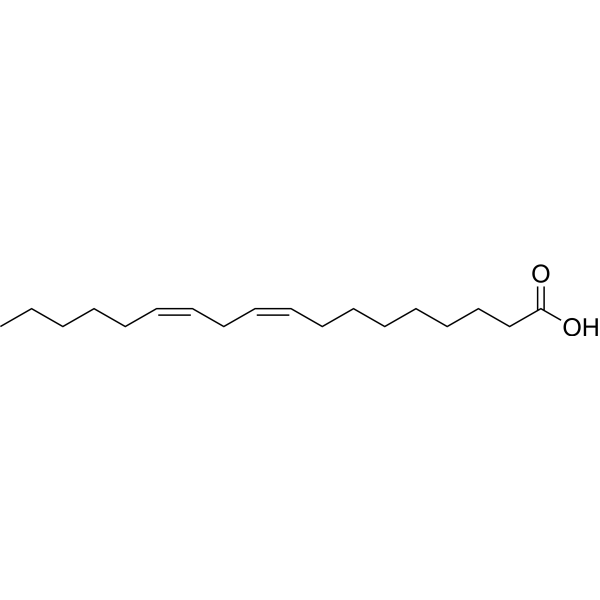
Linoleic acid is a common polyunsaturated (PUFA) found in plant-based oils, nuts and seeds. Linoleic acid is a part of membrane phospholipids, and functions as a structural component to maintain a certain level of membrane fluidity of the transdermal water barrier of the epidermis. Linoleic acid induces red blood cells and hemoglobin damage via oxidative mechanism .
연구목적의 판매만을 진행합니다. 환자를 대상으로 한 판매는 하지 않습니다.
- Purity : 99.92%
- CAS No.: 60-33-3
- 화학식: C18H32O2
- 분자량:280.45
-
보관:
-20°C, protect from light, stored under nitrogen
* In solvent : -80°C, 6 months; -20°C, 1 month (protect from light, stored under nitrogen)

To place orders, for customer services and technical support, please contact: MedChemExpress USA
Tel: 609-228-6898 E-mail: [email protected] [email protected]


-
 Biological Activity
-
Chemical Information
-
용액&용해도
- 순도&문서
- References
-
 Help & FAQs


-
HY-N0728
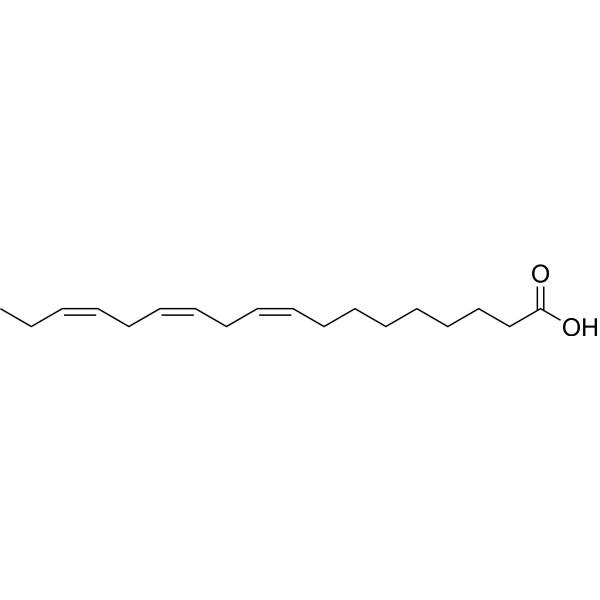
α-Linolenic acidEssential Fatty Acid -
HY-B2167
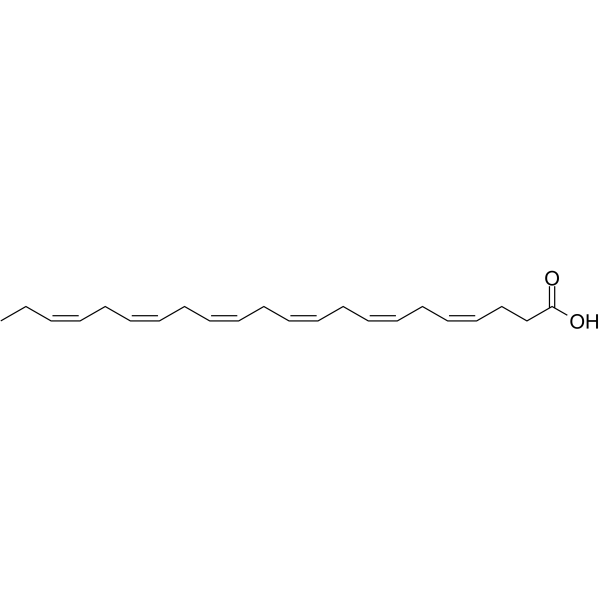
Docosahexaenoic acidomega-3 Fatty Acid -
HY-N1446
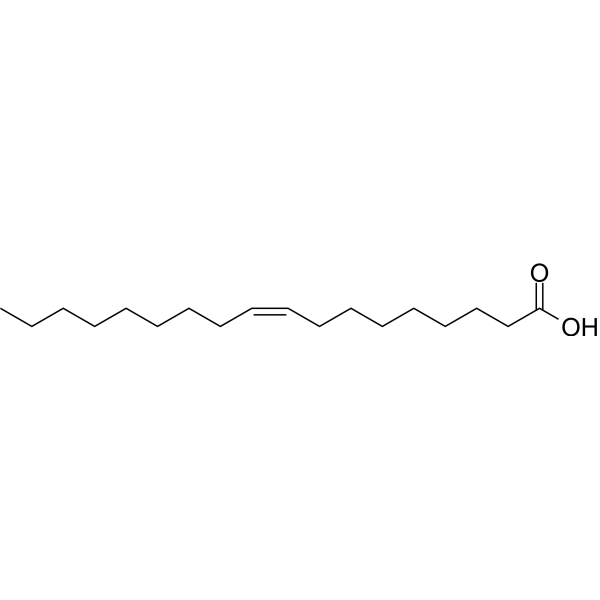
Oleic acidMonounsaturated Fatty Acid -
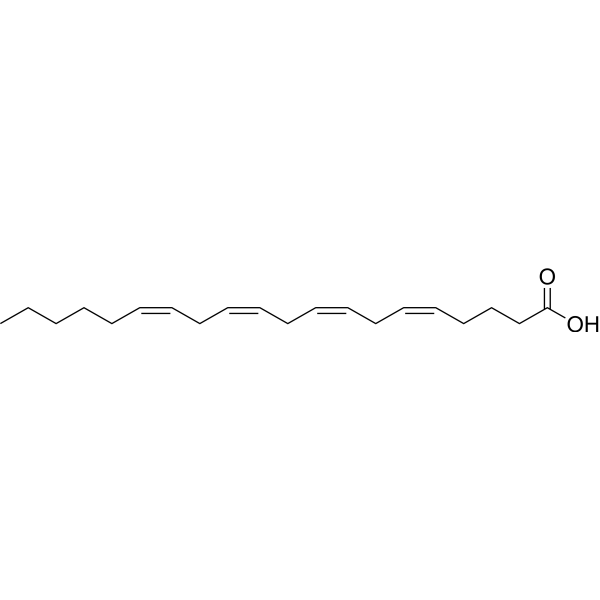
HY-109590
Arachidonic acidPolyunsaturated Fatty Acid -
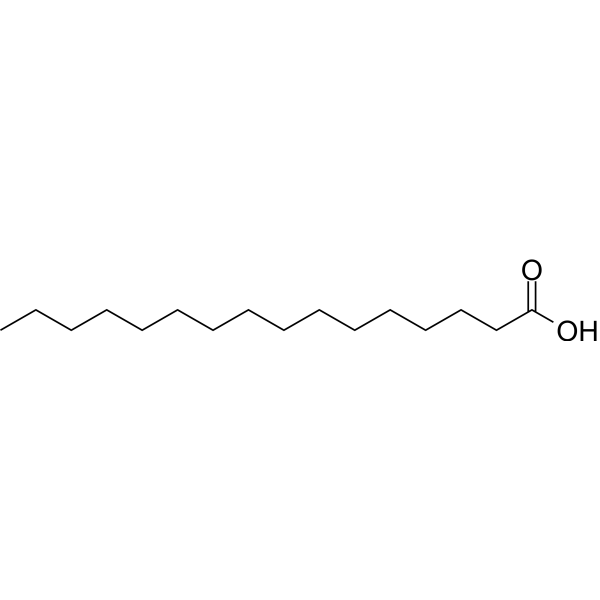
HY-N0830
Palmitic acidEndogenous Metabolite -
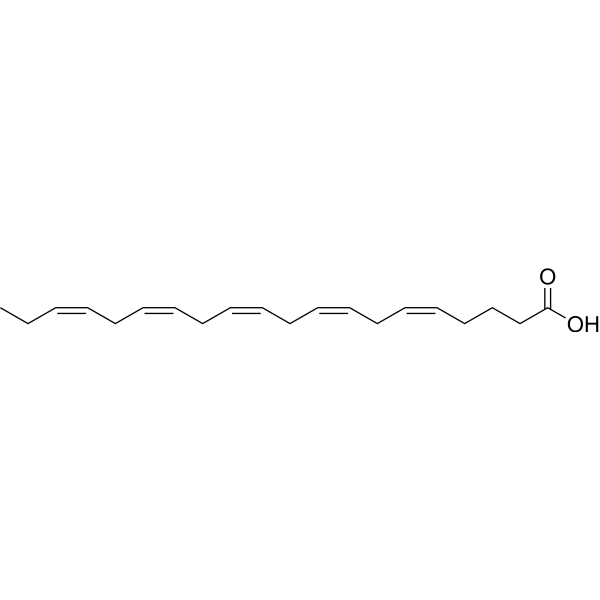
HY-B0660
Eicosapentaenoic AcidLC-PUFA -
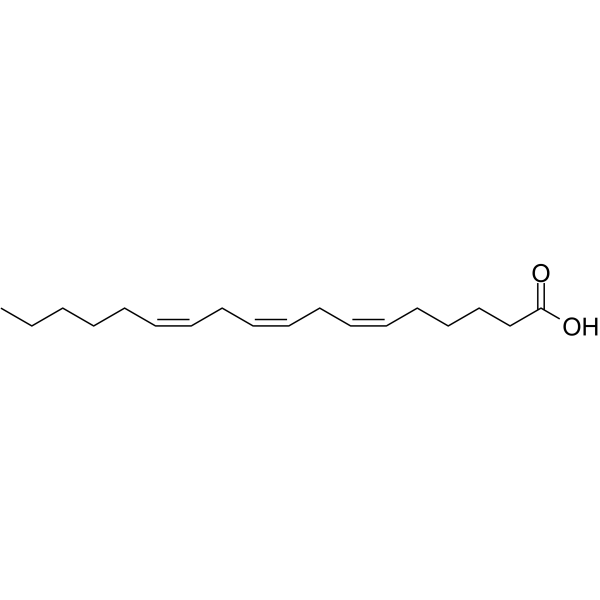
HY-N7140
Gamma-Linolenic acidEndogenous Metabolite -
HY-W011873
Palmitoleic acid -
HY-N2041
Myristic acidEndogenous Metabolite -
HY-Y0366
Lauric acidMiddle Chain-free Fatty Acid -

HY-N0729D
Linoleic acid,suitable for cell cultureNo Target-Effect Identified
Publications Citing Use of MedChemExpress (MCE) Linoleic acid
More- Signal Transduct Target Ther. 2025 Dec 15;10(1):406. [Abstract]
- Nat Microbiol. 2025 Nov;10(11):2949-2965. [Abstract]
- Autophagy. 2026 Mar 11:1-18. [Abstract]
- Nat Commun. 2026 Jul 8;17(1):8447.
- Redox Biol. 2023 Oct:66:102857. [Abstract]
- Gut Microbes. Jan-Dec 2022;14(1):2003176. [Abstract]
- Gut Microbes. 2022 Jan-Dec;14(1):2139978. [Abstract]
- Genes Dis. 2026 Mar 19.
- Adv Sci (Weinh). 2026 Jul 7:e20994.
- J Anal Test. 2024 Dec.
- Cell Rep. 2025 Nov 25;44(11):116496. [Abstract]
- Cell Rep. 2022 Sep 20;40(12):111381. [Abstract]
- Chin Med. 2025 Nov 17;20(1):190. [Abstract]
- Food Sci Hum Wellness. 2026 Mar 3.
- Nutrients. 2025 Feb 25;17(5):794. [Abstract]
- Eur J Pharmacol. 2023 Apr 15:945:175618. [Abstract]
- Immunology. 2026 Sep 20.
- ACS Omega. 2024 Feb 28;9(10):11870-11882. [Abstract]
- Neuropharmacology. 2026 May 13:296:111022. [Abstract]
- iScience. 2026 Jun 2;29(6):116202. [Abstract]
- iScience. 2023 Apr 1;26(4):106551. [Abstract]
- Mol Nutr Food Res. 2023 Jan;67(2):e2200429. [Abstract]
- J Biol Chem. 2024 Jun;300(6):107351. [Abstract]
- J Biol Chem. 2023 Jul;299(7):104909. [Abstract]
- J Sci Food Agric. 2025 Sep 24. [Abstract]
- Comp Biochem Physiol Part D Genomics Proteomics. 2026 Dec:60:101959.
- Biochem Biophys Res Commun. 2026 Mar 12:804:153358. [Abstract]
- Eur J Lipid Sci Technol. 2023 Feb 25.
- bioRxiv. 2025 Jun 16.
- SSRN. 2025 May 22.
 Customer Validation & Images

-
Flow Cytometry
-
ELISA
-
Bio/Physico-chemical Assay
-
WB
All Endogenous Metabolite Isoforms
More

Biological Activity
제품 설명
Cellular Effect
|
Cell Line

|
Type | Value | Description | References |
|---|---|---|---|---|
| CHO | EC50 |
1.8 μM
Compound: Linoleic acid
|
Agonist activity at human GPR40 expressed in CHO cells assessed as calcium flux by FLIPR assay
Agonist activity at human GPR40 expressed in CHO cells assessed as calcium flux by FLIPR assay
|
[PMID: 18993064] |
| CHO-K1 | EC50 |
0.54 μM
Compound: Linoleic acid
|
Agonist activity at human GPR40 expressed in CHOK1 cells by fluorescence assay
Agonist activity at human GPR40 expressed in CHOK1 cells by fluorescence assay
|
[PMID: 18993064] |
| HEK293 | EC50 |
4.8 μM
Compound: linoleic acid
|
Agonist activity at human FFA1 receptor expressed in HEK293 cells assessed as increase in intracellular Ca2+ flux by Fluo-4 dye based assay
Agonist activity at human FFA1 receptor expressed in HEK293 cells assessed as increase in intracellular Ca2+ flux by Fluo-4 dye based assay
|
[PMID: 30685095] |
| RBL-2H3 | IC50 |
>50 μM
Compound: 2
|
Antiallergic activity in rat RBL2H3 cells assessed as inhibition of DNP-HSA-mediated degranulation by measuring decrease in beta-hexosaminidase activity preincubated for 30 mins followed by DNP-HSA stimulation and measured after 30 mins by 4-nitrophenyl 2
Antiallergic activity in rat RBL2H3 cells assessed as inhibition of DNP-HSA-mediated degranulation by measuring decrease in beta-hexosaminidase activity preincubated for 30 mins followed by DNP-HSA stimulation and measured after 30 mins by 4-nitrophenyl 2
|
[PMID: 31618024] |
In Vitro
Linoleic acid contains unsaturated double bonds that are highly vulnerable to free radical attack and oxidation. If ROS are produced in great quantities, the body can no longer efficiently remove them. In such instances, ROS may be released into the extracellular space, causing damage to surrounding cells and tissues. Linoleic acid is a decomposition product of a free fatty acid and has been linked to erythrocyte damage[1].
MedChemExpress (MCE) has not independently confirmed the accuracy of these methods. They are for reference only.


Chemical Information
-
CAS No. 60-33-3
-
Appearance Liquid (Density: 0.902 g/cm3)
-
분자량 280.45
-
화학식 C18H32O2
-
Color Colorless to light yellow
-
SMILES
CCCCC/C=C\C/C=C\CCCCCCCC(O)=O
-
Structure Classification
-
Initial Source
-
선적
Room temperature in continental US; may vary elsewhere.
-
보관
-20°C, protect from light, stored under nitrogen
* In solvent : -80°C, 6 months; -20°C, 1 month (protect from light, stored under nitrogen)


Publications (30)
-
Journal Impact Factor
-
Most Recent
-
Signal Transduct Target Ther
Selective depletion of tumor-associated SAMHD1 enhances chemotherapeutic efficacy and antitumor immune responses. [Abstract]2025 Dec 15;10(1):406. PMID: 41392286 -
Nat Microbiol
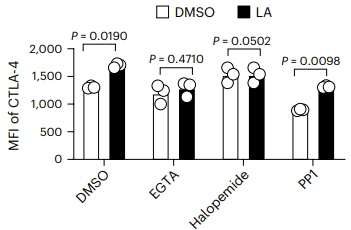
Mycobacterium tuberculosis-derived linoleic acid increases regulatory T cell function to promote bacterial survival within macrophages. [Abstract]2025 Nov;10(11):2949-2965. PMID: 41073667
Linoleic acid purchased from MedChemExpress. Usage Cited in: Nat Microbiol. 2025 Nov;10(11):2949-2965. [Abstract]
Naive CD4+ T cells were stimulated with anti-CD3 and anti-CD28 antibodies in the presence of IL-2 and TGFβ for 3 days and treated with DMSO or treated with Linoleic acid (100 μM) for 48 h. Linoleic acid promotes Ca2+-dependent CTLA-4 surface trafficking.
-
Autophagy
2026 Mar 11:1-18. PMID: 41810751 -
-
Redox Biol
Ferroptosis triggered by STAT1- IRF1-ACSL4 pathway was involved in radiation-induced intestinal injury. [Abstract]2023 Oct:66:102857. PMID: 37611494 -
Gut Microbes
Combined berberine and probiotic treatment as an effective regimen for improving postprandial hyperlipidemia in type 2 diabetes patients: a double blinded placebo controlled randomized study. [Abstract]Jan-Dec 2022;14(1):2003176. PMID: 34923903 -
Gut Microbes
FABP4 in Paneth cells regulates antimicrobial protein expression to reprogram gut microbiota. [Abstract]2022 Jan-Dec;14(1):2139978. PMID: 36519446 -
-
-
-
Cell Rep
A generalized strategy to kill leukemic cells by targeting the regulatory systems governing mitochondrial membrane potential. [Abstract]2025 Nov 25;44(11):116496. PMID: 41166305 -
Cell Rep
Early-life vitamin B12 orchestrates lipid peroxidation to ensure reproductive success via SBP-1/SREBP1 in Caenorhabditis elegans. [Abstract]2022 Sep 20;40(12):111381. PMID: 36130518 -
Chin Med
Berberine ameliorates high-fat diet-induced metabolic disorders through promoting gut Akkermansia and modulating bile acid metabolism. [Abstract]2025 Nov 17;20(1):190. PMID: 41243097 -
-
Nutrients
Medium-Chain Fatty Acids Selectively Sensitize Cancer Cells to Ferroptosis by Inducing CD36 and ACSL4. [Abstract]2025 Feb 25;17(5):794. PMID: 40077664 -
Eur J Pharmacol
Polyunsaturated fatty acids drive neutrophil extracellular trap formation in nonalcoholic steatohepatitis. [Abstract]2023 Apr 15:945:175618. PMID: 36841284 -
-
ACS Omega
Identification of New Modulators and Inhibitors of Palmitoyl-Protein Thioesterase 1 for CLN1 Batten Disease and Cancer. [Abstract]2024 Feb 28;9(10):11870-11882. PMID: 38496939 -
Neuropharmacology
Antibiotic-mediated gut microbiota depletion partially attenuates methamphetamine-induced reward and linoleic acid metabolic disturbance. [Abstract]2026 May 13:296:111022. PMID: 42134644 -
iScience
2026 Jun 2;29(6):116202. PMID: 42291184 -
iScience
Transcriptomic investigation reveals a physiological mechanism for Beauveria bassiana to survive under linoleic acid stress. [Abstract]2023 Apr 1;26(4):106551. PMID: 37102147 -
Mol Nutr Food Res
Consumption of Saturated Fatty Acids-Rich Lard Benefits Recovery of Experimental Arthritis by Activating PPAR-γ. [Abstract]2023 Jan;67(2):e2200429. PMID: 36433679
Linoleic acid purchased from MedChemExpress. Usage Cited in: Mol Nutr Food Res. 2023 Jan;67(2):e2200429. [Abstract]
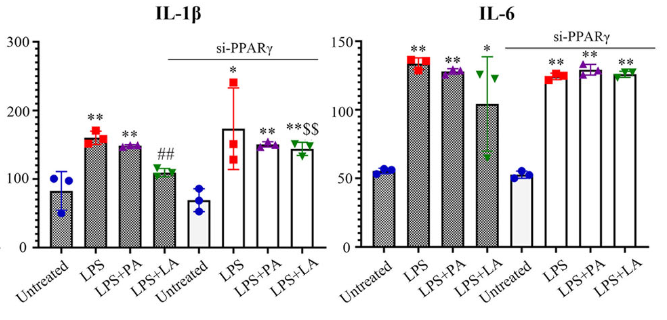
Effects of PA and Linoleic acid (LA) (24 h) on IL-1β, IL-6, and TNF-α secretion in LPS-primed THP-1 cells with different PPAR-γ expression levels.
Linoleic acid purchased from MedChemExpress. Usage Cited in: Mol Nutr Food Res. 2023 Jan;67(2):e2200429. [Abstract]
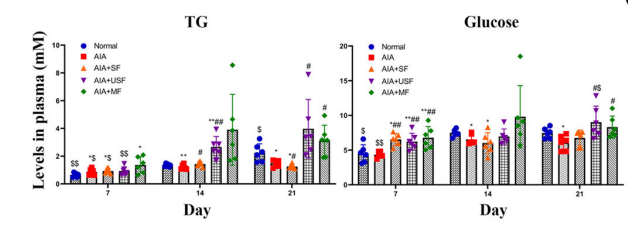
AIA was induced in male SD rats using above protocol. Fatty acid combinations and their administration volumes were designed as below: AIA+SF, SA (670 mg/kg/d) plus PA (310 mg/kg/d); AIA+USF, OA (1060 mg/kg/d) plus LA (450 mg/kg/d). Dynamic changes of metabolic indicators levels in plasma.
Linoleic acid purchased from MedChemExpress. Usage Cited in: Mol Nutr Food Res. 2023 Jan;67(2):e2200429. [Abstract]
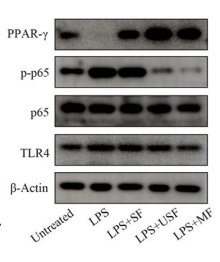
Anti-inflammatory properties of Linoleic acid (LA) in LPS-primed THP-1 monocytes, indicated by expression of p-p65, p65, TLR4, and PPAR-γ. THP-1 monocytes were stimulated with SF, USF (OA plus LA), or MF for 24 h with/without LPS (500 ng/mL). OA, 25 µM; LA, 15 µM.
-
J Biol Chem
STAT3 activation of SCAP-SREBP-1 signaling upregulates fatty acid synthesis to promote tumor growth. [Abstract]2024 Jun;300(6):107351. PMID: 38718868 -
J Biol Chem
Mitochondrial folate metabolism-mediated α-linolenic acid exhaustion masks liver fibrosis resolution. [Abstract]2023 Jul;299(7):104909. PMID: 37307917 -
J Sci Food Agric
Uncovering key bioactive fatty acids from velvet antler extracts that promote healthspan and neuroprotection in Caenorhabditis elegans. [Abstract]2025 Sep 24. PMID: 40994013 -
-
Biochem Biophys Res Commun
2026 Mar 12:804:153358. PMID: 41619507 -
-
-


용액&용해도
In Vitro:
DMSO : 100 mg/mL (356.57 mM; Need ultrasonic; Hygroscopic DMSO has a significant impact on the solubility of product, please use newly opened DMSO)
0.1 M NaOH : 8.33 mg/mL (29.70 mM; ultrasonic and warming and adjust pH to 11 with NaOH and heat to 60°C)
Please refer to the solubility information to select the appropriate solvent. Once prepared, please aliquot and store the solution to prevent product inactivation from repeated freeze-thaw cycles.
Storage method and period of stock solution: -80°C, 6 months; -20°C, 1 month (protect from light, stored under nitrogen). When stored at -80°C, please use it within 6 months. When stored at -20°C, please use it within 1 month.
Please refer to the solubility information to select the appropriate solvent. Once prepared, please aliquot and store the solution to prevent product inactivation from repeated freeze-thaw cycles.
Storage method and period of stock solution: -80°C, 6 months; -20°C, 1 month (protect from light, stored under nitrogen). When stored at -80°C, please use it within 6 months. When stored at -20°C, please use it within 1 month.
Concentration (start) × Volume (start) = Concentration (final) × Volume (final)
In Vivo:
Select the appropriate dissolution method based on your experimental animal and administration route.
- For the following dissolution methods, please ensure to first prepare a clear stock solution using an In Vitro approach and then sequentially add co-solvents:
- To ensure reliable experimental results, the clarified stock solution can be appropriately stored based on storage conditions. As for the working solution for In Vivo experiments, it is recommended to prepare freshly and use it on the same day.
- The percentages shown for the solvents indicate their volumetric ratio in the final prepared solution. If precipitation or phase separation occurs during preparation, heat and/or sonication can be used to aid dissolution.
Add each solvent one by one: 10% DMSO 40% PEG300 5% Tween-80 45% Saline
Solubility: ≥ 2.5 mg/mL (8.91 mM); Clear solution
This protocol yields a clear solution of ≥ 2.5 mg/mL (saturation unknown).
Taking 1 mL working solution as an example, add 100 μL DMSO stock solution (25.0 mg/mL) to 400 μL PEG300, and mix evenly; then add 50 μL Tween-80 and mix evenly; then add 450 μL Saline to adjust the volume to 1 mL.
Preparation of Saline: Dissolve 0.9 g sodium chloride in ddH₂O and dilute to 100 mL to obtain a clear Saline solution.
Add each solvent one by one: 10% DMSO 90% (20% SBE-β-CD in Saline)
Solubility: ≥ 2.5 mg/mL (8.91 mM); Clear solution
This protocol yields a clear solution of ≥ 2.5 mg/mL (saturation unknown).
Taking 1 mL working solution as an example, add 100 μL DMSO stock solution (25.0 mg/mL) to 900 μL 20% SBE-β-CD in Saline, and mix evenly.
Preparation of 20% SBE-β-CD in Saline (4°C, storage for one week): 2 g SBE-β-CD powder is dissolved in 10 mL Saline, completely dissolve until clear.
In Vivo Dissolution Calculator
Please enter the basic information of animal experiments:
-
-
-
-
Recommended: Prepare an additional quantity of animals to account for potential losses during experiments.
Please enter your animal formula composition:
-
%DMSO +
Recommended: Keep the proportion of DMSO in working solution below 2% if your animal is weak.
-
%+
-
+%Tween-80 + +
-
%Saline +
The co-solvents required include: DMSO, . All of co-solvents are available by MedChemExpress (MCE). , Tween 80. All of co-solvents are available by MedChemExpress (MCE).
Working solution concentration: 0.22 mg/mL
Method for preparing stock solution: mg drug dissolved in μL DMSO. Stock solution concentration: mg/mL. * In solvent : -80°C, 6 months; -20°C, 1 month (protect from light, stored under nitrogen)
1. Take μL DMSO stock solution;
2. Add μL .
μL , mix evenly;
3. Then add μL Tween 80, mix evenly;
4. Then add μL
Please ensure that the stock solution in the first step is dissolved to a clear state, and add co-solvents in sequence. You can use ultrasonic heating (ultrasonic cleaner, recommended frequency 20-40 kHz), vortexing, etc. to assist dissolution.


순도&문서
-
Data Sheet (267 KB)
-
SDS (396 KB)
- English - EN (396 KB)
- Français - FR (396 KB)
- Deutsch - DE (396 KB)
- Norwegian - NO (396 KB)
- Español - ES (396 KB)
- Swedish - SV (396 KB)
- Italian - IT (396 KB)
- Korean - KR (396 KB)
- Portuguese - PT (396 KB)
-
Handling Instructions (2659 KB)
References


Complete Stock Solution Preparation Table
Please refer to the solubility information to select the appropriate solvent. Once prepared, please aliquot and store the solution to prevent product inactivation from repeated freeze-thaw cycles.
Storage method and period of stock solution: -80°C, 6 months; -20°C, 1 month (protect from light, stored under nitrogen). When stored at -80°C, please use it within 6 months. When stored at -20°C, please use it within 1 month.
| Optional Solvent | Concentration Solvent Mass | 1 mg | 5 mg | 10 mg | 25 mg |
|---|---|---|---|---|---|
| 0.1 M NaOH / DMSO | 1 mM | 3.5657 mL | 17.8285 mL | 35.6570 mL | 89.1424 mL |
| 5 mM | 0.7131 mL | 3.5657 mL | 7.1314 mL | 17.8285 mL | |
| 10 mM | 0.3566 mL | 1.7828 mL | 3.5657 mL | 8.9142 mL | |
| 15 mM | 0.2377 mL | 1.1886 mL | 2.3771 mL | 5.9428 mL | |
| 20 mM | 0.1783 mL | 0.8914 mL | 1.7828 mL | 4.4571 mL | |
| 25 mM | 0.1426 mL | 0.7131 mL | 1.4263 mL | 3.5657 mL | |
| DMSO | 30 mM | 0.1189 mL | 0.5943 mL | 1.1886 mL | 2.9714 mL |
| 40 mM | 0.0891 mL | 0.4457 mL | 0.8914 mL | 2.2286 mL | |
| 50 mM | 0.0713 mL | 0.3566 mL | 0.7131 mL | 1.7828 mL | |
| 60 mM | 0.0594 mL | 0.2971 mL | 0.5943 mL | 1.4857 mL | |
| 80 mM | 0.0446 mL | 0.2229 mL | 0.4457 mL | 1.1143 mL | |
| 100 mM | 0.0357 mL | 0.1783 mL | 0.3566 mL | 0.8914 mL |


Linoleic acid Related Classifications
HY-N0729 Related Classifications
 Powered by Bioz