



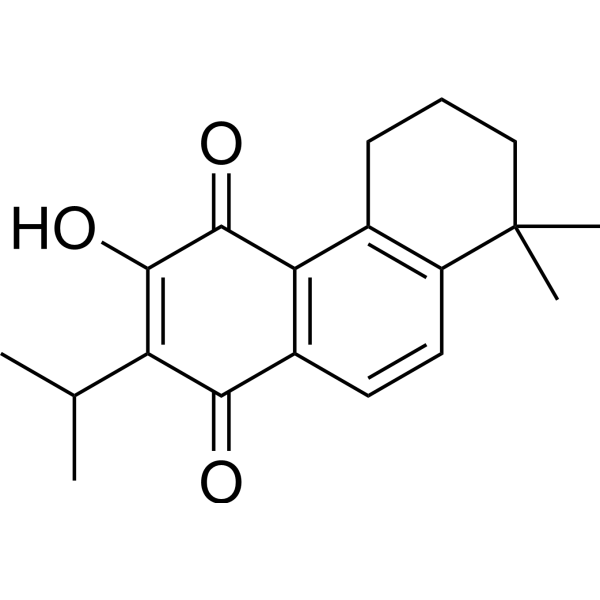
Deoxyneocryptotanshinone
Deoxyneocryptotanshinone, a natural tanshinone, is a high affinity BACE1 (Beta-secretase) inhibitor with an IC50 value of 11.53 μM. Deoxyneocryptotanshinone shows a promising dose-dependent inhibition of protein tyrosine phosphatase 1B (PTP1B) with an IC50 value of 133.5 μM. Deoxyneocryptotanshinone can be used for Alzheimer's disease research.
연구목적의 판매만을 진행합니다. 환자를 대상으로 한 판매는 하지 않습니다.
- CAS No.: 27468-20-8
- 화학식: C19H22O3
- 분자량:298.38
-
보관:
Please store the product under the recommended conditions in the Certificate of Analysis.

To place orders, for customer services and technical support, please contact: MedChemExpress USA
Tel: 609-228-6898 E-mail: [email protected] [email protected]


-
 Biological Activity
-
Chemical Information
- Protocol
- 순도&문서
- References
-
 Help & FAQs


-
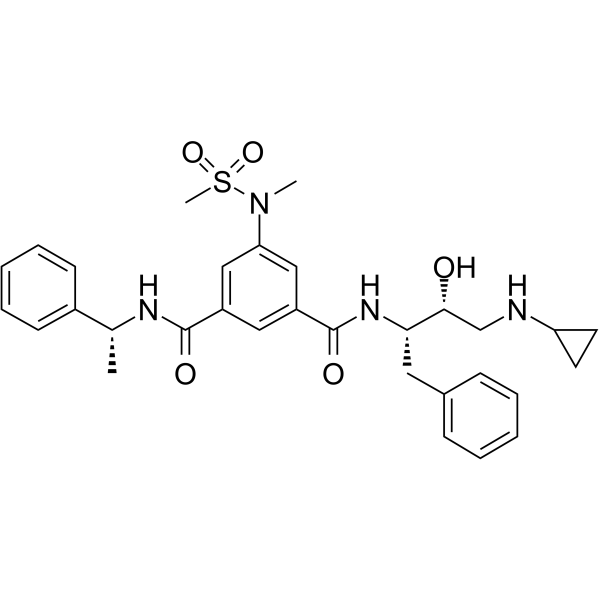
HY-10133
β-Secretase Inhibitor IVBACE-1 Inhibitor -
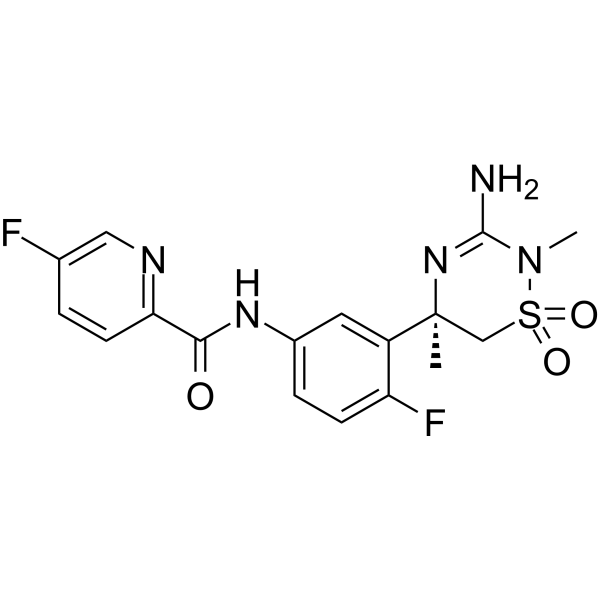
HY-16759
VerubecestatBACE1/2 Inhibitor -
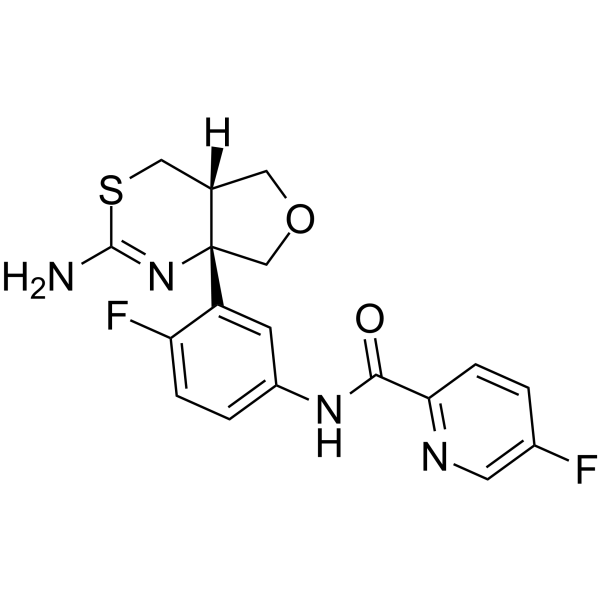
HY-13240
LY2886721BACE1 Inhibitor -
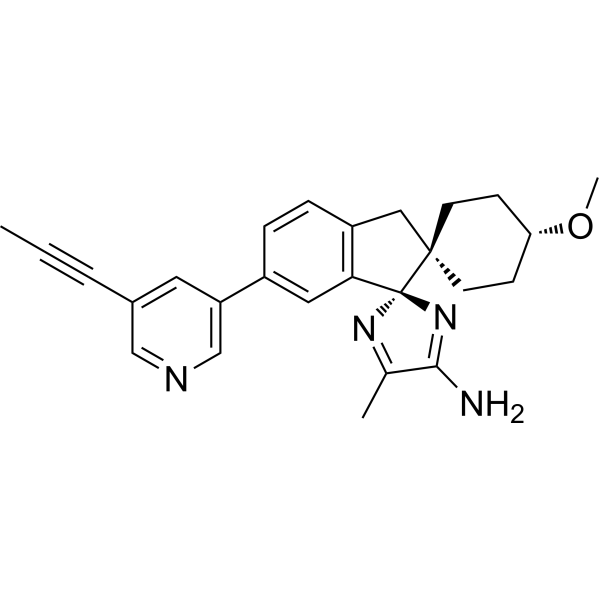
HY-100740
LanabecestatBACE1 Inhibitor -
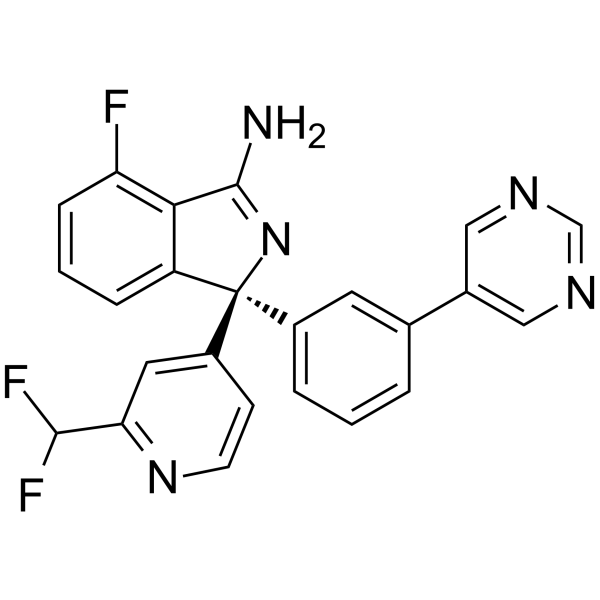
HY-13438
AZD3839 free baseBACE1 Iinhibitor -
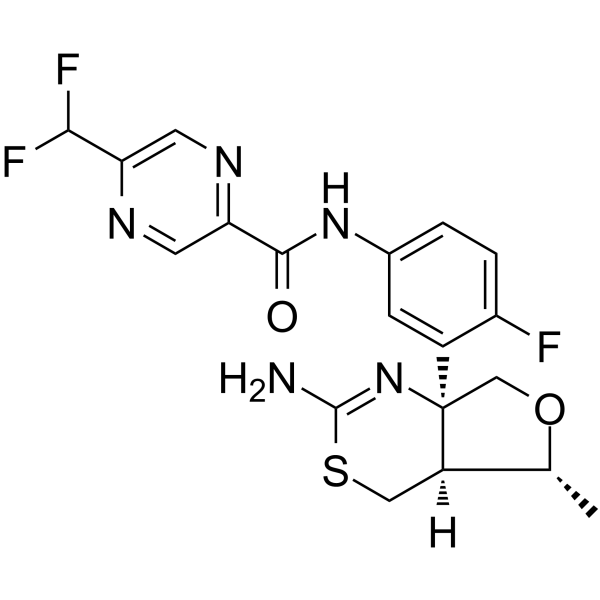
HY-109055
ElenbecestatBACE-1 Inhibitor -
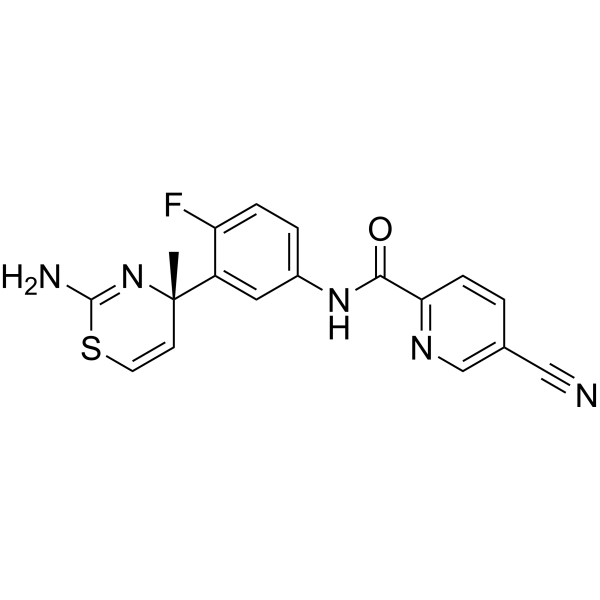
HY-109052
AtabecestatBACE1 Inhibitor -
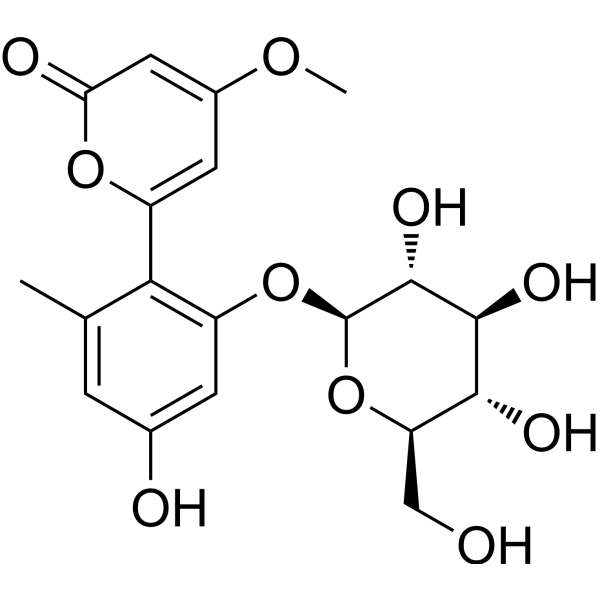
HY-N0495
AloeninBeta-secretase Inhibitor -

HY-10133R
β-Secretase Inhibitor IV (Standard)BACE-1 Inhibitor -
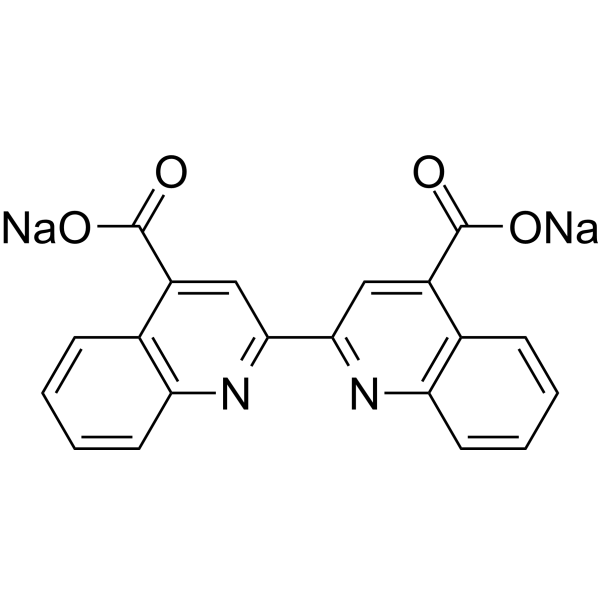
HY-15908
BCACu(I) Chelator -
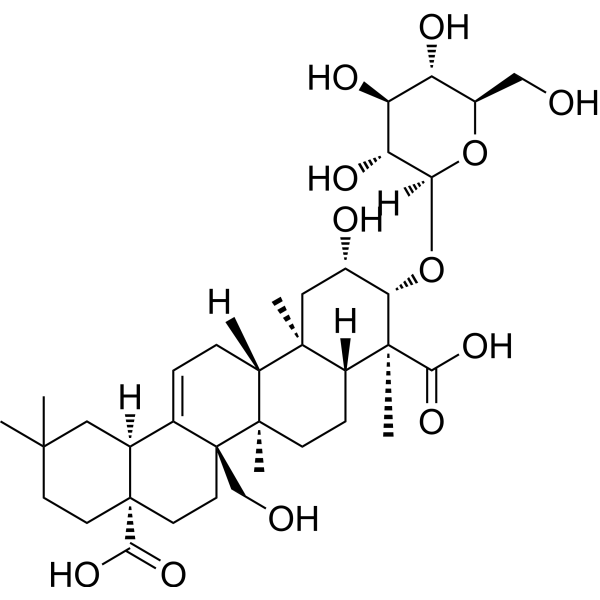
HY-N0702
Tenuifolinβ-Secretase Inhibitor -
HY-114703
EslicarbazepineAnticonvulsant Agent


Biological Activity
제품 설명
IC50 & Target
Cellular Effect
|
Cell Line

|
Type | Value | Description | References |
|---|---|---|---|---|
| MIA PaCa-2 | IC50 |
>100 μM
Compound: 7
|
Cytotoxicity against human MIAPaCa2 cells after 24 hrs by MTT assay
Cytotoxicity against human MIAPaCa2 cells after 24 hrs by MTT assay
|
[PMID: 21775156] |


Chemical Information
-
CAS No. 27468-20-8
-
분자량 298.38
-
화학식 C19H22O3
-
SMILES
O=C1C(C(C)C)=C(O)C(C2=C1C=CC3=C2CCCC3(C)C)=O
-
Structure Classification
-
선적
Room temperature in continental US; may vary elsewhere.
-
보관
Please store the product under the recommended conditions in the Certificate of Analysis.

Protocol
-
Alzheimer’s Disease Modeling
Alzheimer’s Disease (AD) is a neurodegenerative disorder characterized by a progressive decline in cognitive functions and loss of specific types of neurons and synapses. Alzheimer's symptoms can be simulated in mice by injecting drugs (such as Aβ) or genetically modified.


순도&문서
References
[1]. Ting Yu, et al. Computational insights into β-site amyloid precursor protein enzyme 1 (BACE1) inhibition by tanshinones and salvianolic acids from Salvia miltiorrhiza via molecular docking simulations. Comput Biol Chem. 2018 Jun;74:273-285. [Content Brief]
[2]. Da Hye Kim, et al. Characterization of the inhibitory activity of natural tanshinones from Salvia miltiorrhiza roots on protein tyrosine phosphatase 1B. Chem Biol Interact. 2017 Dec 25;278:65-73. [Content Brief]

Calculators
Concentration (start) × Volume (start) = Concentration (final) × Volume (final)


Deoxyneocryptotanshinone Related Classifications
HY-N3734 Related Classifications
 Powered by Bioz