2438 Results for "

decrease

" in MedChemExpress (MCE) Product Catalog:
Products (2438)

2438 Results for "decrease" in MCE Product Catalog:

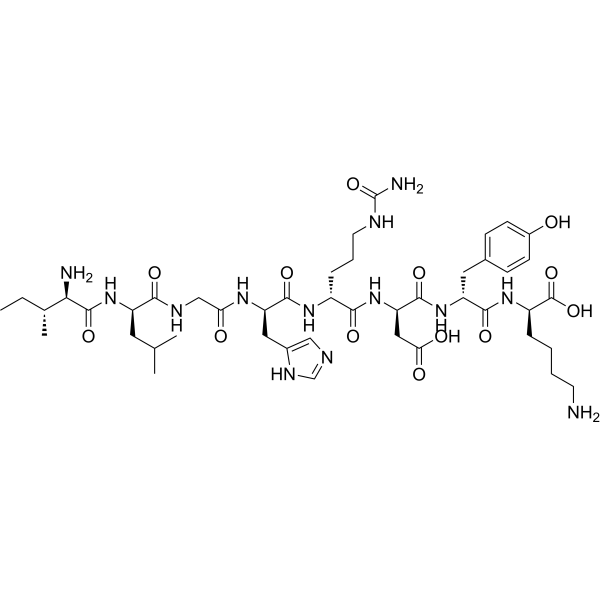
Cat. No.: HY-P4160
CAS No.: 634586-40-6
Synonyms: THG113.31; ILGHXDYK
연구분야:  

Endocrinology

PDC31 (THG113.31; ILGHXDYK) is an allosteric and non-competitive inhibitor of FP Prostaglandin Receptor. PDC31 is the D-amino acid-based oligopeptide, is used for smooth muscle contractile agent. PDC31 decreases the strength and duration of uterine contractions in vivo, which can be used for research of preterm labor and primary dysmenorrhea (PD). PDC31 also enhances Ca 2+-dependent large-conductance K +-channel in human myometrial cells .
loading...
    loading...
Cat. No.: HY-P992101
CAS No.: 3057276-00-0
Synonyms: AUR-200
Aritinercept (AUR-200) is a recombinant fusion protein targeting TNFSF13B/BAFF/CD257. Aritinercept neutralizes BAFF and APRIL (TNFSF13), reduces B cell proliferation, suppresses peripheral B cells, lowers serum immunoglobulins. Aritinercept reduces renal damage markers, decreases IFNγ, IL-17A, and anti-dsDNA autoantibodies, and improves survival in a mouse model of SLE. ritinercept can be used for the research of systemic lupus erythematosus .
loading...
    loading...
Cat. No.: HY-W011086R
CAS No.: 78-30-8
Synonyms: Tri-O-cresyl phosphate (Standard); TOTP (Standard)
Tri-O-tolyl phosphate (Tri-O-cresyl phosphate; TOTP) (Standard) is an analytical standard of Tri-O-tolyl phosphate (HY-W011086). This product is intended for research and analytical applications. Tri-O-tolyl phosphate is an aryl phosphate compounds commonly utilized as flame retardants and lubricant additives across various industrie. Tri-O-tolyl phosphate has neurotoxicity and reproductive toxicity, decreasing cell viability, inhibiting cell proliferation, triggering cell cycle arrest, induceing apoptosis, causing mitochondrial dysfunction, disrupts calcium homeostasis .
loading...
    loading...
Cat. No.: HY-W017448R
CAS No.: 24307-26-4
Synonyms: N,N-Dimethylpiperidinium chloride (Standard); PIX (Standard)
Mepiquat chloride (Standard) (N,N-Dimethylpiperidinium chloride (Standard)) is the analytical standard of Mepiquat chloride (HY-W017448). This product is intended for research and analytical applications. Mepiquat chloride (N,N-Dimethylpiperidinium chloride) is a systemic plant growth regulator. Mepiquat chloride reduces the activity of RuBP carboxylase. Mepiquat chloride decreases plant height, total length of vegetative and fruiting branches, and total leaf area of cotton. Mepiquat chloride reduces the net photosynthetic rate of cotton leaves. Mepiquat chloride promotes starch accumulation in cotton leaves without altering sucrose content .
loading...
    loading...
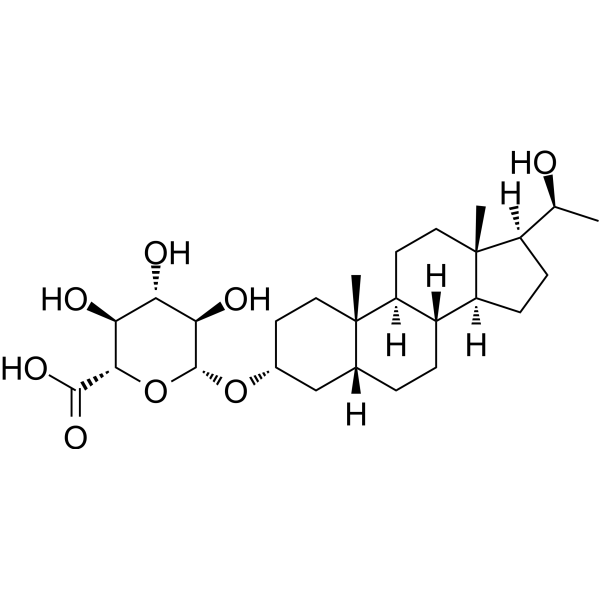
Cat. No.: HY-W040047
CAS No.: 1852-49-9
Pregnanediol 3-glucuronide is the main terminal metabolite of Progesterone (HY-N0437). Pregnanediol 3-glucuronide is the metabolite of Progesterone produced in the liver through hydroxylation and glucuronidation, with high hydrophilicity and easy excretion through urine. A decrease in the level of Pregnanediol 3-glucuronide is associated with an increased risk of thyroid cancer, while an increase is associated with the state of pregnancy. Pregnanediol 3-glucuronide is of great significance in the monitoring of female reproductive health, pregnancy assessment, and the diagnosis of endocrine diseases .
loading...
    loading...
Cat. No.: HY-W088066A
CAS No.: 10101-89-0
Trisodium phosphate dodecahydrate, 98% is an Antibacterial agent. Trisodium phosphate dodecahydrate, 98% reduces the counts of Escherichia coli O157:H7 and Salmonella typhimurium attached to the surfaces of beef fat and fascia. Trisodium phosphate dodecahydrate, 98% modulates the growth parameters of Listeria monocytogenes in vitro: low concentrations shorten the lag phase and increase the maximum growth rate, while high concentrations prolong the lag phase and decrease the maximum growth rate. Trisodium phosphate dodecahydrate, 98% is used in poultry processing .
loading...
    loading...
Cat. No.: HY-W162231
CAS No.: 91216-38-5
Target:  

Bacterial

연구분야:  

Infection Metabolic Disease

HC102A is an Antibacterial agent and an inhibitor of DosS and DosT histidine sensor kinases, with an IC50 of 1.9 μM against Mycobacterium tuberculosis DosS. HC102A does not alter the heme redox state of sensor kinases. HC102A reduces triacylglycerol synthesis and accumulation, decreases the survival rate of Mtb under non-replicating persistent and hypoxic conditions, and enhances the sensitivity of Mtb to Isoniazid (HY-B0329). HC102A can be used in research related to tuberculosis .
loading...
    loading...
Cat. No.: HY-W269032
CAS No.: 3598-68-3
Lig4-4 is an orally active and selective TREK-1 inhibitor, with an IC50 of 2.06 μM in rats. Lig4-4 improves neuronal viability, reduces cell apoptosis by upregulating cleaved-caspase-3 and downregulating Bcl-2, and decreases infarct volume. Lig4-4 exerts a neuroprotective effect against cerebral ischemia injury. Lig4-4 can be used in studies related to cerebral ischemia .
loading...
    loading...
Cat. No.: HY-W402074
CAS No.: 16275-44-8
Synonyms: Butenolide
5-Acetamide-Butenolide (Butenolide) is a mycotoxin with pro-oxidant activity, which is found in Fusarium. 5-Acetamide-Butenolide disrupts the mitochondrial membrane potential in primary neonatal rat cardiomyocytes. 5-Acetamide-Butenolide also induces the production of thiobarbituric acid reactive substances (TBARS) in isolated rat myocardial mitochondria. 5-Acetamide-Butenolide increases the production of reactive oxygen species (ROS), decreases the levels of GSH and reduces the viability of HepG2 cells .
loading...
    loading...
Cat. No.: HY-W747703
CAS No.: 1163160-18-6
Synonyms: Benzoylglycine-13C6
Hippuric acid- 13C6 (Benzoylglycine- 13C6) is 13C labeled Hippuric acid. Hippuric Acid is an orally active metabolite. Hippuric Acid can be produced by intestinal microorganisms from the metabolism of polyphenols, benzoic acid. Hippuric Acid decreases NRF2, MMP9 and leads to ROS accumulation. Hippuric Acid activates TGFβ/SMAD signaling. Hippuric Acid improves hyperuricemia and colitis. Hippuric Acid can also be used in cardiovascular disease research . .
loading...
    loading...
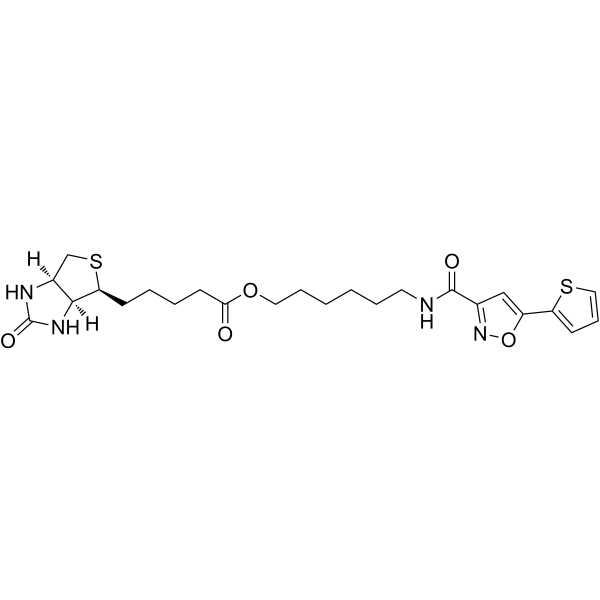
Cat. No.: HY-W750960
CAS No.: 1377605-22-5
Biotinylated isoxazole is a chemical probe that selectively precipitates proteins containing prion-like low-complexity domains and Cross-β prion-like polymers through recognition of Cross-β structure. Biotinylated isoxazole induces precipitation of proteins containing intrinsically disordered regions through microcrystal formation in solution. Biotinylated isoxazole enables enrichment of Amyloid oligomers for ELISA-based detection. Biotinylated isoxazole decreases Gems and increases misfolded PFN1 aggregates .
loading...
    loading...
Cat. No.: HY-W758396
Synonyms: N,N-Dimethylpiperidinium-d16 chloride; PIX-d16
Mepiquat-d16 chloride (N,N-Dimethylpiperidinium-d16 chloride) is the deuterated-labeled Mepiquat chloride (HY-W017448). Mepiquat chloride (N,N-Dimethylpiperidinium chloride) is a systemic plant growth regulator. Mepiquat chloride reduces the activity of RuBP carboxylase. Mepiquat chloride decreases plant height, total length of vegetative and fruiting branches, and total leaf area of cotton. Mepiquat chloride reduces the net photosynthetic rate of cotton leaves. Mepiquat chloride promotes starch accumulation in cotton leaves without altering sucrose content .
loading...
    loading...
Cat. No.: HY-W774926
CAS No.: 82523-59-9
Synonyms: NRDC-143-d6
Permethrin-d6 (NRDC-143-d6) is deuterium labeled Permethrin. Permethrin (NRDC-143) is an insecticide, acaricide and a high selectively inhibitor of the Mitochondrial complex I, found in sediment and water samples. Permethrin shows estrogenic in vivo and anti-estrogenic activity in vitro. Permethrin also acts as a neurotoxin affecting neuron membranes by prolonging Sodium channel activation. Permethrin decreases resistance to bacterial infections in medaka (Oryzias latipes) .
loading...
    loading...
Cat. No.: HY-W014507
CAS No.: 84-11-7
Synonyms: 9,10-PQ
9,10-Phenanthrenequinone (9,10-PQ) is a quinone environmental pollutant that induces oxidative stress. 9,10-Phenanthrenequinone upregulates AKR1B10 and NQO1, and promotes Nrf2 nuclear translocation, MEK/ERK phosphorylation, MMP-2 expression, caspase-3/9/8 activation, Bax increase, Bcl-2/Bcl-XL decrease, PARP activation, E-cadherin decrease, and 26S proteasome inhibition. 9,10-Phenanthrenequinone oxidizes thiols, causes oxidative damage to CuZn-SOD, depletes intracellular GSH, induces lipid peroxidation, and mediates mitochondrial dysfunction, p53 activation, and initiation of caspase-dependent apoptosis. 9,10-Phenanthrenequinone has ROS-independent toxicity pathways, and can inhibit cyclin B1 accumulation in mouse oocytes, downregulate Cdk1 activity, disrupt acentrosomal MTOC assembly and bipolar spindle formation, and arrest meiotic progression. 9,10-Phenanthrenequinone can be used in research on lung cancer, neuroblastoma, and cardiovascular diseases .
loading...
    loading...
Cat. No.: HY-100421R
CAS No.: 1628208-23-0
연구분야:  

Cancer

CPI-455 (Standard) is the analytical standard of CPI-455 (HY-100421). This product is intended for research and analytical applications. CPI-455 is a specific, pan-KDM5 inhibitor with an IC50 of 10 nM for KDM5A. CPI-455 mediates KDM5 inhibition, elevates global levels of H3K4me3, and decreases the number of drug-tolerant persister cancer cells in multiple cancer cell line models treated with standard chemotherapy or targeted agents .
loading...
    loading...
Cat. No.: HY-100432R
CAS No.: 877963-94-5
LOC14 (Standard) is the analytical standard of LOC14 (HY-100432). This product is intended for research and analytical applications. LOC14 is a potent Protein disulfide isomerase (PDI) inhibitor with EC50 and Kd values of 500 nM and 62 nM, respectively. LOC14 exhibits high stability in mouse liver microsomes and blood plasma, low intrinsic microsome clearance, and low plasma-protein binding . LOC14 inhibits PDIA3 activity, decreases intramolecular disulfide bonds and subsequent oligomerization (maturation) of HA in lung epithelial cells .
loading...
    loading...
Cat. No.: HY-100900R
CAS No.: 1991986-30-1
연구분야:  

Cancer

ML364 (Standard) is the analytical standard of ML364 (HY-100900). This product is intended for research and analytical applications. ML364 is a selective ubiquitin specific peptidase 2 (USP2) inhibitor (IC50=1.1 μM) with anti-proliferative activity, which direct binds to USP2 (Kd=5.2 μM), induces an increase in cellular cyclin D1 degradation and causes cell cycle arrest. ML364 increases the levels of mitochondrial ROS and decreases in the intracellular content of ATP .
loading...
    loading...
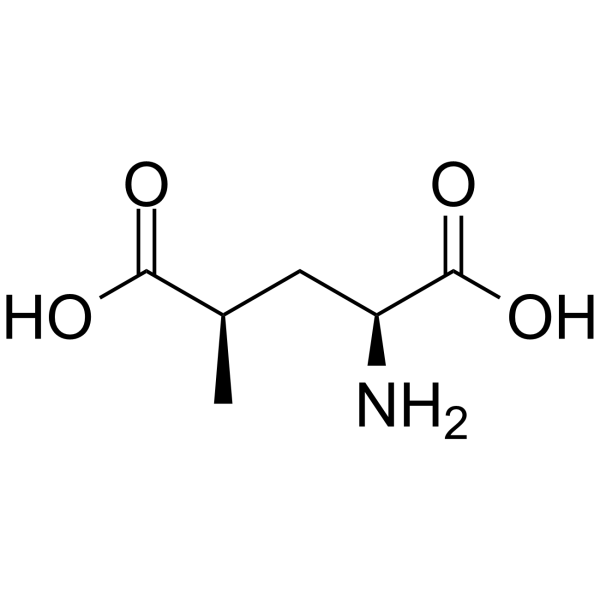
Cat. No.: HY-101310
CAS No.: 31137-74-3
Purity:  ≥98.0%
SYM 2081 is a kainate receptor agonist. SYM 2081 is a substrate of EAAT1 (Km of 54 μM). SYM 2081 inhibits EAAT2-mediated glutamate transport (Kb is 3.4 μM in Xenopus oocytes), modulates Apoptotic signaling pathways (increases Bcl-2 and decreases Bax/caspase-3 expression). SYM 2081 exhibits neuroprotective activity. SYM 2081 can be used in the study of hypoxic-ischemic brain damage and inflammatory or neuropathic pain .
loading...
    loading...
Cat. No.: HY-101563R
CAS No.: 1616392-22-3
Synonyms: GSK3326595 (Standard); EPZ015938 (Standard)
Pemrametostat (Standard) (GSK3326595 (Standard); EPZ015938 (Standard)) is the analytical standard of Pemrametostat (HY-101563). This product is intended for research and analytical applications. Pemrametostat (GSK3326595) is a protein arginine methyltransferase 5 (PRMT5) inhibitor. Pemrametostat decreases SARS-CoV-2 infection, inhibits cancer cell proliferation and induces pro-inflammatory macrophage polarization and increases hepatic triglyceride levels without affecting atherosclerosis. Pemrametostat can be used for research of relapsed/refractory mantle cell lymphoma .
loading...
    loading...
Cat. No.: HY-101872AR
CAS No.: 2703752-81-0
GSK-872 hydrochloride (Standard) is the analytical standard of GSK-872 hydrochloride (HY-101872A). This product is intended for research and analytical applications. GSK-872 hydrochloride is a RIPK3 inhibitor, which binds RIP3 kinase domain with an IC50 of 1.8 nM, and inhibits kinase activity with an IC50 of 1.3 nM. GSK-872 hydrochloride decreases the RIPK3-mediated necroptosis and subsequent cytoplasmic translocation and expression of HMGB1, as well as ameliorates brain edema and neurological deficits in early brain injury .
loading...
    loading...

