



Leucinostatin A
Leucinostatin A (Antibiotic P168) is a nonapeptide exerting a remarkable activity especially against Candida albicans and Cryptococcus neoformans. Leucinostatin A is a hydrophobic nonapeptide antibiotic. Leucinostatin A inhibits prostate cancer growth through reduction of insulin-like growth factor-I expression in prostate stromal cells. Antiprotozoal activies.
For research use only. We do not sell to patients.
- CAS No.: 76600-38-9
- Formula: C62H111N11O13
- Molecular Weight:1218.61
-
Storage:
Please store the product under the recommended conditions in the Certificate of Analysis.

To place orders, for customer services and technical support, please contact: MedChemExpress USA
Tel: 609-228-6898 E-mail: [email protected] [email protected]


-
 Biological Activity
-
Chemical Information
- Protocols
- Purity & Documentation
- References
-
 Help & FAQs


-
HY-B0105
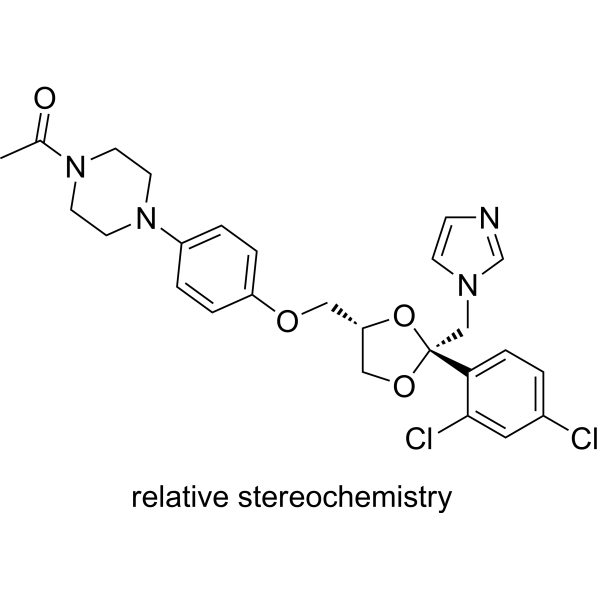
KetoconazoleCYP3A4 Inhibitor -
HY-N3460
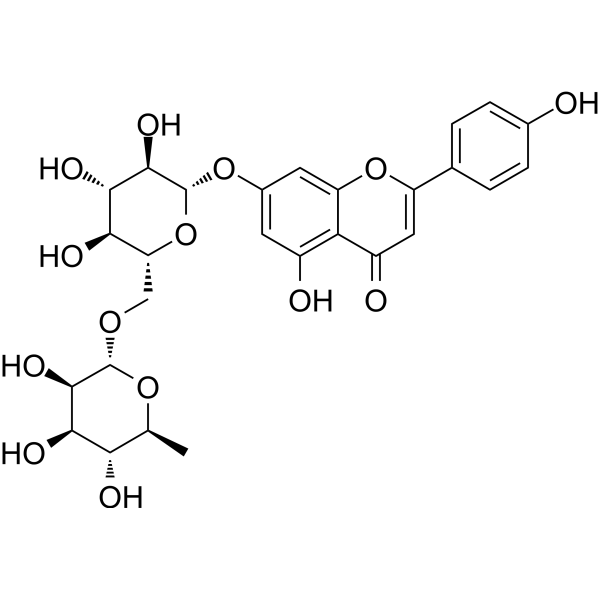
IsorhoifolinFlavonoid Glycoside -

HY-B0105R
Ketoconazole (Standard)CYP3A4 Inhibitor -
HY-145491
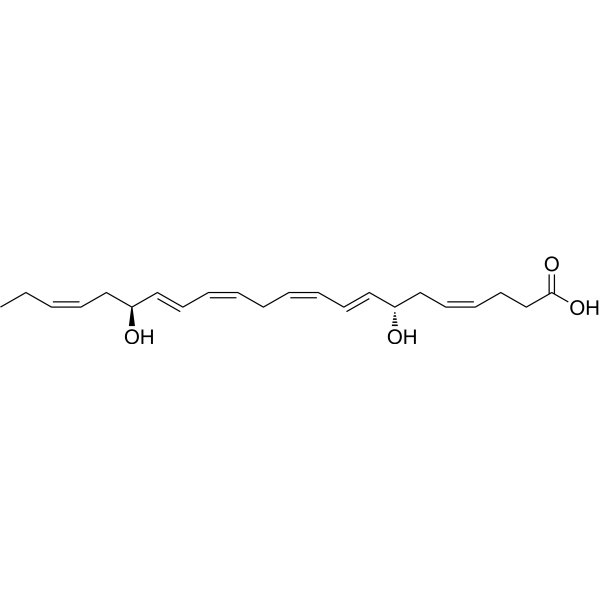
Resolvin D5Inflammation Inhibitor -

HY-W012088
(Z)-Methyl tetradec-9-enoate -
HY-129642
HirsutideCyclic Tetrapeptide -
HY-N5140
Bacopaside XSaponin -
HY-151264
BSP16STING Agonist -
HY-W505771
SeselinAnti-inflammatory Agent -

HY-N3460R
Isorhoifolin (Standard)Flavonoid Glycoside -

HY-116585
C6 D-Threo Ceramide (d18:1/6:0)Bioactive Sphingolipid -
HY-121780
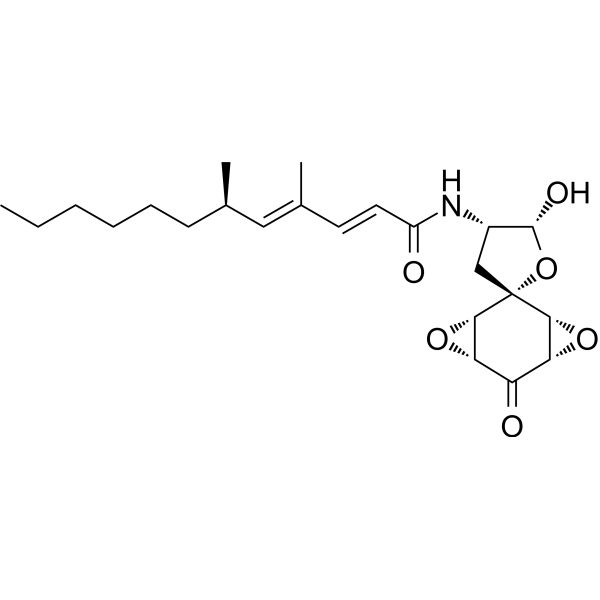
AranorosinAntifungal Antibiotic
All Antibiotic Isoforms
More

Biological Activity
Description


Chemical Information
-
CAS No. 76600-38-9
-
Molecular Weight 1218.61
-
Formula C62H111N11O13
-
SMILES
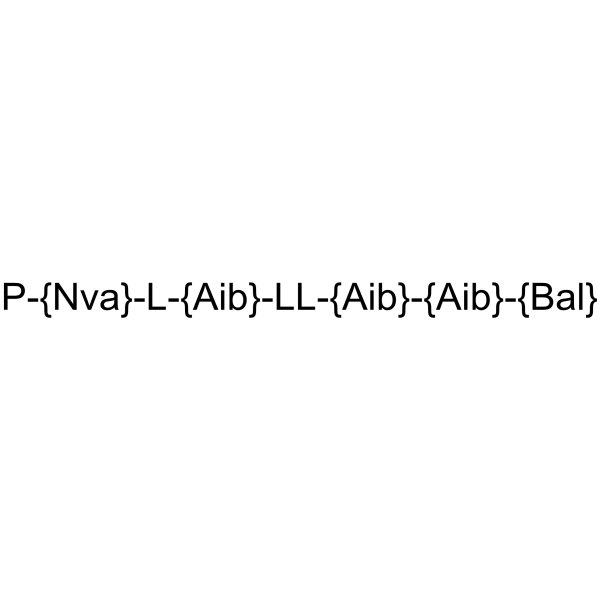
[P-{Nva}-L-{Aib}-LL-{Aib}-{Aib}-{Bal}]
-
Synonyms
Antibiotic P168
-
Sequence Shortening
P-{Nva}-L-{Aib}-LL-{Aib}-{Aib}-{Bal}
-
Structure Classification
-
Initial Source
Paecilomyces lilacinus
-
Shipping
Room temperature in continental US; may vary elsewhere.
-
Storage
Please store the product under the recommended conditions in the Certificate of Analysis.

Protocols
-
RNA extraction experimental
By lysing cells, releasing RNA, and removing impurities such as proteins and DNA, high-purity RNA products are finally obtained. The commonly used traditional method is the guanidine isothiocyanate/phenol/chloroform method (Trizol), which is suitable for a variety of animal materials including animal tissues, microorganisms, cultured cells, etc., and most plant materials.
-
Research Protocol for Endocrine Diseases
Endocrine diseases often arise from disrupted hormone production, hormone signaling, or target-tissue responsiveness; for diabetes-focused endocrine disease models, insulin signaling regulates glucose uptake, hepatic glucose output, lipid metabolism, and β-cell compensation. Type 2 diabetes develops through interacting defects in insulin resistance, β-cell dysfunction, adipose inflammation, hepatic glucose overproduction, altered incretin signaling, and ectopic lipid metabolism. A major unresolved question is whether endocrine dysfunction is driven primarily by target-tissue insulin resistance, intrinsic β-cell failure, immune/inflammatory stress, or combined multi-organ failure that differs by disease stage.


Purity & Documentation
References
[1]. Csermely P, et al. The nonapeptide leucinostatin A acts as a weak ionophore and as an immunosuppressant on T lymphocytes. Biochim Biophys Acta. 1994;1221(2):125-132. [Content Brief]
[2]. Ricci M, et al. Leucinostatin-A loaded nanospheres: characterization and in vivo toxicity and efficacy evaluation. Int J Pharm. 2004;275(1-2):61-72. [Content Brief]
[3]. Brand M, et al. Antiprotozoal Structure-Activity Relationships of Synthetic Leucinostatin Derivatives and Elucidation of their Mode of Action. Angew Chem Int Ed Engl. 2021;60(28):15613-15621. [Content Brief]

Calculators
Concentration (start) × Volume (start) = Concentration (final) × Volume (final)


Leucinostatin A Related Classifications
HY-P2450 Related Classifications
 Powered by Bioz