



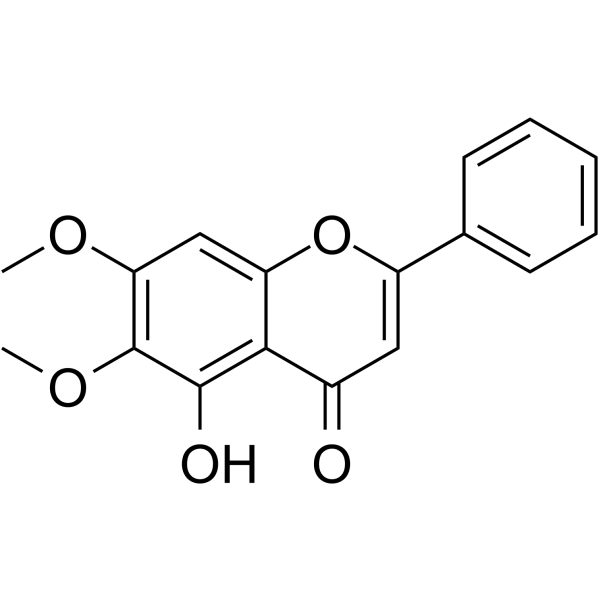
Mosloflavone
Based on 1 publication(s) in Google Scholar
Mosloflavone is a flavonoid isolated from Scutellaria baicalensis Georgi with ?anti-EV71 activity. Mosloflavone? inhibits VP2 virus replication and protein expression during the initial stage of virus infection and inhibits viral VP2 capsid protein synthesis. Mosloflavone is a promising biocide and inhibits P. aeruginosa virulence and biofilm formation.
For research use only. We do not sell to patients.
- Purity : 99.92%
- CAS No.: 740-33-0
- Formula: C17H14O5
- Molecular Weight:298.29
-
Storage:
4°C, protect from light
* In solvent : -80°C, 6 months; -20°C, 1 month (protect from light)

To place orders, for customer services and technical support, please contact: MedChemExpress USA
Tel: 609-228-6898 E-mail: [email protected] [email protected]


-
 Biological Activity
-
Chemical Information
-
Solvent & Solubility
- Protocols
- Purity & Documentation
- References
-
 Help & FAQs


-
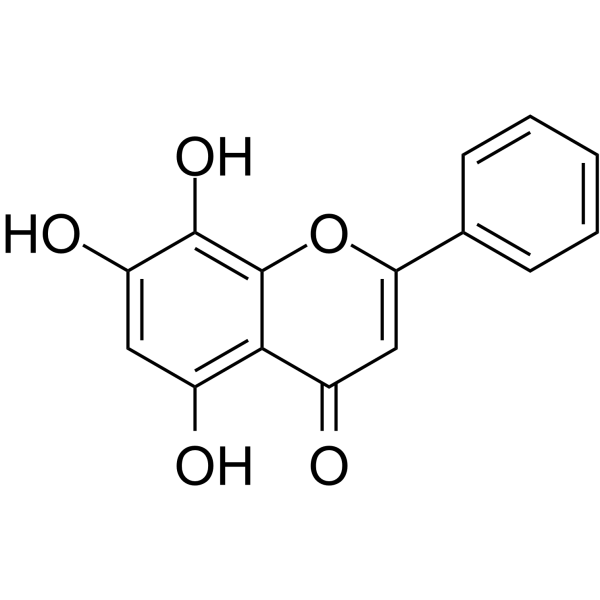
HY-N2562
NorwogoninEnterovirus 71 Inhibitor -
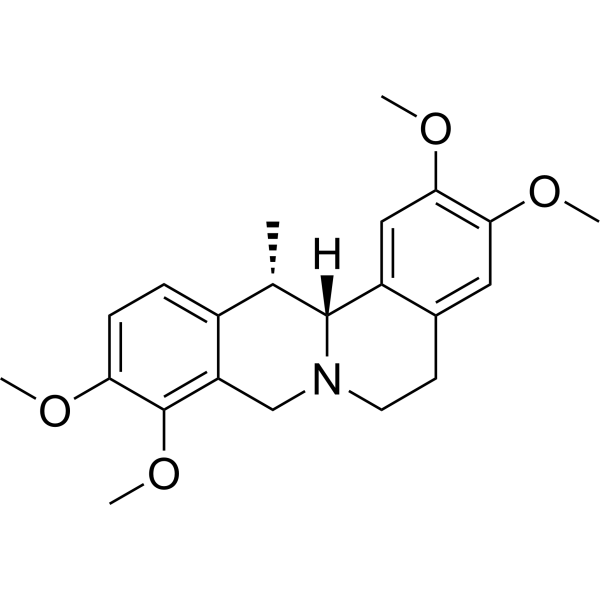
HY-N0923
CorydalineCholinesterase (ChE) Inhibitor -
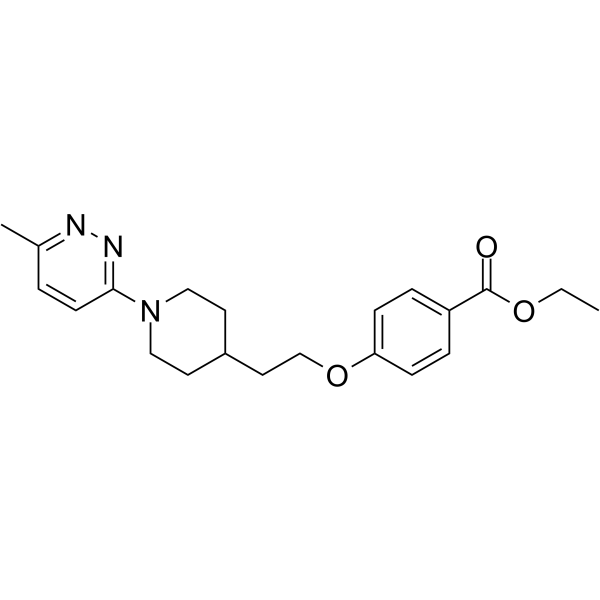
HY-13784
PirodavirPicornavirus Inhibitor -
HY-B1030
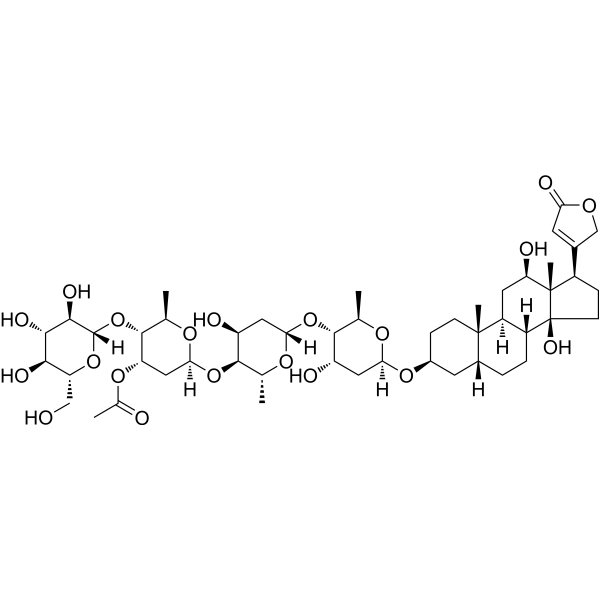
Lanatoside CCardiac Glycoside -
HY-128382
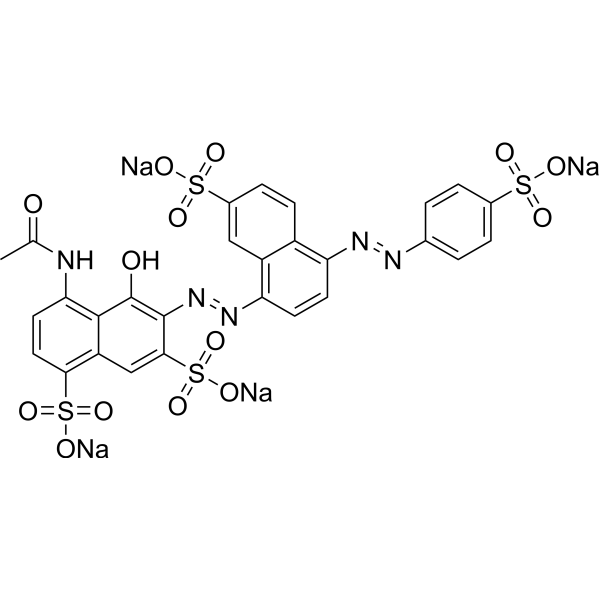
Brilliant Black BNAntiviral Agent -
HY-N0306
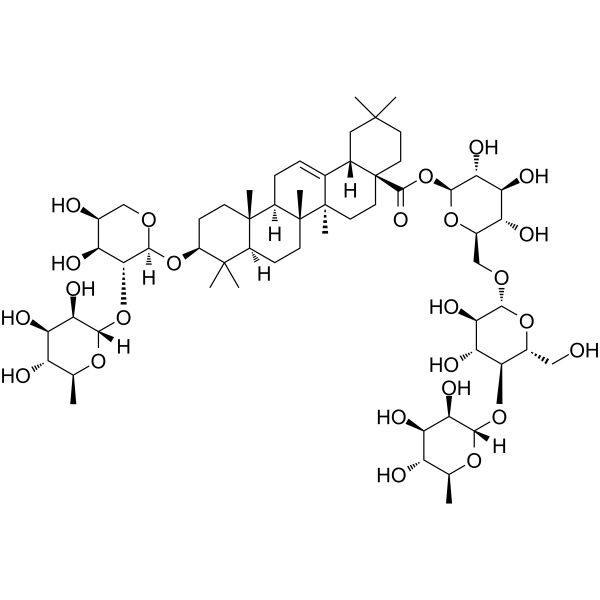
Hederasaponin BAntiviral Agent -
HY-16561A
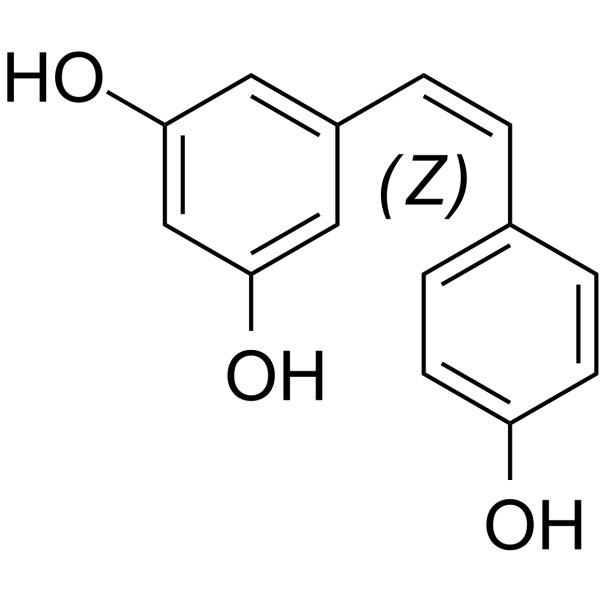
cis-ResveratrolEnteroviruses Inhibitor -
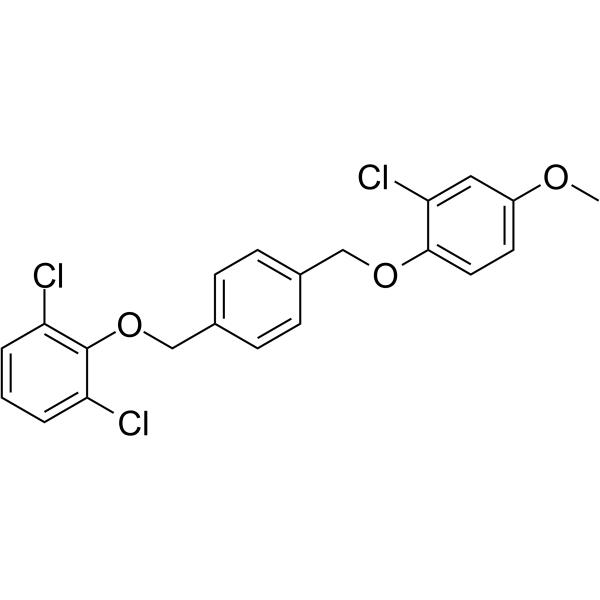
HY-104074
PocapavirCapsid Inhibitor -
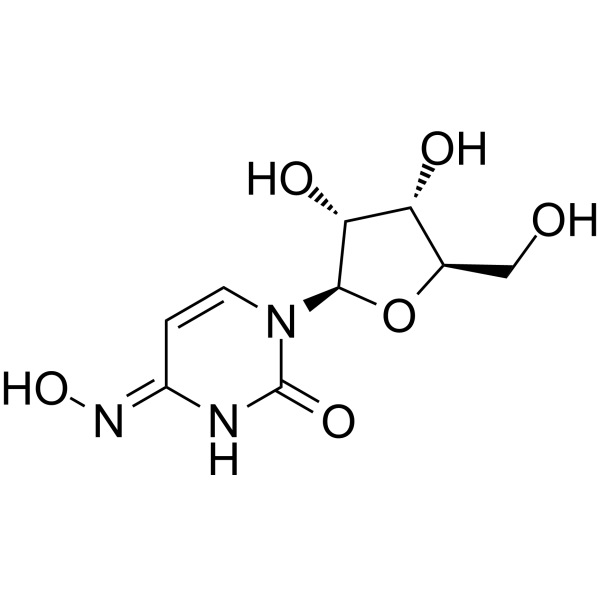
HY-125033
EIDD-1931Anti-Virus Agent -
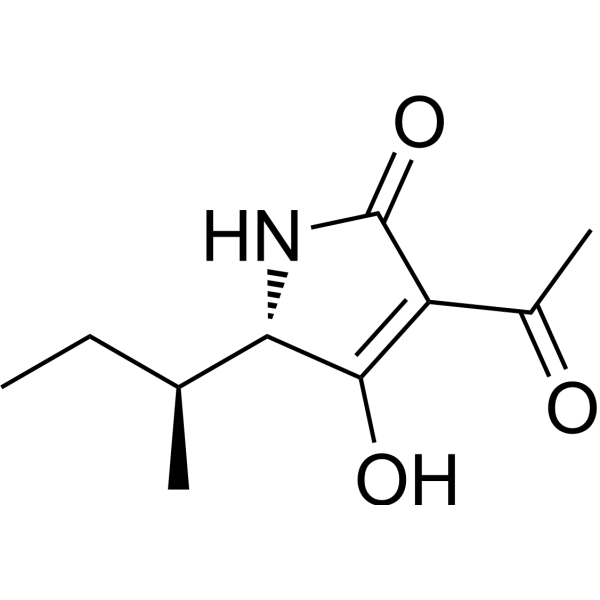
HY-N6715
Tenuazonic acidBacterial Inhibitor -
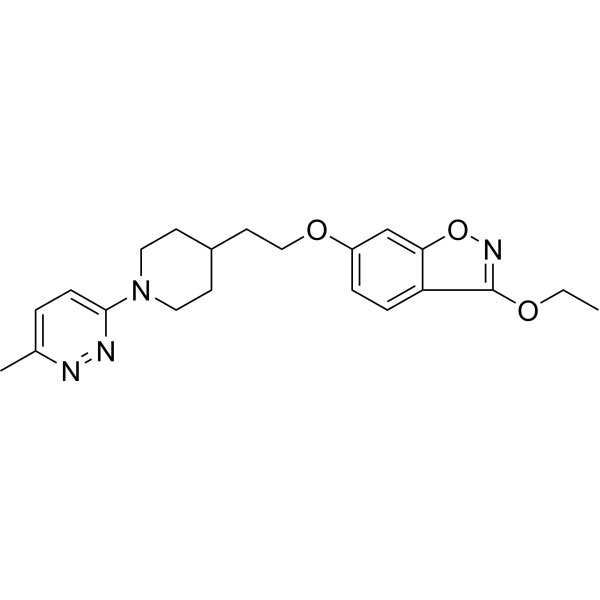
HY-106254
VapendavirEnteroviral Capsid Binder -
HY-145932
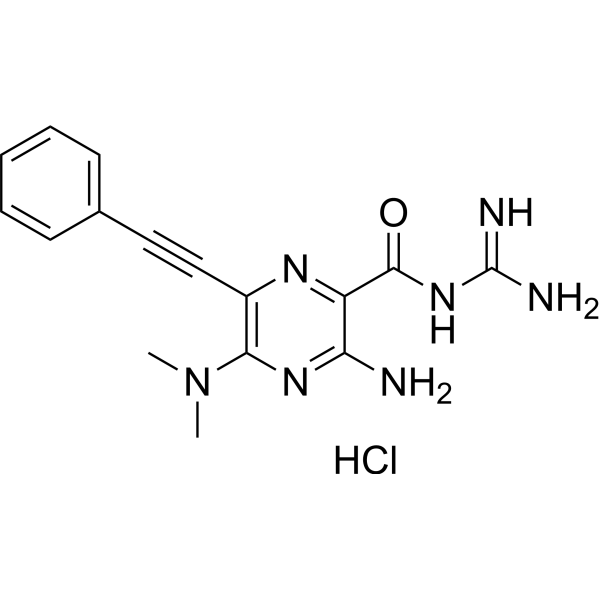
DMA-135 hydrochlorideEV71 Inhibitor
Publications Citing Use of MedChemExpress (MCE) Mosloflavone
More

Biological Activity
Description
IC50 & Target
Cellular Effect
|
Cell Line

|
Type | Value | Description | References |
|---|---|---|---|---|
| H9 | IC50 |
20.2 μg/mL
Compound: 1
|
Concentration that inhibits uninfected H9 cell growth by 50%.
Concentration that inhibits uninfected H9 cell growth by 50%.
|
[PMID: 12729671] |
| HT-22 | EC50 |
23.4 μM
Compound: 13
|
Neuroprotective activity against glutamate-induced cell death in mouse HT-22 cells assessed as increase in cell viability after 24 hrs by EZ-Cytox assay
Neuroprotective activity against glutamate-induced cell death in mouse HT-22 cells assessed as increase in cell viability after 24 hrs by EZ-Cytox assay
|
[PMID: 32991171] |
| J774.A1 | IC50 |
0.22 μM
Compound: 46
|
Anti-inflammatory activity in mouse J774.A1 macrophage cells assessed as reduction in LPS-induced TNF-alpha production
Anti-inflammatory activity in mouse J774.A1 macrophage cells assessed as reduction in LPS-induced TNF-alpha production
|
[PMID: 37683361] |
| J774.A1 | IC50 |
6.4 μM
Compound: 46
|
Antiinflammatory activity in LPS-induced mouse J774.A1 macrophage cells assessed as reduction in LPS-induced IL-1 beta level
Antiinflammatory activity in LPS-induced mouse J774.A1 macrophage cells assessed as reduction in LPS-induced IL-1 beta level
|
[PMID: 37683361] |
| KB | IC50 |
>100 μM
Compound: 8
|
Inhibitory activity against KB cell line after 72 h of drug exposure
Inhibitory activity against KB cell line after 72 h of drug exposure
|
[PMID: 15481991] |
| KB 3-1 | EC50 |
4.6 μM
Compound: 8
|
Concentration that causes 50% of maximum vinblastine accumulation in KB/MDR cells in 1 h
Concentration that causes 50% of maximum vinblastine accumulation in KB/MDR cells in 1 h
|
[PMID: 15481991] |
| KB 3-1 | IC50 |
>100 μM
Compound: 8
|
Inhibitory activity against KB/MDR cell line after 72 hr of drug exposure
Inhibitory activity against KB/MDR cell line after 72 hr of drug exposure
|
[PMID: 15481991] |
| MCF7 | IC50 |
>50 μM
Compound: 14
|
Cytotoxicity against human MCF7 cells after 72 hrs by MTS reduction assay
Cytotoxicity against human MCF7 cells after 72 hrs by MTS reduction assay
|
[PMID: 20704331] |
| NCI-H460 | IC50 |
>50 μM
Compound: 14
|
Cytotoxicity against human NCI-H460 cells after 72 hrs by MTS reduction assay
Cytotoxicity against human NCI-H460 cells after 72 hrs by MTS reduction assay
|
[PMID: 20704331] |
| SF-268 | IC50 |
>50 μM
Compound: 14
|
Cytotoxicity against human SF268 cells after 72 hrs by MTS reduction assay
Cytotoxicity against human SF268 cells after 72 hrs by MTS reduction assay
|
[PMID: 20704331] |
In Vitro
Mosloflavone shows promising anti-inflammatory activity via inhibition of TNF-α and IL-1β with IC50 values of 16.4 uM and 6.4 uM, respectively; inhibits TNF-α, IL-1β and iNOS levels in the supernatant of mouse macrophage cell line J774A as a dose-dependent manner, it also can be used as a starting point to discover lead structures for treatment of inflammatory and immunomodulatory diseases[2].
MedChemExpress (MCE) has not independently confirmed the accuracy of these methods. They are for reference only. Further protocols information, click here.


Chemical Information
-
CAS No. 740-33-0
-
Appearance Solid
-
Molecular Weight 298.29
-
Formula C17H14O5
-
Color Light yellow to yellow
-
SMILES
O=C1C=C(C2=CC=CC=C2)OC3=CC(OC)=C(OC)C(O)=C13
-
Structure Classification
-
Initial Source
-
Shipping
Room temperature in continental US; may vary elsewhere.
-
Storage
4°C, protect from light
* In solvent : -80°C, 6 months; -20°C, 1 month (protect from light)


Publications (1)
-
Journal Impact Factor
-
Most Recent
-
Vet Microbiol
The Chinese medicine monomer Schisandrin C inhibits PRRSV infection by regulating the OGT-PI3K/AKT/mTOR signaling pathway. [Abstract]2026 May:316:110992. PMID: 41865607


Solvent & Solubility
In Vitro:
DMSO : 50 mg/mL (167.62 mM; Need ultrasonic; Hygroscopic DMSO has a significant impact on the solubility of product, please use newly opened DMSO)
Please refer to the solubility information to select the appropriate solvent. Once prepared, please aliquot and store the solution to prevent product inactivation from repeated freeze-thaw cycles.
Storage method and period of stock solution: -80°C, 6 months; -20°C, 1 month (protect from light). When stored at -80°C, please use it within 6 months. When stored at -20°C, please use it within 1 month.
Please refer to the solubility information to select the appropriate solvent. Once prepared, please aliquot and store the solution to prevent product inactivation from repeated freeze-thaw cycles.
Storage method and period of stock solution: -80°C, 6 months; -20°C, 1 month (protect from light). When stored at -80°C, please use it within 6 months. When stored at -20°C, please use it within 1 month.
Concentration (start) × Volume (start) = Concentration (final) × Volume (final)
In Vivo:
Select the appropriate dissolution method based on your experimental animal and administration route.
- For the following dissolution methods, please ensure to first prepare a clear stock solution using an In Vitro approach and then sequentially add co-solvents:
- To ensure reliable experimental results, the clarified stock solution can be appropriately stored based on storage conditions. As for the working solution for In Vivo experiments, it is recommended to prepare freshly and use it on the same day.
- The percentages shown for the solvents indicate their volumetric ratio in the final prepared solution. If precipitation or phase separation occurs during preparation, heat and/or sonication can be used to aid dissolution.
Add each solvent one by one: 10% DMSO 90% (20% SBE-β-CD in Saline)
Solubility: 2.5 mg/mL (8.38 mM); Suspended solution; Need ultrasonic
This protocol yields a suspended solution of 2.5 mg/mL. Suspended solution can be used for oral and intraperitoneal injection.
Taking 1 mL working solution as an example, add 100 μL DMSO stock solution (25.0 mg/mL) to 900 μL 20% SBE-β-CD in Saline, and mix evenly.
Preparation of 20% SBE-β-CD in Saline (4°C, storage for one week): 2 g SBE-β-CD powder is dissolved in 10 mL Saline, completely dissolve until clear.
In Vivo Dissolution Calculator
Please enter the basic information of animal experiments:
-
-
-
-
Recommended: Prepare an additional quantity of animals to account for potential losses during experiments.
Please enter your animal formula composition:
-
%DMSO +
Recommended: Keep the proportion of DMSO in working solution below 2% if your animal is weak.
-
%+
-
+%Tween-80 + +
-
%Saline +
The co-solvents required include: DMSO, . All of co-solvents are available by MedChemExpress (MCE). , Tween 80. All of co-solvents are available by MedChemExpress (MCE).
Working solution concentration: 0.22 mg/mL
Method for preparing stock solution: mg drug dissolved in μL DMSO. Stock solution concentration: mg/mL. * In solvent : -80°C, 6 months; -20°C, 1 month (protect from light)
1. Take μL DMSO stock solution;
2. Add μL .
μL , mix evenly;
3. Then add μL Tween 80, mix evenly;
4. Then add μL
Please ensure that the stock solution in the first step is dissolved to a clear state, and add co-solvents in sequence. You can use ultrasonic heating (ultrasonic cleaner, recommended frequency 20-40 kHz), vortexing, etc. to assist dissolution.

Protocols
-
RNA extraction experimental
By lysing cells, releasing RNA, and removing impurities such as proteins and DNA, high-purity RNA products are finally obtained. The commonly used traditional method is the guanidine isothiocyanate/phenol/chloroform method (Trizol), which is suitable for a variety of animal materials including animal tissues, microorganisms, cultured cells, etc., and most plant materials.
-
Western Blot
Western blotting (WB) is a commonly used experimental method in molecular biology, biochemistry, and immunogenetics for identifying and quantifying target proteins. It combines gel electrophoresis with immunoassay, enabling researchers to analyze protein expression, post-translational modifications, and molecular weight.
-
Research Protocol for Infectious Diseases
Infectious-disease experiments test how pathogens interact with host barriers, innate immune receptors, inflammatory signaling, pathogen replication, and tissue injury; pattern-recognition receptors such as TLRs, RIG-I-like receptors, NOD-like receptors, and inflammasomes detect microbial molecules and activate NF-κB, interferon, and cytokine responses. The central hypothesis is that infection severity reflects the balance between pathogen burden and host response: protective inflammation restricts pathogen growth, whereas excessive or mislocalized inflammation contributes to tissue damage and disease phenotype. Unresolved questions include which host pathways are protective versus pathogenic, why some infection models fail to translate to human disease, and which combined readouts best predict clinically relevant infection outcomes.
-
Fungal Biofilm Culture
Fungal biofilm culture is an in vitro method for growing surface-attached fungal communities, most commonly Candida albicans, on abiotic substrates such as polystyrene wells, silicone elastomer, or polymethylmethacrylate; the assay models adhesion, proliferation, filamentation, extracellular-matrix-associated maturation, and dispersion. Biofilm output can be read by optical density at 600 nm for adherent biomass, XTT reduction for metabolic activity, CFU recovery for viable attached or dispersed cells, and microscopy for architecture.
-
Protocol For Protein Expression And Purification
Recombinant protein expression in Escherichia coli followed by purification of a His-tagged soluble protein by immobilized metal affinity chromatography (IMAC), with optional MBP fusion and TEV tag removal when the construct includes these elements. The biological readout is production of the encoded target protein, detected as an inducible band at the expected molecular mass by SDS-PAGE and quantified by total protein assay or chromatographic absorbance; the purification readout is enrichment of the target protein in elution fractions after selective binding of polyhistidine residues to immobilized Ni2+/metal-chelate resin and elution by imidazole-containing buffer. Expression is driven by an inducible bacterial expression system, commonly T7/lac-based, in which IPTG or lactose/auto-induction activates transcription and translation of the cloned gene; lower induction temperature, lower inducer concentration, induction timing, and solubility-enhancing fusion tags can influence the frac


Purity & Documentation
-
Data Sheet (275 KB)
-
SDS (252 KB)
- English - EN (252 KB)
- Français - FR (252 KB)
- Deutsch - DE (252 KB)
- Norwegian - NO (252 KB)
- Español - ES (252 KB)
- Swedish - SV (252 KB)
- Italian - IT (252 KB)
- Korean - KR (252 KB)
- Portuguese - PT (252 KB)
-
Handling Instructions (2659 KB)
References
[1]. 2.Choi HJ, et al. Inhibitory Effects of Norwogonin, Oroxylin A, and Mosloflavone on Enterovirus 71.Biomol Ther (Seoul). 2016 Sep 1;24(5):552-8. [Content Brief]
[2]. 2.Hnamte S, et al. Mosloflavone attenuates the quorum sensing controlled virulence phenotypes and biofilm formation in Pseudomonas aeruginosa PAO1: In vitro, in vivo and in silico approach.Microb Pathog. 2019 Jun;131:128-134. [Content Brief]
[3]. 4.Singh B, et al. Anti-inflammatory and immunomodulatory flavones from Actinocarya tibetica Benth.Nat Prod Res. 2013;27(23):2227-30. [Content Brief]


Complete Stock Solution Preparation Table
Please refer to the solubility information to select the appropriate solvent. Once prepared, please aliquot and store the solution to prevent product inactivation from repeated freeze-thaw cycles.
Storage method and period of stock solution: -80°C, 6 months; -20°C, 1 month (protect from light). When stored at -80°C, please use it within 6 months. When stored at -20°C, please use it within 1 month.
| Optional Solvent | Concentration Solvent Mass | 1 mg | 5 mg | 10 mg | 25 mg |
|---|---|---|---|---|---|
| DMSO | 1 mM | 3.3524 mL | 16.7622 mL | 33.5244 mL | 83.8111 mL |
| 5 mM | 0.6705 mL | 3.3524 mL | 6.7049 mL | 16.7622 mL | |
| 10 mM | 0.3352 mL | 1.6762 mL | 3.3524 mL | 8.3811 mL | |
| 15 mM | 0.2235 mL | 1.1175 mL | 2.2350 mL | 5.5874 mL | |
| 20 mM | 0.1676 mL | 0.8381 mL | 1.6762 mL | 4.1906 mL | |
| 25 mM | 0.1341 mL | 0.6705 mL | 1.3410 mL | 3.3524 mL | |
| 30 mM | 0.1117 mL | 0.5587 mL | 1.1175 mL | 2.7937 mL | |
| 40 mM | 0.0838 mL | 0.4191 mL | 0.8381 mL | 2.0953 mL | |
| 50 mM | 0.0670 mL | 0.3352 mL | 0.6705 mL | 1.6762 mL | |
| 60 mM | 0.0559 mL | 0.2794 mL | 0.5587 mL | 1.3969 mL | |
| 80 mM | 0.0419 mL | 0.2095 mL | 0.4191 mL | 1.0476 mL | |
| 100 mM | 0.0335 mL | 0.1676 mL | 0.3352 mL | 0.8381 mL |


Mosloflavone Related Classifications
HY-N2036 Related Classifications
 Powered by Bioz