



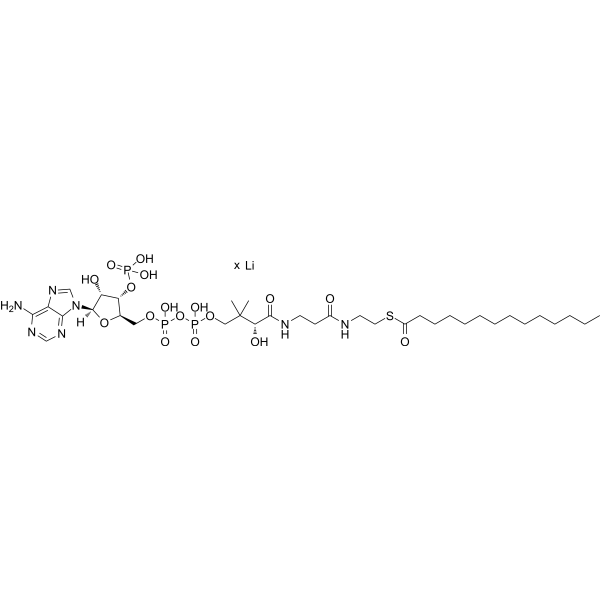
Myristoyl coenzyme A lithium

Based on 1 Customer Validation
Myristoyl coenzyme A lithium is lithium-labeled myristoylated coenzyme A (CoA). Myristoylation is an essential process in viruses and is generally controlled by N-myristoyltransferase (NMT). And NMT is more active in colon epithelial tumors than in normal cells. Reduced Ccoenzyme A (CoA) is known to be a key regulator of NMT activity, whereas oxidized CoA does not allow NMT to promote myristoylation. Myristoyl coenzyme A blocks the demyristoylation process and has potential anticancer and antiviral mechanisms.
For research use only. We do not sell to patients.
- Purity : 97.12%
- CAS No.: 187100-75-0
- Formula: C35H63LiN7O17P3S
-
Storage:
-20°C, sealed storage, away from moisture and light
* In solvent : -80°C, 6 months; -20°C, 1 month (sealed storage, away from moisture and light)

To place orders, for customer services and technical support, please contact: MedChemExpress USA
Tel: 609-228-6898 E-mail: [email protected] [email protected]


-
 Biological Activity
-
Chemical Information
- Protocols
- Purity & Documentation
- References
-
 Help & FAQs


-
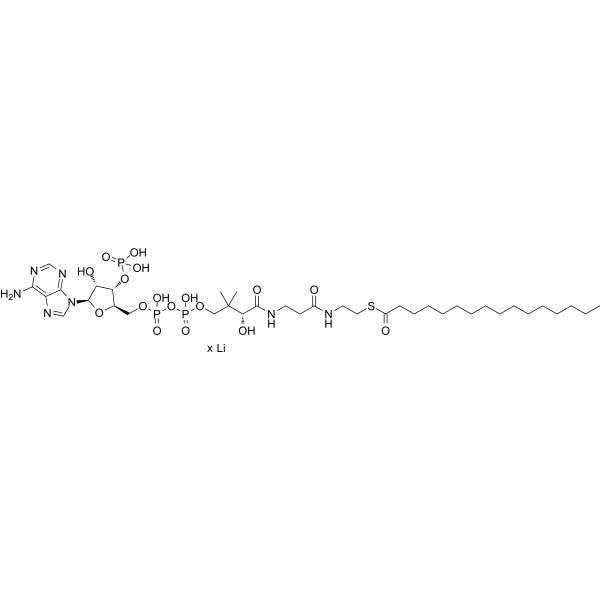
HY-134427
Palmitoyl coenzyme A lithiumPalmitoyl Coenzyme A -
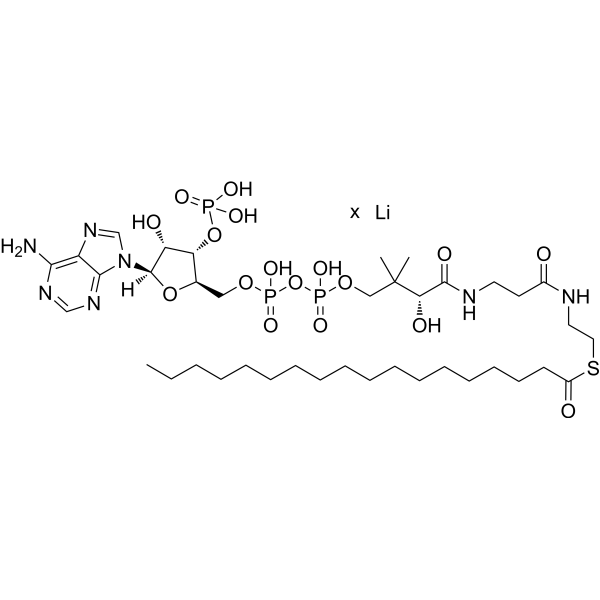
HY-134423
Stearoyl coenzyme A lithiumActive Compound -
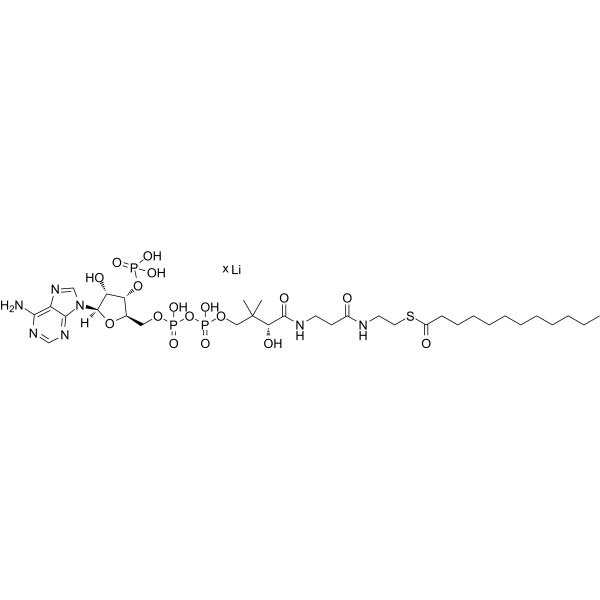
HY-126912A
Lauroyl coenzyme A lithiumCoenzyme A -
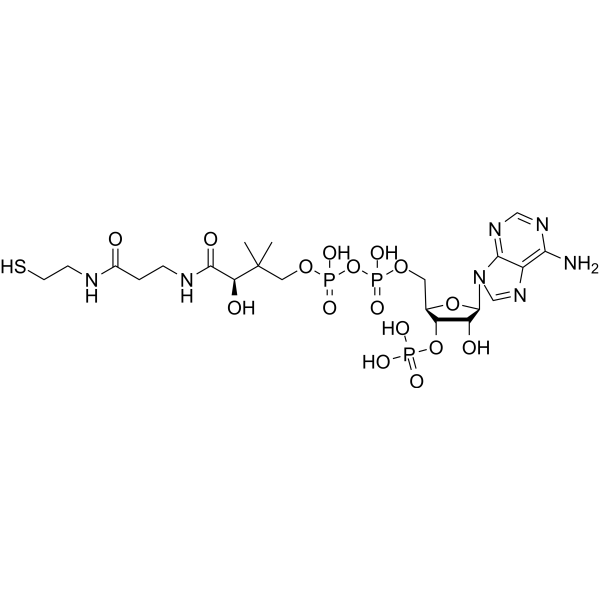
HY-128851
Coenzyme ACofactor -
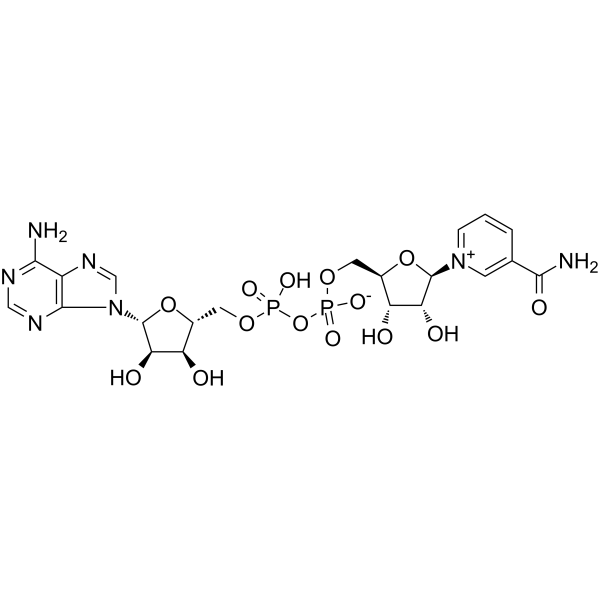
HY-B0445
NAD+Endogenous Metabolite -
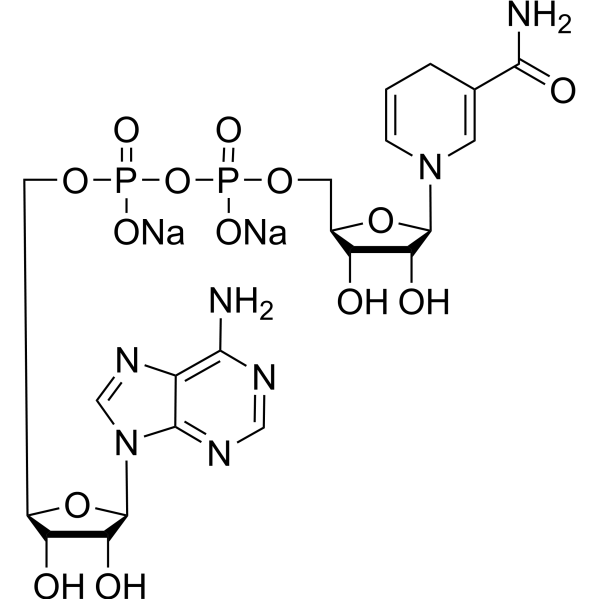
HY-F0001
NADH disodium saltReduced Coenzyme -
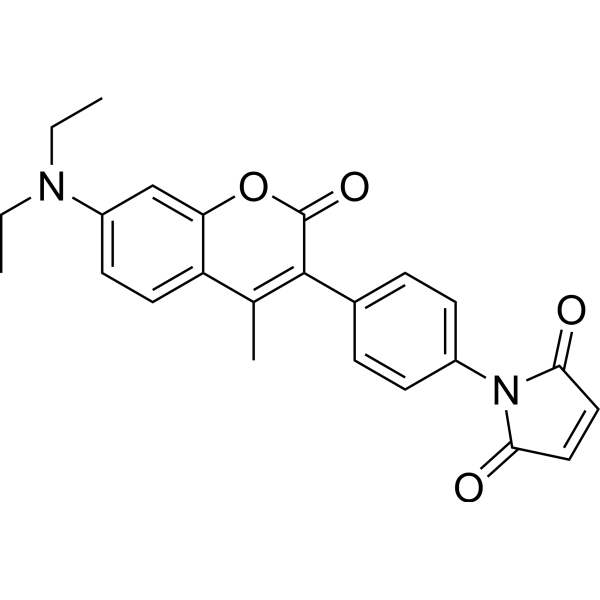
HY-D0069
CPMFluorescent Dye -
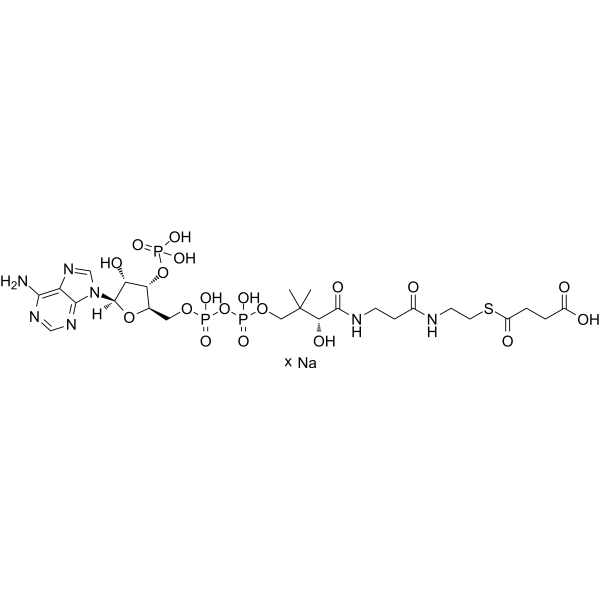
HY-137808
Succinyl-Coenzyme A sodiumCoenzyme A Derivative -
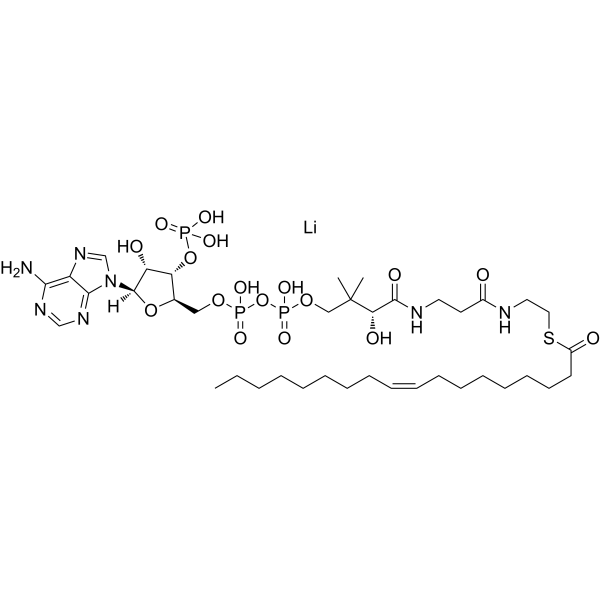
HY-109591A
Oleoyl coenzyme A lithiumCoA -

HY-F0001R
NADH disodium salt (Standard)Reference Standard -
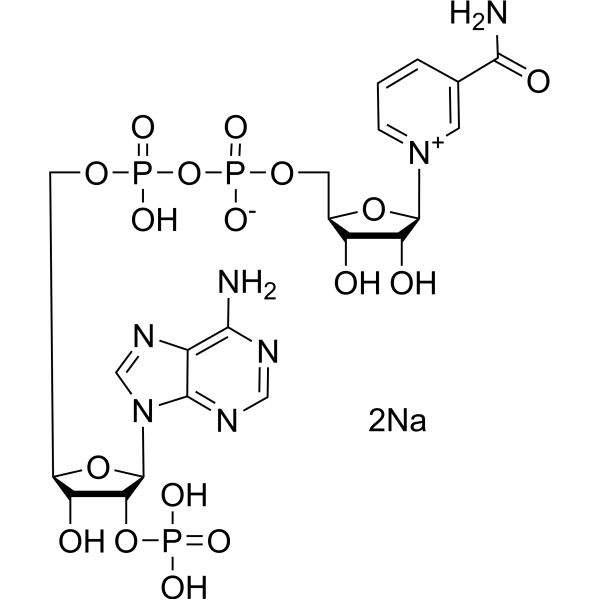
HY-F0002A
NADP disodium saltRedox Coenzyme -
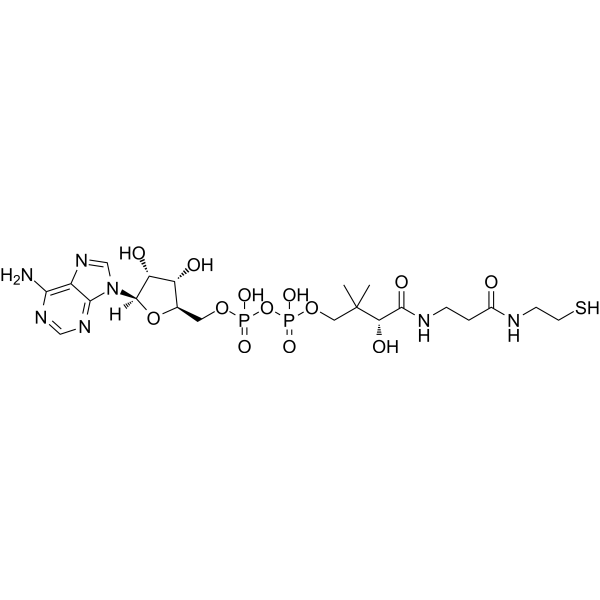
HY-137899
Dephospho-CoADPCK Substrate
All Endogenous Metabolite Isoforms
More

Biological Activity
Description
IC50 & Target
|
Human Endogenous Metabolite |
In Vitro
Myristoylation is an essential process in viruses and is generally controlled by N-myristoyltransferase (NMT). And NMT is more active in colon epithelial tumors than in normal cells. Reduced Ccoenzyme A (CoA) is known to be a key regulator of NMT activity, whereas oxidized CoA does not allow NMT to promote myristoylation. Myristoyl coenzyme A blocks the demyristoylation process and has potential anticancer and antiviral mechanisms[1].
MedChemExpress (MCE) has not independently confirmed the accuracy of these methods. They are for reference only. Further protocols information, click here.


Chemical Information
-
CAS No. 187100-75-0
-
Appearance Solid
-
Formula C35H63LiN7O17P3S
-
Color White to off-white
-
SMILES
O=C(SCCNC(CCNC([C@H](O)C(C)(C)COP(OP(OC[C@@H]1[C@@H](OP(O)(O)=O)[C@@H](O)[C@]([H])(N2C=NC3=C(N)N=CN=C32)O1)(O)=O)(O)=O)=O)=O)CCCCCCCCCCCCC.[Li].[x]
-
Structure Classification
-
Initial Source
-
Shipping
Room temperature in continental US; may vary elsewhere.
-
Storage
-20°C, sealed storage, away from moisture and light
* In solvent : -80°C, 6 months; -20°C, 1 month (sealed storage, away from moisture and light)

Protocols
-
Research Protocol for Infectious Diseases
Infectious-disease experiments test how pathogens interact with host barriers, innate immune receptors, inflammatory signaling, pathogen replication, and tissue injury; pattern-recognition receptors such as TLRs, RIG-I-like receptors, NOD-like receptors, and inflammasomes detect microbial molecules and activate NF-κB, interferon, and cytokine responses. The central hypothesis is that infection severity reflects the balance between pathogen burden and host response: protective inflammation restricts pathogen growth, whereas excessive or mislocalized inflammation contributes to tissue damage and disease phenotype. Unresolved questions include which host pathways are protective versus pathogenic, why some infection models fail to translate to human disease, and which combined readouts best predict clinically relevant infection outcomes.


Purity & Documentation
-
Data Sheet (267 KB)
-
SDS (252 KB)
- English - EN (252 KB)
- Français - FR (252 KB)
- Deutsch - DE (252 KB)
- Norwegian - NO (252 KB)
- Español - ES (252 KB)
- Swedish - SV (252 KB)
- Italian - IT (252 KB)
- Korean - KR (252 KB)
- Portuguese - PT (252 KB)
-
Handling Instructions (2659 KB)
References

Calculators
Concentration (start) × Volume (start) = Concentration (final) × Volume (final)


Myristoyl coenzyme A lithium Related Classifications
HY-126833A Related Classifications
 Powered by Bioz