



Quinethazone
Quinethazone is an orally active diuretic agent and is also a weak inhibitor of carbonic anhydrase. Quinethazone can be used for hypertension research.
Nos produits utilisent uniquement pour la recherche. Nous ne vendons pas aux patients.
- CAS No.: 73-49-4
- Formule: C10H12ClN3O3S
- Masse moléculaire:289.74
-
Stockage:Powder -20°C, 3 years , 4°C, 2 years ; In solvent -80°C, 6 months , -20°C, 1 month

To place orders, for customer services and technical support, please contact: MedChemExpress USA
Tel: 609-228-6898 E-mail: [email protected] [email protected]


-
 Activité biologique
-
Chemical Information
- Protocole
- Pureté et documentation
- Références
-
 Help & FAQs


-
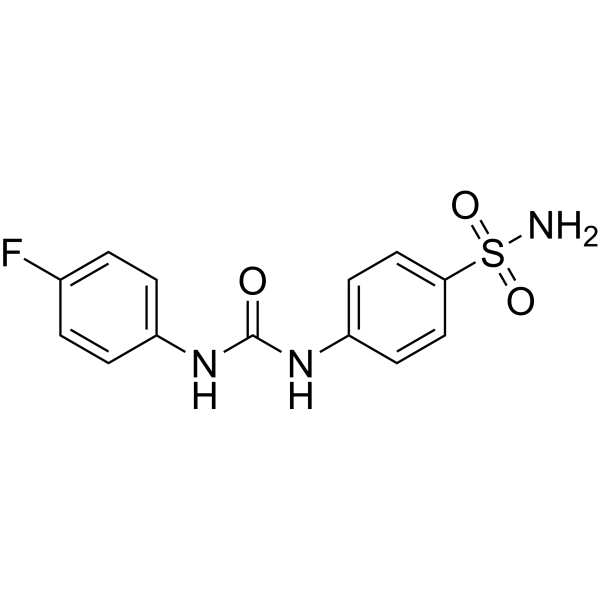
HY-13513
U-104CA IX/XII Inhibitor -
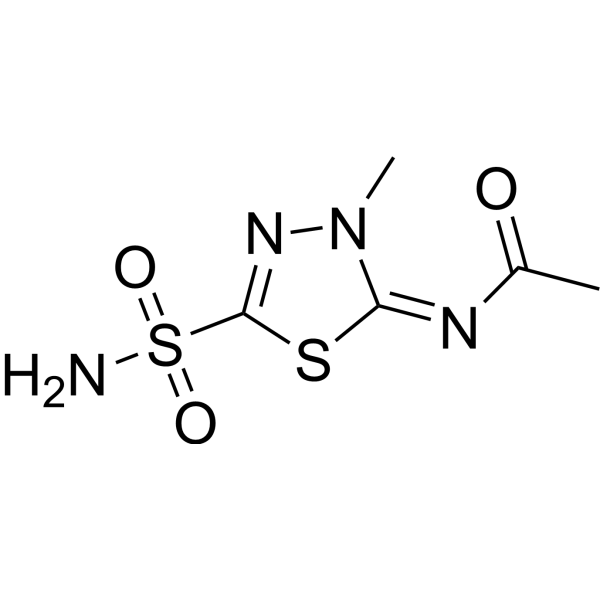
HY-B0553
MethazolamideCarbonic Anhydrase Inhibitor -
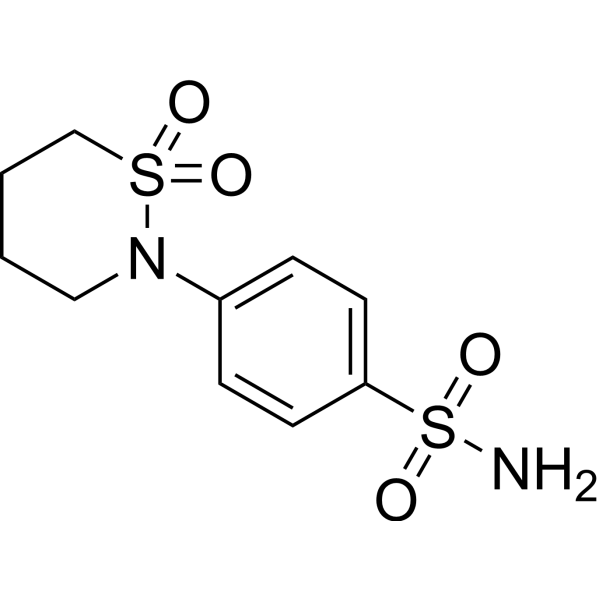
HY-108316
SultiameCarbonic Anhydrase Inhibitor -
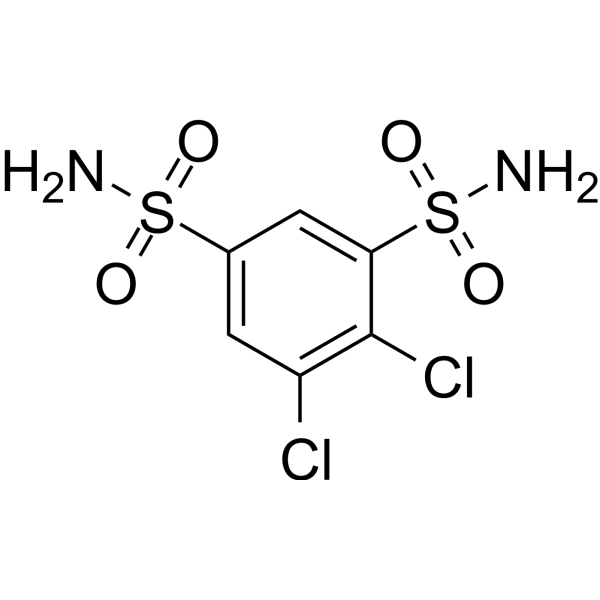
HY-B0397
DichlorphenamideCarbonic Anhydrase Inhibitor -
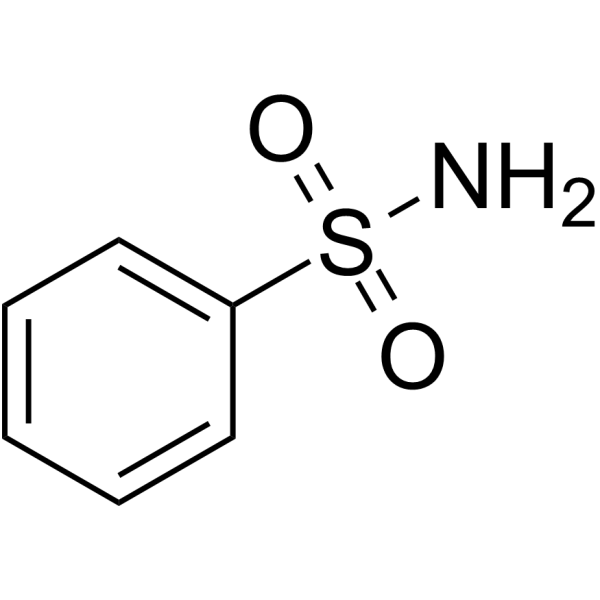
HY-101087
BenzenesulphonamideCA Inhibitor -
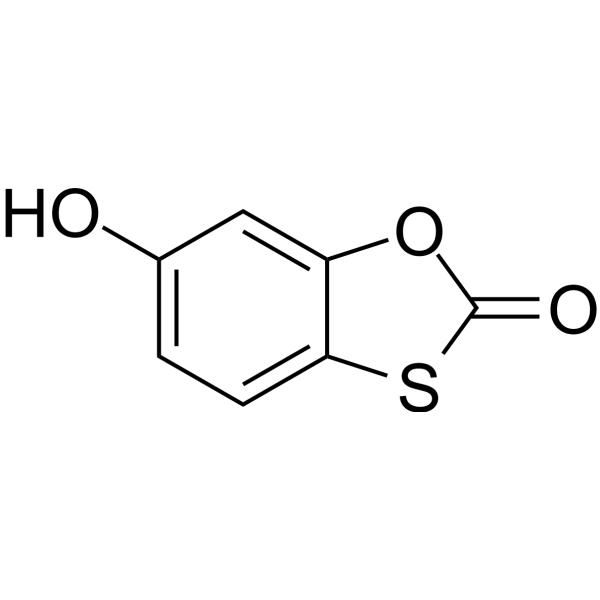
HY-B0483
TioxoloneCarbonic Anhydrase Inhibitor -
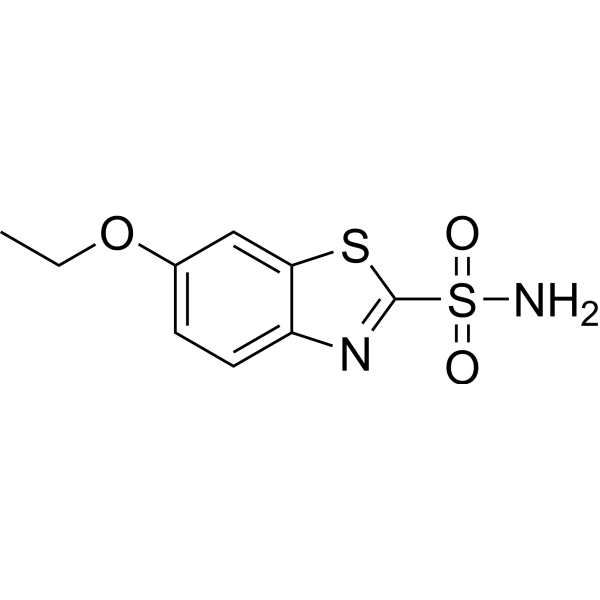
HY-B1480
EthoxzolamideCarbonic Anhydrase Inhibitor -

HY-B0553R
Methazolamide (Standard)Carbonic Anhydrase Inhibitor -
HY-B0397R
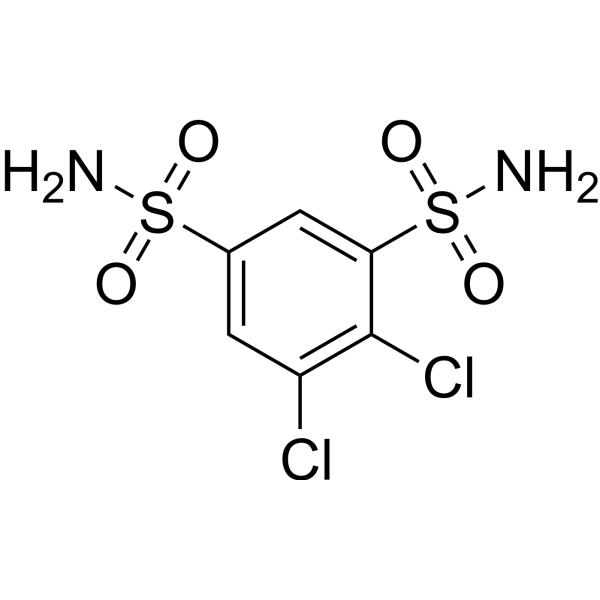
Dichlorphenamide (Standard)Carbonic Anhydrase Inhibitor -

HY-B0483R
Tioxolone (Standard)Carbonic Anhydrase Inhibitor -

HY-108316R
Sultiame (Standard)Carbonic Anhydrase Inhibitor -

HY-101087R
Benzenesulphonamide (Standard)CA Inhibitor


Activité biologique
Description
In Vivo
MedChemExpress (MCE) has not independently confirmed the accuracy of these methods. They are for reference only.
-
Animal Model:Five- to 6-week-old Long Evans male rats, hypertension model[1]
-
Dosage:50 mg/kg
-
Administration:Oral, daily for 2 weeks
-
Result:Had no significant effect on sodium or water distribution in arterial tissue of hypertensive rats, but decreased approximate 20% intra-cellular content of potassium


Chemical Information
-
CAS No. 73-49-4
-
Appearance Solid
-
Masse moléculaire 289.74
-
Formule C10H12ClN3O3S
-
Color Light brown to brown
-
SMILES
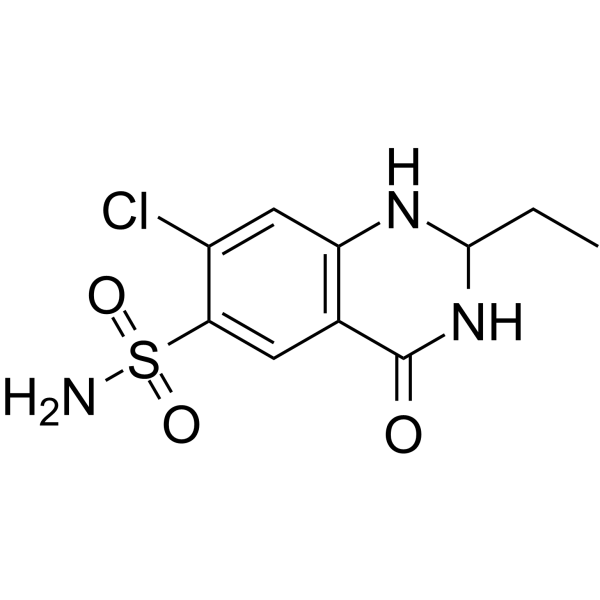
O=S(C1=CC2=C(NC(CC)NC2=O)C=C1Cl)(N)=O
-
Livraison
Room temperature in continental US; may vary elsewhere.
-
Stockage
Powder -20°C 3 years 4°C 2 years In solvent -80°C 6 months -20°C 1 month

Protocole
-
Research Protocol for Cardiovascular Diseases
Cardiovascular disease can be modeled as maladaptive cardiac remodeling, where ischemic injury or pressure overload activates inflammatory signaling, fibroblast activation, extracellular-matrix deposition, cardiomyocyte hypertrophy, vascular remodeling, and progressive ventricular dysfunction. The TGF-β/SMAD axis is a central profibrotic pathway after myocardial injury and pressure overload, while innate immune and cytokine pathways regulate leukocyte recruitment, scar formation, and adverse remodeling. Key unresolved questions include which inflammatory signals are reparative versus harmful, when fibrosis is protective versus maladaptive, and whether pathway inhibition improves function without weakening necessary infarct healing or compensatory remodeling.


Pureté et documentation
-
Fiche technique (270 KB)
-
SDS (393 KB)
- English - EN (393 KB)
- Français - FR (393 KB)
- Deutsch - DE (393 KB)
- Norwegian - NO (393 KB)
- Español - ES (393 KB)
- Swedish - SV (393 KB)
- Italian - IT (393 KB)
- Korean - KR (393 KB)
- Portuguese - PT (393 KB)
-
Instruction de manipulation (2659 KB)
Références
[1]. FREED SC. MECHANISM OF ANTI-HYPERTENSIVE ACTION OF QUINETHAZONE. Proc Soc Exp Biol Med. 1963 Nov;114:421-2. [Content Brief]
[2]. Angelopoulos B, et al. Experimental investigation and observations on the diuretic action of quinethazone. Med Pharmacol Exp Int J Exp Med. 1966;14(6):528-36. [Content Brief]

Calculators
Concentration (start) × Volume (start) = Concentration (final) × Volume (final)


Quinethazone Related Classifications
HY-B1364 Related Classifications
 Powered by Bioz