



Rp-8-Br-cAMPS
Based on 1 publication(s) in Google Scholar
Rp-8-Br-cAMPS is an analog of cAMP and an inhibitor of PKA. Rp-8-Br-cAMPS occupies cAMP binding sites on PKA type I regulatory subunits, thereby preventing PKA dissociation and activation. Rp-8-Br-cAMPS can be used in the study of tumors and retrovirus-induced immune deficiency. Rp-8-Br-cAMPS also inhibits insulin secretion.
For research use only. We do not sell to patients.
- CAS No.: 129735-00-8
- Formula: C10H11BrN5O5PS
- Molecular Weight:424.17
-
Storage:
Please store the product under the recommended conditions in the Certificate of Analysis.


To place orders, for customer services and technical support, please contact: MedChemExpress USA
Tel: 609-228-6898 E-mail: [email protected] [email protected]


-
 Biological Activity
-
Chemical Information
- Protocols
- Purity & Documentation
- References
-
 Help & FAQs


-
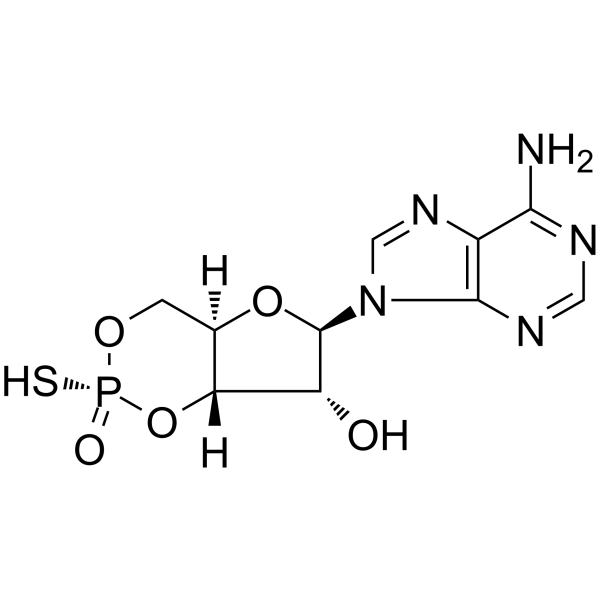
HY-100530A
Rp-cAMPSPKA I/II Antagonist -
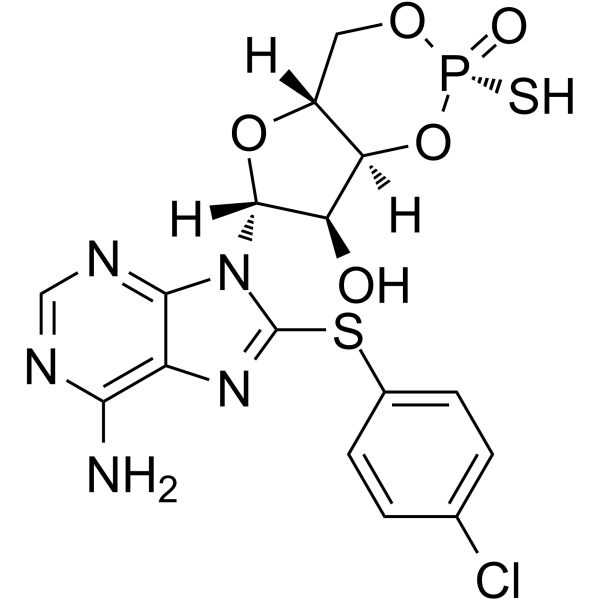
HY-120994B
Sp-8-CPT-cAMPSPKA Activator -
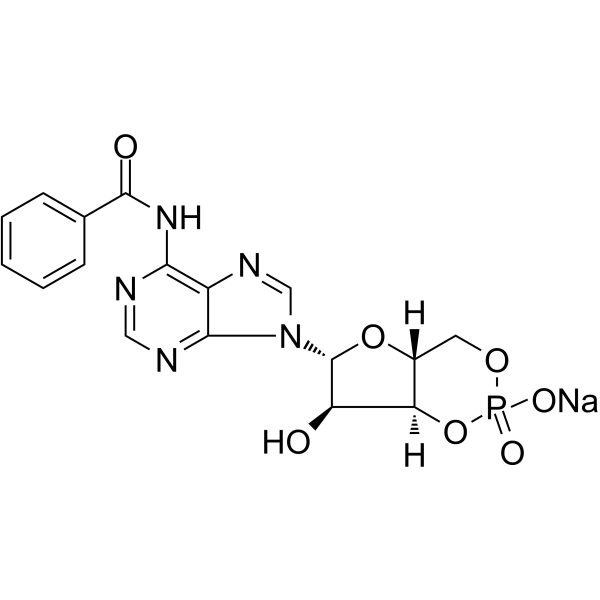
HY-103322
6-Bnz-cAMP sodium saltPKA Activator -
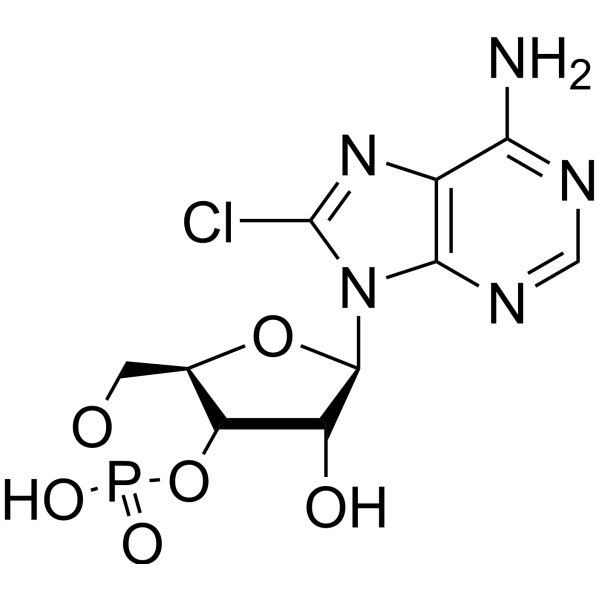
HY-123396
8-Chloro-cAMPcAMP Analogue -
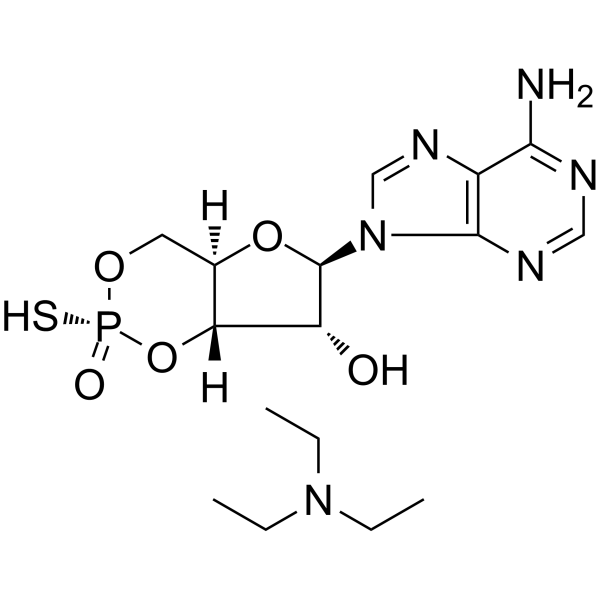
HY-100530
Rp-cAMPS triethylammonium saltPKA I/II Antagonist -
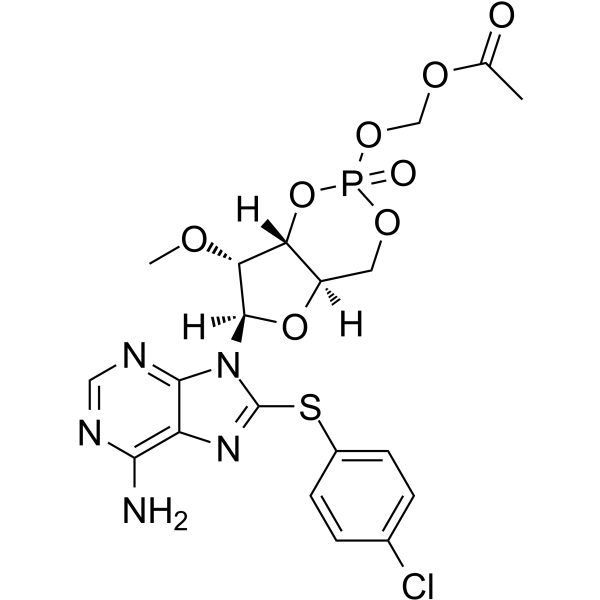
HY-107544
8-pCPT-2'-O-Me-cAMP-AMAMP Analogue -

HY-137633
Sp-8-Br-PET-cGMPSPKG Agonist -
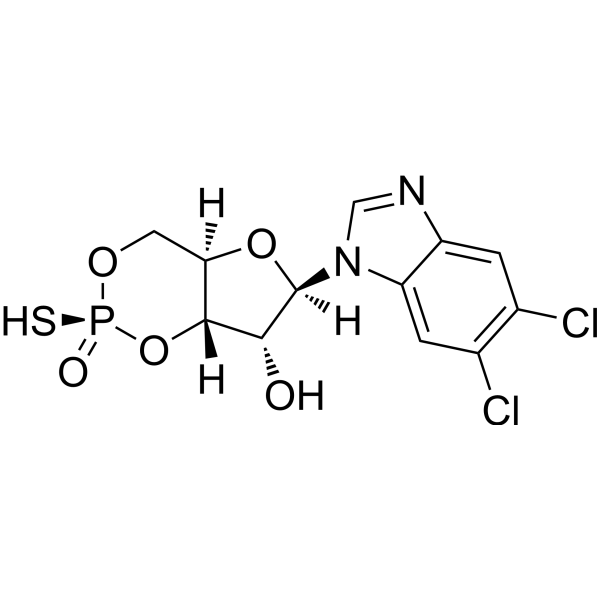
HY-137638
Sp-5,6-DCl-cBIMPScAMP-PK Activator -

HY-137640
Sp-8-Br-cAMPSPKA Agonist -

HY-131421
8-PIP-cAMPProtein Kinase Activator -
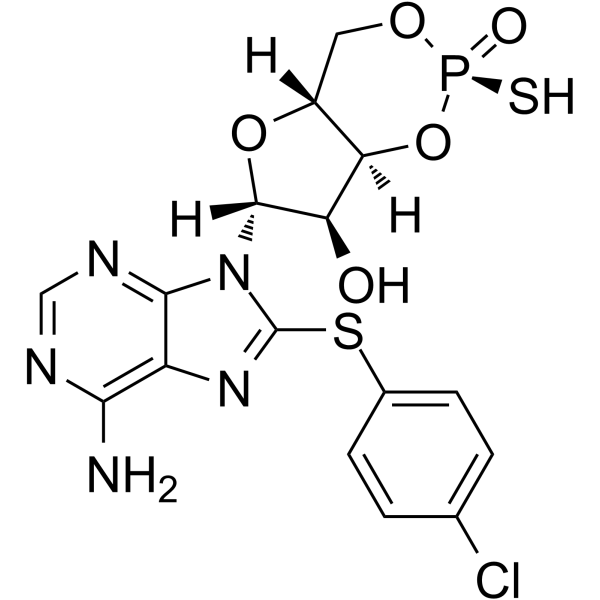
HY-120994A
Rp-8-CPT-cAMPSPKA Antagonist -

HY-137530
8-MA-cAMPPKA Agonist
Publications Citing Use of MedChemExpress (MCE) Rp-8-Br-cAMPS
More

Biological Activity
Description
In Vitro
Rp-8-Br-cAMPS (1 mM; 4-6 h) completely blocks the ability of 2-chloroadenosine (HY-W008344) to inhibit LAK cytotoxicity, and significantly reduces the inhibitory effect of 2-chloroadenosine (HY-W008344) on cytokine production[1].
Rp-8-Br-cAMPS (50-100 μM; 2 min) inhibits insulin secretion in 832/13 cells (derived from INS-1 cells)[2].
MedChemExpress (MCE) has not independently confirmed the accuracy of these methods. They are for reference only. Further protocols information, click here.
In Vivo
MedChemExpress (MCE) has not independently confirmed the accuracy of these methods. They are for reference only.
-
Animal Model:Murine leukemia retrovirus RadLV-Rs treated male C57BL/6 mice[3]
-
Dosage:1 mg
-
Administration:Intraperitoneal injection (i.p.); 10 days
-
Result:Had no significant effect on the extent of lymphadenopathy and splenomegaly which is typical of RadLV-Rs retroviral infection.
Strongly increased responses to the anti-CD3 mAb.
Improved T cell responses.


Chemical Information
-
CAS No. 129735-00-8
-
Molecular Weight 424.17
-
Formula C10H11BrN5O5PS
-
SMILES
NC1=NC=NC2=C1N=C(Br)N2[C@H]3[C@H](O)[C@H](O4)[C@@H](CO[P@]4(S)=O)O3
-
Shipping
Room temperature in continental US; may vary elsewhere.
-
Storage
Please store the product under the recommended conditions in the Certificate of Analysis.


Publications (1)
-
Journal Impact Factor
-
Most Recent

Protocols
-
Research Protocol for Endocrine Diseases
Endocrine diseases often arise from disrupted hormone production, hormone signaling, or target-tissue responsiveness; for diabetes-focused endocrine disease models, insulin signaling regulates glucose uptake, hepatic glucose output, lipid metabolism, and β-cell compensation. Type 2 diabetes develops through interacting defects in insulin resistance, β-cell dysfunction, adipose inflammation, hepatic glucose overproduction, altered incretin signaling, and ectopic lipid metabolism. A major unresolved question is whether endocrine dysfunction is driven primarily by target-tissue insulin resistance, intrinsic β-cell failure, immune/inflammatory stress, or combined multi-organ failure that differs by disease stage.
-
Human Islet Cell Culture
The method of preserving islets in vitro, with purified reduced immunogenicity. The steps are islet isolation, islet cell purification, in vitro determination of islet function and islet cell culture.


Purity & Documentation
References
[1]. Raskovalova T, et al. Adenosine-mediated inhibition of cytotoxic activity and cytokine production by IL-2/NKp46-activated NK cells: involvement of protein kinase A isozyme I (PKA I). Immunol Res. 2006;36(1-3):91-9. [Content Brief]
[2]. Yang S, et al. Enhanced cAMP protein kinase A signaling determines improved insulin secretion in a clonal insulin-producing beta-cell line (INS-1 832/13). Mol Endocrinol. 2004 Sep;18(9):2312-20. [Content Brief]

Calculators
Concentration (start) × Volume (start) = Concentration (final) × Volume (final)


Rp-8-Br-cAMPS Related Classifications
HY-137640B Related Classifications
 Powered by Bioz