



S1R agonist 1

Based on 1 Customer Validation
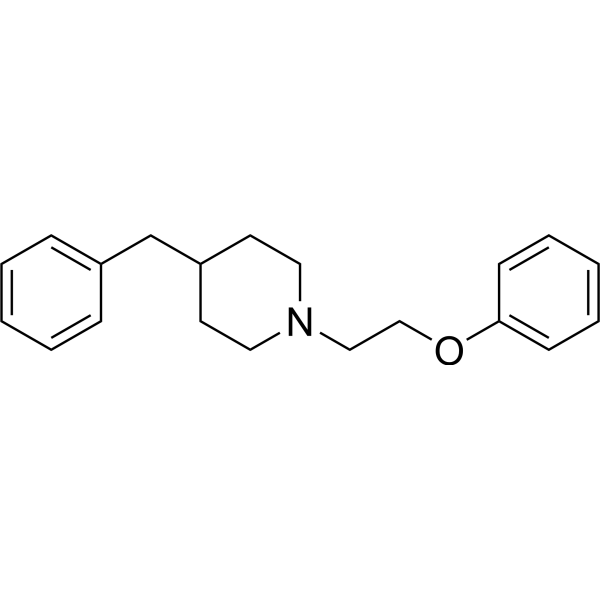
S1R agonist 1 (Compound 6b) is a selective S1R agonist with Kis of 0.93 nM and 72 nM for S1R and S2R, respectively. S1R agonist 1 exhibits neuroprotection against ROS and NMDA-induced neurotoxicity.
Nur für Forschungszwecke. Wir verkaufen nicht an Patienten.
- Reinheit : ≥98.0%
- CAS. Nr.: 193354-70-0
- Formel: C20H25NO
- Molecular Weight:295.42
-
Speicherung:Pure form -20°C, 3 years ; In solvent -80°C, 6 months , -20°C, 1 month

To place orders, for customer services and technical support, please contact: MedChemExpress USA
Tel: 609-228-6898 E-mail: [email protected] [email protected]


-
 Biologische Aktivität
-
Chemical Information
-
Lösungsmittel & Löslichkeit
- Protokoll
- Reinheit & Dokumentation
- Verweise
-
 Help & FAQs


-
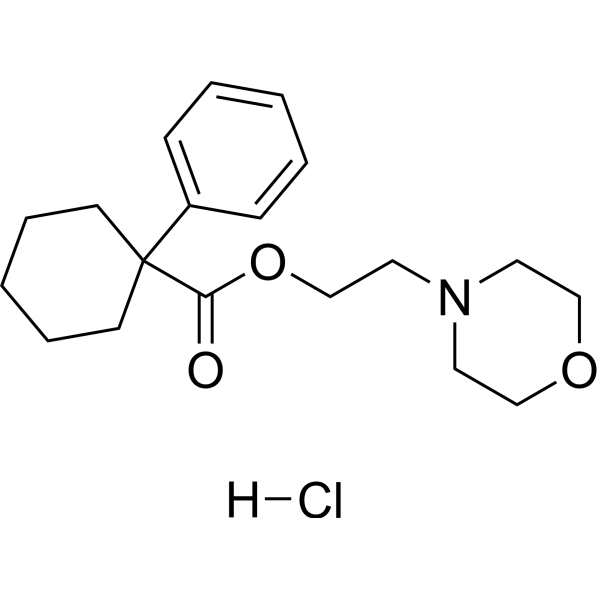
HY-18100A
PRE-084 hydrochlorideS1R Agonist -
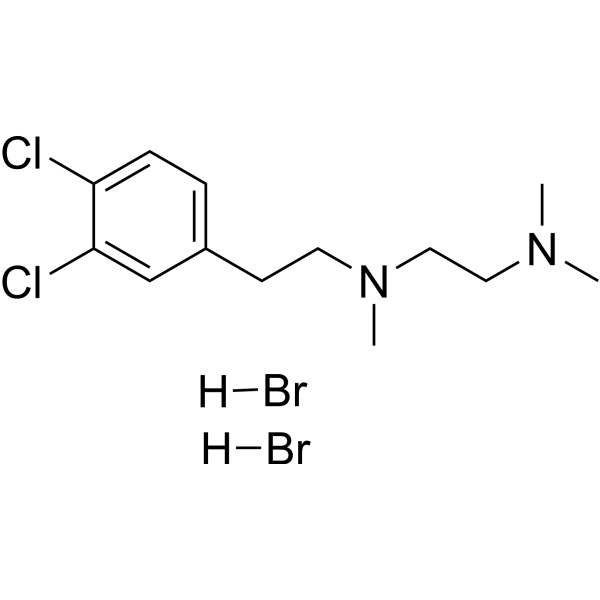
HY-16996A
BD-1047 dihydrobromideSigma-1 Receptor Antagonist -
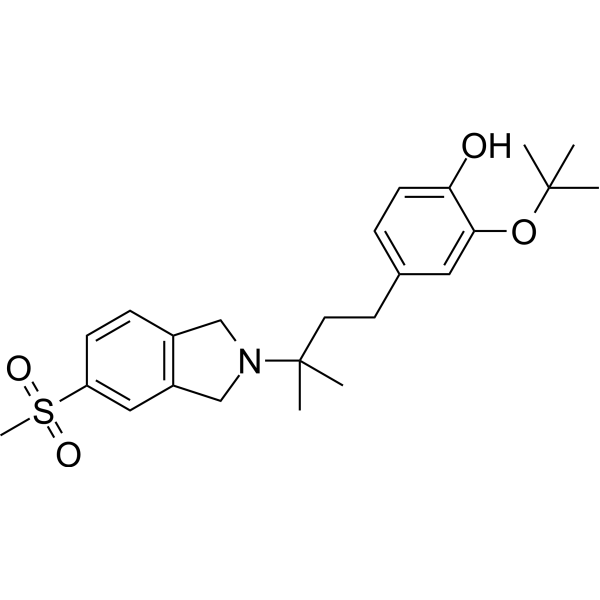
HY-111669
ZervimesineSigma-2 Receptor Antagonist -
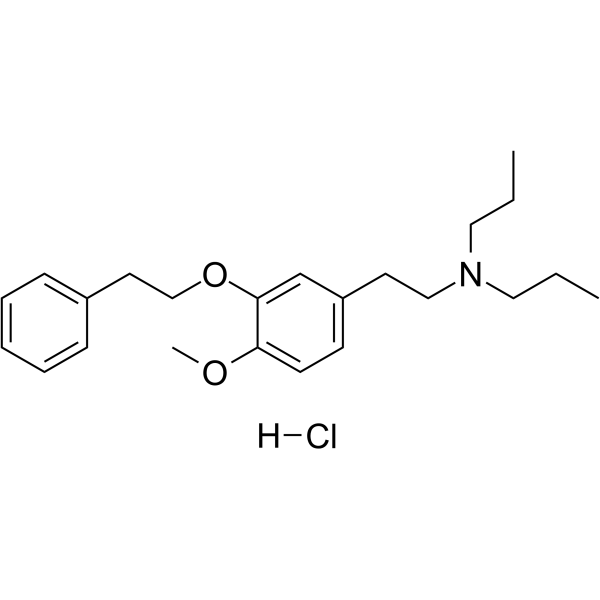
HY-101484A
NE-100 hydrochlorideSigma Receptor Antagonist -
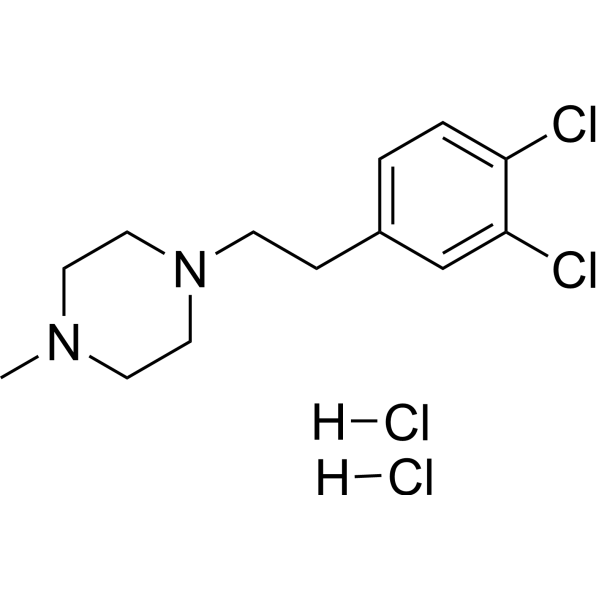
HY-18101A
BD-1063 dihydrochlorideσ-1R Antagonist -
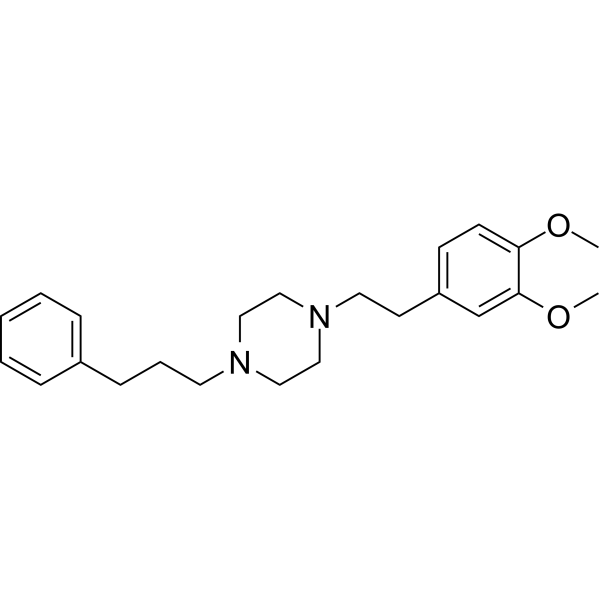
HY-14813
Cutamesineσ1R Agonist -
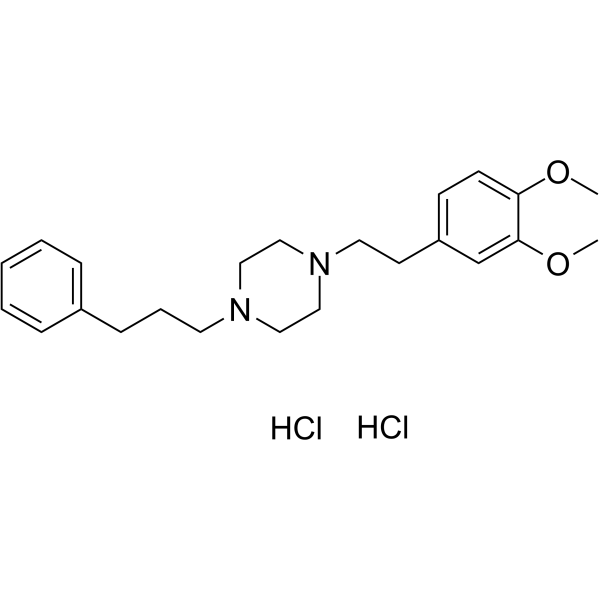
HY-13510
Cutamesine dihydrochlorideσ1R Agonist -
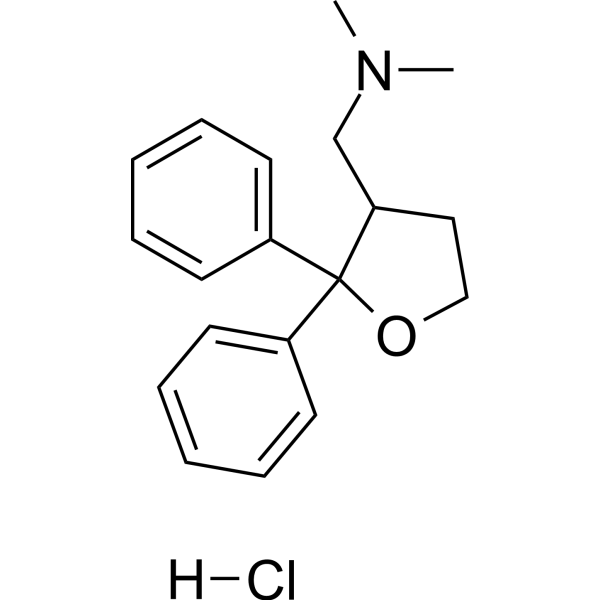
HY-101864
Blarcamesine hydrochlorideSigma-1 Receptor Agonist -
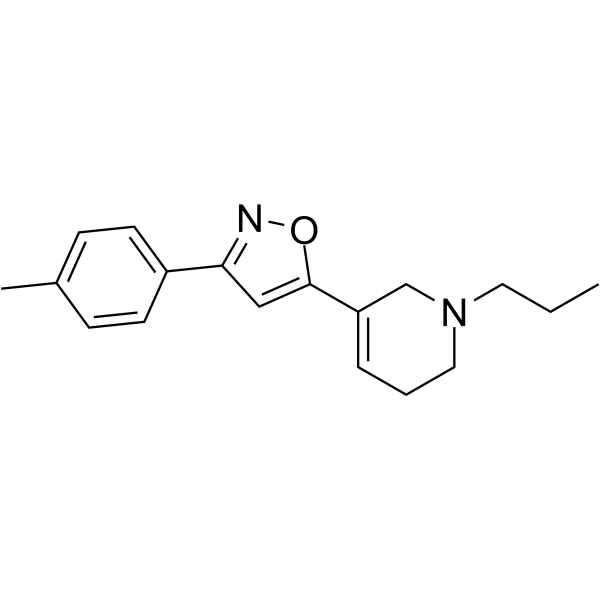
HY-108512
PD 144418σ1 Receptor Ligand -
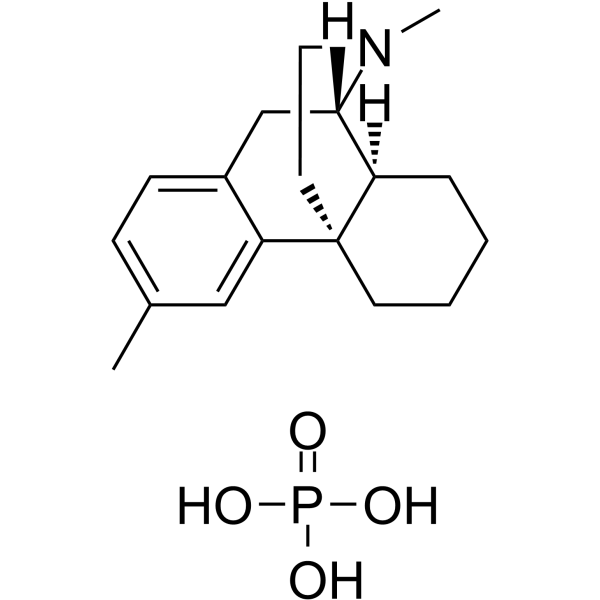
HY-B2215
Dimemorfan phosphateSigma Receptor Agonist -
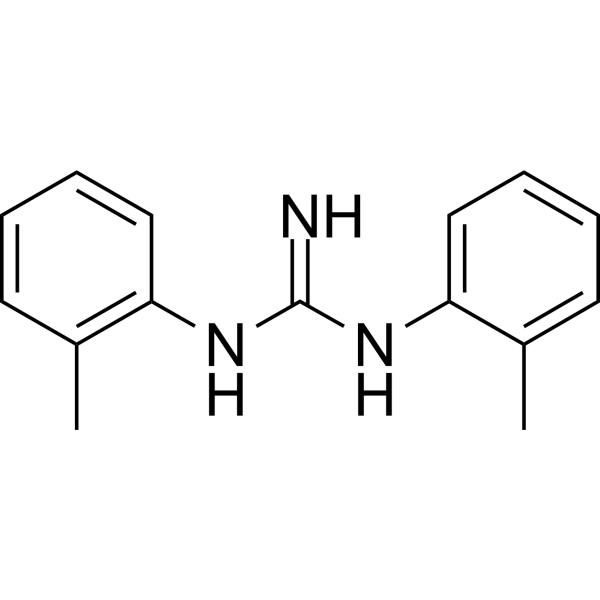
HY-14218
DitolylguanidineSigma Receptor Agonist -
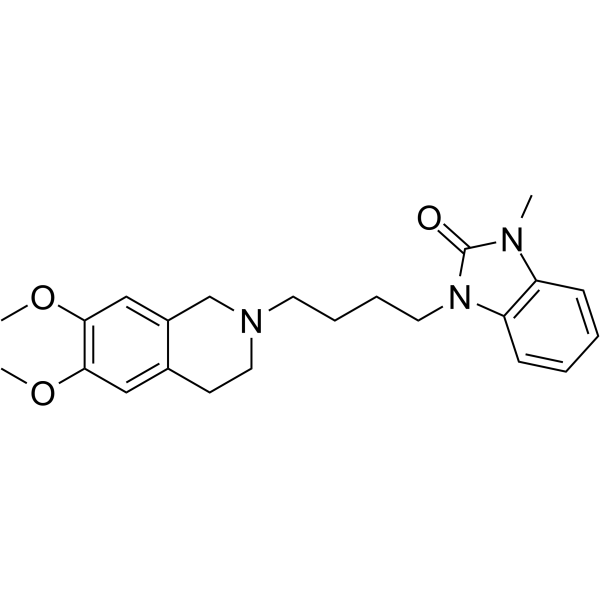
HY-145628
CM398sigma-2 receptor Modulator
Alle Sigma Receptor Isoform-spezifische Produkte anzeigen
More

Biologische Aktivität
Beschreibung
IC50 & Target
[1]|
Sigma 1 Receptor 0.93 nM (Ki) |
Sigma 2 Receptor 72 nM (Ki) |
Cellular Effect
|
Cell Line

|
Type | Value | Description | References |
|---|---|---|---|---|
| Oocyte | IC50 |
>100 μM
Compound: 8
|
In vitro inhibitory concentration against NMDA responses at cloned NR1A/2A receptors expressed in Xenopus oocytes
In vitro inhibitory concentration against NMDA responses at cloned NR1A/2A receptors expressed in Xenopus oocytes
|
[PMID: 10425109] |
| Oocyte | IC50 |
>100 μM
Compound: 8
|
In vitro inhibitory concentration against NMDA responses at NR1A/2C receptors expressed in Xenopus oocytes
In vitro inhibitory concentration against NMDA responses at NR1A/2C receptors expressed in Xenopus oocytes
|
[PMID: 10425109] |
| Oocyte | IC50 |
0.63 μM
Compound: 8
|
In vitro inhibitory concentration against NMDA responses at NR1A/2B receptors expressed in Xenopus oocytes
In vitro inhibitory concentration against NMDA responses at NR1A/2B receptors expressed in Xenopus oocytes
|
[PMID: 10425109] |
In Vitro
S1R agonist 1 (Compound 6b; 0.1-5 μM) significantly increases the nerve growth factor (NGF) induced neurite outgrowth at all the tested concentrations in a dose-dependent manner in PC12 cell lines[1].
S1R agonist 1 (24 h) significantly prevents cell damage induced by Rotenone (HY-B1756) when tested at the concentration of 1 μM in SHSY5Y cells[1].
S1R agonist 1 (0.1-5 μM; 24 h) demonstrates a neuroprotective effect against NMDA stimuli in SHSY5Y cells[1].
S1R agonist 1 (0-10 μM; 24-72 h) shows no cytotoxicity against A549, LoVo and Panc-1 cells[1].
MedChemExpress (MCE) has not independently confirmed the accuracy of these methods. They are for reference only. Further protocols information, click here.
In Vivo
MedChemExpress (MCE) has not independently confirmed the accuracy of these methods. They are for reference only.


Chemical Information
-
CAS. Nr. 193354-70-0
-
Appearance Liquid (Density: 1.048±0.06 g/cm3)
-
Molecular Weight 295.42
-
Formel C20H25NO
-
Color Colorless to light yellow
-
SMILES
C1(OCCN2CCC(CC2)CC3=CC=CC=C3)=CC=CC=C1
-
Versand
Room temperature in continental US; may vary elsewhere.
-
Speicherung
Pure form -20°C 3 years In solvent -80°C 6 months -20°C 1 month


Lösungsmittel & Löslichkeit
In Vitro:
DMSO : 100 mg/mL (338.50 mM; Need ultrasonic; Hygroscopic DMSO has a significant impact on the solubility of product, please use newly opened DMSO)
Please refer to the solubility information to select the appropriate solvent. Once prepared, please aliquot and store the solution to prevent product inactivation from repeated freeze-thaw cycles.
Storage method and period of stock solution: -80°C, 6 months; -20°C, 1 month. When stored at -80°C, please use it within 6 months. When stored at -20°C, please use it within 1 month.
Please refer to the solubility information to select the appropriate solvent. Once prepared, please aliquot and store the solution to prevent product inactivation from repeated freeze-thaw cycles.
Storage method and period of stock solution: -80°C, 6 months; -20°C, 1 month. When stored at -80°C, please use it within 6 months. When stored at -20°C, please use it within 1 month.
Konzentration (Stammlösung) × Volumen (Stammlösung) = Konzentration (Ziellösung) × Volumen (Ziellösung)
In Vivo:
Select the appropriate dissolution method based on your experimental animal and administration route.
- For the following dissolution methods, please ensure to first prepare a clear stock solution using an In Vitro approach and then sequentially add co-solvents:
- To ensure reliable experimental results, the clarified stock solution can be appropriately stored based on storage conditions. As for the working solution for In Vivo experiments, it is recommended to prepare freshly and use it on the same day.
- The percentages shown for the solvents indicate their volumetric ratio in the final prepared solution. If precipitation or phase separation occurs during preparation, heat and/or sonication can be used to aid dissolution.
Add each solvent one by one: 10% DMSO 90% (20% SBE-β-CD in Saline)
Solubility: ≥ 2.5 mg/mL (8.46 mM); Clear solution
This protocol yields a clear solution of ≥ 2.5 mg/mL (saturation unknown).
Taking 1 mL working solution as an example, add 100 μL DMSO stock solution (25.0 mg/mL) to 900 μL 20% SBE-β-CD in Saline, and mix evenly.
Preparation of 20% SBE-β-CD in Saline (4°C, storage for one week): 2 g SBE-β-CD powder is dissolved in 10 mL Saline, completely dissolve until clear.
In Vivo Dissolution Calculator
Please enter the basic information of animal experiments:
-
-
-
-
Recommended: Prepare an additional quantity of animals to account for potential losses during experiments.
Please enter your animal formula composition:
-
%DMSO +
Recommended: Keep the proportion of DMSO in working solution below 2% if your animal is weak.
-
%+
-
+%Tween-80 + +
-
%Saline +
The co-solvents required include: DMSO, . All of co-solvents are available by MedChemExpress (MCE). , Tween 80. All of co-solvents are available by MedChemExpress (MCE).
Working solution concentration: 0.22 mg/mL
Method for preparing stock solution: mg drug dissolved in μL DMSO. Stock solution concentration: mg/mL.
1. Take μL DMSO stock solution;
2. Add μL .
μL , mix evenly;
3. Then add μL Tween 80, mix evenly;
4. Then add μL
Please ensure that the stock solution in the first step is dissolved to a clear state, and add co-solvents in sequence. You can use ultrasonic heating (ultrasonic cleaner, recommended frequency 20-40 kHz), vortexing, etc. to assist dissolution.

Protokoll
-
Neurotoxicity Study
This protocol assesses in vitro neurotoxicity by combining neuronal viability, mitochondrial/metabolic activity, neurite outgrowth, and optional neuronal network function readouts. Calcein-AM or resazurin/PrestoBlue readouts estimate viable or metabolically active cells; βIII-tubulin immunofluorescence detects neuronal morphology and neurite networks; TMRE detects mitochondrial membrane potential; and MEA recordings detect functional changes in neuronal network activity.
-
ROS/oxidative-stress fluorescent staining
ROS/oxidative-stress fluorescent staining uses cell-permeant fluorogenic probes that become fluorescent after oxidation inside cells or tissues; commonly used examples include DCFH-DA/DCFDA for broad cellular oxidant detection, DHE for superoxide-related signal detection, MitoSOX for mitochondrial superoxide-related signal detection, and CellROX probes for oxidative-stress-associated fluorescence readouts. The assay detects probe oxidation rather than a single ROS species unless the probe and analysis method have been chemically validated for that species. DCFH-DA enters cells, is deacetylated by intracellular esterases to DCFH, and produces fluorescent DCF after oxidation, so the readout is used as an operational measure of total cellular oxidative stress rather than a species-specific ROS measurement. DHE and MitoSOX can report superoxide-related oxidation, but red fluorescence alone can include non-specific ethidium-like oxidation products; HPLC or optimized spectral approaches are


Reinheit & Dokumentation
-
Data Sheet (269 KB)
-
SDS (251 KB)
- English - EN (251 KB)
- Français - FR (251 KB)
- Deutsch - DE (251 KB)
- Norwegian - NO (251 KB)
- Español - ES (251 KB)
- Swedish - SV (251 KB)
- Italian - IT (251 KB)
- Korean - KR (251 KB)
- Portuguese - PT (251 KB)
-
Handling Instructions (2659 KB)
Verweise


Complete Stock Solution Preparation Table
Please refer to the solubility information to select the appropriate solvent. Once prepared, please aliquot and store the solution to prevent product inactivation from repeated freeze-thaw cycles.
Storage method and period of stock solution: -80°C, 6 months; -20°C, 1 month. When stored at -80°C, please use it within 6 months. When stored at -20°C, please use it within 1 month.
| Optional Solvent | Concentration Solvent Mass | 1 mg | 5 mg | 10 mg | 25 mg |
|---|---|---|---|---|---|
| DMSO | 1 mM | 3.3850 mL | 16.9251 mL | 33.8501 mL | 84.6253 mL |
| 5 mM | 0.6770 mL | 3.3850 mL | 6.7700 mL | 16.9251 mL | |
| 10 mM | 0.3385 mL | 1.6925 mL | 3.3850 mL | 8.4625 mL | |
| 15 mM | 0.2257 mL | 1.1283 mL | 2.2567 mL | 5.6417 mL | |
| 20 mM | 0.1693 mL | 0.8463 mL | 1.6925 mL | 4.2313 mL | |
| 25 mM | 0.1354 mL | 0.6770 mL | 1.3540 mL | 3.3850 mL | |
| 30 mM | 0.1128 mL | 0.5642 mL | 1.1283 mL | 2.8208 mL | |
| 40 mM | 0.0846 mL | 0.4231 mL | 0.8463 mL | 2.1156 mL | |
| 50 mM | 0.0677 mL | 0.3385 mL | 0.6770 mL | 1.6925 mL | |
| 60 mM | 0.0564 mL | 0.2821 mL | 0.5642 mL | 1.4104 mL | |
| 80 mM | 0.0423 mL | 0.2116 mL | 0.4231 mL | 1.0578 mL | |
| 100 mM | 0.0339 mL | 0.1693 mL | 0.3385 mL | 0.8463 mL |


S1R agonist 1 Related Classifications
HY-149803 Related Classifications
 Powered by Bioz