



Doxofylline

Based on 1 Customer Validation
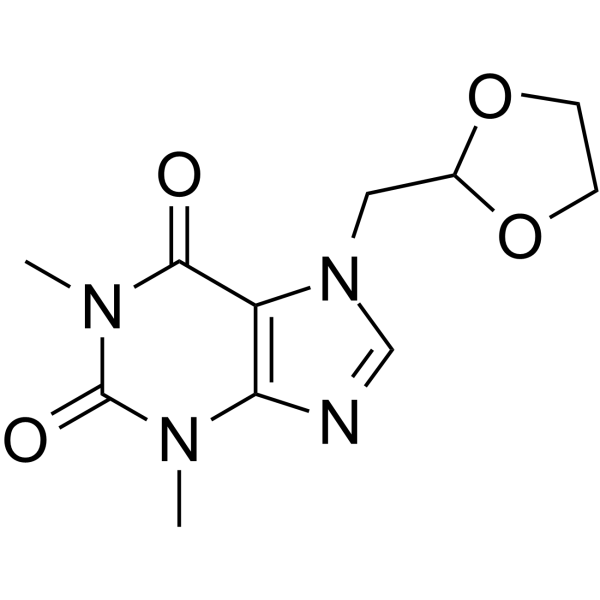
Doxofylline is an orally active PDE IV inhibitor and A1AR antagonist. Doxofylline reduces inflammation in epithelial cells via inhibiting mitochondrial ROS production and amelioration of multiple cellular pathways (NLRP3-TXNIP inflammasome activation). Doxophylline can be used in studies of asthma, chronic obstructive pulmonary disease, and bronchospasm.
For research use only. We do not sell to patients.
- Purity : 99.97%
- CAS No.: 69975-86-6
- Formula: C11H14N4O4
- Molecular Weight:266.25
-
Storage:Powder -20°C, 3 years , 4°C, 2 years ; In solvent -80°C, 2 years , -20°C, 1 year

To place orders, for customer services and technical support, please contact: MedChemExpress USA
Tel: 609-228-6898 E-mail: [email protected] [email protected]


-
 Biological Activity
-
Chemical Information
-
Solvent & Solubility
- Protocols
- Purity & Documentation
- References
-
 Help & FAQs


-
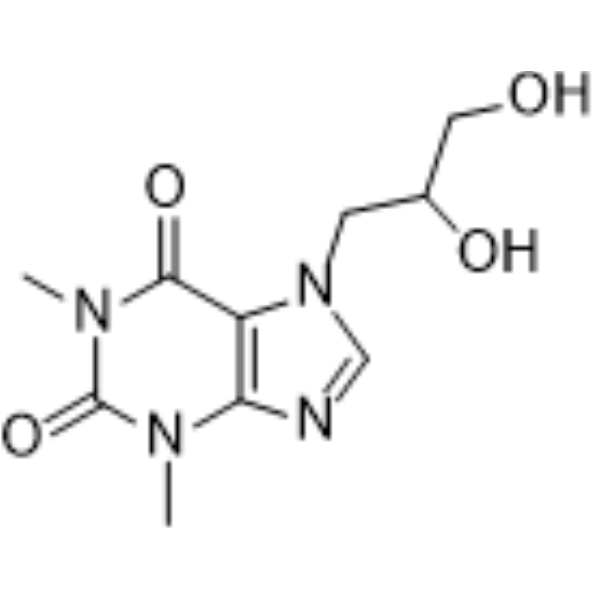
HY-B0128
DiphyllinePDE Inhibitor -
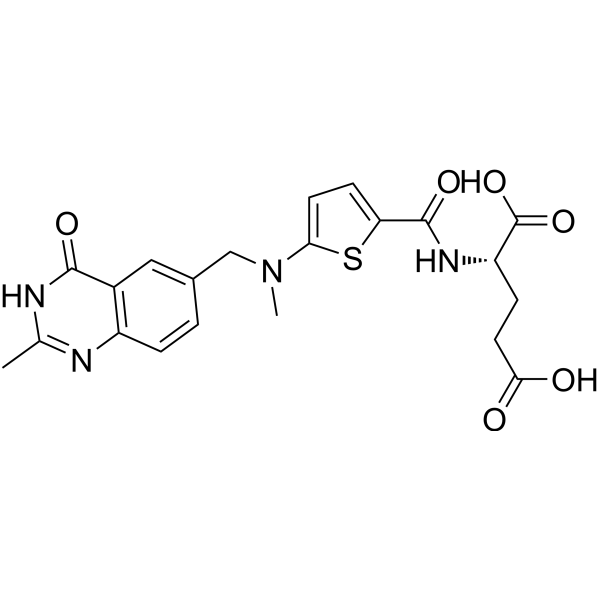
HY-10821
RaltitrexedThymidylate Synthase Inhibitor -
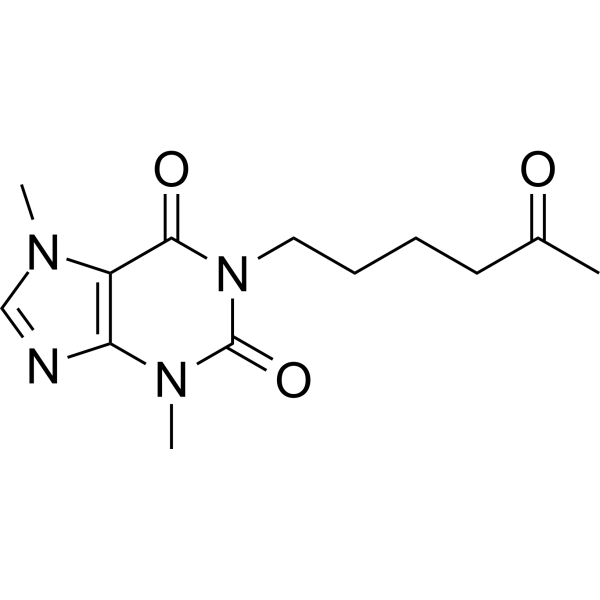
HY-B0715
PentoxifyllinePDE Inhibitor -
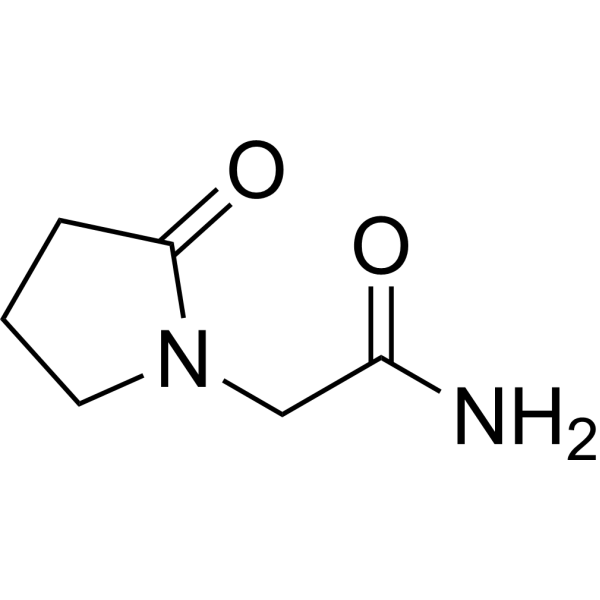
HY-B0585
PiracetamiGluR Modulator -
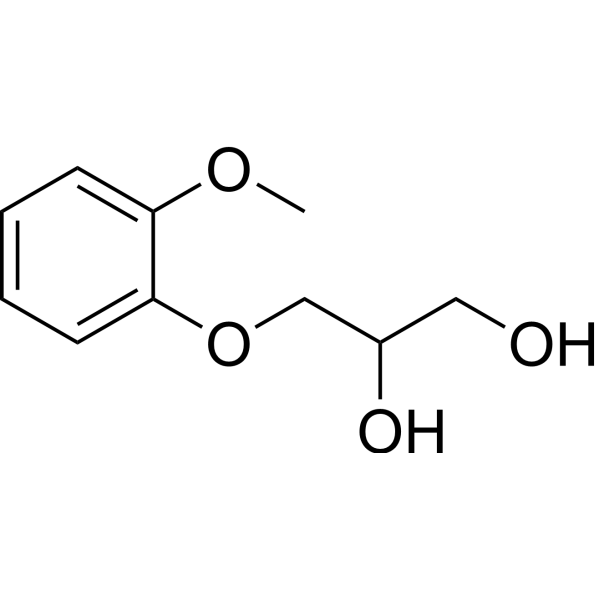
HY-B0264
GuaifenesinExpectorant -
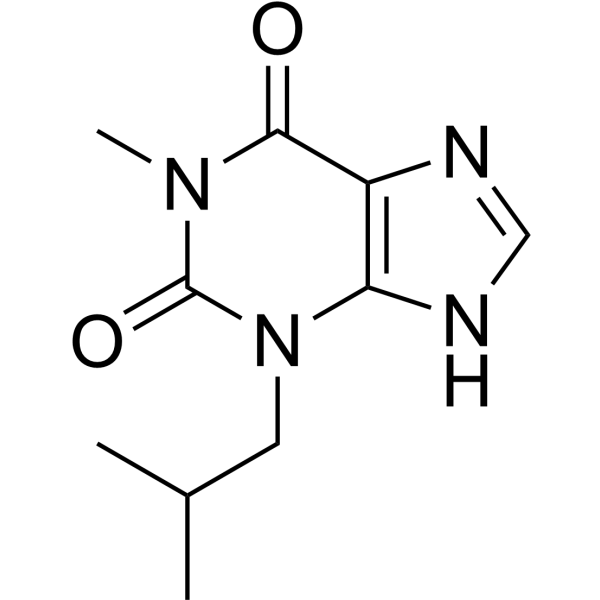
HY-12318
IBMXPDE Inhibitor -
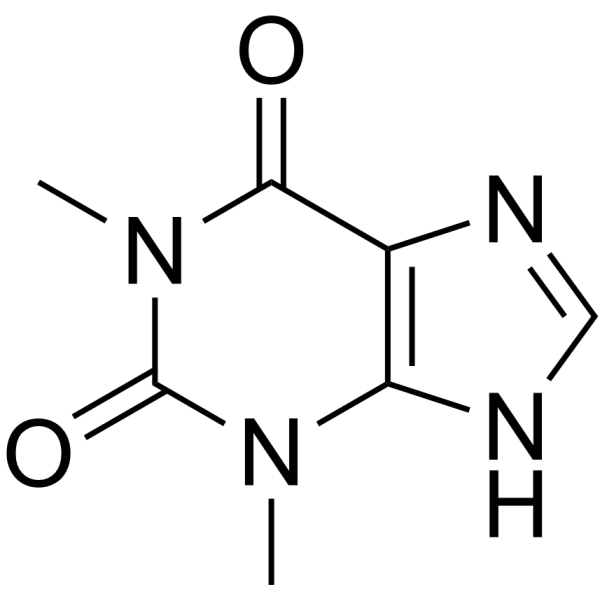
HY-B0809
TheophyllinePDE Inhibitor -
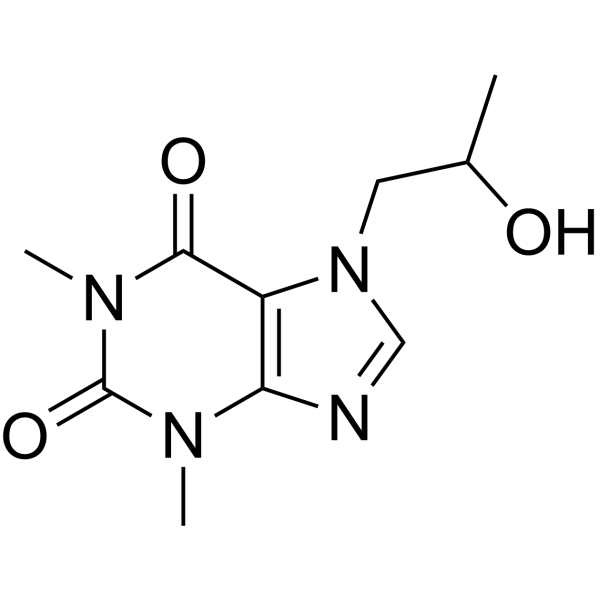
HY-B1742
ProxyphyllineAdenosine Receptor Antagonist -
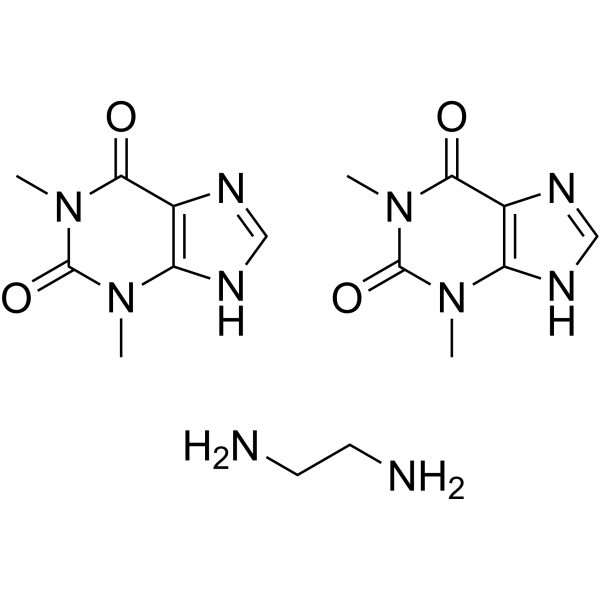
HY-B0140
AminophyllinePDE3/4 Inhibitor/Adenosine Receptor Antagonist -
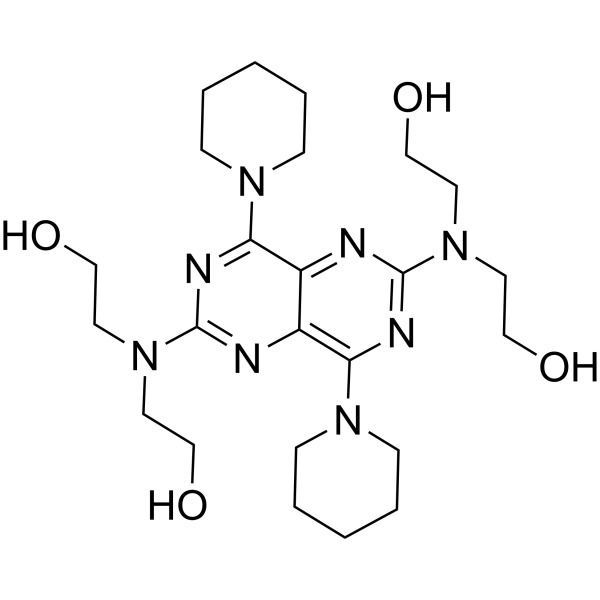
HY-B0312
DipyridamolePDE Inhibitor -

HY-B0004R
Doxofylline (Standard)PDE IV Inhibitor/A1AR Antagonist -
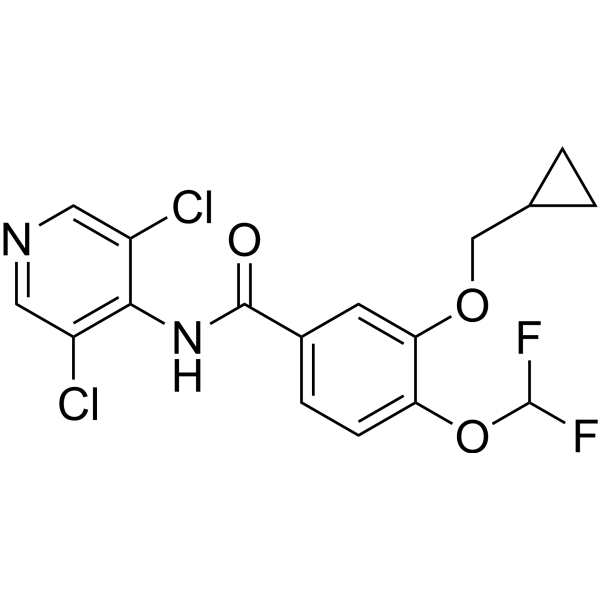
HY-15455
RoflumilastPDE4 Inhibitor
All Adenosine Receptor Isoforms
More

Biological Activity
Description
IC50 & Target
In Vitro
Doxofylline (5, 10 μM; 48 h) shows potent protection against LPS-induced epithelial inflammation by reducing PGE
Doxofylline (5, 10 μM; 48 h) suppresses LPS-induced expression of NADPH oxidase subunits and TXNIP 16HBE cells[1].
Doxofylline (5, 10 μM; 48 h) inhibits LPS-induced NLRP3 inflammasome activation and secretion of IL-1b and IL-18, as well as mitigates LPS-mediated SIRT1 reduction[1].
Doxofylline (0.1-10 μM; 15 min) significantly reduces fMLP-induced leukocyte migration in BM cells (fMLP: Formyl-Methionyl-Leucyl-Phenylalanine)[2].
MedChemExpress (MCE) has not independently confirmed the accuracy of these methods. They are for reference only.
-
Cell Line:16HBE cells
-
Concentration:5, 10 µM
-
Incubation Time:48 h
-
Result:Weakened LPS-induced NO and PGE
2 in a dose-dependent manner.
Exerted dose-dependent inhibition on LPS-induced mitochondrial ROS production and NADPH oxidase subunits expression.
Suppressed LPS-induced TXNIP expression and NLRP3 inflammasome activation at the protein level in a dose-dependent manner.
Inhibited LPS-induced secretion of IL-1b and IL-18.
-
Cell Line:BM cells (from naive mice)
-
Concentration:0.1-10 µM
-
Incubation Time:15 min (pretreat)
-
Result:Notably surpressed positive migration of BM cells in response to fMLP.
In Vivo
Doxofylline (0.3 mg/kg; i.p.; pre-treat; single) notably reduces the adhesion of cells to the vascular tissue and surpresses the expression of LPS-induced ICAM-1 in vivo[2].
MedChemExpress (MCE) has not independently confirmed the accuracy of these methods. They are for reference only.
-
Animal Model:Male BALB/c mice (6 to 8-week-old)[2].
-
Dosage:0.3, 1 mg/kg
-
Administration:Intraperitoneal injection; single.
-
Result:Significantly inhibited the migration of neutrophils and the release of IL-6 and TNF-a into the lung lumen.
Increased the bone marrow leukocyte numbers to levels similar to those seen in the saline-treated group.
Notably reduced the number of circulating leukocytes in comparison to LPS-treated mice.
Significantly reduced accumulation of neutrophils in the peribronchial area.
-
Animal Model:Male BALB/c mice (6 to 8-week-old)[2].
-
Dosage:0.3 mg/kg
-
Administration:Intraperitoneal injection; pre-treat; single.
-
Result:Significantly reduced the adhesion of cells to the vascular tissue, but not the rolling of cells along the vessel wall in mice.
Significantly reduced the expression of ICAM-1 induced by LPS.
Clinical Trial
| NCT Number | Sponsor | Condition | Start Date |
Phase

|
|---|---|---|---|---|
| NCT01329991 | 2011-05 | PHASE1 |


Chemical Information
-
CAS No. 69975-86-6
-
Appearance Solid
-
Molecular Weight 266.25
-
Formula C11H14N4O4
-
Color White to off-white
-
SMILES
O=C(N1C)N(C)C2=C(N(CC3OCCO3)C=N2)C1=O
-
Shipping
Room temperature in continental US; may vary elsewhere.
-
Storage
Powder -20°C 3 years 4°C 2 years In solvent -80°C 2 years -20°C 1 year


Solvent & Solubility
In Vitro:
DMSO : 50 mg/mL (187.79 mM; Need ultrasonic; Hygroscopic DMSO has a significant impact on the solubility of product, please use newly opened DMSO)
H2O : 25 mg/mL (93.90 mM; Need ultrasonic)
Please refer to the solubility information to select the appropriate solvent. Once prepared, please aliquot and store the solution to prevent product inactivation from repeated freeze-thaw cycles.
Storage method and period of stock solution: -80°C, 2 years; -20°C, 1 year. When stored at -80°C, please use it within 2 years. When stored at -20°C, please use it within 1 year.
* Note: If you choose water as the stock solution, please dilute it to the working solution, then filter and sterilize it with a 0.22 μm filter before use.
Please refer to the solubility information to select the appropriate solvent. Once prepared, please aliquot and store the solution to prevent product inactivation from repeated freeze-thaw cycles.
Storage method and period of stock solution: -80°C, 2 years; -20°C, 1 year. When stored at -80°C, please use it within 2 years. When stored at -20°C, please use it within 1 year.
* Note: If you choose water as the stock solution, please dilute it to the working solution, then filter and sterilize it with a 0.22 μm filter before use.
Concentration (start) × Volume (start) = Concentration (final) × Volume (final)
In Vivo:
Select the appropriate dissolution method based on your experimental animal and administration route.
- For the following dissolution methods, please ensure to first prepare a clear stock solution using an In Vitro approach and then sequentially add co-solvents:
- To ensure reliable experimental results, the clarified stock solution can be appropriately stored based on storage conditions. As for the working solution for In Vivo experiments, it is recommended to prepare freshly and use it on the same day.
- The percentages shown for the solvents indicate their volumetric ratio in the final prepared solution. If precipitation or phase separation occurs during preparation, heat and/or sonication can be used to aid dissolution.
Add each solvent one by one: 10% DMSO 40% PEG300 5% Tween-80 45% Saline
Solubility: ≥ 2.5 mg/mL (9.39 mM); Clear solution
This protocol yields a clear solution of ≥ 2.5 mg/mL (saturation unknown).
Taking 1 mL working solution as an example, add 100 μL DMSO stock solution (25.0 mg/mL) to 400 μL PEG300, and mix evenly; then add 50 μL Tween-80 and mix evenly; then add 450 μL Saline to adjust the volume to 1 mL.
Preparation of Saline: Dissolve 0.9 g sodium chloride in ddH₂O and dilute to 100 mL to obtain a clear Saline solution.
Add each solvent one by one: 10% DMSO 90% (20% SBE-β-CD in Saline)
Solubility: ≥ 2.5 mg/mL (9.39 mM); Clear solution
This protocol yields a clear solution of ≥ 2.5 mg/mL (saturation unknown).
Taking 1 mL working solution as an example, add 100 μL DMSO stock solution (25.0 mg/mL) to 900 μL 20% SBE-β-CD in Saline, and mix evenly.
Preparation of 20% SBE-β-CD in Saline (4°C, storage for one week): 2 g SBE-β-CD powder is dissolved in 10 mL Saline, completely dissolve until clear.
For the following dissolution methods, please prepare the working solution directly:
It is recommended to prepare fresh solutions and use them promptly within a short period of time.
The percentages shown for the solvents indicate their volumetric ratio in the final prepared solution. If precipitation or phase separation occurs during preparation, heat and/or sonication can be used to aid dissolution.
Add each solvent one by one: PBS
Solubility: 65 mg/mL (244.13 mM); Clear solution; Need ultrasonic and warming and heat to 60°C
In Vivo Dissolution Calculator
Please enter the basic information of animal experiments:
-
-
-
-
Recommended: Prepare an additional quantity of animals to account for potential losses during experiments.
Working solution concentration: 0.22 mg/mL
This product has good water solubility, please refer to the measured solubility data in water/PBS/Saline for details.


Purity & Documentation
-
Data Sheet (284 KB)
-
SDS (392 KB)
- English - EN (392 KB)
- Français - FR (392 KB)
- Deutsch - DE (392 KB)
- Norwegian - NO (392 KB)
- Español - ES (392 KB)
- Swedish - SV (392 KB)
- Italian - IT (392 KB)
- Korean - KR (392 KB)
- Portuguese - PT (392 KB)
-
Handling Instructions (2659 KB)
References
[1]. Jiao P, et al. The protective effect of doxofylline against lipopolysaccharides (LPS)-induced activation of NLRP3 inflammasome is mediated by SIRT1 in human pulmonary bronchial epithelial cells. Artif Cells Nanomed Biotechnol. 2020 Dec;48(1):687-694. [Content Brief]
[2]. Riffo-Vasquez Y, et al. Doxofylline, a novofylline inhibits lung inflammation induced by lipopolysacharide in the mouse. Pulm Pharmacol Ther. 2014 Apr;27(2):170-8. [Content Brief]
[3]. Shukla D, et al. Doxofylline: a promising methylxanthine derivative for the treatment of asthma and chronic obstructive pulmonary disease. Expert Opin Pharmacother. 2009 Oct;10(14):2343-56. [Content Brief]


Complete Stock Solution Preparation Table
Please refer to the solubility information to select the appropriate solvent. Once prepared, please aliquot and store the solution to prevent product inactivation from repeated freeze-thaw cycles.
Storage method and period of stock solution: -80°C, 2 years; -20°C, 1 year. When stored at -80°C, please use it within 2 years. When stored at -20°C, please use it within 1 year.
| Optional Solvent | Concentration Solvent Mass | 1 mg | 5 mg | 10 mg | 25 mg |
|---|---|---|---|---|---|
| H2O / DMSO | 1 mM | 3.7559 mL | 18.7793 mL | 37.5587 mL | 93.8967 mL |
| 5 mM | 0.7512 mL | 3.7559 mL | 7.5117 mL | 18.7793 mL | |
| 10 mM | 0.3756 mL | 1.8779 mL | 3.7559 mL | 9.3897 mL | |
| 15 mM | 0.2504 mL | 1.2520 mL | 2.5039 mL | 6.2598 mL | |
| 20 mM | 0.1878 mL | 0.9390 mL | 1.8779 mL | 4.6948 mL | |
| 25 mM | 0.1502 mL | 0.7512 mL | 1.5023 mL | 3.7559 mL | |
| 30 mM | 0.1252 mL | 0.6260 mL | 1.2520 mL | 3.1299 mL | |
| 40 mM | 0.0939 mL | 0.4695 mL | 0.9390 mL | 2.3474 mL | |
| 50 mM | 0.0751 mL | 0.3756 mL | 0.7512 mL | 1.8779 mL | |
| 60 mM | 0.0626 mL | 0.3130 mL | 0.6260 mL | 1.5649 mL | |
| 80 mM | 0.0469 mL | 0.2347 mL | 0.4695 mL | 1.1737 mL | |
| DMSO | 100 mM | 0.0376 mL | 0.1878 mL | 0.3756 mL | 0.9390 mL |
* Note: If you choose water as the stock solution, please dilute it to the working solution, then filter and sterilize it with a 0.22 μm filter before use.


Doxofylline Related Classifications
HY-B0004 Related Classifications
 Powered by Bioz