



Phenacetin
Based on 1 publication(s) in Google Scholar
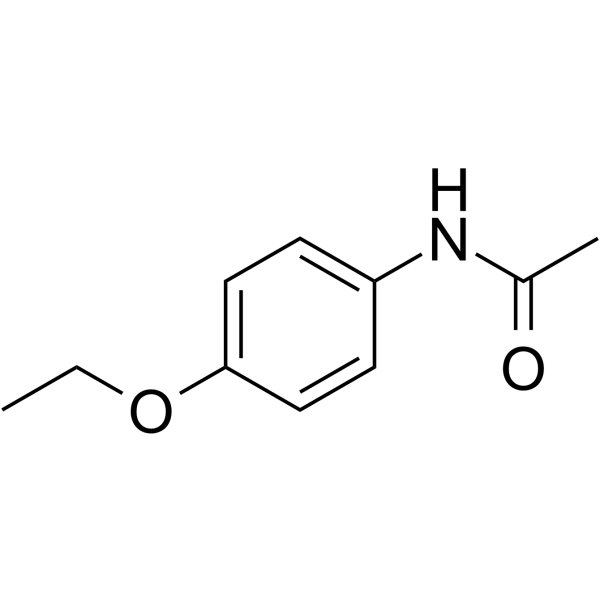
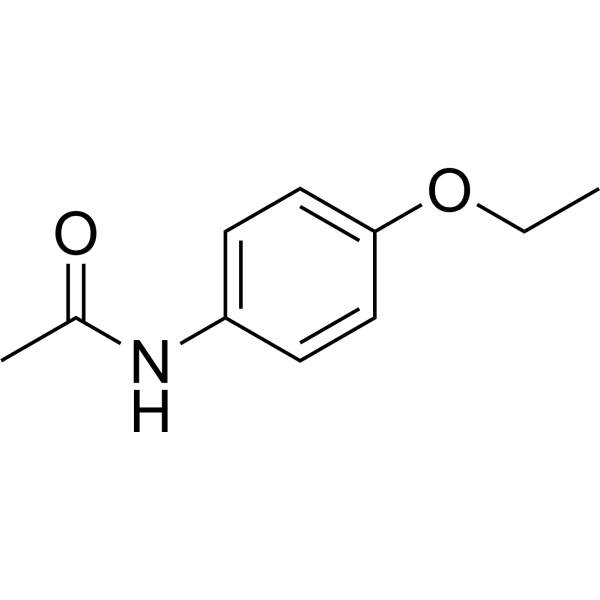
Phenacetin (Acetophenetidin) is a non-opioid analgesic/antipyretic agent. Phenacetin is a selective COX-3 inhibitor. Phenacetin is used as probe of cytochrome P450 enzymes CYP1A2 in human liver microsomes and in rats.
For research use only. We do not sell to patients.
- Purity : 99.95%
- CAS No.: 62-44-2
- Formula: C10H13NO2
- Molecular Weight:179.22
-
Storage:Powder -20°C, 3 years , 4°C, 2 years ; In solvent -80°C, 2 years , -20°C, 1 year

To place orders, for customer services and technical support, please contact: MedChemExpress USA
Tel: 609-228-6898 E-mail: [email protected] [email protected]


-
 Biological Activity
-
Chemical Information
-
Solvent & Solubility
- Purity & Documentation
- References
-
 Help & FAQs


-
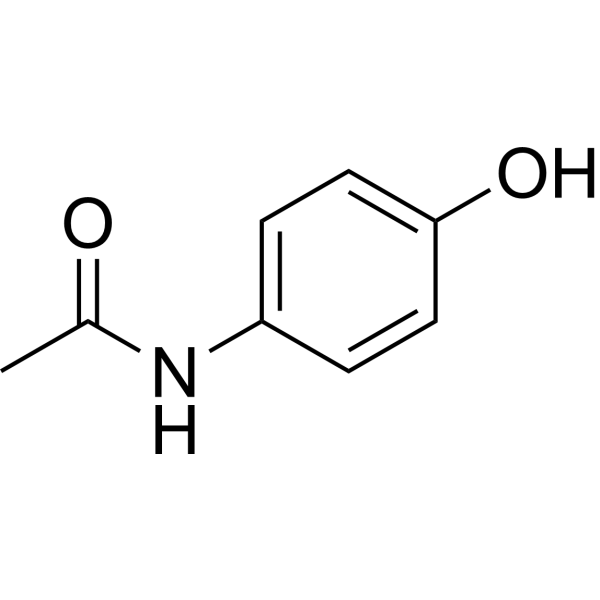
HY-66005
AcetaminophenCOX-2 Inhibitor -
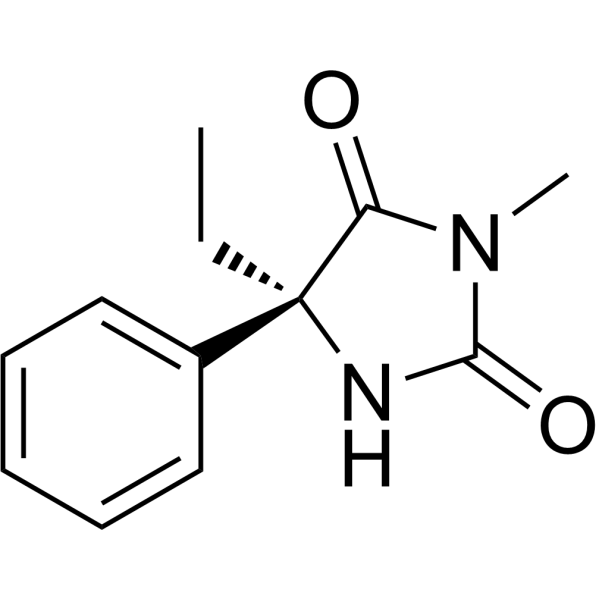
HY-B1184A
(S)-MephenytoinAnticonvulsive Agent -
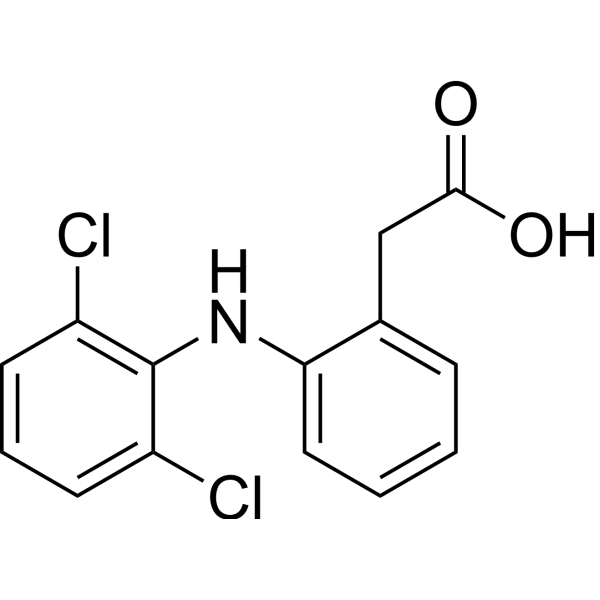
HY-15036
DiclofenacCOX Inhibitor -
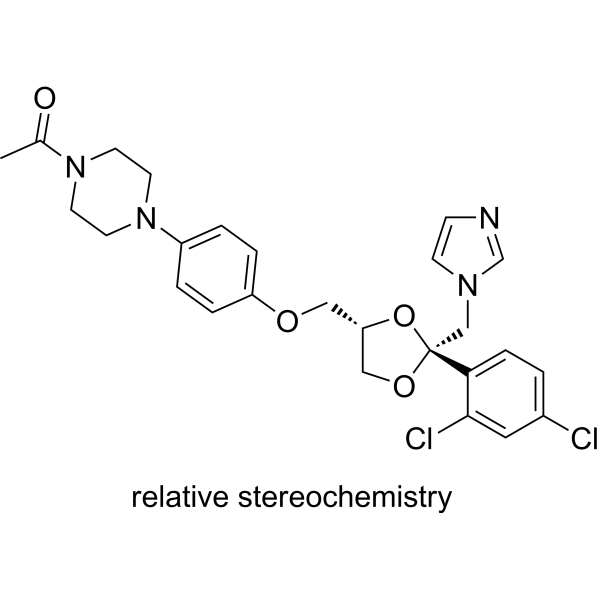
HY-B0105
KetoconazoleCYP3A4 Inhibitor -
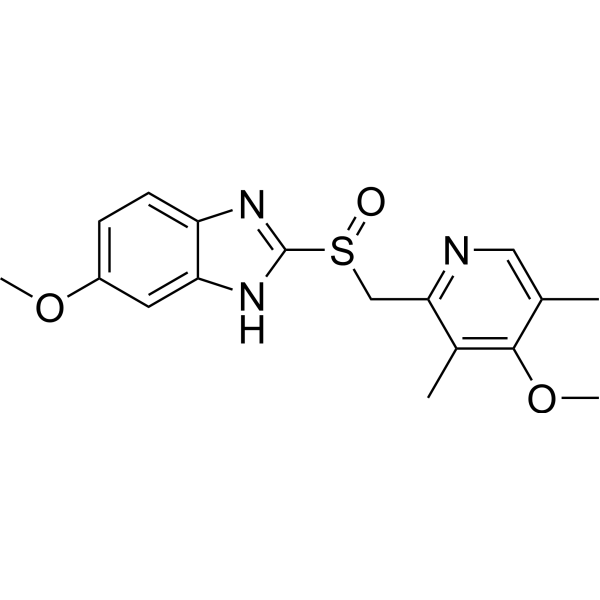
HY-B0113
OmeprazoleH+,K+-ATPase Inhibitor -
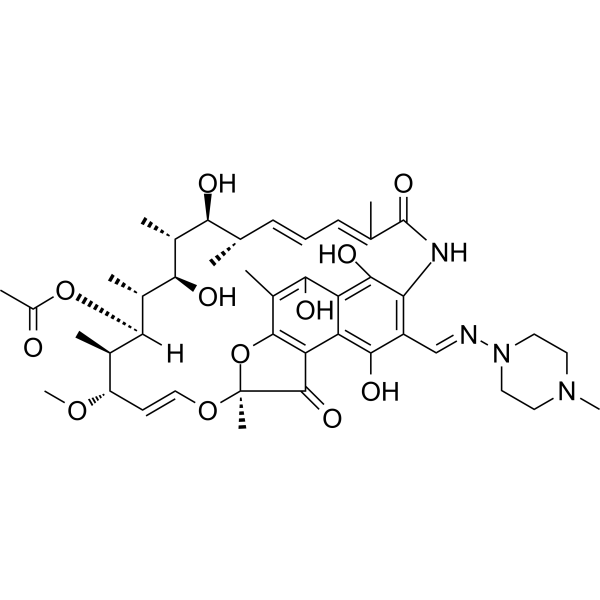
HY-B0272
RifampicinAntivirus Agent -
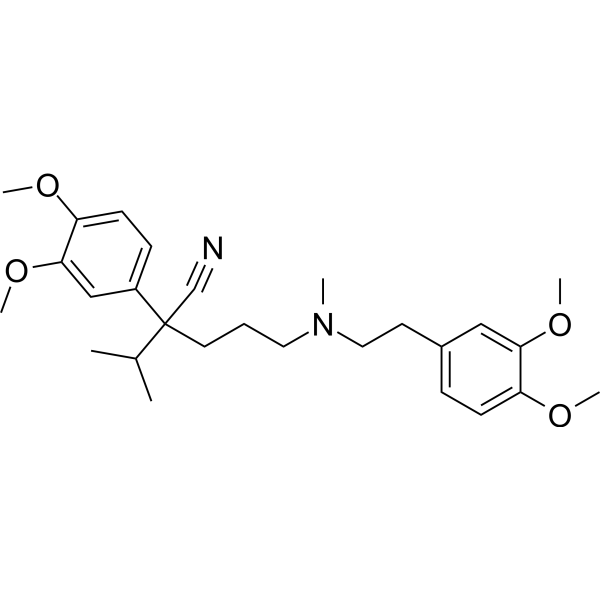
HY-14275
VerapamilCalcium Channel Blocker -
HY-B1322A
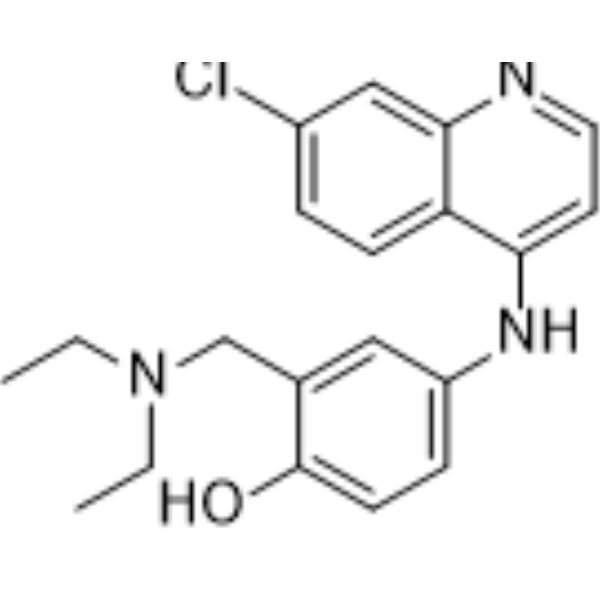
AmodiaquineAntimalarial Agent -
HY-B1218
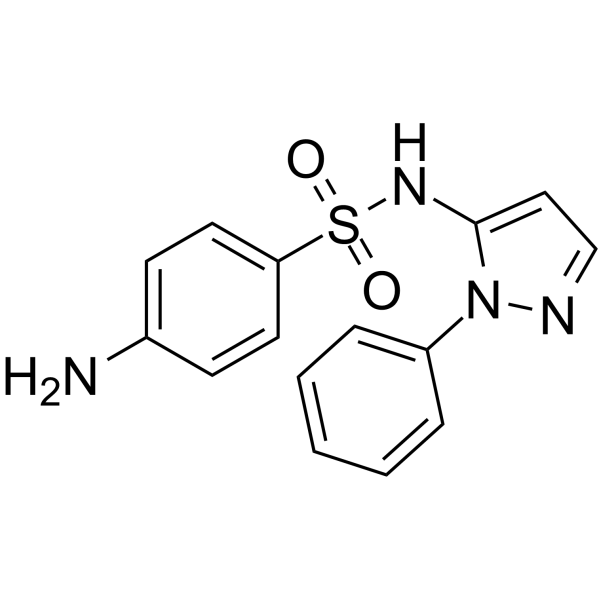
SulfaphenazoleCYP2C9 Inhibitor -
HY-B0476R
Phenacetin (Standard) -
HY-B1751
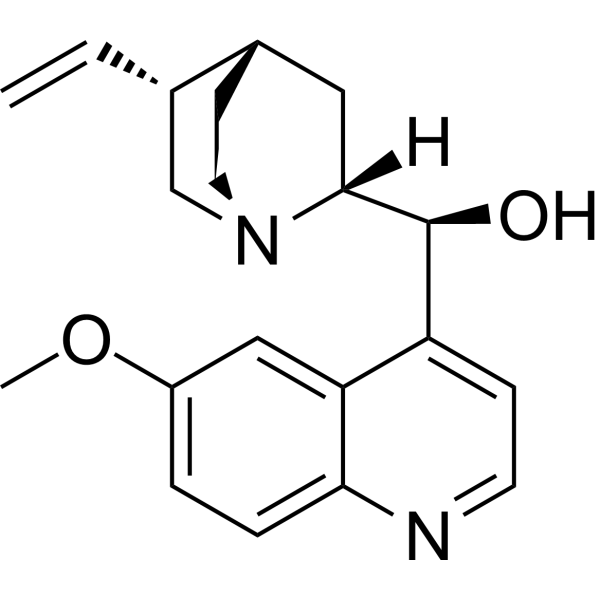
Quinidine (15% dihydroquinidine)Anti-arrythmic Agent -
HY-125833
Alpha-NaphthoflavoneAromatase Inhibitor
Publications Citing Use of MedChemExpress (MCE) Phenacetin
More

Biological Activity
Description
IC50 & Target
[1]|
COX-3 102 μM (IC50) |
Cellular Effect
|
Cell Line

|
Type | Value | Description | References |
|---|---|---|---|---|
| CHO | IC50 |
200 μM
Compound: Phenacetin
|
TP_TRANSPORTER: inhibition of Adefovir uptake in OAT1-expressing CHO cells
TP_TRANSPORTER: inhibition of Adefovir uptake in OAT1-expressing CHO cells
|
[PMID: 10991954] |
| HEK293 | IC50 |
>500 μM
Compound: phenacetin
|
Inhibition of human MATE1-mediated ASP+ uptake expressed in HEK293 cells after 1.5 mins by fluorescence assay
Inhibition of human MATE1-mediated ASP+ uptake expressed in HEK293 cells after 1.5 mins by fluorescence assay
|
[PMID: 23241029] |
In Vitro
Phenacetin shows inhibitory activity for COX-3 with an IC50 value of 102 μM in insect cells [1].
Phenacetin is a substrate widely used as an in vitro and in vivo probe to measure the activity of CYP1A2, because the metabolism of phenacetin to acetaminophen is thought to be a selective CYP1A2-mediated reaction[2][3].
MedChemExpress (MCE) has not independently confirmed the accuracy of these methods. They are for reference only.
In Vivo
MedChemExpress (MCE) has not independently confirmed the accuracy of these methods. They are for reference only.
-
Animal Model:Male Sprague-Dawley rats (180-200 g)[2]
-
Dosage:20 mg/kg
-
Administration:Oral administration (Pharmacokinetic Analysis)
-
Result:T1/2 (2.06 hours), Cmax (6,728.3 μg/L).


Chemical Information
-
CAS No. 62-44-2
-
Appearance Solid
-
Molecular Weight 179.22
-
Formula C10H13NO2
-
Color White to off-white
-
SMILES
CC(NC1=CC=C(OCC)C=C1)=O
-
Synonyms
Acetophenetidin
-
Shipping
Room temperature in continental US; may vary elsewhere.
-
Storage
Powder -20°C 3 years 4°C 2 years In solvent -80°C 2 years -20°C 1 year


Publications (1)
-
Journal Impact Factor
-
Most Recent
-
Drug Deliv Transl Res
Leveraging quantum chemical properties in transfer learning for predicting blood-brain barrier permeability of drugs. [Abstract]2025 Oct 29. PMID: 41160380


Solvent & Solubility
In Vitro:
DMSO : ≥ 100 mg/mL (557.97 mM; Hygroscopic DMSO has a significant impact on the solubility of product, please use newly opened DMSO)
H2O : 0.67 mg/mL (3.74 mM; Need ultrasonic)
* "≥" means soluble, but saturation unknown.
Please refer to the solubility information to select the appropriate solvent. Once prepared, please aliquot and store the solution to prevent product inactivation from repeated freeze-thaw cycles.
Storage method and period of stock solution: -80°C, 2 years; -20°C, 1 year. When stored at -80°C, please use it within 2 years. When stored at -20°C, please use it within 1 year.
* Note: If you choose water as the stock solution, please dilute it to the working solution, then filter and sterilize it with a 0.22 μm filter before use.
Please refer to the solubility information to select the appropriate solvent. Once prepared, please aliquot and store the solution to prevent product inactivation from repeated freeze-thaw cycles.
Storage method and period of stock solution: -80°C, 2 years; -20°C, 1 year. When stored at -80°C, please use it within 2 years. When stored at -20°C, please use it within 1 year.
* Note: If you choose water as the stock solution, please dilute it to the working solution, then filter and sterilize it with a 0.22 μm filter before use.
Concentration (start) × Volume (start) = Concentration (final) × Volume (final)
In Vivo:
Select the appropriate dissolution method based on your experimental animal and administration route.
- For the following dissolution methods, please ensure to first prepare a clear stock solution using an In Vitro approach and then sequentially add co-solvents:
- To ensure reliable experimental results, the clarified stock solution can be appropriately stored based on storage conditions. As for the working solution for In Vivo experiments, it is recommended to prepare freshly and use it on the same day.
- The percentages shown for the solvents indicate their volumetric ratio in the final prepared solution. If precipitation or phase separation occurs during preparation, heat and/or sonication can be used to aid dissolution.
Add each solvent one by one: 10% DMSO 40% PEG300 5% Tween-80 45% Saline
Solubility: ≥ 2.5 mg/mL (13.95 mM); Clear solution
This protocol yields a clear solution of ≥ 2.5 mg/mL (saturation unknown).
Taking 1 mL working solution as an example, add 100 μL DMSO stock solution (25.0 mg/mL) to 400 μL PEG300, and mix evenly; then add 50 μL Tween-80 and mix evenly; then add 450 μL Saline to adjust the volume to 1 mL.
Preparation of Saline: Dissolve 0.9 g sodium chloride in ddH₂O and dilute to 100 mL to obtain a clear Saline solution.
Add each solvent one by one: 10% DMSO 90% (20% SBE-β-CD in Saline)
Solubility: ≥ 2.5 mg/mL (13.95 mM); Clear solution
This protocol yields a clear solution of ≥ 2.5 mg/mL (saturation unknown).
Taking 1 mL working solution as an example, add 100 μL DMSO stock solution (25.0 mg/mL) to 900 μL 20% SBE-β-CD in Saline, and mix evenly.
Preparation of 20% SBE-β-CD in Saline (4°C, storage for one week): 2 g SBE-β-CD powder is dissolved in 10 mL Saline, completely dissolve until clear.
In Vivo Dissolution Calculator
Please enter the basic information of animal experiments:
-
-
-
-
Recommended: Prepare an additional quantity of animals to account for potential losses during experiments.
Please enter your animal formula composition:
-
%DMSO +
Recommended: Keep the proportion of DMSO in working solution below 2% if your animal is weak.
-
%+
-
+%Tween-80 + +
-
%Saline +
The co-solvents required include: DMSO, . All of co-solvents are available by MedChemExpress (MCE). , Tween 80. All of co-solvents are available by MedChemExpress (MCE).
Working solution concentration: 0.22 mg/mL
Method for preparing stock solution: mg drug dissolved in μL DMSO. Stock solution concentration: mg/mL.
1. Take μL DMSO stock solution;
2. Add μL .
μL , mix evenly;
3. Then add μL Tween 80, mix evenly;
4. Then add μL
Please ensure that the stock solution in the first step is dissolved to a clear state, and add co-solvents in sequence. You can use ultrasonic heating (ultrasonic cleaner, recommended frequency 20-40 kHz), vortexing, etc. to assist dissolution.


Purity & Documentation
-
Data Sheet (275 KB)
-
SDS (419 KB)
- English - EN (419 KB)
- Français - FR (419 KB)
- Deutsch - DE (419 KB)
- Norwegian - NO (419 KB)
- Español - ES (419 KB)
- Swedish - SV (419 KB)
- Italian - IT (419 KB)
- Korean - KR (419 KB)
- Portuguese - PT (419 KB)
-
Handling Instructions (2659 KB)
References
[1]. Chandrasekharan NV, et al. COX-3, a cyclooxygenase-1 variant inhibited by acetaminophen and other analgesic/antipyretic drugs: cloning, structure, and expression. Proc Natl Acad Sci U S A. 2002 Oct 15;99(21):13926-31. [Content Brief]
[2]. Xiao-Meng He, et al. Effects of long-term smoking on the activity and mRNA expression of CYP isozymes in rats. J Thorac Dis. 2015 Oct; 7(10): 1725–1731. [Content Brief]
[3]. Na Gao, et al. Inhibition of Baicalin on Metabolism of Phenacetin, a Probe of CYP1A2, in Human Liver Microsomes and in Rats. PLoS One. 2014; 9(2): e89752. [Content Brief]


Complete Stock Solution Preparation Table
Please refer to the solubility information to select the appropriate solvent. Once prepared, please aliquot and store the solution to prevent product inactivation from repeated freeze-thaw cycles.
Storage method and period of stock solution: -80°C, 2 years; -20°C, 1 year. When stored at -80°C, please use it within 2 years. When stored at -20°C, please use it within 1 year.
| Optional Solvent | Concentration Solvent Mass | 1 mg | 5 mg | 10 mg | 25 mg |
|---|---|---|---|---|---|
| H2O / DMSO | 1 mM | 5.5797 mL | 27.8987 mL | 55.7973 mL | 139.4934 mL |
| DMSO | 5 mM | 1.1159 mL | 5.5797 mL | 11.1595 mL | 27.8987 mL |
| 10 mM | 0.5580 mL | 2.7899 mL | 5.5797 mL | 13.9493 mL | |
| 15 mM | 0.3720 mL | 1.8599 mL | 3.7198 mL | 9.2996 mL | |
| 20 mM | 0.2790 mL | 1.3949 mL | 2.7899 mL | 6.9747 mL | |
| 25 mM | 0.2232 mL | 1.1159 mL | 2.2319 mL | 5.5797 mL | |
| 30 mM | 0.1860 mL | 0.9300 mL | 1.8599 mL | 4.6498 mL | |
| 40 mM | 0.1395 mL | 0.6975 mL | 1.3949 mL | 3.4873 mL | |
| 50 mM | 0.1116 mL | 0.5580 mL | 1.1159 mL | 2.7899 mL | |
| 60 mM | 0.0930 mL | 0.4650 mL | 0.9300 mL | 2.3249 mL | |
| 80 mM | 0.0697 mL | 0.3487 mL | 0.6975 mL | 1.7437 mL | |
| 100 mM | 0.0558 mL | 0.2790 mL | 0.5580 mL | 1.3949 mL |
* Note: If you choose water as the stock solution, please dilute it to the working solution, then filter and sterilize it with a 0.22 μm filter before use.


Phenacetin Related Classifications
HY-B0476 Related Classifications
 Powered by Bioz