



Prometryn
Based on 1 publication(s) in Google Scholar
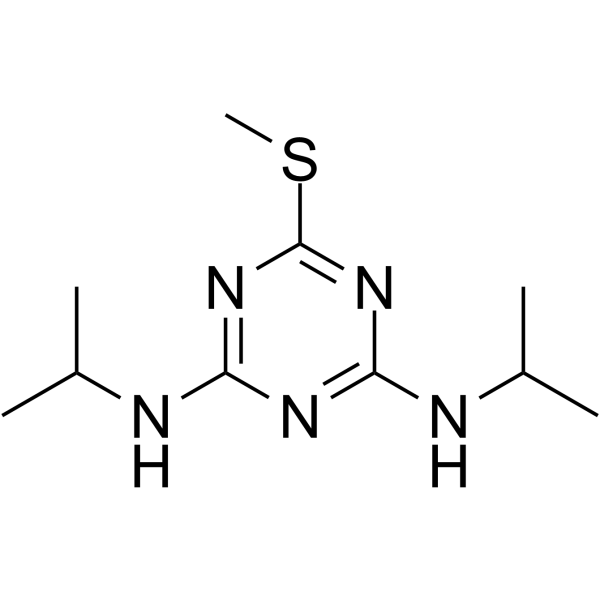
Prometryn is a triazine herbicide. Prometryn induces apoptosis and cell cycle arrest. Prometryn induces oxidative stress, DNA damage and autophagy-related gene expression, and non-specific immunity gene expression. Prometryn can be used for the research of herbicide, hepatopancreas injury, and intestinal stress and intestinal barrier dysfunction.
For research use only. We do not sell to patients.
- Purity : 99.58%
- CAS No.: 7287-19-6
- Formula: C10H19N5S
- Molecular Weight:241.36
-
Storage:
4°C, sealed storage, away from moisture and light
* In solvent : -80°C, 6 months; -20°C, 1 month (sealed storage, away from moisture and light)

To place orders, for customer services and technical support, please contact: MedChemExpress USA
Tel: 609-228-6898 E-mail: [email protected] [email protected]


-
 Biological Activity
-
Chemical Information
-
Solvent & Solubility
- Protocols
- Purity & Documentation
- References
-
 Help & FAQs


-
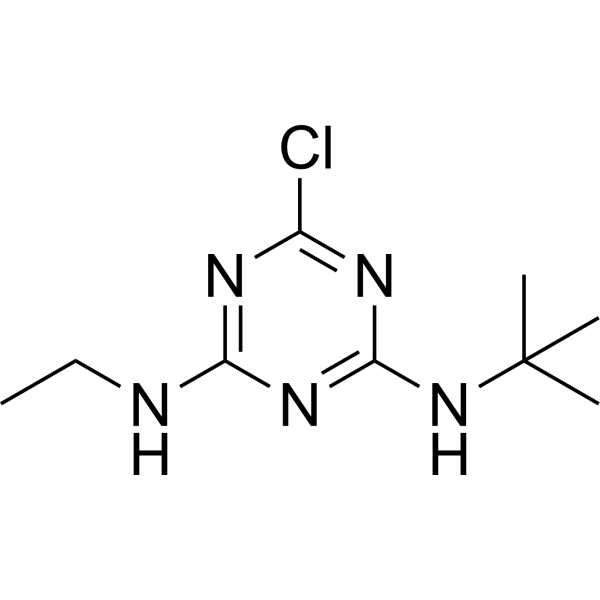
HY-B1847
TerbuthylazineHerbicide -
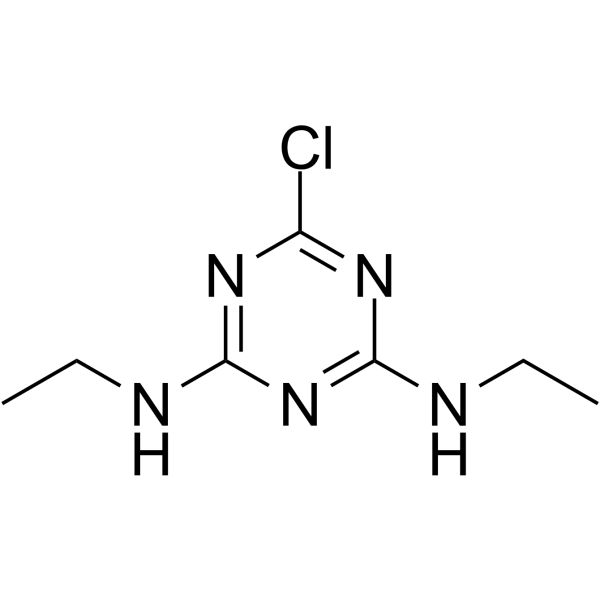
HY-B2046
SimazineHerbicide -
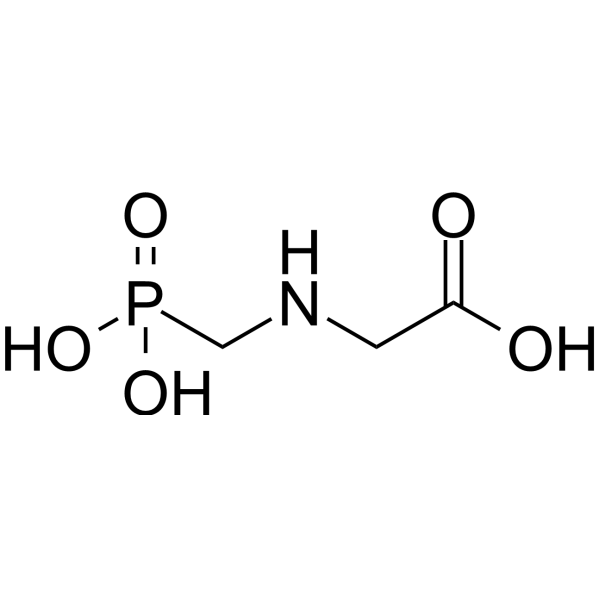
HY-B0863
GlyphosateEPSPS Inhibitor -

HY-121324R
Prometryn (Standard)Active Compound -
HY-B0863R
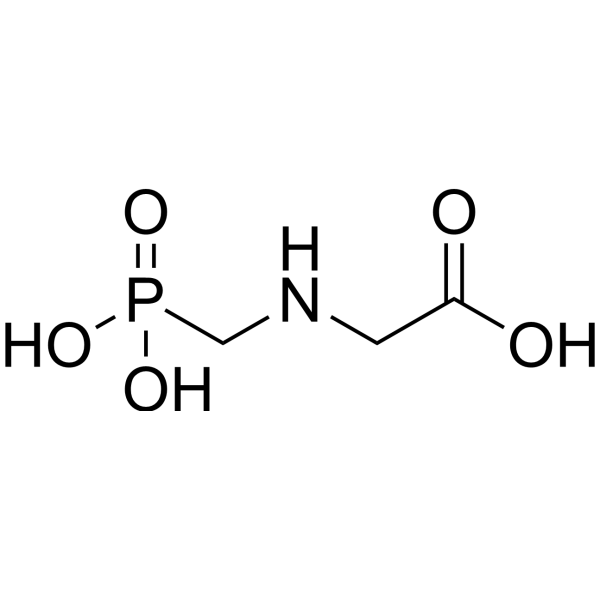
Glyphosate (Standard)Herbicide -
HY-B2050
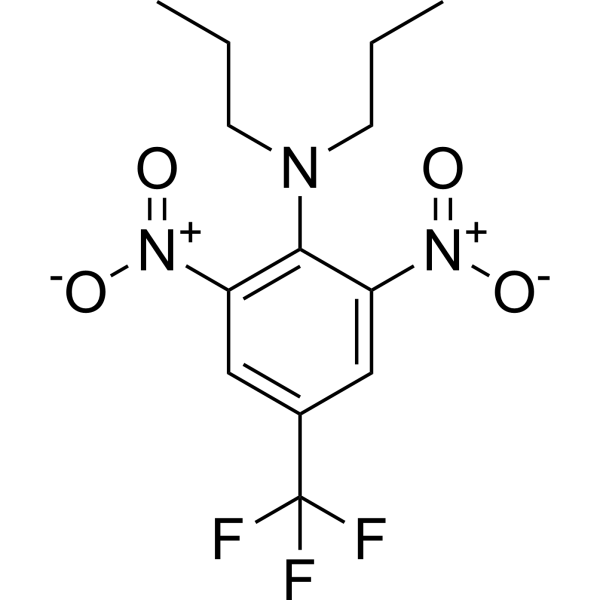
TrifluralinPre-Emergence Herbicide -

HY-B2046R
Simazine (Standard)Herbicide -
HY-B2030
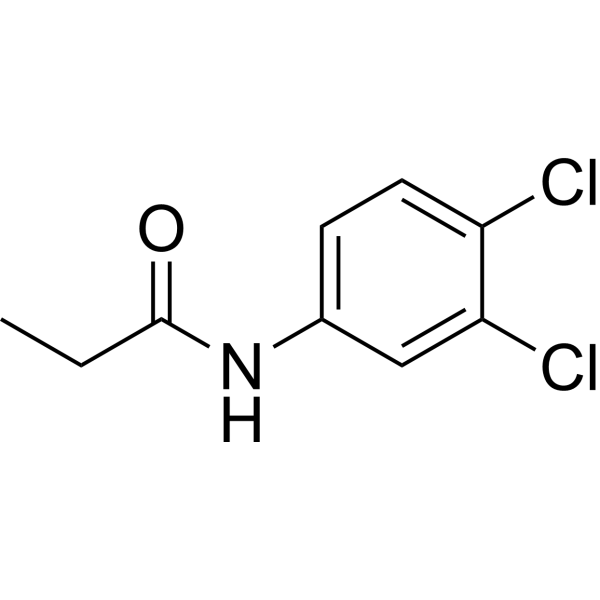
PropanilHerbicide -
HY-B1880
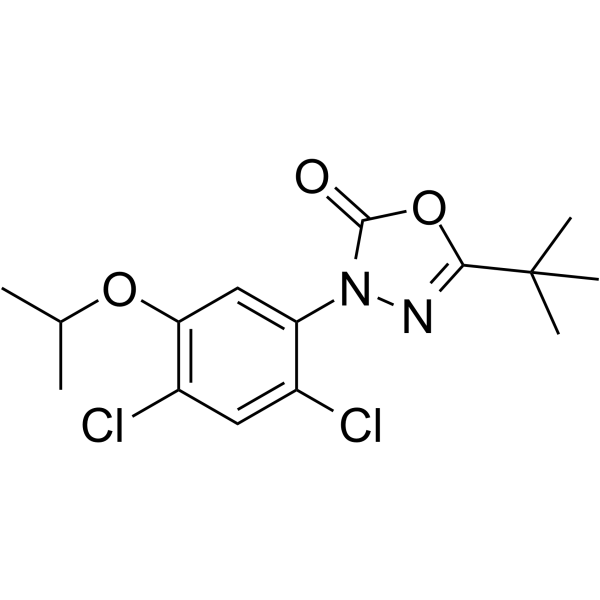
OxadiazonHerbicide -
HY-B2035
PretilachlorHerbicide -

HY-B2030R
Propanil (Standard)Reference Standard -

HY-B1880R
Oxadiazon (Standard)Herbicide
Publications Citing Use of MedChemExpress (MCE) Prometryn
More

Biological Activity
Description
In Vitro
Prometryn (25-200 μM; 24-48 h) decreases the viability of BEAS-2B cells in a time- and concentration-dependent manner[1].
Prometryn (25-200 μM; 24-48 h) induces S phase cell cycle arrest in BEAS-2B cells at concentrations of 100 and 200 μM after 48 h of exposure, accompanied by reduced cyclin A and CDK2 expression and increased p53 expression[1].
Prometryn (25-200 μM; 48 h) induces apoptosis in BEAS-2B cells in a concentration-dependent manner at 100 and 200 μM after 48 h of exposure, mediated by altered expression of Bcl2, Bax, Caspase 9, Caspase 3, and PARP[1].
Prometryn (25-200 μM; 48 h) induces dose-dependent intracellular ROS generation in BEAS-2B cells, with significant increases detected at 200 μM after 48 h of exposure[1].
Prometryn (25-200 μM; 48 h) induces dose-dependent DNA damage in BEAS-2B cells[1].
Prometryn (5-20 mg/L; 96 hours) induces dose-dependent developmental toxicity in Danio rerio embryos over 96 hours, causing morphological defects, organogenesis failure, oxidative stress, apoptosis, and mitochondrial dysfunction, with an LC50 value of 23.14 mg/L[4].
MedChemExpress (MCE) has not independently confirmed the accuracy of these methods. They are for reference only.
-
Cell Line:human bronchial epithelial BEAS-2B cells
-
Concentration:25 μM; 50 μM; 100 μM; 200 μM
-
Incubation Time:24 h; 48 h
-
Result:Decreased BEAS-2B cell viability significantly at 100-200 μM after 48 h incubation (P < 0.01).
Showed no significant viability reduction after 24 h of treatment at any tested concentration.
Induced morphological changes including reduced cell volume, rounded cell shape, loss of intercellular connections, floating cells, and cell debris in cells treated with 50-200 μM for 48 h.
-
Cell Line:human bronchial epithelial BEAS-2B cells
-
Concentration:25 μM; 50 μM; 100 μM; 200 μM
-
Incubation Time:24 h; 48 h
-
Result:Decreased the proportion of BEAS-2B cells in the G1 phase and increased the proportion in the S phase at 100 and 200 μM after 48 h incubation (P < 0.05), indicating S phase cell cycle arrest.
Reduced cyclin A and CDK2 protein expression in a dose-dependent manner via western blotting.
Increased p53 protein expression in a dose-dependent manner via western blotting.
Showed no cell cycle effects after 24 h of treatment at any concentration.
-
Cell Line:human bronchial epithelial BEAS-2B cells
-
Concentration:25 μM; 50 μM; 100 μM; 200 μM
-
Incubation Time:48 h
-
Result:Induced apoptosis in BEAS-2B cells at 100 μM with an apoptotic rate of ~6.5% (P < 0.01).
Induced apoptosis in BEAS-2B cells at 200 μM with an apoptotic rate of ~9% (P < 0.001).
Reduced anti-apoptotic Bcl2 protein expression in a dose-dependent manner via western blotting.
Increased pro-apoptotic Bax protein expression in a dose-dependent manner via western blotting.
Reduced expression of full-length Caspase 9, Caspase 3, and PARP via western blotting.
Increased expression of cleaved, active forms of Caspase 9, Caspase 3, and PARP via western blotting.
- RT-PCR
- RNA extraction experimental
- Annexin V plus membrane-impermeant dye apoptosis staining
- BrdU Incorporation Assay
- ROS/oxidative-stress fluorescent staining
- Protocol for Cell Cycle
- Real Time qPCR (Q-PCR)
- Detection of Apoptosis
- TUNEL staining for apoptotic DNA fragmentation
- Flow cytometric DNA-content cell-cycle staining
- Autophagy
- Apoptosis Solutions
- Lysosome and acidic-vesicle live-cell staining
- Macroautophagy Solutions
- Genotoxicity/Mutagenicity Study


Chemical Information
-
CAS No. 7287-19-6
-
Appearance Solid
-
Molecular Weight 241.36
-
Formula C10H19N5S
-
Color White to off-white
-
SMILES
CSC1=NC(NC(C)C)=NC(NC(C)C)=N1
-
Shipping
Room temperature in continental US; may vary elsewhere.
-
Storage
4°C, sealed storage, away from moisture and light
* In solvent : -80°C, 6 months; -20°C, 1 month (sealed storage, away from moisture and light)


Publications (1)
-
Journal Impact Factor
-
Most Recent


Solvent & Solubility
In Vitro:
DMSO : 100 mg/mL (414.32 mM; Need ultrasonic; Hygroscopic DMSO has a significant impact on the solubility of product, please use newly opened DMSO)
Please refer to the solubility information to select the appropriate solvent. Once prepared, please aliquot and store the solution to prevent product inactivation from repeated freeze-thaw cycles.
Storage method and period of stock solution: -80°C, 6 months; -20°C, 1 month (sealed storage, away from moisture and light). When stored at -80°C, please use it within 6 months. When stored at -20°C, please use it within 1 month.
Please refer to the solubility information to select the appropriate solvent. Once prepared, please aliquot and store the solution to prevent product inactivation from repeated freeze-thaw cycles.
Storage method and period of stock solution: -80°C, 6 months; -20°C, 1 month (sealed storage, away from moisture and light). When stored at -80°C, please use it within 6 months. When stored at -20°C, please use it within 1 month.
Concentration (start) × Volume (start) = Concentration (final) × Volume (final)


Purity & Documentation
-
Data Sheet (277 KB)
-
SDS (393 KB)
- English - EN (393 KB)
- Français - FR (393 KB)
- Deutsch - DE (393 KB)
- Norwegian - NO (393 KB)
- Español - ES (393 KB)
- Swedish - SV (393 KB)
- Italian - IT (393 KB)
- Korean - KR (393 KB)
- Portuguese - PT (393 KB)
-
Handling Instructions (2659 KB)
References
[1]. Liu Q, et al. Prometryn induces apoptotic cell death through cell cycle arrest and oxidative DNA damage. Toxicol Res (Camb). 2019;8(6):833-841. Published 2019 Jul 26. [Content Brief]
[2]. Huang P, et al. Effects of prometryn on oxidative stress, immune response and apoptosis in the hepatopancreas of Eriocheir sinensis (Crustacea: Decapoda). Ecotoxicol Environ Saf. Published online June 23, 2023. [Content Brief]
[3]. Huang P, et al. Prometryn exposure disrupts the intestinal health of Eriocheir sinensis: Physiological responses and underlying mechanism. Comp Biochem Physiol C Toxicol Pharmacol. 2024;277:109820. [Content Brief]
[4]. Min N, et al. Developmental toxicity of prometryn induces mitochondrial dysfunction, oxidative stress, and failure of organogenesis in zebrafish (Danio rerio). J Hazard Mater. 2023;443(Pt A):130202. [Content Brief]


Complete Stock Solution Preparation Table
Please refer to the solubility information to select the appropriate solvent. Once prepared, please aliquot and store the solution to prevent product inactivation from repeated freeze-thaw cycles.
Storage method and period of stock solution: -80°C, 6 months; -20°C, 1 month (sealed storage, away from moisture and light). When stored at -80°C, please use it within 6 months. When stored at -20°C, please use it within 1 month.
| Optional Solvent | Concentration Solvent Mass | 1 mg | 5 mg | 10 mg | 25 mg |
|---|---|---|---|---|---|
| DMSO | 1 mM | 4.1432 mL | 20.7159 mL | 41.4319 mL | 103.5797 mL |
| 5 mM | 0.8286 mL | 4.1432 mL | 8.2864 mL | 20.7159 mL | |
| 10 mM | 0.4143 mL | 2.0716 mL | 4.1432 mL | 10.3580 mL | |
| 15 mM | 0.2762 mL | 1.3811 mL | 2.7621 mL | 6.9053 mL | |
| 20 mM | 0.2072 mL | 1.0358 mL | 2.0716 mL | 5.1790 mL | |
| 25 mM | 0.1657 mL | 0.8286 mL | 1.6573 mL | 4.1432 mL | |
| 30 mM | 0.1381 mL | 0.6905 mL | 1.3811 mL | 3.4527 mL | |
| 40 mM | 0.1036 mL | 0.5179 mL | 1.0358 mL | 2.5895 mL | |
| 50 mM | 0.0829 mL | 0.4143 mL | 0.8286 mL | 2.0716 mL | |
| 60 mM | 0.0691 mL | 0.3453 mL | 0.6905 mL | 1.7263 mL | |
| 80 mM | 0.0518 mL | 0.2589 mL | 0.5179 mL | 1.2947 mL | |
| 100 mM | 0.0414 mL | 0.2072 mL | 0.4143 mL | 1.0358 mL |


Prometryn Related Classifications
HY-121324 Related Classifications
 Powered by Bioz