
242 Results for "

Nucleus

" in MedChemExpress (MCE) Product Catalog:
Products (242)

242 Results for "Nucleus" in MCE Product Catalog:

Cat. No.: HY-D3210
CAS No.: 2098632-04-1
Target:  

Fluorescent Dye

Research Areas:  

Inflammation/Immunology

DCM-KPV is a fluorescent probe targeting the human intestinal oligopeptide transporter PEPT1/SLC15A1 receptor (λex=480 nm, λem=620-670 nm). DCM-KPV specifically binds to PepT1 via its KPV domain and mediates receptor-targeted internalization, thus effectively accumulating in the cytoplasm and nucleus of cells overexpressing this receptor. DCM-KPV has the advantages of long emission wavelength, high emission efficiency, low photobleaching, and negligible cytotoxicity. DCM-KPV maintains stable fluorescence intensity under continuous illumination, exhibiting extremely high live cell compatibility. DCM-KPV can specifically accumulate at colonic inflammatory sites through the intestinal mucosa, enabling direct non-invasive visual differentiation between chronic and acute ulcerative colitis groups and the normal group .
loading...
    loading...
Cat. No.: HY-W010514R
CAS No.: 1460-57-7
trans-Cyclohexane-1,2-diol (Standard) is the analytical standard of trans-Cyclohexane-1,2-diol (HY-W010514). This product is intended for research and analytical applications. trans-Cyclohexane-1,2-diol (TCHD) is a transient dilator of the nuclear pore complex (NPC). By interacting with the hydrophobic core (FG nucleoporin) of the NPC, trans-Cyclohexane-1,2-diol can disrupt the NPC structure and reversibly increase the permeability of the nuclear pore, allowing macromolecules larger than 40 kDa (such as plasmid DNA) to enter the cell nucleus by passive diffusion, thereby enhancing the nuclear import efficiency of non-viral vectors. trans-Cyclohexane-1,2-diol can improve the efficiency of in vitro electrotransfection or lipid-mediated gene transfection, especially significantly increasing gene expression in differentiated airway epithelial cells .
loading...
    loading...
Cat. No.: HY-W322225
CAS No.: 59752-57-7
Synonyms: DLPE; 1,2-Dilauroyl-sn-glycero-3-PE
Target:  

Liposome

Research Areas:  

Others

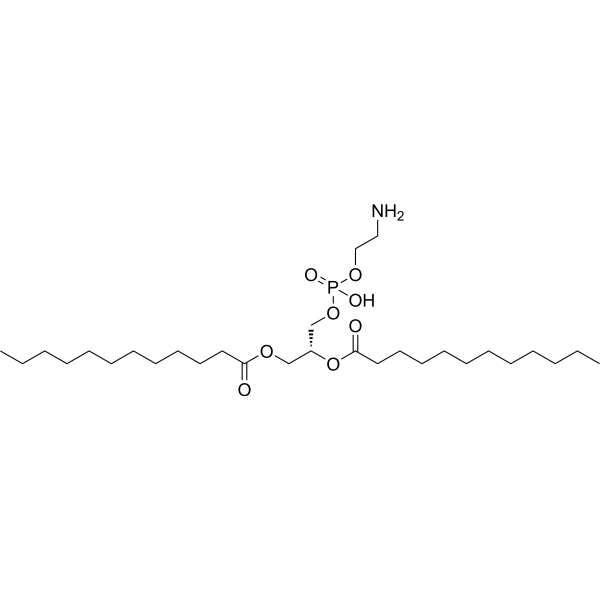
1,2-Dilauroyl-sn-glycero-3-phosphoethanolamine (DLPE; 1,2-Dilauroyl-sn-glycero-3-PE) is an anionic phospholipid. 1,2-Dilauroyl-sn-glycero-3-phosphoethanolamine promotes the endocytosis of liposome-DNA complexes into target cells, and subsequently mediates membrane fusion between liposome carriers and endosomes to deliver DNA into the nucleus. 1,2-Dilauroyl-sn-glycero-3-phosphoethanolamine is a component of anionic artificial viral envelope liposomes, which deliver plasmid DNA to hepatoma cells without serum inhibition. 1,2-Dilauroyl-sn-glycero-3-phosphoethanolamine enables the construction of biocompatible non-viral gene delivery vector systems. 1,2-Dilauroyl-sn-glycero-3-phosphoethanolamine is applicable for liposome synthesis .
loading...
    loading...
Cat. No.: HY-101140R
CAS No.: 1799974-70-1
KI696 (Standard) is the analytical standard of KI696 (HY-101140). This product is intended for research and analytical applications. KI696 is a selective KEAP1/NRF2 protein-protein interaction inhibitor with a human Kd value of 1.3 nM. KI696 acts by competitively occupying the NRF2-binding pocket of the KEAP1 Kelch domain. KI696 blocks KEAP1-mediated ubiquitination and degradation of NRF2, promotes the translocation of NRF2 to the nucleus, activates the expression of downstream antioxidant genes, increases intracellular glutathione levels, and alleviates oxidative stress-induced cell damage and inflammatory cell infiltration in the lungs. KI696 reduces ozone-induced pulmonary oxidative damage and inflammatory cell accumulation in rats, and upregulates pulmonary antioxidant genes. KI696 can be used in research related to chronic obstructive pulmonary disease, oxidative stress and inflammation .
loading...
    loading...
Cat. No.: HY-D3088
Research Areas:  

Others

CQPP is a Fluorescent probe designed for monitoring polarity changes in the cellular microenvironment, including polarity tracking of lipid droplets/nuclei during ferroptosis. CQPP exhibits ratiometric fluorescence emission and fluorescence lifetime variations in response to polarity changes; a nonpolar environment stimulates fluorescence from the locally excited (LE) state, while a polar environment drives solvation relaxation to the intramolecular charge transfer (ICT) state, which attenuates the LE emission at ~470 nm and simultaneously enhances the ICT emission at ~670 nm. CQPP binds to intranuclear DNA through electrostatic interactions and hydrogen bonds in the DNA minor groove, which enhances its emission at ~670 nm and prolongs its fluorescence lifetime. CQPP can simultaneously target lipid droplets (green LE fluorescence) and the nucleus (red ICT fluorescence). The detection wavelengths of CQPP are Ex/Em = 405/470 nm and Ex/Em = 405/670 nm, and it also supports fluorescence lifetime imaging via 810 nm two-photon excitation .
loading...
    loading...
Cat. No.: HY-P991400
GSK1995057 is a human monoclonal antibody (mAb) targeting TNFRSF1A. GSK1995057 selectively binds to TNFR1, blocks the binding of TNF-α and LT-α, and does not interfere with TNFR2 signaling. GSK1995057 inhibits the activation of NF-κB, JNK and MAPK pathways, alleviates apoptosis (apoptosis) and inflammatory responses (inhibiting IL-1β, IL-6, IL-10, TNF-α), and prevents viability loss of human nucleus pulposus cells. GSK1995057 inhibits the expression of cytokines and neutrophil adhesion molecules in human pulmonary microvascular endothelial cell monolayers, and reduces inflammatory responses and lung injury symptoms in non-human primates. GSK1995057 forms complexes with HAVH autoantibodies, thereby activating TNFR1 and triggering the release of cytokines and IL-8 in human cells. GSK1995057 can be used in research related to intervertebral disc degeneration and acute lung injury .
loading...
    loading...
Cat. No.: HY-W097625
CAS No.: 26964-24-9
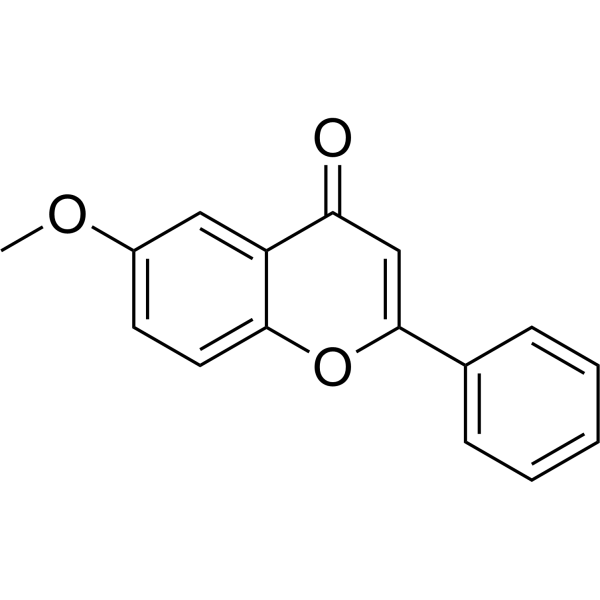
6-Methoxyflavone is an orally active methoxyflavone. 6-Methoxyflavone suppresses neuroinflammation in microglia through the inhibition of TLR4/MyD88/p38 MAPK/NF-κB dependent pathways and the activation of HO-1/NQO-1 signaling. 6-Methoxyflavone induces S-phase arrest through the CCNA2/CDK2/p21CIP1 signaling pathway in HeLa cells. 6-Methoxyflavone inhibits NFAT Translocation into the nucleus and suppresses T cell activation. 6-Methoxyflavone partially restores chronic ethanol-induced behavioral deficits in mice. 6-Methoxyflavone antagonizes chronic constriction injury and diabetes associated neuropathic nociception expression. 6-Methoxyflavone can be used for the study of cancer, inflammation and neurological diseases .
loading...
    loading...
Cat. No.: HY-L211
86 compounds

Hormones are a class of biologically active substances secreted by endocrine gland cells, which are transported through the circulatory system to various parts of the body, and precisely act on specific target organs or cells, playing a crucial role in regulating the growth, development, metabolism, and reproduction of organisms. The mechanisms of hormone action are diverse and complex. Some hormones (such as corticosteroids, vitamin D, and thyroid hormones) can enter the cell interior and interact with receptors in the nucleus, thereby regulating gene expression and affecting cell function. Other hormones (such as growth hormone and thyrotropin-releasing hormone) bind directly to receptors on the cell surface, exerting their effects by regulating enzyme activity or influencing the state of ion channels. Additionally, hormones play a key role in the study of endocrine and metabolic diseases, and are closely related to the development of diseases such as diabetes and thyroid diseases.

MCE has included 86 human hormone compounds, which is of great significance for the study of human metabolic pathways, and can also be used to build a metabonomics database.

Cat. No.: HY-101140AR
CAS No.: 1799974-69-8
Research Areas:  

Inflammation/Immunology

KI696 isomer (Standard) is the analytical standard of KI696 isomer (HY-101140A). This product is intended for research and analytical applications. KI696 isomer is an isomer of KI696 (HY-101140). KI696 is a selective KEAP1/NRF2 protein-protein interaction inhibitor with a human Kd value of 1.3 nM. KI696 acts by competitively occupying the NRF2-binding pocket of the KEAP1 Kelch domain. KI696 blocks KEAP1-mediated ubiquitination and degradation of NRF2, promotes the translocation of NRF2 to the nucleus, activates the expression of downstream antioxidant genes, increases intracellular glutathione levels, and alleviates oxidative stress-induced cell damage and inflammatory cell infiltration in the lungs. KI696 reduces ozone-induced pulmonary oxidative damage and inflammatory cell accumulation in rats, and upregulates pulmonary antioxidant genes. KI696 can be used in research related to chronic obstructive pulmonary disease, oxidative stress and inflammation .
loading...
    loading...
Cat. No.: HY-12388AR
CAS No.: 29854-14-6
Synonyms: Desmethylclomipramine hydrochloride (Standard); Norclomipramine hydrochloride (Standard)
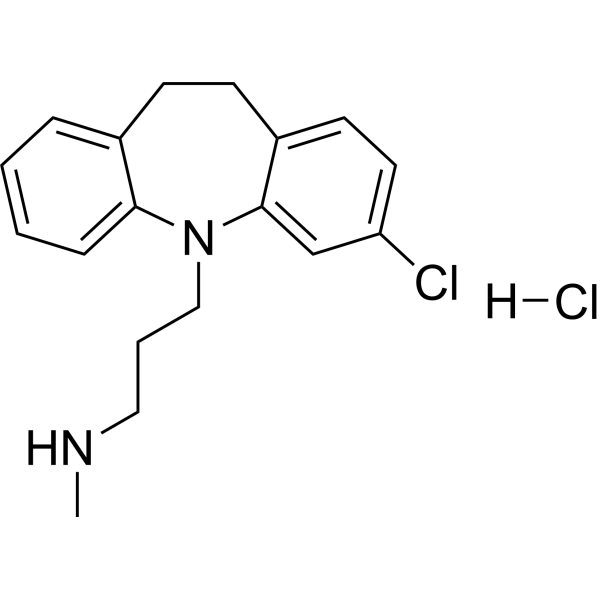
N-Desmethyl clomipramine hydrochloride (Standard) (Desmethylclomipramine hydrochloride (Standard); Norclomipramine hydrochloride (Standard)) is the analytical standard of N-Desmethyl clomipramine hydrochloride (HY-12388A). This product is intended for research and analytical applications. N-Desmethyl clomipramine hydrochloride is the orally active major active metabolite of the tricyclic antidepressant Clomipramine (HY-B0457A), possessing multiple activities including anti-inflammatory, antioxidant, antibacterial, and antiparasitic effects. N-Desmethyl clomipramine hydrochloride blocks autophagosome-lysosome fusion, leading to the accumulation of LC3-II, p62, ATG7, WIPI2, and ATG5-12, reactivates the p53/p21 pathway, induces apoptosis through C-PARP and C-CAS3, and inhibits the proliferation, migration, and invasion of renal cancer cells. N-Desmethyl clomipramine hydrochloride inhibits LdTOPIA, inducing R-loop accumulation in the nucleus of Leishmania, ultimately causing parasite death. N-Desmethyl clomipramine hydrochloride can be used for research on depression, metastatic renal cell carcinoma, and leishmaniasis .
loading...
    loading...
Cat. No.: HY-N1902R
CAS No.: 156-38-7
4-Hydroxyphenylacetic acid (Standard) is the analytical standard of 4-Hydroxyphenylacetic acid. This product is intended for research and analytical applications. 4-hydroxyphenylacetic acid, a major microbiota-derived metabolite of polyphenols, is involved in the antioxidative action. 4-hydroxyphenylacetic acid induces expression of Nrf2 . IC50 & Target:Nrf2 In Vivo: 4-Hydroxyphenylacetic acid (6, 12, or 25 mg/kg) increases Nrf2 translocation to the nucleus and enhances the activity of phase II and antioxidant enzymes. The protein levels of nuclear Nrf2 are increased by 170% and 230% in pre-treated 12 and 25 mg/kg 4-Hydroxyphenylacetic acid groups, respectively, compared with the control group.The 4-Hydroxyphenylacetic acid pretreatment at a final dose of 25 mg/kg markedly and selectively up-regulated the target genes of phase II enzymes and resulted in higher up-regulation than that of the control group by 270%, 400%, and 500% or UGT1A1, UGT1A9, and SULT2A1, respectively. 4-Hydroxyphenylacetic acid also suppresses the expression of CYP2E1 .
loading...
    loading...
Cat. No.: HY-P1248
CAS No.: 99566-27-5
Synonyms: NPFF
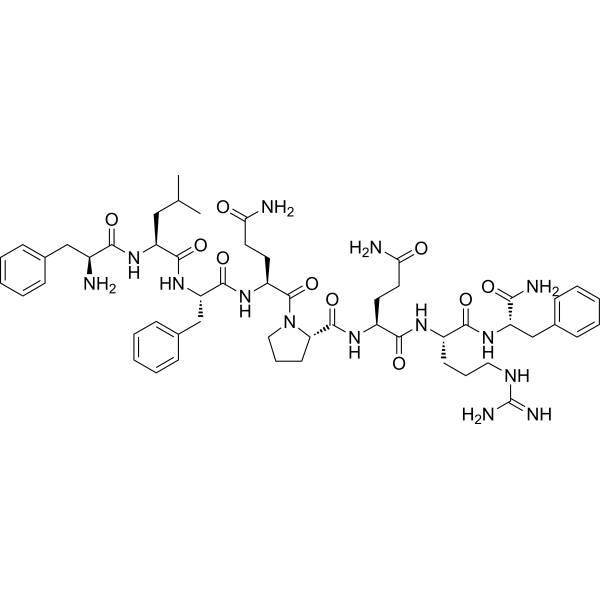
Neuropeptide FF (NPFF), an octapeptide belonging to the RF-amide family of peptides, is a NPFF1 and NPFF2 receptors agonist with Ki values of 2.82 nM and 0.21 nM, respectively. Neuropeptide FF induces abstinence syndrome, exerts antiopioid and analgesic effects, releases via calcium-dependent mechanisms from rat spinal cord, regulates memory, autonomic function, and neuroendocrine function, modulates pain and opioid antinociception, reduces food intake, stimulates water intake, alters cardiovascular parameters, and shows differential activity in hypothalamic paraventricular nucleus neurons. Neuropeptide FF is present in mammalian central nervous system and periphery, with NPFF-immunoreactivity increases in rat cerebrospinal fluid during opiate tolerance, and its NPFF gene and NPFF-R2 gene are up-regulated in rat spinal cord and dorsal root ganglia during peripheral inflammation. Neuropeptide FF can be used for the research of opioid tolerance, morphine-induced analgesia, abstinence syndrome, pain, hypertension, nociception, inflammatory pain, and neuropathic pain .
loading...
    loading...
Cat. No.: HY-L027
1,237 compounds

Viruses are much simpler organisms than bacteria, and they are made from protein substances and nucleic acid. Despite the fact that the exact mechanism of infection is extremely specific to each type of virus, the general scheme of infection can be represented in the following manner: A virus is absorbed at the surface of a host cell and then permeates through the membrane, where it releases nucleic acid from its protein protection. Then the viral nucleic acid begins to replicate, and transcription of the viral genome takes place either in the cytoplasm, or in the nucleus of the host cell. As a result of these events, a large amount of viral nucleic acid and protein are made to make new generations of virions. Therefore, one mechanism of action of antiviral drugs is to interfere with the ability of a virus to get into a target cell. A second mechanism of action is to target the processes that synthesize virus components after a virus invades a cell, such as nucleotide or nucleoside analogs.

MCE designs a unique collection of 1,237 anti-virus compounds that target several viruses, including SARS-CoV, HBV, HCV, HIV, HSV and Influenza Virus. It’s an effective tool for anti-virus drug discovery.

Cat. No.: HY-12388AS
CAS No.: 1189971-04-7
Purity:  99.81%
Synonyms: Desmethylclomipramine-d3 hydrochloride;Norclomipramine-d3 hydrochloride
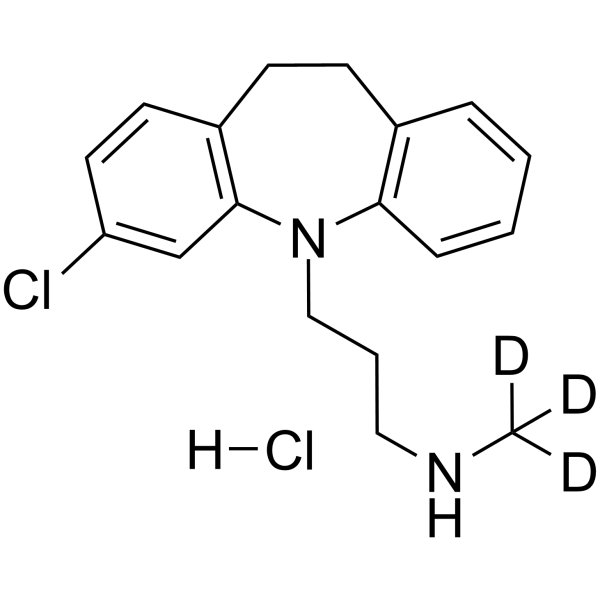
N-Desmethyl clomipramine-d3 hydrochloride (Desmethylclomipramine-d3 hydrochloride; Norclomipramine-d3 hydrochloride) is the deuterated-labeled N-Desmethyl clomipramine hydrochloride (HY-12388A). N-Desmethyl clomipramine hydrochloride is the orally active major active metabolite of the tricyclic antidepressant Clomipramine (HY-B0457A), possessing multiple activities including anti-inflammatory, antioxidant, antibacterial, and antiparasitic effects. N-Desmethyl clomipramine hydrochloride blocks autophagosome-lysosome fusion, leading to the accumulation of LC3-II, p62, ATG7, WIPI2, and ATG5-12, reactivates the p53/p21 pathway, induces apoptosis through C-PARP and C-CAS3, and inhibits the proliferation, migration, and invasion of renal cancer cells. N-Desmethyl clomipramine hydrochloride inhibits LdTOPIA, inducing R-loop accumulation in the nucleus of Leishmania, ultimately causing parasite death. N-Desmethyl clomipramine hydrochloride can be used for research on depression, metastatic renal cell carcinoma, and leishmaniasis .
loading...
    loading...
Cat. No.: HY-12388S
Synonyms: Desmethylclomipramine-d7; Norclomipramine-d7
N-Desmethyl clomipramine-d7 (Desmethylclomipramine-d7; Norclomipramine-d7) is the deuterated-labeled N-Desmethyl clomipramine (HY-12388). N-Desmethyl clomipramine is the orally active major active metabolite of the tricyclic antidepressant Clomipramine (HY-B0457A), possessing multiple activities including anti-inflammatory, antioxidant, antibacterial, and antiparasitic effects. N-Desmethyl clomipramine blocks autophagosome-lysosome fusion, leading to the accumulation of LC3-II, p62, ATG7, WIPI2, and ATG5-12, reactivates the p53/p21 pathway, induces apoptosis through C-PARP and C-CAS3, and inhibits the proliferation, migration, and invasion of renal cancer cells. N-Desmethyl clomipramine inhibits LdTOPIA, inducing R-loop accumulation in the nucleus of Leishmania, ultimately causing parasite death. N-Desmethyl clomipramine can be used for research on depression, metastatic renal cell carcinoma, and leishmaniasis .
loading...
    loading...
Cat. No.: HY-12388S1
Synonyms: Desmethylclomipramine-d6; Norclomipramine-d6
N-Desmethyl clomipramine-d6 (Desmethylclomipramine-d6; Norclomipramine-d6) is the deuterated-labeled N-Desmethyl clomipramine (HY-12388). N-Desmethyl clomipramine (Desmethylclomipramine; Norclomipramine) is the orally active major active metabolite of the tricyclic antidepressant Clomipramine (HY-B0457A), possessing multiple activities including anti-inflammatory, antioxidant, antibacterial, and antiparasitic effects. N-Desmethyl clomipramine blocks autophagosome-lysosome fusion, leading to the accumulation of LC3-II, p62, ATG7, WIPI2, and ATG5-12, reactivates the p53/p21 pathway, induces apoptosis through C-PARP and C-CAS3, and inhibits the proliferation, migration, and invasion of renal cancer cells. N-Desmethyl clomipramine inhibits LdTOPIA, inducing R-loop accumulation in the nucleus of Leishmania, ultimately causing parasite death. N-Desmethyl clomipramine can be used for research on depression, metastatic renal cell carcinoma, and leishmaniasis .
loading...
    loading...
Cat. No.: HY-P1341
CAS No.: 343268-91-7
Synonyms: Orexin A (17-33) (human, mouse, rat, bovine)
OXA (17-33) (Orexin A (17-33) (human, mouse, rat, bovine)) is the shortest active orexin peptide that selectively targets OX1 (EC50=8.29 nM), with 23-fold selectivity for the OX1 receptor over the OX2 receptor. The activity of OXA (17-33) depends on the Tyr17, Leu20, Asn25, His26 residues and the spatial conformation of the α-helix. OXA (17-33) activates signaling pathways involving inositol-1,4,5-trisphosphate receptor (IP3R), phospholipase D (PL-D) and choline-Sigma-1R, thereby increasing the cytoplasmic Ca 2+ level in nucleus accumbens neurons, an effect that is blocked by Sigma-1R antagonists. OXA (17-33) serves as an important biological probe for investigating the function of the OX1 receptor. OXA (17-33) can be modified via incorporation of mixed disulfide bonds of homocysteine and cysteamine, and is widely used in studies related to insomnia and narcolepsy .
loading...
    loading...
Cat. No.: HY-178736S
Synonyms: DLPE-d46; 1,2-Dilauroyl-sn-glycero-3-PE-d46
1,2-Dilauroyl-sn-glycero-3-phosphoethanolamine-d46 (DLPE-d46; 1,2-Dilauroyl-sn-glycero-3-PE-d46) is the deuterium labeled 1,2-Dilauroyl-sn-glycero-3-phosphoethanolamine. 1,2-Dilauroyl-sn-glycero-3-phosphoethanolamine (DLPE; 1,2-Dilauroyl-sn-glycero-3-PE) is an anionic phospholipid. 1,2-Dilauroyl-sn-glycero-3-phosphoethanolamine promotes the endocytosis of liposome-DNA complexes into target cells, and subsequently mediates membrane fusion between liposome carriers and endosomes to deliver DNA into the nucleus. 1,2-Dilauroyl-sn-glycero-3-phosphoethanolamine is a component of anionic artificial viral envelope liposomes, which deliver plasmid DNA to hepatoma cells without serum inhibition. 1,2-Dilauroyl-sn-glycero-3-phosphoethanolamine enables the construction of biocompatible non-viral gene delivery vector systems. 1,2-Dilauroyl-sn-glycero-3-phosphoethanolamine is applicable for liposome synthesis .
loading...
    loading...
Cat. No.: HY-L165
282 compounds

Dopamine receptor (DAR), widely distributed in the brain, plays a key role in regulating motor function, motivation, driving force and cognition. The role of DA is mediated by D1-type (D1, D5) and D2-type receptors (D2S, D2L, D3, D4), which are distributed in presynaptic, postsynaptic and extrasynaptic, projection neurons and interneurons. Each receptor has a different function. D1 and D5 receptors couple with G stimulation sites and activate Adenylyl cyclase. The activation of Adenylyl cyclase leads to the production of the second messenger cAMP, which leads to the production of protein kinase A (PKA), which leads to further transcription in the nucleus. D2 to D4 receptors are coupled to G inhibitory sites to inhibit adenylyl cyclase and activate potassium Ion channel. These receptors utilize phosphorylation cascades or direct membrane interactions to affect the functions of voltage-gated and neurotransmitter-gated channels, cytoplasmic enzymes, and transcription factors. Dopamine receptor plays an important role in daily life.

MCE designs a unique collection of 282 small molecules related to dopamine receptor. It is a good tool for screening drugs from nervous system disease.

Cat. No.: HY-L018
458 compounds

The transforming growth factor beta (TGF-β) signaling pathway is involved in many cellular processes in both the adult organism and the developing embryo including cell growth, cell differentiation, apoptosis, cellular homeostasis and other cellular functions. The TGF-β superfamily comprises TGF-βs, bone morphogenetic proteins (BMPs), activins and related proteins. Signaling begins with the binding of a TGF beta superfamily ligand to a TGF beta type II receptor. The type II receptor is a serine/threonine receptor kinase, which catalyzes the phosphorylation of the Type I receptor. The type I receptor then phosphorylates receptor-regulated SMADs (R-SMADs) which can now bind the coSMAD (e.g. SMAD4). R-SMAD/coSMAD complexes accumulate in the nucleus where they act as transcription factors and participate in the regulation of target gene expression. Deregulation of TGF-β signaling contributes to developmental defects and human diseases, including cancers, some bone diseases, chronic kidney disease, etc.

MCE designs a unique collection of 458 TGF-beta/Smad signaling pathway compounds. TGF-beta/Smad Compound Library acts as a useful tool for TGF-beta/Smad-related drug screening and disease research.

