244 Results for "

active component

" in MedChemExpress (MCE) Product Catalog:
Products (244)

244 Results for "active component" in MCE Product Catalog:

Cat. No.: HY-143203
CAS No.: 7266-53-7
Purity:  ≥98.0%
Synonyms: 1-Stearoyl-2-linoleoyl-sn-glycero-3-phosphoethanolamine
Target:  

Liposome

Research Areas:  

Cardiovascular Disease Cancer

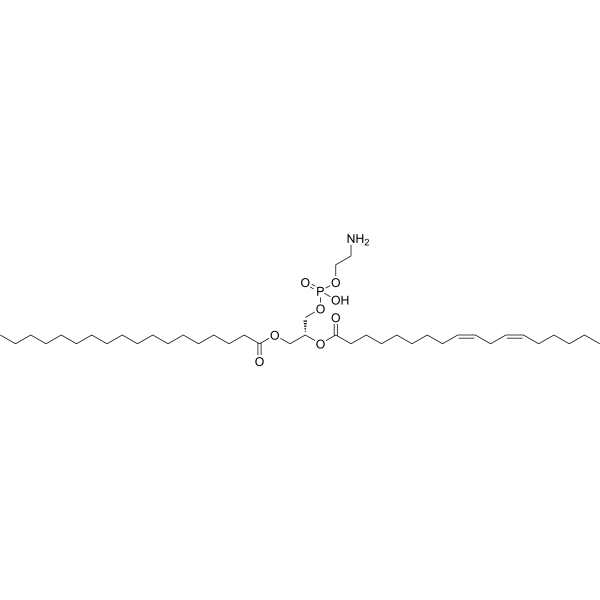
18:0-18:2 PE (1-Stearoyl-2-linoleoyl-sn-glycero-3-phosphoethanolamine) is a glycerophospholipid compound and an essential component of biological cell membranes. 18:0-18:2 PE possesses biological activities including regulation of phospholipid metabolism, antioxidant activity, maintenance of cell membrane fluidity, immune protection, and regulation of signaling pathways. 18:0-18:2 PE in the hot processing process, its unsaturated fatty acids will degrade to form a variety of odor active compounds. 18:0-18:2 PE can be applied in food processing and research on phospholipid metabolism-related diseases .
loading...
    loading...
Cat. No.: HY-P992488
Synonyms: ZV0501 Antibody
Research Areas:  

Cancer

ZV05 (ZV0501 Antibody) is an anti-5T4 monoclonal antibody with an EC50 of 4.3 ng/mL against h5T4. ZV05 does not induce apoptosis or interfere with cell cycle progression. ZV05 accumulates specifically in 5T4-positive tumor xenografts. ZV05 can serve as the antibody component of antibody-active molecule conjugates (ADCs) to bind the 5T4 glycoprotein, thereby enabling targeted delivery of toxins. ZV05 is used in studies of 5T4-positive cancers, including triple-negative breast cancer .
loading...
    loading...
Cat. No.: HY-131501R
CAS No.: 523-39-7
Menaquinone 9 (Standard) is the analytical standard of Menaquinone 9 (HY-131501). This product is intended for research and analytical applications. Menaquinone 9 is a naphthoquinone-type vitamin K and electron transport component produced by bacteria. Menaquinone 9 is an orally active analog of Vitamin K2 (HY-109569). Menaquinone 9 acts as an ultraviolet-sensitive, photooxidizable substrate that generates more polar photodegradation products under oxygen and ultraviolet irradiation. Menaquinone 9 binds to the αβ dimer of Escherichia coli nitrate reductase, supporting electron transport within the αβ subunit structure of the enzyme. Menaquinone 9 serves as a precursor for bone Menaquinone-4 (HY-B2156). Menaquinone 9 can be used in studies related to metabolic diseases .
loading...
    loading...
Cat. No.: HY-131501S
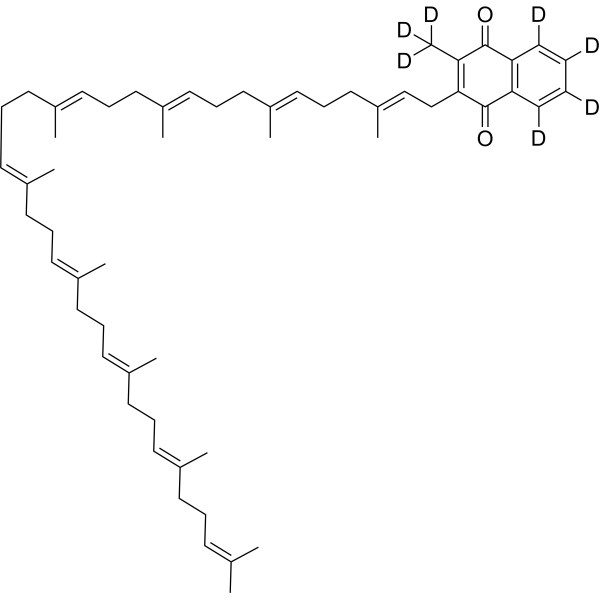
Menaquinone-9-d7 is the deuterated-labeled Menaquinone 9 (HY-131501). Menaquinone 9 is a naphthoquinone-type vitamin K and electron transport component produced by bacteria. Menaquinone 9 is an orally active analog of Vitamin K2 (HY-109569). Menaquinone 9 acts as an ultraviolet-sensitive, photooxidizable substrate that generates more polar photodegradation products under oxygen and ultraviolet irradiation. Menaquinone 9 binds to the αβ dimer of Escherichia coli nitrate reductase, supporting electron transport within the αβ subunit structure of the enzyme. Menaquinone 9 serves as a precursor for bone Menaquinone-4 (HY-B2156). Menaquinone 9 can be used in studies related to metabolic diseases .
loading...
    loading...
Cat. No.: HY-131501S1
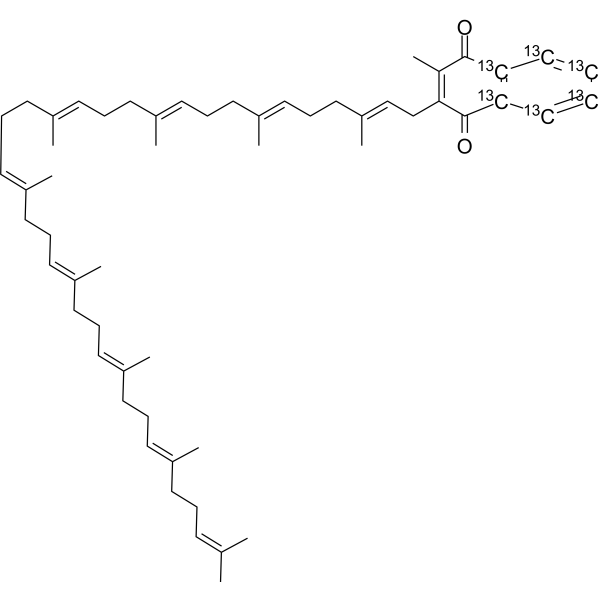
Menaquinone-9-13C6 is the 13C-labeled Menaquinone 9 (HY-131501). Menaquinone 9 is a naphthoquinone-type vitamin K and electron transport component produced by bacteria. Menaquinone 9 is an orally active analog of Vitamin K2 (HY-109569). Menaquinone 9 acts as an ultraviolet-sensitive, photooxidizable substrate that generates more polar photodegradation products under oxygen and ultraviolet irradiation. Menaquinone 9 binds to the αβ dimer of Escherichia coli nitrate reductase, supporting electron transport within the αβ subunit structure of the enzyme. Menaquinone 9 serves as a precursor for bone Menaquinone-4 (HY-B2156). Menaquinone 9 can be used in studies related to metabolic diseases .
loading...
    loading...
Cat. No.: HY-187131
CAS No.: 869-06-7
Magnesium malate is an orally active organic acid-chelated magnesium complex. Magnesium malate promotes the release of prostaglandin E2 (PGE2) from macrophages, synergistically stimulates the synthesis/release of calcitonin gene-related peptide (CGRP) from dorsal root ganglion neurons, and upregulates the osteogenic transcription factor RUNX2 in osteoblasts via the Mg 2+-PGE2-CGRP axis, thereby promoting osteoblast proliferation. Magnesium malate can be incorporated into calcium phosphate bone cement as a modifying component to improve compressive strength, shorten setting time and enhance disintegration resistance. Magnesium malate increases serum magnesium levels. Magnesium malate can be used in studies related to bone defects and magnesium deficiency .
loading...
    loading...
Cat. No.: HY-N0245
CAS No.: 30462-34-1
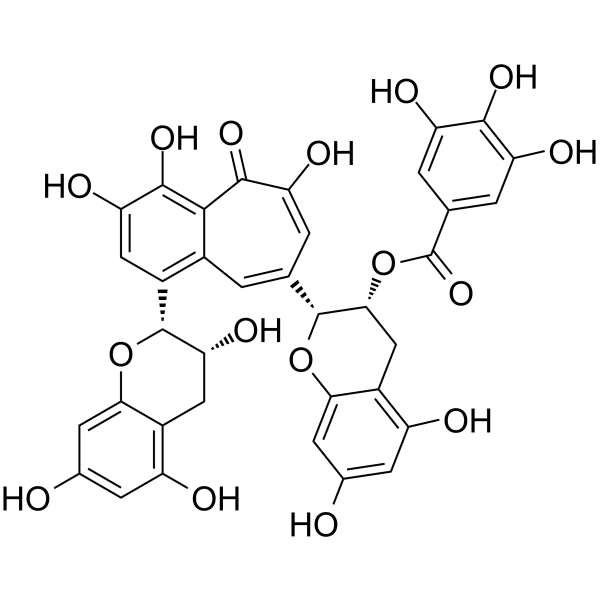
Theaflavin-3-gallate, a black tea theaflavin monomer, is regarded as the biologically important active component of black tea and provides health benefits. Theaflavin-3-gallate acts as prooxidants and induces oxidative stress in the carcinoma cells. Theaflavin-3-gallate reacts directly with reduced glutathione (GSH) in a time- and concentration-dependent manner. Theaflavin-3-gallate induces apoptosis and G1 cell cycle arrest in ovarian cancer A2780/CP70 cells through p53-dependent pathways. Theaflavin-3-gallate induces DNA damage through ATM/Chk/p53 pathway .
loading...
    loading...
Cat. No.: HY-N0695R
CAS No.: 58546-55-7
Synonyms: Gomisin-B (Standard); Wuweizi ester-B (Standard); Schisantherin-B (Standard)
Schisantherin B (Gomisin-B) (Standard) is the analytical standard of Schisantherin B. This product is intended for research and analytical applications. Schisantherin B is a lignan compound and one of the active components of Schisandra chinensis. Schisantherin B activates the PI3K/AKT signaling pathway, restores the activity of GSK3β, and reduces the hyperphosphorylation of tau protein in hippocampal and cerebral cortical tissues. Schisantherin B upregulates the level of GLT-1, decreases the expression of pro-inflammatory cytokines TNF-α/IL-1β/IL-6, upregulates the expression of IL-10, and inhibits cell apoptosis. Schisantherin B is applicable to the research of spinal cord injury, Alzheimer's disease and depression.
loading...
    loading...
Cat. No.: HY-W241255
CAS No.: 27473-62-7
2-Aminoindan-2-carboxylic acid is a conformationally restricted Phenylalanine analog and molecular building block. 2-Aminoindan-2-carboxylic acid constitutes a component of allosteric LFA-1 antagonists targeting the LFA-1/ICAM-1 interaction. 2-Aminoindan-2-carboxylic acid serves as a molecular building block for various biologically active peptides, including μ-receptor-selective opioid analogs, activated protein C inhibitors, and histone deacetylase inhibitors. 2-Aminoindan-2-carboxylic acid can be used in the research of autoimmune diseases, inflammatory diseases, opioid receptor-related diseases, antidiuresis-related diseases, and cancers .
loading...
    loading...
Cat. No.: HY-N20713
CAS No.: 118524-14-4
Licocoumarone is an active component derived from licorice. Licocoumarone has an IC50 of 12.56 μM and a Kd of 14.90 μM against human DYRK1A. Licocoumarone inhibits NF-κB activation by blocking IκBα degradation and p65 phosphorylation, interferes with MAPK activation via inhibiting phosphorylation, and downregulates the expression of iNOS. Licocoumarone inhibits LPS-induced expression of IL-1β, IL-6 and IL-10; it induces apoptosis of pancreatic cancer cells apoptosis and acts as a neuraminidase inhibitor (IC50 = 27.8 μM). Licocoumarone exhibits anti-inflammatory and antimicrobial activities, with antibacterial activity against Listeria and antifungal activity against Candida parapsilosis. Licocoumarone can be used in studies related to immune and inflammatory diseases, pancreatic cancer, and specific bacterial and fungal infections .
loading...
    loading...
Cat. No.: HY-L214
227 compounds

Liposomes are spherical or multilayered spherical vesicles formed by the self-assembly of diacyl chain phospholipids (lipid bilayers) in aqueous solutions, which can be made from natural or synthetic phospholipids and exhibit good biocompatibility and low toxicity. They can serve as delivery carriers for various bioactive substances (such as drugs, proteins, nucleic acids, etc.) and are widely used in biomedical and chemical research. The main advantages of liposomes include 1) Protective effect: Their bilayer structure can protect encapsulated molecules from enzymatic degradation, oxidation, and other influences, extending stability and activity; 2) Active targeting: Surface modifications enable active targeting, enhancing the concentration of drugs or molecules in specific tissues or cells; 3) Customizability: The composition and structure of liposomes can be adjusted according to needs, such as altering phospholipid types or adding targeting ligands. These properties make liposomes highly valuable in developing novel drug delivery systems, serving as nucleic acid carriers for gene transfection, studying cellular uptake mechanisms and drug release kinetics, as well as developing functional food additives to improve the bioavailability of nutritional components.

MCE contains 227 liposome compounds, which is a good tool for drug delivery-related studies.

Cat. No.: HY-N0245R
CAS No.: 30462-34-1
Theaflavin-3-gallate (Standard) is the analytical standard of Theaflavin-3-gallate. This product is intended for research and analytical applications. Theaflavin-3-gallate, a black tea theaflavin monomer, is regarded as the biologically important active component of black tea and provides health benefits. Theaflavin-3-gallate acts as prooxidants and induces oxidative stress in the carcinoma cells. Theaflavin-3-gallate reacts directly with reduced glutathione (GSH) in a time- and concentration-dependent manner. Theaflavin-3-gallate induces apoptosis and G1 cell cycle arrest in ovarian cancer A2780/CP70 cells through p53-dependent pathways. Theaflavin-3-gallate induces DNA damage through ATM/Chk/p53 pathway .
loading...
    loading...
Cat. No.: HY-W016480
CAS No.: 943-80-6
Synonyms: H-Phe(4-NH2)-OH
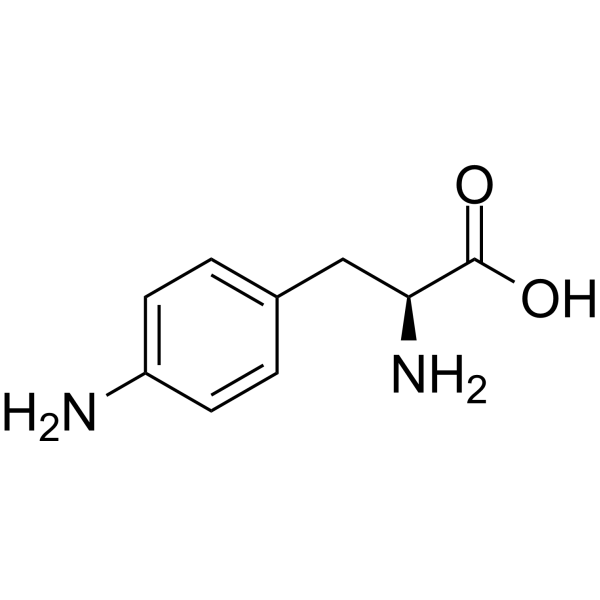
4-Amino-L-phenylalanine (H-Phe(4-NH2)-OH) is a metabolic intermediate and an α-carbonic anhydrase (TcCA) activator with a Ka value of 0.75 μM. 4-Amino-L-phenylalanine acts through active site cavity entrance binding and a proton shuttle mechanism to enhance the catalytic rate of CO2 hydration. 4-Amino-L-phenylalanine serves as a diamine monomer for bio-based polymer synthesis and is produced in Escherichia coli via the shikimate pathway. 4-Amino-L-phenylalanine constitutes a structural component of haptens used in immunoassay development. 4-Amino-L-phenylalanine is used for the production of Chloramphenicol (HY-B0239) and Pristinamycin I in Streptomyces venezuelae and S. pristinaespiralis, respectively. 4-Amino-L-phenylalanine is used in research related to Trypanosoma cruzi infection .
loading...
    loading...
Cat. No.: HY-W141810
CAS No.: 62040-55-5
Synonyms: H-Phe(4-NH2)-OH hydrochloride
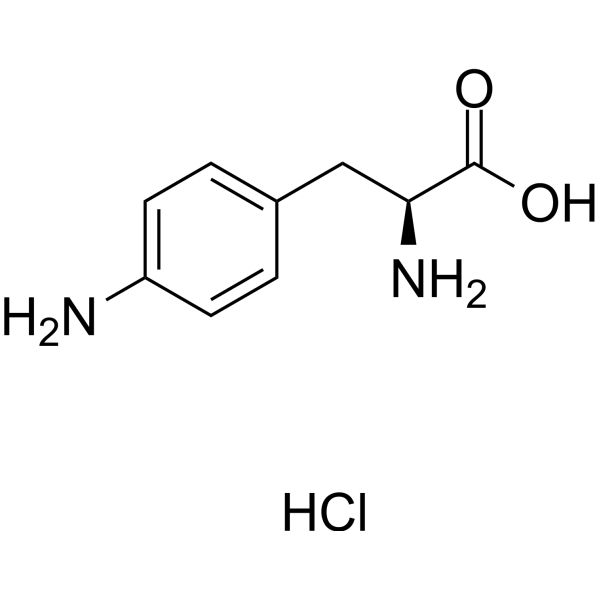
4-Amino-L-phenylalanine hydrochloride (H-Phe(4-NH2)-OH) is a metabolic intermediate and an α-carbonic anhydrase (TcCA) activator with a Ka value of 0.75 μM. 4-Amino-L-phenylalanine hydrochloride acts through active site cavity entrance binding and a proton shuttle mechanism to enhance the catalytic rate of CO2 hydration. 4-Amino-L-phenylalanine hydrochloride serves as a diamine monomer for bio-based polymer synthesis and is produced in Escherichia coli via the shikimate pathway. 4-Amino-L-phenylalanine hydrochloride constitutes a structural component of haptens used in immunoassay development. 4-Amino-L-phenylalanine hydrochloride is used for the production of Chloramphenicol (HY-B0239) and Pristinamycin I in Streptomyces venezuelae and S. pristinaespiralis, respectively. 4-Amino-L-phenylalanine hydrochloride is used in research related to Trypanosoma cruzi infection .
loading...
    loading...
Cat. No.: HY-N0259R
CAS No.: 110623-73-9
Synonyms: Epmedin B (Standard)
Epimedin B (Standard) (Epmedin B (Standard)) is the analytical standard of Epimedin B (HY-N0259). This product is intended for research and analytical applications. Epimedin B (Epmedin B) is a flavonoid active component found in Epimedium, with oral activity, and exhibits anti-osteoporotic and neuroprotective effects. Epimedin B inhibits RANKL-induced osteoclast differentiation, F-actin ring formation, and mature osteoclast bone resorption, inhibits the phosphorylation of JNK, p38 MAPK, PI3K, and AKT, activates the AMPK-Nrf2 antioxidant pathway, and reduces cellular and mitochondrial ROS. Epimedin B acts on ESR1 and exerts its effects via GPER. Epimedin B alleviates bone loss and improves bone microstructure in vivo, and in Parkinson's models protects dopaminergic neurons and maintains striatal dopamine levels through anti-apoptotic and anti-endoplasmic reticulum stress effects. Epimedin B can be used for research related to osteoporosis, diabetic osteoporosis, and Parkinson's disease .
loading...
    loading...
Cat. No.: HY-L163
306 compounds

Traditional Chinese medicine provides abundant natural resources for medicinal compounds, which are often considered effective and safe for drug discovery. Traditional Chinese medicine is based on the principle of "multiple components, multiple targets, and multiple pathways", and naturally has multiple pharmacological effects. As herbal medicine, the secondary plant metabolites in Chinese herbal medicine play an important role in alleviating many diseases in Traditional medicine and folk use. Therefore, the identification of traditional Chinese medicine derived compounds is also an important process in drug development and a necessary factor in dissecting the overall mechanism of action of traditional Chinese medicine. FDA listed compounds have completed extensive preclinical and clinical studies, exhibiting good biological activity, safety, and bioavailability.

MCE designs a unique collection of 306 FDA/EMA/NMPA/PMDA etc-approved traditional Chinese medicine active compounds, including flavonoids, polyphenols, alkaloids, terpenoids, and other structural types. It is a good tool for drug reuse and screening drugs from traditional Chinese medicine sources.

Cat. No.: HY-N5073
CAS No.: 178468-00-3
Synonyms: 4''-O-Glucosylvitexin
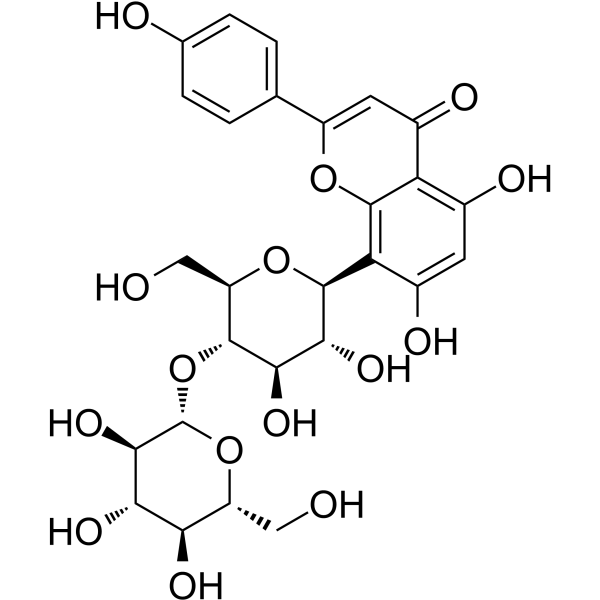
Vitexin-4''-O-glucoside (4''-O-Glucosylvitexin) is an orally active natural flavonoid component with multiple pharmacological effects including antioxidation, anti-inflammation, cytoprotection and anti-apoptosis. Vitexin-4''-O-glucoside regulates the MAPK signaling pathway by downregulating the phosphorylation levels of JNK and p38, thereby blocking endoplasmic reticulum stress responses. Vitexin-4''-O-glucoside alleviates oxidative stress by reducing MDA content and upregulating the activities of SOD and CAT, attenuates inflammation by downregulating the expressions of inflammatory factors TNF-α, IL-1β and IL-6, and also reduces LDH release and inhibits caspase-3 activation. Vitexin-4''-O-glucoside effectively improves drug-induced acute liver injury and exerts significant protective effects against myocardial hypoxia/reoxygenation injury. Vitexin-4''-O-glucoside can be used in studies on acute liver injury, cardiovascular diseases and myocardial hypoxia-reoxygenation injury .
loading...
    loading...
Cat. No.: HY-135319
CAS No.: 517-46-4
Purity:  97.15%
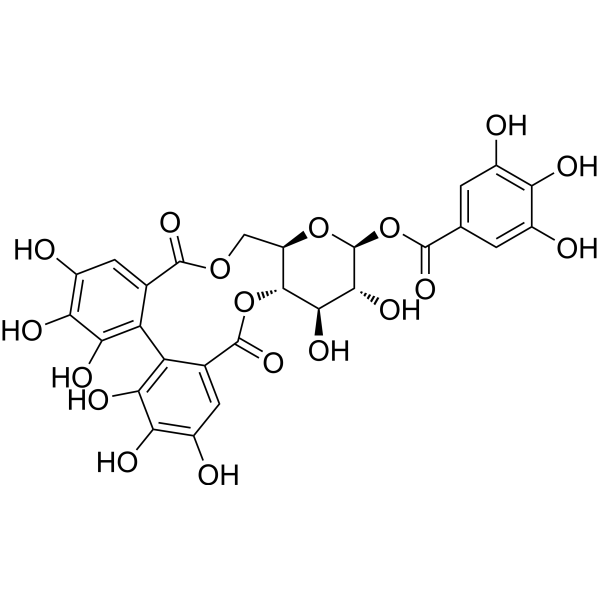
Strictinin is an orally active phenolic compound. Strictinin reduces xanthine oxidase activity, uric acid production, and the activation of ERK1/2, JNK, NF-κB, and NLRP3 inflammasome components in hepatocytes treated with Xanthine (HY-W017389). Strictinin decreases elevated serum uric acid levels and enhanced xanthine oxidase activity in mice treated with potassium oxonate. Strictinin acts as a ROR1 inhibitor and exhibits anticancer activity against highly aggressive non-androgen-dependent prostate cancer. Strictinin induces cancer cell apoptosis (apoptosis), arrests cell cycle, and inhibits cancer cell migration, invasion, and epithelial-mesenchymal transition. Strictinin modulates gut microbiota, inhibits bacterial growth and biofilm formation, accelerates small intestinal transit, and blocks viral entry and replication. Strictinin can be used in research related to hyperuricemia, androgen receptor-negative non-androgen-dependent prostate cancer, triple-negative breast cancer, bacterial infections, constipation, coronavirus infections, dental caries, and infections caused by influenza A, influenza B, and human parainfluenza virus type 1 .
loading...
    loading...
Cat. No.: HY-W016480R
CAS No.: 943-80-6
Synonyms: H-Phe(4-NH2)-OH (Standard)
4-Amino-L-phenylalanine (Standard) (H-Phe(4-NH2)-OH (Standard)) is the analytical standard of 4-Amino-L-phenylalanine (HY-W016480). This product is intended for research and analytical applications. 4-Amino-L-phenylalanine (H-Phe(4-NH2)-OH) is a metabolic intermediate and an α-carbonic anhydrase (TcCA) activator with a Ka value of 0.75 μM. 4-Amino-L-phenylalanine acts through active site cavity entrance binding and a proton shuttle mechanism to enhance the catalytic rate of CO2 hydration. 4-Amino-L-phenylalanine serves as a diamine monomer for bio-based polymer synthesis and is produced in Escherichia coli via the shikimate pathway. 4-Amino-L-phenylalanine constitutes a structural component of haptens used in immunoassay development. 4-Amino-L-phenylalanine is used for the production of Chloramphenicol (HY-B0239) and Pristinamycin I in Streptomyces venezuelae and S. pristinaespiralis, respectively. 4-Amino-L-phenylalanine is used in research related to Trypanosoma cruzi infection .
loading...
    loading...
Cat. No.: HY-L194
1,282 compounds

Heat-clearing and detoxification is a specific treatment method in the research of traditional Chinese medicine (TCM), which is clinically used to treat infectious diseases with remarkable effect. Over the past decades, the research of heat-clearing and detoxification treatment has been one of the most active fields of combining traditional Chinese and western medicines, and has made remarkable achievements. Nowadays, the application field of heat-clearing and detoxification traditional Chinese medicine is not only limited to antibacterial and antiviral, but also has made progress in the research fields of anti-inflammatory reaction, anti-endotoxin, anti-peroxidative damage, anti-inflammatory cytokines, enhancement of immune function, protection of cellular organelles, and maintenance of calcium homeostasis. In addition to this, clearing heat and removing toxins has also made significant research progress in non-infectious diseases, for example, in tumors, cardiovascular diseases, renal diseases, blood diseases, geriatrics, and diabetes, all of which have shown good curative effect.

MCE can supply 1,282 monomer component from more than a hundred sources of heat-clearing and detoxification TCM, which can be used in TCM studies, drug development and mechanism-based studies.

