247 Results for "

citrate

" in MedChemExpress (MCE) Product Catalog:
Products (247)

247 Results for "citrate" in MCE Product Catalog:

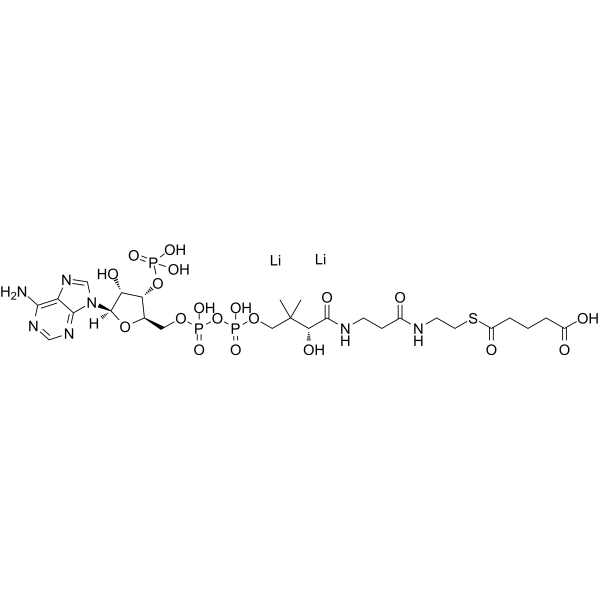
Cat. No.: HY-141474
CAS No.: 103192-48-9
Purity:  99.00%
Glutaryl coenzyme A lithium is an endogenous metabolite. Glutaryl coenzyme A lithium acts on the E2k subunit to inhibit KGDHc. It serves as a substrate for the reverse reaction of E2k and does not affect the E1k or E3 subunits of KGDHc. Glutaryl coenzyme A lithium exhibits weak inhibitory activity against citrate synthase. It can be used in research on glutaryl-CoA dehydrogenase deficiency (type I glutaric acidemia) .
loading...
    loading...
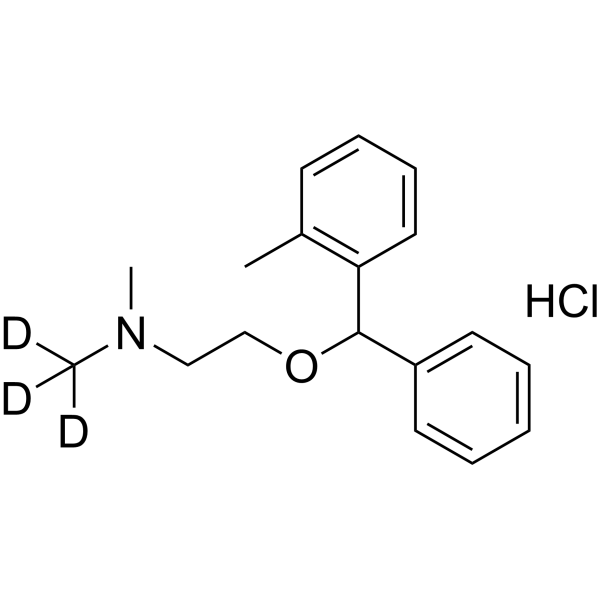
Cat. No.: HY-B1126S
CAS No.: 1309283-23-5
Orphenadrine-d3 (hydrochloride) is the deuterium labeled Orphenadrine hydrochloride . Orphenadrine hydrochloride is an orally active and non-competitive NMDA receptor antagonist (crosses the blood-brain barrier) with a Ki of 6.0 μM. Orphenadrine hydrochloride relieves stiffness, pain and discomfort due to muscle strains, sprains or other injuries. Orphenadrine hydrochloride is also used to relieve tremors associated with parkinson's disease. Orphenadrine citrate has good neuroprotective properties, can be used in studies of neurodegenerative diseases .
loading...
    loading...
Cat. No.: HY-125362
CAS No.: 133705-26-7
Target:  

Bacterial Fungal

Research Areas:  

Infection

Nannochelin C is a citrate-hydroxamate siderophore and iron chelator found in Nannocystis exedens strain Na e485. The MIC of Nannochelin C against Brevibacterium ammoniagenes is 0.39 μg/mL, and it exhibits weak growth inhibitory activity against some Gram-positive bacteria. The antimicrobial effect of Nannochelin C may be associated with its metal chelating activity. Nannochelin C can be used in studies related to siderophores, microbial iron metabolism and antimicrobial activity .
loading...
    loading...
Cat. No.: HY-187095
Research Areas:  

Others

PTAD-ergosta-3-one is a snake venom enzyme inhibitor. PTAD-ergosta-3-one inhibits the procoagulant activity of citrated plasma mediated by serine protease (SVSP) from Bothrops asper venom. PTAD-ergosta-3-one inhibits the esterase activity of PLA2 from Bothrops asper venom. PTAD-ergosta-3-one can be used in the research of snakebite envenoming .
loading...
    loading...
Cat. No.: HY-B1126R
CAS No.: 341-69-5
Research Areas:  

Neurological Disease Cancer

Orphenadrine (hydrochloride) (Standard) is the analytical standard of Orphenadrine (hydrochloride). This product is intended for research and analytical applications. Orphenadrine hydrochloride is an orally active and non-competitive NMDA receptor antagonist (crosses the blood-brain barrier) with a Ki of 6.0 μM. Orphenadrine hydrochloride relieves stiffness, pain and discomfort due to muscle strains, sprains or other injuries. Orphenadrine hydrochloride is also used to relieve tremors associated with parkinson's disease. Orphenadrine citrate has good neuroprotective properties, can be used in studies of neurodegenerative diseases .
loading...
    loading...
Cat. No.: HY-E70394
CAS No.: 75179-85-0
Synonyms: Acetonyl-coenzyme A
S-Acetonyl-CoA (Acetonyl-coenzyme A) is a non-reactive structural analog of acetyl-CoA that acts as a competitive inhibitor against multiple target enzymes. S-Acetonyl-CoA lacks the characteristic thioester group of acetyl-CoA, retaining only a thioether structure. S-Acetonyl-CoA competes with acetyl-CoA for binding to citrate synthase, phosphate transacetylase, carnitine acetyltransferase, and N-myristoyltransferase 1. S-Acetonyl-CoA serves as a reagent for investigating acetyl-CoA-dependent physiological processes .
loading...
    loading...
Cat. No.: HY-184648
Gold nanoparticles, also known as gold nanoparticle colloids, are colloidal systems formed by dispersing gold nanoparticles in a solution. Common methods for preparing gold nanoparticle colloids include the sodium citrate reduction of chloroauric acid method, also called the seed growth method or electrochemical synthesis method. The color of gold nanoparticle colloids changes with the size of the gold nanoparticles. Generally, the larger the diameter of the gold nanoparticles, the more the wavelength of light absorbed by the solution shifts towards longer wavelengths, and the particles will exhibit the complementary color of the absorbed light.
loading...
    loading...
Cat. No.: HY-175606
CAS No.: 2588489-03-4
Target:  

ATP Citrate Lyase

Research Areas:  

Cancer

EVT0185 is an orally active ATP citrate lyase (ACLY) inhibitor. EVT0185 is converted to a CoA thioester in the liver by SLC27A2 and interacts with the CoA-binding site of ACLY. EVT0185-CoA inhibits ACLY activity with an IC50 of 2.5 μM. EVT0185 can phenocopy the immune and antitumour effects of genetic ACLY deletion. EVT0185 can increase tumour-infiltrating B cells and chemokine CXCL13 levels. EVT0185 can be used for the research of cancer, such as hepatocellular carcinoma (HCC) .
loading...
    loading...
Cat. No.: HY-182751
Target:  

ATP Citrate Lyase

Research Areas:  

Inflammation/Immunology

ACLY-IN-4 is an ATP-citrate lyase (ACLY) inhibitor with an IC50 of 0.022 μM and a Kd of 0.19 μM. ACLY-IN-4 binds to the allosteric binding site of ACLY. ACLY-IN-4 exhibits hypolipidemic, anti-steatotic, insulin sensitivity-improving, anti-oxidative stress, anti-inflammatory and anti-fibrotic activities. ACLY-IN-4 alleviates hepatic steatosis, systemic insulin resistance, oxidative stress, hepatic inflammation and fibrosis. ACLY-IN-4 can be used for the research of metabolic dysfunction-associated steatohepatitis .
loading...
    loading...
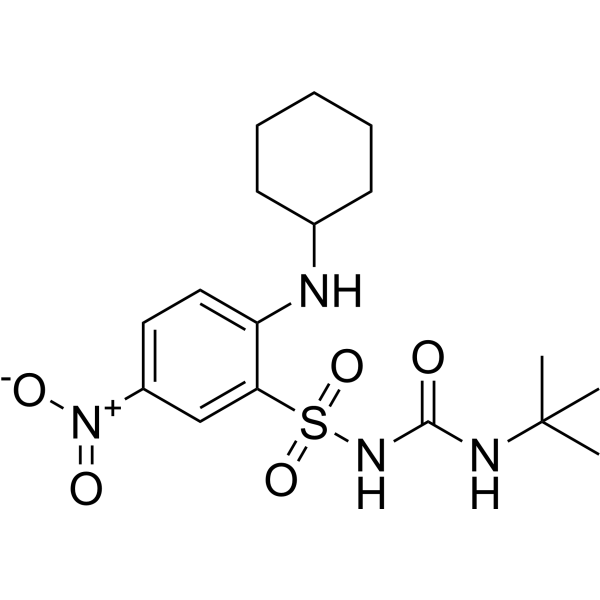
Cat. No.: HY-201256
CAS No.: 301312-49-2
Target:  

Bacterial MDM-2/p53

Research Areas:  

Infection

UCI-14 is a gltA1/lprQ modulator with in vitro anti-tuberculosis activity against drug-sensitive and multidrug-resistant mycobacteria. UCI-14 upregulates the expression of genes encoding citrate synthase I, downregulates the expression of genes encoding conserved mycobacterial lipoprotein, and alters the carbon metabolism of mycobacteria. UCI-14 reactivates the expression of wild-type p53 target genes in p53-mutated cells. UCI-14 can be used in the research of tuberculosis and cancer .
loading...
    loading...
Cat. No.: HY-135447
CAS No.: 284464-46-6
BM-531 is a dual-acting agent for thromboxane receptor (TXA2) antagonism and thromboxane synthase inhibition. BM-531 exerts anti-aggregatory effects on human citrated platelet-rich plasma (PRP), inhibiting Arachidonic acid (HY-109590A)-induced aggregation with an ED100 of 0.125 μM and U-46619 (HY-108566)-induced aggregation with an ED50 of 0.482 μM. BM-531 inhibits high-K +-induced contraction of porcine uterine smooth muscle .
loading...
    loading...
Cat. No.: HY-N4104R
CAS No.: 666-99-9
Synonyms: Agaricinic Acid (Standard)
Agaric acid (Standard) (Agaricinic Acid (Standard)) is the analytical standard of Agaric acid (HY-N4104). This product is intended for research and analytical applications. Agaric acid (Agaricinic Acid) is an orally active inhibitor of adenine nucleotide translocase found in specific fungi. Agaric acid can inhibit the biofilm formation of various bacteria such as Salmonella. Agaric acid can also induce mitochondrial permeability transition, prompting mitochondria to release Ca 2+, disrupting the transmembrane potential, and causing mitochondrial swelling. In addition, Agaric acid can also inhibit citrate transport in liver mitochondria and participate in the inhibition of fatty acid synthesis, affecting multiple metabolic processes.
loading...
    loading...
Cat. No.: HY-L064
1,827 compounds

Glutamine is an important metabolic fuel that helps rapidly proliferating cells meet the increased demand for ATP, biosynthetic precursors, and reducing agents. Glutamine Metabolism pathway involves the initial deamination of glutamine by glutaminase(GLS), yielding glutamate and ammonia. Glutamate is converted to the TCA cycle intermediate α-ketoglutarate (α-KG) by either glutamate dehydrogenase (GDH) or by the alanine or aspartate transaminases (TAs), to produce both ATP and anabolic carbons for the synthesis of amino acids, nucleotides and lipids. During periods of hypoxia or mitochondrial dysfunction, α-KG can be converted to citrate in a reductive carboxylation reaction catalyzed by IDH2. The newly formed citrate exits the mitochondria where it is used to synthesize fatty acids and amino acids and produce the reducing agent, NADPH.

Cancer cells display an altered metabolic circuitry that is directly regulated by oncogenic mutations and loss of tumor suppressors. Mounting evidence indicates that altered glutamine metabolism in cancer cells has critical roles in supporting macromolecule biosynthesis, regulating signaling pathways, and maintaining redox homeostasis, all of which contribute to cancer cell proliferation and survival. Thus, intervention in glutamine metabolic processes could provide novel approaches to improve cancer treatment.

MCE owns a unique collection of 1,827 compounds targeting the mainly proteins and enzymes involved in glutamine metabolism pathway. Glutamine Metabolism compound library is a useful tool for intervention in glutamine metabolic processes.

Cat. No.: HY-165175
CAS No.: 25518-51-8
Target:  

Drug Derivative

Research Areas:  

Metabolic Disease

(+)-Decanoylcarnitine is an (S)-acylcarnitine derivative and a potent inhibitor of carnitine-acylcarnitine translocase, with an IC50 of 5 μM. (+)-Decanoylcarnitine acts as a competitive inhibitor of long-chain acylcarnitine transferase and (-)-carnitine palmityltransferase. (+)-Decanoylcarnitine blocks hepatic fatty acid oxidation, ketogenesis, oleate-induced activation of gluconeogenesis, as well as associated changes in acetyl-CoA, citrate, redox pair ratios, flavins and pyridine nucleotides. (+)-Decanoylcarnitine reverses ketosis in vivo, enhances insulin-mediated hypoglycemic effects in anesthetized animals, and reduces plasma ketone body levels when used in combination with insulin. (+)-Decanoylcarnitine can be used in studies related to diabetic ketoacidosis .
loading...
    loading...
Cat. No.: HY-123986R
CAS No.: 68003-38-3
CTPI-2 (Standard) is the analytical standard of CTPI-2 (HY-123986). This product is intended for research and analytical applications. CTPI-2 is a third-generation mitochondrial citrate carrier SLC25A1 inhibitor with a KD of 3.5 μM. CTPI-2 inhibits glycolysis, PPARγ, and its downstream target the glucose transporter GLUT4. CTPI-2 halts salient alterations of NASH reverting steatosis, preventing the evolution to steatohepatitis, reducing inflammatory macrophage infiltration in the liver and adipose tissue, and starkly mitigating obesity induced by a high-fat diet. Antitumor activity .
loading...
    loading...
Cat. No.: HY-181966
Research Areas:  

Infection

Sideromycin 7 is an antibacterial agent. Sideromycin 7 forms a 7-Bi 3+ coordination complex with bismuth citrate, exerting a three-pronged antibacterial mode of action: direct DNA binding to induce damage and arrest replication, suppression of KdpC synthesis to block KdpFABC-mediated potas-sium transport, and inhibition of ATP production. Sideromycin 7 exhibits potent antibacterial activity against Ciprofloxacin (HY-B0356)-resistant Pseudomonas aeruginosa strains. Sideromycin 7 exerts antibiofilm activity against Pseudomonas aeruginosa. Sideromycin 7 can be used for the research of ciprofloxacin-resistant Pseudomonas aeruginosa infection .
loading...
    loading...
Cat. No.: HY-P11358
CAS No.: 159718-10-2
IRW is an orally active tripeptide produced from egg white with angiotensin converting enzyme (ACE) inhibitory properties. IRW can prevent high-fat diet (HFD)-induced Non-alcoholic fatty liver disease (NAFLD) by modulating hepatic lipid metabolism and increasing mitochondrial content. IRW decreases hepatic triglyceride content and lipid droplet size. IRW increases the hepatic mitochondrial complexes and citrate synthase activity, phosphorylation of 5’-AMP-activated protein kinase and microsomal triglyceride transfer protein abundance. IRW increases phosphorylated acetyl CoA carboxylase and mitochondrial complexes, IRW can be used for the research of inflammation .
loading...
    loading...
Cat. No.: HY-P811169
Synonyms: IREB1, ACO1, Cytoplasmic aconitate hydratase, Aconitase, citrate hydro-lyase, Ferritin repressor protein, Iron regulatory protein 1, Iron-responsive element-binding protein 1, IRP1, IRE-BP 1

Host:  

Rabbit

Application:  

WB, IHC-P, ICC/IF

Reactivity:  

Human, Mouse, Rat

loading...
    loading...
Cat. No.: HY-16387
CAS No.: 854514-88-8
Target:  

VEGFR

Research Areas:  

Others

PF-00337210 is a potent and selective inhibitor of VEGFRs, designed for treating age-related macular degeneration via intravitreal injection. The formulation strategy focused on developing an ophthalmic solution that would precipitate upon injection into the vitreous, ensuring sustained drug delivery. Challenges included maintaining low dosing volumes, selecting safe excipients for intravitreal use, and addressing the drug's unique physicochemical properties. The final formulation, an isotonic solution in a citrate-buffered vehicle with NaCl, demonstrated stability, potency, and recovery through intravitreal dosing syringes. It formed a depot upon injection into vitreous humor, representing a novel nonpolymeric in situ-forming depot formulation for intravitreal drug delivery .
loading...
    loading...
Cat. No.: HY-P83105
Synonyms: ACO1; IREB1; Cytoplasmic aconitate hydratase; Aconitase; citrate hydro-lyase; Ferritin repressor protein; Iron regulatory protein 1; IRP1; Iron-responsive element-binding protein 1; IRE-BP 1

Host:  

Rabbit

Application:  

WB, ICC/IF

Reactivity:  

Human, Mouse, Rat

loading...
    loading...

