
248 Results for "

fluid

" in MedChemExpress (MCE) Product Catalog:
Products (248)

248 Results for "fluid" in MCE Product Catalog:

Cat. No.: HY-Z11709
CAS No.: 1160974-39-9
13-Hydroxy-alpha-tocopherol is a fat-soluble vitamin E derivative and anticancer agent with antioxidant and antiproliferative activities. 13-Hydroxy-alpha-tocopherol scavenges peroxyl free radicals and protects polyunsaturated fatty acids from oxidative damage. 13-Hydroxy-alpha-tocopherol not only inhibits the growth of glioma cancer cells, but its deficiency is also closely associated with recurrent miscarriage, embryonic growth retardation and death. Clinical observations show that the expression of 13-Hydroxy-alpha-tocopherol is downregulated in the follicular fluid of patients with recurrent miscarriage. 13-Hydroxy-alpha-tocopherol has important application potential in the research of recurrent miscarriage and glioma .
loading...
    loading...
Cat. No.: HY-119649R
CAS No.: 158062-67-0
Synonyms: IKI220 (Standard)
Flonicamid (Standard) (IKI220 (Standard)) is the analytical standard of Flonicamid (HY-119649). This product is intended for research and analytical applications. Flonicamid (IKI220) is an antifeedant Insecticide active against Hemiptera, Thysanoptera, and piercing-sucking pests including aphids of all species, developmental stages and morphs. Flonicamid inhibits the inward rectifier potassium channel NlKir1, blocking stylet penetration, salivation, sap feeding, honeydew secretion, and fluid secretion by isolated Malpighian tubules. Flonicamid reduces renal excretory function in female Culex pipiens pallens. Flonicamid rapidly disrupts insect feeding behavior without neurotoxic poisoning symptoms, induces irreversible starvation, and increases the mortality of nymph progeny of adult aphids exposed to this agent .
loading...
    loading...
Cat. No.: HY-147613
CAS No.: 2456295-59-1
Target:  

PI3K mTOR

Research Areas:  

Cancer

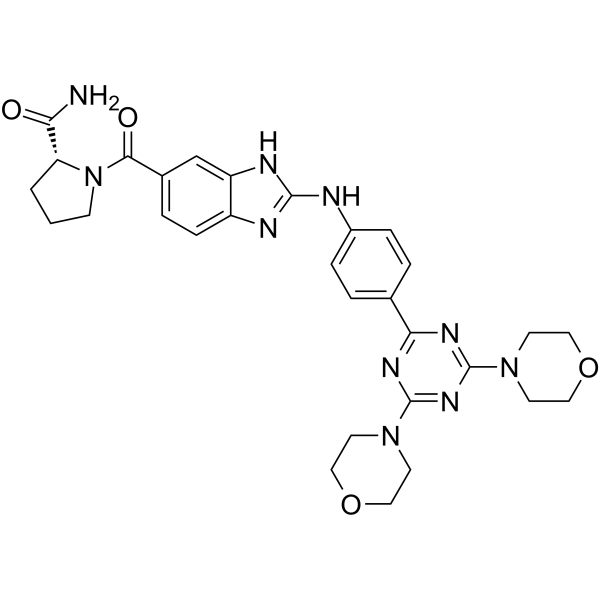
PI3K/mTOR Inhibitor-6 (Compound 19c) is a potent and dual inhibitor of PI3K/mTOR. PI3K/mTOR Inhibitor-6 displays better stability in artificial gastric fluids than gedatolisib. PI3K/mTOR Inhibitor-6 significantly suppresses the PI3K/Akt/mTOR signaling pathway at 10 μM. PI3K/mTOR Inhibitor-6 has the potential for the research of cancer diseases .
loading...
    loading...
Cat. No.: HY-16633
CAS No.: 1444006-79-4
Target:  

γ-secretase Amyloid-β

Research Areas:  

Metabolic Disease

ELND 007 (Compound 34) is a metabolically stable γ-secretase inhibitor designed to selectively inhibit amyloid beta (Aβ) generation while minimizing Notch inhibition. Developed alongside ELND 006 (Compound 30), it underwent human clinical trials following a synthetic strategy emphasizing diversity and chirality. In preclinical studies, ELND 007 showed promising in vitro and in vivo characteristics, effectively reducing Aβ levels. Comparative studies with other γ-secretase inhibitors like Semagacestat, Begacestat, and Avagacestat highlighted its efficacy in lowering Aβ production, particularly demonstrated by reduced Aβ levels in the cerebrospinal fluid (CSF) of healthy human volunteers, suggesting potential therapeutic benefit for Alzheimer's disease .
loading...
    loading...
Cat. No.: HY-N0668R
CAS No.: 64849-39-4
Rubusoside (Standard) is the analytical standard of Rubusoside. This product is intended for research and analytical applications. Rubusoside is a diterpene glycoside that is also a sweetener and solubilizer with anti-angiogenic, anti-cancer, anti-obesity, anti-allergic and anti-asthmatic effects. Rubusoside attenuates airway hyperresponsiveness and reduces inflammatory cells in bronchoalveolar lavage fluid (BALF), reducing OVA (HY-W250978)-induced airway inflammation. Rubusoside also prevents palmitic acid-induced lipotoxicity in pancreatic INS-1 cells, reduces the transport of human glucose transporters GLUT-1 and fructose GLUT-5, and inhibits NF-κB and α-amylase (α-amylase) .
loading...
    loading...
Cat. No.: HY-L239
71 compounds

Steroid hormones (also known as steroidal hormones) are a class of tetracyclic aliphatic hydrocarbon compounds derived from cholesterol. Typical representatives of steroid hormones include cortisol, aldosterone, testosterone, estradiol, among others. These hormones serve diverse regulatory functions within the body. For instance, aldosterone helps maintain the homeostasis of extracellular fluid volume and circulating blood volume; testosterone and estradiol primarily promote the development and maturation of male and female reproductive organs and regulate reproductive functions.

MCE designs a unique collection of 71 steroid hormones. This library can be used for research related to metabolic or immune diseases, investigations into the mechanisms of action of nuclear receptor signaling pathways, as well as identification and quantitative analysis in metabolomics studies.

Cat. No.: HY-101810
CAS No.: 82989-25-1
Purity:  99.50%
Synonyms: TO 188; Tazalest; Tazanol
Target:  

Calcium Channel PKC

Research Areas:  

Inflammation/Immunology

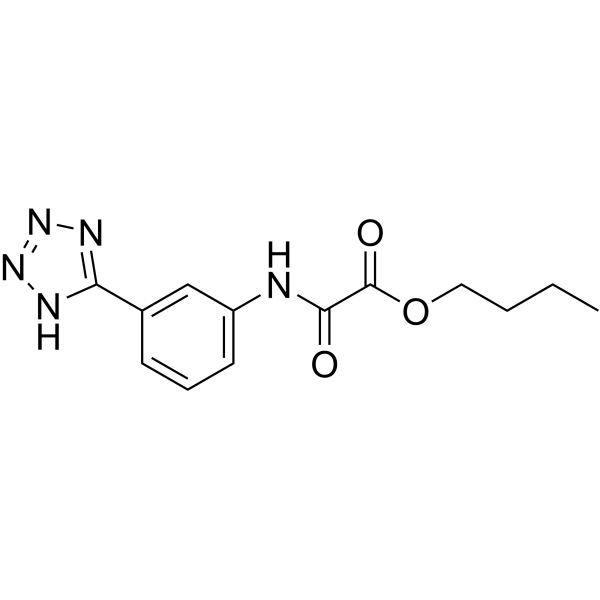
Tazanolast (TO 188) is an orally active selective mast cell stabilizer. Tazanolast prevents the elevation of intracellular calcium concentration, inhibits calcium uptake and Protein kinase C translocation, without directly inhibiting phospholipase C. Tazanolast inhibits ozone-induced airway hyperresponsiveness to Methacholine in guinea pigs, as well as passive cutaneous anaphylaxis, Schultz-Dale reaction, experimental asthma, passive cutaneous anaphylaxis in rats, and increased cutaneous vascular permeability in rats. Tazanolast does not alter airway responsiveness in sham-exposed guinea pigs, cell distribution in bronchoalveolar lavage fluid after ozone exposure, type II-IV allergic reactions, or histamine release from atopic leukocytes. Tazanolast can be used in research related to allergic diseases .
loading...
    loading...
Cat. No.: HY-111355
CAS No.: 1256-86-6
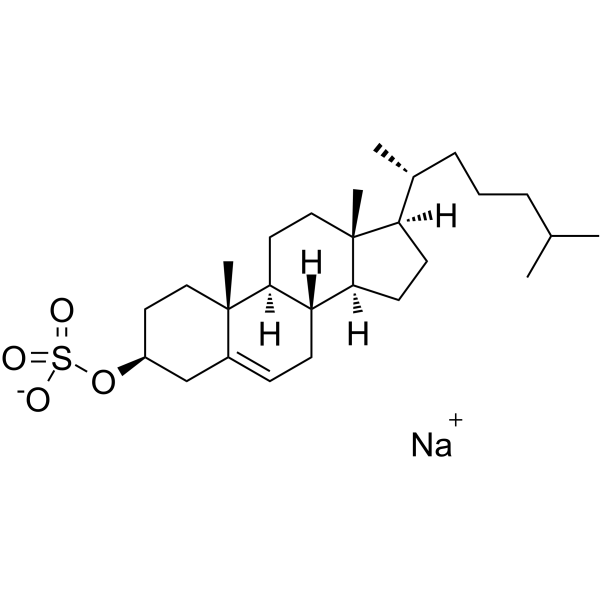
Cholesterol sulfate is a naturally occurring, orally active cholesterol derivative that is widely distributed in various tissues and body fluids. Cholesterol sulfate acts as a DOCK2 inhibitor, with IC50 values of 2 μM and 2.9 μM against mouse and human targets, respectively. Cholesterol sulfate restricts excessive neutrophil infiltration and alleviates intestinal inflammation and damage. Cholesterol sulfate serves as an activator of protein kinase C (PKC), which promotes squamous cell differentiation and inhibits skin carcinogenesis. Cholesterol sulfate regulates cholesterol homeostasis and cellular metabolism by activating the AMPK-Sirt1 pathway. Cholesterol sulfate can be used in research related to actinic keratitis, ulcerative colitis, skin cancer, and other conditions .
loading...
    loading...
Cat. No.: HY-111355B
CAS No.: 2864-50-8
Purity:  98.22%
Cholesterol sulfate sodium is a naturally occurring, orally active cholesterol derivative that is widely distributed in various tissues and body fluids. Cholesterol sulfate sodium acts as a DOCK2 inhibitor, with IC50 values of 2 μM and 2.9 μM against mouse and human targets, respectively. Cholesterol sulfate sodium restricts excessive neutrophil infiltration and alleviates intestinal inflammation and damage. Cholesterol sulfate sodium serves as an activator of protein kinase C (PKC), which promotes squamous cell differentiation and inhibits skin carcinogenesis. Cholesterol sulfate sodium regulates cholesterol homeostasis and cellular metabolism by activating the AMPK-Sirt1 pathway. Cholesterol sulfate sodium can be used in research related to actinic keratitis, ulcerative colitis, skin cancer, and other conditions .
loading...
    loading...
Cat. No.: HY-111355S
CAS No.: 2687961-01-7
Purity:  ≥98.0%
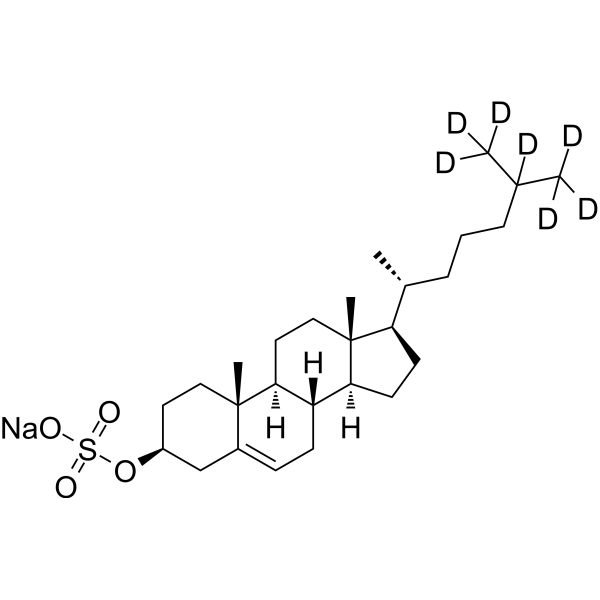
Cholesterol sulfate sodium-d7 is the deuterium labeled Cholesterol sulfate sodium. Cholesterol sulfate sodium is a naturally occurring, orally active cholesterol derivative that is widely distributed in various tissues and body fluids. Cholesterol sulfate sodium acts as a DOCK2 inhibitor, with IC50 values of 2 μM and 2.9 μM against mouse and human targets, respectively. Cholesterol sulfate sodium restricts excessive neutrophil infiltration and alleviates intestinal inflammation and damage. Cholesterol sulfate sodium serves as an activator of protein kinase C (PKC), which promotes squamous cell differentiation and inhibits skin carcinogenesis. Cholesterol sulfate sodium regulates cholesterol homeostasis and cellular metabolism by activating the AMPK-Sirt1 pathway. Cholesterol sulfate sodium can be used in research related to actinic keratitis, ulcerative colitis, skin cancer, and other conditions.
loading...
    loading...
Cat. No.: HY-119649S
CAS No.: 2483830-60-8
Purity:  ≥98.0%
Synonyms: IKI220-15N18O
Flonicamid- 15N, 18O (IKI220- 15N, 18O) is the 18O , 15N-labeled Flonicamid (HY-119649). Flonicamid (IKI220) is an antifeedant Insecticide active against Hemiptera, Thysanoptera, and piercing-sucking pests including aphids of all species, developmental stages and morphs. Flonicamid inhibits the inward rectifier potassium channel NlKir1, blocking stylet penetration, salivation, sap feeding, honeydew secretion, and fluid secretion by isolated Malpighian tubules. Flonicamid reduces renal excretory function in female Culex pipiens pallens. Flonicamid rapidly disrupts insect feeding behavior without neurotoxic poisoning symptoms, induces irreversible starvation, and increases the mortality of nymph progeny of adult aphids exposed to this agent .
loading...
    loading...
Cat. No.: HY-154487
CAS No.: 25637-84-7
Research Areas:  

Neurological Disease

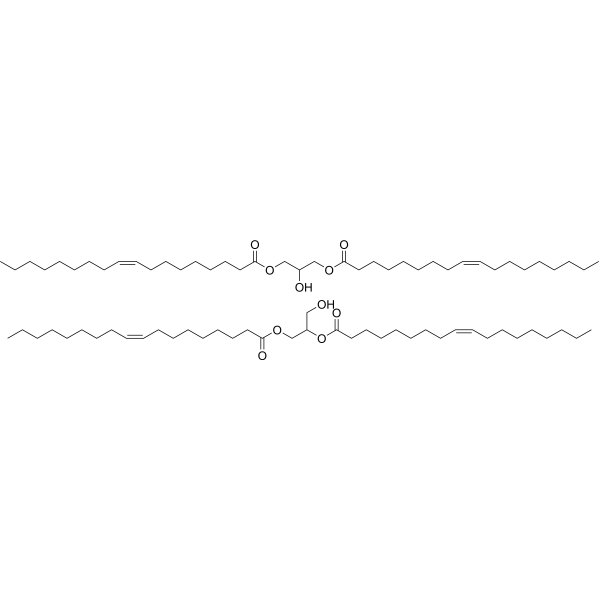
Glycerol dioleate is a lipid capable of forming Lyotropic Liquid Crystal (LLC). When formulated with phosphatidylcholine and exposed to aqueous media, glycerol dioleate constructs an inverted hexagonal (HII) phase structure with sustained-release properties. The in-situ forming gel prepared by optimizing glycerol dioleate with phosphatidylcholine and N-methyl-2-pyrrolidone enables stable release of Risperidone (HY-11018) for up to 60 days in vitro and in vivo. Glycerol dioleate causes minimal side effects in rabbits, making it an ideal carrier component for the development of antischizophrenia agents .Note: Lyotropic liquid crystals (Lyotropic Liquid Crystal, LLC) are ordered fluid phases self-assembled by amphipathic molecules (e.g., lipids, surfactants) in solvents (usually water) at specific concentrations .
loading...
    loading...
Cat. No.: HY-D1005A7
CAS No.: 9003-11-6
Synonyms: PEG-PPG-PEG, 2400 (Average)
Poloxamer 125 (L45) (PEG-PPG-PEG, 2400 (Average)) is a block polymer of polyoxyethylene and polyoxypropylene, belonging to water-soluble non-ionic biosurfactants with properties such as emulsification and wetting. Poloxamer 125 (L45) has thermosensitive characteristics and can form thermoreversible hydrogels in aqueous solutions, presenting a fluid state at room temperature and transforming into a viscous gel under body temperature conditions; when its concentration is higher than the critical micelle concentration, it can also self-assemble into micelles in aqueous systems. Poloxamer 125 (L45) enables controlled drug release, prolongs the local retention time of drugs, and is often used as a drug delivery carrier. Poloxamer 125 (L45) can be applied in the fields of cosmetics, biomedicine and tissue engineering .
loading...
    loading...
Cat. No.: HY-DY2045
Target:  

Fluorescent Dye

Research Areas:  

Others

Alizarin Red S Staining Solution (2%, pH 4.2) is a 2% concentration, pH 4.2 anthraquinone dye (sodium alizarin sulfonate) that can be used for intercellular staining of corneal endothelial cell boundaries. Alizarin Red S Staining Solution (2%, pH 4.2) is an anthraquinone dye (sodium alizarin sulfonate) with an optimized pH of 4.2, which undergoes a dye-lake reaction with calcium and serves as an intercellular stain for corneal endothelial cell boundaries. Alizarin Red S Staining Solution (2%, pH 4.2) can be used for screening tests of calcium compounds in synovial fluid, detection of osteoblast differentiation, and staining detection of bone in mice. Excitation/emission wavelength: 500/570 nm .
loading...
    loading...
Cat. No.: HY-P10000
CAS No.: 123583-37-9
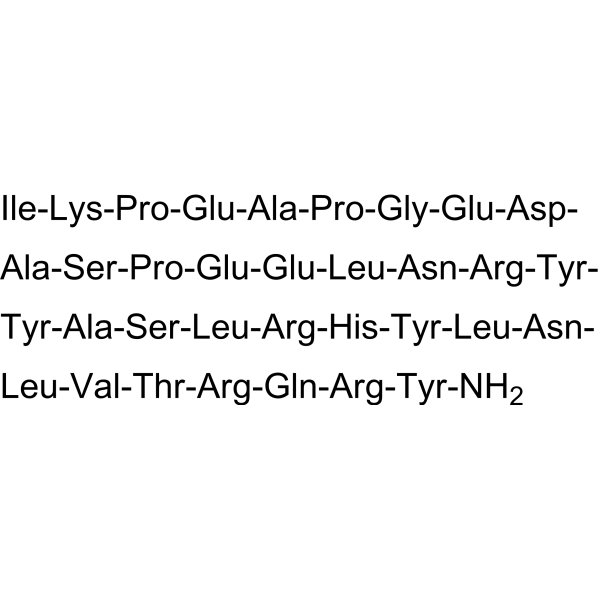
Peptide YY (PYY) (3-36), Human is an endogenous appetite-suppressing peptide that acts as a selective agonist of neuropeptide Y (NPY) Y2 receptor. Peptide YY (PYY) (3-36), Human inhibits intestinal fluid secretion, colonic propulsion, and reduces fecal output in mouse models. Peptide YY (PYY) (3-36), Human inhibits dmPGE2-, 5HT (HY-B1473A)-, and Castor oil (HY-107799)-induced diarrhea in mice. Peptide YY (PYY) (3-36), Human improves metabolic parameters and mitochondrial function in obese rat MASLD models. Peptide YY (PYY) (3-36), Human can be used for research on intestinal diseases such as diarrhea and metabolic dysfunction-associated steatotic liver disease .
loading...
    loading...
Cat. No.: HY-W115727A
CAS No.: 9003-05-8
Synonyms: PAM,Anion,Mw 14-16 million
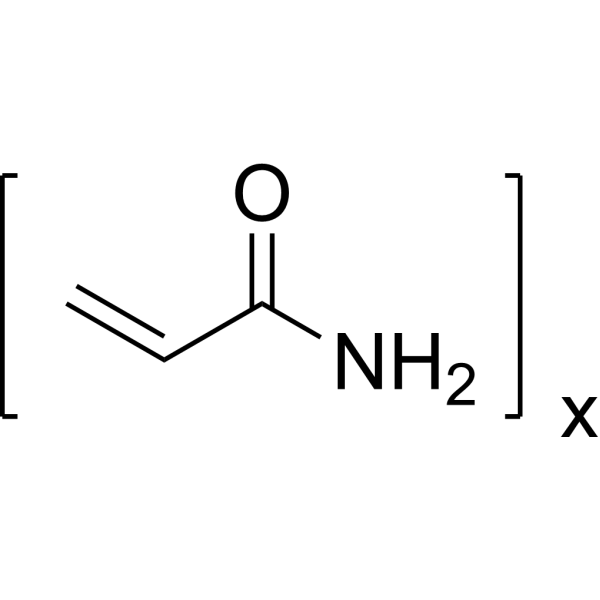
Polyacrylamide, Anion, Mw 14-16 million is a multifunctional high molecular weight anionic polyacrylamide copolymer. The anionic properties of Polyacrylamide, Anion, Mw 14-16 million enable it to be used as a flocculant to achieve charge neutralization and aggregation, while its high molecular weight properties provide viscoelastic properties for fluid applications. Polyacrylamide series materials can maintain enzyme activity in enzyme immobilization, achieve controlled release as a drug carrier, respond to temperature/pH stimulation as a smart material, and can also be used for in vitro toxin adsorption and soft tissue filling through mechanisms such as physical embedding, covalent bonding or chemical cross-linking. Polyacrylamide can be used in biomedical engineering, environmental management and industrial applications .
loading...
    loading...
Cat. No.: HY-W115727B
CAS No.: 9003-05-8
Synonyms: PAM,Anion,Mw 18 million
Polyacrylamide,Anion,Mw 18 million (PAM,Anion,Mw 18 million) is a multifunctional high molecular weight anionic polyacrylamide copolymer. The anionic properties of Polyacrylamide,Anion,Mw 18 million enable it to be used as a flocculant to achieve charge neutralization and aggregation, while its high molecular weight properties provide viscoelastic properties for fluid applications. Polyacrylamide series materials can maintain enzyme activity in enzyme immobilization, act as drug carriers to achieve controlled release, serve as smart materials responding to temperature/pH stimuli, and be used for in vitro toxin adsorption and soft tissue filling through mechanisms such as physical entrapment, covalent binding or chemical crosslinking. Polyacrylamide finds applications in biomedical engineering, environmental management and industrial applications .
loading...
    loading...
Cat. No.: HY-D3419
Neuro-DiO 4-chlorobenzenesulfonate is a hydrophobic C18 alkyl chain carbocyanine dye with green fluorescence, commonly used as a vascular marker, cell internalizer and deposition agent. Neuro-DiO 4-chlorobenzenesulfonate inserts its alkyl chain into the endothelial plasma membrane via liposome-mediated perfusion to achieve vascular labeling. Neuro-DiO chlorobenzenesulfonate can also stain the cell membrane and cytoplasm of cancer cells to assist in confocal microscopy observations. Neuro-DiO chlorobenzenesulfonate can be released from nanosponges and accumulate on the surface of mouse retina, then internalize into retinal ganglion cells, which is applicable to researches related to glaucoma and other diseases. It should be noted that during liposome-mediated vascular staining in mice, Neuro-DiO 4-chlorobenzenesulfonate may cause leakage of airway lavage fluid .
loading...
    loading...
Cat. No.: HY-P5377
CAS No.: 221055-89-6
Synonyms: Cathepsin K substrate
Target:  

Ser/Thr Protease

Research Areas:  

Others

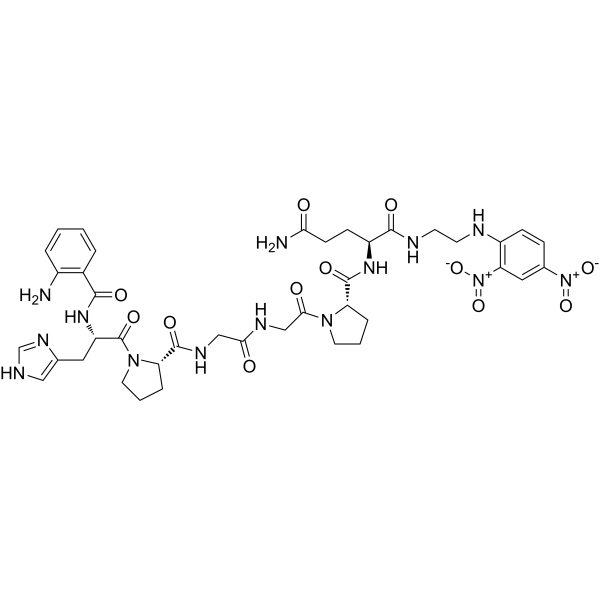
Abz-HPGGPQ-EDDnp (Cathepsin K substrate) is a biological active peptide. (Cathepsins are a class of globular lysosomal proteases, playing a vital role in mammalian cellular turnover. They degrade polypeptides and are distinguished by their substrate specificities. Cathepsin K is the lysosomal cysteine protease involved in bone remodeling and resorption. It has potential as a drug target in autoimmune diseases and osteoporosis.This FRET peptide can be used to monitor selectively cathepsin K activity in physiological fluids and cell lysates. Abz-HPGGPQ-EDDnp [where Abz represents o-aminobenzoic acid and EDDnp represents N -(2, 4-dinitrophenyl)-ethylenediamine], a substrate initially developed for trypanosomal enzymes, is efficiently cleaved at the Gly-Gly bond by cathepsin K. This peptide is resistant to hydrolysis by cathepsins B, F, H, L, S and V, Ex/Em=340 nm/420 nm.)
loading...
    loading...
Cat. No.: HY-101810R
CAS No.: 82989-25-1
Synonyms: TO 188 (Standard); Tazalest (Standard); Tazanol (Standard)
Tazanolast (Standard) (TO 188 (Standard)) is the analytical standard of Tazanolast (HY-101810). This product is intended for research and analytical applications. Tazanolast (TO 188) is an orally active selective mast cell stabilizer. Tazanolast prevents the elevation of intracellular calcium concentration, inhibits calcium uptake and Protein kinase C translocation, without directly inhibiting phospholipase C. Tazanolast inhibits ozone-induced airway hyperresponsiveness to Methacholine in guinea pigs, as well as passive cutaneous anaphylaxis, Schultz-Dale reaction, experimental asthma, passive cutaneous anaphylaxis in rats, and increased cutaneous vascular permeability in rats. Tazanolast does not alter airway responsiveness in sham-exposed guinea pigs, cell distribution in bronchoalveolar lavage fluid after ozone exposure, type II-IV allergic reactions, or histamine release from atopic leukocytes. Tazanolast can be used in research related to allergic diseases .
loading...
    loading...

