

272 Results for "

hydrogel shells

" in MedChemExpress (MCE) Product Catalog:
Products (272)

272 Results for "hydrogel shells" in MCE Product Catalog:

Cat. No.: HY-184639
Carboxylated magnetic microspheres (low nonspecificity) are functionalized nano- or micron-sized magnetic particles with abundant carboxyl functional groups on their surface. Special chemical treatments reduce the likelihood of nonspecific adsorption. This 1μm carboxylated magnetic microsphere features a core-shell structure: a PS core, an outer layer of iron oxide (Fe3O4), and an outermost encapsulation layer. The carboxyl groups are obtained through polymer modification. Exhibiting low nonspecific adsorption, these microspheres can covalently couple with bioligands such as peptides, proteins, antibodies, and oligonucleotides using specific chemical reagents (e.g., EDC), making them particularly suitable for cell sorting, affinity chromatography, and immunoassay.
loading...
    loading...
Cat. No.: HY-W145695
CAS No.: 68232-35-9
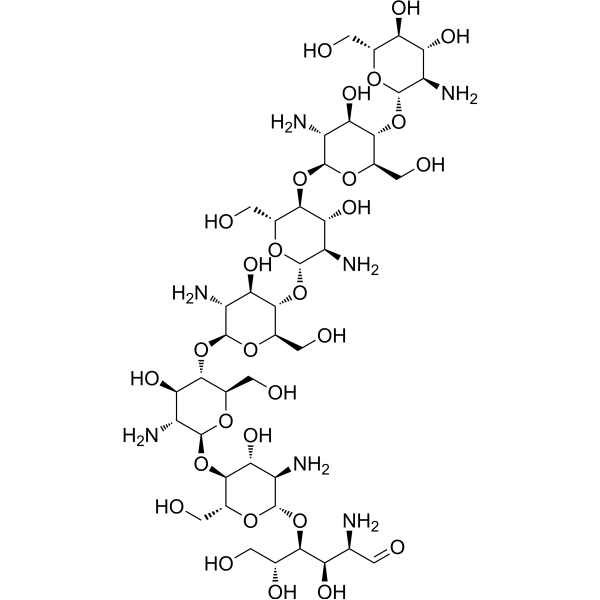
Chitoheptaose is an orally active chitooligosaccharide (degree of polymerization = 7). Chitoheptaose can be extracted from the exoskeletons of crustaceans, such as the shells of crabs, shrimps and lobsters. Chitoheptaose reduces pro-inflammatory cytokines while increasing the levels of anti-inflammatory cytokines (decreasing the levels of pro-inflammatory cytokines IL-1β, IL-17A and IFN-γ, and increasing the level of the anti-inflammatory cytokine IL-10). Chitoheptaose possesses antioxidant, anti-inflammatory and anti-Apoptotic activities. Chitoheptaose improves cardiac parameters, alleviates myocarditis injury, and exerts cardioprotective effects in a rat model of myocarditis. Chitoheptaose can be used in studies related to myocarditis .
loading...
    loading...
Cat. No.: HY-126304R
CAS No.: 154804-51-0
β-Glycerophosphate disodium salt hydrate (Standard) is the analytical standard of β-Glycerophosphate disodium salt hydrate (HY-126304). This product is intended for research and analytical applications. β-Glycerophosphate disodium salt pentahydrate is a bioactive endogenous metabolite and a phosphatase inhibitor. β-Glycerophosphate disodium salt pentahydrate plays an important role in inducing and maintaining osteoblast differentiation, mineral metabolism and signal transduction, and can be used as a drug carrier to form heat-sensitive hydrogels. β-Glycerophosphate disodium salt hydrate accelerates the calcification of vascular smooth muscle cells.
loading...
    loading...
Cat. No.: HY-B1158
CAS No.: 39236-46-9
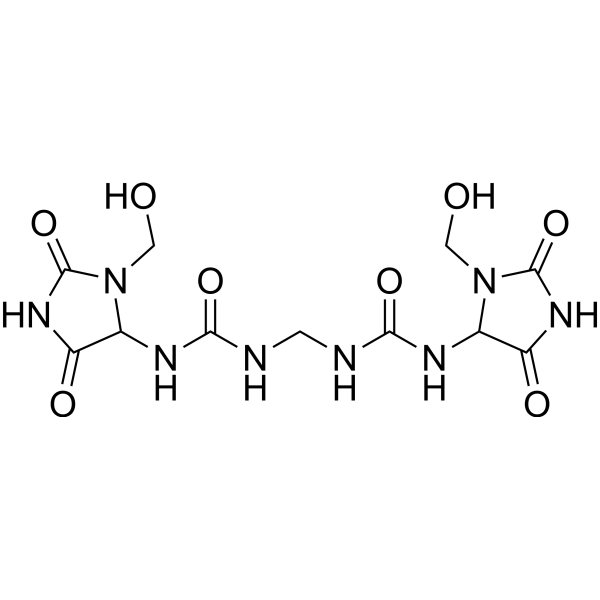
Imidazolidinyl urea is a commonly used antibacterial preservative in cosmetics and pharmaceuticals that releases formaldehyde through decomposition. Imidazolidinyl urea can also be used in the preparation of multifunctional hydrogels for the care of infectious wounds. Imidazolidinyl urea has broad-spectrum antibacterial activity, which mainly inhibits the reproduction of gram-negative bacteria and gram-positive bacteria, and restricts the growth of yeast and mold to a certain extent. Imidazolidinyl urea can induce non-histaminergic allergy by MRGPRX2 activation of mast cells .
loading...
    loading...
Cat. No.: HY-D1005A10
CAS No.: 9003-11-6
Synonyms: PEG-PPG-PEG, 2900 (Average)
Poloxamer 184 L64 is a block copolymer of polyethylene oxide and polypropylene oxide with an average molecular weight of 2900. Poloxamer has the ability to inhibit P-gp. Poloxamer 184 exhibits short-term skin toxicity, characterized by mild erythema and intradermal inflammatory reactions. Poloxamer 184 has antimicrobial activity, inhibiting 60% of Mycobacterium avium at a concentration of 1 mg/mL. Poloxamer 184 forms a thermoreversible hydrogel and is used as a food additive and as a drug delivery carrier in cosmetics and tissue engineering .
loading...
    loading...
Cat. No.: HY-D1005A6
CAS No.: 9003-11-6
Synonyms: PEG-PPG-PEG, 2200 (Average)
Poloxamer 124 L44 is a block polymer of polyoxyethylene and polyoxypropylene and a hydrophobic surfactant. Poloxamer 124 L44 causes eye irritation and exhibits oral toxicity in albino rats with an LD50 of 5 g/kg. Poloxamer 124 L44 has reversible adverse effects on triglyceride and cholesterol transport in the lymphatic system of rats. Poloxamer 124 L44 can form thermoreversible hydrogels and is used as a food additive and as a drug delivery vehicle in cosmetics, pharmaceuticals, and tissue engineering[1][2][3].
loading...
    loading...
Cat. No.: HY-W110707
CAS No.: 143-27-1
Synonyms: Hexadecylamine
Research Areas:  

Cancer

Cetylamine (Hexadecylamine) is an amphipathic hexadecyl alkylamine. Cetylamine enhances phase separation of aqueous PVA solutions, promotes the formation of PVA crystalline domains while remaining amorphous itself, and enables the preparation of surfactant-free, solvent-free, and crosslinker-free PVA hydrogels via freeze-thaw blending. Cetylamine can serve as the cationic surfactant component in ion-crosslinked micelles, which can load hydrophobic drugs and deliver them to breast cancer cells. Cetylamine is applicable to breast cancer-related research .
loading...
    loading...
Cat. No.: HY-Y0850U5
CAS No.: 9002-89-5
Synonyms: Polyvinyl alcohol (Mw 27000, 98-99% hydrolyzed, ~600 polymerization); Poly(Ethenol) (Mw 27000, 98-99% hydrolyzed, ~600 polymerization)
PVA (Polyvinyl alcohol) (Mw 27000, 98-99% hydrolyzed, ~600 polymerization) is a nonionic ethanol homopolymer with hydrophilicity, water solubility and biodegradability. PVA (Mw 27000, 98-99% hydrolyzed, ~600 polymerization) exhibits biocompatibility, non-toxicity and non-carcinogenicity, as well as antibacterial activity against Gram-positive bacteria, Gram-negative bacteria and fungal strains. PVA (Mw 27000, 98-99% hydrolyzed, ~600 polymerization) can serve as a solubilizer, stabilizer, mucoadhesive agent and sustained-release agent, and has a synergistic solubilizing effect on voriconazole/sulfobutyl ether β-cyclodextrin complexes. By stabilizing such complexes, PVA (Mw 27000, 98-99% hydrolyzed, ~600 polymerization) forms freeze-thaw hydrogels with high mucoadhesion, sustained drug release and ex vivo corneal permeability. When compounded with hyaluronic acid hydrogels, PVA (Mw 27000, 98-99% hydrolyzed, ~600 polymerization) supports chondrocyte growth in vitro, and also forms complexes with Cu 2+, Co 2+, Ni 2+ and Zn 2+ ions. PVA (Mw 27000, 98-99% hydrolyzed, ~600 polymerization) can be used in studies related to fungal keratitis, bacterial infections and fungal infections .
loading...
    loading...
Cat. No.: HY-158227
Synonyms: DexMA (MW 200000)
Dextran Methacryloyl (MW 200000) is a methacryloyl dextran that converts into cell matrix gels. Dextran Methacryloyl (MW 200000) formed gels that had no cytotoxic effects on fibroblasts, but cells adhered only inefficiently in long-term experiments . Dextran Methacryloyl (MW 200000) needs to self-assemble into fibrous hydrogel under the action of photoinitiator LAP (HY-44076), and target bioactive adhesion sites, play an inherent supporting role for tissue cells and biodegradable activity.
Application: cell culture, biological 3D printing, tissue engineering, etc.
loading...
    loading...
Cat. No.: HY-158227A
Synonyms: DexMA (MW 500000)
Dextran Methacryloyl (MW 500000) is a methacryloyl dextran that converts into cell matrix gels. Dextran Methacryloyl (MW 500000) formed gels that had no cytotoxic effects on fibroblasts, but cells adhered only inefficiently in long-term experiments . Dextran Methacryloyl (MW 500000) needs to self-assemble into fibrous hydrogel under the action of photoinitiator LAP (HY-44076), and target bioactive adhesion sites, play an inherent supporting role for tissue cells and biodegradable activity.
Application: cell culture, biological 3D printing, tissue engineering, etc.
loading...
    loading...
Cat. No.: HY-158228
Synonyms: PLMA
Poly-L-lysine Methacryloyl (PLMA) is methacrylated polylysine. When Poly-L-lysine Methacryloyl is cross-linked on polyetheretherketone (PEEK) through UV-induced cross-linking, it can improve the hydrophilicity of PEEK and retain its own degradation bioinertness . Poly-L-lysine Methacryloyl needs to self-assemble into fibrous hydrogel under the action of photoinitiator LAP (HY-44076), and target bioactive adhesion sites, play an inherent supporting role for tissue cells and biodegradable activity.
Application: cell culture, biological 3D printing, tissue engineering, etc.
loading...
    loading...
Cat. No.: HY-P10303
CAS No.: 2767993-86-0
Synonyms: Cyclo[RGDfK(Azide)]
Research Areas:  

Others

Cyclo[Arg-Gly-Asp-D-Phe-Lys(Azide)] (Cyclo[RGDfK(Azide)]) is a derivative of Cyclo (-RGDfK) (HY-P0023). Cyclo[Arg-Gly-Asp-D-Phe-Lys (Azide)] is a click chemistry reagent containing an azide group. Cyclo[Arg-Gly-Asp-D-Phe-Lys (Azide)] enables functionalization of alginate via SPAAC bioconjugation. Alginate hydrogels functionalized with Cyclo[Arg-Gly-Asp-D-Phe-Lys (Azide)] significantly promote cell expansion while maintaining cell pluripotency .
loading...
    loading...
Cat. No.: HY-P2263A
Target:  

Inhibitory Antibodies

Research Areas:  

Inflammation/Immunology

KLD-12 TFA is the TFA salt form of KLD-12 (HY-P2263). KLD-12 TFA is a self a 12-residue self-assembling peptide that is used in tissue-engineering. KLD-12 TFA combined with SDF-1 self-assembled polypeptide enhances chondrogenic differentiation of bone marrow stromal cells (BMSCs). KLD-12 TFA hydrogel can fill full-thickness osteochondral defects in situ and improve cartilage repair .
loading...
    loading...
Cat. No.: HY-W243303J
CAS No.: 9003-01-4
Poly(acrylic acid) (MW 250000) is a synthetic cationic electrolyte containing abundant carboxyl groups (-COOH), which exhibits excellent water absorption and retention properties and is often cross-linked to form hydrogels. Poly(acrylic acid) (with a molecular weight of 250,000). Poly(acrylic acid) (MW 250000) can be used as a non-collagenous analog in the biomimetic mineralization research of type I collagen. Poly(acrylic acid) (MW 250000) has pH responsiveness and biocompatibility and is often used as a drug carrier, surface modifier and functional material .
loading...
    loading...
Cat. No.: HY-177840
Target:  

Liposome

Research Areas:  

Inflammation/Immunology

Liposomal Curcumin is a specialized delivery system that encapsulates Curcumin (HY-N0005) within tiny liposomes. These liposomes act as protective shells, enhancing the absorption and bioavailability of Curcumin. Curcumin (Diferuloylmethane), a natural phenolic compound, is a p300/CREB-binding protein-specific inhibitor of acetyltransferase, represses the acetylation of histone/nonhistone proteins and histone acetyltransferase-dependent chromatin transcription. Curcumin is a photosensitizer against microorganisms. Curcumin shows inhibitory effects on NF-κB and MAPKs, and has diverse pharmacologic effects including anti-inflammatory, antioxidant, antiproliferative and antiangiogenic activities. Curcumin induces stabilization of Nrf2 protein through Keap1 cysteine modification.
The product size below only indicate the effective content of Curcumin.
loading...
    loading...
Cat. No.: HY-135721
CAS No.: 13304-62-6
Synonyms: Benzyl acrylamide
Research Areas:  

Others

N-Benzylacrylamide (Benzyl acrylamide) is a hydrophobic monomer. N-Benzylacrylamide can form hydrophobic microdomains that act as physical cross-linking sites to connect polymer chains to each other into a three-dimensional network; dynamically reversible hydrophobic interactions enable the spontaneous reformation of physical cross-linking sites after contact of fractured surfaces, thereby achieving autonomous self-healing. N-Benzylacrylamide can promote the synthesis of carboxymethyl cellulose-modified amphiphilic copolymers, and enhance the intermolecular association, viscoelasticity, thermal stability, as well as fire resistance/fire extinguishing performance of the resulting hydrogels .
loading...
    loading...
Cat. No.: HY-158222
Synonyms: AlgMA (MW 50000)
Alginate Methacryloyl (MW 50000) is a methacryloyl alginate with potential for use as a tissue engineering scaffold and 3D printing ink. Alginate Methacryloyl (MW 50000) is biocompatible, non-immunogenic, has low toxicity and is capable of physical cross-linking with divalent cations such as calcium . Alginate Methacryloyl (MW 50000) needs to self-assemble into fibrous hydrogel under the action of photoinitiator LAP (HY-44076), and target bioactive adhesion sites, play an inherent supporting role for tissue cells and biodegradable activity.
Application: cell culture, biological 3D printing, tissue engineering, etc.
loading...
    loading...
Cat. No.: HY-158222A
Synonyms: AlgMA (MW 300000)
Research Areas:  

Others

Alginate Methacryloyl (MW 300000) is a methacryloyl alginate with potential for use as a tissue engineering scaffold and 3D printing ink. Alginate Methacryloyl (MW 300000) is biocompatible, non-immunogenic, has low toxicity and is capable of physical cross-linking with divalent cations such as calcium . Alginate Methacryloyl (MW 300000) needs to self-assemble into fibrous hydrogel under the action of photoinitiator LAP (HY-44076), and target bioactive adhesion sites, play an inherent supporting role for tissue cells and biodegradable activity.
Application: cell culture, biological 3D printing, tissue engineering, etc.
loading...
    loading...
Cat. No.: HY-D0886R
CAS No.: 13408-09-8
β-Glycerophosphate disodium salt pentahydrate (Standard) is the analytical standard of β-Glycerophosphate disodium salt pentahydrate (HY-D0886). This product is intended for research and analytical applications. β-Glycerophosphate disodium salt pentahydrate is a bioactive endogenous metabolite and a phosphatase inhibitor. β-Glycerophosphate disodium salt pentahydrate plays an important role in inducing and maintaining osteoblast differentiation, mineral metabolism and signal transduction, and can be used as a drug carrier to form heat-sensitive hydrogels. β-Glycerophosphate disodium salt hydrate accelerates the calcification of vascular smooth muscle cells .
loading...
    loading...
Cat. No.: HY-100966S
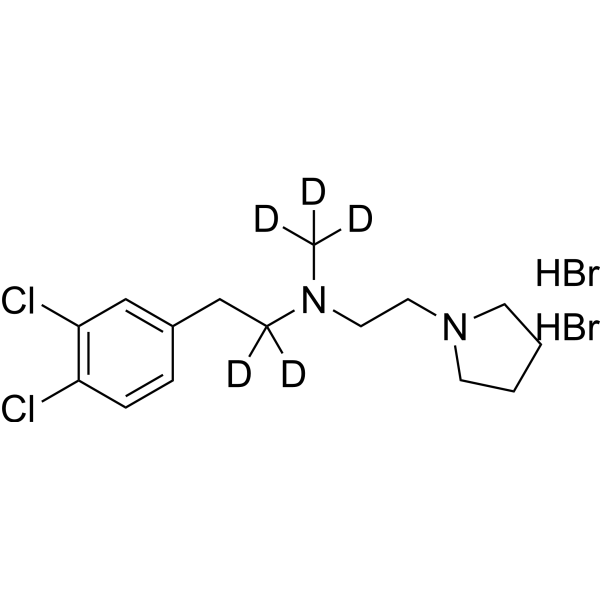
BD-1008-d5 dihydrobromide is the deuterium labeled BD-1008 dihydrobromide (HY-100966). BD-1008 dihydrobromide is a nonselective σ receptor antagonist with Kis against σ1 receptor and σ2 receptor of 2 nM and 8 nM. The BD-1008 dihydrobromide has an extremely low affinity for the D2 receptor (Ki = 1112 nM) and dopamine transporter (DAT) (Ki > 10,000 nM). BD-1008 dihydrobromide significantly antagonizes dopamine release in the shell region of the nucleus accumbens via the σ₂ receptor. BD-1008 dihydrobromide blocks the self-administration behavior of σ agonists.BD-1008 dihydrobromide can be used for the study of addiction therapy that target the σ receptor .
loading...
    loading...