2491 Results for "

class

" in MedChemExpress (MCE) Product Catalog:
Products (2491)

2491 Results for "class" in MCE Product Catalog:

Cat. No.: HY-137055
CAS No.: 1171824-96-6
Target:  

Others

Research Areas:  

Others

PF-3774076 is a highly central nervous system (CNS) penetrant, potent, and selective human α1A-adrenoceptor partial agonist. It exhibits good potency and selectivity in multiple binding and functional assays. PF-3774076 increases peak urethral pressure in anesthetized female dogs in a dose-dependent manner via a central mechanism. PF-3774076 affects both the proximal and distal portions of the urethra in vivo. These properties suggest that PF-3774076 may have significant benefit in the treatment of stress urinary incontinence (SUI) as a CNS-penetrant α1A receptor partial agonist. However, despite its partial agonism and selectivity for α1A receptors, PF-3774076 failed to provide adequate safety differences in in vivo models of cardiovascular function. This may be due to the simultaneous activation of both peripheral and central α1A receptors. These data suggest that while central α1A partial agonists may have significant benefit in the treatment of SUI, this class of agents may have difficulty achieving the desired urethral selectivity without affecting cardiovascular function.
loading...
    loading...
Cat. No.: HY-B0110R
CAS No.: 60282-87-3
Synonyms: SHB 331 (Standard); WL 70 (Standard)
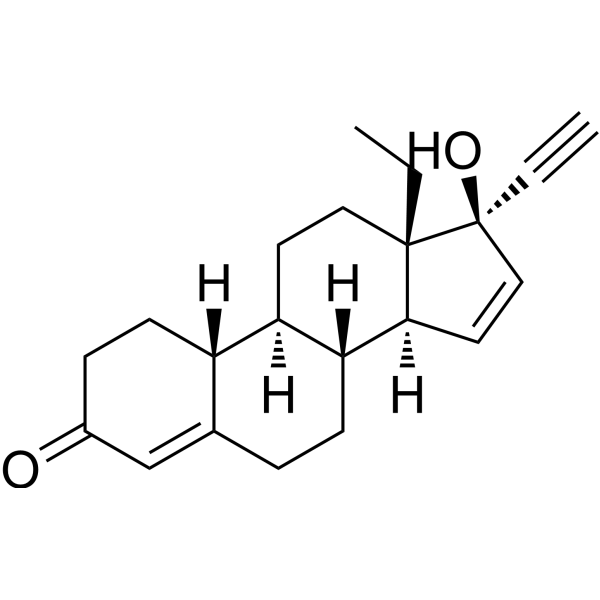
Gestodene (Standard) (SHB 331 (Standard); WL 70 (Standard)) is the analytical standard of Gestodene (HY-B0110). This product is intended for research and analytical applications. Gestodene is an orally active synthetic progestogen compound of the 19-nortestosterone class. Gestodene binds with high affinity to the progesterone receptor, inhibits 5α-reductase, binds to androgen and aldosterone receptors, and inactivates CYP3A. Gestodene acts as a positive allosteric modulator of PAR1, enhances PAR1-mediated signaling pathways, and is capable of increasing the activation potency of PAR1-AP toward PAR1, thereby promoting ERK1/2 phosphorylation, receptor internalization, cell morphological changes, and human platelet aggregation. Gestodene and its A-ring reduced metabolites promote the proliferation, differentiation, and mineralization of neonatal rat osteoblasts. Gestodene itself has no binding capacity for estrogen receptors, and this osteogenic activity depends on intracellular metabolism to generate A-ring reduced products with estrogen-like agonistic activity. Gestodene is useful for research on diseases related to progesterone secretion and diseases related to thrombosis .
loading...
    loading...
Cat. No.: HY-W127393
CAS No.: 177158-21-3
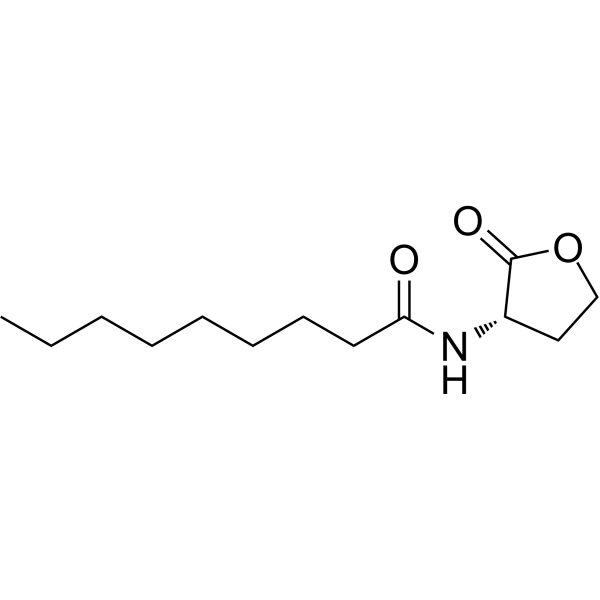
Quorum sensing is a regulatory system used by bacteria to control gene expression in response to increased cell density. This regulatory process manifests itself in a variety of phenotypes, including biofilm formation and virulence factor production. Coordinated gene expression is achieved through the production, release and detection of small diffusible signaling molecules called autoinducers. N-acylated homoserine lactones (AHLs) comprise a class of such autoinducers, each of which generally consists of a fatty acid coupled to a homoserine lactone (HSL). Modulation of bacterial quorum-sensing signaling systems to suppress pathogenesis represents a new approach to antimicrobial research for infectious diseases. AHLs differ in acyl length (C4-C18), C3 substitution (hydrogen, hydroxyl, or oxo group), and the presence or absence of one or more carbon-carbon double bonds in the fatty acid chain. These differences confer signaling specificity through the affinity of the LuxR family of transcriptional regulators. C9-HSL is a rare odd-numbered acyl carbon chain produced by wild-type Erwinia carotovora strain SCC 3193 grown in nutrient-rich Luria-Bertani broth (LB) medium.
loading...
    loading...
Cat. No.: HY-L937
931 compounds

Unnatural amino acids (UAAs), also referred to as non-canonical amino acids (ncAAs) or non-proteinogenic amino acids, are a class of amino acids that are distinct from the 20 standard natural amino acids. They can be obtained through chemical synthesis, biosynthesis, and other approaches, with structural diversity far exceeding that of natural amino acids. UAAs are mainly including naturally occurring non-canonical amino acids, chemically synthesized amino acids, and biosynthetic amino acids, which provide a molecular basis for protein function design.

UAAs exhibit significant value in multiple fields. They can optimize the pharmacokinetic properties of peptide drugs and peptidomimetics, modify enzyme functions and endow them with new biological activities, thereby overcoming the limitations of traditional peptide drugs and expanding the chemical space . Meanwhile, UAAs can serve as molecular probes to analyze protein-protein interactions and investigate the regulatory mechanisms of protein functions.

MCE has compiled a UAAs Fragment Library comprising nearly a thousand unnatural amino acid fragments with extensive coverage of chemical space and enhanced structural diversity. This compound library can be widely applied in peptide synthesis, drug design, and protein engineering.

Cat. No.: HY-L251
93 compounds

Ionizable lipids are a class of specialized, functional lipid molecules with pH-sensitive charge characteristics. They are primarily divided into two major categories: ionizable cationic lipids and ionizable anionic lipids, though the term typically specifies ionizable cationic lipids within the biomedical field. Structurally, these lipids consist of an ionizable hydrophilic headgroup, a biodegradable linker, and hydrophobic tails. Their primary application is serving as the key delivery vehicle in lipid nanoparticles (LNPs) to encapsulate negatively charged nucleic acid macromolecules, such as mRNA vaccines, siRNA therapeutics, and CRISPR gene-editing components. In a physiological, neutral environment, they remain electrically neutral to minimize systemic toxicity and prolong circulation time. Upon entering the acidic microenvironment of cellular endosomes, however, they undergo protonation to become positively charged, thereby inducing membrane fusion and enabling the highly efficient intracellular release of the nucleic acid cargo. Consequently, they serve as the technological cornerstone for bringing nucleic acid therapies into clinical application.

To accelerate the translational process of cutting-edge nucleic acid drugs, MCE has meticulously constructed an ionizable lipid compound library containing 93 high-performance molecules, aiming to provide researchers and pharmaceutical professionals with a high-throughput, multi-dimensional lipid screening platform.

Cat. No.: HY-P77001
Purity:  ≥ 95%, as determined by reducing SDS-PAGE.
Synonyms: IL22RA1; Interleukin 22 Receptor, Alpha 1; Prev. IL22R; IL-22R-Alpha-1; CRF2-9; IL-22RA1; Interleukin-22 Receptor Subunit Alpha-1; ZcytoR11; Cytokine Receptor class-II Member 9; Interleukin 22 Receptor; Cytokine Receptor Family 2 Member 9; IL22R1; Interle
Species:  
Rat
Source:  
HEK293
loading...
    loading...
Cat. No.: HY-P77002
Purity:  ≥ 95%, as determined by reducing SDS-PAGE or Bis-Tris PAGE.
Synonyms: IL22RA1; Interleukin 22 Receptor, Alpha 1; Prev. IL22R; IL-22R-Alpha-1; CRF2-9; IL-22RA1; Interleukin-22 Receptor Subunit Alpha-1; ZcytoR11; Cytokine Receptor class-II Member 9; Interleukin 22 Receptor; Cytokine Receptor Family 2 Member 9; IL22R1; Interle
Species:  
Rat
Source:  
HEK293
loading...
    loading...
Cat. No.: HY-P77423
Purity:  ≥ 85%, as determined by reducing SDS-PAGE.
Synonyms: IL22RA1; Interleukin 22 Receptor, Alpha 1; Prev. IL22R; IL-22R-Alpha-1; CRF2-9; IL-22RA1; Interleukin-22 Receptor Subunit Alpha-1; ZcytoR11; Cytokine Receptor class-II Member 9; Interleukin 22 Receptor; Cytokine Receptor Family 2 Member 9; IL22R1; Interle
Species:  
Canine
Source:  
HEK293
loading...
    loading...
Cat. No.: HY-P77424
Purity:  ≥ 95%, as determined by reducing SDS-PAGE.
Synonyms: IL22RA1; Interleukin 22 Receptor, Alpha 1; Prev. IL22R; IL-22R-Alpha-1; CRF2-9; IL-22RA1; Interleukin-22 Receptor Subunit Alpha-1; ZcytoR11; Cytokine Receptor class-II Member 9; Interleukin 22 Receptor; Cytokine Receptor Family 2 Member 9; IL22R1; Interle
Species:  
Canine
Source:  
HEK293
loading...
    loading...
Cat. No.: HY-P700744
Purity:  ≥ 95%, as determined by Bis-Tris PAGE.
Synonyms: IL22RA1; Interleukin 22 Receptor, Alpha 1; Prev. IL22R; IL-22R-Alpha-1; CRF2-9; IL-22RA1; Interleukin-22 Receptor Subunit Alpha-1; ZcytoR11; Cytokine Receptor class-II Member 9; Interleukin 22 Receptor; Cytokine Receptor Family 2 Member 9; IL22R1; Interle
Species:  
Cynomolgus
Source:  
HEK293
loading...
    loading...
Cat. No.: HY-P703975
Purity:  ≥ 95%, as determined by Bis-Tris PAGE.
Synonyms: IL22RA1; Interleukin 22 Receptor, Alpha 1; Prev. IL22R; IL-22R-Alpha-1; CRF2-9; IL-22RA1; Interleukin-22 Receptor Subunit Alpha-1; ZcytoR11; Cytokine Receptor class-II Member 9; Interleukin 22 Receptor; Cytokine Receptor Family 2 Member 9; IL22R1; Interle
Species:  
Human
Source:  
HEK293
loading...
    loading...
Cat. No.: HY-B0110S
CAS No.: 1542211-40-4
Synonyms: SHB 331-d6; WL 70-d6
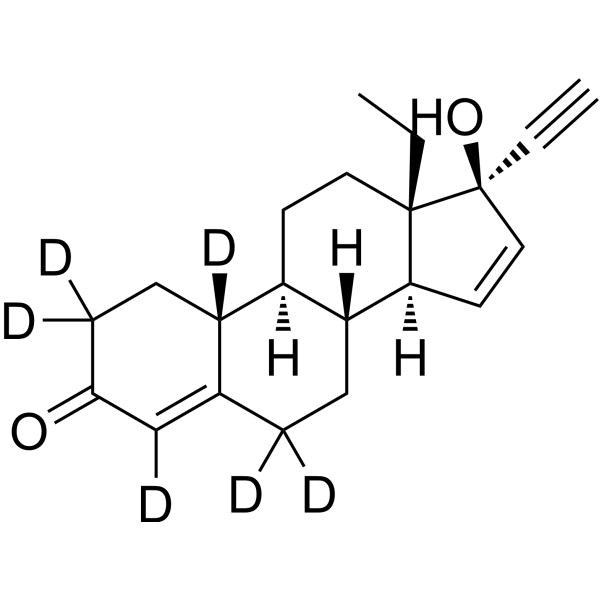
Gestodene-d6 (SHB 331-d6; WL 70-d6) is the deuterated-labeled Gestodene (HY-B0110). Gestodene is an orally active synthetic progestogen compound of the 19-nortestosterone class. Gestodene binds with high affinity to the progesterone receptor, inhibits 5α-reductase, binds to androgen and aldosterone receptors, and inactivates CYP3A. Gestodene acts as a positive allosteric modulator of PAR1, enhances PAR1-mediated signaling pathways, and is capable of increasing the activation potency of PAR1-AP toward PAR1, thereby promoting ERK1/2 phosphorylation, receptor internalization, cell morphological changes, and human platelet aggregation. Gestodene and its A-ring reduced metabolites promote the proliferation, differentiation, and mineralization of neonatal rat osteoblasts. Gestodene itself has no binding capacity for estrogen receptors, and this osteogenic activity depends on intracellular metabolism to generate A-ring reduced products with estrogen-like agonistic activity. Gestodene is useful for research on diseases related to progesterone secretion and diseases related to thrombosis .
loading...
    loading...
Cat. No.: HY-W753897
Synonyms: SHB 331-d7; WL 70-d7
Gestodene-d7 (SHB 331-d7; WL 70-d7) is the deuterated-labeled Gestodene (HY-B0110). Gestodene is an orally active synthetic progestogen compound of the 19-nortestosterone class. Gestodene binds with high affinity to the progesterone receptor, inhibits 5α-reductase, binds to androgen and aldosterone receptors, and inactivates CYP3A. Gestodene acts as a positive allosteric modulator of PAR1, enhances PAR1-mediated signaling pathways, and is capable of increasing the activation potency of PAR1-AP toward PAR1, thereby promoting ERK1/2 phosphorylation, receptor internalization, cell morphological changes, and human platelet aggregation. Gestodene and its A-ring reduced metabolites promote the proliferation, differentiation, and mineralization of neonatal rat osteoblasts. Gestodene itself has no binding capacity for estrogen receptors, and this osteogenic activity depends on intracellular metabolism to generate A-ring reduced products with estrogen-like agonistic activity. Gestodene is useful for research on diseases related to progesterone secretion and diseases related to thrombosis .
loading...
    loading...
Cat. No.: HY-L001P
32,925 compounds

Bioactive compounds are a general term for a class of substances that can cause certain biological effects in the body, which are the main source of small molecule drugs. These compounds generally penetrate cell membranes, act on specific target proteins in cells, regulate intracellular signaling pathways, and cause some changes in cell phenotype.

MCE owns a unique collection of 32,925 compounds with confirmed biological activities and clear targets. These compounds include natural products, innovative compounds, approved compounds, and clinical compounds. This library is a useful tool for signal pathway research, drug discovery and drug repurposing, etc.

Bioactive Compound Library Plus, with more powerful screening capability, further complements Bioactive Compound Library (HY-L001) by adding some compounds with low solubility or solution stability (Part B) and some novel, rare or exclusive compounds (Part C) to this library. Overall, bioactive compound library plus (HY-L001P) includes tree parts: Part A, Part B and Part C. Compounds in Part A are equal to the products in HY-L001, which can be supplied in solution or solid form. Compounds in Part B and C are only supplied in solid form.

Cat. No.: HY-P700872
Purity:  ≥ 95%, as determined by reducing SDS-PAGE.
Synonyms: IL22RA1; Interleukin 22 Receptor, Alpha 1; Prev. IL22R; IL-22R-Alpha-1; CRF2-9; IL-22RA1; Interleukin-22 Receptor Subunit Alpha-1; ZcytoR11; Cytokine Receptor class-II Member 9; Interleukin 22 Receptor; Cytokine Receptor Family 2 Member 9; IL22R1; Interle
Species:  
Human
Source:  
HEK293
loading...
    loading...
Cat. No.: HY-P701062
Purity:  ≥ 95%, as determined by reducing SDS-PAGE.
Synonyms: IL22RA1; Interleukin 22 Receptor, Alpha 1; Prev. IL22R; IL-22R-Alpha-1; CRF2-9; IL-22RA1; Interleukin-22 Receptor Subunit Alpha-1; ZcytoR11; Cytokine Receptor class-II Member 9; Interleukin 22 Receptor; Cytokine Receptor Family 2 Member 9; IL22R1; Interle
Species:  
Human
Source:  
HEK293
loading...
    loading...
Cat. No.: HY-P81501
Synonyms: KIR2DL3 ; CD158B2, KIRCL23, NKAT2; CD158b2; Killer cell immunoglobulin-like receptor 2DL3 ; CD158 antigen-like family member B2; KIR-023GB; Killer inhibitory receptor cl 2-3; NKAT2a; NKAT2b; Natural killer-associated transcript 2 (NKAT-2); p58 natural killer cell receptor clone CL-6 (p58 NK receptor CL-6); p58.2 MHC class-I-specific NK receptor

Host:  

Rabbit

Application:  

IHC-P

Reactivity:  

Human

loading...
    loading...
Cat. No.: HY-L013
3,961 compounds

Neuronal Signaling is involved in the regulation of the mechanisms of the central nervous system (CNS) such as its structure, function, genetics and physiology as well as how this can be applied to understand diseases of the nervous system. Every information processing system in the CNS is composed of neurons and glia, neurons have evolved unique capabilities for intracellular signaling (communication within the cell) and intercellular signaling (communication between cells). G protein-coupled receptors (GPCRs), including 5-HT receptor, histamine receptor, opioid receptor, etc. are the largest class of sensory proteins and are important therapeutic targets in Neuronal Signaling. Besides, Notch signaling, such as β- and γ-secretase, also plays multiple roles in the development of the CNS including regulating neural stem cell (NSC) proliferation, survival, self-renewal and differentiation. GPCR dysfunction caused by receptor mutations and environmental challenges contributes to many neurological diseases. Notch signaling in neurons, glia, and NSCs is also involved in pathological changes that occur in disorders such as stroke, Alzheimer's disease and CNS tumors. Thus, targeting Neuronal Signaling, such as notch signaling and GPCRs, can be used as therapeutic interventions for several different CNS disorders.

MCE designs a unique collection of 3,961 Neuronal Signaling-related compounds that act as a useful tool for the research of neuronal regulation and neuronal diseases.

Cat. No.: HY-P81501A
Synonyms: KIR2DL3 ; CD158B2, KIRCL23, NKAT2; CD158b2; Killer cell immunoglobulin-like receptor 2DL3 ; CD158 antigen-like family member B2; KIR-023GB; Killer inhibitory receptor cl 2-3; NKAT2a; NKAT2b; Natural killer-associated transcript 2 (NKAT-2); p58 natural killer cell receptor clone CL-6 (p58 NK receptor CL-6); p58.2 MHC class-I-specific NK receptor

Host:  

Rabbit

Application:  

IHC-P

Reactivity:  

Human

loading...
    loading...
Cat. No.: HY-P703466
Purity:  ≥ 90%, as determined by reducing SDS-PAGE.
Synonyms: PIK3R1; PI3-Kinase Subunit P85-Alpha; Phosphoinositide-3-Kinase Regulatory Subunit 1; PI3 Kinase-Associated P85; GRB1; CDNA FLJ44373 Fis, Clone TRACH3009455, Highly Similar To Phosphatidylinositol 3-Kinase Regulatory Subunit Alpha; Phosphatidylinositol 3-Kinase 85 KDa Regulatory Subunit Alpha; Phosphatidylinositol 3-Kinase, Regulatory Subunit, Polypeptide 1 (P85 Alpha); Phosphatidylinositol 3-Kinase Regulatory Subunit Alpha; Phosphatidylinositol 3-Kinase-Associated P-85 Alpha; P85-ALPHA; PtdIns-3-Kinase Regulatory Subunit P85-Alpha; P85alpha; Phosphoinositide-3-Kinase Regulatory Subunit; P85; PI3-Kinase Regulatory Subunit Alpha; Phosphoinositide-3-Kinase, Regulatory Subunit 1 (Alpha); PIK3R1/NR4A3 Fusion Protein; Phosphoinositide-3-Kinase Regulatory Subunit Alpha; NR4A3 Fusion; PtdIns-3-Kinase Regulatory Subunit Alpha; IMD36; Growth Factor Receptor Bound 1; AGM7; PI3K Regulatory Subunit Alpha; MHC class I antigen; MHC class I protein; Mamu-A1; Mamu-A
Species:  
Human
Source:  
Sf9 insect cells
loading...
    loading...

