



Gestodene-d6
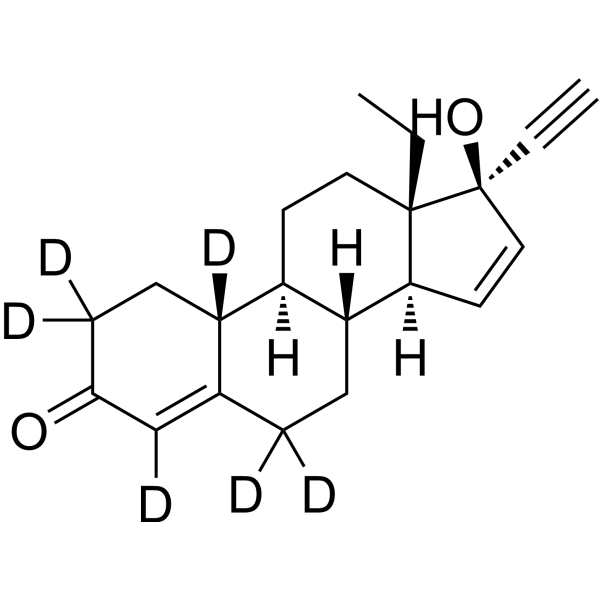
Gestodene-d6 (SHB 331-d6; WL 70-d6) is the deuterated-labeled Gestodene (HY-B0110). Gestodene is an orally active synthetic progestogen compound of the 19-nortestosterone class. Gestodene binds with high affinity to the progesterone receptor, inhibits 5α-reductase, binds to androgen and aldosterone receptors, and inactivates CYP3A. Gestodene acts as a positive allosteric modulator of PAR1, enhances PAR1-mediated signaling pathways, and is capable of increasing the activation potency of PAR1-AP toward PAR1, thereby promoting ERK1/2 phosphorylation, receptor internalization, cell morphological changes, and human platelet aggregation. Gestodene and its A-ring reduced metabolites promote the proliferation, differentiation, and mineralization of neonatal rat osteoblasts. Gestodene itself has no binding capacity for estrogen receptors, and this osteogenic activity depends on intracellular metabolism to generate A-ring reduced products with estrogen-like agonistic activity. Gestodene is useful for research on diseases related to progesterone secretion and diseases related to thrombosis.
Nos produits utilisent uniquement pour la recherche. Nous ne vendons pas aux patients.
- CAS No.: 1542211-40-4
- Formule: C21H20D6O2
- Masse moléculaire:316.47
-
Stockage:
Please store the product under the recommended conditions in the Certificate of Analysis.

To place orders, for customer services and technical support, please contact: MedChemExpress USA
Tel: 609-228-6898 E-mail: [email protected] [email protected]


-
 Activité biologique
-
Chemical Information
- Protocole
- Pureté et documentation
- Références
-
 Help & FAQs


-
HY-14171
BexaroteneRXR Agonist -
HY-16950A
(E/Z)-4-HydroxytamoxifenEstrogen Receptor Modulator -
HY-127137
Adenylosuccinic acidNucleotide Cycle Metabolite -
HY-B0257S1
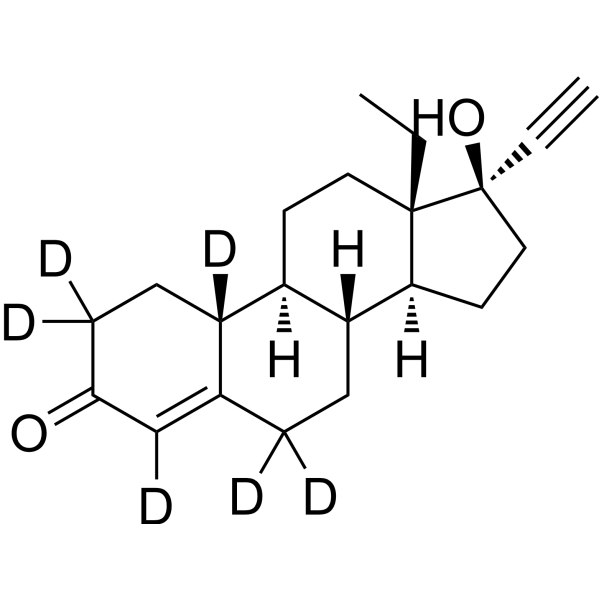
Norgestrel-d6Stable Isotope -
HY-B0469
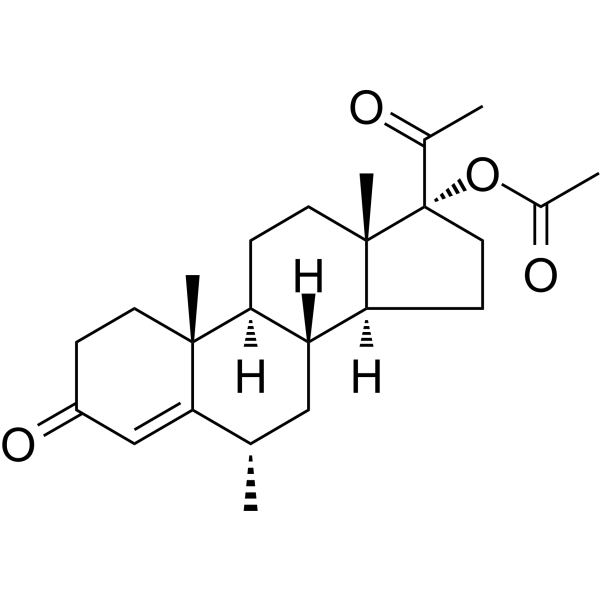
Medroxyprogesterone acetateProgesterone Receptor Agonist -
HY-N0019S
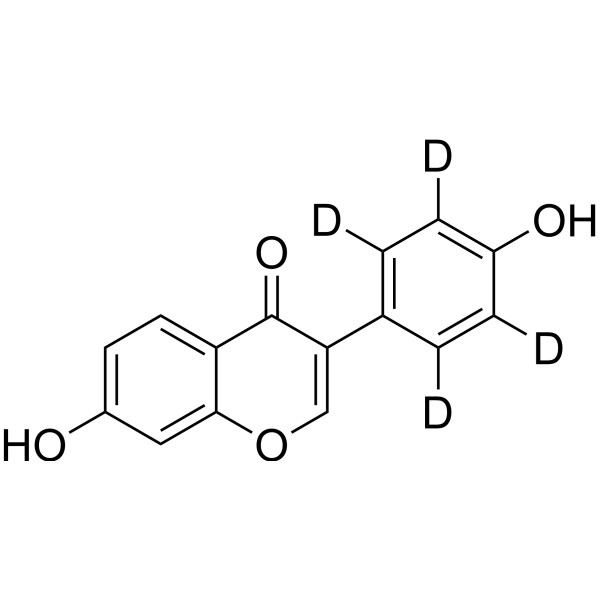
Daidzein-d4Stable Isotope -
HY-120140
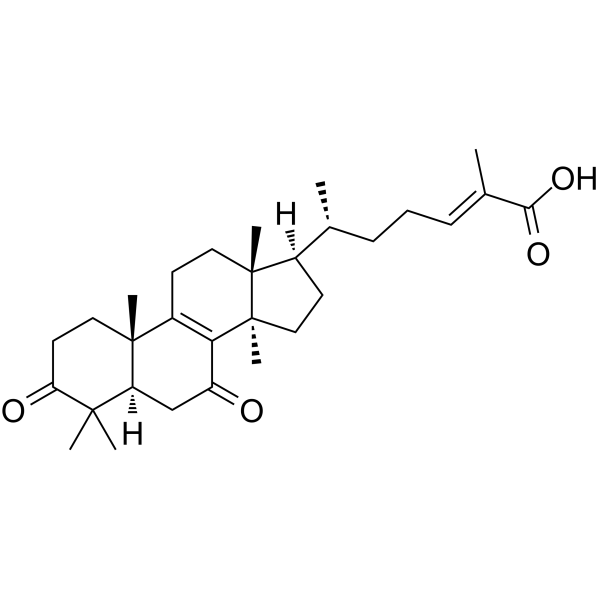
Ganoderic acid DMCancer and Osteoclastogenesis Inhibitor -
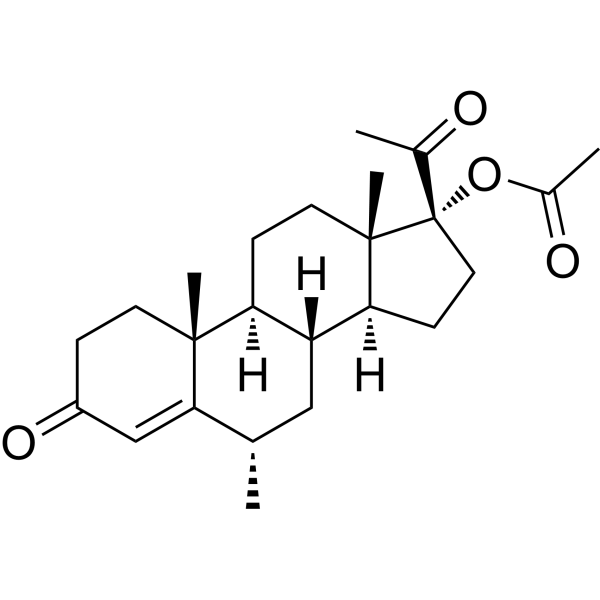
HY-B0469R
Medroxyprogesterone acetate (Standard) -
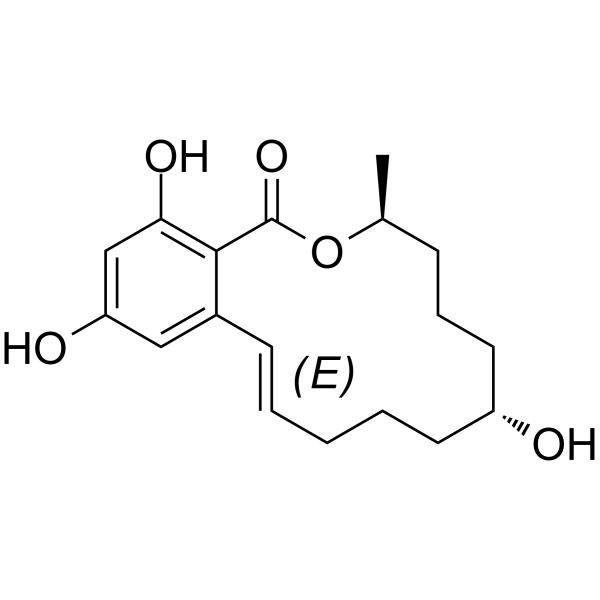
HY-N6710
α-ZearalenolEstrogen Receptor/ERR Inhibitor -
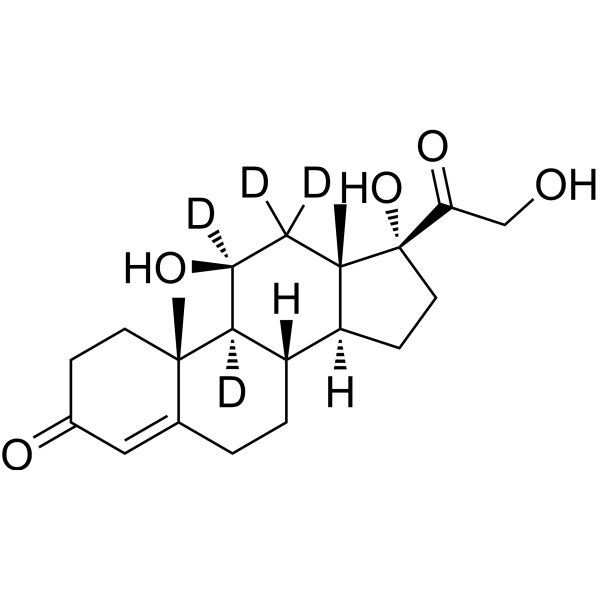
HY-N0583S2
Hydrocortisone-d4Stable Isotope -
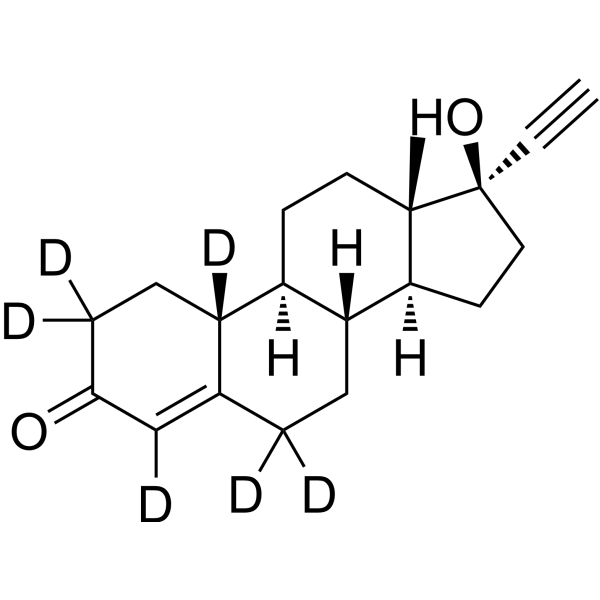
HY-B0554S
Norethindrone-d6Stable Isotope -
HY-14781S1
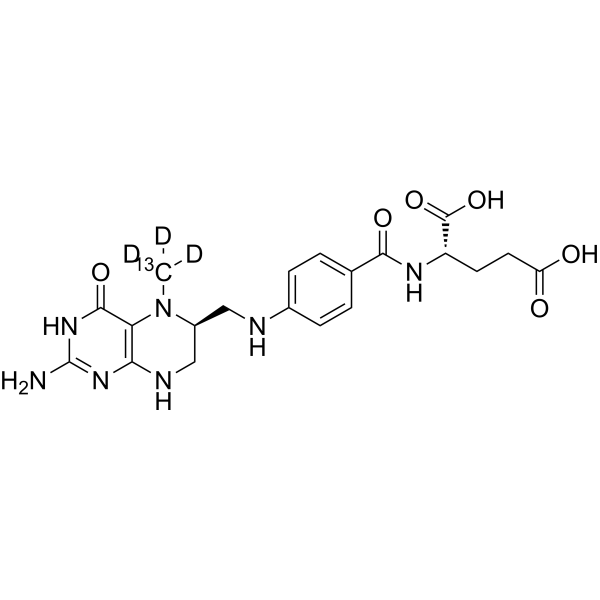
Levomefolic acid-13C,d3Stable Isotope


Activité biologique
Description
Application
1. This compound can be used as a tracer
2. This compound can be used as an internal standard for quantitative analysis by NMR, GC-MS, or LC-MS.


Chemical Information
-
CAS No. 1542211-40-4
-
Unlabeled CAS 60282-87-3
-
Masse moléculaire 316.47
-
Formule C21H20D6O2
-
SMILES
CC[C@@]12[C@](C=C[C@@]2(O)C#C)([H])[C@@]3([H])[C@]([C@]4([2H])C(C([2H])([2H])C3)=C([2H])C(C([2H])([2H])C4)=O)([H])CC1
-
Synonyms
SHB 331-d6; WL 70-d6
-
Livraison
Room temperature in continental US; may vary elsewhere.
-
Stockage
Please store the product under the recommended conditions in the Certificate of Analysis.


Pureté et documentation
Références

Calculators
Concentration (start) × Volume (start) = Concentration (final) × Volume (final)


Gestodene-d6 Related Classifications
HY-B0110S Related Classifications
 Powered by Bioz
Keywords
- Gestodene-d6
- 1542211-40-4
- SHB 331-d6
- WL 70-d6
- Isotope-Labeled Compounds
- Progesterone Receptor
- ERK
- Cytochrome P450
- Protease Activated Receptor (PAR)
- 5 alpha Reductase
- MMP
- Drug Intermediate
- T47D-A cells
- neonatal rat calvarial osteoblasts
- CYP3A
- MCF-7 breast cancer cells
- progesterone receptors
- HT29 cells
- PAR1-selective positive allosteric modulator
- 5α-reductase
- SHBG
- A2058 cells
- Inhibitor
- inhibitor
- inhibit