298 Results for "

SMAD

" in MedChemExpress (MCE) Product Catalog:
Products (298)

298 Results for "SMAD" in MCE Product Catalog:

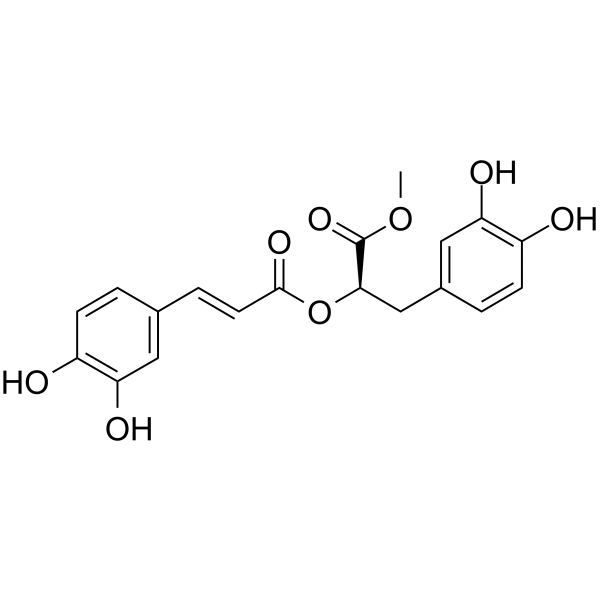
Cat. No.: HY-N3266
CAS No.: 99353-00-1
Methyl rosmarinate is an orally active hydroxycinnamic acid. Methyl rosmarinate exhibits an IC50 of 24.70 μM and a Ki of 15.29 μM against PTP1B, an IC50 of 41.46 μg/mL against BChE, a Ki of 0.61 mM against mushroom tyrosinase, and an IC50 of 2.50 μM against SARS-CoV-2 3CLpro. Methyl rosmarinate downregulates the phosphorylation levels of ERK, JNK, p38, Smad2 and Smad3. Methyl rosmarinate activates erythrocyte BPGM and promotes the production of 2,3-BPG. Methyl rosmarinate induces apoptosis of fibroblasts. Methyl rosmarinate prolongs the survival time of hypoxic mice. Methyl rosmarinate improves insulin sensitivity. Methyl rosmarinate binds to SARS-CoV-2 3CLpro and inhibits viral replication. Methyl rosmarinate induces glioblastoma cell death. Methyl rosmarinate activates the TGR5/AMPK axis and reduces the levels of ROS and MDA. Methyl rosmarinate shows inhibitory activity against MMP-1. Methyl rosmarinate can be used in research related to pulmonary fibrosis, hypoxia-induced injury, type 2 diabetes, Alzheimer's disease, hyperpigmentation disorders, COVID-19, glioblastoma and myocardial ischemia-reperfusion injury .
loading...
    loading...
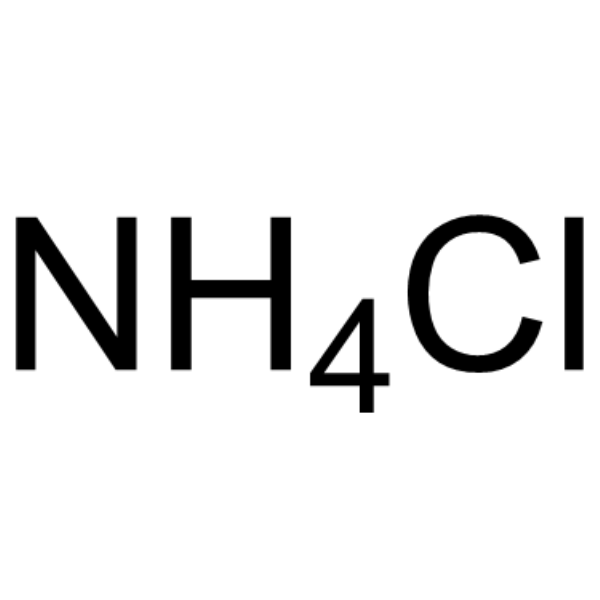
Cat. No.: HY-Y1269H
CAS No.: 12125-02-9
Synonyms: Salmiac, meets analytical specification of Ph. Eur. BP USP FCC
Ammonium chloride, meets analytical specification of Ph. Eur. BP USP FCC (Salmiac, meets analytical specification of Ph. Eur. BP USP FCC) is an inhibitor of Slc26a4 and SMAD2. Ammonium chloride, meets analytical specification of Ph. Eur. BP USP FCC reduces the protein expression level of Slc26a4 in lung tissue, and attenuates ozone-induced increases in proinflammatory cytokines, inflammatory cells, pulmonary resistance, goblet cell hyperplasia, peribronchial inflammation and thiocyanate levels in mouse tissues and bronchoalveolar lavage fluid. Ammonium chloride, meets analytical specification of Ph. Eur. BP USP FCC decreases the level of phosphorylated SMAD2, inhibits autophagy by reducing autophagy-related proteins, and enhances Cisplatin (HY-17394)-induced cancer cell apoptosis and DNA double-strand breaks. Ammonium chloride, meets analytical specification of Ph. Eur. BP USP FCC also inhibits the TCA cycle, reduces ATP production, increases glucose utilization, regulates the levels of lactic acid, glutamic acid and ATP, and induces morphological degeneration of neuroblastoma cells. Ammonium chloride, meets analytical specification of Ph. Eur. BP USP FCC can be used in studies related to ozone-induced airway injury, hepatocellular carcinoma, human cervical cancer, hepatic encephalopathy, Reye syndrome, epilepsy and neurodegenerative diseases .
loading...
    loading...
Cat. No.: HY-162729
CAS No.: 3048029-74-6
LSD1-IN-34 (Compound 7d) is the orally active inhibitor for Lysine-specific demethylase (LSD) and monoamine oxidase (MAO), with IC50 of 4.51 and 18.46 nM, for LSD1 and MAO A. LSD1-IN-34 inhibits the Ang II-induced neonatal rat myocardial fibroblasts (NRCFs) activation, without significant toxicity (20 μM). LSD1-IN-34 inhibits TGFβ/Smad signaling pathway, and ameliorates heart failure in mice. LSD1-IN-34 exhibits good pharmacokinetic characteristics in rats .
loading...
    loading...
Cat. No.: HY-170839
CAS No.: 87657-67-8
Target:  

TRP Channel

Research Areas:  

Inflammation/Immunology

TRPV1-IN-3 (compound 14) is a TRPV1 inhibitor that can be used for the research of idiopathic pulmonary fibrosis. TRPV1-IN-3 affects the expression of fibrosis markers collagen I and α-SMA by inhibiting the TGF-β/Smads and MAPK pathways, thereby exerting antifibrotic activity in vitro (IC50=0.51 μM). TRPV1-IN-3 significantly inhibits collagen deposition in lung tissue, improves the alveolar structure, and also increases the survival rate of mice with pulmonary fibrosis induced by Bleomycin (HY-108345) .
loading...
    loading...
Cat. No.: HY-N0546R
CAS No.: 260413-62-5
Synonyms: Nuezhenoside (Standard)
Ligustroflavone (Standard) is the analytical standard of Ligustroflavone (HY-N0546). This product is intended for research and analytical applications. Ligustroflavone is an orally active flavonoid compound. Ligustroflavone can be extracted from Ligustrum lucidum. Ligustroflavone antagonizes the calcium-sensing receptor (CaSR), inhibits the RIPK1/RIPK3/MLKL pathway, and downregulates TGF-β/Smad signaling. Ligustroflavone regulates calcium metabolism, protects bone tissue, reduces cerebral ischemic injury, and inhibits liver fibrosis. Ligustroflavone can be used in the study of diabetic osteoporosis, ischemic stroke, and liver fibrosis .
loading...
    loading...
Cat. No.: HY-100113A
CAS No.: 1947313-60-1
Synonyms: AT2 receptor agonist C21 hydrochloride
Buloxibutid (AT2 receptor agonist C21) hydrochloride is an orally active, selective angiotensin II type 2 receptor (AT2R) agonist, with a Ki value of 0.4 nM for porcine AT2R. Buloxibutid hydrochloride exerts vasodilatory, anti-inflammatory, antifibrotic (promoting the expression of collagenase MMP-13) and tissue repair effects mainly by activating the NO/cGMP pathway, inhibiting the pro-proliferative MAPK signaling, and suppressing the pro-fibrotic TGF-β/Smad pathway and inflammatory NF-κB pathway. Buloxibutid hydrochloride can be used in research related to idiopathic pulmonary fibrosis, hypertension, systemic sclerosis and other conditions .
loading...
    loading...
Cat. No.: HY-178821
CAS No.: 3086603-12-2
Target:  

ROCK TGF-beta/Smad STAT

Research Areas:  

Inflammation/Immunology

ROCK2-IN-12 (Compound A25) is a selective ROCK2 inhibitor with an IC50 of 7.0  nM for ROCK2 over ROCK1. ROCK2-IN-12 has potent antifibrotic effects via the TGF-β/Smad and ROCK2/STAT3 signaling pathways. ROCK2-IN-12 significantly reduces collagen deposition and reverses fibrotic progression in Bleomycin (HY-108345)-induced pulmonary fibrosis (PF) mouse models. ROCK2-IN-12 can be used for lung diseases like pulmonary fibrosis research .
loading...
    loading...
Cat. No.: HY-184535
CAS No.: 3008320-14-4
PDIC-DPC is a HMGA1 inhibitor and lung-targeting agent. PDIC-DPC upregulates STING expression and enhances STING-mediated immune signaling. PDIC-DPC inhibits the TGFβ-Smad pathway and activates AMPK. PDIC-DPC forms nanocomplexes with fibrinogen β chain and vitronectin, and achieves lung-specific accumulation by binding to pulmonary endothelial receptors. PDIC-DPC reverses established pulmonary fibrosis, reduces collagen deposition, restores alveolar structure, improves pulmonary function, and inhibits in situ ESCC growth. PDIC-DPC can be used for the research of esophageal squamous cell carcinoma and idiopathic pulmonary fibrosis .
loading...
    loading...
Cat. No.: HY-189140
Research Areas:  

Endocrinology

HIPK2-IN-1 is an orally active and selective HIPK2 inhibitor with an IC50 of 0.56 μM. HIPK2-IN-1 exerts antifibrotic and anti-inflammatory activities. HIPK2-IN-1 binds to HIPK2, inhibits the downstream TGF‑β/Smad3, p53, and TNF‑α/NF‑κB signaling pathways, reduces the expression of fibrotic markers, suppresses cell proliferation and migration, and alleviates renal tubular injury and collagen deposition. HIPK2-IN-1 is used for the study of renal fibrosis associated with chronic kidney disease .
loading...
    loading...
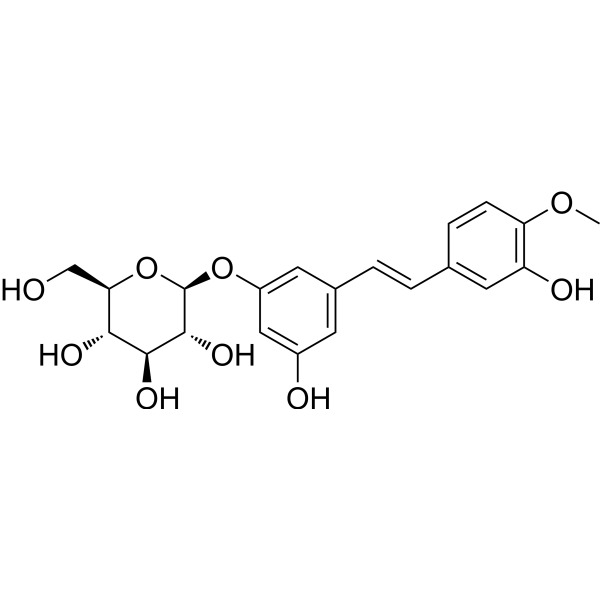
Cat. No.: HY-N0671R
CAS No.: 155-58-8
Synonyms: Rhaponiticin (Standard)
Rhapontin (Standard) is the analytical standard of Rhapontin (HY-N0671). This product is intended for research and analytical applications. Rhapontin (Rhaponiticin) is an orally aactive SIRT1 agonist and AMPK activator with anti-inflammatory and anti-fibrotic activities. Rhapontin inhibits NLRP3 inflammasome activation by activating SIRT1 and inhibits TGF-β/Smad signaling via the AMPK pathway. Rhapontin reduces intestinal and lung inflammation, inhibits fibroblast differentiation and extracellular matrix deposition, and enhances tight junction protein expression to repair epithelial barriers. Rhapontin can be used in the study of inflammatory bowel diseases (such as ulcerative colitis) and pulmonary fibrosis .
loading...
    loading...
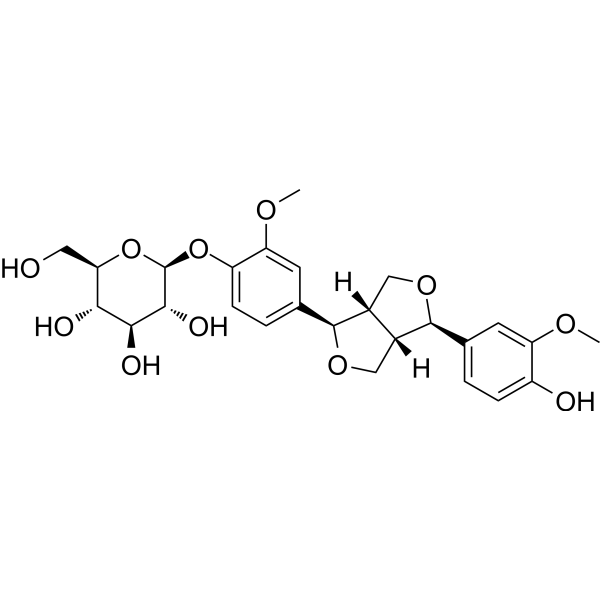
Cat. No.: HY-N0946
CAS No.: 41607-20-9
Synonyms: (-)-Pinoresinol 4-O-β-D-glucopyranoside
(-)-Pinoresinol 4-O-glucoside ((-)-Pinoresinol 4-O-β-D-glucopyranoside) is a potent and orally active α-glucosidase inhibitor with an IC50 value of 48.13 µM. (-)-Pinoresinol 4-O-glucoside increases cell migration and early differentiation of pre-osteoblasts. (-)-Pinoresinol 4-O-glucoside increases protein level of BMP2, p-Smad1/5/8, RUNX2. (-)-Pinoresinol 4-O-glucoside attenuates oxidative stress, hyperglycemia and hepatic toxicity. (-)-Pinoresinol 4-O-glucoside has the potential for the research of osteoporosis and periodontal disease .
loading...
    loading...
Cat. No.: HY-K6301

MCE Human iPSC/ESC Cortical Brain Organoid Induction Differentiation Kit is a standardized culture system specifically designed to recapitulate the developmental processes and functional features of the human cerebral cortex through forebrain ventralization-based signaling regulation. By sequentially activating the Wnt/β-catenin pathway and gradually inhibiting BMP/Smad signaling, this system efficiently drives human pluripotent stem cells (PSC) to differentiate into high-purity glutamatergic neurons (VGLUT1/2+ > 85%), while simultaneously promoting the formation of Pax6+/BLBP+ radial glial cells that establish a biomimetic ventricular-zone–like structure.

loading...
    loading...
Cat. No.: HY-187219
CX-Se13 is an orally active pulmonary fibrosis inhibitor with anti-inflammatory and antioxidant activities. CX-Se13 regulates the Keap1/Nrf2/HO-1/NQO1, YAP/TAZ-TEAD, NF-κB p65 and TGF-β/Smads signaling pathways. CX-Se13 activates the cellular antioxidant defense system, restores redox balance, alleviates inflammatory responses, reduces collagen deposition, decreases pro-inflammatory cytokine levels and inhibits pathological progression. CX-Se13 can be used in studies related to pulmonary fibrosis .
loading...
    loading...
Cat. No.: HY-18758R
CAS No.: 868612-83-3
Target:  

TGF-β Receptor

Research Areas:  

Inflammation/Immunology Cancer

IN-1130 (Standard) is the analytical standard of IN-1130. This product is intended for research and analytical applications. IN-1130 is a highly selective transforming growth factor-β type I receptor kinase (ALK5) inhibitor with an IC50 of 5.3 nM for ALK5-mediated Smad3 phosphorylation. IN-1130 inhibits ALK5 phosphorylation of casein (IC50=36 nM) and p38α mitogen-activated protein kinase (IC50=4.3 μM). IN-1130 suppresses renal fibrosis in obstructive nephropathy and blocks breast cancer lung metastasis .
loading...
    loading...
Cat. No.: HY-189141
Research Areas:  

Endocrinology

HIPK2-IN-2 is an orally active and selective HIPK2 inhibitor with an IC50 of 0.36 μM against HIPK2. HIPK2-IN-2 reduces HIPK2 protein expression levels. HIPK2-IN-2 inhibits the proliferation and migration of renal interstitial fibroblasts, alleviates renal tubular injury and collagen deposition, and suppresses TGF-β/Smad3-mediated profibrotic signaling pathways as well as TNF-α/NF-κB-mediated inflammatory signaling pathways in renal cells. HIPK2-IN-2 is used for the study of chronic kidney disease-associated renal fibrosis .
loading...
    loading...
Cat. No.: HY-N6896R
CAS No.: 40788-84-9
Isoviolanthin (Standard) is the analytical standard of Isoviolanthin (HY-N6896). This product is intended for research and analytical applications. Isoviolanthin is a flavonoid glycoside. Isoviolanthin can be extracted from Dendrobium officinale. Isoviolanthin has a strong affinity for binding to KDM6B, CHAC2, ESCO2, and IPO4. Isoviolanthin decreases MMP-2 and MMP-9. Isoviolanthin inhibits TGF-β/Smad and PI3K/Akt/mTOR signaling pathways. Isoviolanthin increases Fhl3 expression. Isoviolanthin has cytoprotective effects. Isoviolanthin has anticancer activity against hepatocellular carcinoma .
loading...
    loading...
Cat. No.: HY-100113R
CAS No.: 477775-14-7
Synonyms: AT2 receptor agonist C21 (Standard)
Buloxibutid (AT2 receptor agonist C21) (Standard) is the analytical standard of Buloxibutid (HY-100113). This product is intended for research and analytical applications. Buloxibutid is an orally active, selective angiotensin II type 2 receptor (AT2R) agonist, with a Ki value of 0.4 nM for porcine AT2R. Buloxibutid exerts effects such as vasodilation, anti-inflammation, anti-fibrosis (promoting the expression of collagenase MMP-13) and tissue repair mainly by activating the NO/cGMP pathway, inhibiting the pro-proliferative MAPK signaling, and suppressing the pro-fibrotic TGF-β/Smad pathway as well as the inflammatory NF-κB pathway. Buloxibutid can be used in research related to idiopathic pulmonary fibrosis, hypertension, and systemic sclerosis.
loading...
    loading...
Cat. No.: HY-124595
CAS No.: 1254363-89-7
MPT0B098 is a microtubule inhibitor with a Ki of 0.8 μM and an IC50 of 0.8 μM. MPT0B098 inhibits tubulin polymerization, blocks HuR nuclear-cytoplasmic translocation to decrease HIF-1α mRNA stability, suppresses HIF-1α, TGF-β/Smad, JAK2/STAT3 and FAK/actin cytoskeleton signaling pathways, upregulates SOCS3 to reinforce the inhibition of JAK2/STAT3 cascade, and induces apoptosis. MPT0B098 can be used for research on multiple malignancies including head and neck squamous cell carcinoma and human non-small cell lung cancer .
loading...
    loading...
Cat. No.: HY-132187
CAS No.: 1670-26-4
Purity:  99.50%
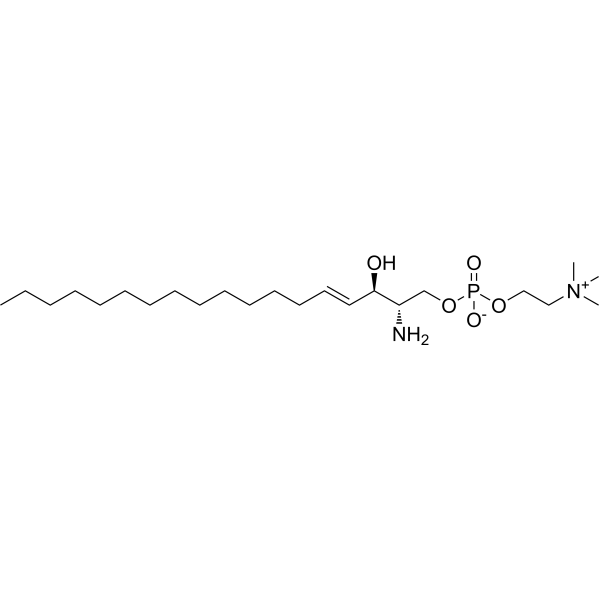
Sphingosylphosphorylcholine is a bioactive lipid and a major component of plasma high-density lipoprotein that binds to OGR1 with a Kd of 33.3 nM. Sphingosylphosphorylcholine triggers delayed phosphorylation of Smad2, upregulates α-SMA expression, and activates TRPM3. Sphingosylphosphorylcholine reduces Apoptosis and upregulates the expression of uPA and its receptor uPA-R. Sphingosylphosphorylcholine exerts anti-apoptotic, anti-cardiac hypertrophy and pro-wound healing effects. Sphingosylphosphorylcholine induces scratching behavior in mice. Sphingosylphosphorylcholine is used in studies related to atopic dermatitis, promyelocytic leukemia, heart failure, myocardial ischemia/reperfusion injury, ovarian cancer, breast cancer, pancreatic cancer, and skin wound healing disorders in genetically impaired healing diabetes .
loading...
    loading...
Cat. No.: HY-181430
CAS No.: 798546-78-8
Target:  

TGF-beta/Smad

PXS 25 is a cation-independent mannose 6-phosphate receptor (CI-M6PR) inhibitor that inhibits CI-M6PR-mediated activation of latent TGF-β1. PXS 25 inhibits conversion of high glucose-induced latent TGF-β1 to active TGF-β1 in proximal tubule cells under normoxic conditions. PXS 25 suppresses high glucose-induced fibronectin, collagen IV production, and phosphorylated Smad 2 in proximal tubule cells under normoxic conditions. PXS 25 has antifibrotic properties in skin fibroblasts. PXS 25 can be used for the research of diabetic nephropathy .
loading...
    loading...

