
314 Results for "

branches

" in MedChemExpress (MCE) Product Catalog:
Products (314)

314 Results for "branches" in MCE Product Catalog:

Cat. No.: HY-W1005647
CAS No.: 2095501-92-9
Research Areas:  

Others

(rac)-Isoleucine is the racemic form of Isoleucine. Isoleucine is a mixture of the diastereomers L-isoleucine, L-alloisoleucine, D-isoleucine, and D-alloisoleucine. L-isoleucine is a branched-chain amino acid that acts as a nitrogen donor, and has roles in glucose consumption, fatty acid metabolism, as well as immune function. L-Alloisoleucine is generated by transamination of L-isoleucine. D-Isoleucine and D-alloisoleucine are enantiomers of L-isoleucine and L-alloisoleucine, respectively .
loading...
    loading...
Cat. No.: HY-171984
CAS No.: 2863553-06-2
Target:  

Liposome

514O6,10 is an ionizable lipidoid containing a branched-tail. 514O6,10 can be used to synthesize lipid nanoparticles (LNPs) for delivering mRNA to natural killer and dendritic cells within the lung. 514O6,10 can be used for the RNA therapies for lung diseases associated with immune cell dysregulation, including cancer, viral infections, and autoimmune disorders research .
loading...
    loading...
Cat. No.: HY-E70029
Target:  

Glycosidase

Research Areas:  

Others

alpha-1,6-Fucosidase (LpAlfC(E274A)) (EC 3.2.1.51) cleaves branched non-reducing terminal fucose, linked α(1-6) to the core N-acetylglucosamine of N-linked oligosaccharides. alpha-1,6-Fucosidase (LpAlfC(E274A)) is useful for determining core fucosylation .
loading...
    loading...
Cat. No.: HY-E71320
Research Areas:  

Others

Terminal N-acetyl-β-D-glucosaminyl residues in polysaccharides, glycoproteins and glycopeptides can act as acceptor. High activity is shown towards such residues in branched-chain polysaccharides when these are linked by β-1,6-links to galactose residues; lower activity towards residues linked to galactose by β-1,3-links. A component of EC 2.4.1.22 (lactose synthase) .
loading...
    loading...
Cat. No.: HY-W015664
CAS No.: 1188-02-9
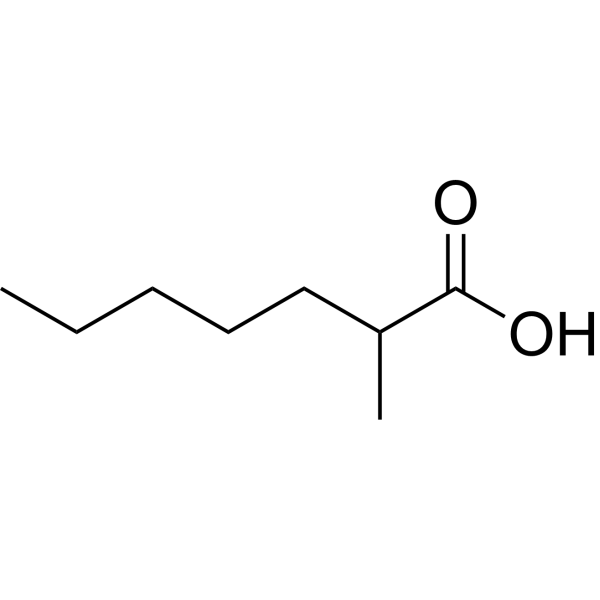
2-Methylheptanoic acid is a naturally occurring branched-chain medium-chain fatty acid with fumigant activity against Aspergillus flavus. 2-Methylheptanoic acid inhibits the growth of Aspergillus flavus and kills its spores via two modes of action, namely fumigation and direct contact, with its fumigant activity being stronger than its direct contact activity. 2-Methylheptanoic acid can be used in studies related to Aspergillus flavus infection .
loading...
    loading...
Cat. No.: HY-140680
Research Areas:  

Cancer

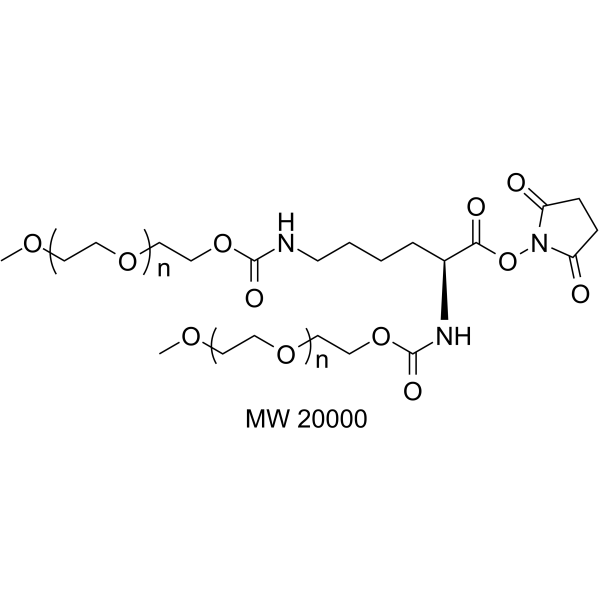
m-PEG20000-Lys-NHS ester is a pegylation reagent that targets the primary amino groups of branched polyethyleneimine on gold nanoparticles. m-PEG1000-NHS ester covalently links its PEG moiety to target amino groups via amine-mediated coupling chemistry. m-PEG1000-NHS ester helps improve the biocompatibility of modified gold nanoparticles used as CT contrast agents and prolongs their blood circulation time.
loading...
    loading...
Cat. No.: HY-140681
Research Areas:  

Cancer

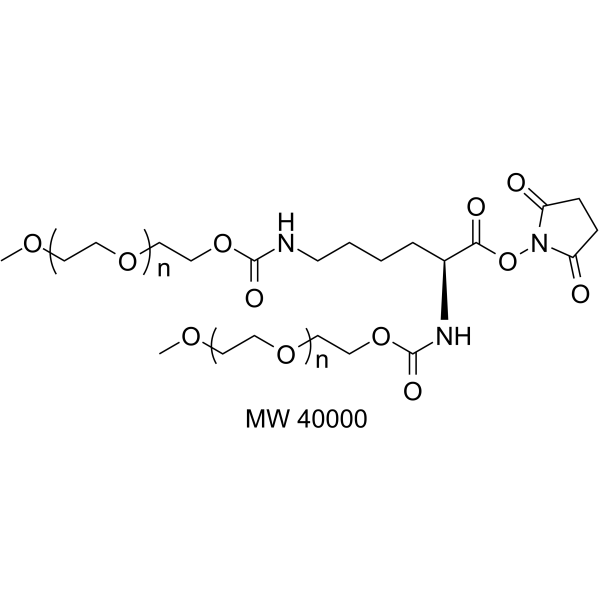
m-PEG40000-Lys-NHS ester is a pegylation reagent that targets the primary amino groups of branched polyethyleneimine on gold nanoparticles. m-PEG1000-NHS ester covalently links its PEG moiety to target amino groups via amine-mediated coupling chemistry. m-PEG1000-NHS ester helps improve the biocompatibility of modified gold nanoparticles used as CT contrast agents and prolongs their blood circulation time.
loading...
    loading...
Cat. No.: HY-B1876
CAS No.: 111991-09-4
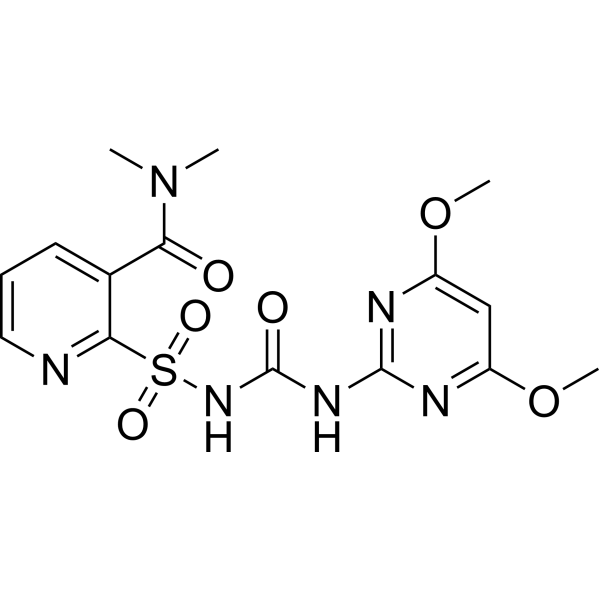
Nicosulfuron is efficient, harmless, antifungal and selective herbicide belonging to the sulfonylurea family. Nicosulfuron is also a photosynthetic system inhibitor and inhibits acetolactate synthase (ALS) enzyme activity. Nicosulfuron degradation by Plectosphaerella cucumerina AR1 is glucose concentration dependent in planktonic lifestyle. Nicosulfuron enhances the glycolysis pathway and tricarboxylic acid cycle to improve the adaptability of sweet maize. Nicosulfuron reduces the synthesis of branched-chain amino acids (BCAAs), which is proming for maize cultivation .
loading...
    loading...
Cat. No.: HY-P2988A
CAS No.: 9001-67-6
Target:  

Glycosidase

Research Areas:  

Metabolic Disease

α2-3,6 Neuraminidase, Bifidobacterium infantis is a highly specific exoglycosidase that catalyzes the hydrolysis of non-reducing terminal α2-3 and α2-6 unbranched sialic acid residues from complex carbohydrates and glycoproteins. α2-3,6 Neuraminidase does not exhibit activity on α2-8 or branched sialic acids .
loading...
    loading...
Cat. No.: HY-W800708
CAS No.: 2644769-96-8
Research Areas:  

Others

N-(TCO)-N-bis(PEG4-acid) is a branched click chemistry reagent with a terminal TCO group and two terminal carboxylic acids. This reagent can react with tetrazine-containing molecule to form a stable covalent bond . The inverse-electron demand Diels-Alder cycloaddition reaction of TCO with tetrazines is the fastest bioorthogonal reaction with exceptional selectivity. The terminal carboxylic acids can react with primary amino groups in the presence of activators (e.g. EDC, HATU ).
loading...
    loading...
Cat. No.: HY-140699
CAS No.: 92451-01-9
Purity:  ≥98.0%
Synonyms: mPEG10000-SC; mPEG10000-Succinimidyl ester
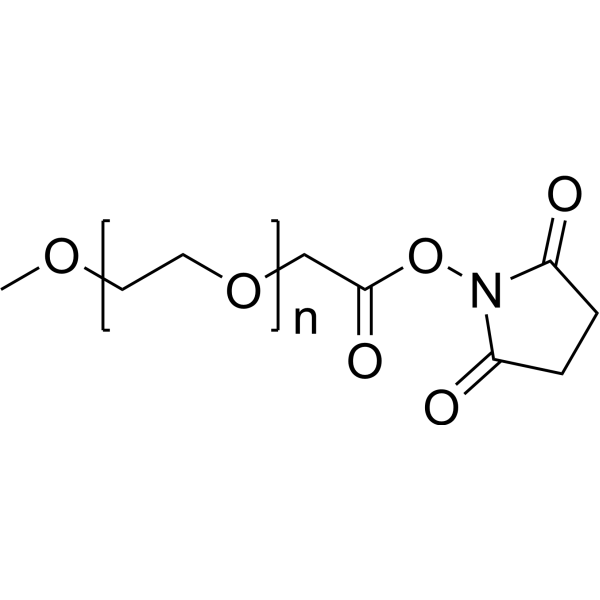
m-PEG10000-NHS ester (mPEG10000-SC) is a pegylation reagent that targets the primary amino groups of branched polyethyleneimine on gold nanoparticles. m-PEG1000-NHS ester covalently links its PEG moiety to target amino groups via amine-mediated coupling chemistry. m-PEG1000-NHS ester helps improve the biocompatibility of modified gold nanoparticles used as CT contrast agents and prolongs their blood circulation time.
loading...
    loading...
Cat. No.: HY-140700
CAS No.: 92451-01-9
Purity:  ≥98.0%
Synonyms: mPEG20000-SC; mPEG20000-Succinimidyl ester
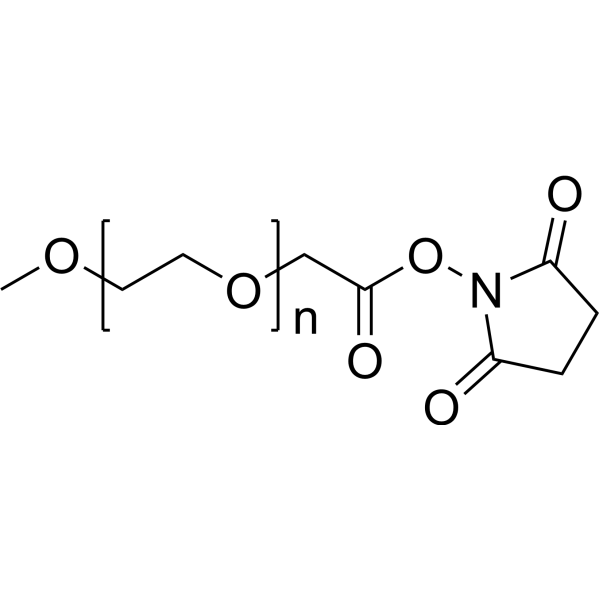
m-PEG20000-NHS ester (mPEG20000-SC) is a pegylation reagent that targets the primary amino groups of branched polyethyleneimine on gold nanoparticles. m-PEG1000-NHS ester covalently links its PEG moiety to target amino groups via amine-mediated coupling chemistry. m-PEG1000-NHS ester helps improve the biocompatibility of modified gold nanoparticles used as CT contrast agents and prolongs their blood circulation time.
loading...
    loading...
Cat. No.: HY-184625
Polyethyleneimine (PEI)-modified magnetic iron(III) oxide (Fe3O4) nanoparticles are a composite nanomaterial that combines the properties of magnetic nanoparticles and polyethyleneimine. Polyethyleneimine is a highly branched polymer with a high density of amino groups. These amino groups stabilize the Fe3O4 nanoparticles and provide sites for further functionalization. The amino groups of PEI impart a high surface positive charge to the Fe3O4 nanoparticles, which helps enhance their interaction with negatively charged cell membranes.
loading...
    loading...
Cat. No.: HY-B0869AR
CAS No.: 125401-92-5
Bispyribac (sodium) (Standard) is the analytical standard of Bispyribac sodium (HY-B0869A). This product is intended for research and analytical applications. Bispyribac sodium is a selective, orally active, systemic and post-emergence herbicide. Bispyribac sodium reduces SOD levels and inhibits ALS activity. Bispyribac sodium blocks the biosynthesis of branched-chain amino acids, resulting in growth retardation, chlorosis and necrosis of weeds. Bispyribac sodium exerts herbicidal activity against grass, sedge and broadleaf weeds in rice fields. Bispyribac sodium is hepatotoxic and genotoxic .
loading...
    loading...
Cat. No.: HY-E71158
Research Areas:  

Others

1,4-Dihydroxy-2-naphthoyl-CoA synthase (EC 4.1.3.36) is involved in the synthesis of 1,4-Dihydroxy-2-naphthoate, a branch point metabolite leading to the biosynthesis of menaquinone (vitamin K2, in bacteria) , phylloquinone (vitamin K1 in plants) , and many plant pigments.The coenzyme A group is subsequently removed from the product by EC 3.1.2.28, 1,4-Dihydroxy-2-naphthoyl-CoA hydrolase.
loading...
    loading...
Cat. No.: HY-N15007
CAS No.: 86343-22-8
Target:  

Drug Derivative

Research Areas:  

Others

6-Ethoxyethyl-5-hydroxy-2,7-dime-thoxy-1,4-naphtoquinone is a naphthoquinone compound that causes branch wilt in larch and inhibits seed germination and growth in lettuce. 6-Ethoxyethyl-5-hydroxy-2,7-dime-thoxy-1,4-naphtoquinone completely inhibits hypocotyl and root growth at 100 ppm and more than 95% at 50 ppm .
loading...
    loading...
Cat. No.: HY-N17713
CAS No.: 1360168-37-1
Synonyms: NDPIH
N-De-phenylethyl isohericerin (NDPIH) is a neurotrophic agent and ERK1/2 activator. N-De-phenylethyl isohericerin activates ERK1/2 signaling in a TrkB-independent manner, and its effects are partially mediated through BDNF/TrkB signaling. N-De-phenylethyl isohericerin promotes axon growth, neurite branching, and growth cone enlargement in central neurons, and enhances memory. N-De-phenylethyl isohericerin can be used for research on neurological diseases .
loading...
    loading...
Cat. No.: HY-W017448R
CAS No.: 24307-26-4
Synonyms: N,N-Dimethylpiperidinium chloride (Standard); PIX (Standard)
Mepiquat chloride (Standard) (N,N-Dimethylpiperidinium chloride (Standard)) is the analytical standard of Mepiquat chloride (HY-W017448). This product is intended for research and analytical applications. Mepiquat chloride (N,N-Dimethylpiperidinium chloride) is a systemic plant growth regulator. Mepiquat chloride reduces the activity of RuBP carboxylase. Mepiquat chloride decreases plant height, total length of vegetative and fruiting branches, and total leaf area of cotton. Mepiquat chloride reduces the net photosynthetic rate of cotton leaves. Mepiquat chloride promotes starch accumulation in cotton leaves without altering sucrose content .
loading...
    loading...
Cat. No.: HY-W040279
CAS No.: 94125-34-5
Research Areas:  

Others

Prosulfuron is a fluorinated sulfonylurea herbicide with a reported acute oral LD50 of 546 mg/kg in female rats. Prosulfuron acts by inhibiting acetolactate synthase (ALS) to block the biosynthesis of branched-chain amino acids (valine, leucine and isoleucine) in plants, thereby suppressing weed growth. Prosulfuron may disrupt the soil microbial community balance in alkaline soils with minimal chemical degradation. Prosulfuron has low toxicity to humans and mammals, and can be used for the research of broadleaf weed control in maize and sweet corn .
loading...
    loading...
Cat. No.: HY-W758396
Synonyms: N,N-Dimethylpiperidinium-d16 chloride; PIX-d16
Mepiquat-d16 chloride (N,N-Dimethylpiperidinium-d16 chloride) is the deuterated-labeled Mepiquat chloride (HY-W017448). Mepiquat chloride (N,N-Dimethylpiperidinium chloride) is a systemic plant growth regulator. Mepiquat chloride reduces the activity of RuBP carboxylase. Mepiquat chloride decreases plant height, total length of vegetative and fruiting branches, and total leaf area of cotton. Mepiquat chloride reduces the net photosynthetic rate of cotton leaves. Mepiquat chloride promotes starch accumulation in cotton leaves without altering sucrose content .
loading...
    loading...

