
314 Results for "

branches

" in MedChemExpress (MCE) Product Catalog:
Products (314)

314 Results for "branches" in MCE Product Catalog:

Cat. No.: HY-120883
CAS No.: 150346-23-9
Rhizopodin is a new cytostatic compound isolated from the culture fluid of the slime mold Myxococcus stipitatus. Rhizopodin inhibits the growth of various animal cell cultures without killing the cells, with an ID50 value of 12 to 30 ng/ml, depending on the cell line. In particular, fibroblast-like cells show typical morphological changes, with cells becoming larger and forming long branched reticular extensions within hours, and these morphological changes are irreversible. Rhizopodin inhibits bleb formation in K-562 cells, possibly through interaction with protein phosphorylation.
loading...
    loading...
Cat. No.: HY-140698
CAS No.: 92451-01-9
Purity:  ≥95.0%
Synonyms: mPEG5000-SC; mPEG5000-Succinimidyl ester
Research Areas:  

Cancer

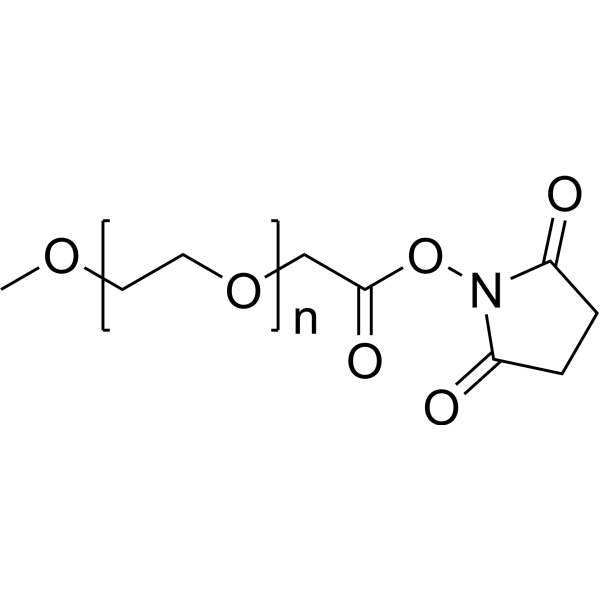
m-PEG5000-NHS ester (mPEG5000-SC; mPEG5000-Succinimidyl ester) is a pegylation reagent that targets the primary amino groups of branched polyethyleneimine on gold nanoparticles. m-PEG1000-NHS ester covalently links its PEG moiety to target amino groups via amine-mediated coupling chemistry. m-PEG1000-NHS ester helps improve the biocompatibility of modified gold nanoparticles used as CT contrast agents and prolongs their blood circulation time.
loading...
    loading...
Cat. No.: HY-147206A
Target:  

Fluorescent Dye

Research Areas:  

Others

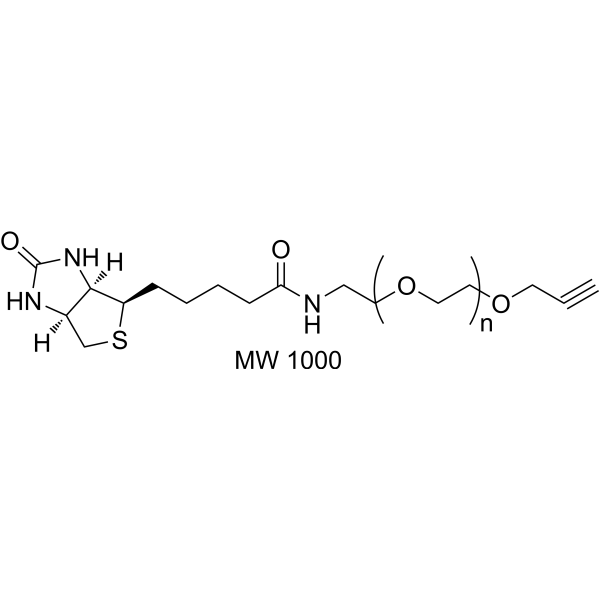
Biotin-PEG1000-Alk is a biotin labeled PEG derivative. Biotin is an enzyme co-factor, can be used for labeling protein; PEG is a hydrophilic and water-soluble polymer with low toxicity; Alk (Alkyne), acyclic (branched or unbranched) aliphatic hydrocarbon, can react with azido, which improve the efficiency of biotin binding targets. Biotin-PEG1000-Alk is a click chemistry reagent, it contains an Alkyne group and can undergo copper-catalyzed azide-alkyne cycloaddition (CuAAc) with molecules containing Azide groups.
loading...
    loading...
Cat. No.: HY-147206B
Target:  

Fluorescent Dye

Research Areas:  

Others

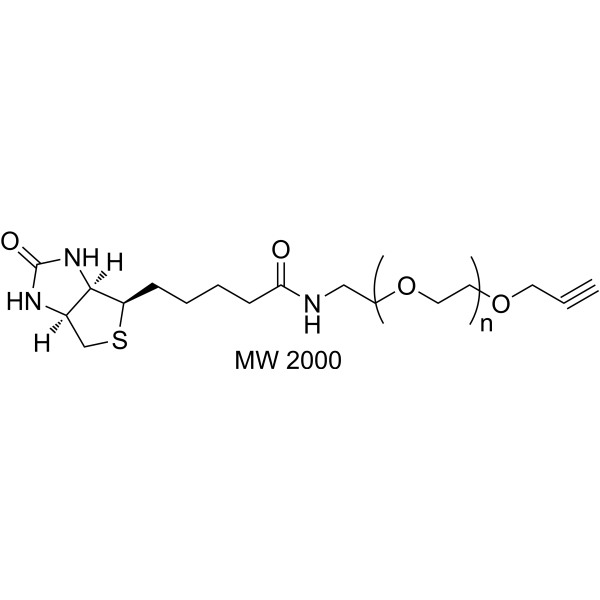
Biotin-PEG2000-Alk is a biotin labeled PEG derivative. Biotin is an enzyme co-factor, can be used for labeling protein; PEG is a hydrophilic and water-soluble polymer with low toxicity; Alk (Alkyne), acyclic (branched or unbranched) aliphatic hydrocarbon, can react with azido, which improve the efficiency of biotin binding targets. Biotin-PEG2000-Alk is a click chemistry reagent, it contains an Alkyne group and can undergo copper-catalyzed azide-alkyne cycloaddition (CuAAc) with molecules containing Azide groups.
loading...
    loading...
Cat. No.: HY-147206C
Target:  

Fluorescent Dye

Research Areas:  

Others

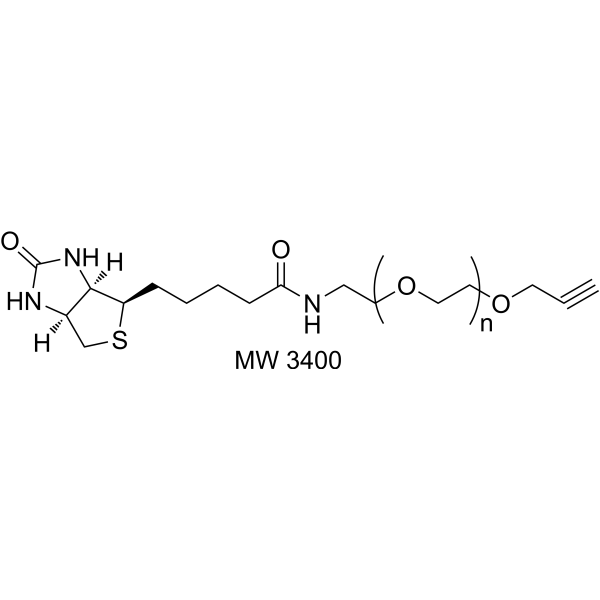
Biotin-PEG3400-Alk is a biotin labeled PEG derivative. Biotin is an enzyme co-factor, can be used for labeling protein; PEG is a hydrophilic and water-soluble polymer with low toxicity; Alk (Alkyne), acyclic (branched or unbranched) aliphatic hydrocarbon, can react with azido, which improve the efficiency of biotin binding targets. Biotin-PEG3400-Alk is a click chemistry reagent, it contains an Alkyne group and can undergo copper-catalyzed azide-alkyne cycloaddition (CuAAc) with molecules containing Azide groups.
loading...
    loading...
Cat. No.: HY-147206E
Target:  

Fluorescent Dye

Research Areas:  

Others

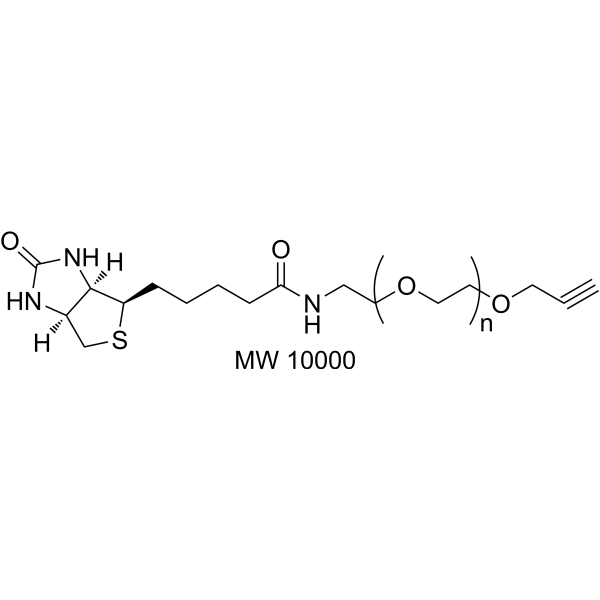
Biotin-PEG10000-Alk is a biotin labeled PEG derivative. Biotin is an enzyme co-factor, can be used for labeling protein; PEG is a hydrophilic and water-soluble polymer with low toxicity; Alk (Alkyne), acyclic (branched or unbranched) aliphatic hydrocarbon, can react with azido, which improve the efficiency of biotin binding targets. Biotin-PEG10000-Alk is a click chemistry reagent, it contains an Alkyne group and can undergo copper-catalyzed azide-alkyne cycloaddition (CuAAc) with molecules containing Azide groups.
loading...
    loading...
Cat. No.: HY-147206F
Target:  

Fluorescent Dye

Research Areas:  

Others

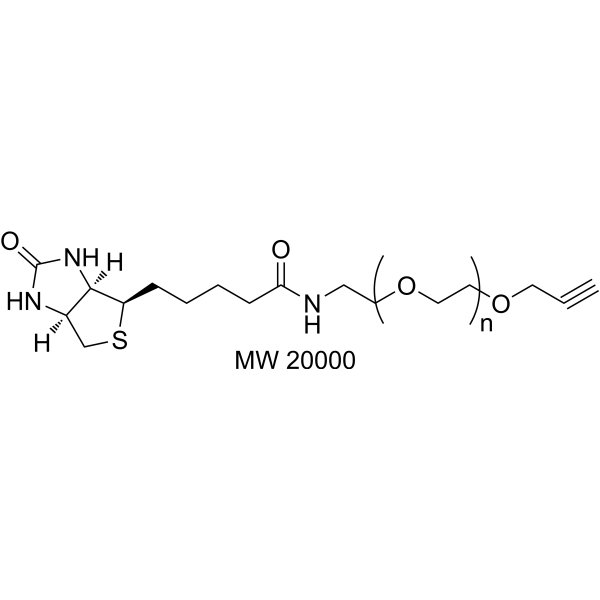
Biotin-PEG20000-Alk is a biotin labeled PEG derivative. Biotin is an enzyme co-factor, can be used for labeling protein; PEG is a hydrophilic and water-soluble polymer with low toxicity; Alk (Alkyne), acyclic (branched or unbranched) aliphatic hydrocarbon, can react with azido, which improve the efficiency of biotin binding targets. Biotin-PEG20000-Alk is a click chemistry reagent, it contains an Alkyne group and can undergo copper-catalyzed azide-alkyne cycloaddition (CuAAc) with molecules containing Azide groups.
loading...
    loading...
Cat. No.: HY-NP008
CAS No.: 9045-23-2
β-Lactoglobulin, a major whey protein, is a small globular protein from the lipocalin family. β-Lactoglobulin is an important source of the essential and branched-chain amino acids (leucine, isoleucine, and valine). β-Lactoglobulin shows antioxidant properties, because it contains two disulfide bonds and one free thiol group. β-Lactoglobulin is a ligand transport agent. β-Lactoglobulin is one of the major allergens in milk and can be utilized in the research for developing safe hypoallergenic dairy products .
loading...
    loading...
Cat. No.: HY-108839
CAS No.: 198153-51-4
Synonyms: Ro 25-8310/000
Target:  

IFNAR

Research Areas:  

Infection

Peginterferon alfa-2a (Ro 25-8310/000) is a 40 kDa branched pegylated IFN alfa-2a with antiviral and immunomodulatory activities. Peginterferon alfa-2a binds to the Interferon Receptor on the surface of target cells, induces the formation of ISGF3, and promotes the expression of effector proteins such as interferon-stimulated genes (ISGs) and Mx proteins, thereby exerting sustained antiviral effects. Peginterferon alfa-2a is applicable to research on virus infections associated with chronic hepatitis C and chronic hepatitis B .
loading...
    loading...
Cat. No.: HY-113037CS
Synonyms: Farnesyl diphosphate-d2 triammonium
Farnesyl pyrophosphate-d2 (Farnesyl diphosphate-d2) triammonium is a deuterium labeled Farnesyl pyrophosphate triammonium (HY-113037C). Farnesyl pyrophosphate ammonium is a metabolic intermediate in the mevalonate (MVA) pathway. It is a TRP channel (TRPM2) agonist that triggers Ca2+ influx and cell death. Farnesyl pyrophosphate ammonium is a key branch substrate for cholesterol synthesis, ubiquinone synthesis, protein farnesylation, and geranylgeranyl pyrophosphate (GGPP) synthesis. Farnesyl pyrophosphate ammonium is used in research on cerebral ischemia, neurodegenerative diseases, pancreatic cancer, inflammation, and autoimmune diseases.
loading...
    loading...
Cat. No.: HY-174443
PROTAC sEH degrader-2 is a soluble epoxide hydrolase (sEH) PROTAC degrader, with pIC50 values of 8.37 and 7.12 against hsEH-H and msEH-H, respectively. PROTAC sEH degrader-2 induces targeted degradation of sEH via the ubiquitin-proteasome system, thereby completely blocking its dual functions as an epoxide hydrolase and a lipid phosphatase by bridging the short-branch exit of sEH with the CRBN E3 ubiquitin ligase. PROTAC sEH degrader-2 can be used in the research of neuroinflammation and Alzheimer's disease .
loading...
    loading...
Cat. No.: HY-B1860
CAS No.: 104098-48-8
Research Areas:  

Others

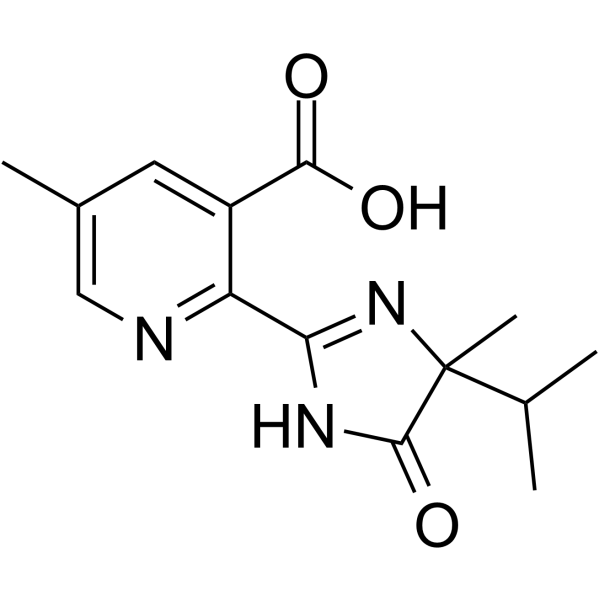
Imazapic is an imidazolinone herbicide. Imazapic is an inhibitor of acetolactate synthase, which inhibits branched-chain amino acid biosynthesis, thereby hindering protein synthesis and cell growth and exerting herbicidal activity. Imazapic exerts a lethal effect only on Phelipanche aegyptiaca that has already parasitically attached to tomato roots, and has no inhibitory effect on unattached broomrape seeds and seedlings. Imazapic can control weedy annual grasses, non-grass herbaceous plants, and downy brome, but can damage perennial forage grass species. Imazapic can be used in herbicide-related research .
loading...
    loading...
Cat. No.: HY-N21879
CAS No.: 88192-99-8
Myxopyronin B is an α-pyrone natural product derived from Myxococcus fulvus and acts as an inhibitor of the switch region of bacterial RNA polymerase (RNAP) (IC50 = 24 μM). Myxopyronin B binds to the switch region of RNA polymerase, locking the polymerase clamp into a closed conformation and thereby inhibiting transcription initiation. Myxopyronin B exhibits antibacterial activity against Staphylococcus aureus and Clostridioides difficile, inhibits the early synthesis of toxins A and B, and reduces the abundance of proteins in the branched-chain amino acid fermentation pathway. Myxopyronin B is useful for research related to bacterial infections .
loading...
    loading...
Cat. No.: HY-W587796
CAS No.: 2641-81-8
Synonyms: 6-PGδL; 6-Phosphonoglucono-D-lactone
6-Phosphoglucono-δ-lactone (6-PGδL), a reversal substrate of glucose-6-phosphate dehydrogenase (G6PD), is an intermediate compound in the oxidative branch of the pentose phosphate pathway (PPP). 6-Phosphoglucono-δ-lactone produced from D-glucose-6-phosphate by glucose-6-phosphate dehydrogenase (G6PDH) and is converted to 6-phosphoglutonate by lactonase. 6-Phosphoglucono-δ-lactone can be used for heart failure, type 2 diabetes and cancers research .
loading...
    loading...
Cat. No.: HY-181739
Target:  

CD1

Research Areas:  

Cancer

GCB-27a is a CD1d-binding immunostimulant and antitumor agent. GCB-27a binds to CD1d to form a stable complex and presents it to NKT cells, enhancing hydrophobic interactions within the A' pocket of CD1d through branched-chain conformation restriction. GCB-27a induces a Th1-biased immune response, drives IFN?γ production and limits IL-4 levels. GCB-27a is applicable to research related to melanoma lung metastasis .
loading...
    loading...
Cat. No.: HY-W015664R
CAS No.: 1188-02-9
2-Methylheptanoic acid (Standard) is the analytical standard of 2-Methylheptanoic acid (HY-W015664). This product is intended for research and analytical applications. 2-Methylheptanoic acid is a naturally occurring branched-chain medium-chain fatty acid with fumigant activity against Aspergillus flavus. 2-Methylheptanoic acid inhibits the growth of Aspergillus flavus and kills its spores via two modes of action, namely fumigation and direct contact, with its fumigant activity being stronger than its direct contact activity. 2-Methylheptanoic acid can be used in studies related to Aspergillus flavus infection .
loading...
    loading...
Cat. No.: HY-113165AR
CAS No.: 6920-31-6
Isobutyryl-L-carnitine chloride (Standard) is the analytical standard of Isobutyryl-L-carnitine chloride (HY-113165A). This product is intended for research and analytical applications. Isobutyryl-L-carnitine chloride is a biomarker. Isobutyryl-L-carnitine chloride is a product of acyl-CoA dehydrogenases involved in fatty acid β-oxidation, and it buffers the mitochondrial acyl-CoA/CoA ratio, oxidizes branched-chain amino acids, and supports the endogenous antioxidant defense system. Isobutyryl-L-carnitine chloride is a plasma biomarker of hepatic OCT1 transporter inhibition. Isobutyryl-L-carnitine chloride is a urinary biomarker of renal cell carcinoma, and its levels are elevated one year after nephrectomy compared with before nephrectomy. Isobutyryl-L-carnitine chloride can be used in research on renal cell carcinoma .
loading...
    loading...
Cat. No.: HY-113165AS
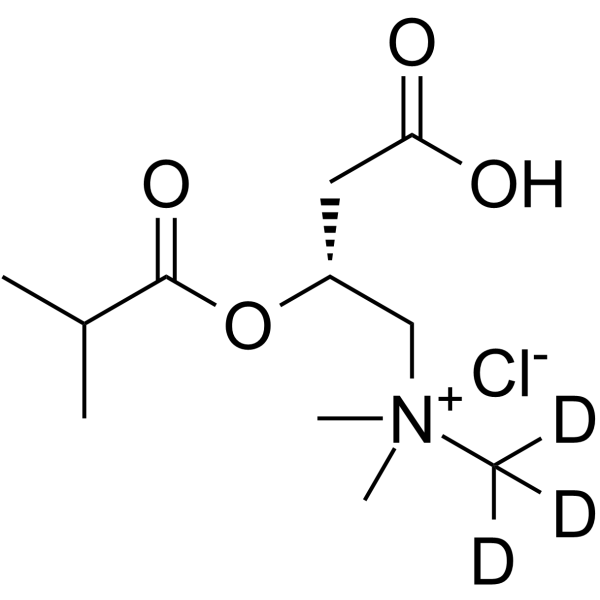
Isobutyryl-L-carnitine-d3 chloride is the d3-labeled Isobutyryl-L-carnitine chloride (HY-113165A). Isobutyryl-L-carnitine chloride is a biomarker. Isobutyryl-L-carnitine chloride is a product of acyl-CoA dehydrogenases involved in fatty acid β-oxidation, and it buffers the mitochondrial acyl-CoA/CoA ratio, oxidizes branched-chain amino acids, and supports the endogenous antioxidant defense system. Isobutyryl-L-carnitine chloride is a plasma biomarker of hepatic OCT1 transporter inhibition. Isobutyryl-L-carnitine chloride is a urinary biomarker of renal cell carcinoma, and its levels are elevated one year after nephrectomy compared with before nephrectomy. Isobutyryl-L-carnitine chloride can be used in research on renal cell carcinoma .
loading...
    loading...
Cat. No.: HY-16347
CAS No.: 290296-54-7
Synonyms: CID 6451149 hydrochloride
Target:  

Neurokinin Receptor

Research Areas:  

Neurological Disease Endocrinology

Netupitant hydrochloride (CID 6451149 hydrochloride) is a blood-brain barrier penetrable, orally active NK1 receptor inhibitor with a Ki of 0.95 nM (CHO cells) against the human receptor. Netupitant hydrochloride antagonizes the effects induced by Substance P, inhibits the maximal response of Substance P with a long-lasting action, and suppresses NK1 agonist-induced behaviors in mice and gerbils. Netupitant hydrochloride reduces the frequency of bladder contractions, prolongs contraction intervals, decreases basal pressure at high doses, and acts on the afferent branch of the micturition reflex. Netupitant hydrochloride can be used in research related to overactive bladder, chemotherapy-induced nausea and vomiting, post-operative nausea and vomiting, anxiety disorders, and depression .
loading...
    loading...
Cat. No.: HY-N6664
CAS No.: 9000-01-5
Synonyms: Arabic gum
Gum Arabic is an orally active complex branched polysaccharide. Gum Arabic can be isolated from the Acacia senegal tree. Gum Arabic upregulates the expression of maturation markers (CD86, CD40, and CD54), promotes ERK1/2 phosphorylation, and inhibits Apoptosis. Gum Arabic exhibits antimalarial effects against Plasmodium berghei ANKA. Gum Arabic exhibits hepatoprotective, renal, and cardiovascular protective activities. Gum Arabic improves obesity. Gum Arabic is commonly used as a stabilizer and thickener. Gum Arabic can be used in the research of brain tumor imaging .
loading...
    loading...

