
232 Results for "

Minimal

" in MedChemExpress (MCE) Product Catalog:
Products (232)

232 Results for "Minimal" in MCE Product Catalog:

2
2 Cited Publications
Cat. No.: HY-136390
CAS No.: 1386162-69-1
Purity:  99.50%
Target:  

Dopamine Receptor

Research Areas:  

Neurological Disease

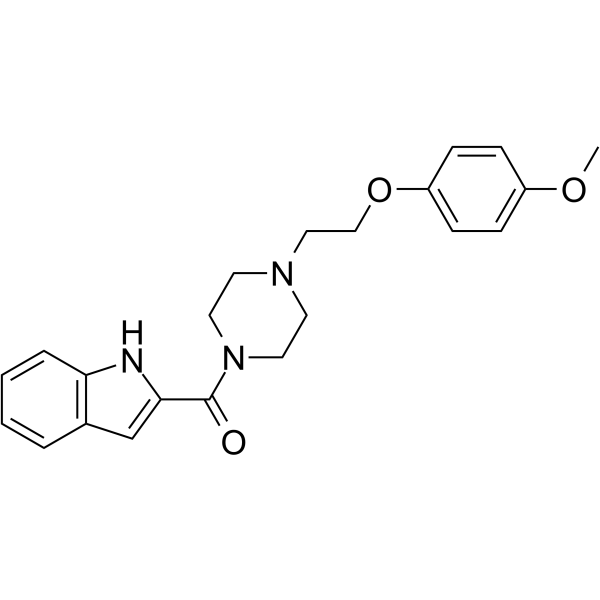
ML417 is a selective and brain penetrant D3 dopamine receptor (D3R) agonist, with an EC50 of 38 nM. ML417 potently promotes D3R-mediated β-arrestin translocation, G protein mediated signaling, and pERK phosphorylation with minimal effects on other GPCR-mediated signaling. ML417 exhibits neuroprotection against toxin-induced neurodegeneration of dopaminergic neurons .
loading...
    loading...
2
2 Cited Publications
Cat. No.: HY-107625A
CAS No.: 1781934-47-1
Purity:  99.90%
Target:  

MCHR1 (GPR24)

Research Areas:  

Neurological Disease

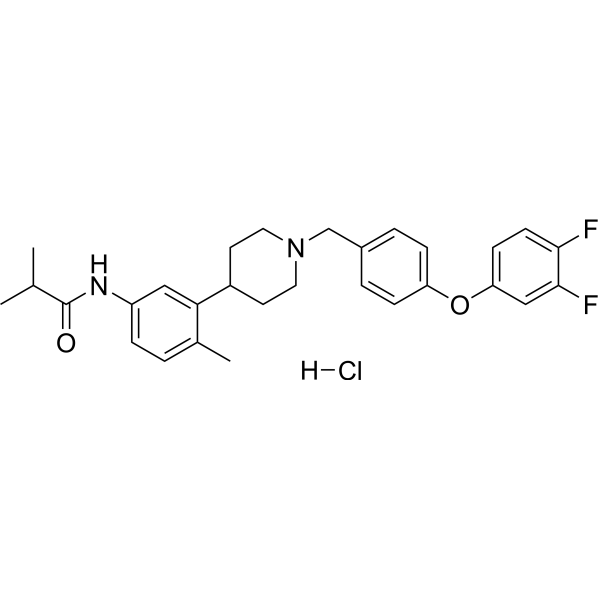
SNAP 94847 hydrochloride is a novel, high affinity selective melanin-concentrating hormonereceptor1 (MCHR1) antagonist with (Ki= 2.2 nM, Kd=530 pM), it displays >80-fold and >500-fold selectivity over MCHα1A and MCHD2 receptors respectively. SNAP 94847 hydrochloride binds with high affinity to the mouse and rat MCHR1 with minimal cross-reactivity to other GPCR, ion channels, enzymes, and transporters .
loading...
    loading...
2
2 Cited Publications
Cat. No.: HY-13769A
CAS No.: 2076-91-7
Purity:  ≥98.0%
Synonyms: NSC55712; TPU-260 Dihydrochloride
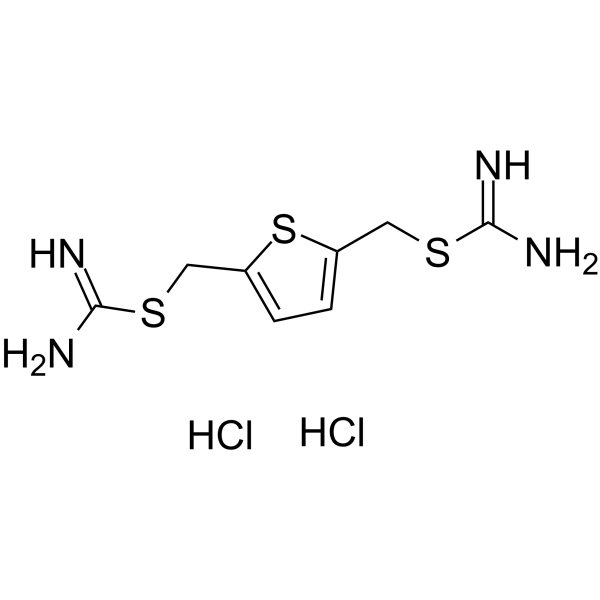
TPT-260 Dihydrochloride (NSC55712), a thiophene thiourea derivative, is a retromer complex stabilizer against thermal denaturation (Kd = ~5 µM). TPT-260 Dihydrochloride increases the levels of retromer proteins, shifts amyloid-precursor protein (APP) away from the endosome, and decreases the pathogenic processing of APP. TPT-260 Dihydrochloride inhibits TLR4 upregulation, IKKβ phosphorylation, NF-κB p65 nuclear translocation, and NLRP3 inflammasome formation. TPT-260 Dihydrochloride improves retromer-mediated cargo trafficking, reduces brain infarct area, and decreases amyloid plaque deposition. TPT-260 Dihydrochloride exhibits minimal cytotoxicity to primary microglia at tested concentrations. TPT-260 Dihydrochloride can be used for the research of inflammatory bowel disease, ischemic stroke and Alzheimer's disease .
loading...
    loading...
1
1 Cited Publications
Cat. No.: HY-153306
CAS No.: 2733573-94-7
Purity:  99.20%
Synonyms: RLY-2608
Target:  

PI3K

Research Areas:  

Cancer

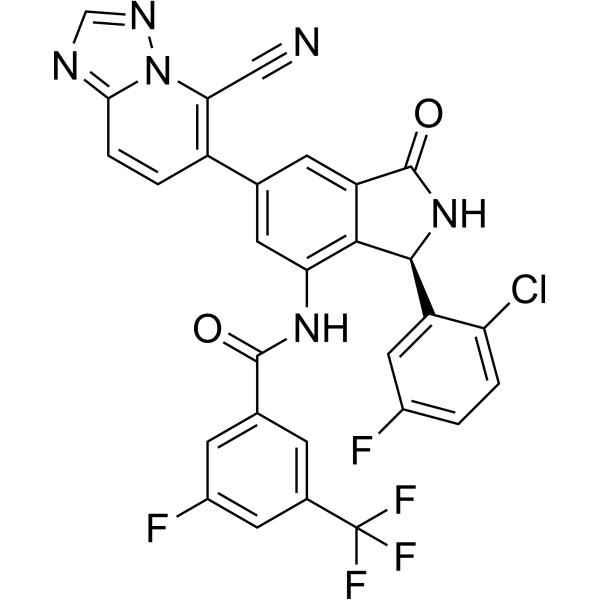
Zovegalisib (RLY-2608) is an orally active first-in-class allosteric mutant-selective inhibitor of PI3Ka with anti-tumor activity. Zovegalisib inhibits tumor growth in PIK3CA-mutant xenograft mice models with minimal impact on insulin .
loading...
    loading...
1
1 Cited Publications
Cat. No.: HY-150505
CAS No.: 2410534-62-0
Purity:  99.03%
Research Areas:  

Cancer

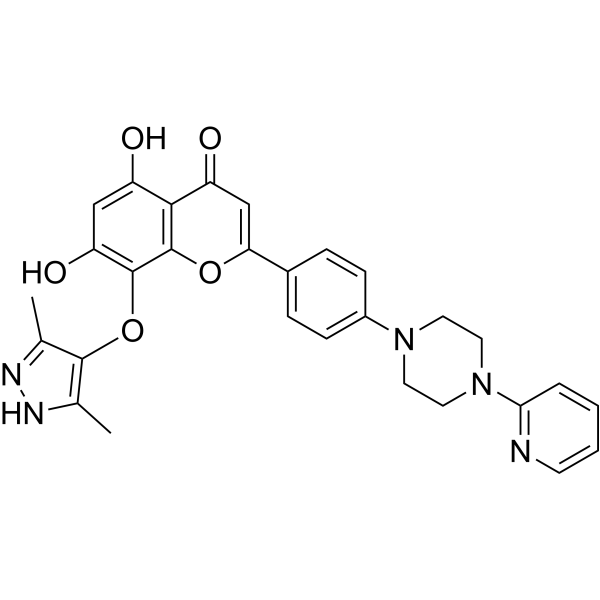
DC-U4106 is a USP8 targeting inhibitor with the Kdvalue of 4.7 μM and the IC50 value of 1.2 μM. DC-U4106 can target the ubiquitin pathway and facilitate the degradation of Erα. DC-U4106 inhibits tumor growth with minimal toxicity and has the potential for the research of breast cancer .
loading...
    loading...
1
1 Cited Publications
Cat. No.: HY-13649
CAS No.: 204205-90-3
Purity:  99.89%
Synonyms: ZIO 301; D 24851
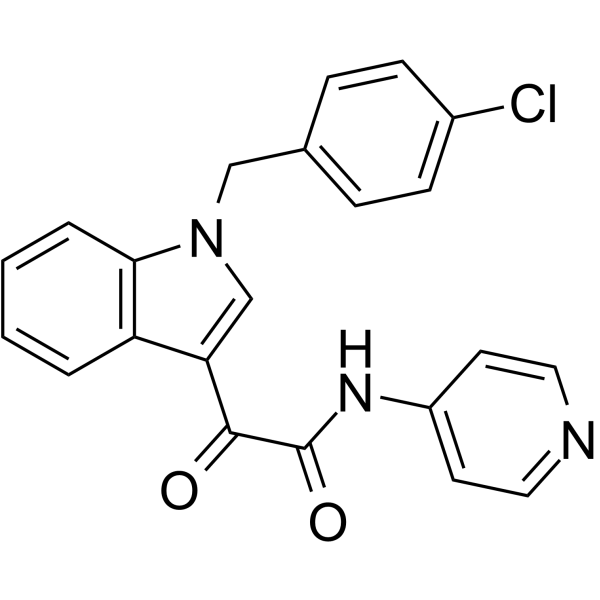
Indibulin (ZIO 301), an orally applicable inhibitor of tubulin assembly, shows potent anticancer activity with a minimal neurotoxicity. Indibulin reduces inter-kinetochoric tension, produces aberrant spindles, activates mitotic checkpoint proteins Mad2 and BubR1, and induces mitotic arrest and apoptosis .
loading...
    loading...
1
1 Cited Publications
Cat. No.: HY-139297
CAS No.: 2377858-38-1
Purity:  98.23%
Research Areas:  

Cancer

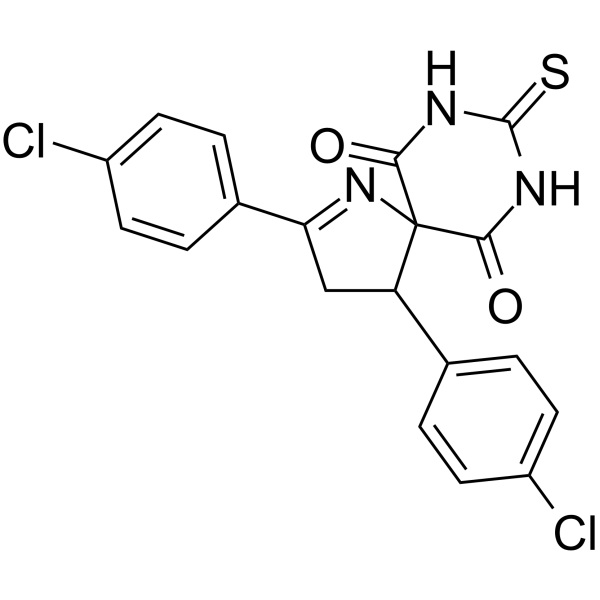
SCR130 is a SCR7-based DNA nonhomologous end-joining (NHEJ) inhibitor. SCR130 inhibits the end-joining of DNA in a Ligase IV-dependent manner. SCR130 is specific to Ligase IV, and shows minimal or no effect on Ligase III and Ligase I mediated joining. SCR130 induces cell apoptosis and has anticancer activity .
loading...
    loading...
1
1 Cited Publications
Cat. No.: HY-N0610R
CAS No.: 140-10-3
Synonyms: Trans-3-Phenylacrylic acid (Standard)
trans-Cinnamic acid (Standard) is the analytical standard of trans-Cinnamic acid. This product is intended for research and analytical applications. trans-Cinnamic acid is a natural antimicrobial, with minimal inhibitory concentration (MIC) of 250 μg/mL against fish pathogen A. sobria, SY-AS1 .
loading...
    loading...
1
1 Cited Publications
Cat. No.: HY-R04602A
Target:  

MicroRNA

Research Areas:  

Others

MicroRNA Agomir Negative Control is a chemically-modified double-strand miRNA mimic, and can be used as a negative control. The sequence of MicroRNA Agomir Negative Control is derived from cel-mir-239b. It has minimal sequence identity with miRNAs in human, mouse, and rat.
loading...
    loading...
1
1 Cited Publications
Cat. No.: HY-D1815
Synonyms: APC Dye
Allophycocyanin (APC Dye) is a light-harvesting protein, containing strongly coupled dimers of chromophores. Allophycocyanin serve as a minimal system to examine photosynthetic energy transfer. Allophycocyanin strongly absorbs far-red light (FRL), and expresses during acclimation to low light, likely associates with chlorophyll a-containing photosystem I .
loading...
    loading...
1
1 Cited Publications
Cat. No.: HY-141716
Purity:  99.19%
Research Areas:  

Cancer

SW2_110A is a selective chromobox 8 chromodomain (CBX8 ChD) inhibitor with a Kd of 800 nM. SW2_110A shows minimal 5-fold selectivity for CBX8 ChD over all other CBX paralogs in vitro .
loading...
    loading...
1
1 Cited Publications
Cat. No.: HY-128153
CAS No.: 1018454-97-1
Purity:  98.05%
Target:  

Phosphatase Apoptosis

Research Areas:  

Cancer

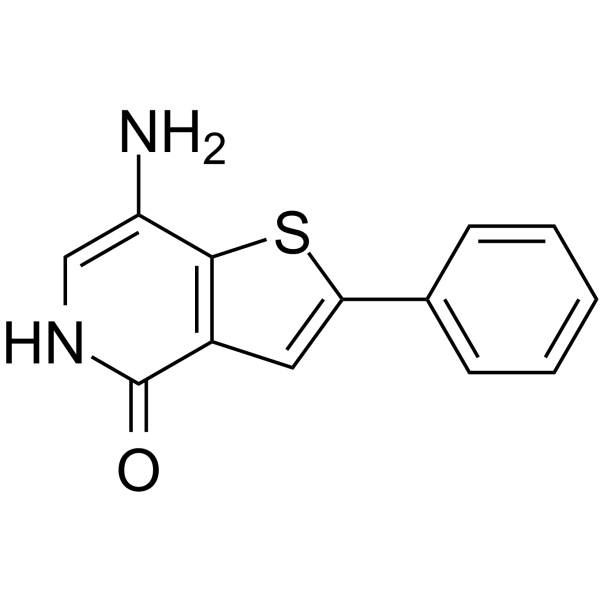
Thienopyridone is a potent and selective phosphatase of regenerating liver (PRL) phosphatase inhibitor with IC50s of 173 nM, 277 nM and 128 nM for PRL-1, PRL-2, and PRL-3, respectively. Thienopyridone shows minimal effects on other phosphatases. Thienopyridone induces p130Cas cleavage and apoptosis and has anticancer effects .
loading...
    loading...
1
1 Cited Publications
Cat. No.: HY-R04602F
FAM-MicroRNA Mimic Negative Control is a FAM labeled FAM-MicroRNA Mimic Negative Control (HY-R04602). MicroRNA Mimic Negative Control is a miRNA mimic of 21-nucleotides, and can be used as a negative control. The sequence of MicroRNA Mimic Negative Control is derived from cel-mir-239b. It has minimal sequence identity with miRNAs in human, mouse, and rat.
loading...
    loading...
1
1 Cited Publications
Cat. No.: HY-124602
CAS No.: 2245887-38-9
Purity:  99.42%
Target:  

E1/E2/E3 Enzyme

Research Areas:  

Cancer

DI-591 is a potent, high-affinity and cell-permeable inhibitor of the DCN1-UBC12 interaction. DI-591 binds to DCN1 and DCN2 with Ki values of 12 nM and 10.4 nM, respectively and has no appreciable binding to DCN3, DCN4, and DCN5 proteins. DI-591 selectively inhibits neddylation of cullin 3 but has no or minimal effect on neddylation of other cullin family members .
loading...
    loading...
1
1 Cited Publications
Cat. No.: HY-147423
CAS No.: 2154406-04-7
Purity:  99.28%
Synonyms: NBI-921352; XEN901
Target:  

Sodium Channel

Research Areas:  

Neurological Disease

Zandatrigine (NBI-921352; XEN901) is a selective, orally active, voltage-gated sodium channel NaV1.6/SCN8A inhibitor that can penetrate the blood-brain barrier. Zandatrigine inhibits sodium influx by non-covalently binding to the VSD4 structure of NaV1.6, blocking the persistent and resuscitative currents under pathological conditions. Zandatrigine can reduce neuronal hyperexcitability and reduce epileptic seizures. Zandatrigine is 134-756-fold selective for other isoforms such as NaV1.1 and NaV1.2, and has minimal effect on NaV1.1 expressed by inhibitory interneurons. Zandatrigine can be used to study NaV1.6-mediated neuroexcitability diseases such as SCN8A-related developmental epileptic encephalopathy (SCN8A-DEE) and adult focal epilepsy .
loading...
    loading...
1
1 Cited Publications
Cat. No.: HY-156395
CAS No.: 3044099-90-0
Purity:  98.05%
Target:  

E1/E2/E3 Enzyme

Research Areas:  

Others

MN551 is a covalent modulator of SOCS2 and CISH, with selectivity for SOCS2 and CISH over SOCS4. MN551 covalently modifies Cys111 in the SH2 domain of SOCS2 and Cys144 in the EF loop of the CISH SH2 domain, while only minimally modifying Cys471 in the BG loop of the SOCS6 SH2 domain. MN551 increases the thermal stability of the recombinant SOCS2-ElonginB-ElonginC complex and competitively blocks the binding of SOCS2 to its substrate; when delivered via the prodrug MN714, it blocks the intracellular recruitment of substrates by SOCS2. MN551 can serve as a chemical probe for investigating the biological functions of SOCS2 and its CRL5 complex, and also act as an E3 ligase-binding module in proteolysis-targeting chimeras (PROTACs) .
loading...
    loading...
Cat. No.: HY-W145519
CAS No.: 9005-27-0
Hydroxyethyl starch (MW170-230 kDa) is a type of hydroxyethyl starch with a molecular weight of 170-230 kDa. A medium-molecular-weight hydroxyethyl starch (HES 200/0.62) exhibits minimal intravascular hydrolysis. The rapidly degradable medium-molecular-weight Hydroxyethyl starch 200/0.5 causes almost no coagulation disorders and improves hemorheological parameters .
loading...
    loading...
Cat. No.: HY-172431
CAS No.: 2376397-93-0
Synonyms: BHV-7000
Target:  

Potassium Channel

Research Areas:  

Neurological Disease

Opakalim (BHV-7000) is a selective Kv7.2/7.3 potassium channels activator with an EC50 of 0.6 μM. Opakalim shows minimal GABAA receptor activation and exhibits potent anti-seizure efficacy in the maximal electroshock seizure (MES) model. Opakalim can be used for the study of seizures .
loading...
    loading...
Cat. No.: HY-B2106D
CAS No.: 9002-92-0
Synonyms: Decaethylene glycol monododecyl ether (C12E10); Polidocanol (10)
Polyoxyethylene (10) lauryl ether is a nonionic surfactant. Polyoxyethylene (10) lauryl ether exhibits unique properties in dissolving liposomes and exerts the minimal interference with endotoxin detection. Polyoxyethylene (10) lauryl ether forms hybrid liposomes with Dimyristoylphosphatidylcholine (DMPC) (HY-109541), which can inhibit the proliferation of human promyelocytic leukemia cells without the administration of any drugs .
loading...
    loading...
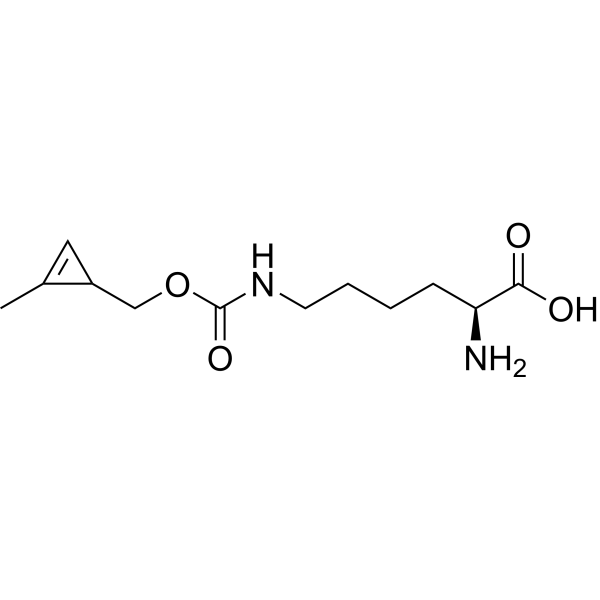
Cat. No.: HY-134669
CAS No.: 1610703-09-7
Purity:  98.30%
Synonyms: N-Cyclopropene-L-Lysine
Research Areas:  

Cancer

CypK (N-Cyclopropene-L-Lysine), a cyclopropene derivative of lysine, is efficiently incorporated into antibodies through genetic-code expansion. CypK is a minimal bioorthogonal handle for the creation of stable therapeutic protein conjugates .
loading...
    loading...

