39 Results for "

chromatin binding

" in MedChemExpress (MCE) Product Catalog:
Products (39)

39 Results for "chromatin binding" in MCE Product Catalog:

Cat. No.: HY-157251A
CAS No.: 2929304-60-7
Purity:  99.13%
Research Areas:  

Cancer

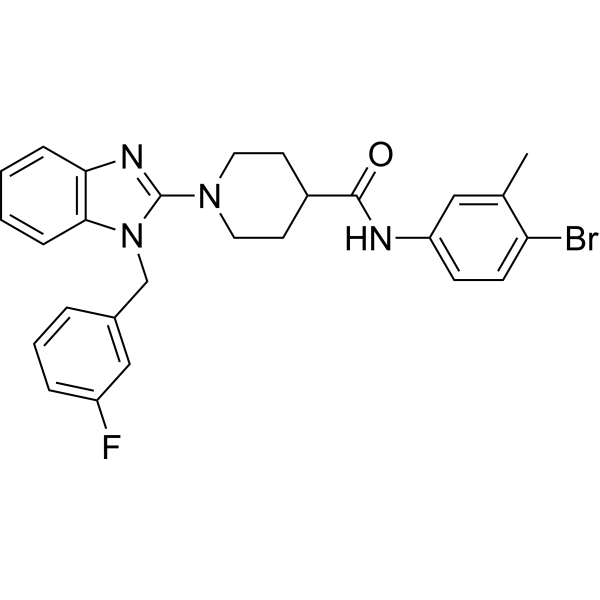
UNC8153 is a potent and selective nuclear receptor-binding SET domain-containing 2 (NSD2)-targeted degrader with a Kd of 24 nM. UNC8153 reduces the cellular levels of both NSD2 protein (DC50 in cell U2OS is 0.35 μM) and the H3K36me2 chromatin mark. UNC8153 contains a simple warhead that confers proteasome-dependent degradation of NSD2 .
loading...
    loading...
Cat. No.: HY-164373
CAS No.: 1898232-70-6
Research Areas:  

Cancer

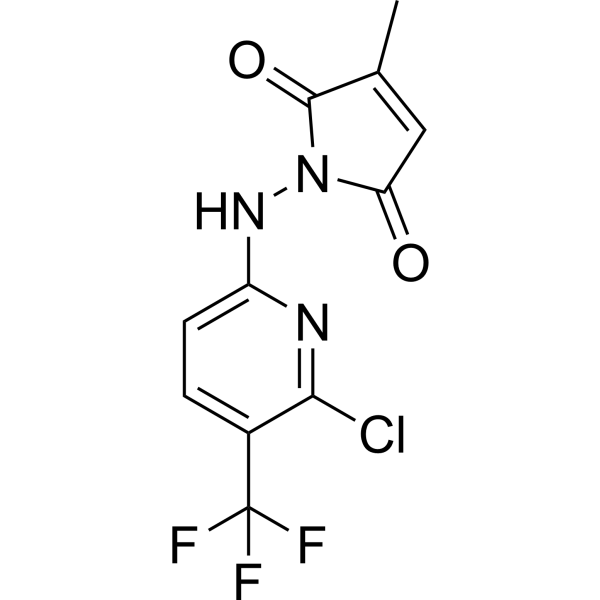
SC428 is an androgen receptor (AR) inhibitor that targets the N-terminal domain. SC428 potently decrease the transactivation of (AR)-V7, (AR)v567es, as well as full-length ( AR ) (AR-FL) and its LBD mutants, substantially. SC428 inhibits androgen-stimulated (AR)-FL nuclear translocation, chromatin binding, and (AR) -regulated gene transcription. SC428 inhibits the proliferation of tumor cells in vitro. SC428 inhibits tumor cell growth by inducing apoptosis in mice transplanted with 22RV1 .
loading...
    loading...
Cat. No.: HY-160267
CAS No.: 950403-60-8
Target:  

HIV DNA/RNA Synthesis

Research Areas:  

Infection Neurological Disease Cancer

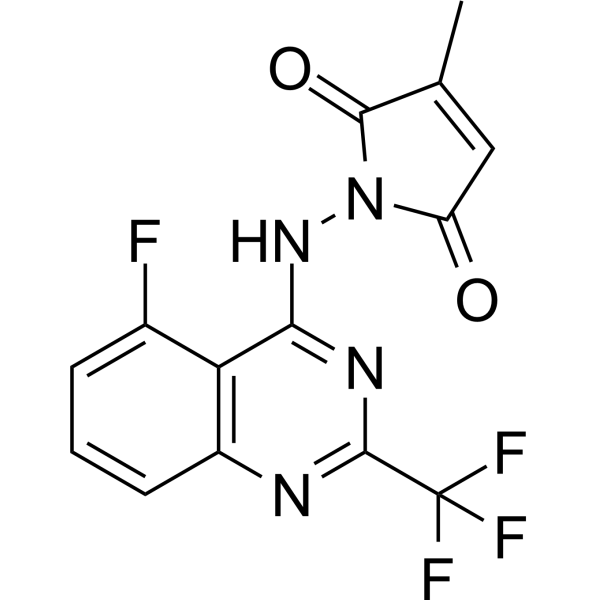
iPAF1C is a inhibitor of the polymerase-associated factor 1 complex (PAF1C) with specific targeting to the PAF1 binding groove of CTR9 (a key subunit of PAF1C). iPAF1C disrupts PAF1C assembly by interfering with the PAF1-CTR9 interaction. iPAF1C selectively impairs BRD4-mediated recruitment of PAF1 to chromatin at hypoxia-responsive genes and inhibits RNA polymerase II (RNAPII) pause release. iPAF1C increases the population of HIV-1 NL4.3 Nef-IRES-GFP infected primary human CD4 +T cells in a dose-dependent manner. PAF1C can be used for the study of infection and diseases associated with abnormal hypoxic adaptation (e.g., cancers, neurological disorders) .
loading...
    loading...
Cat. No.: HY-161391
CAS No.: 1076235-18-1
Target:  

CRM1

Research Areas:  

Cancer

CW0134 (Compound 12) is a modulator for exportin1 (XPO1) ,which disrupts the chromatin binding, inhibits NFAT transcription factors and activation of T cells .
loading...
    loading...
Cat. No.: HY-120907
CAS No.: 1197054-49-1
Target:  

SF3B1

Research Areas:  

Cancer

Sudemycin E is an analog of FR901464 (HY-16212). Sudemycin E can induce reversible changes in alternative splicing and abnormalities in chromatin modifications by binding to SF3B1, a component of the U2 small nuclear ribonucleoprotein (snRNP), thereby leading to the death of cancer cells. Sudemycin E has anti-tumor activity and can be used in tumor research .
loading...
    loading...
Cat. No.: HY-N0005S1
Synonyms: Diferuloylmethane-d3; Natural Yellow 3-d3; Turmeric yellow-d3
Curcumin-d3 (Diferuloylmethane-d3 ) is deuterium labeled Curcumin (HY-N0005). Curcumin (Diferuloylmethane), a natural phenolic compound, is a p300/CREB-binding protein-specific inhibitor of acetyltransferase, represses the acetylation of histone/nonhistone proteins and histone acetyltransferase-dependent chromatin transcription. Curcumin is a photosensitizer against microorganisms. Curcumin shows inhibitory effects on NF-κB and MAPKs, and has diverse pharmacologic effects including anti-inflammatory, antioxidant, antiproliferative and antiangiogenic activities. Curcumin induces stabilization of Nrf2 protein through Keap1 cysteine modification.
loading...
    loading...
Cat. No.: HY-161392
Target:  

CRM1

Research Areas:  

Cancer

CW2158 (Compound 13) is a modulator for exportin1 (XPO1) ,which disrupts the chromatin binding, inhibits NFAT transcription factors and activation of T cells .
loading...
    loading...
Cat. No.: HY-141551
CAS No.: 2369048-69-9
Purity:  98.00%
Target:  

Estrogen Receptor/ERR

Research Areas:  

Cancer

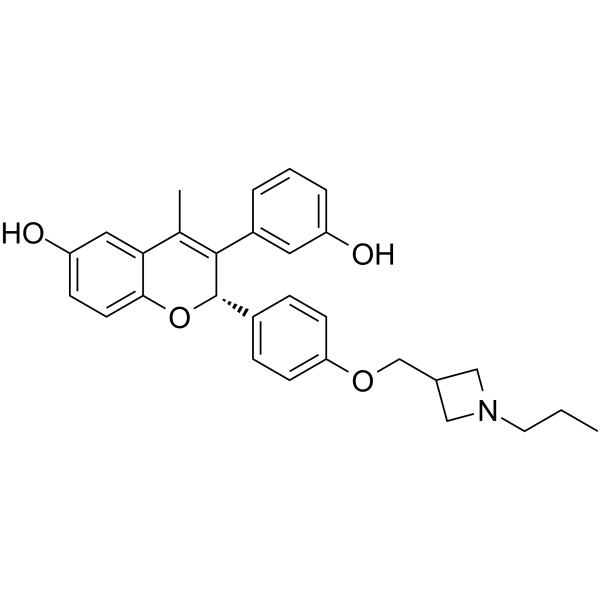
GNE-274 is a non-degrading estrogen receptor α (ERα/ESR1) modulator structurally similar to GDC-0927 (HY-111484). GNE-274 competes for binding to the ligand-binding domain of ERα and induces a coregulator-binding conformation similar to that of antagonists, yet retains partial agonistic transcriptional activity and does not promote ERα turnover. GNE-274 effectively inhibits E2-stimulated proliferation of ER-positive, HER2-negative breast cancer cells. GNE-274 promotes the recruitment of ERα to the nucleus and chromatin, increases chromatin accessibility, while largely maintaining the intranuclear mobility of ERα. GNE-274 can be used in research on ER-positive breast cancer and ERα transcriptional dynamics .
loading...
    loading...
Cat. No.: HY-151153
Research Areas:  

Cancer

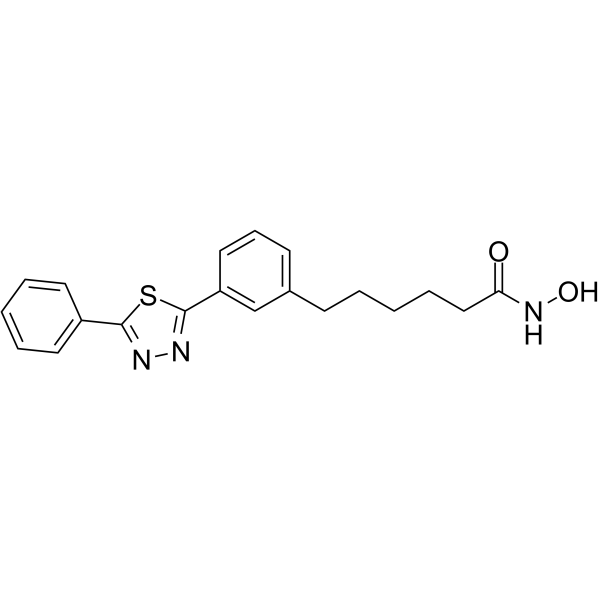
HDAC1-IN-5 is a potent HDAC1 inhibitor with IC50 values of 15 nM and 20 nM for HDAC1 and HDAC6, respectively. HDAC1-IN-5 can enhance the acetylation of histone H3 and α-tubulin, as well as promote the activation of caspase 3 in cancer cells, thereby inducing apoptosis. HDAC1-IN-5 induces chromatin damage by binding with DNA. HDAC1-IN-5 has strong inhibitory activity against tumor growth in xenograft mice .
loading...
    loading...
Cat. No.: HY-177840
Target:  

Liposome

Research Areas:  

Inflammation/Immunology

Liposomal Curcumin is a specialized delivery system that encapsulates Curcumin (HY-N0005) within tiny liposomes. These liposomes act as protective shells, enhancing the absorption and bioavailability of Curcumin. Curcumin (Diferuloylmethane), a natural phenolic compound, is a p300/CREB-binding protein-specific inhibitor of acetyltransferase, represses the acetylation of histone/nonhistone proteins and histone acetyltransferase-dependent chromatin transcription. Curcumin is a photosensitizer against microorganisms. Curcumin shows inhibitory effects on NF-κB and MAPKs, and has diverse pharmacologic effects including anti-inflammatory, antioxidant, antiproliferative and antiangiogenic activities. Curcumin induces stabilization of Nrf2 protein through Keap1 cysteine modification.
The product size below only indicate the effective content of Curcumin.
loading...
    loading...
Cat. No.: HY-P74601
Purity:  ≥ 85%, as determined by reducing SDS-PAGE.
Synonyms: RBBP4; Histone-binding Protein RBBP4; RB binding Protein 4, chromatin Remodeling Factor; CAF-I 48 KDa Subunit; Retinoblastoma-binding Protein 4; CAF-1 Subunit C; RbAp48; CAF-I P48; NURF55; RBBP-4; Lin-53; chromatin Assembly Factor/CAF-1 P48 Subunit; Nucle
Species:  
Human
Source:  
Sf9 insect cells
loading...
    loading...
Cat. No.: HY-P74600
Purity:  ≥ 90%, as determined by reducing SDS-PAGE.
Synonyms: RBBP4; Histone-binding Protein RBBP4; RB binding Protein 4, chromatin Remodeling Factor; CAF-I 48 KDa Subunit; Retinoblastoma-binding Protein 4; CAF-1 Subunit C; RbAp48; CAF-I P48; NURF55; RBBP-4; Lin-53; chromatin Assembly Factor/CAF-1 P48 Subunit; Nucle
Species:  
Mouse
Source:  
Sf9 insect cells
loading...
    loading...
Cat. No.: HY-P71588
Purity:  ≥ 90%, as determined by reducing SDS-PAGE.
Synonyms: CHD1L; Chromo Domain-Containing Protein 1-Like; Chromodomain Helicase DNA binding Protein 1 Like; Amplified In Liver Cancer Protein 1; ALC1; Amplified In Liver Cancer 1; Chromodomain-Helicase-DNA-binding Protein 1-Like; CHDL; ATP-Dependent chromatin Remod
Species:  
Human
Source:  
E. coli
loading...
    loading...
Cat. No.: HY-181421
CAS No.: 2929223-36-7
Target:  

SF3B1

Research Areas:  

Cancer

WX-02-43 is a weak covalent inhibitor of SF3B1, and is the (1S,3R) enantiomer of WX-02-23 (HY-168534). WX-02-43 cannot effectively covalently modify the C258 site in the DNA-binding domain of FOXA1, and its inhibitory activity against SF3B1 is also weaker than that of WX-02-23. WX-02-43 serves as a negative control probe that fails to remodel the chromatin binding pattern and transcriptional activity of FOXA1. WX-02-43 can be used in studies on cancers such as prostate cancer to verify the specific effects of WX-02-23 on FOXA1 and SF3B1 targets .
loading...
    loading...
Cat. No.: HY-182037
Research Areas:  

Cancer

Multi-target kinase-IN-9 is a multi-target enzyme inhibitor with antiproliferative and antiangiogenic activities, and exhibits remarkable selectivity against hepatocellular carcinoma cells. By broadly binding to the active sites or ATP-binding regions of multiple key enzymes including DNA polymerase β, Pyruvate Kinase M2 (PKM2), Multi-target kinase-IN-9 comprehensively disrupts DNA repair and replication, glycolysis, chromatin dynamics and transcriptional programs, and blocks the self-renewal of cancer stem cells. Multi-target kinase-IN-9 induces genomic instability, lysosomal dysfunction and autophagic flux impairment, thereby triggering tumor cell death, effectively inhibiting tumor proliferation, invasion, metastasis and angiogenesis, and significantly reducing tumor volume in xenograft models. Multi-target kinase-IN-9 is applicable to hepatocellular carcinoma-related research .
loading...
    loading...
Cat. No.: HY-183622
CAS No.: 304896-41-1
Target:  

MDM-2/p53

Research Areas:  

Cancer

UCI-1014 is a mutant p53 (p53 R175H) corrector/reactivator. UCI-1014 restores the wild-type-like DNA-binding activity of p53 R175H, promotes the redistribution of the mutant protein to chromatin, and induces the expression of p53-dependent target genes. UCI-1014 inhibits the proliferation of p53 R175H-mutant cancer cells through an SLC7A11-independent mechanism. UCI-1014 can be used for research related to p53-mutant cancers .
loading...
    loading...
Cat. No.: HY-P701528
Purity:  ≥ 90%, as determined by reducing SDS-PAGE.
Synonyms: HLTF; SWI/SNF Related, Matrix Associated, Actin Dependent Regulator Of chromatin, Subfamily A, Member 3; Prev. SMARCA3; RING Finger Protein 80; Prev. SNF2L3; HIP116; HIP116A; ZBU1; RNF80; DNA-binding Protein/Plasminogen Activator Inhibitor-1 Regulator; SW
Species:  
Human
Source:  
E. coli
loading...
    loading...
Cat. No.: HY-P701529
Purity:  ≥ 90%, as determined by reducing SDS-PAGE.
Synonyms: HLTF; SWI/SNF Related, Matrix Associated, Actin Dependent Regulator Of chromatin, Subfamily A, Member 3; Prev. SMARCA3; RING Finger Protein 80; Prev. SNF2L3; HIP116; HIP116A; ZBU1; RNF80; DNA-binding Protein/Plasminogen Activator Inhibitor-1 Regulator; SW
Species:  
Human
Source:  
E. coli
loading...
    loading...
Cat. No.: HY-187521
CAS No.: 102537-38-2
Target:  

c-Myc Topoisomerase

Research Areas:  

Cancer

MYCMI-7 hydrobromide is a potent and selective MYC/MYCN inhibitor, with a Kd of 4 μM for MYC and an IC50 of 10 μM for topoisomerase IIα (Topoisomerase IIα). MYCMI-7 hydrobromide binds directly to MYC, selectively inhibits the interactions of MYC:MAX and MYCN:MAX, reduces MYC-driven transcription levels, induces MYC/MYCN protein degradation, and blocks the binding of MYC to chromatin, thereby inducing tumor cell growth arrest, apoptosis and reducing cell viability, while only inducing G1 phase growth arrest in normal cells. MYCMI-7 hydrobromide can be used in research related to MYC-driven acute myeloid leukemia and breast cancer, MYCN-amplified neuroblastoma, glioblastoma, Burkitt's lymphoma, melanoma, colon cancer, osteosarcoma, cervical cancer and histiocytic lymphoma .
loading...
    loading...

