38 Results for "

fixed cells

" in MedChemExpress (MCE) Product Catalog:
Products (38)

38 Results for "fixed cells" in MCE Product Catalog:

Cat. No.: HY-D1991
CAS No.: 906664-68-4
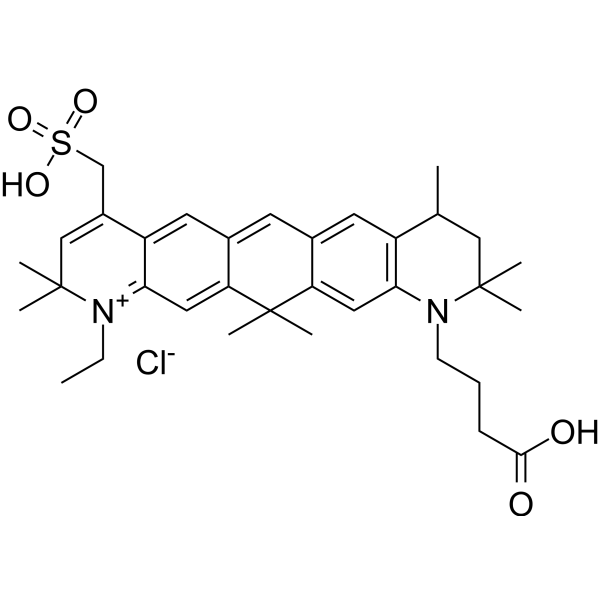
ATTO 647 is a carborhodamine fluorophore and imaging tracer with photostable properties. ATTO 647 serves as a fluorescent probe to investigate cell membrane structure and diffusion characteristics. When conjugated with wheat germ agglutinin, ATTO 647 specifically binds to N-acetyl-β-D-glucosamine and sialic acid residues on membrane glycoproteins, enabling single-molecule tracing of glycoprotein diffusion. ATTO 647 exhibits highly stable fluorescence properties with significantly reduced blinking in mounting media such as ROXS (AA/MV) and ROXS (TX/TQ), whereas its brightness properties vary in Ibidi-MM and Vectashield. ATTO 647 can also be used to label histone H2B-GFP in fixed cells for confocal microscopy photobleaching experiments .
loading...
    loading...
Cat. No.: HY-151759
CAS No.: 2129525-69-3
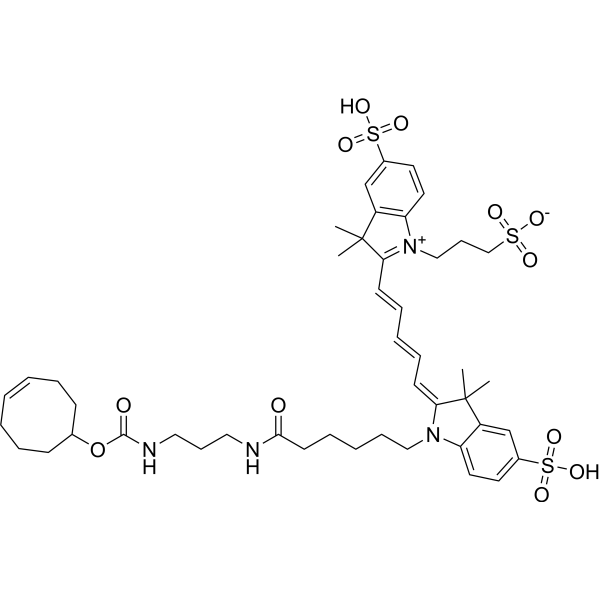
Sulfo-Cy5-TCO is a water-soluble sulfonated Cy5 fluorescent reagent containing trans-cyclooctene (TCO). Sulfo-Cy5-TCO undergoes an inverse electron demand Diels‑Alder reaction with tetrazine-labeled fixed breast cancer cells to achieve cell labeling. Sulfo-Cy5-TCO is used for fluorescent labeling and imaging of biological samples such as proteins and cells .
loading...
    loading...
Cat. No.: HY-13735R
CAS No.: 83-89-6
Synonyms: Acriquine (Standard)
Quinacrine (Standard) is the analytical standard of Quinacrine. This product is intended for research and analytical applications. Quinacrine (Acriquine) is an antimalarial and anti-cancer agent. Quinacrine also inhibits human aldehyde oxidase (IC50: 3.3 μM). Quinacrine has affinity for nucleic acids, and stains DNA and RNA in fixed cells (Ex/Em: 436/525 nm) .
loading...
    loading...
Cat. No.: HY-W615095
CAS No.: 2227450-68-0
Target:  

PROTAC Linkers

Research Areas:  

Others

Biotin-PEG2-alkyne is a click chemistry PEG linker based on copper (I)-catalyzed azide-alkyne cycloaddition (CuAAC), as well as a biotinylation reagent. In solution-phase and click labeling systems, Biotin-PEG2-alkyne efficiently conjugates biotin groups to azide-functionalized streptavidin amplicons. Biotin-PEG2-alkyne is also widely applicable in fixed cells and mouse intestinal tissue sections to achieve specific biotinylation of various azide-labeled biomolecules (such as proteins, lipids, DNA, and Afatinib (HY-10261)), thereby effectively promoting signal amplification and precise detection of targets .
loading...
    loading...
Cat. No.: HY-D1745
CAS No.: 1369583-75-4
Synonyms: fac-[Re(CO)3(phen)L]
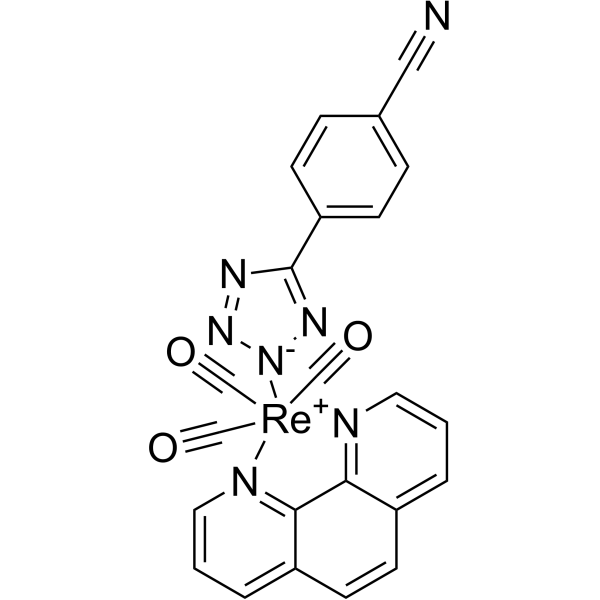
Liptracker-green (fac-[Re(CO)3(phen)L]) is a cell-permeable fluorogenic probe that localizes to polar lipids, and can be used to label lipid droplets and other high lipid-content compartments in live and fixed cells using fluorescent microscopy.
loading...
    loading...
Cat. No.: HY-D3499
CAS No.: 148185-53-9
(E,E)-3,5-Bis(phenylethenyl)-BODIPY lipid stain is a fluorescent dye for intracellular lipid droplets. It is primarily used for specific fluorescent labeling and dynamic tracking of lipid droplets in living or fixed cells (Ex/Em = 627 nm/640 nm).
loading...
    loading...
Cat. No.: HY-D3446
CAS No.: 2358677-26-4
PA-SiR-Halo is a photoactivatable fluorophore targeting HaloTag. When bound to HaloTag, PA-SiR-Halo stabilizes its fluorescent form under physiological pH. After conjugation and photoactivation, it exhibits enhanced resistance to nucleophiles, and enables live-cell confocal imaging, fixed-cell single-molecule localization microscopy imaging, live-cell single-particle tracking, as well as live-cell single-molecule localization microscopy imaging of dynamic mitochondrial structures without the need for washing .
loading...
    loading...
Cat. No.: HY-DY2031
Target:  

Fluorescent Dye

Research Areas:  

Others

Dienes Mycoplasma Staining Solution is a Romanovsky type absorbent composite staining solution, containing Methylene Blue (HY-14536) and Azure II (HY-D0946). Dienes Mycoplasma Staining Solution is used for identifying mycoplasma colonies growing on solid agar, or for staining fixed cell cultures and tissue sections. Dienes Mycoplasma Staining Solution can distinguish between tiny cell-free bacteria and ordinary bacterial colonies under an optical microscope.
loading...
    loading...
Cat. No.: HY-DY2028
Research Areas:  

Others

Ready-to-Use Giemsa Staining Solution is a ready-to-use Romanowsky-type staining solution that can be used for staining blood and cell smears, bacteria, chromosome banding, parasites, and other specimens. Ready-to-Use Giemsa Staining Solution stains blood smears to reveal blood parasites including Plasmodium, microfilariae, and trypanosomes. Ready-to-Use Giemsa Staining Solution enables morphological identification of blood cells, and can also stain fixed cells to observe muscle cell nuclei, distinguish myotubes from myoblasts, and quantitatively analyze the differentiation status of myoblasts .
loading...
    loading...
Cat. No.: HY-K0613

MCE Oil Red O Staining Kit for Cultured Cells consists of Oil Red O staining solution and hematoxylin. It is used to demonstrate fat degeneration and abnormal lipid deposition in cultured cells, particularly when multiple neutral fat droplets are present within the cells. This kit helps in identifying lipid changes and their nature in cultured cells. It is important to note that samples should not be fixed with ethanol-containing fixatives, as ethanol may interfere with lipid staining. The positive staining result for fat typically appears orange-yellow to red, with the exact color depending on the lipid concentration.

loading...
    loading...
Cat. No.: HY-W1061291
CAS No.: 3101697-53-1
Research Areas:  

Others

Quasar670 Phosphoramidite is a modified phosphoramidite monomer that can be used for oligonucleotide synthesis and fluorescent in situ hybridization probe synthesis. Oligonucleotide probes synthesized with Quasar670 Phosphoramidite can be used to detect eGFP mRNA in fixed cells; they can target the 26S rRNA D1/D2 region of Hanseniaspora uvarum to enable tracking and detection of this yeast strain .
loading...
    loading...
Cat. No.: HY-D3362
Research Areas:  

Others

RL420 is an RNA-selective fluorescent covalent probe that binds covalently to the 2′-hydroxyl group of RNA via an acylimidazole-mediated reaction. RL420 has excitation/emission wavelengths of 420/452 nm, exhibits a 150-fold selectivity for RNA over DNA, and shows high labeling efficiency. RL420 can be used in studies related to in vitro RNA labeling, gel imaging, and blue fluorescent imaging of RNA in fixed cells (e.g., nucleoli) .
loading...
    loading...
Cat. No.: HY-D3363
Target:  

Fluorescent Dye mRNA

Research Areas:  

Others

RL450 is an RNA-selective fluorescent covalent probe that binds covalently to the 2′-hydroxyl group of RNA via an acylimidazole-mediated reaction. RL450 has excitation/emission wavelengths of 450/497 nm, exhibits a 970-fold selectivity for RNA over DNA, and features high labeling efficiency. RL450 can be used in studies related to in vitro RNA labeling, gel imaging, and cyan fluorescent imaging of RNA in fixed cells (e.g., nucleoli) .
loading...
    loading...
Cat. No.: HY-DY1090
CAS No.: 216434-81-0
BODIPY 493/503 methyl bromide (solution) is a BODIPY dye. BODIPY dye is a small molecule dye with strong ultraviolet absorption ability, its fluorescence peak is relatively sharp, and the quantum yield is high. They are relatively insensitive to the polarity and pH of the environment and are relatively stable under different physiological conditions. Due to its structural asymmetry, BODIPY derives a variety of structural products. BODIPY lipid droplet dyes can well pass through the cell membrane into the cell, and localize the neutral lipids in the cell to specifically stain the lipid droplets, which can be used for labeling of live cells and fixed cells . Maximum excitation/emission wavelength: 493/503 nm .
Solvent and concentration: DMSO: 5 mM
loading...
    loading...
Cat. No.: HY-K0614

MCE Oil Red O Staining Kit for Cell Smears effectively stains lipid droplets of various sizes, including smaller lipid droplets, and preferentially adsorbs dye from the solvent. It is suitable for staining oil red O in cell smears, bone marrow smears, fluid smears, blood smears, and other samples. When using the kit, specimens should not be fixed with fixatives containing ethanol. If fixation is required, 10% formalin can be used. The positive staining result for fat typically appears orange-yellow to red, with the exact color varying depending on the lipid concentration.

loading...
    loading...
Cat. No.: HY-W800699
CAS No.: 2644752-85-0
BP Fluor 430 DBCO reacts with azides via a copper-free click chemistry reaction to form a stable triazole and does not require a Cu-catalyst or elevated temperatures. In applications where the presence of copper is a concern, BP Fluor 430 DBCO is an ideal alternative to copper requiring fluorescent alkynes. BP Fluor 430 is a bright, photostable, green-fluorescent probe optimally excited near its absorption maximum at 432 nm. Its emission peak at 539 nm is pH independent over a wide pH range. BP Fluor DBCO reagent is not suitable for staining intracellular components of fixed and permeabilized cells due to high backgrounds.
loading...
    loading...
Cat. No.: HY-D1737
RADA is a fluorescent D-amino acid (FDAA) with high photostability and thermostability, which emits yellow-to-orange fluorescence. RADA shows low outer membrane permeability in wild-type Gram-negative Escherichia coli, but it targets penicillin-binding proteins and L,D-transpeptidases, mimics the interaction between acyl acceptors and enzyme intermediates, and integrates into peptidoglycan during biosynthesis. As a peptidoglycan labeling reagent, RADA metabolically integrates into the nascent peptidoglycan of live bacterial cells, labels the peptidoglycan at the poles and lateral walls of mycobacteria, and enables visualization of peptidoglycan synthesis and remodeling processes. RADA serves as a non-specific stain for fixed cells, is non-toxic to bacterial cells, and its red-shifted excitation/emission spectra reduce phototoxicity. RADA also supports virtual pulse-chase labeling experiments and stochastic optical reconstruction microscopy for sub-diffraction-limited imaging of bacterial cell walls .
loading...
    loading...
Cat. No.: HY-DY1081
CAS No.: 28718-90-3
Synonyms: 4',6-Diamidino-2-phenylindole dihydrochloride (solution)
DAPI (4',6-Diamidino-2-phenylindole) dihydrochloride (solution) is a DAPI dye. DAPI is a fluorescent dye that binds strongly to DNA. It binds to the AT base pair of the double-stranded DNA minor groove, and one DAPI molecule can occupy three base pair positions. The fluorescence intensity of DAPI molecules bound to double-stranded DNA is increased by about 20 times, and it is commonly observed with fluorescence microscopy, and the amount of DNA can be determined based on the intensity of fluorescence. DAPI cannot penetrate intact cell membranes and is commonly used for staining damaged and fixed cells . DAPI (Compound 3) is an acid-sensing ion channel 3 (ASIC3) inhibitor. DAPI binds to ASIC3 and blocks the channel function. DAPI can be used in the study of chronic pain treatment (Ex/Em = 356/451 nm).
Solvent and concentration: ddH2O: 5 mg/mL
loading...
    loading...

