103 Results for "

phase 1

" in MedChemExpress (MCE) Product Catalog:
Products (103)

103 Results for "phase 1" in MCE Product Catalog:

Cat. No.: HY-156285
CAS No.: 3053365-82-2
Purity:  98.74%
Research Areas:  

Cancer

ZZM-1220 is a histone lysine methyltransferase G9a/GLP covalent inhibitor with IC50s of of 458 nM and 924 nM, respectively. ZZM-1220 inhibits H3K9me2 in cells and significantly induces apoptosis of triple-negative breast cancer (TNBC) cells and blocks the cell cycle in the G2/M phase .
loading...
    loading...
Cat. No.: HY-119062
CAS No.: 681245-85-2
Target:  

MetAP CDK

Research Areas:  

Cancer

A-800141 is an orally active, selective, sulfonamide-based MetAP2 inhibitor (IC50=12 nM) that binds reversibly to MetAP2 and interacts with its manganese ions. A-800141 induces the production of N-terminal methionine-unprocessed GAPDH variants, which in turn triggers G1-phase cell cycle arrest, elevates p21 levels, and reduces the levels of phosphorylated Rb and total cyclin A. A-800141 exhibits anti-angiogenic and tumor growth inhibitory effects, and produces synergistic effects when combined with cytotoxic inhibitors or BCL-2 inhibitors. A-800141 has been widely used in scientific research related to B-cell lymphoma, neuroblastoma, prostate cancer, colon cancer, melanoma and other fields .
loading...
    loading...
Cat. No.: HY-149132
CAS No.: 1191043-85-2
Purity:  96.7%
Synonyms: DDA
Dendrogenin A (DDA) is a ligand for liver X receptor (LXR), that induces the expression of sodium/iodine symporter, and increases iodine uptake. Dendrogenin A induces cell differentiation of MCF-7, and reactivates the function of lactating cells. Dendrogenin A induces the expressions of the TSH receptor, thyroid peroxidase, and thyroglobulin, and affects thyroid hormone generation. Dendrogenin A exhibits cytotoxicity in cancer cell B-CPAP and 8505c with IC50 of 4.1 and 6.2 µM. Dendrogenin A arrests the cell cycle at G0/G1 phase .
loading...
    loading...
Cat. No.: HY-P1109
CAS No.: 189064-08-2
Target:  

CDK

Research Areas:  

Cancer

[Ala92]-p16 (84-103) is a peptide derived from the p16CDKN2/INK4a (p16) tumor suppressor protein. [Ala92]-p16 (84-103) binds to both cdk4 and cdk6 and inhibits cdk4-cyclin D1 kinase activity in vitro (IC50: 1.5 μM). [Ala92]-p16 (84-103) blocks cell cycle progression through the G1 phase .
loading...
    loading...
Cat. No.: HY-168620
CAS No.: 2743517-28-2
Target:  

CDK

Research Areas:  

Cancer

CDK6-IN-1 (compound 4i) is a CDK6 inhibitor. CDK6-IN-1 inhibits cell growth and induces cell cycle arrest at G1-phase .
loading...
    loading...
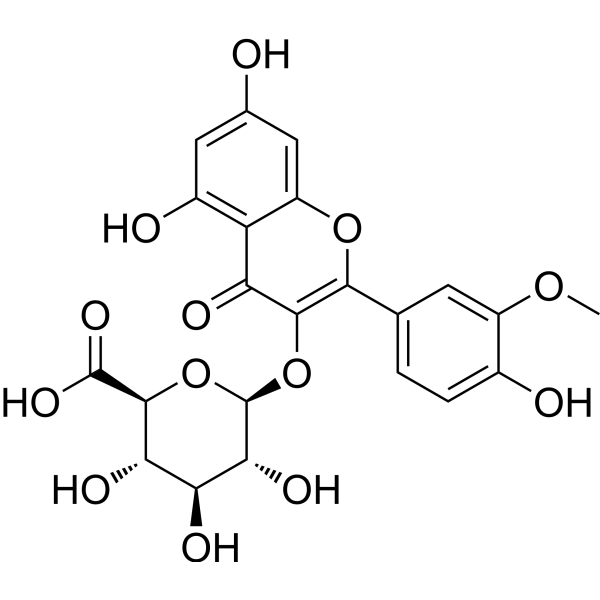
Cat. No.: HY-126423
CAS No.: 36687-76-0
Synonyms: Isorhamnetin 3-O-glucuronide
Isorhamnetin 3-glucuronide is a potent anticancer agent. Isorhamnetin 3-glucuronide shows anti-proliferative activity. Isorhamnetin 3-glucuronide induces Apoptosis and cell cycle arrest at S-phase .
loading...
    loading...
Cat. No.: HY-144738
CAS No.: 2756099-59-7
Target:  

Epoxide Hydrolase FAAH

Research Areas:  

Inflammation/Immunology

Dual FAAH/sEH-IN-1 (compound 3) is a high affinity dual sEH (soluble epoxide hydrolase) and FAAH (fatty acid amide hydrolase) inhibitor, with IC50 values of 9.6 and 7 nM, respectively. Dual FAAH/sEH-IN-1 shows antinociception against the inflammatory phase .
loading...
    loading...
Cat. No.: HY-149024
CAS No.: 2411174-53-1
Target:  

VEGFR Apoptosis MDM-2/p53

Research Areas:  

Cancer

VEGFR-2-IN-23 (compound 11b) is a potent and selective VEGFR-2 inhibitor with an IC50 value of 0.34 nM. VEGFR-2-IN-23 shows antitumor activity. VEGFR-2-IN-23 induces apoptosis and cell cycle arrest at G1 phase .
loading...
    loading...
Cat. No.: HY-173406
CAS No.: 3011713-80-4
Research Areas:  

Cancer

RSK-IN-2 (Compound 3e) is a RSK inhibitor, with IC50 s of 37.89 nM (RSK2), 30.78 nM (RSK1), 20.51 nM (RSK3), 91.28 nM (RSK4). RSK-IN-2 inhibits tumor cell proliferation, induces apoptosis and causes cell cycle arrest in the G2/M phase .
loading...
    loading...
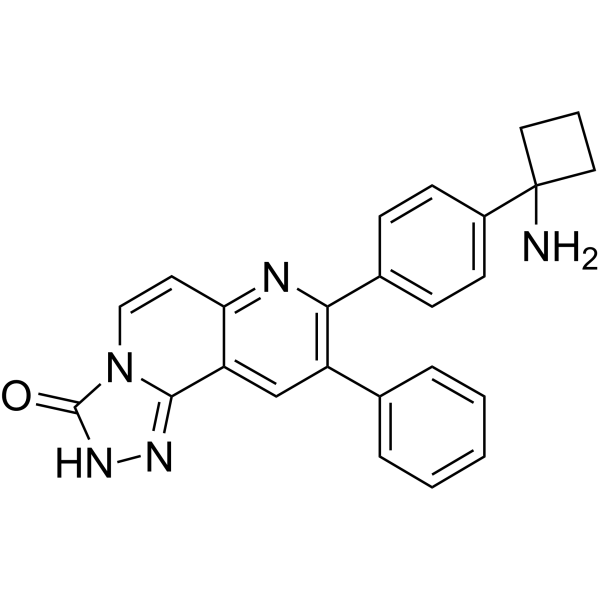
Cat. No.: HY-10357
CAS No.: 1032349-93-1
MK-2206 free base is an orally active pan-AKT inhibitor, with IC50 values of 8 nM, 12 nM and 65 nM against AKT1, AKT2 and AKT3, respectively. MK-2206 free base inhibits the Akt/mTOR signaling pathway and reduces the levels of downstream GSK3β and Mcl-1 via proteasomal degradation. MK-2206 free base induces G1-phase cell cycle arrest, apoptosis, epithelial-mesenchymal transition, fibroblast activation and extracellular matrix deposition. MK-2206 free base causes transient hyperglycemia and hyperinsulinemia in animals. MK-2206 free base can be used in research related to solid tumors, renal fibrosis and hypercholesterolemia .
loading...
    loading...
Cat. No.: HY-N8287
CAS No.: 55623-37-5
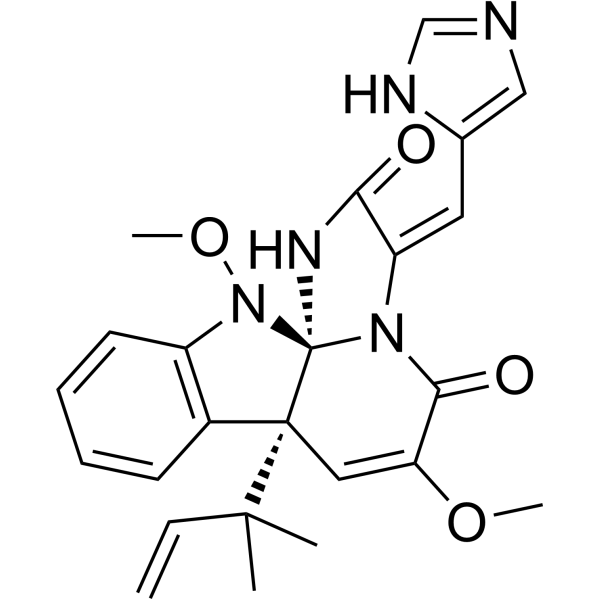
Oxaline is a fungal alkaloid that can be isolated from Penicillium oxalicum. Oxaline inhibits tubulin polymerization, resulting in cell cycle arrest at the M phase .
loading...
    loading...
Cat. No.: HY-123369
CAS No.: 477726-77-5
Target:  

CDK Apoptosis

Research Areas:  

Cancer

BMI-1026 is a cyclin-dependent kinase 1 (Cdk1) inhibitor with IC50 of 2.3 nM. BMI-1026 induces apoptosis by arresting the G2-M phase .
loading...
    loading...
Cat. No.: HY-119407
CAS No.: 167427-23-8
Terpendole E is a mitotic kinesin Eg5 inhibitor. Terpendole E inhibits both motor and microtubule-stimulated ATPase activities of human Eg5. Terpendole E induces formation of a monoastral spindle in M phase .
loading...
    loading...
Cat. No.: HY-146422
CAS No.: 2409793-36-6
Target:  

PROTACs EGFR Apoptosis

Research Areas:  

Cancer

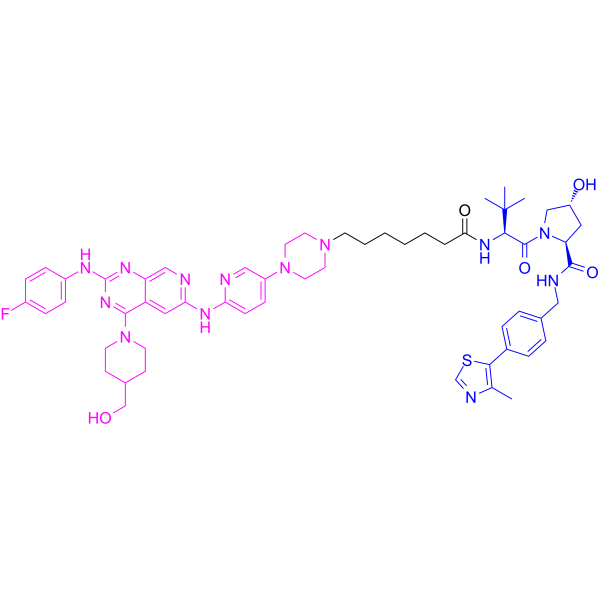
PROTAC EGFR degrader 5 is a PROTAC EGFR degrader, potently degrades EGFR Del19 in HCC827 cells with the DC50 of 34.8 nM. PROTAC EGFR degrader 5 significantly induces the apoptosis of HCC827 cells and arrest the cells in G1 phase .
loading...
    loading...
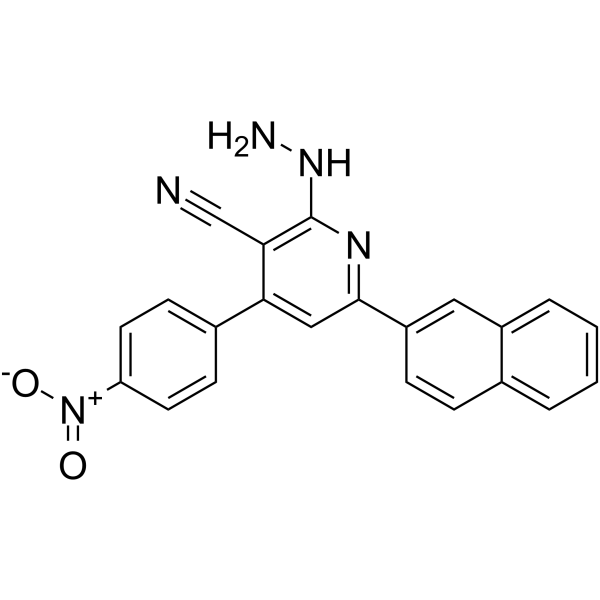
Cat. No.: HY-147896
CAS No.: 630058-59-2
Target:  

Microtubule/Tubulin

Research Areas:  

Cancer

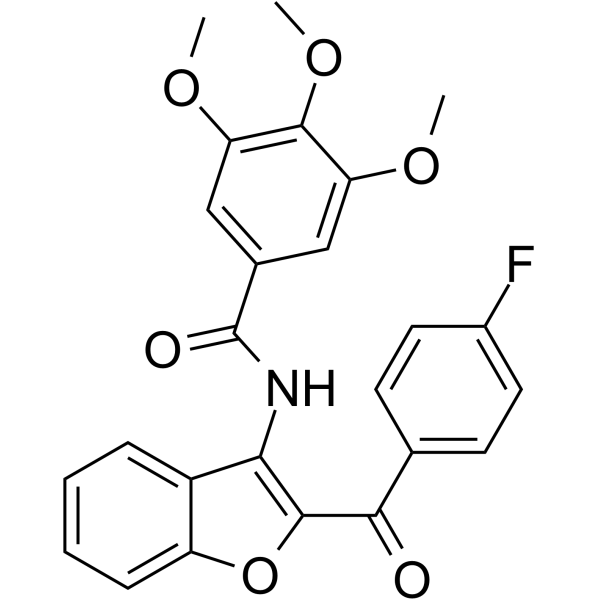
Tubulin polymerization-IN-29 (compound 6g) is a potent tubulin polymerization inhibitor. Tubulin polymerization-IN-29 exhibits potent antiproliferative activity. Tubulin polymerization-IN-29 can induce HeLa cells arrest in G2/M phase .
loading...
    loading...
Cat. No.: HY-150048
CAS No.: 2204291-78-9
Target:  

CD73 Apoptosis

Research Areas:  

Cancer

BK50164 is a potent CD73 inhibitor with an IC50 value of 13.089 μM. BK50164 binds to CD99 with a KD value of 1.5 μM. BK50164 shows antiproliferative activity. BK50164 induced Apoptosis and cell cycle arrest at Sub-G1 phase .
loading...
    loading...
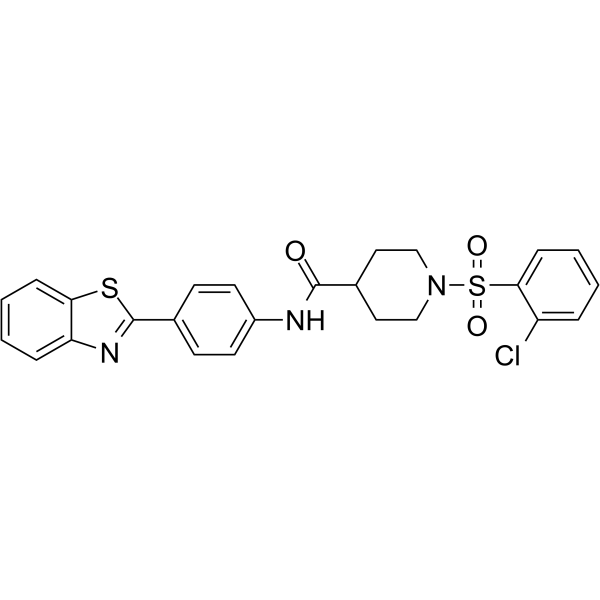
Cat. No.: HY-151436
CAS No.: 2841473-39-8
Research Areas:  

Cancer

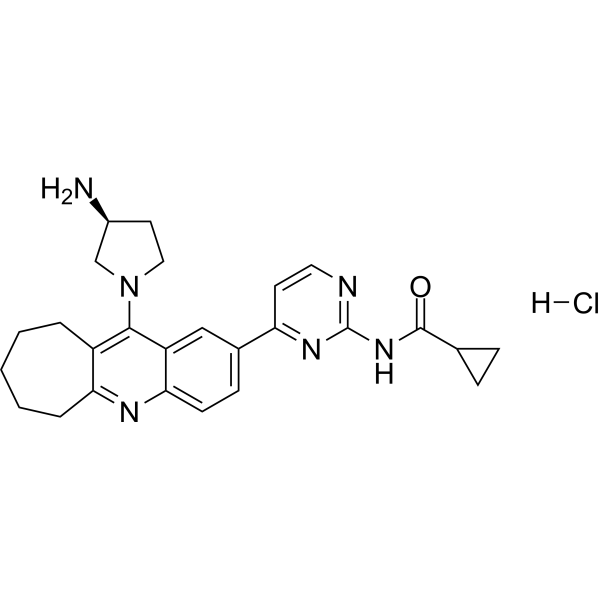
ZLMT-12 (compound 35), tacrine derivatives, is a potent, orally active CDK2/9 inhibitor with IC50 values of 0.002 and 0.011 μM for CDK9 and CDK2, respectively. ZLMT-12 has a weak inhibitory effect on AChE (IC50=19.023 μM) and BChE (IC50=2.768 μM). ZLMT-12 has low toxicity and antiproliferative activity. ZLMT-12 induces apoptosis and arrests the cell cycle in the S phase and G2/M phase .
loading...
    loading...
Cat. No.: HY-N0662R
CAS No.: 1617-53-4
Synonyms: Didemethyl-ginkgetin (Standard)
Amentoflavone (Standard) is the analytical standard of Amentoflavone. This product is intended for research and analytical applications. Amentoflavone (Didemethyl-ginkgetin) is a potent and orally active GABA(A) negative modulator. Amentoflavone also shows anti-inflammatory, antioxidative, anti-viral, anti-tumor, anti-radiation, anti-fungal, antibacterial activity. Amentoflavone induces apoptosis and cell cycle arrest at sub-G1 phase .
loading...
    loading...
Cat. No.: HY-157419
CAS No.: 2413582-39-3
Synonyms: 7-(4-Ethylphenyl)-FL118
Target:  

Apoptosis

Research Areas:  

Cancer

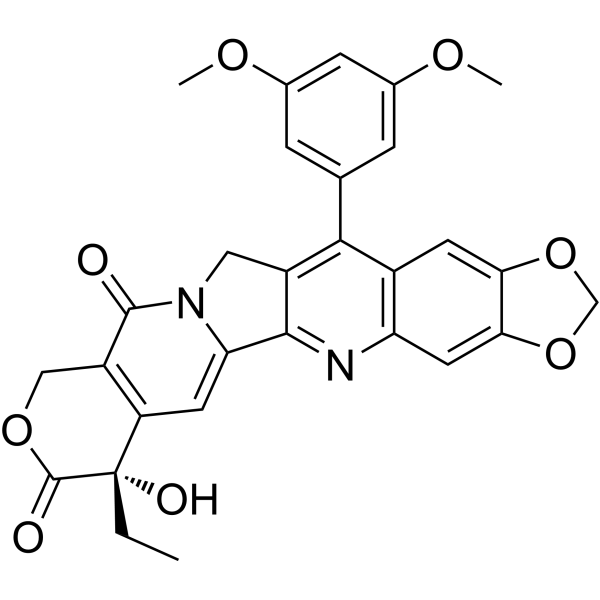
FL77-24, a FL118 analog and apoptosis inducer, possesses antitumor activity, with IC50 values of 99.4 nM, 118 nM, <6.4 nM, 28.5 nM and <6.4 nM in HCT116, HepG2, MCF-7, A549 and HeLa cells, respectively. FL77-24 mainly causes cell cycle arrest in S and G2/M phases .
loading...
    loading...
Cat. No.: HY-157165
Research Areas:  

Cancer

Tubulin/PARP-IN-1 (compound 14) is a dual PARP-tubulin inhibitor with activity against endometrial cancer. Tubulin/PARP-IN-1 inhibits PARP and tubulin with IC50s of 74 nM (PARP1), 109 nM (PARP2), and 1.4 μM (Microtubule/Tubulin), respectively. Tubulin/PARP-IN-1 can induce apoptosis and autophagy and cause cell cycle arrest in the G2/M phase .
loading...
    loading...