63 Results for "

pollutant

" in MedChemExpress (MCE) Product Catalog:
Products (63)

63 Results for "pollutant" in MCE Product Catalog:

Cat. No.: HY-21195
CAS No.: 423-50-7
Synonyms: Perfluorohexanesulphonyl fluoride
Research Areas:  

Others

Perfluorohexylsulfonyl fluoride (Perfluorohexanesulphonyl fluoride) is a perfluoroalkyl and polyfluoroalkyl substances, that is defined as persistant organic pollutant by 2022 Stockholm Convention. Perfluorohexylsulfonyl fluoride can be used for drug modification .
loading...
    loading...
Cat. No.: HY-W004769
CAS No.: 230-27-3
Synonyms: α-Naphthoquinoline
Research Areas:  

Others

Benzo[h]quinolone is a widespread environmental pollutant. Benzo[h]quinolone is mutagenic. Benzo(h)quinoline derivatives can serve as G-quadruplex binding agents .
loading...
    loading...
Cat. No.: HY-N7106R
CAS No.: 131-11-3
Synonyms: DMP (Standard)
Dimethyl phthalate (Standard) is the analytical standard of Dimethyl phthalate. This product is intended for research and analytical applications. Dimethyl phthalate, a known endocrine disruptor and one of the phthalate esters (PAEs), is a ubiquitous pollutant. Dimethyl phthalate is commonly used as a plasticizer to impart flexibility to rigid polyvinylchloride (PVC) resins .
loading...
    loading...
Cat. No.: HY-W587805
CAS No.: 41997-13-1
Synonyms: FHxSA
Research Areas:  

Others

Perfluorohexane sulfonamide (FHxSA) is the inhibitor for carbonic anhydrase, that inhibits bovine CA and human CA II with IC50 of 0.122 and 1.38 μM. Perfluorohexane sulfonamide is a delayed-action insecticide, that can be used to control red fire ants (Solenopsis invicta). Perfluorohexane sulfonamide could be a environmental pollutant .
loading...
    loading...
Cat. No.: HY-E70418
CAS No.: 9048-63-9
Epoxide hydrolase is an enzyme responsible for catalyzing the reaction between epoxides and water, converting epoxide groups into diols. Epoxide hydrolase plays a key role in the metabolism of environmental pollutants and lipids, contributing to detoxification, inflammation responses, and the regulation of cardiovascular system health. Additionally, epoxide hydrolase can be used in asymmetric catalytic reactions, such as the asymmetric ring-opening of epoxides, to produce chiral drug molecules .
loading...
    loading...
Cat. No.: HY-W090065
CAS No.: 93324-65-3
Synonyms: 1-Pyrenemethylamine hydrochloride
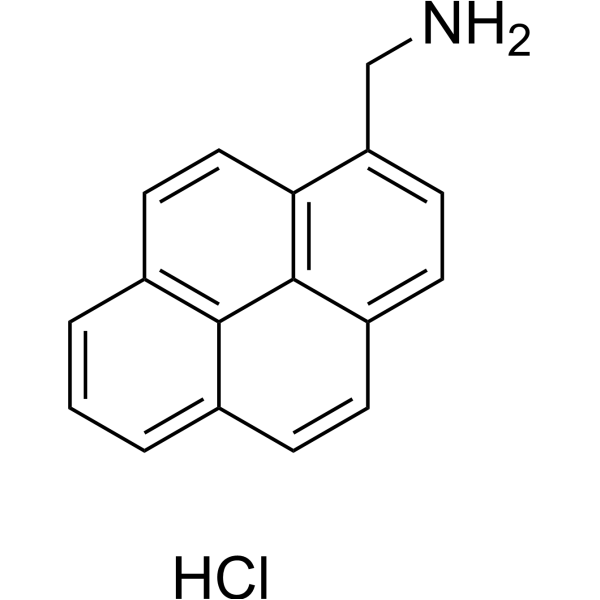
Pyren-1-ylmethanamine hydrochloride, Pyren-1-ylmethanamine hydrochloride is commonly used as a fluorescent probe in biochemistry and molecular biology to detect and study nucleic acids, proteins and other biomolecules, moreover, it has been used in analytical chemistry Among them, for the detection of heavy metals and other pollutants in environmental samples, the pyrene group in the molecule exhibits strong fluorescence properties, which makes it useful as a sensitive and selective detector in various applications.
loading...
    loading...
Cat. No.: HY-121779
CAS No.: 3424-82-6
Synonyms: 2,4'-DDE; 2,4-Dichlorodiphenyldichloroethylene; 2,4'-DDE; o,p'-Dichlorodiphenyldichloroethylene
Target:  

Insecticide

Research Areas:  

Endocrinology

o,p'-DDE (2,4-Dichlorodiphenyldichloroethylene) is a metabolite and degradation product of the organochlorine pesticide DDT. It accumulates in smallmouth buffalo, channel catfish, and largemouth bass, and in sediments from DDT manufacturing plants around the Huntsville Spring Branch-Indian Creek tributary system, where it is considered a persistent organic pollutant (POP). o,p'-DDE inhibits estrogen binding to the rainbow trout estrogen receptor (rtER) with an IC50 value of 3.2 μM. It induces concentration-dependent estradiol secretion in co-cultures of granulosa and theca cells isolated from porcine follicles. In ovo exposure to o,p'-DDE increases follicular degeneration and reduces testis size in Japanese medaka (O. latipes).
loading...
    loading...
Cat. No.: HY-Y0850U1
CAS No.: 9002-89-5
Synonyms: Polyvinyl alcohol (Mw 61000, 98-99% hydrolyzed, ~1400 polymerization); Poly(Ethenol) (Mw 61000, 98-99% hydrolyzed, ~1400 polymerization)
PVA (Mw 61000, 98-99% hydrolyzed, ~1400 polymerization) is a semicrystalline and biocompatible synthetic polymer with excellent safety properties including non-toxicity, no accumulation, and non-mutagenicity. PVA (Mw 61000, 98-99% hydrolyzed, ~1400 polymerization) undergoes cross-linking via acetal bond formation between hydroxyl and aldehyde groups, and it can be used to prepare highly rigid, low-solubility degradable films as well as for dry or minimally invasive in vitro wound studies. PVA (Mw 61000, 98-99% hydrolyzed, ~1400 polymerization) can construct a hydroxyl-rich microenvironment to trap photogenerated holes, thereby promoting hydrogen peroxide production and enhancing the redox cycle of iron species in the photo-Fenton reaction. PVA (Mw 61000, 98-99% hydrolyzed, ~1400 polymerization) can act as a sacrificial agent and substrate to achieve synchronous degradation with pollutants, and it is applicable to sustainable waste management and water treatment .
loading...
    loading...
Cat. No.: HY-Y0850U2
CAS No.: 9002-89-5
Synonyms: Polyvinyl alcohol (Mw 130000, 87-89% hydrolyzed, ~2700 polymerization); Poly(Ethenol) (Mw 130000, 87-89% hydrolyzed, ~2700 polymerization)
PVA (Polyvinyl alcohol; Poly(Ethenol)) (Mw 130000, 87-89% hydrolyzed, ~2700 polymerization) is a non-toxic, biodegradable, and highly biocompatible semicrystalline synthetic polymer. PVA (Mw 130000, 87-89% hydrolyzed, ~2700 polymerization) acts as a coating agent to improve tableting performance, and can be cross-linked with sodium trimetaphosphate to prepare tubular vascular grafts or form hydrogels for use as artificial articular cartilage and sustained-release matrices for growth factors. PVA (Mw 130000, 87-89% hydrolyzed, ~2700 polymerization) enhances the redox cycle of iron species in photo-assisted Fenton reactions to simultaneously generate hydrogen peroxide and degrade pollutants, enabling integrated sustainable waste management and water treatment. PVA (Mw 130000, 87-89% hydrolyzed, ~2700 polymerization) is used in the manufacture of biodegradable films and in studies of dry or minimally invasive ex vivo wounds, but cannot form freeze-thaw cross-linked solid sheets for wound dressings .
loading...
    loading...
Cat. No.: HY-Y0850U8
CAS No.: 9002-89-5
Synonyms: Polyvinyl alcohol (Mw 47000, 98-99% hydrolyzed, ~1000 polymerization); Poly(Ethenol) (Mw 47000, 98-99% hydrolyzed, ~1000 polymerization)
PVA (Polyvinyl alcohol; Poly(Ethenol)) (Mw 47000, 98-99% hydrolyzed, ~1000 polymerization) is a semicrystalline synthetic polymer with excellent biocompatibility and biodegradability, which is non-toxic and non-mutagenic upon oral administration in the human body. PVA (Mw 47000, 98-99% hydrolyzed, ~1000 polymerization) can serve as an excipient, inhibitor or coating agent to prepare solid dispersions by absorbing water and inhibiting drug crystal nucleation and growth, and can encapsulate insulin-like growth factor-1. PVA (Mw 47000, 98-99% hydrolyzed, ~1000 polymerization) can form physically crosslinked cryogels and degradable films, and is widely used in the construction of vascular grafts, the synthesis of articular cartilage, and studies on dry or minimally invasive ex vivo wounds. PVA (Mw 47000, 98-99% hydrolyzed, ~1000 polymerization) also promotes hydrogen peroxide generation and enhances the redox cycle of iron species, thus acting as a sacrificial agent to effectively degrade pollutants .
loading...
    loading...
Cat. No.: HY-W099984
CAS No.: 89-72-5
Research Areas:  

Others

2-sec-Butylphenol is a ubiquitous pollutant found in aquatic environments and is highly lethal and accumulative to aquatic organisms .
loading...
    loading...
Cat. No.: HY-W004460
CAS No.: 781-43-1
9,10-Dimethylanthracene is a polycyclic aromatic hydrocarbon that acts as a DNA-damaging agent. 9,10-Dimethylanthracene is promising for research of carcinogenic risks of environmental pollutants .
loading...
    loading...
Cat. No.: HY-B1781R
CAS No.: 80-32-0
Synonyms: Sulfachlorpyridazine (Standard)
Research Areas:  

Infection

Sulfachloropyridazine (Standard) is the analytical standard of Sulfachloropyridazine. This product is intended for research and analytical applications. Sulfachloropyridazine is a broad spectrum sulfonamide that can be used against both gram-positive and gram-negative aerobic bacteria as well as Chlamydia. Sulfachloropyridazine is also considered as a common pollutant in surface and groundwater. Sulfachloropyridazine via electro-Fenton is a model for sulfonamide antibiotics that are widespread in waters .
loading...
    loading...
Cat. No.: HY-W012278
CAS No.: 56-55-3
Synonyms: Tetraphene
Benz[a]anthracene (Tetraphene) is a polycyclic aromatic hydrocarbon pollutant and also a ligand of aryl hydrocarbon receptor 2 (AHR2), with a pIC50 of 7.319. Benz[a]anthracene can be detected in spruce needles near aluminum smelters. Exposure to Benz[a]anthracene during zebrafish embryonic stage activates the AHR-CYP1A signaling pathway and induces AHR2 expression, leading to social behavioral deficits that persist into adulthood, accompanied by impaired neuro-immune interaction, while anxiety levels remain unaffected. Benz[a]anthracene can be used in studies related to PAH environmental toxicology, developmental neurotoxicity and biodegradation .
loading...
    loading...
Cat. No.: HY-W541058
CAS No.: 94-47-3
Phenethyl Benzoate is a fragrance and flavor ingredient. Phenethyl Benzoate is promising for research of pollutant degradation and cosmetics .
loading...
    loading...
Cat. No.: HY-W271064
CAS No.: 2381-21-7
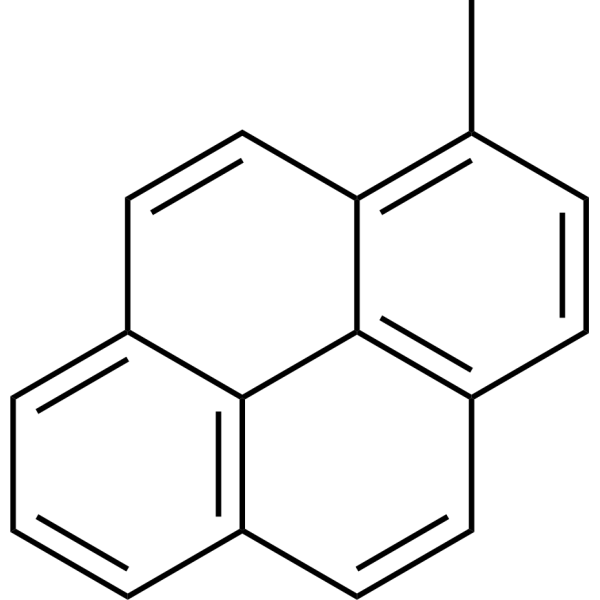
1-Methylpyrene is a ubiquitous environmental pollutant and rodent carcinogen. Its mutagenic activity depends on sequential activation by various CYP and sulfotransferase (SULT) enzymes. 1-Methylpyrene induces chromosome loss and mitotic disturbance, proba
loading...
    loading...
Cat. No.: HY-124451
CAS No.: 91-58-7
Purity:  99.69%
Research Areas:  

Cancer

2-Chloronaphthalene, serving as an intermediate in organic synthesis, is classified as a persistent organic pollutant. 2-Chloronaphthalene can induce apoptosis and autophagy, while inhibiting cell proliferation. 2-Chloronaphthalene leads to cell death through the interplay between autophagy and apoptosis .
loading...
    loading...
Cat. No.: HY-W011103
CAS No.: 3648-21-3
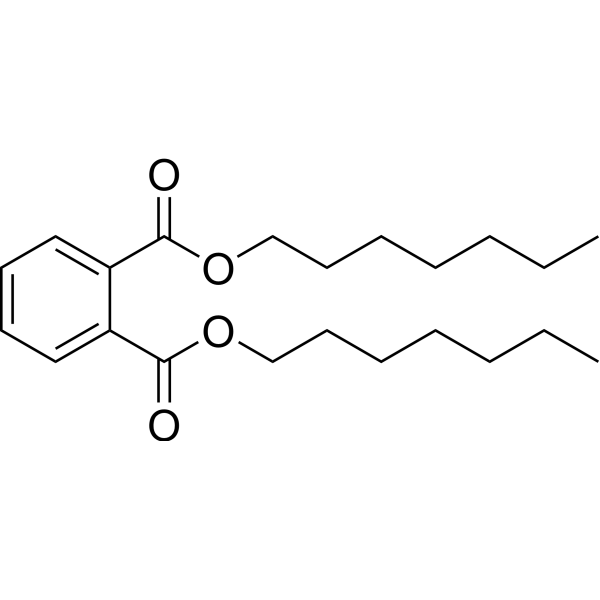
Diheptyl phthalate is a class of phthalates consisting of two heptyl (C7) chains attached to a phthalic acid backbone. This compound is commonly used as a plasticizer in various polymer materials such as PVC to increase flexibility and durability. It can also be used as a lubricant, solvent or additive in various industrial applications such as coatings, adhesives and sealants. However, Diheptyl phthalate has been identified as an environmental pollutant and health hazard due to its potential for endocrine disruption and toxicity.
loading...
    loading...
Cat. No.: HY-W016758
CAS No.: 79917-90-1
Synonyms: 1-Butyl-3-methylimidazolium chloride
Target:  

Bacterial

Research Areas:  

Infection

[BMIM]Cl (1-butyl-3-methylimidazolium chloride) is an alkyl-imidazolium chloride compound and a persistent aquatic pollutant. [BMIM]Cl exhibits antimicrobial activity against S. aureus (MIC = 25 mM), E. coli (MIC = 50 mM), and P. aeruginosa (MIC = 100 mM). It possesses moderate membrane permeability and cytotoxicity, directly affecting microorganisms and mammalian cells at high concentrations, but can inhibit the function of complex ecosystems (e.g., anaerobic digestion) even at environmentally relevant low concentrations by disrupting microbial community structures. [BMIM]Cl can be used in research related to bacterial infections .
loading...
    loading...
Cat. No.: HY-W017960R
CAS No.: 1149-23-1
Synonyms: Et-HE (Standard); 1,4-DHP (Standard)
Target:  

SOD Reference Standards

Research Areas:  

Metabolic Disease

Diludine (Standard) is the analytical standard of Diludine (HY-W017960). This product is intended for research and analytical applications. Diludine (BNP-7787) is an orally effective feed additive. Diludine reduces the activity of G6PD and increases the level of superoxide dismutase (SOD). Diludine reduces the mutagenic effect of environmental pollutants, protects parental reproductive systems and improves offspring quality. Diludine is mainly applied during the transition period of dairy cows to increase milk yield and milk fat content, and improve health status during parturition. Diludine can be used in animal feeding research .
loading...
    loading...