
486 Results for "

conformations

" in MedChemExpress (MCE) Product Catalog:
Products (486)

486 Results for "conformations" in MCE Product Catalog:

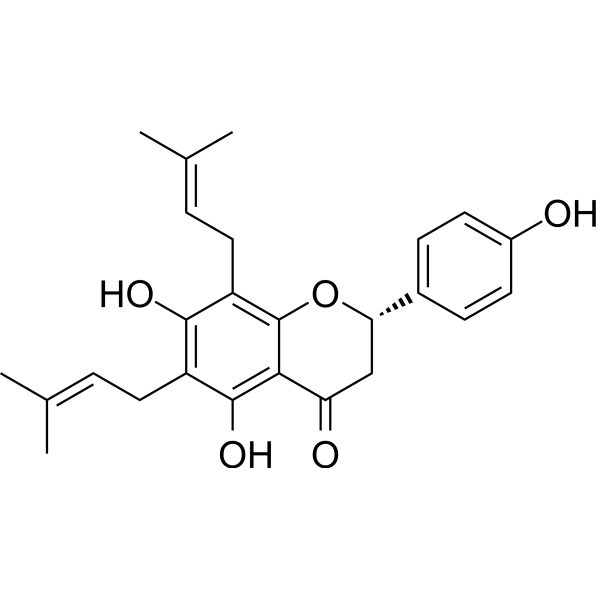
Cat. No.: HY-122416
CAS No.: 68236-11-3
Synonyms: Lonchocarpol A; Senegalensin
6,8-Diprenylnaringenin (Lonchocarpol A; Senegalensin) is a potent BCRP/ABCG2 inhibitor (IC50 = 0.410 μM) and a non-competitive allosteric PTP1B inhibitor (IC50 = 1.04 μM; Ki = 1.56 μM) that is isolated from Humulus lupulus. 6,8-Diprenylnaringenin produces non-competitive allosteric inhibition by locking the WPD catalytic loop of PTP1B in an inactive open conformation, while simultaneously binding to and inhibiting the ABCG2 drug efflux pump. 6,8-Diprenylnaringenin also exhibits antibacterial activity against MRSA (MIC = 6-13 μM) and antioxidant activity. 6,8-Diprenylnaringenin is used in research on type 2 diabetes, obesity, MRSA infection, and atherosclerosis .
loading...
    loading...
Cat. No.: HY-159805
CAS No.: 2813260-27-2
Target:  

CDK

Research Areas:  

Cancer

CDK2-IN-31 is a CCNE1:CDK2 complex inhibitor with an IC50 of 0.13 μM. CDK2-IN-31 binds to a cryptic allosteric pocket at the CCNE1:CDK2 interface, inducing structural rearrangements of the CDK2 A-loop that disrupt the kinase's active conformation and interfere with substrate binding. CDK2-IN-31 inhibits phosphorylation of retinoblastoma protein 1 (RB1) in CCNE1-dependent ovarian cancer cells. CDK2-IN-31 impairs coenrichment of protein PRC1 with CCNE1-N112C:CDK2 complexes. CDK2-IN-31 can be used for the research of ovarian cancer .
loading...
    loading...
Cat. No.: HY-161577
CAS No.: 701231-39-2
Target:  

Bcl-2 Family

Research Areas:  

Cancer

BFC1103 is a small-molecule compound whose primary mechanism of action involves interaction with a specific domain of Bcl-2, particularly its loop domain. This interaction induces a conformational change in Bcl-2, exposing its BH3 (Bcl-2 homology 3) domain, thereby switching Bcl-2's function from anti-apoptotic to pro-apoptotic. The cell death induced by BFC1103 is dependent on the presence of Bax or Bak, both of which are key proteins involved in the intrinsic apoptotic pathway mediated by mitochondria. BFC1103 has successfully inhibited lung metastasis of triple-negative breast cancer in mouse models. It can be utilized in studying the roles of Bcl-2 family proteins in cancer development and how they impact the survival and proliferation of cancer cells .
loading...
    loading...
Cat. No.: HY-168437
Target:  

MicroRNA

Research Areas:  

Cancer

LIN28-IN-2 is a Lin28 inhibitor with activity against Lin28a, Lin28b, and their zinc knuckle domain. LIN28-IN-2 blocks Lin28-RNA substrate binding, perturbs zinc knuckle domain conformation. LIN28-IN-2 inhibits cancer cell proliferation, spheroid growth, and induces G2/M phase arrest. LIN28-IN-2 suppresses cancer stem cell phenotypes, Lin28-mediated stress granule formation, let-7 target genes, cancer stem cell biomarkers, and neuroendocrine biomarkers expression in cancer cells. LIN28-IN-2 can be used for the research of cancer .
loading...
    loading...
Cat. No.: HY-182913
Target:  

SARS-CoV

Research Areas:  

Infection

SARS-CoV-2-IN-122 is a SARS-CoV-2 inhibitor by targeting the S2 subunit of the spike protein. SARS-CoV-2-IN-122 interacts with residues linked to membrane fusion-associated conformational rearrangements, interfering with viral entry events. SARS-CoV-2-IN-122 inhibits SARS-CoV-2 replication, lacks direct virucidal activity, and does not impair viral-host cell attachment. SARS-CoV-2-IN-122 exhibits activity against SARS-CoV-2 variants including B.1 and Omicron (BA.2.86.1). SARS-CoV-2-IN-122 can be used for the research of coronavirus disease 2019 (COVID-19) .
loading...
    loading...
Cat. No.: HY-186151
CAS No.: 1372406-51-3
Target:  

MDM-2/p53 Apoptosis

Research Areas:  

Cancer

UCI-LC0019 is a mutant p53 reactivator. UCI-LC0019 binds to mutant p53, induces wild-type-like conformational change, restores sequence-specific DNA binding activity, activates p53-dependent transcription programs, and does not act via thiol reactivity or glutathione depletion. UCI-LC0019 inhibits proliferation and induces apoptosis in cancer cells harboring mutant p53, with no significant effect on p53 null or wild-type p53 tumors cells. UCI-LC0019 exhibits anti-tumor activity in xenograft mouse models carrying p53R175H mutant tumors. UCI-LC0019 can be used for the research of cancer, such as ovarian cancer .
loading...
    loading...
Cat. No.: HY-188012
CAS No.: 2975602-21-0
Synonyms: dMGer
Target:  

Others

Research Areas:  

Others

Desmethyl germinone (dMGer) is a KL signaling pathway activator that binds to the human HTL/KAI2 receptor with an IC50 of 46.4 nM. Desmethyl germinone induces conformational changes of the receptor by directly binding to the ligand-binding pocket of KAI2/D14L, promotes the interaction of KAI2/D14L with D3/MAX2 and SMAX1, and leads to SMAX1 degradation. Desmethyl germinone induces seed germination and inhibits hypocotyl elongation in an abscisic acid-independent manner in Arabidopsis thaliana, and inhibits mesocotyl elongation and induces the expression of KL-responsive genes in rice. Desmethyl germinone can be used in studies related to seed germination, dormancy, and the KAI2/KL signaling pathway .
loading...
    loading...
Cat. No.: HY-189252
Target:  

JAK STAT

Research Areas:  

Cancer

JAK2 activator 1 is an orally active and selective JAK2 activator derived from Proanthocyanidin A1 (HY-N2344) (EC50 = 64 nM). JAK2 activator 1 directly binds to JAK2, triggers conformational changes, and achieves allosteric activation of the JAK2/STAT3 signaling pathway. JAK2 activator 1 promotes hematopoietic recovery in chemotherapy-induced myelosuppression by protecting hematopoietic stem cells from Carboplatin (HY-17393)-induced damage. JAK2 activator 1 does not promote the proliferation of A549, HepG2, or CaCo2 tumor cells, nor does it attenuate the antitumor effect of Carboplatin. JAK2 activator 1 can be used in research related to cancer chemotherapy-induced myelosuppression .
loading...
    loading...
Cat. No.: HY-N3103R
CAS No.: 7362-39-2
Synonyms: Ethyl (E)-p-hydroxycinnamate (Standard); Ethyl trans-4-hydroxycinnamate (Standard)
p-Coumaric Acid Ethyl Ester Standard (Ethyl (E)-p-hydroxycinnamate Standard; Ethyl trans-4-hydroxycinnamate Standard) is the analytical standard of p-Coumaric Acid Ethyl Ester (HY-N3103). This product is intended for research and analytical applications. p-Coumaric Acid Ethyl Ester (Ethyl (E)-p-hydroxycinnamate; Ethyl trans-4-hydroxycinnamate) is a tyrosinase (Tyrosinase) inhibitor (IC50 = 4.89 μg/mL; Ki = 1.83 μg/mL). p-Coumaric Acid Ethyl Ester exhibits antitumor, antifungal, anti-inflammatory, and antioxidant activities. p-Coumaric Acid Ethyl Ester inhibits melanoma proliferation by inducing cell cycle arrest, and inhibits melanin synthesis by non-competitively altering tyrosinase conformation to hinder substrate binding. p-Coumaric Acid Ethyl Ester can be used in research on melanoma, whitening cosmetics, and fruit preservation .
loading...
    loading...
Cat. No.: HY-N6935R
CAS No.: 517-44-2
Sennidin B Standard is the analytical standard of Sennidin B (HY-N6935). This product is intended for research and analytical applications. Sennidin B is an anthraquinone compound isolated from Cassia angustifolia. Sennidin B is a DPP-4 inhibitor with an IC50 of 39.39 μM. Sennidin B is an insect chitinase inhibitor with a Ki of 80 nM against OfChi-h. Sennidin B competitively inhibits chitinase activity by forming π-π stacking interactions with key tryptophan residues in the active site through a folded conformation. Sennidin B activates PI3K/Akt to promote glucose uptake in adipocytes. Sennidin B can be used for the development of biopesticides and research on type 2 diabetes and metabolism-related signaling pathways .
loading...
    loading...
Cat. No.: HY-P11035
Target:  

Ephrin Receptor

Research Areas:  

Neurological Disease Cancer

APY-d3 is a highly selective EphA4 receptor inhibitor, with an IC50 value of 17-56 nM for human EphA4, an IC50 value of 20 nM for mouse EphA4, and a Kd value of 138 nM for EphA4-LBD. APY-d3 binds to EphA4, blocks its interaction with ephrin ligands, inhibits tyrosine phosphorylation of EphA4, prevents growth cone collapse, and does not induce EphA4 phosphorylation in primary cortical neurons. APY-d3 adopts a β-hairpin conformation stabilized by an N-terminal to C-terminal disulfide bond. APY-d3 can be used in research related to amyotrophic lateral sclerosis, Alzheimer's disease, stroke, neurodegenerative diseases and cancer .
loading...
    loading...
Cat. No.: HY-P11107
CAS No.: 2375823-45-1
Target:  

Apoptosis TNF Receptor

Research Areas:  

Inflammation/Immunology Cancer

RP-832c is a synthetic analogue of host defense peptides (HDP), targeting the mannose receptor CD206 on the surface of M2 polarized macrophages (Kd = 3.5 μM). RP-832c binding to CD206 induces a significant conformational change in the receptor, activating signaling pathways that lead to rapid apoptosis and repolarization of CD206-positive M2 macrophages to an M1 phenotype. RP-832c treatment significantly reduces CD206 gene expression in M2 macrophages while transiently increasing expression of TNF-α, a marker for M1 macrophages. RP-832c is used for the studies of T-cell lymphoma (CTCL) and idiopathic pulmonary fibrosis (IPF) .
loading...
    loading...
Cat. No.: HY-P12350
CAS No.: 1261043-80-4
Research Areas:  

Others

Ac-I3K-NH2 is a surfactant-like peptide. Ac-I3K-NH2 self-assembles into β-sheet nanofibers through β-sheet hydrogen bonding, hydrophobic interactions, and electrostatic repulsion. Ac-I3K-NH2 forms ribbon-like nanofibers with nanoscale widths, adopting a β-sheet conformation, with lateral stacking driven by isoleucine side-chain contacts. Ac-I3K-NH2 templates the sol-gel condensation of tetraethoxysilane, producing silica nanotubes. Ac-I3K-NH2 templates the synthesis of one-dimensional Pt nanostructures with P7A as a capping agent .
loading...
    loading...
Cat. No.: HY-P5423
CAS No.: 107658-43-5
Target:  

Exosomes Liposome

Research Areas:  

Cancer

GALA is a pH-responsive amphipathic peptide consisting of 30 amino acids, which acts as a lung endothelium-targeting ligand. GALA undergoes a conformational transition from random coil to α-helix in an acidic environment at pH 5.0, thereby inducing endosomal membrane destabilization and fusion. GALA-modified liposomes traverse lung endothelial cells via clathrin-dependent endocytosis and transcytosis, and specifically accumulate in the lungs after intravenous injection. GALA significantly promotes the cytosolic release of cargos carried by exosomes, plasmids and liposomes, effectively enhances gene transfection efficiency, and drives gene knockdown of functional macromolecules (such as siRNA) in alveolar epithelial cells (with no significant cytotoxicity at effective concentrations). GALA serves as a critical tool for studies on lung cancer metastasis (e.g., melanoma lung metastasis) and lung-targeted drug delivery systems .
loading...
    loading...
Cat. No.: HY-W746556
CAS No.: 52886-39-2
Methyl cholate-d5 is the deuterium labeled Methyl cholate. Methyl cholate is a bile acid analog and a specific inhibitor of TcdB toxin from Clostridioides difficile. Methyl cholate exerts a stronger selective inhibitory effect on TcdB than on TcdA. Methyl cholate induces conformational stabilization by binding to a unique site of TcdB, thereby blocking the binding of the toxin to host receptors and its self-processing process. Methyl cholate effectively protects human fibroblasts from TcdB-induced cytopathic effects. Methyl cholate exhibits dose-dependent anti-hepatic fibrosis activity in both cellular and zebrafish models, and significantly reduces the expression levels of α-SMA and COL-I. Methyl cholate is suitable for in-depth research in the fields of Clostridioides difficile infection and hepatic fibrosis .
loading...
    loading...
Cat. No.: HY-L110
100 compounds

Cyclic peptides are polypeptide chains taking cyclic ring structure, which exhibit diverse biological activities, such as antibacterial activity, immunosuppressive activity and anti-tumor activity. Cyclic peptides, with the features of good binding affinity, target selectivity and low toxicity, show great success as therapeutics. Multiple cyclic peptides are currently in clinical use, for examples, gramicidin and tyrocidine with bactericidal activity, cyclosporin A with immunosuppressive activity, and vancomycin with antibacterial activity. Furthermore, cyclic peptides usually have the sufficient size and a balanced conformational flexibility/rigidity for binding to flat protein-protein interaction (PPI) interfaces, which have potential to develop PPI drugs.

MCE offers a unique collection of 100 cyclic peptides, all of which have good bioactivities. MCE Cyclic Peptide Library is a powerful tool for drug discovery and PPI inhibitor screening.

Cat. No.: HY-110168R
CAS No.: 913830-15-6
NS 9283 (Standard) is the analytical standard of NS 9283 (HY-110168). This product is intended for research and analytical applications. NS 9283 (A-969933) is a α4β2 nicotinic acetylcholine receptor (α4β2 nAChR) positive allosteric modulator that preferentially targets the (α4)3 (β2)2 stoichiometric conformation. NS 9283 increases the potency of ACh-induced currents without enhancing the maximal effect of ACh. NS 9283 also enhances prefrontal glutamate release, modulates attention-related electrophysiological responses, and potentiates the antinociceptive effects associated with α4β2 nAChR agonists. NS 9283 can be used in research related to inflammatory pain, postoperative pain, osteoarthritis pain, and Parkinson's disease .
loading...
    loading...
Cat. No.: HY-110168S
NS 9283-d4 is the deuterated-labeled NS 9283 (HY-110168). NS 9283 (A-969933) is a α4β2 nicotinic acetylcholine receptor (α4β2 nAChR) positive allosteric modulator that preferentially targets the (α4)3 (β2)2 stoichiometric conformation. NS 9283 increases the potency of ACh-induced currents without enhancing the maximal effect of ACh. NS 9283 also enhances prefrontal glutamate release, modulates attention-related electrophysiological responses, and potentiates the antinociceptive effects associated with α4β2 nAChR agonists. NS 9283 can be used in research related to inflammatory pain, postoperative pain, osteoarthritis pain, and Parkinson's disease .
loading...
    loading...

