481 Results for "

Indicator

" in MedChemExpress (MCE) Product Catalog:
Products (481)

481 Results for "Indicator" in MCE Product Catalog:

Cat. No.: HY-178936
CAS No.: 3094174-82-7
Target:  

JAK STAT

Research Areas:  

Inflammation/Immunology Cancer

JAK2-IN-15 is an orally active, potent, selective JAK2 inhibitor (IC50 = 1.17 nM). JAK2-IN-15 can inhibit the AK2-STAT signaling pathway. JAK2-IN-15 significantly improves key pathological indicators such as hematocrit and splenomegaly in an Epoetin beta (HY-114134) (rhEPO)-induced mouse model. JAK2-IN-15 can be used for the study of Polycythemia Vera (PV) .
loading...
    loading...
Cat. No.: HY-D1447
CAS No.: 348079-14-1
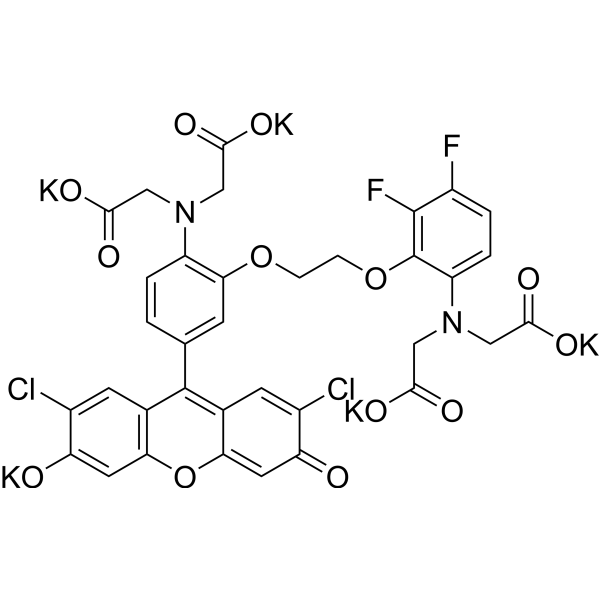
Fluo-3FF pentapotassium is a cell-impermeant fluorescent calcium indicator. Fluo-3FF is a di-fluorinated analog of Fluo-3 with a 100-fold lower affinity than Fluo-3 for calcium (Kds=42 and 0.4 μM, respectively). For its low affinity, Fluo-3FF is used for studying compartments with high concentrations of calcium, such as endoplasmic reticulum, where high affinity dyes will be insensitive to luminal fluctuations.
loading...
    loading...
Cat. No.: HY-D3222
CAS No.: 2413264-79-4
NIR-PN1 is a blood-brain barrier-permeable near-infrared fluorescent indicator targeting peroxynitrite anion (ONOO ) (Ex/Em = 510 nm/670 nm). NIR-PN1 reacts with ONOO to trigger a strong near-infrared fluorescence enhancement, enabling the detection of ONOO flux. NIR-PN1 allows the imaging of ONOO flux in various Parkinson's disease models. NIR-PN1 is applicable to Parkinson's disease-related research .
loading...
    loading...
Cat. No.: HY-113323S
CAS No.: 74495-72-0
Purity:  99.52%
Synonyms: HMPG-d3; MHPG-d3; MOPEG-d3
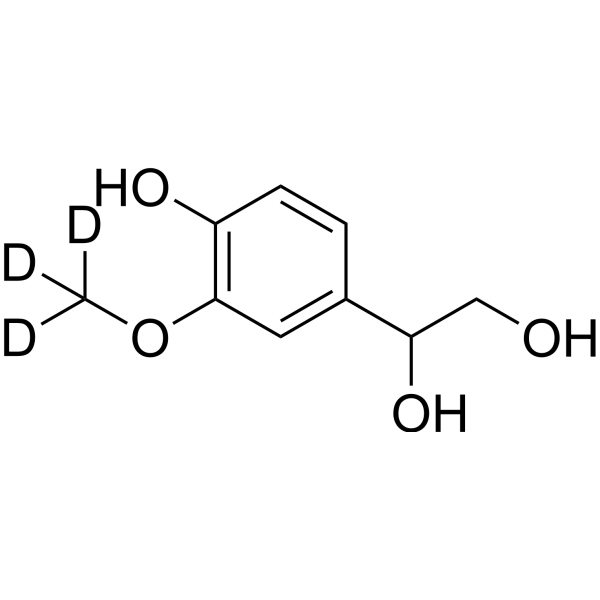
3-Methoxy-4-hydroxyphenylglycol-d3 (HMPG-d3) is the deuterium labeled 3-Methoxy-4-hydroxyphenylglycol. 3-Methoxy-4-hydroxyphenylglycol is a metabolite of norepinephrine degradation in the brain. 3-Methoxy-4-hydroxyphenylglycol (HMPG) serves as an indicator of noradrenergic activity in the central nervous system. 3-Methoxy-4-hydroxyphenylglycol (HMPG) can be used for research on diseases such as depression and chronic schizophrenia.
loading...
    loading...
Cat. No.: HY-117401
CAS No.: 107827-77-0
Purity:  99.32%
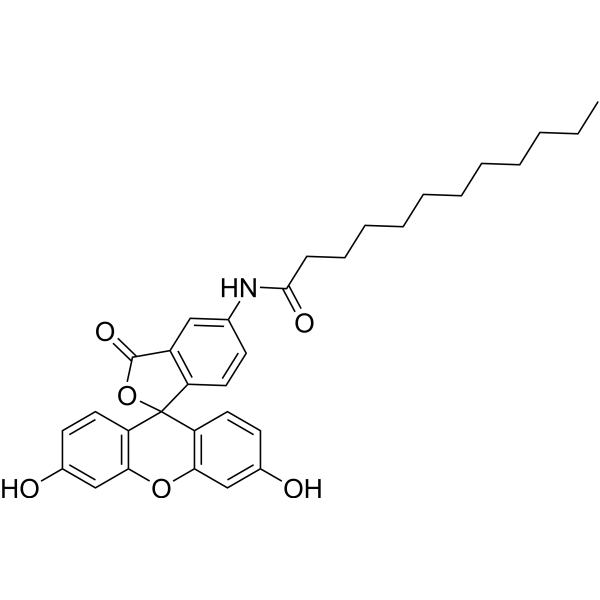
5-Dodecanoylaminofluorescein is an amphipathic (amphoteric) fluorescent probe (Ex/Em = 485 nm/515-535 nm), which consists of a hydrophilic fluorescein core and a hydrophobic dodecanoyl group (C12 fatty acid chain) linked by an amide bond. 5-Dodecanoylaminofluorescein is mainly used as an interface-localized radical trapping/indicator probe. Dodecanoylaminofluorescein can be used for the determination of the antioxidant properties of emulsions, or can serve as a lipophilic drug model for the study of passive skin penetration when encapsulated in tyrosine-derived nanospheres .
loading...
    loading...
Cat. No.: HY-D0142
CAS No.: 59572-10-0
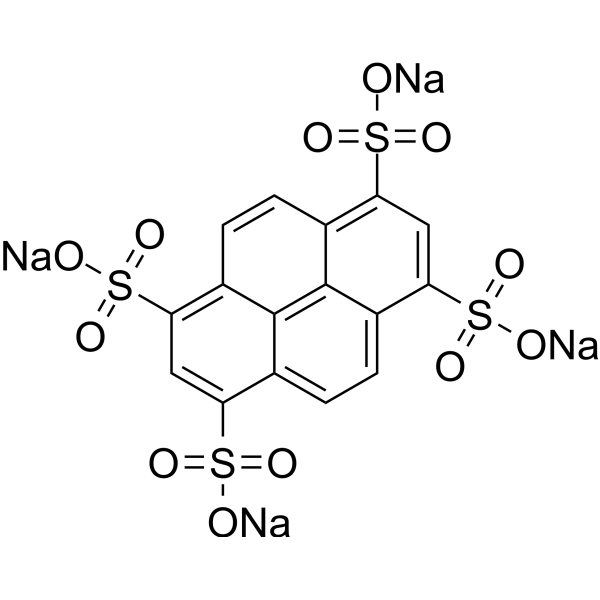
Pyrene-1,3,6,8-tetrasulfonic acid tetrasodium is a fluorescent dye and pH indicator, also as a ligand of multifunctional metal-organic framework. Pyrene-1,3,6,8-tetrasulfonic acid tetrasodium has been used to detect CO2 release. Pyrene-1,3,6,8-tetrasulfonic acid tetrasodium acts as a water-soluble fluorescent dye for fluorescence quenching assays monitoring gramicidin ion-channel activity . Ex/Em = 396/404 nm.
loading...
    loading...
Cat. No.: HY-D1551
CAS No.: 886212-86-8
Target:  

Fluorescent Dye

Research Areas:  

Others

10-(4-(Bis(2-hydroxyethyl)amino)phenyl)-5,5-difluoro-1,3,7,9-tetramethyl-5H-dipyrrolo[1,2-c:2',1'-f][1,3,2]diazaborinin-4-ium-5-uide, a BODIPY derivative, is a fluorescent indicator for detecting Pb 2+ (Ex=504 nM, Em=510 nM) .
loading...
    loading...
Cat. No.: HY-D3116
CAS No.: 2711762-70-6
Research Areas:  

Others

RhoNox-4 is a ferroptosis inhibitor and a fluorescence activation indicator specific to Fe 2+. RhoNox-4 selectively reacts with labile Fe 2+ and oxidizes it to Fe 3+, depleting labile Fe 2+ involved in lipid peroxidation and inhibiting ferroptosis induced by ferroptosis inducers. RhoNox-4 is cell-permeable, accumulates in the endoplasmic reticulum and/or Golgi apparatus, can be used for live-cell imaging and high-throughput screening of subcellular iron status regulators, and is applicable to iron biology research .
loading...
    loading...
Cat. No.: HY-D3240
CAS No.: 2375541-43-6
Photoactive NTR probe (Compound 1) is a covalent crosslinker and Fluorescent indicator targeting Nitroreductase. The Photoactive NTR probe undergoes a sequential activation process: it is first activated via nitroreductase-mediated nitro-to-amino conversion, and then forms a fluorescent product upon photoactivation. The Photoactive NTR probe can form covalent adducts with the side chains of cysteine, tyrosine, lysine and histidine in adjacent proteins to reduce fluorophore diffusion. The Photoactive NTR probe enables super-resolution (STORM) imaging of active mitochondrial nitroreductase microdomains in living cells .
loading...
    loading...
Cat. No.: HY-100168AR
CAS No.: 126824-24-6
Research Areas:  

Others

BAPTA tetrasodium (Standard) is the analytical standard of BAPTA tetrasodium. This product is intended for research and analytical applications. BAPTA tetrasodium is a selective and cell-impermeant chelator for calcium. BAPTA tetrasodium, as calcium indicator, has high selectivity against magnesium and calcium. BAPTA tetrasodium is widely used as an intracellular buffer for investigating the effects of Ca 2+ release from intracellular stores or influx via Ca 2+-permeable channels in the plasma membrane. BAPTA tetrasodium can also inhibit phospholipase C activity independently of their role as Ca 2+ chelators .
loading...
    loading...
Cat. No.: HY-158779
CAS No.: 1810731-98-6
Purity:  95.16%
Synonyms: SSP4
Target:  

Fluorescent Dye

Research Areas:  

Others

Sulfane sulfur probe 4 (SSP4) is a fluorescent indicator with high selectivity and sensitivity toward sulfane sulfur (including small-molecule sulfane sulfur and protein-bound sulfane sulfur), and its fluorescence is inhibited by Cu 2+. Sulfane sulfur probe 4 produces a fluorescence turn-on response upon reaction with sulfane sulfur. Sulfane sulfur probe 4 can detect persulfidated proteins including papain, BSA, GAPDH, and human protein disulfide isomerase. Sulfane sulfur probe 4 enables bioimaging of exogenous and endogenous sulfane sulfur in cells .
loading...
    loading...
Cat. No.: HY-D0121
CAS No.: 96314-96-4
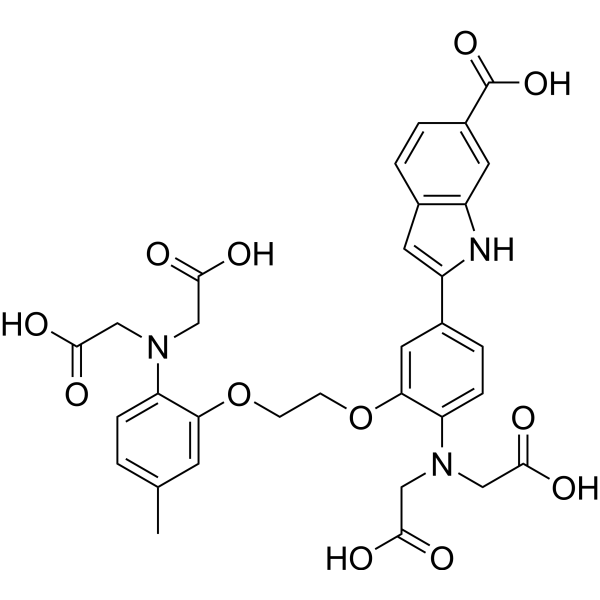
INDO 1 is a cell-impermeable, dual-emission ratiometric fluorescent calcium indicator with a KD·β value of 0.44 μM. INDO 1 binds to intracellular free calcium ions and undergoes wavelength-dependent fluorescence changes. In the unbound state (free form) without Ca 2+, its fluorescence emission peak is at 485 nm upon excitation with ultraviolet light (350 nm). When INDO 1 pentasodium binds to Ca 2+ (bound state), the emission peak shifts to 405 nm (Ex = 350 nm; dual emission at Em= 405/485 nm) .
loading...
    loading...
Cat. No.: HY-D0121A
CAS No.: 132319-56-3
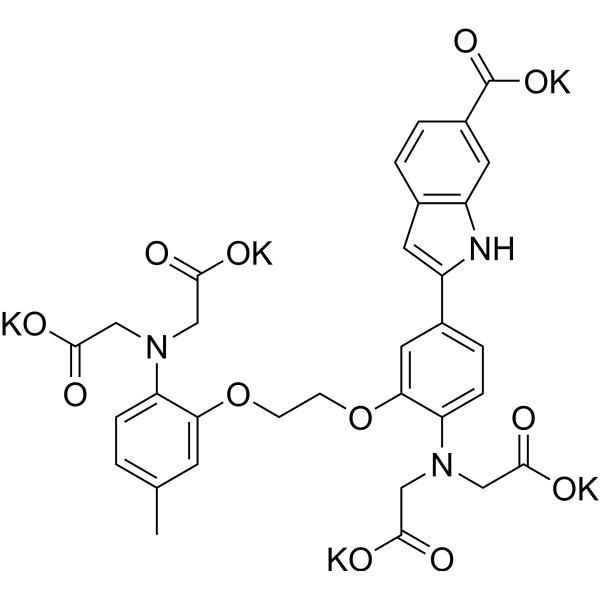
INDO 1 pentapotassium is a cell-impermeable, dual-emission ratiometric fluorescent calcium indicator with a KD·β value of 0.44 μM. INDO 1 pentapotassium binds to intracellular free calcium ions and undergoes wavelength-dependent fluorescence changes. In the unbound state (free form) without Ca 2+, its fluorescence emission peak is at 485 nm upon excitation with ultraviolet light (350 nm). When INDO 1 pentasodium binds to Ca 2+ (bound state), the emission peak shifts to 405 nm (Ex = 350 nm; dual emission at Em= 405/485 nm) .
loading...
    loading...
Cat. No.: HY-D0121B
INDO 1 pentasodium is a cell-impermeable, dual-emission ratiometric fluorescent calcium indicator with a KD·β value of 0.44 μM. INDO 1 pentasodium binds to intracellular free calcium ions and undergoes wavelength-dependent fluorescence changes. In the unbound state (free form) without Ca 2+, its fluorescence emission peak is at 485 nm upon excitation with ultraviolet light (350 nm). When INDO 1 pentasodium binds to Ca 2+ (bound state), the emission peak shifts to 405 nm (Ex = 350 nm; dual emission at Em= 405/485 nm) .
loading...
    loading...
Cat. No.: HY-100168BR
CAS No.: 73630-08-7
BAPTA tetrapotassium (Standard) is the analytical standard of BAPTA tetrapotassium (HY-100168B). This product is intended for research and analytical applications. BAPTA tetrapotassium is a selective and cell-impermeant chelator for calcium. BAPTA tetrapotassium, as calcium indicator, has high selectivity against magnesium and calcium. BAPTA tetrapotassium is widely used as an intracellular buffer for investigating the effects of Ca 2+ release from intracellular stores or influx via Ca 2+-permeable channels in the plasma membrane. BAPTA tetrapotassium can also inhibit phospholipase C activity independently of their role as Ca 2+ chelators .
loading...
    loading...
Cat. No.: HY-124470
CAS No.: 550-28-7
Target:  

Others

Research Areas:  

Cardiovascular Disease

Amisometradine is an orally active aminouracil diuretic with a diuretic potency approximately 40% that of Mersalyl (HY-108868) (when administered intramuscularly). Amisometradine exerts its effects by promoting the excretion of sodium, chloride and a small amount of potassium, exhibits significant therapeutic effects in heart failure models, and has good tolerance with long-term administration. Compared with drugs of the same class, Amisometradine causes fewer gastrointestinal reactions; its minor side effects mainly include nausea, vomiting, diarrhea, tinnitus and deafness, and are usually not accompanied by proteinuria or abnormalities in blood and urine indicators. Amisometradine is an important tool for the study of heart failure and related diuretic mechanisms .
loading...
    loading...
Cat. No.: HY-125287
CAS No.: 1802518-63-3
Purity:  99.87%
Synonyms: (Rac)-UCB0599; NPT200-11
Target:  

α-synuclein

Research Areas:  

Neurological Disease

(Rac)-Minzasolmin ((Rac)-UCB0599; NPT200-11) is a blood-brain barrier penetrated alpha-synuclein (ASYN) misfolding inhibitor. (Rac)-Minzasolmin acts on the early stage of ASYN aggregation process, by replacing the membrane-bound oligomers ASYN, allowing them to revert to the monomeric form, while preventing pathological aggregation. (Rac)-Minzasolmin effectively improves the ASYN deposition in the retina and the neuro-pathological indicators in two α-synuclein transgenic mouse models. (Rac)-Minzasolmin can be used for the studies of Parkinson's disease (PD) and dementia with Lewy bodies (DLB) .
loading...
    loading...
Cat. No.: HY-D3480
BeRST voltage sensitive dye is a silicon-rhodamine-based voltage-sensitive dye that serves as a membrane potential indicator, featuring fast response kinetics, high sensitivity, photostability, and excellent signal-to-noise ratio. BeRST voltage sensitive dye relies on the photoinduced electron transfer (PeT) mechanism to report changes in neuronal membrane potential via fluorescent signals. BeRST voltage sensitive dye localizes to the extracellular surface of neuronal plasma membranes, including cell bodies and neurites. BeRST voltage sensitive dye can be used in studies related to Alzheimer's disease (Ex/Em = 658/683 nm) .
loading...
    loading...
Cat. No.: HY-DY1015
CAS No.: 104821-25-2
Dihydroethidium (solution) , also known as DHE, is a peroxide indicator. Dihydroethidium penetrates cell membranes to form a fluorescent protein complex with blue fluoresces. After entering the cells, Dihydroethidium is mainly localized in the cell membrane, cytoplasm and nucleus, and the staining effect is the strongest in the nucleus. Dihydroethidium produces inherent blue fluorescence with a maximum excitation wavelength of 370 nm and a maximum emission wavelength of 420 nm; after dehydrogenation, Dihydroethidium combines with RNA or DNA to produce red fluorescence with a maximum excitation wavelength of 300 nm and a maximum emission wavelength of 610 nm. 535 nm can also be used as the excitation wavelength for actual observation .
Solvent and concentration: DMSO: 5 mM
loading...
    loading...
Cat. No.: HY-W751181
Synonyms: CGP62221-13C6; O-Desmethyl PKC412-13C6
O-Desmethyl midostaurin- 13C6 (CGP62221- 13C6; O-Desmethyl PKC412- 13C6) is the 13C-labeled O-Desmethyl Midostaurin (HY-129491). O-Desmethyl Midostaurin (CGP62221; O-Desmethyl PKC412) is the active metabolite of Midostaurin (HY-10230) via cytochrome P450 liver enzyme metabolism. O-Desmethyl Midostaurin can be used as an indicator for Midostaurin metabolism in vivo . Midostaurin is a multi-targeted protein kinase inhibitor?with?IC50?ranging from 22-500 nM.
loading...
    loading...