
590 Results for "

Cell viability

" in MedChemExpress (MCE) Product Catalog:
Products (590)

590 Results for "Cell viability" in MCE Product Catalog:

Cat. No.: HY-P11766A
Synonyms: GALA-cholesterol TFA
Research Areas:  

Cancer

GALA-chol TFA (GALA-cholesterol TFA) is a cholesterol-conjugated pH-responsive fusion peptide that can serve as a delivery adjuvant. GALA-chol TFA enhances the endocytosis of siRNA RET/PTC1-SQ nanoparticles, inhibits cell viability, and undergoes pH-responsive charge conversion in the acidic lysosomal environment, thereby promoting lysosomal escape of small extracellular vesicle (sEV) cargo. GALA-chol TFA anchors to the sEV membrane and maintains the structural integrity and intrinsic homing activity of sEVs. GALA-chol TFA can be used in studies related to adjuvant delivery .
loading...
    loading...
Cat. No.: HY-W040144
CAS No.: 76-60-8
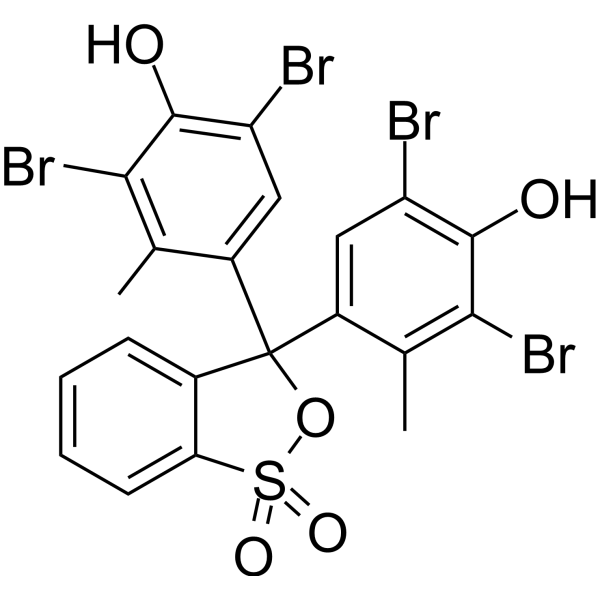
Bromocresol green is a pH-sensitive triphenylmethane dye commonly used for the determination of protein and albumin in serum. Bromocresol green is a bio-based dye with a yellow-green to blue-green color. Bromocresol green turns yellow (λmax=435 nm, protonated form) when placed in acidic solution (e.g. pH=4.15), and turns blue in basic solution (λmax=615 nm, deprotonated form). Bromocresol green is widely used as a pH indicator in the field of biochemical analysis. In addition, Bromocresol green is also used to detect the concentration of molecules such as creatinine, and to judge the viability of cells .
loading...
    loading...
Cat. No.: HY-P99899
CAS No.: 2052591-32-7
Synonyms: PR-1498487

Target:  

ADC Antibodies

Research Areas:  

Cancer

Samrotamab (PR-1498487) is a humanized IgG1-κ chimeric monoclonal antibody targeting LRRC15, with a Kd of 5.42 nM for human LRRC15. Samrotamab can be used to synthesize antibody-drug conjugates (ADC). Samrotamab disrupts the LRRC15-SCG5 signaling module, binds to a membrane-proximal conformational epitope within the C-terminal leucine-rich repeat region of LRRC15, and binds to the lateral edge of the LRR solenoid while leaving the canonical concave β-sheet surface fully exposed. Samrotamab reduces the viability of bladder cancer cells, inhibits clonogenic growth, impairs cell migration, and compromises cell invasion. Samrotamab induces compensatory upregulation of LRRC15 transcripts while suppressing the expression of SCG5 mRNA. Samrotamab is applicable to research related to urothelial carcinoma, sarcoma, osteosarcoma, and undifferentiated pleomorphic sarcoma .
loading...
    loading...
Cat. No.: HY-129108
CAS No.: 205252-57-9
Synonyms: (9Z)-UAB-30
9-cis-UAB30 is a rexinoid agonist. 9-cis-UAB30 significantly decreases the proliferation, viability, and motility of both patient-derived xenografts (PDXs). 9-cis-UAB30 induced cell-cycle arrest as demonstrated by the significant increase in the percentage of cells in G1 and a decrease in the percentage of cells in S phase by downregulating SKP2 and/or 20S proteasome activity, which leads to increased p27kip1 protein stability. 9-cis-UAB30 downregulates the abundance of stem cell marker mRNAs (Oct4, Nanog, Sox2, nestin) and upregulates the abundance of differentiation marker mRNAs (β3-tubulin, NSE, HOXC9, GAP43). 9-cis-UAB30 has no adverse effects on the central nervous system and cardiovascular system at the tested dose. 9-cis-UAB30 can be used for the study of neuroblastoma, cutaneous T-cell lymphomas, and breast cancer .
loading...
    loading...
Cat. No.: HY-N0565BR
CAS No.: 24390-14-5
Synonyms: Doxycycline hydrochloride hemiethanolate hemihydrate (Standard); WC2031 (Standard)
Doxycycline hyclate (Standard) is the analytical standard of Doxycycline hyclate (HY-N0565B). This product is intended for research and analytical applications. Doxycycline hyclate is an orally active highly lipophilic, tissue-permeable MMP inhibitor with broad-spectrum antibacterial activity. Doxycycline hyclate is also a semi-synthetic antibiotic with chelating properties, which blocks bacterial protein synthesis and inhibits extracellular matrix degradation through interactions with zinc and calcium atoms. Doxycycline hyclate also inhibits mitochondrial biogenesis, translation, and the expression of respiratory chain proteins. Doxycycline hyclate induces apoptosis, inhibits autophagy and EMT, downregulates stem cell markers, and activates the PI3K-AKT pathway, thereby effectively inhibiting the viability and proliferation of cancer cells such as breast cancer cells. Doxycycline hyclate also promotes the survival and self-renewal of embryonic stem cells and neural stem cells, and reduces the frequency of medium changes in culture. Doxycycline hyclate has been applied in studies related to breast cancer, prostate cancer, bladder cancer, and other cancers .
loading...
    loading...
Cat. No.: HY-N0565S1
Doxycycline-d3 hyclate (major) is the deuterium labeled Doxycycline hyclate (HY-N0565B). Doxycycline hyclate is an orally active highly lipophilic, tissue-permeable MMP inhibitor with broad-spectrum antibacterial activity. Doxycycline hyclate is also a semi-synthetic antibiotic with chelating properties, which blocks bacterial protein synthesis and inhibits extracellular matrix degradation through interactions with zinc and calcium atoms. Doxycycline hyclate also inhibits mitochondrial biogenesis, translation, and the expression of respiratory chain proteins. Doxycycline hyclate induces apoptosis, inhibits autophagy and EMT, downregulates stem cell markers, and activates the PI3K-AKT pathway, thereby effectively inhibiting the viability and proliferation of cancer cells such as breast cancer cells. Doxycycline hyclate also promotes the survival and self-renewal of embryonic stem cells and neural stem cells, and reduces the frequency of medium changes in culture. Doxycycline hyclate has been applied in studies related to breast cancer, prostate cancer, bladder cancer, and other cancers .
loading...
    loading...
Cat. No.: HY-16900G
CAS No.: 61413-54-5
Rolipram GMP is Rolipram (HY-16900) produced by using GMP guidelines. GMP small molecules works appropriately as an auxiliary reagent for cell therapy manufacture. Rolipram is a PDE4 inhibitor, with blood-brain barrier permeability, that reverses β-amyloid-induced learning and memory impairment in rats. Rolipram elevates intracellular cAMP and clevels and regulates the cAMP/CREB signaling pathway, thereby alleviating neuroinflammation and apoptotic responses. Rolipram promotes neuronal differentiation of human bone marrow mesenchymal stem cells and inhibits Methamphetamine- and morphine-induced hyperlocomotion in mice. Rolipram also reduces the viability of glioblastoma stem-like cells and enhances Bevacizumab (HY-P9906)-induced cell death. Rolipram inhibits the expression of proinflammatory cytokines and enhances central noradrenergic transmission. Rolipram is mainly used in studies related to various central nervous system diseases including Alzheimer's disease, major depressive disorder, glioblastoma multiforme, and multiple sclerosis .
loading...
    loading...
Cat. No.: HY-144820
CAS No.: 130727-21-8
Purity:  98.49%
Research Areas:  

Infection

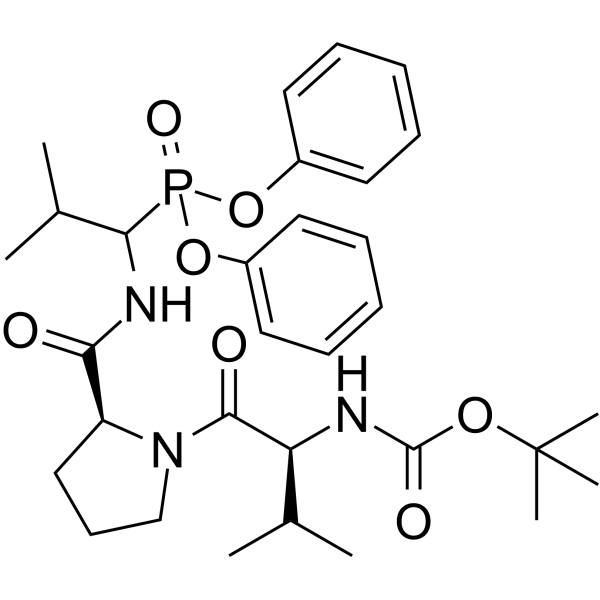
JO146 is an anti-chlamydial agent, Antibacterial agent, and CtHtrA serine protease inhibitor, with an IC50 of 21.86 μM against CtHtrA serine protease. JO146 alters the morphology of chlamydial cells, reduces inclusion vacuoles, decreases the number of infectious progeny, and eliminates viable Chlamydia trachomatis under stress or conditions that reverse persistent infection. JO146 shows no activity against Escherichia coli, Pseudomonas aeruginosa, and Staphylococcus aureus, but exhibits bactericidal activity against Helicobacter pylori. JO146 can be used in research related to Chlamydia trachomatis infection, chlamydial infection in cattle and sheep, and Helicobacter pylori infection .
loading...
    loading...
Cat. No.: HY-164979
CAS No.: 3051552-64-5
Target:  

Kinesin

Research Areas:  

Cancer

KIF18A-IN-15 (Compound Example 36) is a KIF18A inhibitor, available in two forms, EX36-A and its enantiomer EX36-B, with IC50s of 0.01-0.1 μM, respectively. EX36-A and EX36-B inhibit OVCAR-3 cells viability with IC50s of 0.01-0.1 μM and 0-0.01 μM, respectively. KIF18A-IN-15 can be used in tumor (e.g. colon, breast, lung) studies .
loading...
    loading...
Cat. No.: HY-173047
CAS No.: 2768868-14-8
Target:  

Ras ERK

Research Areas:  

Cancer

KRASG12C IN-15 (Compound 21) is the orally active inhibitor for KRAS G12C, and inhibits SOS1-mediated GDP/GTP exchange with an IC50 of 19 nM. KRASG12C IN-15 inhibits the phosphorylation of ERK with IC50 of 0.051 μM. KRASG12C IN-15 inhibits the cell viability of KRAS G12C mutated MIA PaCa-2 with IC50 of 0.023 μM. KRASG12C IN-15 exhibits antitumor effect in MIA PaCa-2 xenograft mouse models .
loading...
    loading...
Cat. No.: HY-173256
Hyp-dBET1 is a hypoxia-activated BRD4 PROTAC degrader. The IC50 of Hyp-dBET1 for reducing cell viability under hypoxic conditions is approximately 153 nM to 192 nM, while it shows low activity under normoxic conditions (IC50 of approximately 2.8 μM to 3.8 μM). Hyp-dBET1 induces BRD4 degradation under hypoxic conditions, converts to dBET1 in hypoxic environments, and downregulates the expression level of ZFP-91. Hyp-dBET1 can be used in studies related to breast cancer, cervical cancer and solid tumors .
loading...
    loading...
Cat. No.: HY-175271
Target:  

PROTACs Trk Receptor

Research Areas:  

Cancer

JWJ-01-378 is a TPM3-TRKA fusion protein inhibitor and a wild-type TRK PROTAC degrader. JWJ-01-378 induces degradation via the ubiquitin-proteasome system, and does not degrade TRK inhibitor-resistant mutants or ALK fusion proteins. JWJ-01-378 inhibits downstream signaling pathways activated by TPM3-TRKA fusion, and reduces the viability of cancer cells harboring TPM3-TRKA fusion. JWJ-01-378 can be used to evaluate targeted degradation of TRK fusion proteins in cancer .
loading...
    loading...
Cat. No.: HY-185102
Target:  

PROTACs RIP kinase

Research Areas:  

Infection Inflammation/Immunology

ZBP1 PROTAC-1 is a PROTAC degrader targeting ZBP1, with a DC50 of 81.52 nM. ZBP1 PROTAC-1 uses a DNA aptamer to specifically bind ZBP1, recruits the VHL E3 ubiquitin ligase, and induces ZBP1 degradation via the ubiquitin-proteasome pathway. ZBP1 PROTAC-1 can partially restore the viability of H1N1-infected cells. ZBP1 PROTAC-1 can be used in studies related to viral pneumonia and influenza A H1N1 virus infection .
loading...
    loading...
Cat. No.: HY-A0287S
CAS No.: 1346606-66-3
Synonyms: Clomifene-d5 hydrochloride; (Z/E)-Enclomiphene-d5 hydrochloride; (Z/E)-Enclomifene-d5 hydrochloride
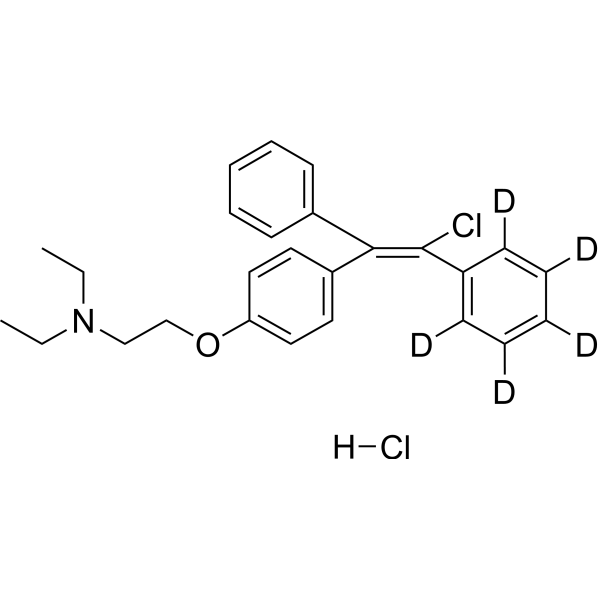
Clomifene (Clomifene; (Z/E)-Enclomiphene; (Z/E)-Enclomifene)-d5 hydrochloride is a deuterium labeled Clomifene hydrochloride (HY-A0287A). Clomiphene hydrochloride is an orally active ovulation-inducing agent. Clomiphene hydrochloride binds to hypothalamic estrogen receptors to elevate FSH levels, and exhibits antiestrogenic or estrogenic properties. Clomiphene hydrochloride can induce erturbations during meiotic maturation and cytogenetic abnormalities in mouse oocytes. Clomiphene hydrochloride ameliorates memory impairment in PCOS models. Clomiphene hydrochloride mobilizes cytosolic calcium and reduces viability in prostate cancer cells. Clomiphene hydrochloride can be used for the research of polycystic ovary syndrome (PCOS) and prostate cancer .
loading...
    loading...
Cat. No.: HY-W014684R
CAS No.: 80-54-6
Lilial (Standard) is the analytical standard of Lilial. This product is intended for research and analytical applications. Lilial is a widely used synthetic fragrance and ester in consumer products. Lilial possesses estrogenic activity in vitro. Lilial can induce a toxic effect on mitochondria that causes a decrease in the viability of HaCaT cells. Lilial can increase NRF2 protein level in vitro. Lilial is able to target respiratory chain complexes, inhibit complexes I and II of the electron transport chain, increase the generation of reactive oxygen species, and decrease the level of intracellular ATP. Lilial can induce systemic toxicity in vivo. Lilial induces significant DNA strand breaks .
loading...
    loading...
Cat. No.: HY-111152R
CAS No.: 912798-42-6
Research Areas:  

Cancer

ML115 (Standard) is the analytical standard of ML115 (HY-111152). This product is intended for research and analytical applications. ML115, a molecular probe of the signal transducer, is a selective STAT3 agonist, with an EC50 of 2 nM. ML115 increases the expression of BCL3, a known STAT3-dependent oncogene. ML115 is inactive against the related STAT1, STAT5 and NF-κB anti-targets. ML115 counteracts the effects of Ginsenoside Rc (HY-N0042) on cell viability and inflammatory responses in LPS (HY-D1056)-stimulated H9c2 and RAW264.7 cells, while altering oxidative stress markers. ML115 can be used for the study of breast and prostate cancers .
loading...
    loading...
Cat. No.: HY-155021
CAS No.: 2781922-42-5
Purity:  99.95%
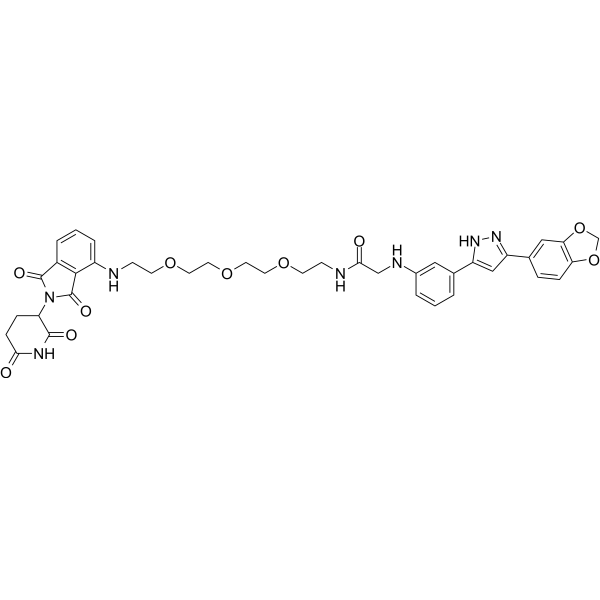
PROTAC α-synuclein degrader 5 is a selective PROTAC degrader targeting α‑synuclein aggregates, with a DC50 of 7.51 μM. PROTAC α-synuclein degrader 5 binds to αSyn aggregates, recruits the CRBN E3 ubiquitin ligase, and mediates the ubiquitination and subsequent degradation of α‑synuclein aggregates. PROTAC α-synuclein degrader 5 activates the autophagy-lysosome pathway. PROTAC α-synuclein degrader 5 reduces ROS levels in neuroblastoma cells, restores mitochondrial membrane potential, rescues cell viability, and decreases LDH release. PROTAC α-synuclein degrader 5 degrades αSyn aggregates in Caenorhabditis elegans and ameliorates oxidative stress. PROTAC α-synuclein degrader 5 is used for the research of synucleinopathies, such as Parkinson's disease .
loading...
    loading...
Cat. No.: HY-162802
Target:  

Apoptosis PI3K Akt PARP CDK

Research Areas:  

Cancer

PI3K/AKT-IN-4 (compound 3) is a diterpenoid that can be isolated from the roots and rhizomes of Salvia castanea Dielsf. PI3K/AKT-IN-4 has antitumor activity, inhibiting cell viability and proliferation (IC50=4.72 μM) and promoting apoptosis by blocking the G0/G1 phase of the Hep3B cell cycle, inducing mitochondrial dysfunction and oxidative stress. In addition, PI3K/AKT-IN-4 inhibits hepatocellular carcinoma by inhibiting the PI3K-Akt signaling pathway and binding to PARP1 and CDK2 targets .
loading...
    loading...
Cat. No.: HY-172586
CAS No.: 1574354-24-7
Target:  

GSK-3 PKA

Research Areas:  

Neurological Disease Cancer

GSK-3α/β-IN-1 is GSK-3α/β inhibitor with IC50 s of 0.265 μM and 0.255 μM for GSK-3α and GSK-3β, respectively. GSK-3α/β-IN-1 also inhibits PKA with an IC50 of 0.188 μM. GSK-3α/β-IN-1 potently inhibits cell viability of three Glioblastoma (GBM) cell lines (IC50 : 3-6 μM, 72 h) with no toxicity to human astrocytes and good metabolic stability. GSK-3α/β-IN-1 has potential CNS activity in all-human blood-brain barrier (BBB) model of GBM .
loading...
    loading...
Cat. No.: HY-182067
Research Areas:  

Cancer

anti-TNBC agent-15 is a platinum (IV) complex with anti-triple-negative breast cancer activity. anti-TNBC agent-15 inhibits cancer cell viability. anti-TNBC agent-15 reverses the resistance of triple-negative breast cancer cells to Cisplatin (HY-17394), increases intracellular uptake, and effectively triggers apoptosis by inducing DNA damage, enhancing intracellular ROS accumulation and activating the mitochondrial pathway. anti-TNBC agent-15 enhances lipid peroxidation, interferes with the signal transduction of the cystine/glutamate transporter-glutathione peroxidase axis, and induces ferroptosis. anti-TNBC agent-15 significantly inhibits tumor growth in triple-negative breast cancer/Cisplatin xenograft models. anti-TNBC agent-15 can be used for the research of triple-negative breast cancer .
loading...
    loading...

