
552 Results for "

electron

" in MedChemExpress (MCE) Product Catalog:
Products (552)

552 Results for "electron" in MCE Product Catalog:

Cat. No.: HY-N21828
CAS No.: 129212-94-8
Annonin VI is an inhibitor of NADH:ubiquinone oxidoreductase (complex I; complex I) and glucose:ubiquinone oxidoreductase discovered in the seeds of Annona squamosa. Annonin VI exhibits an IC50 of 0.02 nmol/mg protein against bovine heart complex I, and an IC50 of 12.4 nmol/mg protein against glucose dehydrogenase (GDH) derived from Gluconobacter oxydans. Annonin VI acts in a partially competitive manner on the region associated with the ubiquinone catalytic site of complex I, blocking electron transfer from high-potential iron-sulfur clusters to ubiquinone. Annonin VI binds competitively with ubiquinone at the homologous ubiquinone site on GDH. Annonin VI can be used in the research of bacterial infections, insecticides, and cancer .
loading...
    loading...
Cat. No.: HY-W250154
CAS No.: 104809-32-7
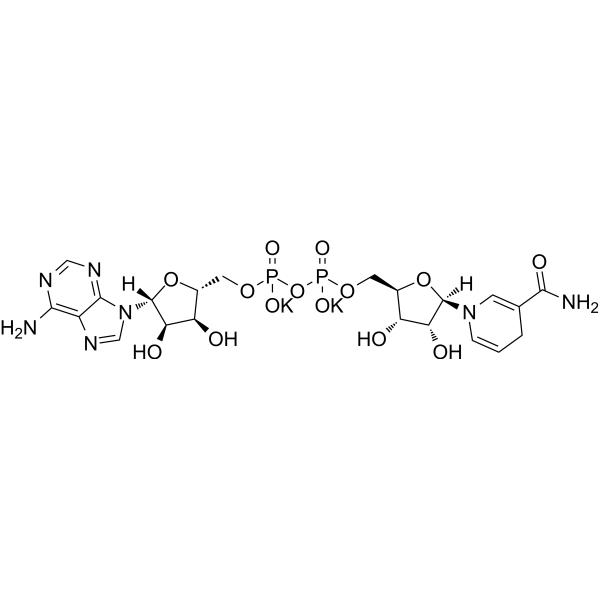
β-Nicotinamide adenine dinucleotide reduced dipotassium is an orally effective reduced coenzyme. β-Nicotinamide adenine dinucleotide reduced dipotassium plays a role in regenerating electron donors during cellular energy metabolism, including glycolysis, β-oxidation, and the tricarboxylic acid (TCA) cycle. β-Nicotinamide adenine dinucleotide reduced dipotassium regulates calcium homeostasis by promoting the opening of IP3-gated Ca 2+ channels and inhibiting Ryanodine receptor, and affects mitochondrial function through direct interaction with VDAC. β-Nicotinamide adenine dinucleotide reduced dipotassium is used in cytoprotective studies related to cerebral ischemic injury, neurodegenerative diseases, aging, and signal transduction .
loading...
    loading...
Cat. No.: HY-113232S
CAS No.: 1276197-31-9
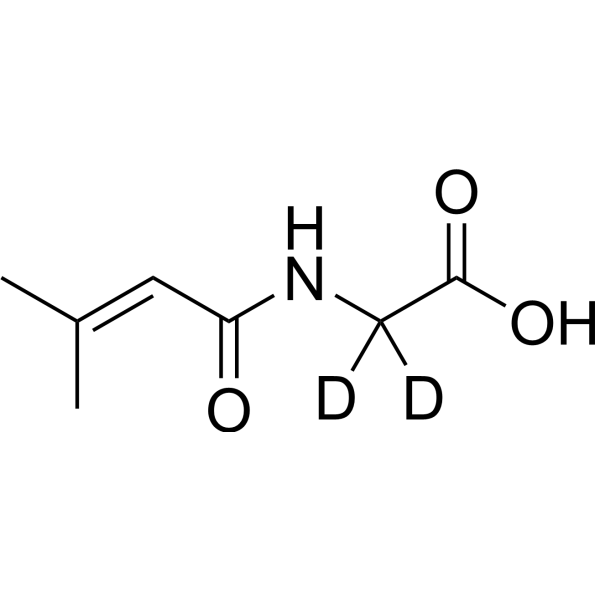
3-Methylcrotonylglycine-d2 is the deuterated-labeled 3-Methylcrotonylglycine (HY-113232). 3-Methylcrotonylglycine is an organic acid conjugate associated with leucine catabolism that inhibits respiratory chain complex II-III, mitochondrial creatine kinase, and synaptic membrane Na +, K +-ATPase. 3-Methylcrotonylglycine increases reactive oxygen species levels to mediate oxidative damage, while inhibiting mitochondrial electron transport, reducing tricarboxylic acid cycle flux, and interfering with intracellular energy transport and neuronal ion homeostasis. 3-Methylcrotonylglycine is a neurotoxic metabolite that accumulates in the metabolic pathway of 3-methylcrotonyl-CoA carboxylase deficiency. 3-Methylcrotonylglycine can be used in studies related to 3-methylcrotonyl-CoA carboxylase deficiency .
loading...
    loading...
Cat. No.: HY-138659
CAS No.: 2042192-00-5
Purity:  95.29%
Synonyms: JF646, Tetrazine
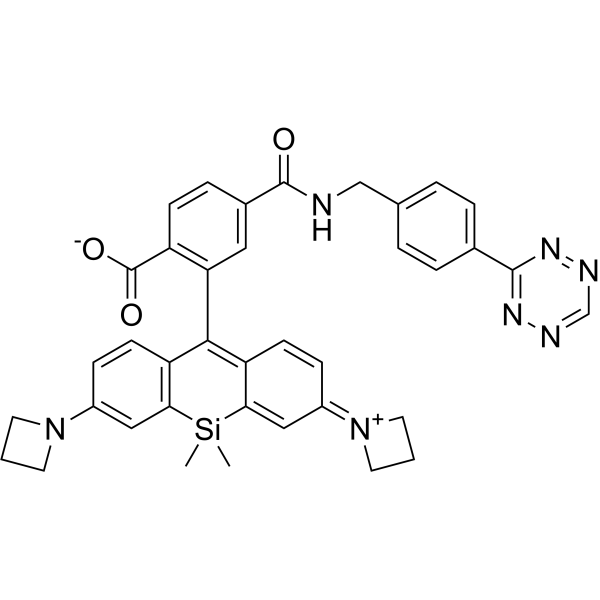
Janelia Fluor 646, Tetrazine (JF646, Tetrazine) a red fluorescent dye that contains a tetrazine group. JF646, Tetrazine can be used in cellular imaging . Janelia Fluor fluorescent dyes can be chemically conjugated to the specific HaloTag substrate (a chloroalkane ligand) to form a fluorescent ligand, rather than binding directly to the HaloTag protein itself. Janelia Fluor products are licensed under U.S. Pat. Nos. 9,933,417, 10,018,624 and 10,161,932 and other patents from Howard Hughes Medical Institute. Janelia Fluor 646, Tetrazine is a click chemistry reagent, it contains a Tetrazine group that can undergo an inverse electron demand Diels-Alder reaction (iEDDA) with molecules containing TCO groups (Ex/Em = 646/664 nm).
loading...
    loading...
Cat. No.: HY-181286
Target:  

Cytochrome P450

Research Areas:  

Infection

ETX1975-3 is an orally active inhibitor and bactericide targeting the bd cytochrome oxidase of Mycobacterium tuberculosis. ETX1975-3 disrupts electron transfer between the b-heme centers of the target enzyme, and in combination with Q203 (HY-101040), exerts bactericidal activity against both replicating and non-replicating Mycobacterium tuberculosis, and reduces bacterial loads in acute mouse models. ETX1975-3 retains activity against clinical isolates of multidrug-resistant/extensively drug-resistant Mycobacterium tuberculosis and non-tuberculous mycobacteria, while possessing favorable preclinical ADMET properties. ETX1975-3 can be used in studies related to tuberculosis and non-tuberculous mycobacterial infections .
loading...
    loading...
Cat. No.: HY-D1450
CAS No.: 155613-98-2
Synonyms: S01448
Target:  

Fluorescent Dye

Research Areas:  

Cancer

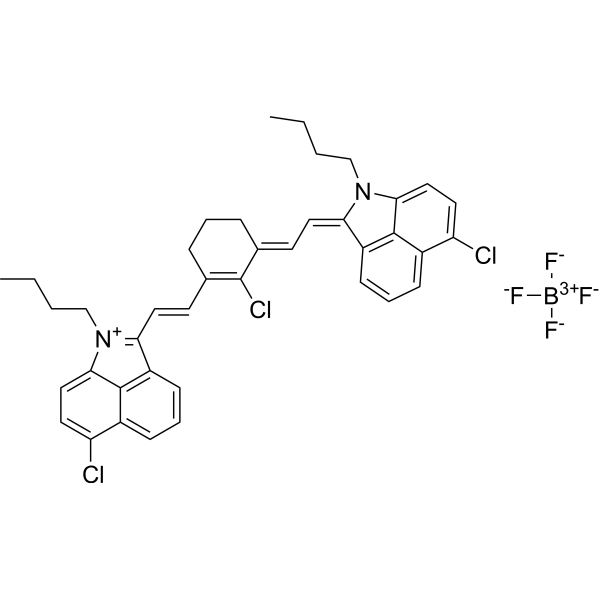
IR-1048 is a nitroreductase (NTR)-responsive near-infrared fluorescence (NIR)/photoacoustic (PA) imaging probe and photothermal agent. IR-1048 is coupled with a nitroimidazole group to form IR-1048-MZ. IR-1048-MZ is catalytically reduced by NTR in a hypoxic environment, restoring strong near-infrared absorption and fluorescence emission (NIR II window), while activating the photothermal effect. IR-1048 relies on NTR-mediated electron transfer to relieve intramolecular fluorescence quenching, achieving specific imaging and photothermal ablation of tumor hypoxic areas. IR-1048 is mainly used for high-contrast NIR II/photoacoustic imaging and photothermal therapy research and tumor diagnosis of the tumor hypoxic microenvironment .
loading...
    loading...
Cat. No.: HY-D3351
CAS No.: 2668963-61-7
Target:  

Fluorescent Dye

Research Areas:  

Inflammation/Immunology

PNO1 is a fluorescent probe for pulmonary fibrosis detection. The detection mechanism of PNO1 relies on sensing upregulated nitric oxide (NO) in the pulmonary fibrosis (PF) microenvironment. PNO1 contains an aniline group that reacts with NO or its derivatives under acidic conditions to form an N-nitrosylated intermediate, which is subsequently converted into a diazonium salt and undergoes deamination, eliminating the intramolecular electron transfer quenching effect and triggering a fluorescence turn-on response. The excitation wavelength of PNO1 includes 545 nm in in vitro solution studies, while an excitation range of 520-550 nm is used for cell, tissue and in vivo imaging; its emission wavelength centers at 572 nm in the unreacted state, and shifts to 559 nm with enhanced fluorescence intensity upon binding to NO. PNO1 can be used for pulmonary fibrosis research .
loading...
    loading...
Cat. No.: HY-N7151R
CAS No.: 108354-13-8
Aurachin D (Standard) is the analytical standard of Aurachin D (HY-N7151). This product is intended for research and analytical applications. Aurachin D is an antibiotic and selective cytochrome bd oxidase inhibitor. Aurachin D exhibits inhibitory effects against Gram-positive bacteria and a small number of fungi, with an IC50 value of 0.1 μM against Escherichia coli and an IC50 value ranging from 0.13 to 33 μM against Mycobacterium tuberculosis. Aurachin D binds to and inhibits cytochrome bd oxidase, thereby blocking the electron transfer process, disrupting the respiratory chain and energy metabolism of pathogens. Aurachin D can be used in research related to leishmaniasis, malaria, Chagas disease, African trypanosomiasis, and tuberculosis [2] .
loading...
    loading...
Cat. No.: HY-W251143
CAS No.: 83054-80-2
N,N′-Bis(2,5-di-tert-butylphenyl)-3,4,9,10-perylenedicarboximide is an organic semiconductor material with excellent electron transport activity. N,N′-Bis(2,5-di-tert-butylphenyl)-3,4,9,10-perylenedicarboximide is widely used in organic field effect transistors (OFETs) and organic photovoltaic (OPV) devices due to its high carrier mobility. The chemical structure design of N,N′-Bis(2,5-di-tert-butylphenyl)-3,4,9,10-perylenedicarboximide enables it to perform well in light absorption and photoelectric conversion, thereby improving the efficiency of organic photoelectric devices.
loading...
    loading...
Cat. No.: HY-W251144
CAS No.: 76372-75-3
Synonyms: PTCDI-C5
N,N′-Dipentyl-3,4,9,10-perylenedicarboximide (PTCDI-C5) is an organic semiconductor compound with excellent electron transport activity. N,N′-Dipentyl-3,4,9,10-perylenedicarboximide exhibits high performance in organic field effect transistors (OFETs) and can effectively improve the carrier mobility of the device. The application of N,N′-Dipentyl-3,4,9,10-perylenedicarboximide in organic photovoltaic (OPV) materials enhances the light absorption performance, thereby improving the photoelectric conversion efficiency. N,N′-Dipentyl-3,4,9,10-perylenedicarboximide has also been widely studied for the development of high-performance sensors and fluorescent materials.
loading...
    loading...
Cat. No.: HY-W778649
CAS No.: 1795136-21-8
Sarmentine-d8 is the deuterium labeled Sarmentine. Sarmentine is a broad-spectrum contact herbicide and PSII inhibitor, with an IC50 of 3.0 μM and a Ki of 1.5 μM against spinach, an IC50 of 1.72 μM against wild-type Amaranthus retroflexus, and an IC50 of 0.97 μM against triazine-resistant Amaranthus retroflexus. Sarmentine competitively binds to the QB binding site of plastoquinone on PSII, thereby blocking photosynthetic electron transport. Sarmentine inhibits enoyl-ACP reductase in Arabidopsis thaliana by targeting the early fatty acid synthesis process, with an IC50 of 18.3 μM. Sarmentine induces light-independent loss of plasma membrane integrity and electrolyte leakage. Sarmentine also exhibits antiplasmodial, antimycobacterial, antituberculous, and antiplatelet aggregation activities .
loading...
    loading...
Cat. No.: HY-W133963
CAS No.: 9063-38-1
Carboxyl methylstarch sodium is an anionic polymer prepared by carboxymethylation of starch, with properties of stability, thickening ability and film-forming capacity . Carboxyl methylstarch sodium exhibits metal adsorption activity and can remove copper ions and cadmium ions from aqueous solutions. Carboxyl methylstarch sodium can serve as a hydrophilic shell component for AIE-active luminescent polymer nanoprobes to achieve high water dispersibility. Carboxyl methylstarch sodium can bind to vancomycin without altering the in vitro antibacterial activity of vancomycin. Carboxyl methylstarch sodium possesses biodegradable, non-toxic and environmentally friendly characteristics. Carboxyl methylstarch sodium can be applied to relevant researches in various fields such as food, medicine and industry .
loading...
    loading...
Cat. No.: HY-182341
CAS No.: 1261156-82-4
Target:  

Drug Derivative

Research Areas:  

Infection

APD-209 is a sialic acid conjugate with a PEG4 polar linker and a PDA non-polar tail. APD-209 aggregates adenovirus type 37 particles, blocks the binding of viral particles to human corneal epithelial cells, and inhibits cellular entry of adenovirus type 37. APD-209 can be used for the research of epidemic keratoconjunctivitis .
loading...
    loading...
Cat. No.: HY-D0142
CAS No.: 59572-10-0
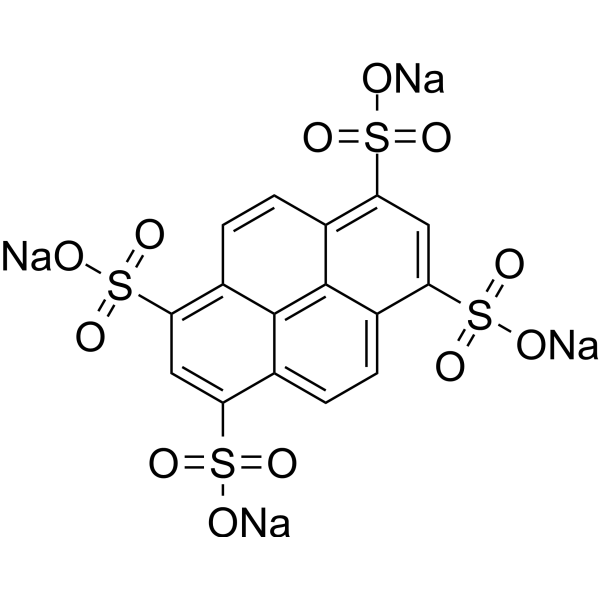
Pyrene-1,3,6,8-tetrasulfonic acid tetrasodium is a fluorescent dye and pH indicator, also as a ligand of multifunctional metal-organic framework. Pyrene-1,3,6,8-tetrasulfonic acid tetrasodium has been used to detect CO2 release. Pyrene-1,3,6,8-tetrasulfonic acid tetrasodium acts as a water-soluble fluorescent dye for fluorescence quenching assays monitoring gramicidin ion-channel activity . Ex/Em = 396/404 nm.
loading...
    loading...
Cat. No.: HY-D1470
CAS No.: 210832-86-3
Target:  

Fluorescent Dye

Research Areas:  

Others

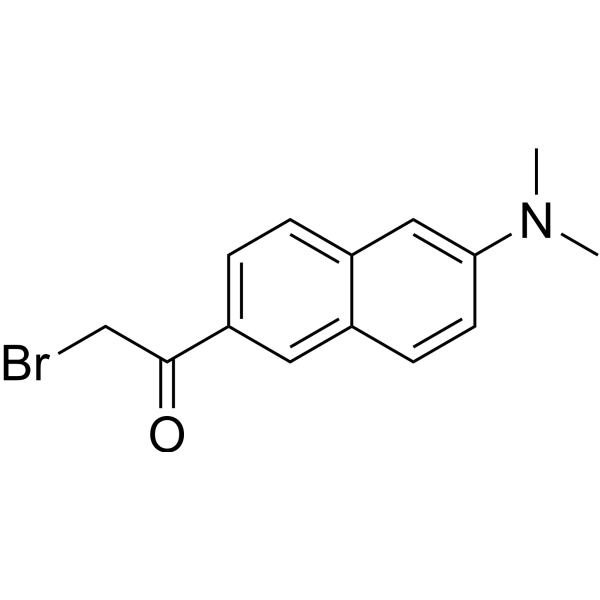
BADAN is a thiol-reactive, environment-sensitive fluorescent probe used for site-specific labeling of protein cysteine residues to detect protein topology, local polarity, protein-lipid interactions, and conformational changes. The bromoacetyl group of BADAN covalently binds to cysteine thiols, and its fluorescence originates from the intramolecular charge transfer (ICT) excited state. The emission peak position varies with the polarity of the surrounding medium: it blue-shifts to approximately 488 nm in nonpolar environments (such as the hydrophobic core of lipid bilayers) and red-shifts to approximately 496-507 nm in polar environments (such as aqueous phases), independent of enzymes, pH, or membrane potential. Ex = 380-402 nm; Em = 400-600 nm .
loading...
    loading...
Cat. No.: HY-N19720
CAS No.: 22684-08-8
Bractein is a natural aurone flavonoid with potential antioxidant activity. Bractein shows in vitro antileishmanial activity and inhibits promastigotes and intracellular amastigotes of Leishmania donovani. Bractein exhibits no obvious cytotoxicity against mammalian macrophages with an EC50 value > 25.0 μg/mL. Bractein can be used for the research of Leishmania .
loading...
    loading...
Cat. No.: HY-W014793
CAS No.: 41394-05-2
Target:  

Herbicide

Research Areas:  

Others

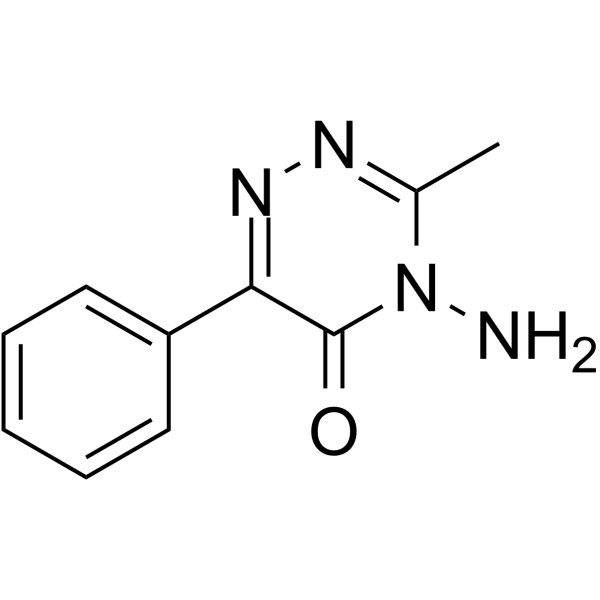
Metamitron is a triazinone pre-emergence and post-emergence Herbicide and fruit thinner. Metamitron controls broadleaf weeds and grassy weeds. Metamitron induces fruit drop in peach trees, and promotes fruit drop, reduces yield per plant, and increases the proportion of large fruits in apple trees. Metamitron is applicable to research related to the management of broadleaf weeds, grassy weeds, and temperate fruit tree crops .
loading...
    loading...
Cat. No.: HY-W035133
CAS No.: 14527-51-6
Synonyms: 5,10,15,20-Tetra-p-tolyl-21H,23H-porphine
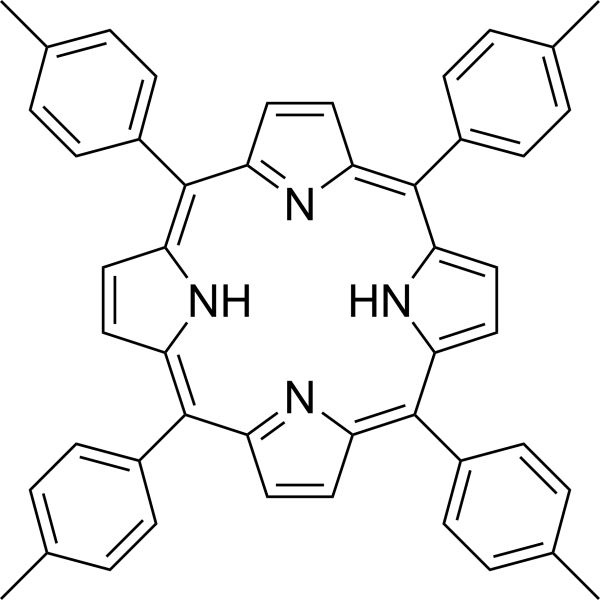
5,10,15,20-Tetrakis(p-tolyl)porphyrin (TTP) is an organic compound belonging to the class of porphyrins, a cyclic molecule composed of four pyrrole rings linked together. TTP is a synthetic porphyrin commonly used as a sensitizer for dye-sensitized solar cells and a catalyst for organic reactions. Due to its unique structure, TTP has a series of interesting properties, including at specific wavelengths and its potential as a catalyst for various chemical reactions. In dye-sensitized solar cells, TTPs help convert sunlight into electricity by absorbing photons and transferring electrons to the semiconductor layer of the device. In organic chemistry, TTP is often used as a catalyst for various organic compounds in reactions such as oxidation and reduction. Its ability to selectively bind certain substrates makes it a useful tool for synthesizing complex molecules and studying their properties.
loading...
    loading...
Cat. No.: HY-130509
CAS No.: 81213-52-7
Synonyms: Otmpmms
Research Areas:  

Infection

MTSSL (Otmpmms) is a highly reactive thiol-specific spin label that can be used to label thiol residues in proteins for the determination of protein structure and dynamics, as well as studies on protein-protein interactions. MTSSL serves as a nitroxide labeling reagent for cysteine residues in recombinant mouse prion protein (moPrP C) mutants. MTSSL can be applied in studies of transmissible spongiform encephalopathies (prion diseases) .
loading...
    loading...
Cat. No.: HY-100138
CAS No.: 173308-19-5
Purity:  ≥98.0%
Research Areas:  

Cancer

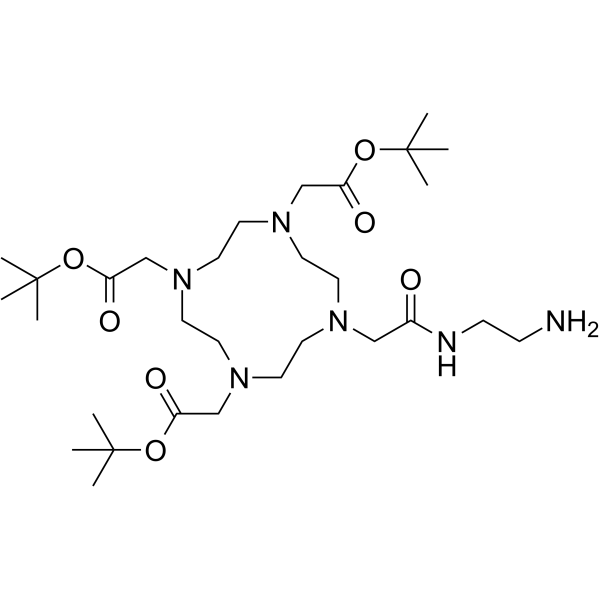
2-Aminoethyl-mono-amide-DOTA-tris(tBu ester) is a metal chelator precursor containing a DOTA macrocyclic structure. DOTA can form highly stable complexes with metal ions (such as 68Ga, 177Lu) through four nitrogen atoms and four carboxylic acid groups to mediate targeted delivery of radionuclides. The tert-butyl ester group (tBu ester) of 2-Aminoethyl-mono-amide-DOTA-tris(tBu ester) also protects the carboxylic acid group during synthesis, and forms a free carboxyl group after deprotection reaction for coupling with targeting molecules (such as antibodies, peptides). 2-Aminoethyl-mono-amide-DOTA-tris(tBu ester) may be combined with tumor pre-targeting systems through bioorthogonal reactions (such as reverse electron demand Diels-Alder reaction) to study radioactive imaging or therapy of tumor tissues, and is mainly used in tumor pre-targeting research in the field of nuclear medicine .
loading...
    loading...

