537 Results for "

G2-M phase

" in MedChemExpress (MCE) Product Catalog:
Products (537)

537 Results for "G2-M phase" in MCE Product Catalog:

Cat. No.: HY-179049
EGFR/tubulin-IN-1 (Compound 26) is a dual-target inhibitor of EGFR and tubulin. EGFR/tubulin-IN-1 significantly reduces the levels of p-EGFR, p-AKT, and p-ERK in cells, disrupting the microtubule structure of the cells. EGFR/tubulin-IN-1 significantly inhibits the proliferation of H1975 cells and significantly blocks the cells in the G2/M phase. EGFR/tubulin-IN-1 induces the expression of autophagy markers LC3B-II and Beclin-1, while down-regulating the expression of p62. EGFR/tubulin-IN-1 induces ferroptosis, with increased ROS content and depletion of glutathione (GSH). EGFR/tubulin-IN-1 inhibits epithelial-mesenchymal transition (EMT) and tumor metastasis. EGFR/tubulin-IN-1 has a significant tumor-suppressing effect in the H1975 transplanted tumor nude mouse model. EGFR/tubulin-IN-1 can be used for the study of non-small cell lung cancer .
loading...
    loading...
Cat. No.: HY-182745
Target:  

VEGFR Apoptosis

Research Areas:  

Cancer

VEGFR-2-IN-85 is a strong VEGFR-2 inhibitor, with an IC50 value of 0.23 μM. VEGFR-2-IN-85 exhibits potent cytotoxic activity against multiple cancer cell lines with minimal toxicity toward normal cells. VEGFR-2-IN-85 also impairs cancer cell migration, likely through modulation of the VEGFR-2/p-Akt pathway. VEGFR-2-IN-85 can induce apoptosis through modulation of Caspase-3, Bax and Bcl-2. VEGFR-2-IN-85 arrests cell cycle at the G2/M phase and has anti-angiogenic activity. VEGFR-2-IN-85 is a targeted radiosensitizer enhancing radiation-induced cytotoxicity. VEGFR-2-IN-85 can be used for research on cancers such as non-small cell lung cancer, breast cancer, and liver cancer .
loading...
    loading...
Cat. No.: HY-113720
CAS No.: 1041469-97-9
RKS262 is an orally active cyclin/CDK inhibitor. RKS262 is also an apoptosis inducer and cell cycle regulator, exhibiting cytotoxic activity against cancer cells. RKS262 induces caspase-3 cleavage, ROS generation, SAPK/JNK activation, and upregulates the expression of p53, Bid, Bad, Bok, and p27. RKS262 inhibits the expression of Bcl-2, Mcl-1, Bcl-xL, p21, cyclin D1, cyclin B1, cdc-2, cyclin D4, and DNA-pk KU-80 subunit. RKS262 suppresses the phosphorylation of the IGF-1R/PI3K/PKC pathway, ras oncogene activity, and Cdk-6, while increasing total Akt expression. RKS262 induces G2/M or S phase cell cycle arrest, disrupts mitochondrial transmembrane potential, and reduces tumor burden in xenograft models. RKS262 is used in research on neuroblastoma and ovarian cancer .
loading...
    loading...
Cat. No.: HY-N0430
CAS No.: 3486-66-6
Synonyms: Coptisin
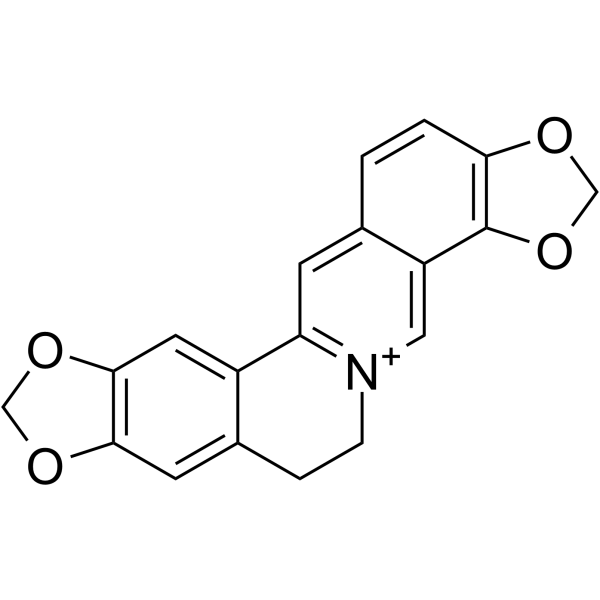
Coptisine is an orally active and brain-penetrant alkaloid found in Coptis chinensis. Coptisine is a reversible, uncompetitive IDO inhibitor with a Ki of 5.8 μM and an IC50 of 6.3 μM. Coptisine suppresses neuroinflammation, reduces Aβ plaque burden and shows neuroprotective activity. Coptisine shows anti-inflammation activity by blocking NF-κB, MAPK, and PI3K/Akt activation. Coptisine inhibits cancer cells proliferation, induces DNA damage, G2/M phase cell cycle arrest, apoptosis, ROS production and mitochondrial dysfunction. Coptisine inhibits Rho/ROCK pathway activation, reduces arrhythmia, limits cardiac injury marker release, reduces infarct size, and preserves cardiac function in rat myocardial ischemia/reperfusion models. Coptisine downregulates HMGCR and upregulates LDLR and CYP7A1 to modulate cholesterol metabolism, reduces abnormal serum lipid levels, and promotes fecal bile acid excretion. Coptisine can be used for the research of cancer, hypercholesterolemia, Alzheimer’s disease, inflammatory disorders and cardiovascular disease .
loading...
    loading...
Cat. No.: HY-156266
CAS No.: 321541-13-3
Synonyms: Rhiz
Target:  

Others

Research Areas:  

Cancer

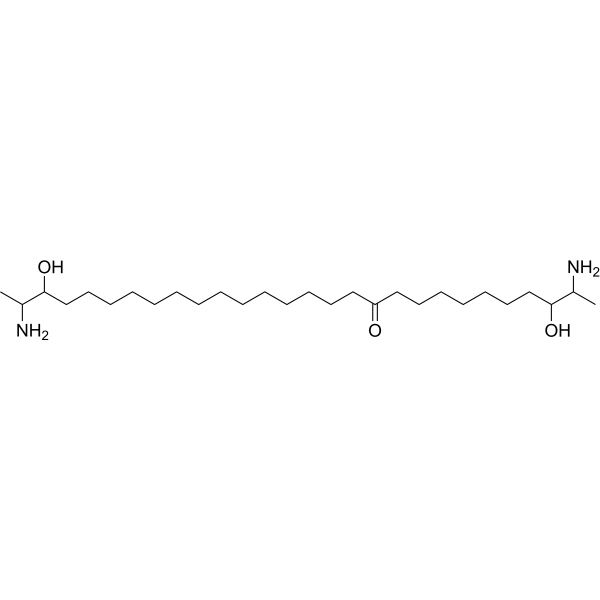
Rhizochalinin (Rhiz) is a cytotoxic sphingolipid. Rhizochalinin (Rhiz) counteracts glioblastoma cell proliferation by inducing apoptosis, G2/M-phase cell cycle arrest, and inhibition of autophagy. Rhizochalinin (Rhiz) can be used for human glioblastoma research .
loading...
    loading...
Cat. No.: HY-179560
Research Areas:  

Cancer

PMV6-PEG4-BI2536 is an RIPTAC-like bifunctional molecule that promotes the formation of the p53 Y220C-PLK1 ternary complex (EC50 = 1.4 μM). PMV6-PEG4-BI2536 causes PLK1 mislocalization and inhibits PLK1 activity, inducing G2/M phase arrest and apoptosis in p53 Y220C-mutant cells, while sparing cells with wild-type TP53. PMV6-PEG4-BI2536 can be used in research on uterine, gastric, pancreatic, prostate, and breast cancers harboring the p53 Y220C mutation. PMV6-PEG4-BI2536 is composed of PMV6 (a p53 Y220C mutant-binding ligand), PEG4 (a linker), and BI2536 (HY-159493) (a PLK inhibitor) .
loading...
    loading...
Cat. No.: HY-146407
CAS No.: 1926985-18-3
Target:  

Apoptosis

Research Areas:  

Cancer

Anticancer agent 53 is a potent anticancer agent. Anticancer agent 53 shows in vitro cytotoxicity. Anticancer agent 53 induces apoptosis and cell cycle arrest in S/G2/M phases. Anticancer agent 53 shows antitumor activity with no apparent toxicity .
loading...
    loading...
Cat. No.: HY-11001A
CAS No.: 718630-60-5
Target:  

CDK Caspase Apoptosis GSK-3

Research Areas:  

Cancer

PHA-793887 hydrochloride is a CDK inhibitor (with IC50 values of 8 nM for Cdk2, 60 nM for Cdk1, 62 nM for Cdk4, 138 nM for Cdk9). PHA-793887 hydrochloride inhibits purified GSK3β (IC50 79 nM). PHA-793887 hydrochloride reduces the phosphorylation level of nucleophosmin/cdc6, induces G1/G2/M phase arrest, and triggers Apoptosis by activating Caspase-3. PHA-793887 hydrochloride exhibits anticancer activity against leukemia. PHA-793887 hydrochloride can be used in research related to acute leukemia, chronic myeloid leukemia, and advanced/metastatic solid tumors .
loading...
    loading...
Cat. No.: HY-104013R
CAS No.: 220792-57-4
Research Areas:  

Cancer

Aminopurvalanol A (Standard) is the analytical standard of Aminopurvalanol A (HY-104013). This product is intended for research and analytical applications. Aminopurvalanol A is a potent, selective, and cell permeable inhibitor of Cyclins/Cdk complexes. Aminopurvalanol A preferentially targets the G2/M-phase transition inhibiting cancer cell differentiation. Aminopurvalanol A causes the inhibition of sperm fertilizing ability via the inhibition of physiological capacitation-dependent actin polymerization .
loading...
    loading...
Cat. No.: HY-183427
CAS No.: 2660138-04-3
Research Areas:  

Cancer

KBJK557 is a Plk1 PBD inhibitor with a human-derived IC50 value of 3.05 μM. KBJK577 binds to Plk1 PBD through electrostatic interactions, π-π stacking, hydrogen bonds, salt bridges and hydrophobic interactions, thereby disrupting the subcellular localization and function of Plk1. KBJK557 induces mitotic arrest, S-phase delay, G2/M-phase arrest and apoptosis, and inhibits cancer cell proliferation. KBJK557 can be used in research related to cancer and non-small cell lung cancer .
loading...
    loading...
Cat. No.: HY-137059
CAS No.: 1217503-60-0
GO-Y078 is a curcumin (HY-N0005) analog. GO-Y078 activates p38/JNK1/2. GO-Y078 activates the MAPK pathway, Caspase 3/8/9, PARP, AP-1, DR5, and TP53, while inhibiting cIAP-1, XIAP, and NF-κB. GO-Y078 induces sub-G1/G2/M phase arrest and Apoptosis. GO-Y078 impairs angiogenesis. GO-Y078 can be used in research related to osteosarcoma, cervical cancer, oral squamous cell carcinoma, and peritoneal metastasis of gastric cancer .
loading...
    loading...
Cat. No.: HY-W749442
CAS No.: 105578-87-8
7a-Hydroxyfrullanolide has anticancer properties. 7a-Hydroxyfrullanolide reduces polymerization of α-, β-tubulin. 7a-Hydroxyfrullanolide preferrs to bind to β-tubulin over α-tubulin. 7a-Hydroxyfrullanolide also triggers DNA damage response arrests cells in the G2/M-phase. 7a-Hydroxyfrullanolide is an eudesmanolide sesquiterpene lactone (SL) and can be isolated from the flowering plants of the Asteraceae family .
loading...
    loading...
Cat. No.: HY-143462
CAS No.: 2740495-53-6
Target:  

HDAC c-Met/HGFR Apoptosis

Research Areas:  

Cancer

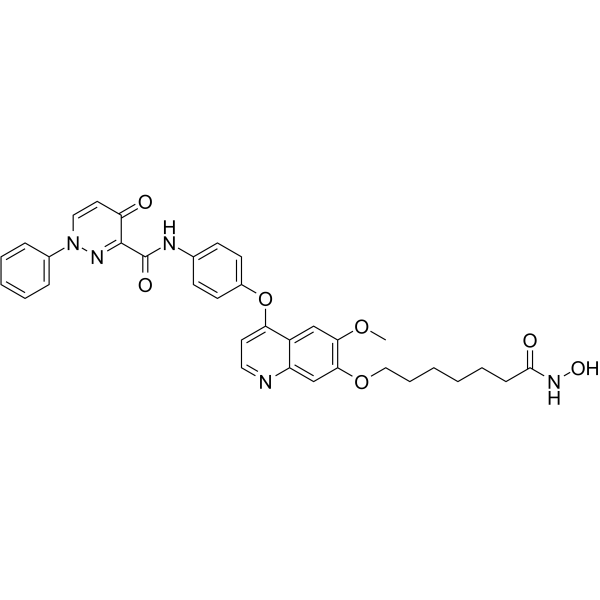
c-Met/HDAC-IN-2 is a highly potent c-Met and HDAC dual inhibitor with IC50s of 18.49 nM and 5.40 nM for HDAC1 and c-Met, respectively. c-Met/HDAC-IN-2 has antiproliferative activities against certain cancer cell lines. c-Met/HDAC-IN-2 can cause G2/M-phase arrest and induce apoptosis in HCT-116. c-Met/HDAC-IN-2 can be used for researching anti-cancer resistance .
loading...
    loading...
Cat. No.: HY-N17440
CAS No.: 15127-94-3
2-Methoxyjuglone, a naphthoquinone, is an apoptosis inducer. 2-Methoxyjuglone activates caspase-9 and caspase-3 via the mitochondrial cytochrome c-dependent intrinsic apoptosis cascade. 2-Methoxyjuglone increases pro-apoptotic Bax levels, decreases anti-apoptotic Bcl-2 levels, and promotes mitochondrial cytochrome c release. 2-Methoxyjuglone induces apoptosis morphological features, early apoptosis, S-phase and G2/M-phase cell cycle arrest, and DNA double-strand breaks. 2-Methoxyjuglone exerts activity against Gram-positive bacteria, pathogenic fungi, and phytopathogenic fungi. 2-Methoxyjuglone can be used for the research of hepatocellular carcinoma, osteosarcoma, colon adenocarcinoma, breast cancer, fungal infection, bacterial infection .
loading...
    loading...
Cat. No.: HY-183787
Target:  

PI3K Akt mTOR Apoptosis CDK

Research Areas:  

Cancer

PI3Kα-IN-33 is an orally active and selective PI3Kα inhibitor with an IC50 of 9.9 nM. PI3Kα-IN-33 blocks the PI3K/Akt/mTOR signaling pathway. PI3Kα-IN-33 induces apoptosis and triggers G2/M-phase arrest via Cyclin B1 and CDK1 downregulation. PI3Kα-IN-33 can be used for the research of colorectal cancer .
loading...
    loading...
Cat. No.: HY-163099
CAS No.: 2928571-43-9
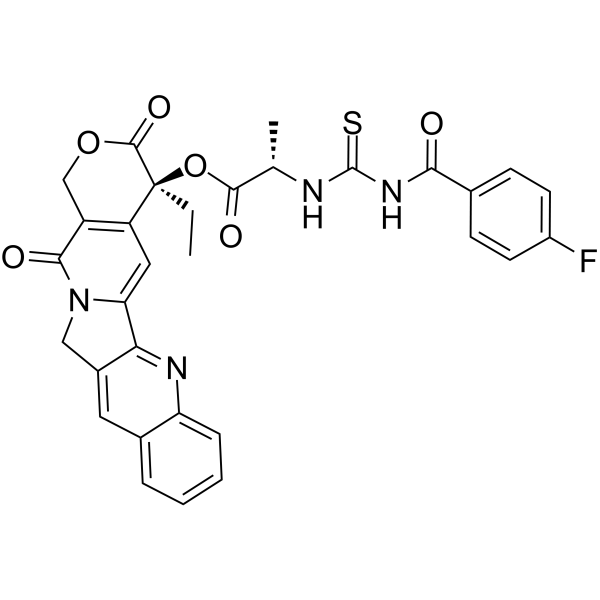
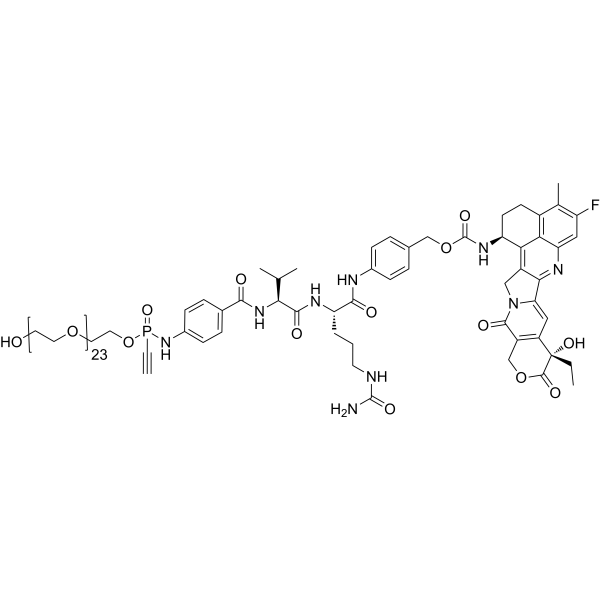
P5 (PEG24)-VC-PAB-Exatecan is a TOP1 inhibitor payload with antibody-conjugation-dependent activity. Conjugation of P5 (PEG24)-VC-PAB-Exatecan with Trastuzumab (HY-P9907) generates a DAR8 antibody-drug conjugate (ADCs) with antibody-like pharmacokinetic properties. P5 (PEG24)-VC-PAB-Exatecan induces S-phase and G2-M-phase cell cycle arrest, DNA damage and apoptosis in target-positive tumor cells, and releases damage-associated molecular patterns (DAMP) related to immunogenic cell death (ICD). The ADCs prepared from it exert bystander killing effects on non-target tumor cells. ADCs based on P5 (PEG24)-VC-PAB-Exatecan exhibit linker stability in vitro and in vivo, show in vivo efficacy, and can be used in research related to HER2-positive cancers .
loading...
    loading...
Cat. No.: HY-179372
CAS No.: 2982893-14-9
Research Areas:  

Cancer

Tubulin polymerization-IN-84 inhibits tubulin polymerization by targeting the colchicine-binding pocket, with anIC50 = 10.9 μM. Tubulin polymerization-IN-84 shows antiproliferative activity against Jurkat, B16-F10, HCT116, and MDA-MB-231 cells (IC50 = 60 nM, 380 nM, 138 nM, and 1.054 μM). Tubulin polymerization-IN-84 induces G2/M-phase arrest and apoptosis in B16-F10 cells. Tubulin polymerization-IN-84 suppresses tumor growth in a B16-F10 melanoma model and potentiates anti-tumor immunity in combination with a PD-L1 mAb for the research of T-cell acute lymphoblastic leukemia, melanoma, colon cancer, and breast cancer.
loading...
    loading...

