616 Results for "

peptide binding

" in MedChemExpress (MCE) Product Catalog:
Products (616)

616 Results for "peptide binding" in MCE Product Catalog:

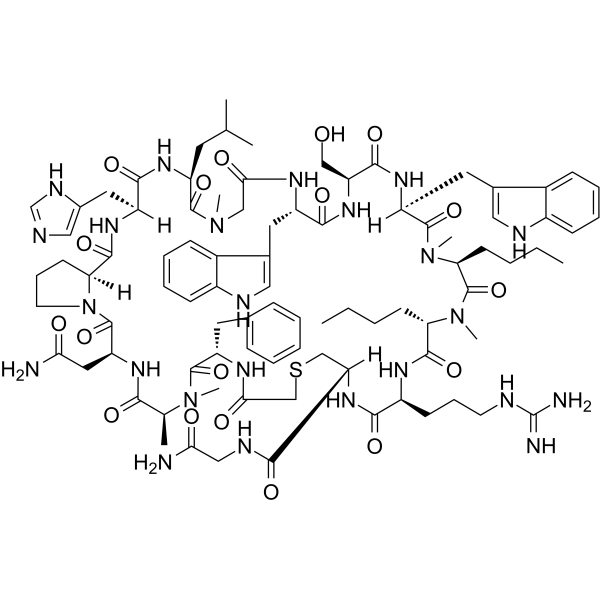
Cat. No.: HY-103048
CAS No.: 1629654-95-0
Target:  

PD-1/PD-L1

Research Areas:  

Cancer

PD-1/PD-L1-IN 3, a macrocyclic peptide, is a potent and selective inhibitor of the PD-1/PD-L1 and CD80/PD-L1 interactions extracted from patent WO2014151634A1, compound No.1. PD-1/PD-L1-IN 3 interferes with PD-L1 binding to PD-1 and CD80 by binding to PD-L1, with IC50s of 5.60 nM and 7.04 nM, respectively. PD-1/PD-L1-IN 3 can be used for the research of various diseases, including cancer and infectious diseases .
loading...
    loading...
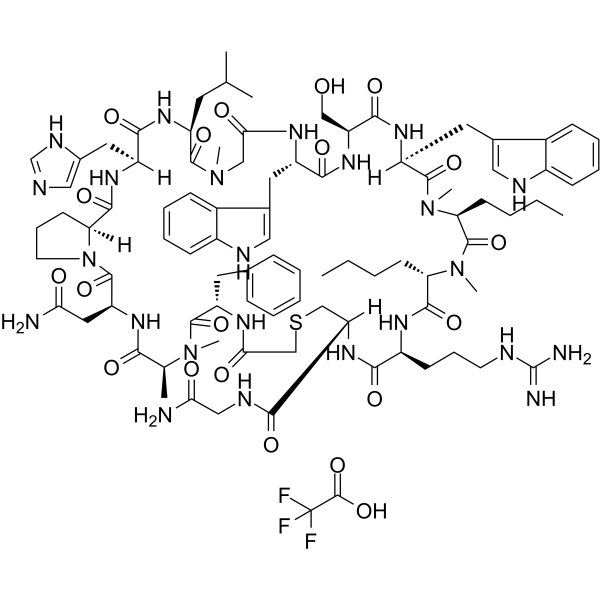
Cat. No.: HY-103048A
Purity:  99.34%
Target:  

PD-1/PD-L1

Research Areas:  

Cancer

PD-1/PD-L1-IN 3 TFA, a macrocyclic peptide, is a potent and selective inhibitor of the PD-1/PD-L1 and CD80/PD-L1 interactions extracted from patent WO2014151634A1, compound No.1. PD-1/PD-L1-IN 3 TFA interferes with PD-L1 binding to PD-1 and CD80 by binding to PD-L1, with IC50s of 5.60 nM and 7.04 nM, respectively. PD-1/PD-L1-IN 3 TFA can be used for the research of various diseases, including cancer and infectious diseases .
loading...
    loading...
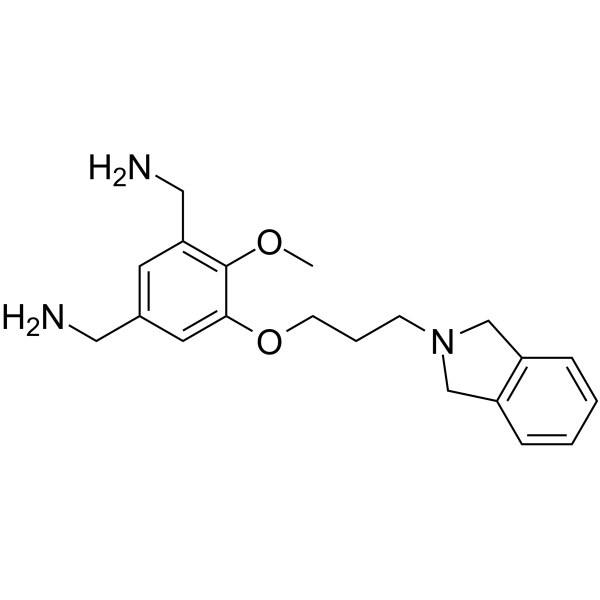
Cat. No.: HY-172662
Target:  

Telomerase

Research Areas:  

Cancer

TRF1-TIN2 PPI-IN-1 (Compound 40) is a TRF1-TIN2 interaction inhibitor. TRF1-TIN2 PPI-IN-1 binds to the TRFH domain of TRF1 (KD = 29 μM) and competitively inhibits the binding of the TIN2 peptide (IC50 = 67 μM). TRF1-TIN2 PPI-IN-1 disrupts the interaction between TRF1 and TIN2 by occupying the hotspot region of the TRF1-TIN2 binding interface. TRF1-TIN2 PPI-IN-1 can expel TRF 1 from the shelterin complex and can be used to study shelterin-related cancers .
loading...
    loading...
Cat. No.: HY-N14094
CAS No.: 2632-29-3
Tubulosine is an alkaloid. Tubulosine can be isolated from Pogonopus tubulosus (DC.) Schumann. Tubulosine is an ATP-competitive, selective JAK3 inhibitor with an IC50 value of 9.9 nM. Tubulosine also inhibits the kinase activities of other JAK family members, the extent of inhibition is less than that of JAK3, with IC50 values of 69.5, 84.9 and 76.3 nM for JAK1, JAK2 and TYK2, respectively. Tubulosine selectively inhibits JAK3 signalling by binding to the ATP-binding site of the kinase of JAK3. Tubulosine induces apoptotic and necrotic/autophagic cell death. Tubulosine inhibits the process of peptide chain elongation by eukaryotic polysomes by, specifically preventing the elongation-factor-2-dependent step of translocation. Tubulosine exhibits anticancer activity in breast cancer cells .
loading...
    loading...
Cat. No.: HY-106994AR
CAS No.: 342005-82-7
Synonyms: YM598 (Standard)
Nebentan potassium (Standard) (GT-2331 maleate (Standard)) is the analytical standard of Nebentan (potassium) (HY-106994A). This product is intended for research and analytical applications. Nebentan potassium (YM598) is a potent, selective and orally active non-peptide endothelin ETA receptor antagonist through the modification of Bosentan (HY-A0013). Nebentan potassium inhibits [125I] endothelin-1 binding to cloned human endothelin ETA and ETB receptor, with Ki of 0.697 nM and 569 nM, respectively . YM598 can ameliorate the progression of cor pulmonale and myocardial infarction in vivo .
loading...
    loading...
Cat. No.: HY-123244
CAS No.: 810659-53-1
Target:  

Bcl-2 Family Apoptosis

Research Areas:  

Cancer

YC137 is a potent Bcl-2 antagonist with Kis of 1.3 μM and >100 μM for Bcl-2 and Bcl-xL when assayed in Bis-Tris buffer, respectively. YC137 inhibits the binding of the Bid BH3 peptide to Bcl-2, thus disrupting an interaction essential for the antiapoptotic activity of Bcl-2. YC137 selectively induces apoptosis of Bcl-2-dependent cells. YC137 has the potential for breast cancer research .
loading...
    loading...
Cat. No.: HY-125837
CAS No.: 2366264-12-0
Research Areas:  

Cancer

MS31 is a potent, highly affinity and selective fragment-like methyllysine reader protein spindlin 1 (SPIN1) inhibitor. MS31 potently inhibits the interactions between SPIN1 and H3K4me3 (IC50=77 nM, AlphaLISA; 243 nM, FP). MS31 selectively binds Tudor domain II of SPIN1 (Kd=91 nM). MS31 potently inhibits binding of trimethyllysine-containing peptides to SPIN1. MS31 is not toxic to nontumorigenic cells .
loading...
    loading...
Cat. No.: HY-171788
CAS No.: 2765258-26-0
Research Areas:  

Cancer

NMT-IN-8 (Compound Ex.129) is an orally active and highly selective inhibitor of N-myristoyl transferase (NMT) with an IC50 value of <10 nM. NMT-IN-8 binds to the peptide binding pocket of NMT, blocking its catalyzed protein N-myristoylation to interfere with key pathways such as protein trafficking, signal transduction, and viral replication. NMT-IN-8 is promising for research of oncology (e.g., MYC-addicted cancers, B-cell lymphoma) and infectious diseases (e.g., malaria, HIV, rhinovirus infection) .
loading...
    loading...
Cat. No.: HY-178489
Target:  

Nectin-4

Research Areas:  

Cancer

BGC1614 is a Nectin-4-targeting bicyclic toxin conjugate (BTC) belonging to the category of peptide-drug conjugates (PDCs). BGC1614 exhibits strong targeted binding ability to Nectin-4, with an KD of 3.859 × 10 -7 M. BGC1614 exhibits superior antitumor efficacy in nude mice bearing PC-3 and N87 tumor xenografts. BGC1614 can be used for research related to Nectin-4-overexpressing tumors (such as prostate cancer, gastric cancer) .
loading...
    loading...
Cat. No.: HY-403538
CAS No.: 1358901-59-3
Target:  

Zinc Finger Protein

Research Areas:  

Cancer

iZMYND8-34 is a ZMYND8 inhibitor with an IC50 of 0.66 μM. iZMYND8-34 inhibits the binding of H3K4me1–H3K14ac peptide to the ZMYND8 protein. iZMYND8-34 inhibits ZMYND8’s histone recognition. iZMYND8-34 blocks neuroendocrine prostate cancer development .
loading...
    loading...
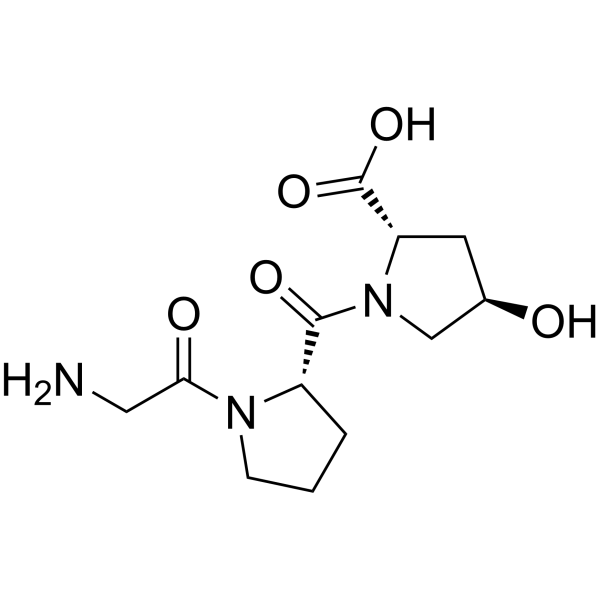
Cat. No.: HY-A0299
CAS No.: 2239-67-0
Synonyms: Tripeptide 29
Target:  

MMP

Research Areas:  

Inflammation/Immunology

H-Gly-Pro-Hyp-OH is a collagen-derived peptide and also a dipeptidyl peptidase-4 inhibitor.\nH-Gly-Pro-Hyp-OH inhibits the activity of dipeptidyl peptidase-4 in vitro. H-Gly-Pro-Hyp-OH binds to the DNA-binding site of the JUN/FOS complex, blocks the formation of the DNA-JUN/FOS complex, and inhibits transcriptional activity. H-Gly-Pro-Hyp-OH is applicable to research related to skin photoaging, UVB-induced skin aging/photoaging, and thrombosis .
loading...
    loading...
Cat. No.: HY-P11612
Research Areas:  

Metabolic Disease

ATS-9R is a peptide consisting of an adipocyte-targeting sequence and D-form 9-arginine. ATS-9R selectively transfects mature adipocytes by binding to prohibitin. ATS-9R allows an adipocyte-targeted gene delivery in vitro and in vivo. ATS-9R can be used for the development of an adipocyte-targeted gene carrier. ATS-9R can be used for the study of obesity as well as obesity-induced metabolic syndromes .
loading...
    loading...
Cat. No.: HY-P5062
CAS No.: 534615-50-4
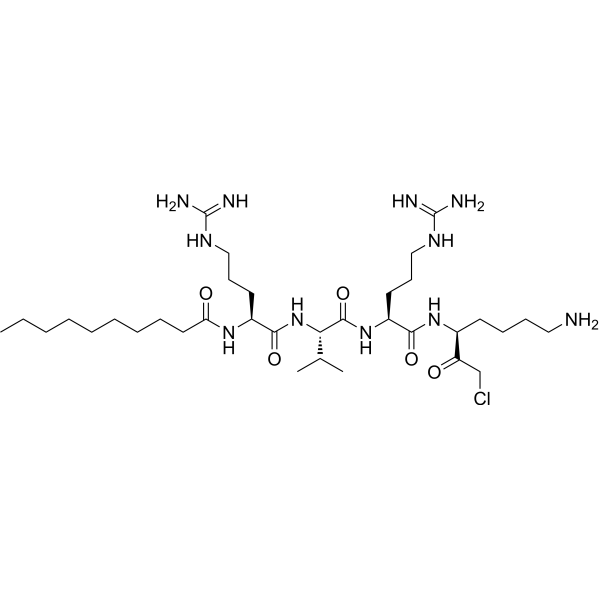
Synonyms: Decanoyl-Arg-Val-Arg-Lys-chloromethylketone
Target:  

Furin

Research Areas:  

Infection

DEC-RVRK-CMK (Decanoyl-Arg-Val-Arg-Lys-chloromethylketone) is a peptide-based CMK (chloromethylketone) inhibitor that targets and inactivates the secreted soluble kexin (Kex2) (Ki=8.45 μM). The yeast enzyme Kex2 (kexin, EC 3.4.21.61) is a calcium-dependent transmembrane protease and belongs to the mammalian protease family of the serine protease subtilisin family. The binding mechanism of Kex2 with different CMK inhibitors depends on substrate selectivity, particularly the selective differences between lysine and arginine at the P1 position .
loading...
    loading...
Cat. No.: HY-P5506
CAS No.: 144555-23-7
Target:  

Complement System

Research Areas:  

Inflammation/Immunology

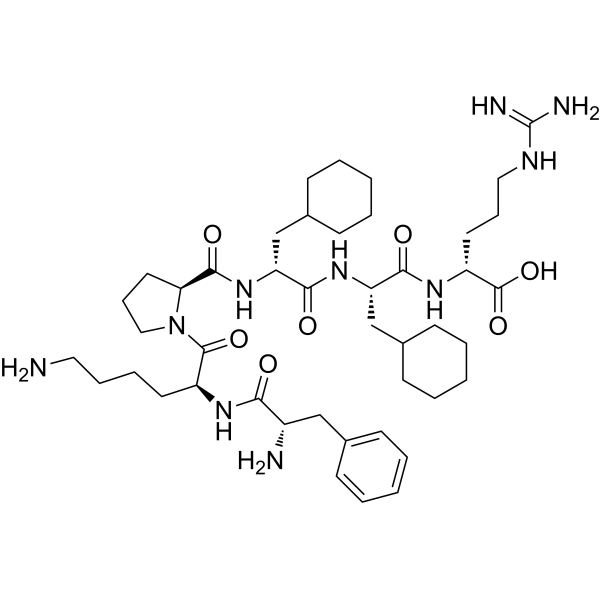
C5a Receptor agonist, W5Cha (Peptide 1) is a synthetic C5a receptor hexapeptide agonist. C5a Receptor agonist, W5Cha exhibits a IC50 of 0.07 μM for binding to C5a receptor on human neutrophil membranes. C5a Receptor agonist, W5Cha activates wild-type C5a receptor and induces Ca 2+ flux. C5a Receptor agonist, W5Cha can be used in studies related to neutrophil activation and inflammation .
loading...
    loading...
Cat. No.: HY-P6023A
Target:  

Factor Xa

Research Areas:  

Cardiovascular Disease

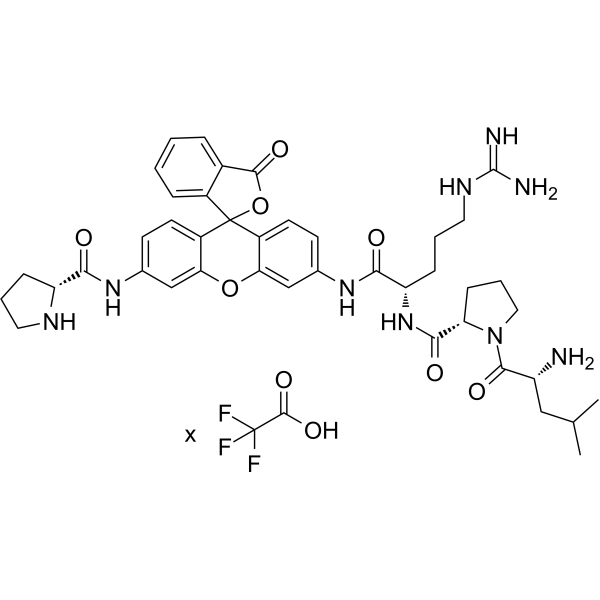
D-Leu-Pro-Arg-Rh110-D-Pro TFA is a substrate for Factor Xa I (FXIa) with binding affinity. D-Leu-Pro-Arg-Rh110-D-Pro TFA consists of Rhodamine 110 (HY-D0817) linked to a peptide chain through a cleavable bond. Cleavable bond cleavage enhances fluorophore intensity. D-Leu-Pro-Arg-Rh110-D-Pro TFA can be used to detect FXIa activity .
loading...
    loading...
Cat. No.: HY-W782087A
CAS No.: 2649490-34-4
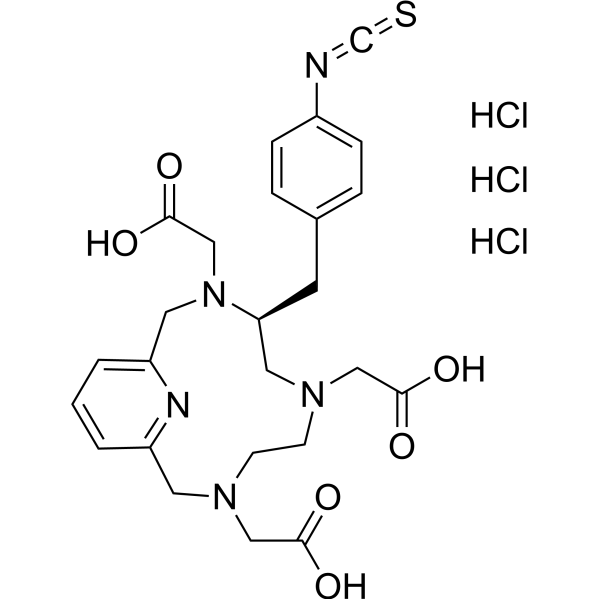
p-SCN-Bn-PCTA hydrochloride is a Bifunctional Chelator used for radiometal labeling. p-SCN-Bn-PCTA hydrochloride can conjugate with peptides or antibodies via its isothiocyanate group. PCTA-RGD, formed by the conjugation of p-SCN-Bn-PCTA with cyclo-RGDyK, retains binding activity towards αvβ3 integrin with an IC50 of 1.8 μM. p-SCN-Bn-PCTA hydrochloride can be used for the construction of PET radiotracers and imaging studies related to pancreatic cancer, colorectal cancer, and tumor angiogenesis .
loading...
    loading...
Cat. No.: HY-111836R
CAS No.: 2763260-39-3
Research Areas:  

Cancer

NRX-252114 (Standard) is the analytical standard of NRX-252114 (HY-111836). This product is intended for research and analytical applications. NRX-252114 is a potent enhancer of the interaction between β-catenin, and its cognate E3 ligase, SCFβ-TrCP. NRX-252114 enhances the binding of pSer33/S37A β-catenin peptide for β-TrCP with an EC50 of 6.5 nM and a Kd of 0.4 nM. NRX-252114 induces mutant β-catenin degradation .
loading...
    loading...
Cat. No.: HY-184566A
Research Areas:  

Cancer

DPPE-PEG2000-iRGD is a functionalized PEGylated lipid conjugate composed of three modular components: dipalmitoylphosphatidylethanolamine (DPPE) as the lipid anchoring group, a polyethylene glycol (PEG) spacer arm with a molecular weight of 2000 Da, and iRGD peptide (HY-P0122) as the terminal targeting/functional ligand. DPPE-PEG2000-iRGD can be incorporated into liposomes, lipid nanoparticles (LNPs), or other nanocarriers to confer ligand-directed targeting capability against sequential binding to αv integrins on tumor vasculature → neuropilin-1 (NRP1) in tumor tissue.
loading...
    loading...
Cat. No.: HY-184567A
Research Areas:  

Cancer

DSG-PEG2000-iRGD is a functionalized PEGylated lipid conjugate composed of three modular components: distearoylglycerol (DSG) as the lipid anchoring group, a polyethylene glycol (PEG) spacer arm with a molecular weight of 2000 Da, and iRGD peptide (HY-P0122) as the terminal targeting/functional ligand. DSG-PEG2000-iRGD can be incorporated into liposomes, lipid nanoparticles (LNPs), or other nanocarriers to confer ligand-directed targeting capability against sequential binding to αv integrins on tumor vasculature → neuropilin-1 (NRP1) in tumor tissue.
loading...
    loading...
Cat. No.: HY-184576
Research Areas:  

Cancer

DOPE-PEG1000-iRGD is a functionalized PEGylated lipid conjugate composed of three modular components: dioleoylphosphatidylethanolamine (DOPE) as the lipid anchoring group, a polyethylene glycol (PEG) spacer arm with a molecular weight of 1000 Da, and iRGD peptide (HY-P0122) as the terminal targeting/functional ligand. DOPE-PEG1000-iRGD can be incorporated into liposomes, lipid nanoparticles (LNPs), or other nanocarriers to confer ligand-directed targeting capability against sequential binding to αv integrins on tumor vasculature → neuropilin-1 (NRP1) in tumor tissue.
loading...
    loading...

