107 Results for "

PLC-

" in MedChemExpress (MCE) Product Catalog:
Products (107)

107 Results for "PLC-" in MCE Product Catalog:

Cat. No.: HY-155513
CAS No.: 2568963-01-7
Target:  

Syk

Research Areas:  

Cancer

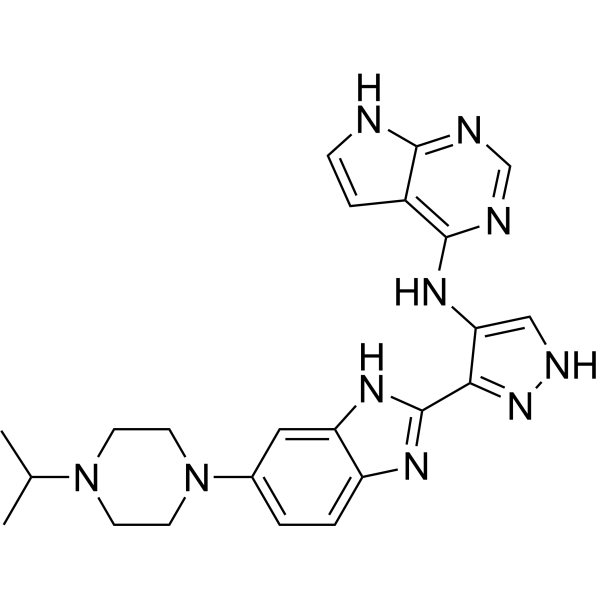
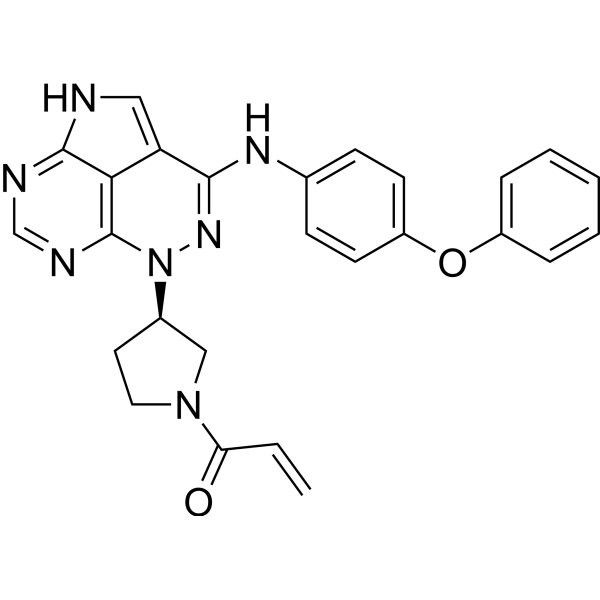
Syk-IN-8 (compound 19q) is a Syk inhibitor, with antiproliferative activity against multiple hematological tumour cells. Syk-IN-8 inhibits PLCγ2 phosphorylation, can be used for research in blood cancers .
loading...
    loading...
Cat. No.: HY-12598AR
CAS No.: 146255-66-5
Synonyms: (RS)-3,5-DHPG (Standard)
Research Areas:  

Neurological Disease

DHPG (Standard) is the analytical standard of DHPG. This product is intended for research and analytical applications. DHPG is the agonist for mGluR 1/5 (EC50 for mGluR 1 is 60 nM) that activates the phospholipase C (PLC) pathway, and leads ultimately to the activation of protein kinase C (PKC) .
loading...
    loading...
Cat. No.: HY-146672
CAS No.: 2404604-06-2
Target:  

Itk

Research Areas:  

Cancer

ITK inhibitor 6 (compound 43) is a potent and selective ITK inhibitor with IC50s of 4 nM, 133 nM, 320 nM, 2360 nM, 155 nM for ITK, BTK, JAK3, EGFR, LCK, respectively. ITK inhibitor 6 inhibits phosphorylation of PLCγ1 and ERK1/2. ITK inhibitor 6 shows antiproliferative activities .
loading...
    loading...
Cat. No.: HY-175407
Target:  

Drug Derivative

Research Areas:  

Others

18:0-20:4 PI(3,4,5)P3 (sodium) is an analogue of phosphatidylinositol. Protein-binding to PtdIns-(3,4,5)-P3 is important for cytoskeletal rearrangements and membrane trafficking. PtdIns-(3,4,5)-P3 is resistant to cleavage by PI-specific PLC .
loading...
    loading...
Cat. No.: HY-175982
Target:  

Aurora Kinase

Research Areas:  

Cancer

AURKA-IN-3 (Compound AL8) is an irreversible covalent Aurora kinase A (AURKA) inhibitor with an IC50 value of 23.0 nM. AURKA-IN-3 inhibits the activation of cAMP signaling pathway and phospholipase C (PLC) signaling pathway mediated by AURKA, and reduces the autophosphorylation level of AURKA. AURKA-IN-3 is promising for research of malignant tumors associated with high AURKA expression (e.g., leukemia, lymphoma) .
loading...
    loading...
Cat. No.: HY-P10833
Target:  

VEGFR PI3K Akt mTOR ERK Apoptosis

Research Areas:  

Cardiovascular Disease Cancer

C-VGB3 is a selective vascular endothelial growth factor receptor 2 (VEGFR2) antagonist, which inhibits VEGFR2-mediated PI3K/AKT/mTOR and PLCγ/ERK1/2 signaling pathways. C-VGB3 binds to the extracellular domain of VEGFR2, blocking ligand-receptor interaction and inducing apoptosis in endothelial and tumor cells through both intrinsic (involving Bcl2 family and caspases) and extrinsic (death receptor-mediated) pathways. C-VGB3 is promising for research of angiogenesis-related cancers, such as breast cancer .
loading...
    loading...
Cat. No.: HY-185206
CAS No.: 2756388-01-7
Target:  

PROTACs Itk NF-κB

Research Areas:  

Cancer

BSJ-05-037 is an ITK PROTAC degrader that effectively targets and degrades ITK in T-cell lymphoma cell lines. BSJ-05-037 blocks the activation of the NF-κB/GATA-3 signaling pathway, inhibits PLCγ1 phosphorylation, and reduces the proliferative capacity of T-cell lymphoma cells. BSJ-05-037 enhances the sensitivity of T-cell lymphoma cells to chemotherapy. In mouse models of T-cell lymphoma, BSJ-05-037 induces ITK degradation, reduces GATA-3 expression, decreases tumor volume, and reverses chemotherapy resistance. BSJ-05-037 is applicable to research related to T-cell lymphoma .
loading...
    loading...
Cat. No.: HY-162280
CAS No.: 3034024-77-3
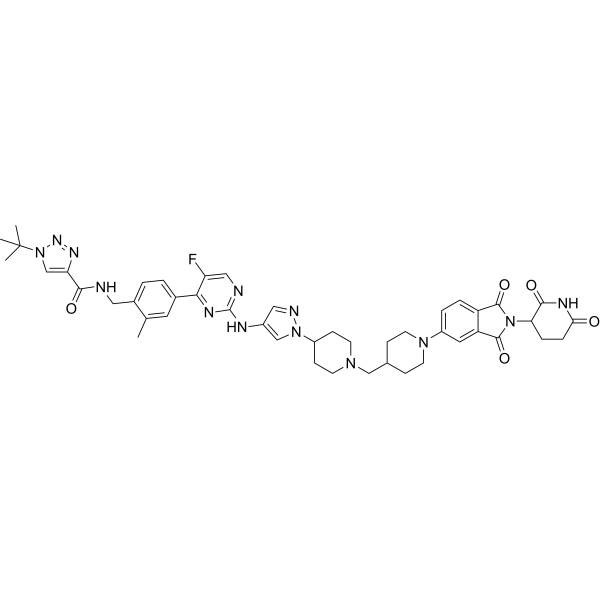
PROTAC BTK Degrader-9 is a potent BTK PROTAC degrader with a DC50 of 1.29 nM (in Mino cells at 4 h). PROTAC BTK Degrader-9 induces the formation of a stable ternary complex with BTK and the CRBN E3 ubiquitin ligase, thereby mediating proteasomal degradation of BTK in a CRBN-dependent manner. PROTAC BTK Degrader-9 downregulates the RANKL-activated BTK-PLCγ2-Ca 2+-NFATc1 signaling pathway. PROTAC BTK Degrader-9 alleviates alveolar bone resorption in periodontitis models of Mus musculus (house mouse). PROTAC BTK Degrader-9 can be used in research related to periodontitis .
loading...
    loading...
Cat. No.: HY-120406
CAS No.: 1431727-04-6
Research Areas:  

Cancer

LPS-123 is a covalently irreversible BTK inhibitor with an IC50 of < 5 nM. LPS-123 simultaneously inhibits the catalytic activity of BTK at Tyr551 and its self-activation at Tyr223. LPS-123 inhibits phosphorylation of the AKT/mTOR and MAPK signaling pathways, activation of PLCγ2, ERK1/2, p38, AKT, and mTOR, and blocks the production of CCL3 and CCL4 chemokines. LPS-123 exhibits significant anti-proliferative activity against various B-cell lymphoma cell lines and effectively induces apoptosis via a caspase-dependent pathway. LPS-123 also demonstrates significant antitumor activity in the OCI-Ly7 xenograft model. LPS-123 can be used for lymphoma research .
loading...
    loading...
Cat. No.: HY-172567
Research Areas:  

Others

PLC thio-PIP2 trisodium is an analog of naturally occurring PIP2. PLC thio-PIP2 trisodium can simulate the process of PIP2 being hydrolyzed by PLC in in vitro experiments, and then quantitatively analyze the activity of PLC by detecting the free thiol produced by hydrolysis .
loading...
    loading...
Cat. No.: HY-RS19691
Research Areas:  

Others

Hspg2 Mouse Pre-designed siRNA Set A contains three designed siRNAs for Hspg2 gene (Mouse), as well as a negative control, a positive control, and a FAM-labeled negative control.

loading...
    loading...
Cat. No.: HY-RS06449
Research Areas:  

Others

HSPG2 Human Pre-designed siRNA Set A contains three designed siRNAs for HSPG2 gene (Human), as well as a negative control, a positive control, and a FAM-labeled negative control.

loading...
    loading...
Cat. No.: HY-P10658
CAS No.: 143228-35-7
Target:  

Phospholipase

Research Areas:  

Others

ARF1 (2-17) inhibits both ARF-independent (PLC-β) and ARF-dependent (PLD) pathways. ARF1 (2-17) inhibits GTP-γ-S-stimulated PLD activity, phospholipase C-β (PLC-β), and exocytosis .
loading...
    loading...
Cat. No.: HY-P10119
CAS No.: 205173-94-0
Target:  

PDGFR Mitosis

Research Areas:  

Others

PDGFR Y1021 peptide (non-phosphorylation) is the non-phosphorylated fragment of platelet-derived growth factor receptor (PDGFR). PDGFR Y1021 peptide (non-phosphorylation) blocks the PLCγ association to PDGFR through PLCγSH2 domain, and thus inhibits mitogenic response .
loading...
    loading...
Cat. No.: HY-P10270
CAS No.: 147428-10-2
Target:  

PDGFR Mitosis

Research Areas:  

Others

PDGFR Y1021 peptide (phosphorylation) is the phosphorylated fragment of platelet-derived growth factor receptor (PDGFR). PDGFR Y1021 peptide (phosphorylation) supports association of PLCγ to PDGFR through PLCγSH2 domains, and thus promotes the production of inositol phosphates and mitogenic response .
loading...
    loading...
Cat. No.: HY-103411
CAS No.: 74115-10-9
Target:  

Dopamine Receptor

Research Areas:  

Neurological Disease

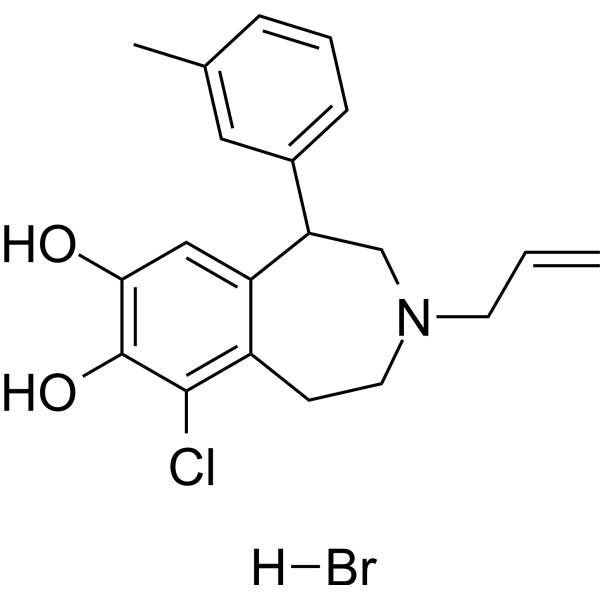
SKF83822 hydrobromide is a potent dopamine D1 receptor agonist. SKF83822 hydrobromide activates Gs/olf/adenylyl cyclase (AC)-coupled D1 receptors, but not phospholipase C (PLC)-coupled D1-like receptors .
loading...
    loading...
Cat. No.: HY-151920
Target:  

Btk

Research Areas:  

Inflammation/Immunology

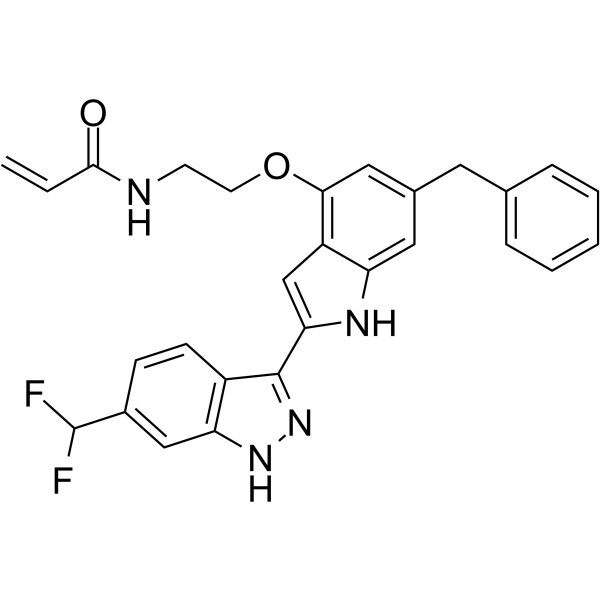
BTK-IN-17 (compound 36R) is a selective and orally activeBTK inhibitor with an IC50 value of 13.7 nM. BTK-IN-17 decreases the expression of p-BTK Y223 and p-PLCγ2 Y1217. BTK-IN-17 shows anti-inflammatory effects .
loading...
    loading...
Cat. No.: HY-P1834
Target:  

Inhibitory Antibodies

Research Areas:  

Inflammation/Immunology

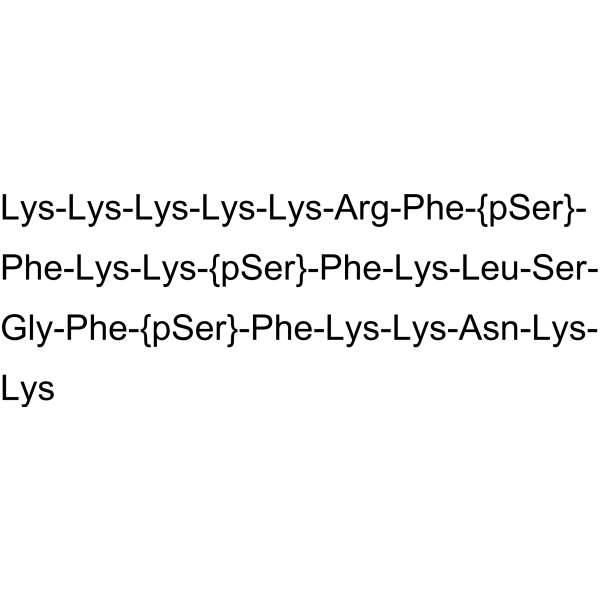
MARCKS Peptide(151-175), Phosphorylated is a phosphorylated peptide corresponding to the basic effector domain of myristoylated alanine-rich protein kinase C substrate protein (MARCKS). Phosphorylation of MARCKS Peptide (151-175) reverses its inhibition of phospholipase C (PLC)-catalyzed hydrolysis of phosphatidylinositol 4,5-bisphosphate (PIP2) .
loading...
    loading...
Cat. No.: HY-N14349
CAS No.: 60696-52-8
Synonyms: ARQ; Asterriquinone SU5504
Asterriquinone (ARQ), a Asterriquinone analog, is a Grb-2 binding inhibitor. Asterriquinone inhibits the Grb-2 binding activity to tyrosine phosphorylated EGFR, with an IC50 of 8.37 μM. Asterriquinone is a HIV1 reverse transcriptase inhibitor with a Ki of 2.3 μM. Asterriquinone also inhibits Grb-7 and PLC-γ binding activities. .
loading...
    loading...
Cat. No.: HY-131688R
CAS No.: 19117-92-1
Research Areas:  

Inflammation/Immunology

Neomycin (sulfate) (Standard) is the analytical standard of Neomycin (sulfate). This product is intended for research and analytical applications. Neomycin sulfate, an aminoglycoside antibiotic, exerts antibacterial activity through irreversible binding of the nuclear 30S ribosomal subunit, thereby blocking bacterial protein synthesis. Neomycin sulfate is a known phospholipase C (PLC) inhibitor. Neomycin sulfate potently inhibits both nuclear translocation of angiogenin and angiogenin-induced cell proliferation and angiogenesis .
loading...
    loading...

