332 Results for "

Substrate specificity

" in MedChemExpress (MCE) Product Catalog:
Products (332)

332 Results for "Substrate specificity" in MCE Product Catalog:

1
1 Cited Publications
Art. -Nr.: HY-Y0678
CAS. Nr.: 621-23-8
Synonyms: TRIMETHYL PHLOROGLUCINOL
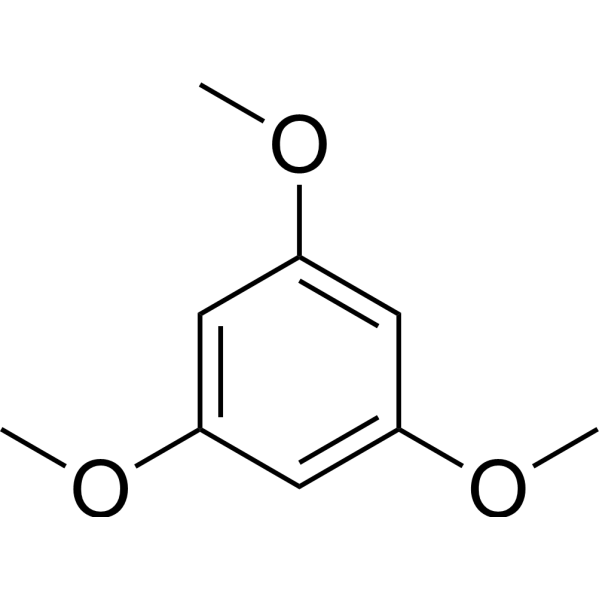
1,3,5-Trimethoxybenzene (TRIMETHYL PHLOROGLUCINOL) is an electrophilic substitution reaction substrate targeting free chlorine (Cl +) and free bromine (Br +). 1,3,5-Trimethoxybenzene has highly selective electrophilic addition characteristics. By capturing halogens, it undergoes specific substitution reactions to generate stable halogenated products. 1,3,5-Trimethoxybenzene can not only quench residual oxidants, but also quantify the halogen concentration by detecting the product without affecting the stability of redox-sensitive disinfection byproducts (DBPs). 1,3,5-Trimethoxybenzene is mainly used in water quality testing and quantitative analysis of free chlorine/bromine in water. At the same time, in phytochemistry, it is a key component of rose fragrance and participates in the study of pollination attraction mechanism .
loading...
    loading...
1
1 Cited Publications
Art. -Nr.: HY-131021
Synonyms: JF549, Azide
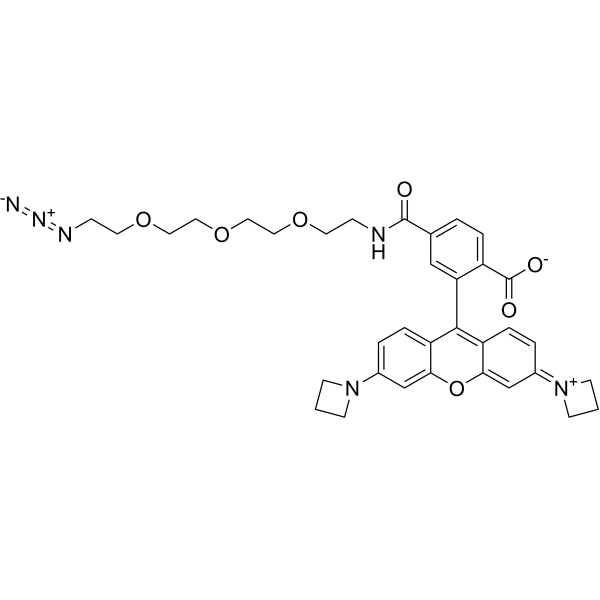
Janelia Fluor 549, Azide (JF549, Azide) is a fluorescent dye with the absorption maximum (λab (max)) of 549 nm and emission maximum (λem (max)) of 571 nm . Janelia Fluor fluorescent dyes can be chemically conjugated to the specific HaloTag substrate (a chloroalkane ligand) to form a fluorescent ligand, rather than binding directly to the HaloTag protein itself. Janelia Fluor products are licensed under U.S. Pat. Nos. 9,933,417, 10,018,624 and 10,161,932 and other patents from Howard Hughes Medical Institute. It contains an azide group and can undergo copper-catalyzed azide-alkyne cycloaddition (CuAAc) with molecules containing alkyne groups. It can also undergo ring strain-promoted alkyne-azide cycloaddition (SPAAC) with molecules containing DBCO or BCN groups.
loading...
    loading...
1
1 Cited Publications
Art. -Nr.: HY-W012985
CAS. Nr.: 600-22-6
Methyl pyruvate is a p53/p21 axis inhibitor, intrinsic apoptosis inhibitor, cytotoxic agent, ATP production enhancer, proteasome function restorer, TDP-43 localization normalizer, ATP-sensitive potassium (K +ATP) channel inhibitor, depolarizer, and insulin secretagogue .Methyl pyruvate turns off apoptotic pathways, induces cancer cell death, acts as a substrate for dimeric dihydrodiol dehydrogenase, enhances TCA cycle activity, rescues proteasome impairment and TDP-43 mislocalization, inhibits K +ATP channels independent of ATP, depolarizes pancreatic β-cell membranes, modulates insulin secretion, and enters pancreatic β-cell mitochondria via a specific transporter .Methyl pyruvate can be used for the research of lung adenocarcinoma, ovarian clear cell adenocarcinoma, breast adenocarcinoma, amyotrophic lateral sclerosis, and type II diabetes .
loading...
    loading...
1
1 Cited Publications
Art. -Nr.: HY-W039897
CAS. Nr.: 617-04-9
Synonyms: α-Methyl-D-mannoside
Target:  

Bacterial

Forschungsgebiete:  

Infection

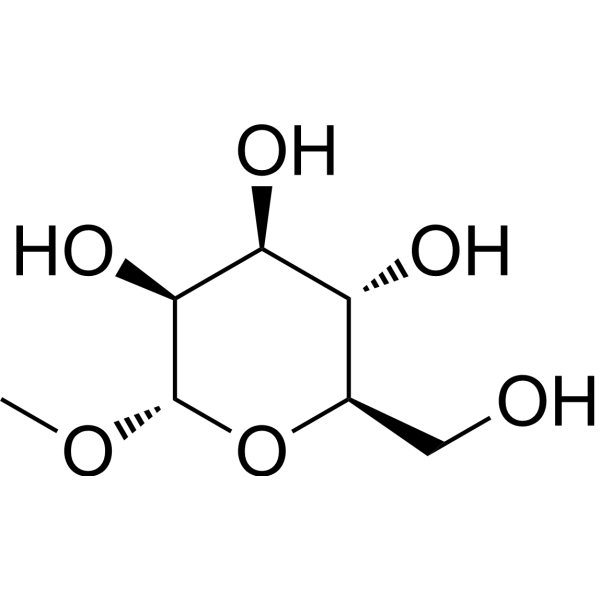
Methyl α-D-mannopyranoside (α-Methyl-D-mannoside) is a methyl glycoside derivative and conformational stabilizer of α-D-mannopyranose. The glycosidic bond conformation of Methyl α-D-mannopyranoside is significantly affected by the environment. In aqueous solution, Methyl α-D-mannopyranoside stabilizes into a trans conformation via intermolecular hydrogen bonds; in the gas phase, however, steric interactions drive Methyl α-D-mannopyranoside to prefer a clockwise gauche conformation. Methyl α-D-mannopyranoside also serves as a major component of secondary cell wall polymers in some bacteria and an active precursor site for virus-targeted glycoproteins. Methyl α-D-mannopyranoside acts as an acceptor substrate for alternansucrase, mediating the transfer of D-glucopyranosyl groups to generate a variety of glycosylated oligosaccharide products, with methyl α-D-glucopyranosyl-(1→6)-α-D-mannopyranoside as the main component. Methyl α-D-mannopyranoside is applicable to studies on bacterial pathogenic mechanisms associated with mannose-specific fimbrial lectins .
loading...
    loading...
Art. -Nr.: HY-W009004
CAS. Nr.: 13184-14-0
Synonyms: Lys-Lys-Lys; H-Lys-Lys-Lys-OH
Forschungsgebiete:  

Others

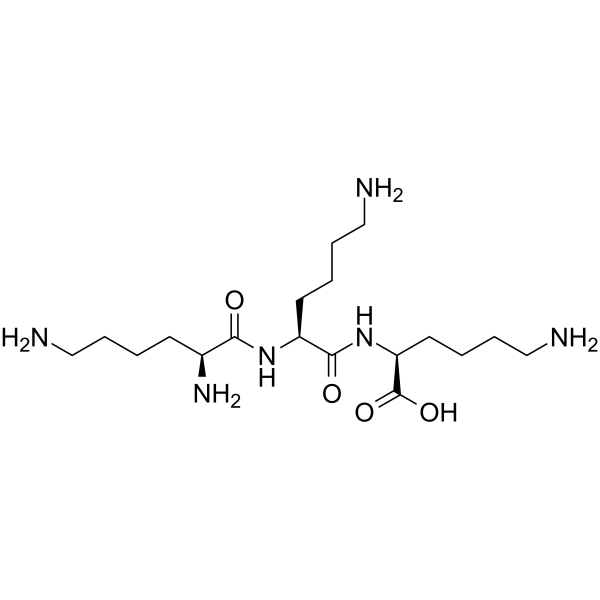
Trilysine is a tripeptide and also a substrate for specific peptidases. Trilysine serves as a hydrolytic substrate for the tripeptide-specific aminopeptidase TP and the oligopeptidase OP .
loading...
    loading...
Art. -Nr.: HY-P3949
CAS. Nr.: 143147-75-5
Target:  

Fluorescent Dye

Forschungsgebiete:  

Others

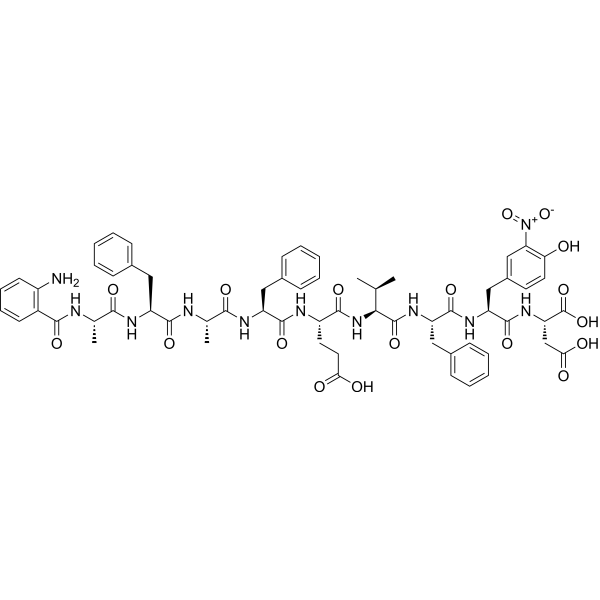
Fluorescent Substrate for Glu-Specific Proteases is a V8 protease-Specific chromogenic substrate .
loading...
    loading...
Art. -Nr.: HY-P5990
CAS. Nr.: 380225-52-5
Target:  

PSMA

Forschungsgebiete:  

Cancer

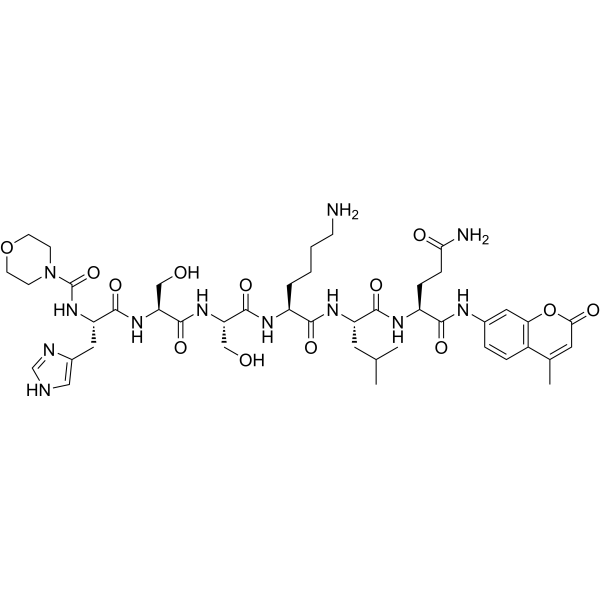
Prostate Specific Antigen Substrate is a highly specific fluorescent peptide substrate can be used for measuring prostate-specific antigen (PSA) enzymatic activity .
loading...
    loading...
Art. -Nr.: HY-123051
CAS. Nr.: 1104011-59-7
Reinheit:  99.79%
Target:  

Proteasome

Forschungsgebiete:  

Inflammation/Immunology

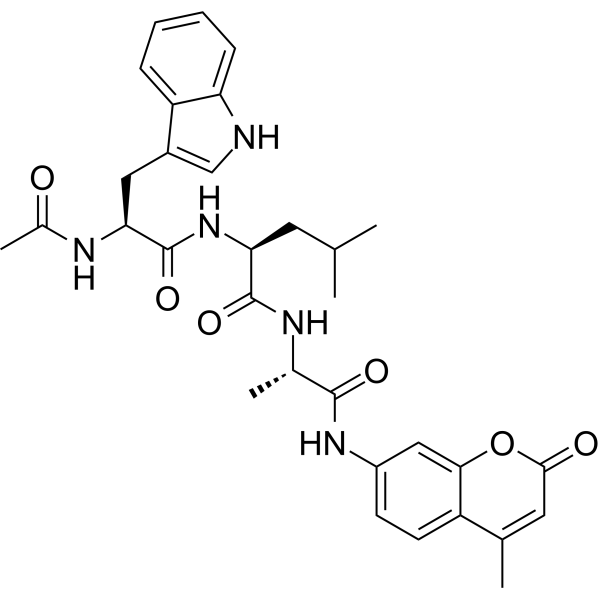
Ac-WLA-AMC is a specific 20S constitutive proteasome β5 fluorogenic substrate .
loading...
    loading...
Art. -Nr.: HY-129385
CAS. Nr.: 72229-40-4
Reinheit:  99.64%
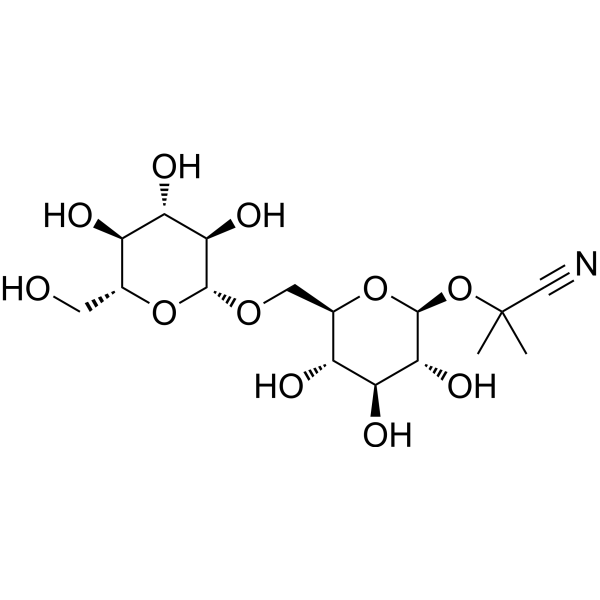
Linustatin is a cyanogenic glycoside compound. Linustatin serves as the natural substrate of the specific β-diglucosidase Linustatinase .
loading...
    loading...
Art. -Nr.: HY-P5979
CAS. Nr.: 1071466-49-3
Target:  

LRRK2

Forschungsgebiete:  

Neurological Disease

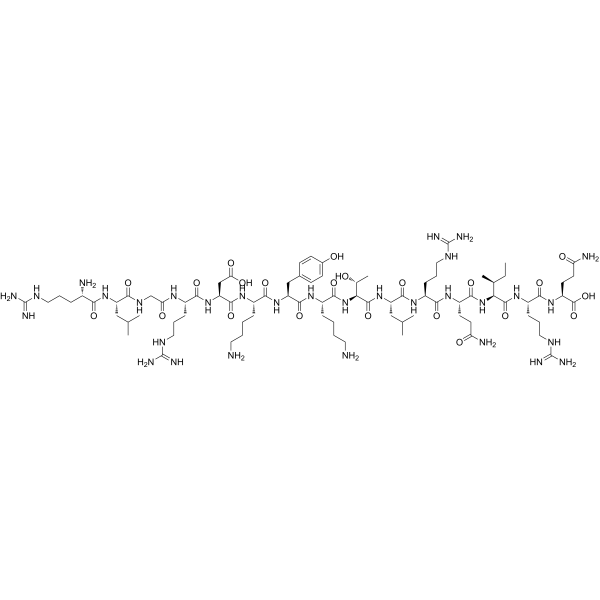
LRRKtide is a polypeptide substrate. LRRKtide is a specific phosphorylation substrate of LRRK2, a kinase associated with Parkinson's disease, and its phosphorylation site is a threonine residue. LRRKtide can be used for characterization of the catalytic properties of LRRK2, as well as studies on kinase activity and inhibition. LRRKtide is applicable to research related to Parkinson's disease .
loading...
    loading...
Art. -Nr.: HY-P10620
Target:  

Bacterial

Forschungsgebiete:  

Others

GGGYK-Biotin is a substrate peptide designed to study the substrate specificity of Sortase A. GGGYK-Biotin can be used to develop Sortase A variants with different substrate specificities .
loading...
    loading...
Art. -Nr.: HY-P10602
CAS. Nr.: 103659-06-9
Synonyms: RII phosphopeptide
Target:  

PKA

Forschungsgebiete:  

Others

PKA Regulatory Subunit II Substrate (RII phosphopeptide) is a tool peptide derived from the regulatory subunit Type II (RII) of cyclic AMP-dependent protein kinase (PKA). PKA Regulatory Subunit II Substrate is commonly used to mimic the phosphorylation of protein kinases and as a specific substrate for protein phosphatases to assess the activities of these enzymes .
loading...
    loading...
Art. -Nr.: HY-P0266
CAS. Nr.: 127103-11-1
Synonyms: Ac-SdKP
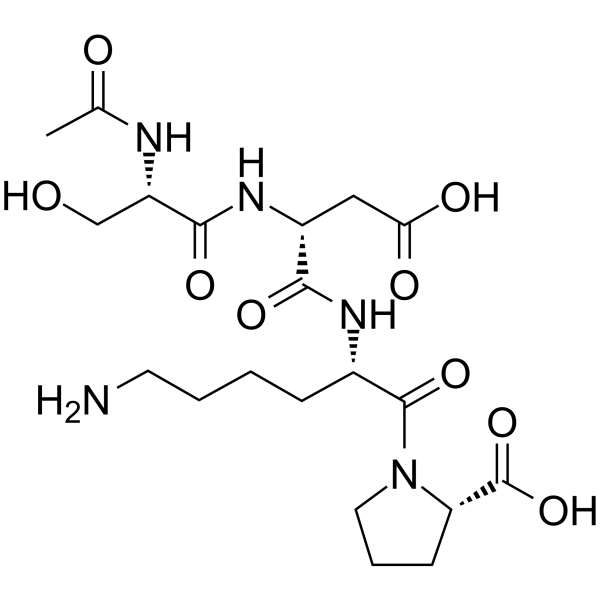
N-Acetyl-Ser-dAsp-Lys-Pro, an endogenous tetrapeptide secreted by bone marrow, is a specific substrate for the N-terminal site of ACE.
loading...
    loading...
Art. -Nr.: HY-123052
CAS. Nr.: 1431362-79-6
Reinheit:  ≥97.0%
Target:  

Proteasome

Forschungsgebiete:  

Inflammation/Immunology

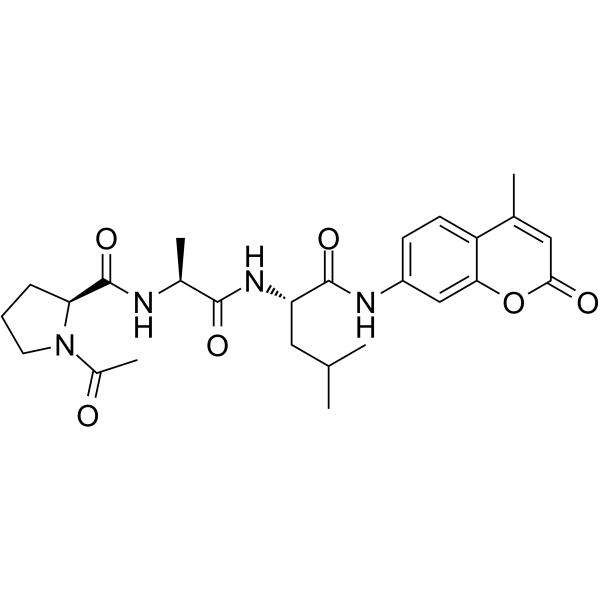
Ac-PAL-AMC is a fluorogenic substrate specific for 20S proteasome LMP2/β1i activity .
loading...
    loading...
Art. -Nr.: HY-W718137
CAS. Nr.: 66927-03-5
6-Azido-6-deoxy-D-galactose, 95% can be used as a substrate in enzymology to study the activity and specificity of galactosyltransferases and other glycosylation enzymes.
loading...
    loading...
Art. -Nr.: HY-P2016
CAS. Nr.: 355140-49-7
Target:  

Proteasome

Forschungsgebiete:  

Others

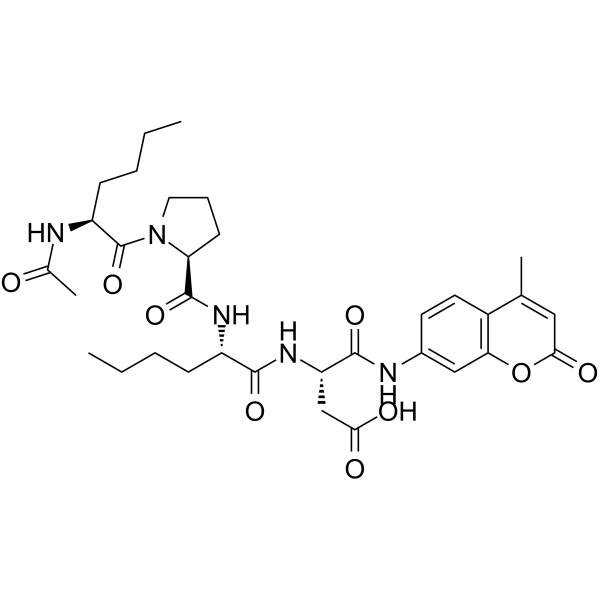
Ac-Nle-Pro-Nle-Asp-AMC is a specific substrate for 26S proteasome. Ac-Nle-Pro-Nle-Asp-AMC can be used for the 26S proteasome caspase-like activity analysis .
loading...
    loading...
Art. -Nr.: HY-P4426A
Target:  

Fluorescent Dye

Forschungsgebiete:  

Others

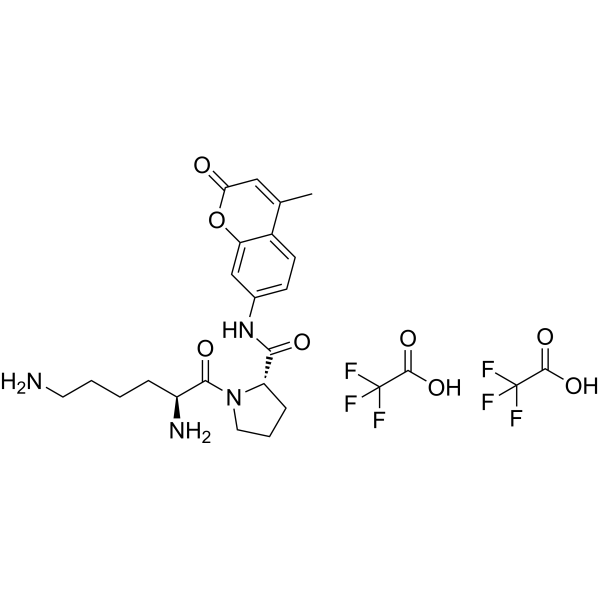
Lys-Pro-AMC diTFA is a fluorogenic substrate for the detection and measurement of the activity of specific enzymes .
loading...
    loading...
Art. -Nr.: HY-U00452
CAS. Nr.: 1456872-74-4
PL553 is a specific and high-affinity fluorigenic substrate of Leukotriene A4 hydrolase, with a λmax of 210 nm and λem of 410 nm.
loading...
    loading...
Art. -Nr.: HY-W039915
CAS. Nr.: 48149-72-0
Allyl α-D-galactopyranoside is an α-galactoside and acceptor/donor substrate for transgalactosylation reactions. Allyl α-D-galactopyranoside acts as an acceptor substrate in α-galactosidase-catalyzed transgalactosylation, and serves as a donor substrate to form longer α-galactosyl-containing oligosaccharides. Allyl α-D-galactopyranoside serves as a model compound for investigating the catalytic mechanism and substrate specificity of glycoside hydrolases and glycosyltransferases .
loading...
    loading...
Art. -Nr.: HY-P5430
CAS. Nr.: 2250228-51-2
Target:  

DYRK

Forschungsgebiete:  

Others

DYRKtide is a biological active peptide. (Dyrktide is designed as the optimal substrate sequence efficiently phosphorylated by DYRK1A, which is a dual-specificity protein kinase that is thought to be involved in brain development.)
loading...
    loading...

