3274 Results for "

complex

" in MedChemExpress (MCE) Product Catalog:
Products (3274)

3274 Results for "complex" in MCE Product Catalog:

26
26 Cited Publications
Cat. No.: HY-N0112
CAS No.: 27200-12-0
Synonyms: Ampelopsin; Ampeloptin
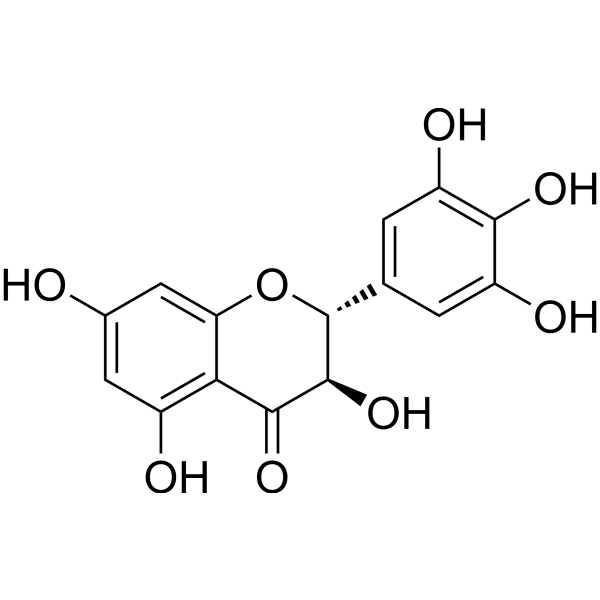
Dihydromyricetin is a potent inhibitor with an IC50 of 48 μM on dihydropyrimidinase. Dihydromyricetin can activate autophagy through inhibiting mTOR signaling. Dihydromyricetin suppresses the formation of mTOR complexes (mTORC1/2). Dihydromyricetin is also a potent influenza RNA-dependent RNA polymerase inhibitor with an IC50 of 22 μM.
loading...
    loading...
26
26 Cited Publications
Cat. No.: HY-N0551
CAS No.: 524-12-9
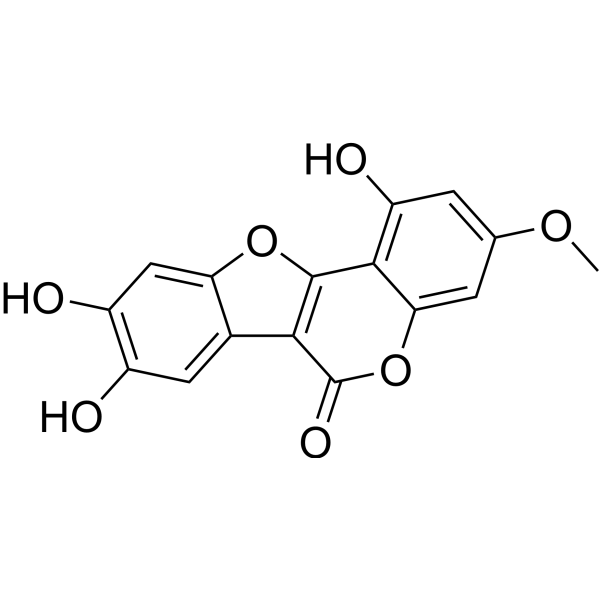
Wedelolactone suppresses LPS-induced caspase-11 expression by directly inhibits the IKK Complex. Wedelolactone also inhibits 5-lipoxygenase (5-Lox) with an IC50 of 2.5 μM. Wedelolactone induces caspase-dependent apoptosis in prostate cancer cells via downregulation of PKCε without inhibiting Akt. Wedelolactone can extract from Eclipta alba, and it can be used for the research of cancer .
loading...
    loading...
26
26 Cited Publications
Cat. No.: HY-13817
CAS No.: 314245-33-5
Purity:  99.30%
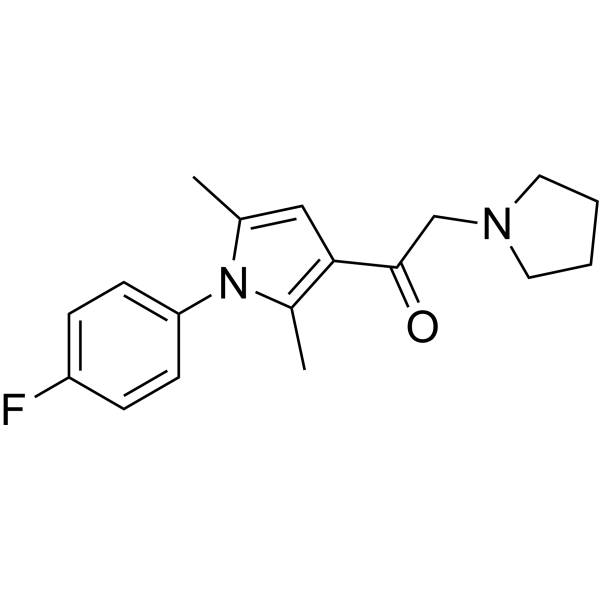
IU1 is a selective, reversible USP14 inhibitor with an IC50 of 4-5 μM. IU1 binds USP14’s catalytic cleft to block deubiquitinase activity. IU1 induces calpain-dependent Tau cleavage, causes ATP deficits, reduces E1~Ub thioester levels and 26S proteasome assembly. IU1 enhances 26S proteasome chymotrypsin-like activity, modulates LC3B-dependent autophagy flux, reduces cancer cell proliferation and migration, and blocks G0/G1 to S phase cell cycle transition in follicular thyroid cancer cells. IU1 activates autophagy-lysosomal and ubiquitin-proteasome pathways, triggers apoptosis, and reduces cervical cancer cell growth. IU1 enhances degradation of proteasome substrates linked to neurodegenerative disease, accelerates oxidized protein degradation, and increases oxidative stress resistance. IU1 can be used for the research of Alzheimer’s disease, follicular thyroid cancer, ischemic stroke, cervical cancer, and neurodegenerative disease .
loading...
    loading...
23
23 Cited Publications
Cat. No.: HY-101916
CAS No.: 9050-30-0
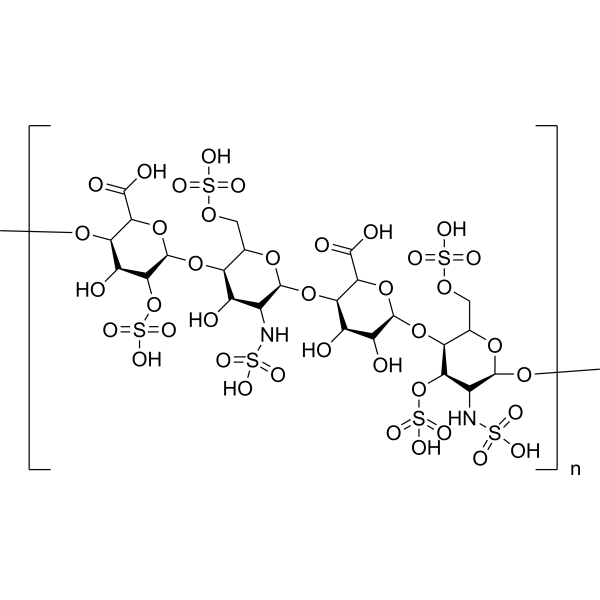
Heparan sulfate, a complex and linear polysaccharide, exists as part of glycoproteins named heparan sulfate proteoglycans, which are expressed abundantly on the cell surface and in the extracellular matrix.
loading...
    loading...
23
23 Cited Publications
Cat. No.: HY-B0185
CAS No.: 137-58-6
Synonyms: Lignocaine
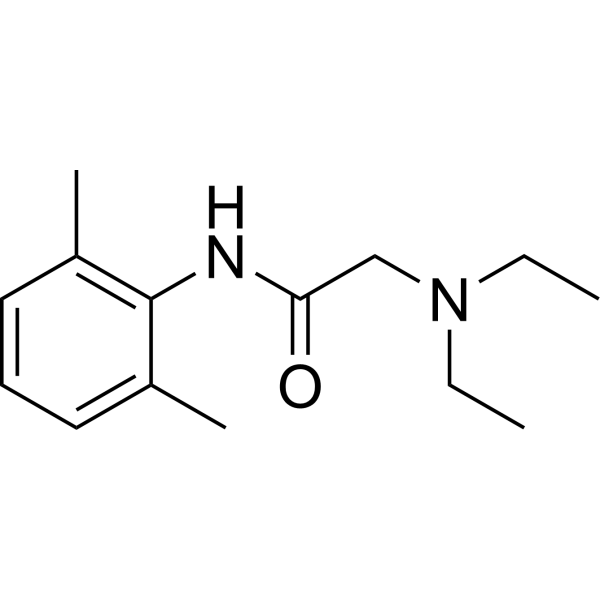
Lidocaine (Lignocaine) inhibits sodium channels involving complex voltage and using dependence . Lidocaine decreases growth, migration and invasion of gastric carcinoma cells via up-regulating miR-145 expression and further inactivation of MEK/ERK and NF-κB signaling pathways. Lidocaine is an amide derivative and has potential for the research of ventricular arrhythmia .
loading...
    loading...
23
23 Cited Publications
Cat. No.: HY-B0185B
CAS No.: 6108-05-0
Synonyms: Lignocaine hydrochloride hydrate
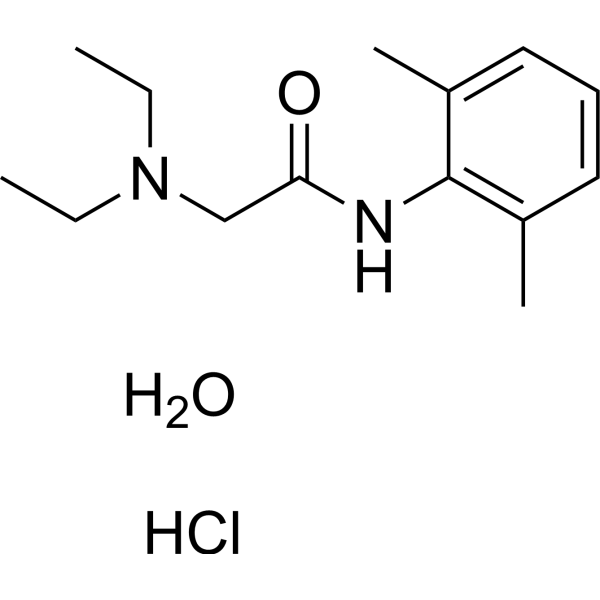
Lidocaine (Lignocaine) hydrochloride hydrate inhibits sodium channels involving complex voltage and using dependence. Lidocaine hydrochloride hydrate decreases growth, migration and invasion of gastric carcinoma cells via up-regulating miR-145 expression and further inactivation of MEK/ERK and NF-κB signaling pathways. Lidocaine hydrochloride hydrate is an amide derivative and has potential for the research of ventricular arrhythmia .
loading...
    loading...
23
23 Cited Publications
Cat. No.: HY-B0185A
CAS No.: 73-78-9
Synonyms: Lignocaine hydrochloride
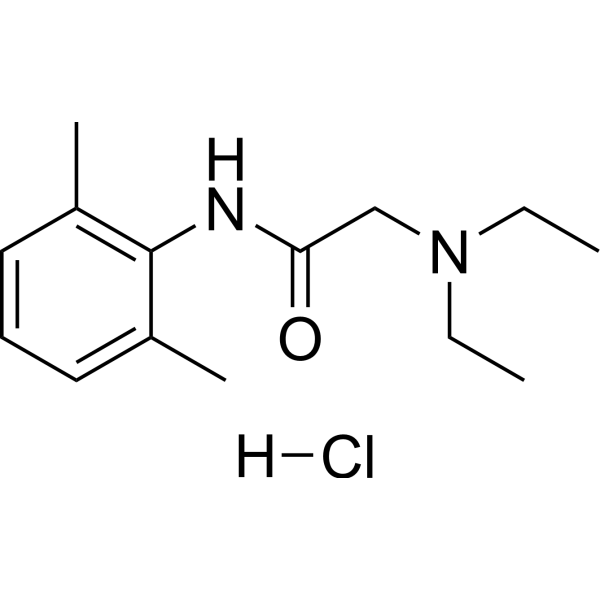
Lidocaine hydrochloride (Lignocaine hydrochloride) inhibits sodium channels involving complex voltage and using dependence . Lidocaine hydrochloride decreases growth, migration and invasion of gastric carcinoma cells via up-regulating miR-145 expression and further inactivation of MEK/ERK and NF-κB signaling pathways. Lidocaine hydrochloride is an amide derivative and a agent to treat ventricular arrhythmia and an effective tumor-inhibitor .
loading...
    loading...
21
21 Cited Publications
Cat. No.: HY-15233
CAS No.: 917389-32-3
Purity:  99.96%
Synonyms: AIC246; MK-8228
Target:  

CMV

Research Areas:  

Infection Cancer

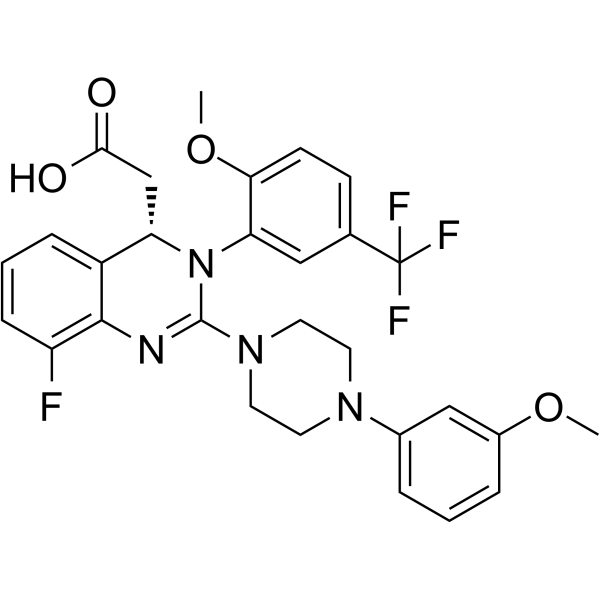
Letermovir (AIC246) is a potent inhibitor of CMV, which targets the viral terminase complex and remains active against virus resistant to DNA polymerase inhibitors.
loading...
    loading...
20
20 Cited Publications
Cat. No.: HY-111444
CAS No.: 86445-22-9
Purity:  99.77%
Target:  

E1/E2/E3 Enzyme

Research Areas:  

Others

Auxinole is a potent auxin antagonist of TIR1/AFB receptors, binding TIR1 to block the formation of the TIR1-IAA-Aux/IAA complex and so inhibits auxin-responsive gene expression.
loading...
    loading...
20
20 Cited Publications
Cat. No.: HY-19528
CAS No.: 979-92-0
Synonyms: SAH (S-Adenosylhomocysteine)
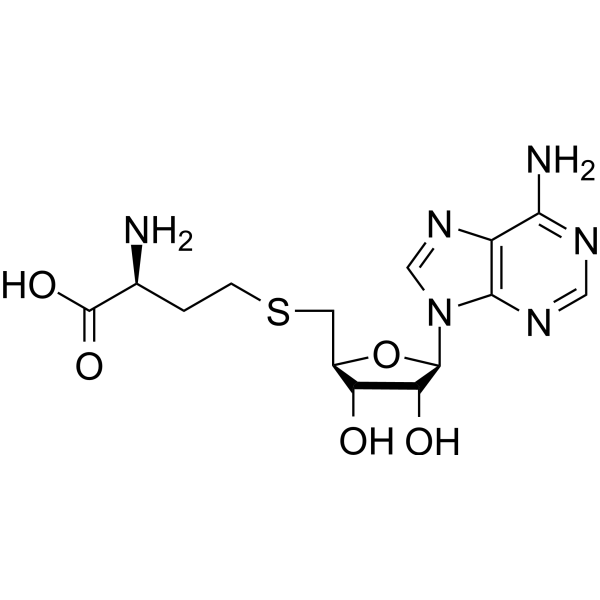
SAH (S-Adenosylhomocysteine) is an amino acid derivative and a modulartor in several metabolic pathways. It is an intermediate in the synthesis of cysteine and adenosine . SAH is an inhibitor for METTL3-METTL14 heterodimer complex (METTL3-14) with an IC50 of 0.9 µM .
loading...
    loading...
20
20 Cited Publications
Cat. No.: HY-117410
CAS No.: 1702967-37-0
Purity:  99.46%
Synonyms: PSMA-617
Research Areas:  

Cancer

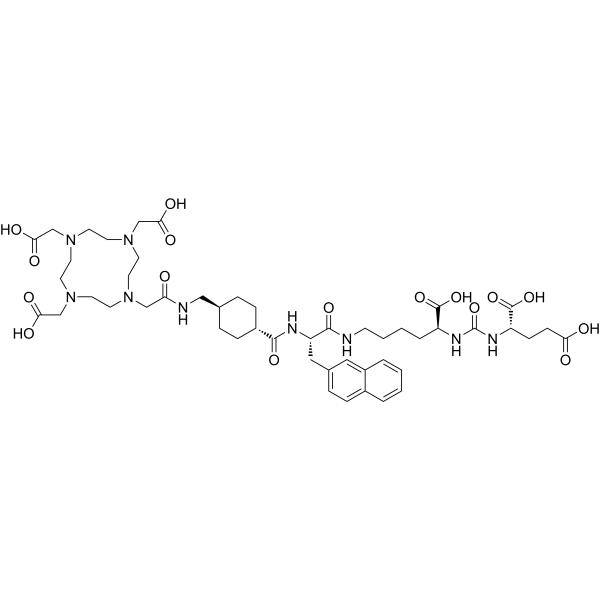
Vipivotide tetraxetan (PSMA-617) is a high potent prostate-specific membrane antigen (PSMA) inhibitor, with a Ki of 0.37 nM. Vipivotide tetraxetan (PSMA-617) is designed consisting of three components: the pharmacophore Glutamate-urea-Lysine, the chelator DOTA able to complex both 68Ga or 177Lu, and a linker connecting these two entities. Glutamate-urea-Lysine is the selective pharmacophore to bind to prostate specific membrane antigen.
loading...
    loading...
20
20 Cited Publications
Cat. No.: HY-W127378
CAS No.: 144189-73-1
Synonyms: 1,2-Dioleoyl-3-trimethylammonium-propane methylsulfate
Target:  

Liposome

Research Areas:  

Others

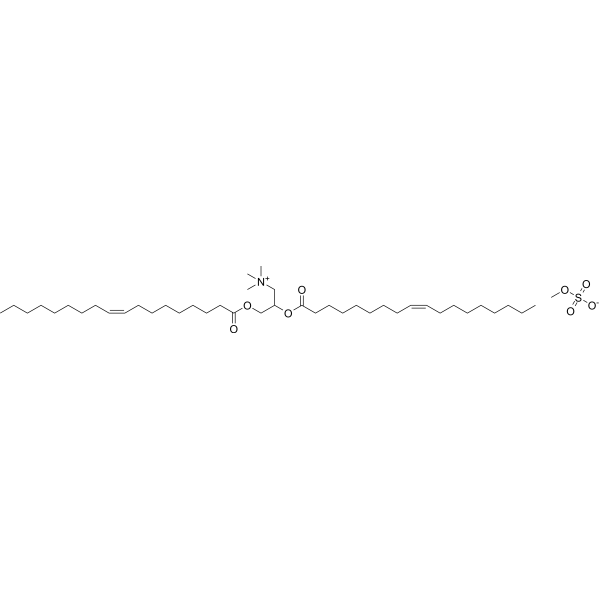
DOTAP methylsulfat is a cationic lipid reagent, a cationic derivative of trimethylammonium, linked to two 18-carbon fatty acid tails, each with a single olefin group. DOTAP methylsulfat can self-assemble with negatively charged ions (such as DNA) to form complexes, which can be adsorbed to the cell membrane surface and enter the cell by electrostatic interaction and endocytosis, respectively. DOTAP methylsulfat promotes endosomal membrane fusion with its own hydrophobic domain, releases DNA into the cytoplasm, and exerts gene delivery function. DOTAP methylsulfat can be widely used in research fields such as gene therapy, cell transfection, and non-viral vector design .
loading...
    loading...
19
19 Cited Publications
Cat. No.: HY-B0486
CAS No.: 50264-69-2
Synonyms: AF-1890; Diclondazolic Acid; DICA
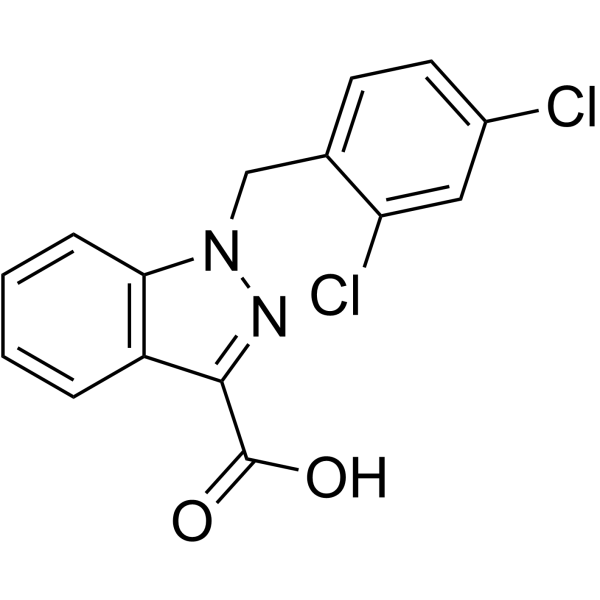
Lonidamine (AF-1890) is a hexokinase and mitochondrial pyruvate carrier inhibitor (Ki: 2.5 μM). Lonidamine also inhibits aerobic glycolysis in cancer cells. Lonidamine can be used in the research of mitochondrial metabolism and inflammation, such as pulmonary fibrosis .
loading...
    loading...
18
18 Cited Publications
Cat. No.: HY-126304A
Purity:  ≥98.0%
Research Areas:  

Others

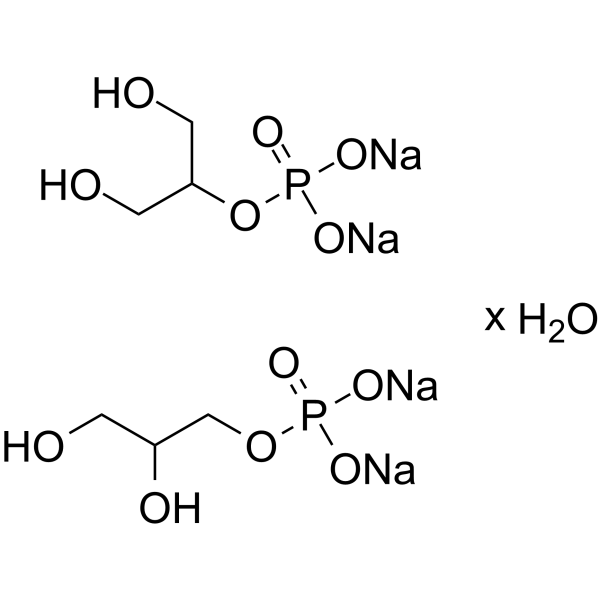
Glycerophosphoric acid (disodium salt hydrate) (α and β mixture) is a complex contains α and β Glycerophosphoric acid isomers.
loading...
    loading...
18
18 Cited Publications
Cat. No.: HY-12795
CAS No.: 1383716-33-3
Purity:  99.79%
Target:  

PI3K Autophagy

Research Areas:  

Cancer

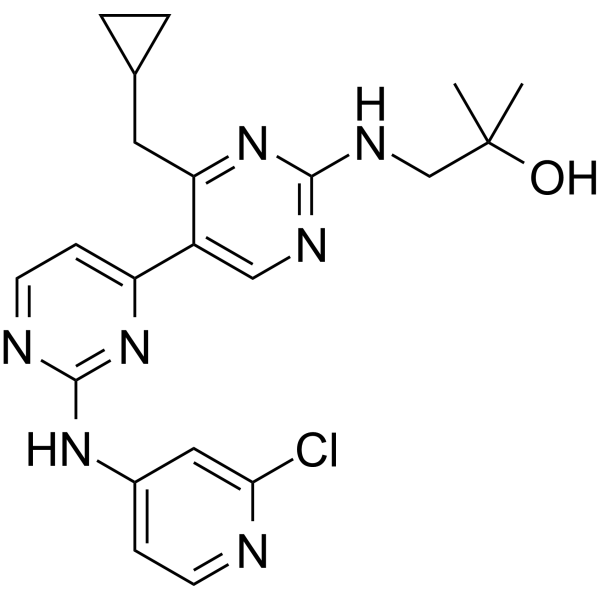
Vps34-IN-1 is a potent and selective inhibitor of class III Vps34 PI3K. Vps34-IN-1 inhibits phosphorylation of PtdIns by recombinant insect cell expressed Vps34-Vps15 complex with an IC50 of ~25 nM. Vps34-IN-1 can suppress SGK3 activation by reducing PtdIns(3)P levels via lowering phosphorylation of T-loop and hydrophobic motifs. Vps34-IN-1 modulates autophagy .
loading...
    loading...
18
18 Cited Publications
Cat. No.: HY-156498
CAS No.: 2765082-12-8
Purity:  99.48%
Research Areas:  

Cancer

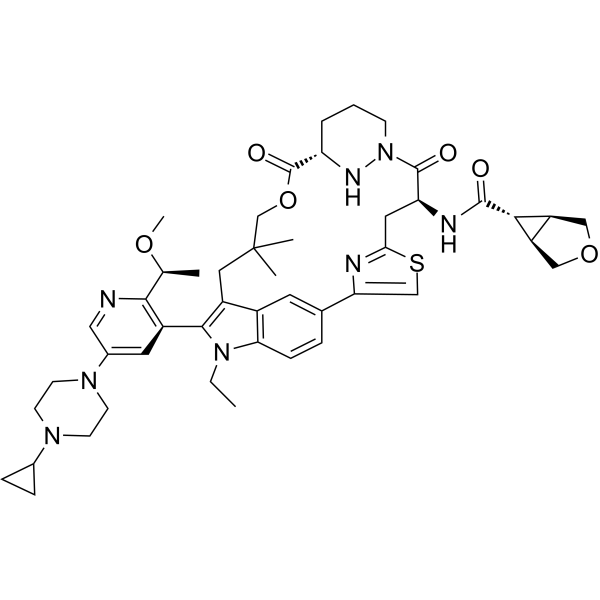
RMC-7977 is an orally active triple-complex RAS inhibitor that can simultaneously bind to cyclophilin A (CYPA) (Kd = 195 nM) and KRAS (G12V) (Kd = 292 μM). It exhibits broad-spectrum inhibitory activity against KRAS, NRAS, and HRAS proteins and their various wild-type and mutant variants. RMC-7977 induces apoptosis by inhibiting the phosphorylation of ERK, CRAF, and RSK, as well as increasing PARP cleavage. This leads to tumor regression, reduces resistance in KRAS G12C cancer models, and demonstrates good tolerability across various RAS cancer models .
loading...
    loading...
17
17 Cited Publications
Cat. No.: HY-114429
CAS No.: 2316817-88-4
Purity:  99.88%
Target:  

DNA/RNA Synthesis

Research Areas:  

Cancer

CB-6644 is a selective inhibitor of RUVBL1/2 complex with anti-cancer activity. CB-6644 blocks the ATPase activity of RUVBL1/2 with an IC50 of 15 nM .
loading...
    loading...
17
17 Cited Publications
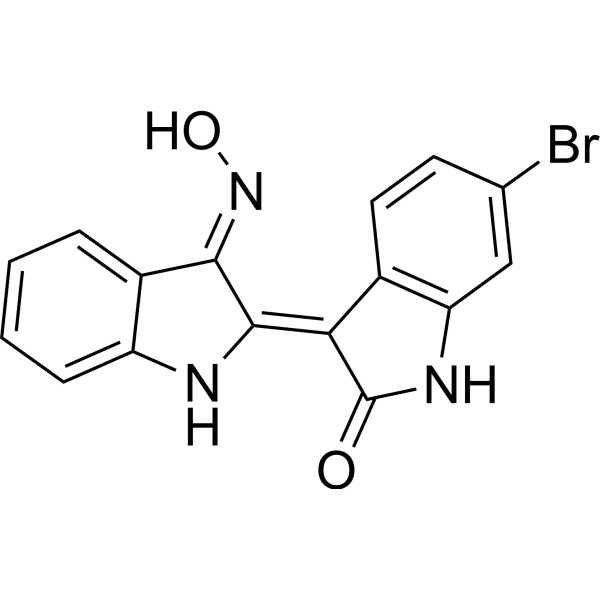
Cat. No.: HY-10580
CAS No.: 667463-62-9
Purity:  99.31%
Synonyms: 6-Bromoindirubin-3'-oxime; BIO; MLS 2052
Target:  

GSK-3 CDK Apoptosis

Research Areas:  

Cancer

GSK 3 Inhibitor IX (6-Bromoindirubin-3'-oxime; BIO) is a potent, selective, reversible and ATP-competitive inhibitor of GSK-3α/β and CDK1-cyclinB complex with IC50s of 5 nM/320 nM/80 nM for (GSK-3α/β)/CDK1/CDK5, respectively.
loading...
    loading...
17
17 Cited Publications
Cat. No.: HY-101117
CAS No.: 2083627-02-3
Purity:  99.56%
Research Areas:  

Cancer

EED226 is a polycomb repressive complex 2 (PRC2) inhibitor, which binds to the K27me3-pocket on embryonic ectoderm development (EED) and shows strong antitumor activity in xenograft mice model . EED226 is a potent, selective, and orally bioavailable EED inhibitor . EED226 inhibits PRC2 with an IC50 of 23.4 nM when the H3K27me0 peptide is used as a substrate in the in vitro enzymatic assays .
loading...
    loading...
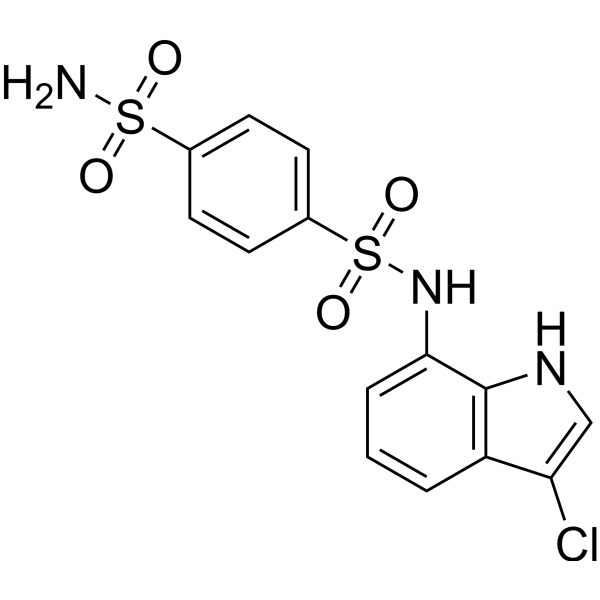
16
16 Cited Publications
Cat. No.: HY-13650
CAS No.: 165668-41-7
Purity:  99.80%
Synonyms: E 7070
Research Areas:  

Cancer

Indisulam (E 7070) is a carbonic anhydrase inhibitor and RBM39 molecular glue degrader, with Ki values of 31, 15, and 24 nM against human carbonic anhydrase I, II, and IX, respectively, and a Ki value of 65 nM against bovine carbonic anhydrase IV. Indisulam promotes the recruitment of RBM39 to the CUL4-DCAF15 E3 ubiquitin ligase complex, triggering polyubiquitination and proteasomal degradation of RBM39. Indisulam induces aberrant pre-mRNA splicing, G1 cell cycle arrest, and cell death in cancer cells. As an anticancer agent, Indisulam drives tumor regression and growth inhibition in xenograft models. Indisulam can be used in research related to solid tumors, hematologic and lymphoid malignancies, colorectal cancer, and non-small cell lung cancer .
loading...
    loading...

