87 Results for "

donor substrate

" in MedChemExpress (MCE) Product Catalog:
Products (87)

87 Results for "donor substrate" in MCE Product Catalog:

  • Categories Recommended:
    More
Cat. No.: HY-145934B
CAS No.: 608514-41-6
UDP-GlcNAz is the analogue of UDP-GlcNAc disodium (HY-112174). UDP-GlcNAc disodium is the donor substrate of many N-acetylgalactosaminyltransferases, enzymes which transfer GlcNAc from the nucleotide sugar to a saccharide or peptide acceptor. UDP-GlcNAc disodium is a click chemistry reagent, it contains an Azide group and can undergo copper-catalyzed azide-alkyne cycloaddition reaction (CuAAc) with molecules containing Alkyne groups. It can also undergo strain-promoted alkyne-azide cycloaddition (SPAAC) reactions with molecules containing DBCO or BCN groups .
loading...
    loading...
Cat. No.: HY-N9422
CAS No.: 936827-87-1
Target:  

P2Y Receptor

Research Areas:  

Cardiovascular Disease

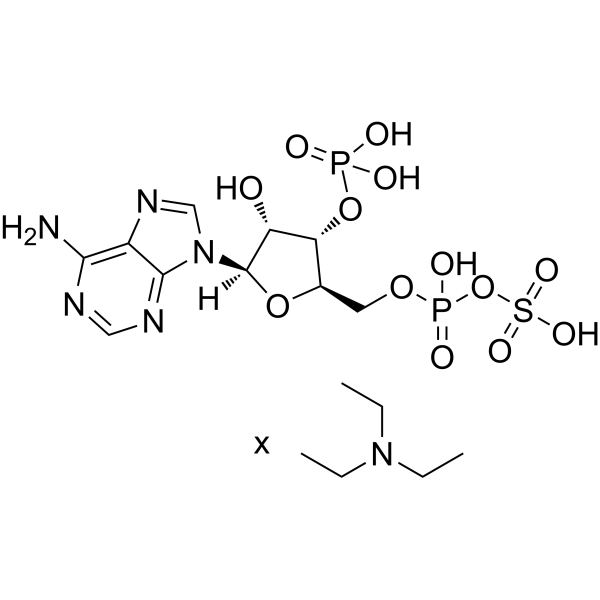
Adenosine 3'-phosphate 5'-phosphosulfate triethylamine, an adenine nucleotide derivative, is a selective P2Y1 antagonist with no effect on P2Y2, P2Y4, or P2Y6 receptors. Adenosine 3'-phosphate 5'-phosphosulfate triethylamine can competitive inhibit ADP-induced platelet aggregation, as well as the ability of ADP to cause shape change and increases in Ca 2+ in platelets, but had no effect on the inhibition of stimulated adenylate cyclase by ADP. Adenosine 3'-phosphate 5'-phosphosulfate triethylamine is a co-substrate used for the sulfonation of glycans. Adenosine 3'-phosphate 5'-phosphosulfate triethylamine can be used for Golgi-resident PAP-specific 3'-phosphatase-coupled sulfotransferase assays, which as donor substrate to transfer a sulfonate group .
loading...
    loading...
Cat. No.: HY-166309
CAS No.: 116912-55-1
Crotonyl-CoA tetralithium, a high-energy acyl donor, is an intermediate in the fermentation of butyric acid, and in the metabolism of lysine and tryptophan. Crotonyl-CoA tetralithium is important in the metabolism of fatty acids and amino acids. Crotonyl-CoA tetralithium acts as a substrate for p300’s histone crotonyltransferase activity, competing with acetyl-CoA for p300-mediated histone acylation reactions. Crotonyl-CoA tetralithium regulates global and gene-specific histone crotonylation levels in cells, with cellular concentration changes altering histone crotonylation at regulatory elements of activated genes. Crotonyl-CoA tetralithium serves as the substrate for crotonyl-CoA reductase/carboxylase (CCRC)-catalyzed NADPH-mediated reduction and carbon dioxide trapping to form unusual alkylmalonyl-CoA polyketide synthase extender units. Crotonyl-CoA tetralithium can be used for the research of LPS-induced inflammatory response .
loading...
    loading...
Cat. No.: HY-125954S
Synonyms: UDP-α-D-glucuronic acid-13C,15N2
Uridine diphosphate glucuronic acid- 13C, 15N2 (UDP-α-D-glucuronic acid- 13C, 15N2) is the 13C- and 15N-labeled Uridine diphosphate glucuronic acid (HY-125954). Uridine diphosphate glucuronic acid ammonium (UDP-α-D-glucuronic acid ammonium) is a glucuronic acid donor. Uridine diphosphate glucuronic acid ammonium transfers its glucuronic acid moiety to acceptor molecules, thereby forming "ether" glucuronides, while being converted into uridine 5'-pyrophosphate. Uridine diphosphate glucuronic acid ammonium serves as a substrate for Arabidopsis UDP-GlcA 4-epimerase 1, and undergoes reversible 4-epimerization to generate UDP-α-D-galacturonic acid .
loading...
    loading...
Cat. No.: HY-P4866
CAS No.: 1361235-89-3
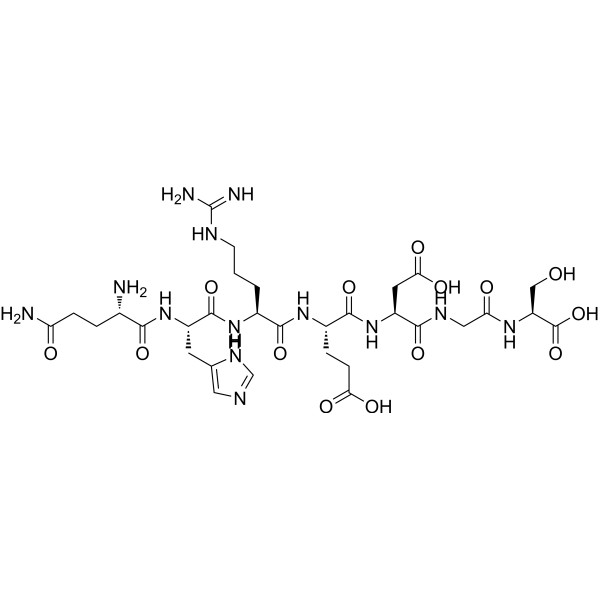
Q-Peptide is an angiopoietin-1 derived peptide (QHREDGS). Q-Peptide interacts with β1-integrin, binds to integrins on the surface of osteoblasts, and serves as an acyl donor substrate for Streptomyces mobaraensis transglutaminase. Q-Peptide activates Akt, MAPKp42/44, ILK, ERK1/2, and downregulates caspase-3/7. Q-Peptide inhibits cell apoptosis, enhances cell adhesion and migration, and promotes osteoblast differentiation, bone matrix deposition and mineralization. Q-Peptide can be used in studies related to myocardial infarction, bone regeneration, diabetic wound repair and human induced pluripotent stem cells .
loading...
    loading...
Cat. No.: HY-E70191
Synonyms: EC:2.4.1.22; B4GALT2
β-1,4-Galactosyltransferase 2 catal exclusive specificity for the donor substrate UDP-galactose and all transfer galactosein a beta1,4 linkage .
loading...
    loading...
Cat. No.: HY-N7389B
CAS No.: 148296-46-2
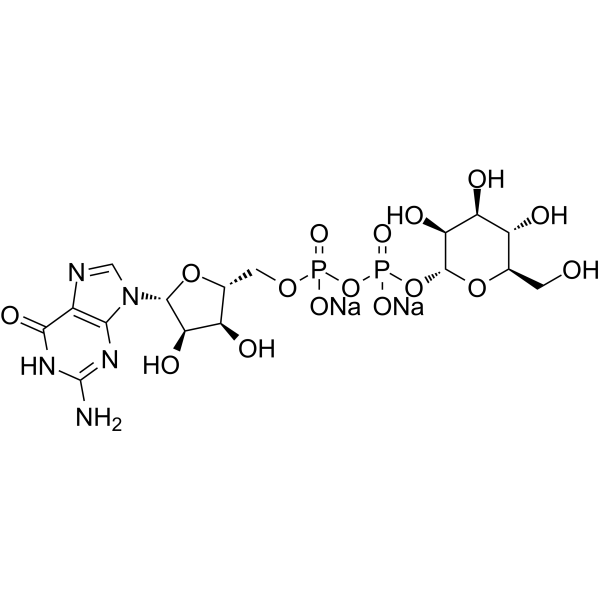
GDP-α-D-mannose disodium is the donor substrate for mannosyltransferases and the precursor of GDP-β-L-fucose. GDP-α-D-mannose disodium gives a competitive inhibition with respect to GTP (Ki 14.7 μM) and an uncompetitive inhibition with respect to mannose-1-P (Ki 115 μM) .
loading...
    loading...
Cat. No.: HY-E70286
CAS No.: 83588-90-3
Synonyms: MGAT4B
Research Areas:  

Cancer

N-Acetylglucosaminyltransferase V (MGAT4B) is the enzyme that catalyzes the formation of the β1,6-GlcNAc branch of N-glycans in the Golgi apparatus using UDP-GlcNAc as the donor substrate. N-Acetylglucosaminyltransferase V is involved in cancer malignancy and autoimmune disease etiology .
loading...
    loading...
Cat. No.: HY-P2888A
CAS No.: 80619-01-8
Synonyms: BOD, bacillus cereus
Target:  

Endogenous Metabolite

Research Areas:  

Metabolic Disease

Bilirubin oxidase, bacillus cereus is a multi-copper oxidase that catalyzes the oxidation of bilirubin into biliverdin, as well as other tetrapyrroles, phenols, and aryl diamines. Bilirubin oxidase, bacillus cereus can serve as a single-enzyme deoxygenator, catalyzing the direct reduction of oxygen to water in the presence of electron donor substrates, without releasing hydrogen peroxide. Bilirubin oxidase, bacillus cereus can be used to develop enzyme-based biosensors .
loading...
    loading...
Cat. No.: HY-P2888C
Synonyms: BOD, Bacillus pumilus
Target:  

Endogenous Metabolite

Research Areas:  

Metabolic Disease

Bilirubin oxidase (BOD), Bacillus pumilus is a multicopper oxidase that catalyzes the oxidation of bilirubin to biliverdin, as well as other tetrapyrrole, phenols, and aryl diamines. Bilirubin oxidase, Bacillus pumilus can serve as a single-enzyme deoxygenator, catalyzing the direct reduction of oxygen to water in the presence of electron donor substrates, without releasing hydrogen peroxide. Bilirubin oxidase, Bacillus pumilus can be used to develop enzyme-based biosensors .
loading...
    loading...
Cat. No.: HY-177787A
Research Areas:  

Others

2'-Deoxy-N-methyl-AMP ammonium is an N6-substituted adenine nucleotide derivative and a glycosyl donor. On one hand, 2'-Deoxy-N-methyl-AMP ammonium acts as a specific substrate for N6-methyl-AMP aminohydrolase, and it is catalytically converted to dIMP to participate in the nucleotide metabolic cycle. On the other hand, 2'-Deoxy-N-methyl-AMP ammonium also serves as a guanosine diphosphate (GDP)-linked fucose derivative donor, driving site-specific glycoconjugation of proteins under the mediation of α-1,3-fucosyltransferase. 2'-Deoxy-N-methyl-AMP ammonium is an important molecular tool for investigating the mechanisms of nucleotide modification and protein glycosylation .
loading...
    loading...
Cat. No.: HY-W250153A
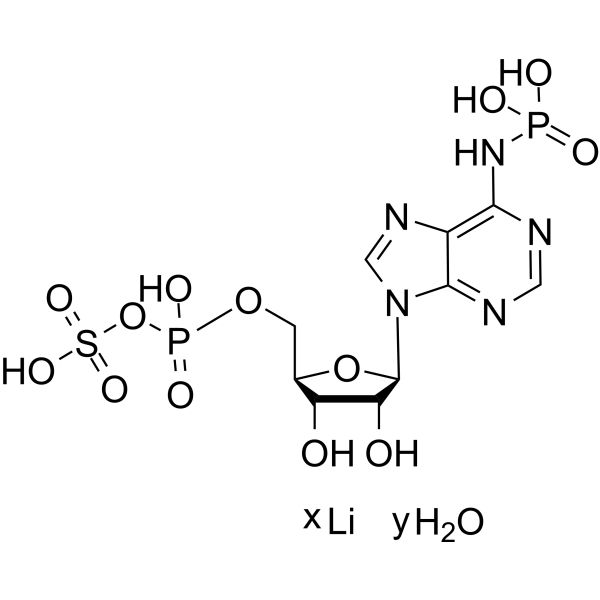
Adenosine 3'-phosphate 5'-phosphosulfate lithium hydrate, an adenine nucleotide derivative, is a selective P2Y1 antagonist with no effect on P2Y2, P2Y4, or P2Y6 receptors. Adenosine 3'-phosphate 5'-phosphosulfate lithium hydrate can competitive inhibit ADP-induced platelet aggregation, as well as the ability of ADP to cause shape change and increases in Ca 2+ in platelets, but had no effect on the inhibition of stimulated adenylate cyclase by ADP. Adenosine 3'-phosphate 5'-phosphosulfate lithium hydrate is a co-substrate used for the sulfonation of glycans. Adenosine 3'-phosphate 5'-phosphosulfate lithium hydrate can be used for Golgi-resident PAP-specific 3'-phosphatase-coupled sulfotransferase assays, which as donor substrate to transfer a sulfonate group .
loading...
    loading...
Cat. No.: HY-P6959
Research Areas:  

Others

N3AcAAPF-glycolate-FG-amide is an ester donor subtiligase substrate. subtiligase contains azide .
loading...
    loading...
Cat. No.: HY-148869A
CAS No.: 799812-81-0
Synonyms: 06:0 Coenzyme A triammonium
Research Areas:  

Metabolic Disease

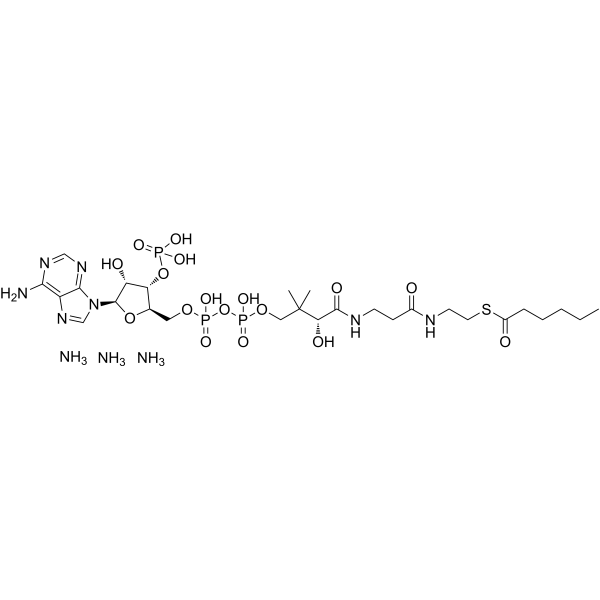
Hexanoyl-Coenzyme A triammonium (06:0 Coenzyme A) is a medium-chain fatty acyl CoA that is an acyl donor substrate for ghrelin O-acyltransferase (GOAT) .
loading...
    loading...
Cat. No.: HY-137802
CAS No.: 53199-56-7
Synonyms: S-Adenosyl-L-homocysteine sulfone
Research Areas:  

Others

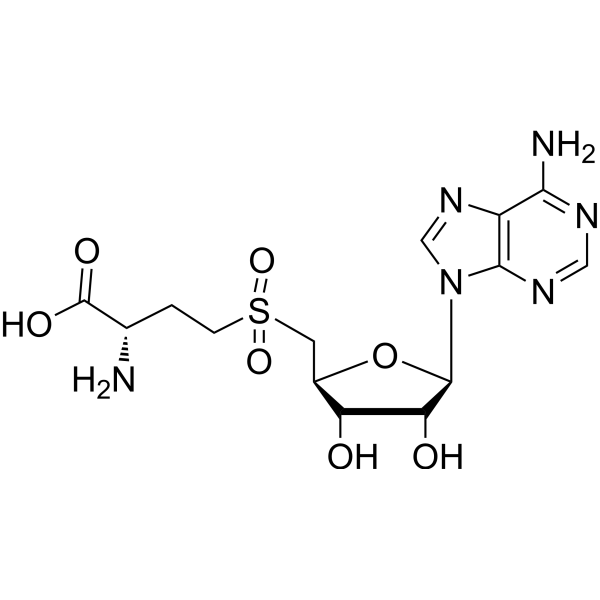
SAHO2 is the sulfone form of the methyl donor S-(5'-adenosyl)-L-methionine chloride (SAM) and serves as a substrate for radical SAM enzymes .
loading...
    loading...
Cat. No.: HY-P10922
CAS No.: 1246741-19-4
Target:  

Cathepsin

Research Areas:  

Others

Cathepsin E substrate e is a substrate of Cathepsin E. Cathepsin E substrate e was designed in such a way that due to the close proximity of a Mca-donor and a Dnp-acceptor, a near complete intramolecular quenching effect was achieved in its intact state. After the proteolytic cleavage of the hydrophobic motif of the peptide substrate, both Mca and Dnp would be further apart, resulting in bright fluorescence .
loading...
    loading...
Cat. No.: HY-P11349
CAS No.: 948889-16-5
Research Areas:  

Others

TG-Gln (a glutamine donor peptide with the sequence H-NQEQVSPLERCG-NH₂) is a substrate-type crosslinker targeting activated coagulation transglutaminase XIII (FXIIIa). TG-Gln is promising for research of angiogenesis induction, cartilage repair, and wound healing .
loading...
    loading...
Cat. No.: HY-162654
CAS No.: 55909-92-7
Target:  

Factor VIII

Research Areas:  

Cardiovascular Disease

FXIIIa-IN-1 (Compound 16) is a potent and selective FXIIIa (Factor XIIIa) inhibitor with an IC50 value of 2.4 μM. FXIIIa-IN-1 inhibits FXIIIa by competing with the Gln-donor protein substrate (dimethylcasein). FXIIIa-IN-1 holds promise for the development of effective and safe novel anticoagulants .
loading...
    loading...
Cat. No.: HY-D0845R
CAS No.: 57564-91-7
Synonyms: GSNO (Standard); RVC-588 (Standard); S-Nitroso-L-glutathione (Standard)
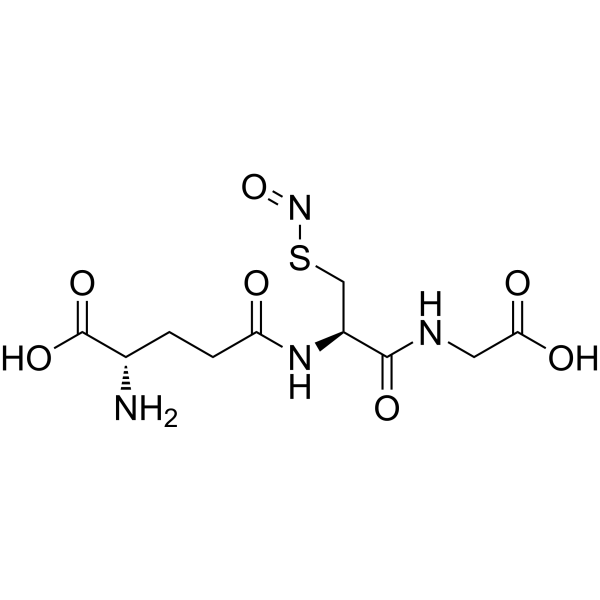
Nitrosoglutathione (Standard) (GSNO (Standard)) is the analytical standard of Nitrosoglutathione (HY-D0845). This product is intended for research and analytical applications. Nitrosoglutathione (GSNO), a exogenous NO donor and a substrate for rat alcohol dehydrogenase class III isoenzyme, inhibits cerebrovascular angiotensin II-dependent and -independent AT1 receptor responses. x
loading...
    loading...
Cat. No.: HY-110196
CAS No.: 1627607-88-8
Research Areas:  

Others

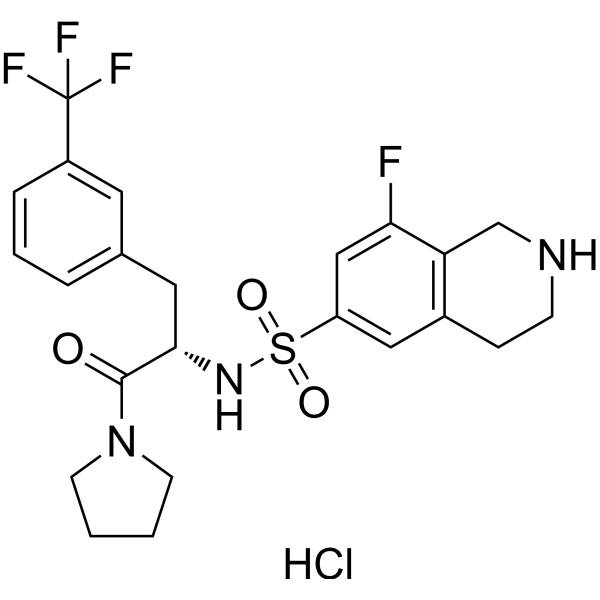
(S)-PFI-2 hydrochloride is an inhibitor of lysine methyltransferase SETD7 and is approximately 500-fold more active than its enantiomer (R)-PFI-2. (R)-PFI-2 is a cofactor-dependent and substrate-competitive inhibitor. (R)-PFI-2 can occupy the substrate peptide binding groove of SETD7 (including the catalytic lysine binding channel) and interact with the cofactor The donor methyl group is in direct contact. However, (S)-PFI-2 was not observed to have the same interaction as (R)-PFI-2 .
loading...
    loading...

