







433 Results for "

microorganisms

" in MedChemExpress (MCE) Product Catalog:
Products (433)

433 Results for "microorganisms" in MCE Product Catalog:

1
1 Cited Publications
Cat. No.: HY-113044R
CAS No.: 133-89-1
Synonyms: UDP-D-Glucose (Standard)
Uridine 5′-diphosphoglucose (Standard) (UDP-D-Glucose (Standard)) is the analytical standard of Uridine 5′-diphosphoglucose (HY-113044). This product is intended for research and analytical applications. Uridine 5’-diphosphoglucose (UDP-glucose), secreted by cardiomyocytes during ischemia and reperfu, is a potent agonist of the proinflammatory P2Y14 receptor. It acts an important role in the regulation of inflammation and neutrophil polarization in neutrophils. Uridine 5’-diphosphoglucose is also the precursor of glucose-containing oligosaccharides, polysaccharides, glycoproteins, and glycolipids in animal tissues and in some microorganisms. Uridine 5’-diphosphoglucose is promising for research in counteracting myocardial infarction/reperfusion (MIR)-induced inflammation in the heart tissue.
loading...
    loading...
Cat. No.: HY-P2890
CAS No.: 80498-15-3
Research Areas:  

Others

Laccase, Microorganisms is a multicopper oxidase. Laccase, Microorganisms catalyzes the oxidation of multiple substrates, including phenolic compounds, polyphenolic compounds, lignin, etc. Laccase, Microorganisms can be used in paper/textile/food industry, bioremediation, biomedicine and agriculture .
loading...
    loading...
Cat. No.: HY-E70013
CAS No.: 37288-51-0
Synonyms: endo-1,3:1,4-β-D-Glucanase
Target:  

Glycosidase

Research Areas:  

Metabolic Disease

Lichenase, Microorganism (endo-1,3:1,4-β-D-Glucanase) is a specific, endo-(1-3),(1-4)-β-D-glucan 4-glucanohydrolase. Lichenase, Microorganism solubilizes β-glucans from cereal grains and gives gluco-oligosaccharides (GOS). Lichenase, Microorganism can be used in the degradation of polysaccharides in the cell walls .
loading...
    loading...
Cat. No.: HY-P2979
CAS No.: 9001-57-4
Synonyms: β-D-Fructofuranosidase
Research Areas:  

Others

Invertase, baker's yeast (S. cerevisiae) is a major enzyme present in plants and microorganisms, is often used in biochemical studies. Invertase catalyzes the hydrolysis of the disaccharide sucrose into glucose and fructose .
loading...
    loading...
Cat. No.: HY-126386
CAS No.: 9032-75-1
Synonyms: EC 3.2.1.15
Research Areas:  

Others

Pectinase (EC 3.2.1.15) is a mixed enzymes that hydrolyze pectic substances, it mostly presents in microorganisms and higher plants. Pectinase is involved in the metabolism of the cell wall as well as in the growth of the cell, senescence, ripening of fruits, pathogenesis and abscission process .
loading...
    loading...
Cat. No.: HY-125863
CAS No.: 9001-40-5
Synonyms: G6PD, Microorganism
Glucose-6-phosphate dehydrogenase, Microorganism (G6PD) is the rate-limiting enzyme of the pentose phosphate pathway. Glucose-6-phosphate dehydrogenase, Microorganism is a primary source of NADPH in antioxidant pathways, nitric oxide synthase, NADPH oxidase, cytochrome p450 systems, and others. Glucose-6-phosphate dehydrogenase, Microorganism is applicable in research related to diabetes, endothelial dysfunction, cancer, and cardiomyopathy .
loading...
    loading...
Cat. No.: HY-P2917
CAS No.: 9030-66-4
Synonyms: GyK
Glycerol kinase, microorganism (GyK) acts as a NR4A1 inhibitor with enzymatic activity. It directly binds to and inhibits the transcription factor NR4A1, thereby negatively regulating hepatic gluconeogenesis and reducing blood glucose levels. Glycerol kinase, microorganism positively regulates UCP1 expression via partial dependence on the β-adrenergic receptor-cAMP-CREB pathway, promotes browning of white adipose tissue and thermogenesis, and further modulates intracellular fatty acid composition and energy metabolism. In diabetic mouse models, overexpression of Glycerol kinase effectively antagonizes NR4A1-induced hyperglycemia, demonstrating potential for improving glucose homeostasis. Glycerol kinase, microorganism can be used for studies on diabetes and obesity .
loading...
    loading...
Cat. No.: HY-100584
CAS No.: 55224-05-0
Purity:  ≥98.0%
Synonyms: Erythromycin Cyclocarbonate
Target:  

Bacterial Antibiotic

Research Areas:  

Infection

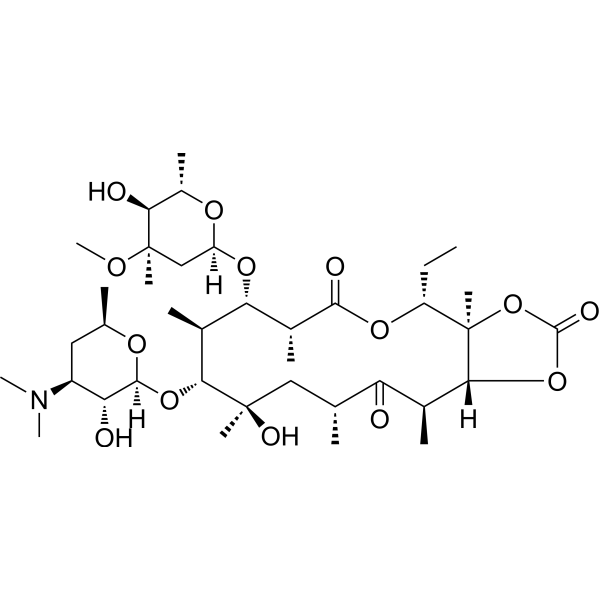
Davercin (Erythromycin Cyclocarbonate), derivative of Erythromycin, which is active against Gram-positive and some Gram-negative microorganisms.
loading...
    loading...
Cat. No.: HY-119809
CAS No.: 548-54-9
Purity:  99.97%
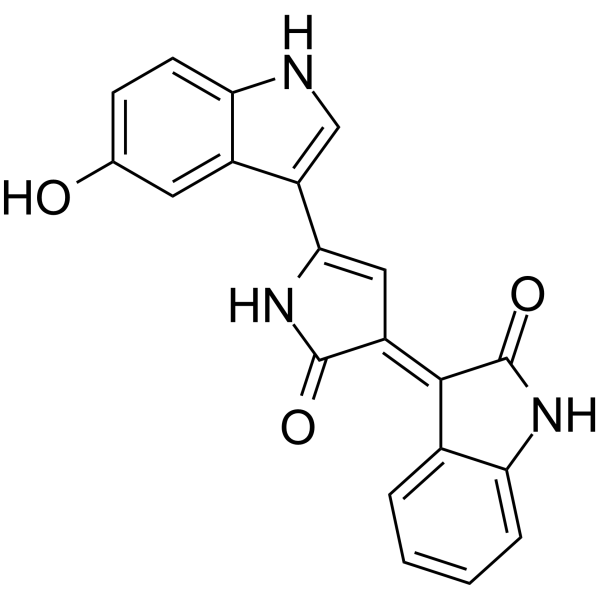
Violacein, a secondary metabolite produced by several microorganisms, possesses potent anticancer and low side effects. Violacein possesses antioxidant properties. Apoptosis inducer .
loading...
    loading...
Cat. No.: HY-P2806
CAS No.: 9001-59-6
Synonyms: PK; Fluorokinase
Pyruvate Kinase, Microorganism (PK) is a glycolytic enzyme that catalyzes the conversion of phosphoenolpyruvate and ADP to pyruvate and ATP .
loading...
    loading...
Cat. No.: HY-138650
CAS No.: 26402-26-6
Purity:  ≥98.0%
Synonyms: Glyceryl monocaprylate; Sefsol 318
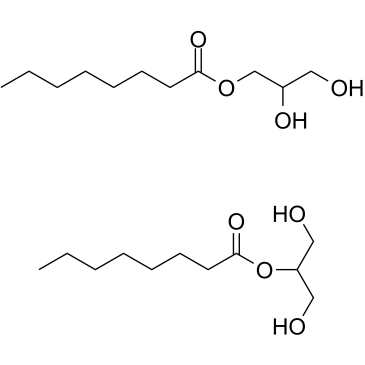
Monocaprylin (Glyceryl monocaprylate), a monoglyceride of caprylic acid, exhibits an excellent antibacterial activity. Monocaprylin inhibits a variety of foodborne pathogenic and spoilage microorganisms and has the potential for an alternative food preservative research .
loading...
    loading...
Cat. No.: HY-W011916
CAS No.: 1114-41-6
Synonyms: 3-O-Carboxyethyl-D-glucosamine
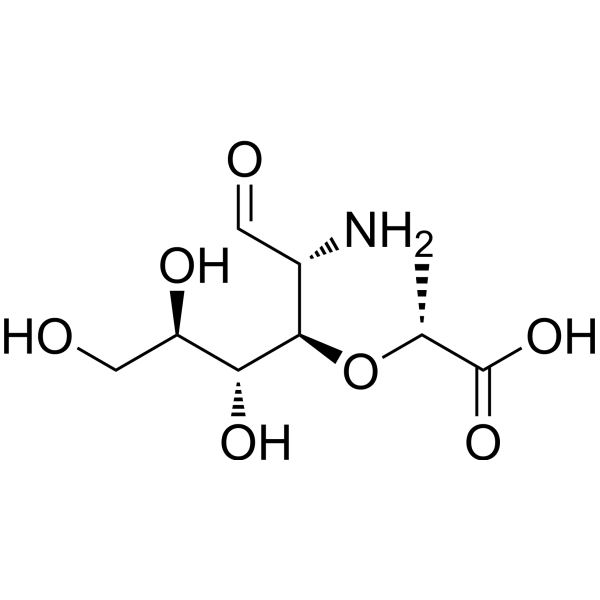
Muramic acid (3-O-Carboxyethyl-D-glucosamine) is a component found only in the cell walls of bacteria and blue-green algae. Muramic acid can be used to measure the biomass of microorganisms in environments such as estuaries, oceans, and soils .
loading...
    loading...
Cat. No.: HY-P2921
CAS No.: 9002-12-4
Synonyms: Uox, Microorganism
Uricase, Microorganism (Uox, Microorganism) is a uricase (urate oxidase) derived from Microorganism. Uricase, Microorganism converts uric acid into allantoin. The absence of Uricase in mammals causes kidney diseases resulting from uric acid accumulation. Uricase, Microorganism can be used for research on chronic refractory gout and hyperuricemia .
loading...
    loading...
Cat. No.: HY-14957
CAS No.: 245765-41-7
Purity:  99.66%
Synonyms: T-3912
Target:  

Bacterial Antibiotic

Research Areas:  

Infection

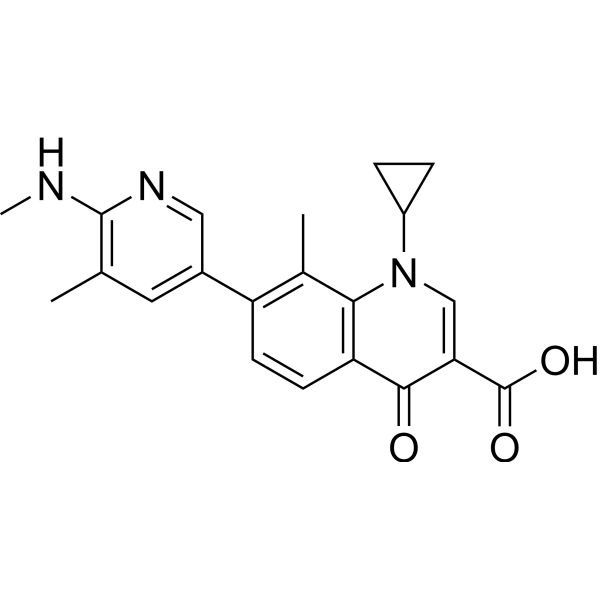
Ozenoxacin is a nonfluorinated quinolone antibacterial, which shows potent activities against the main microorganisms isolated from skin and soft tissue infections.
loading...
    loading...
Cat. No.: HY-P3186
CAS No.: 9028-53-9
Target:  

Endogenous Metabolite

Research Areas:  

Metabolic Disease

Glucose dehydrogenase, recombinant Microorganisms is a FDA-dependent oxidoreductase. Glucose dehydrogenase (GDH) catalyzes the oxidation of β-D-glucose to β-D-glucono-1,5-lactone with simultaneous reduction of the cofactor NADP + to NADPH or, to a lesser extent, NAD + to NADH. Glucose dehydrogenase (GDH) accepts both NAD + and NADP + as cofactors and can be used for the regeneration of NADH and NADPH .
loading...
    loading...
Cat. No.: HY-P2779
CAS No.: 9054-63-1
Target:  

Endogenous Metabolite

Research Areas:  

Metabolic Disease

Microsomal aminopeptidase, Microorganism is first reported from C. elegans. The Microsomal aminopeptidase, Microorganism is beneficial for the development of molecular vaccines against parasitic nematodes .
loading...
    loading...
Cat. No.: HY-P2776
CAS No.: 9001-51-8
Target:  

Hexokinase

Research Areas:  

Metabolic Disease

Hexokinase, microorganism is a hexokinase derived from microorganisms. It catalyzes the phosphorylation of glucose at the C6 position using ATP and Mg 2+, exhibits broad substrate specificity, and demonstrates thermal stability under neutral to weakly alkaline pH and high-temperature conditions. Hexokinase, microorganism uses ATP as the primary phosphate donor for sugar phosphorylation reactions. Hexokinase, microorganism belongs to the prokaryotic hexokinase family and catalyzes sugar phosphorylation reactions in carbohydrate metabolism .
loading...
    loading...
Cat. No.: HY-P2893B
CAS No.: 37340-58-2
Synonyms: Creatine amidinohydrolase, microorganism
Target:  

Endogenous Metabolite

Research Areas:  

Metabolic Disease

Creatine amidinohydrolase, microorganism is a hydrolytic enzyme that catalyzes the hydrolysis of creatine into creatinine and urea, playing a crucial role in the measurement of creatinine concentration. Creatine amidinohydrolase, microorganism can be used in the development of biosensors for measuring serum creatinine levels .
loading...
    loading...
Cat. No.: HY-113382
CAS No.: 616-04-6
Purity:  99.11%
Synonyms: 1-Methylhydantoin
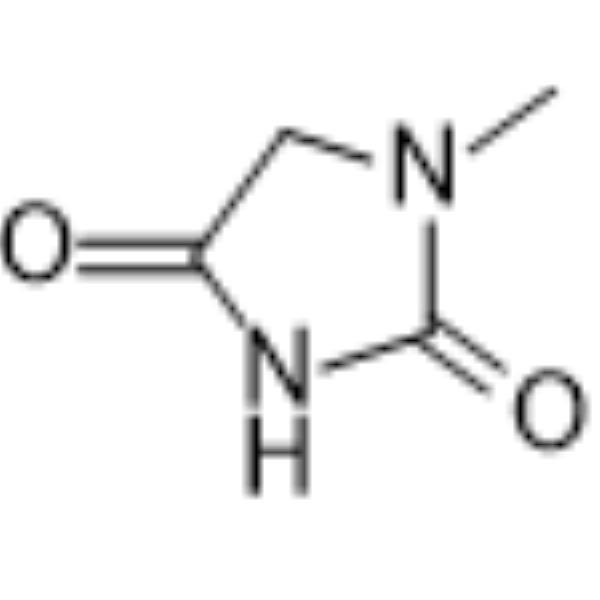
N-Methylhydantoin is a creatinine degradation metabolite and non-substrate for microbial degradation.N-Methylhydantoin resists breakdown by most tested cytosine deaminase-forming microorganisms, which lack N-methylhydantoin amidohydrolase and N-carbamoylsarcosine amidohydrolase activity.N-Methylhydantoin forms as a product of creatinine hydrolysis by cytosine deaminase/creatinine deiminase in various microorganisms .
loading...
    loading...
Cat. No.: HY-E70517
CAS No.: 89190-47-6
Target:  

Histamine Receptor

Research Areas:  

Others

Histamine dehydrogenase, Microorganism (EC 1.4.99) is a homodimeric enzyme which catalyzes oxidative deamination of histamine in the presence of electron carrier .
loading...
    loading...

